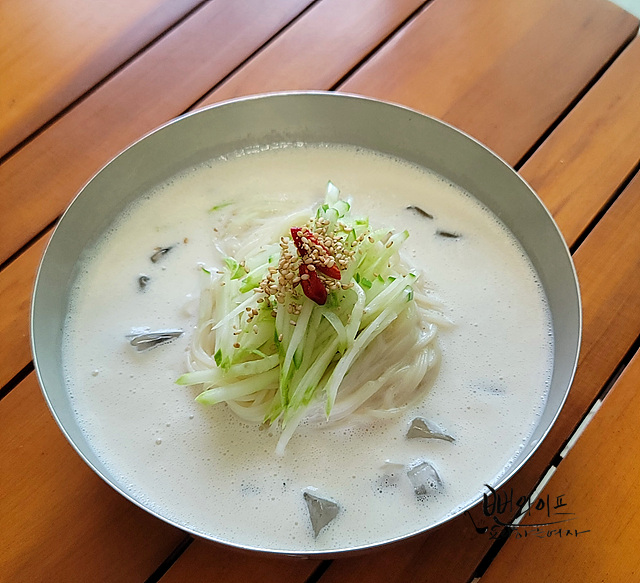
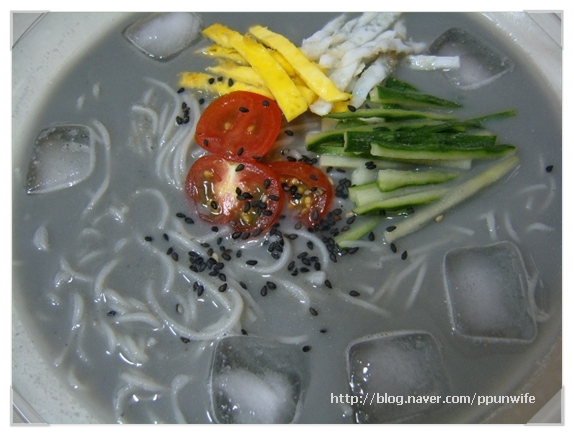
Chilly Kongguksu (Cold Soybean Noodle Soup) with Nuts
A rich, nutty summer delicacy made by blending black soybeans and nuts together into cold soybean noodle soup.
Translated from Korean by AI and not yet checked by a native speaker. Amounts and numbers are taken directly from the original recipe. Read the Korean original →
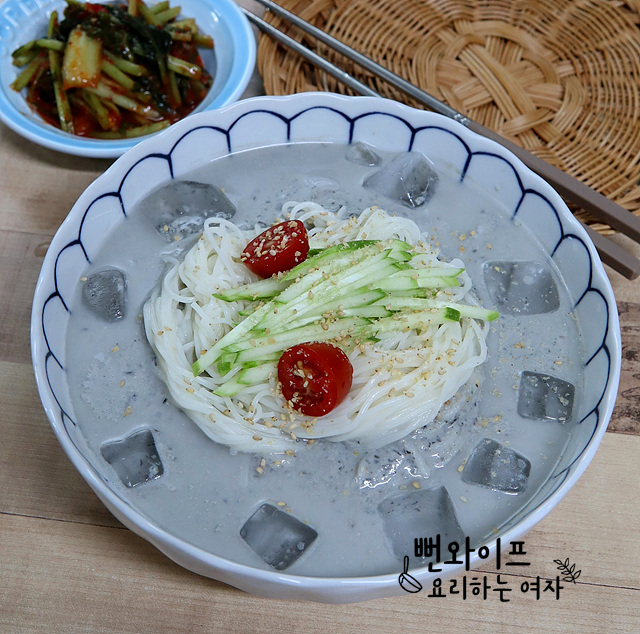
This summer noodle dish is made by thoroughly soaking soybeans, boiling them so they have no raw beany smell, and finely blending them with nuts and toasted sesame seeds. The thick broth coats the noodles well, and you can season it with salt to taste and enjoy it nice and cold.
- Servings
- 4–5 servings
- Cook time
- 10 minprep not included
- Difficulty
- Medium
- Spiciness
- Not spicy
Ingredients
- Black soybeans (seoritae) (or soybeans for meju)2 cups (black soybeans)
- Toasted sesame seeds5 tbsp
- Nuts1/2 cup
- Cucumber
- Cherry tomatoes
- Water10 cups (or more (when blending))
- Saltas needed
- Pour plenty of water over the soybeans and soak them for at least 5 hours, and up to 8 hours.
- If you do not have nuts, unsweetened peanut butter makes a great substitute.
- If you are not eating it right away, omit the salt, which can make the broth watery, and blend plenty to keep in the refrigerator or freezer.
Steps
Prepare the ingredients
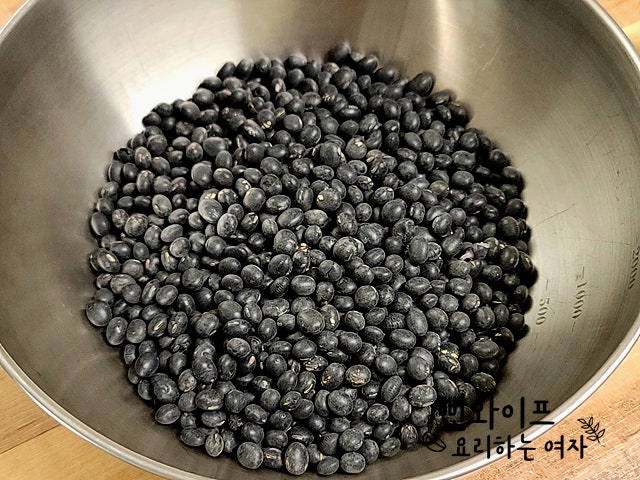
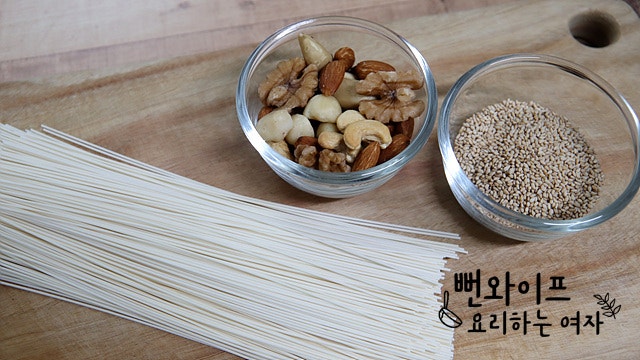
Prepare black soybeans or yellow soybeans.
Using 2 cups will yield about 4 to 5 servings.
Rather than using only soybeans, adding nuts or sesame seeds gives it a deeply nutty flavor, so I prepared a little of each.
Slice the ingredients
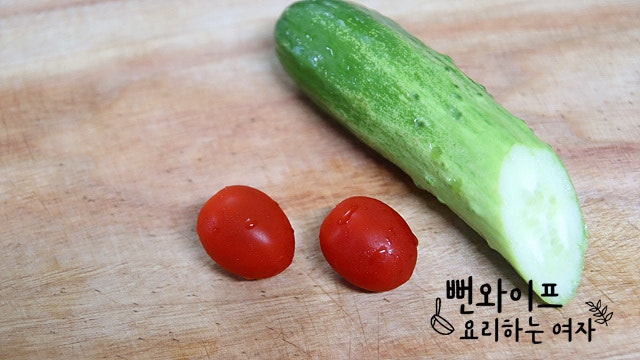
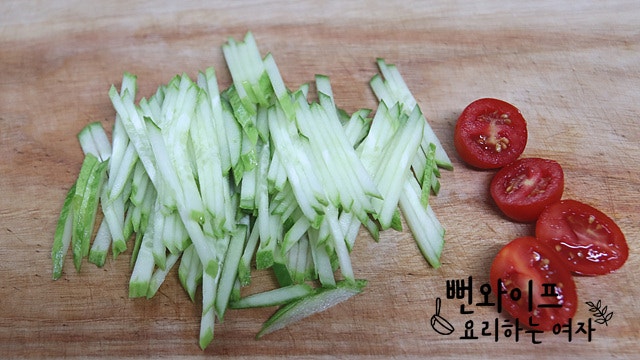
Prepare and slice cucumber and cherry tomatoes for the garnish.
Soak the soybeans
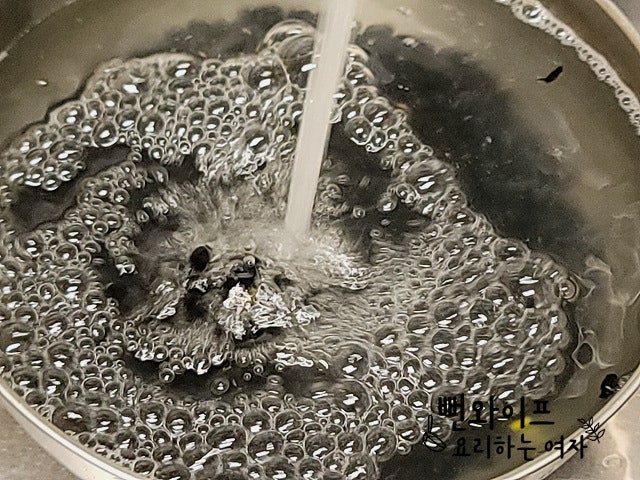
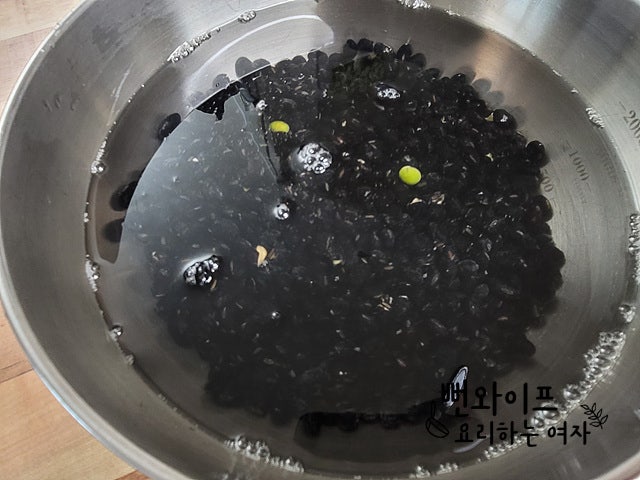
Pick out any debris, spoiled beans, or beans that float on top of the water, wash them several times in water, then pour in water and let them soak.
The soybeans swell to 2 to 3 times their size, so you need to pour in plenty of water.
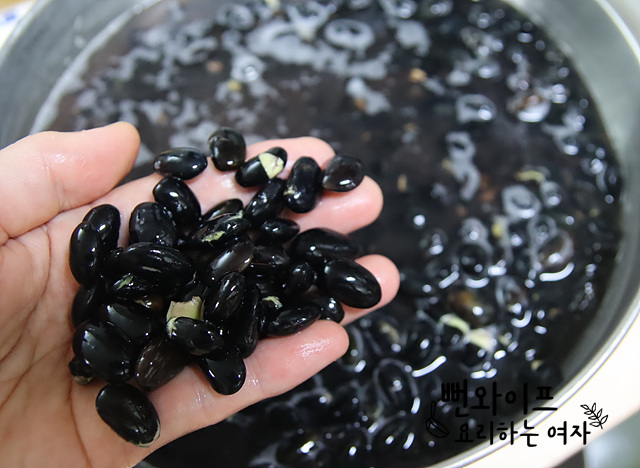
Soak them for at least 5 hours, and up to 8 hours; as they soak up nicely and plump up like this, the skins may split.
The 2 cups of black soybeans I started with swelled to about 5 cups.
Soaking them thoroughly like this significantly shortens the boiling time.
How to boil the soybeans
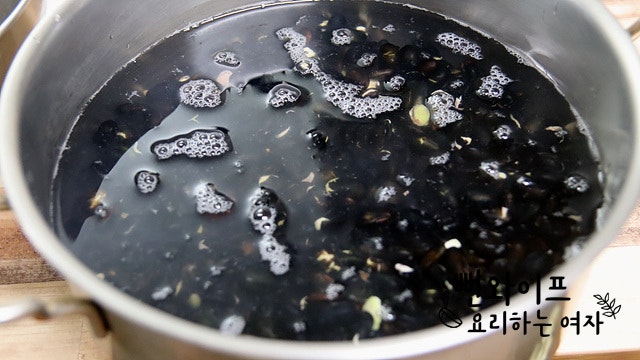
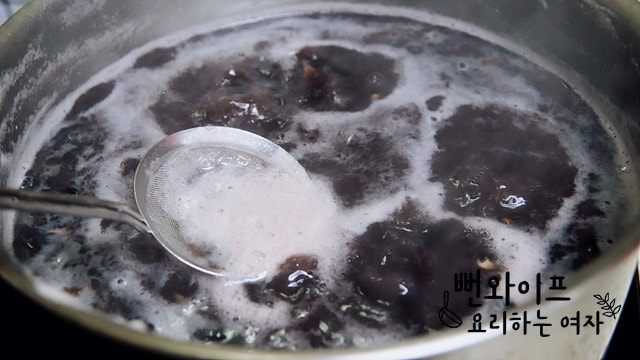
Do not discard the soaking water; add more water to it, bring it to a rolling boil over high heat, and neatly skim off the foam.
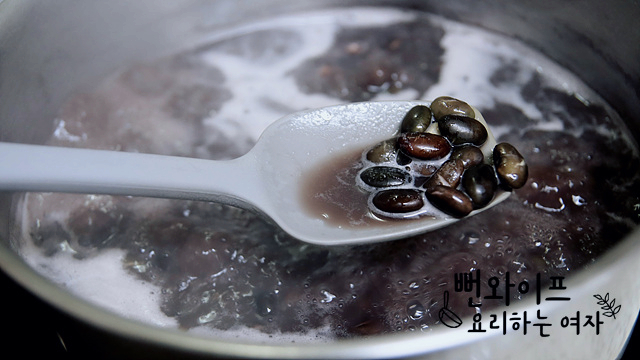
Boil them over medium-low heat for about 10 minutes; taste a bean, and if there is no raw beany smell and a nutty flavor comes through, they are boiled well.
While boiling, if it seems like there is not enough water, add hot water.
Now simply let them cool as they are and blend them in a blender. (Never discard the soybean cooking liquid.)
Because the beans were soaked thoroughly, they do not expand further after boiling and stay the same size. (soaked beans = boiled beans)
Make the soybean broth
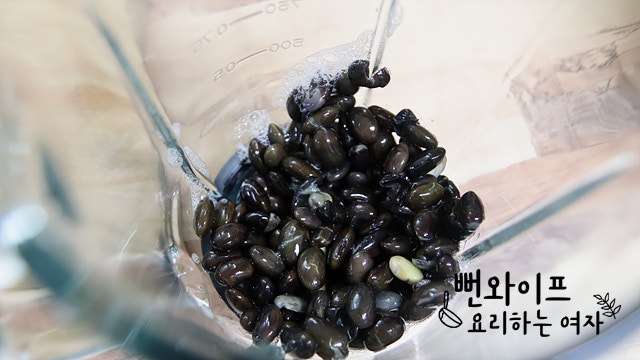
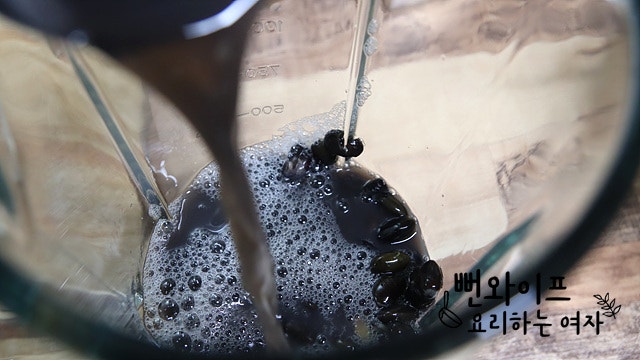
1 cup of boiled soybeans makes roughly 1 serving; just pour in about 2 cups to 2 1/2 cups of water (including the cooking liquid) and blend.
Keep in mind that the broth will thin out as the ice added at the end melts slightly, so blending it on the thicker side makes it just right when you eat.
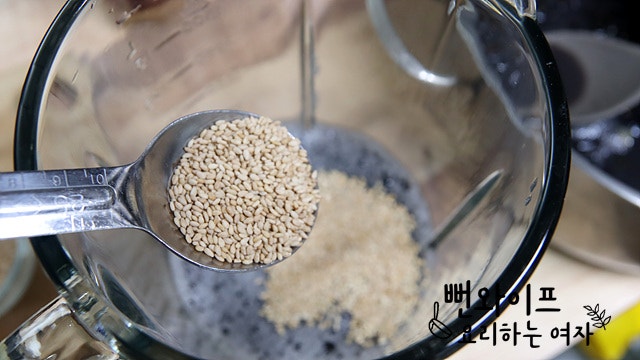
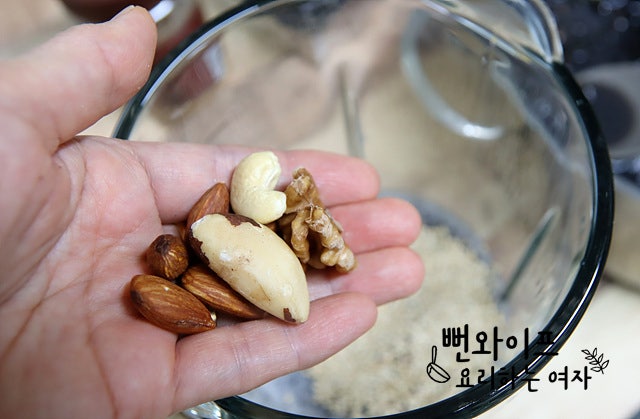
Add the toasted sesame seeds and nuts...
If you do not have nuts, unsweetened peanut butter is good too.
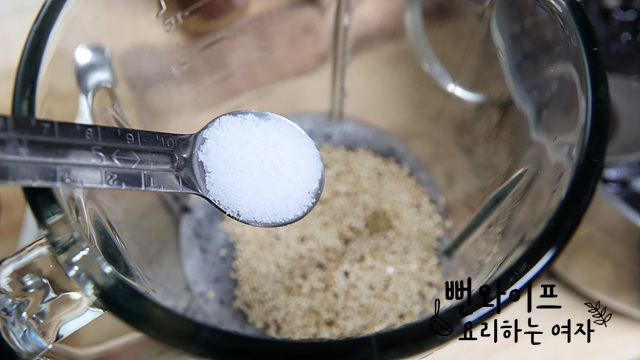
If this is for kongguksu you will eat right away, add 1/3~1/2 tsp of salt per 1 serving to season it lightly.
For the 5 servings of soybean broth I made, I added 5 cups of boiled soybeans, 12 cups of water, and 1 tbsp of salt.
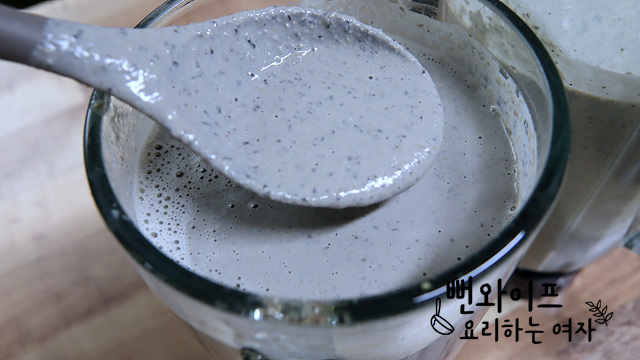
Blend finely, and the soybean broth is complete.
If you are not eating it right away, omit the salt, which can make it watery, blend a generous batch, and keep it in the refrigerator or freezer to enjoy all summer long.
Finish
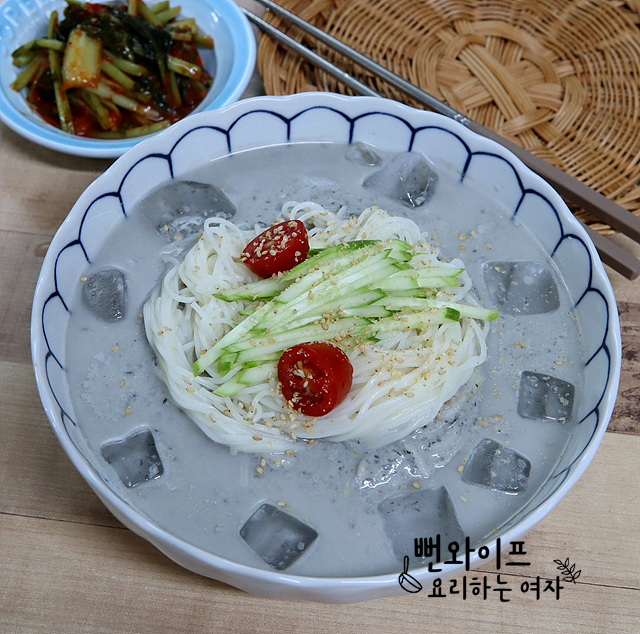
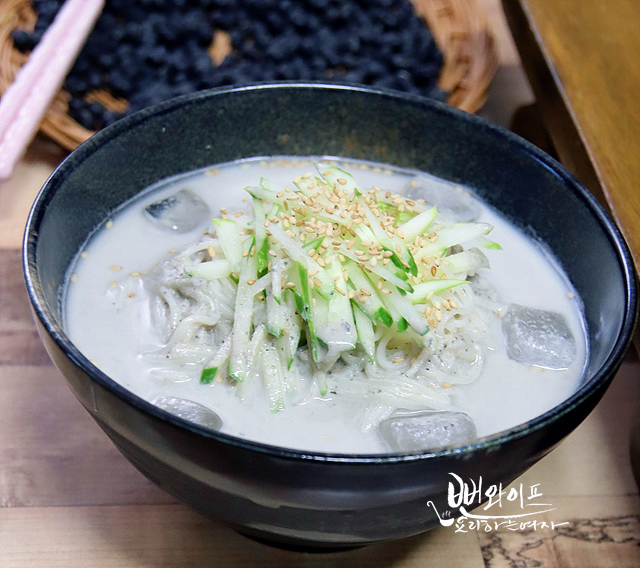
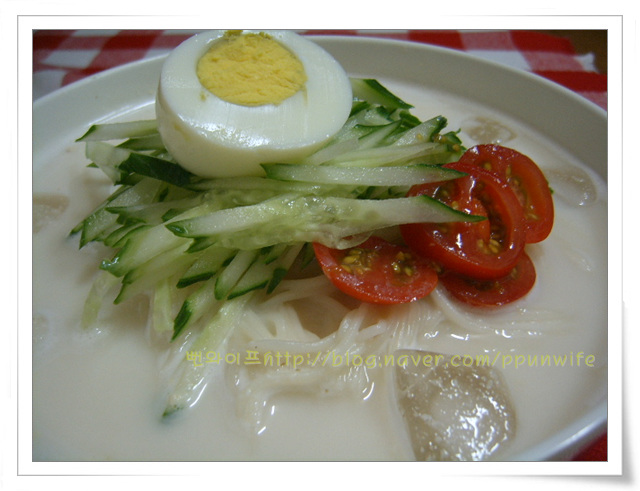
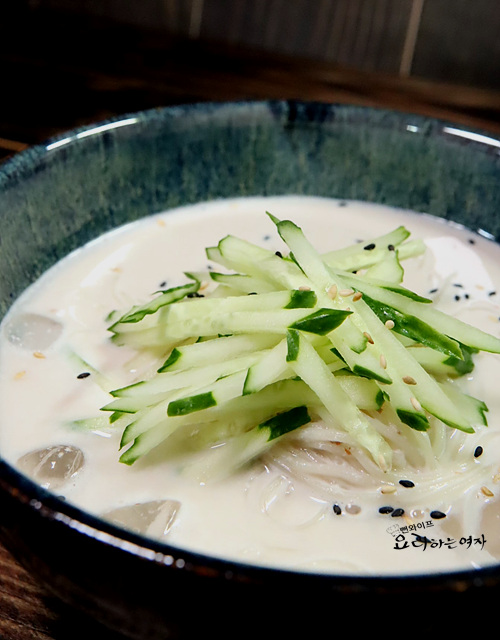
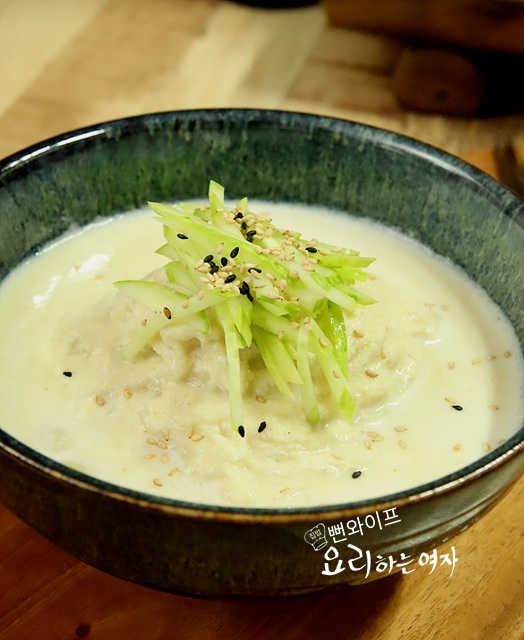
Boil the thin wheat noodles, place them in a bowl, pour in the soybean broth, and arrange the garnishes on top.
Float a few ice cubes, and your chilly, nutty kongguksu is complete.
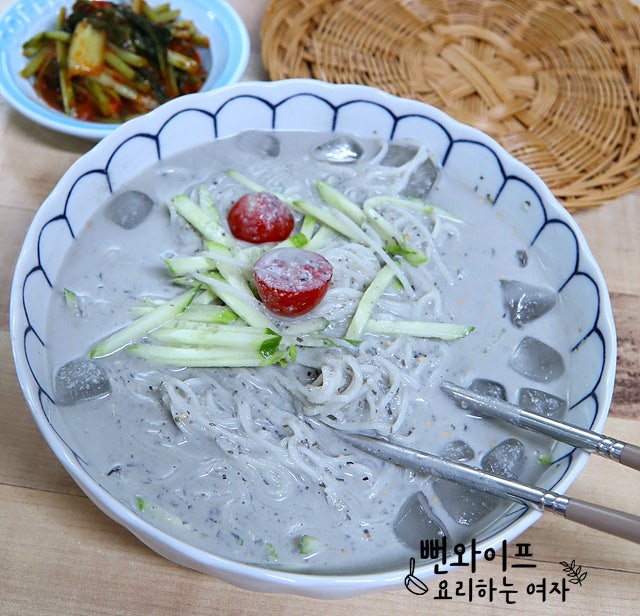
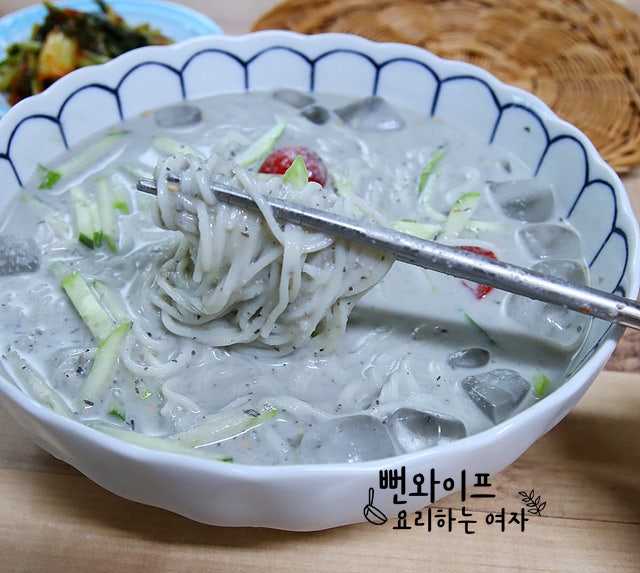
Mix well...
The soybean broth has nice body, so it clings to the noodles, giving you mouthfuls of rich nutty flavor with every bite of noodles.
Adding nuts makes it unbelievably delicious and nutty.
 Ppunwife's tips
- Soaking the soybeans thoroughly significantly shortens the boiling time.
- When boiling the soybeans, neatly skim off the foam once it comes to a rolling boil over high heat.
- They are cooked properly when you taste a soybean and it has no raw beany smell and tastes nutty.
- Do not discard the soybean cooking liquid; let it cool and blend it together with the beans.
- The consistency thins as the ice melts slightly, so blending it slightly thick is just right when eating.
FAQ
What can I use as a substitute when I do not have nuts?
You can use unsweetened peanut butter instead of nuts to get a rich, nutty flavor.
How do I check if the soybeans are properly cooked when boiling?
They are properly boiled when you taste them while simmering over medium-low heat and they have no raw beany smell and taste nutty.
What should I keep in mind when storing soybean broth in large batches ahead of time?
Adding salt in advance can make the broth thin out and spoil, so it is best to blend without salt when storing it in the refrigerator or freezer.