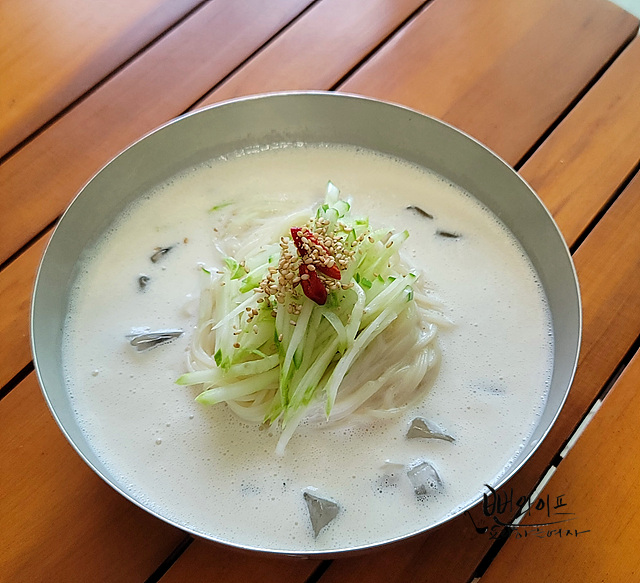
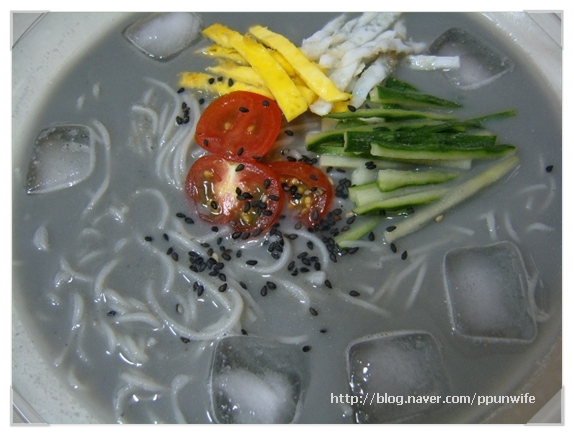
Refreshing Kongguksu (Cold Soybean Noodle Soup) with Seoritae
A refreshing summer noodle dish featuring soaked black soybeans blended thick with nuts and sesame seeds into a chilled broth.
Translated from Korean by AI and not yet checked by a native speaker. Amounts and numbers are taken directly from the original recipe. Read the Korean original →
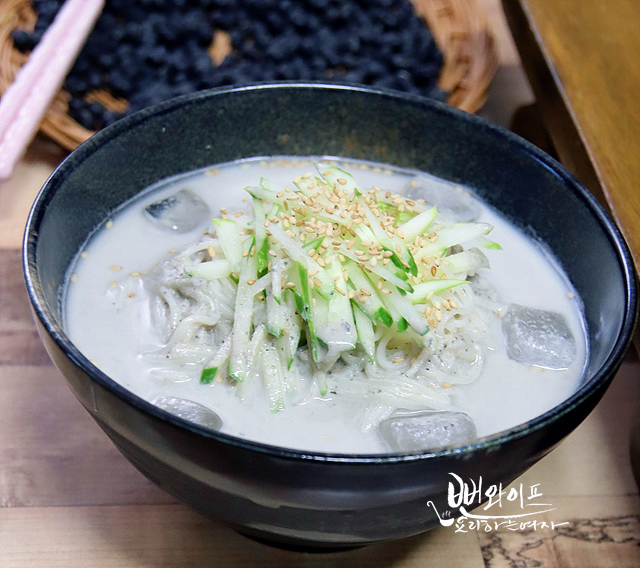
This kongguksu highlights deep nuttiness by thoroughly soaking and boiling black soybeans, then blending them together with toasted sesame seeds and nuts. Straining the blended broth through a sieve gives it a silky-smooth finish, ready to season with salt or sugar to your liking.
- Servings
- 5 servings
- Cook time
- 11 minprep not included
- Difficulty
- Medium
- Spiciness
- Not spicy
Ingredients
- Black soybeans (seoritae)2 cups
- Toasted sesame seeds4 tbsp
- Nuts1/2 cup
- Julienned cucumber
- Salt
- Sugar
- Water10 cups (for soaking, at least)
- Water5 cups (for blending, at least)
- Soaking them thoroughly in the refrigerator overnight for at least 6 hours helps shorten the boiling time.
- Pick out any debris or bad beans, wash them several times, and pour in at least 10 cups of water to soak. The beans absorb a lot of water and expand several times in volume, so use a large container and pour in plenty of water.
Steps
Prepare the ingredients
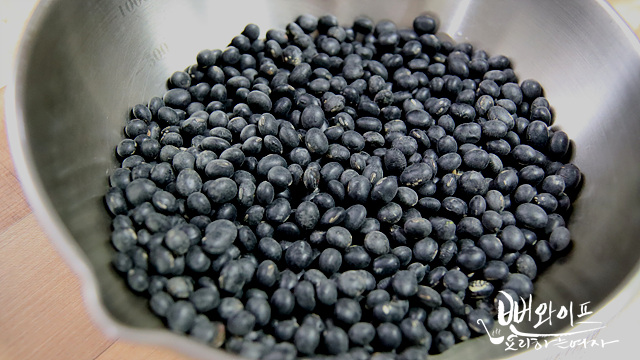
Today, instead of yellow soybeans, I prepared black soybeans (seoritae).
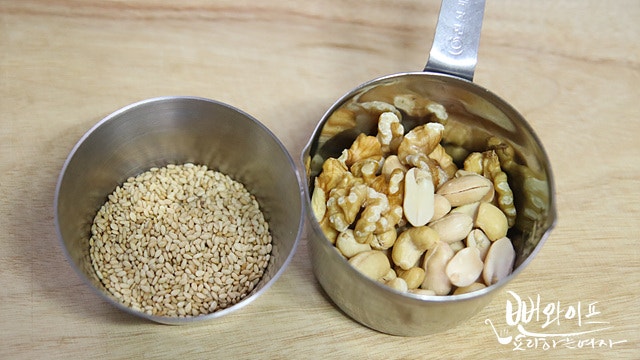
For a rich, nutty flavor, I also prepared toasted sesame seeds and nuts.
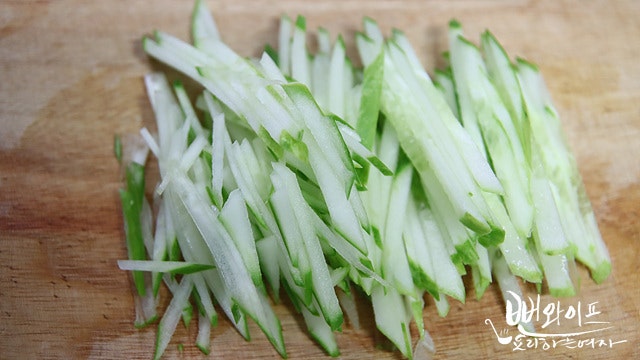
Crisp julienned cucumber goes wonderfully with kongguksu, so slice it into thin strips.
Wash and soak the beans
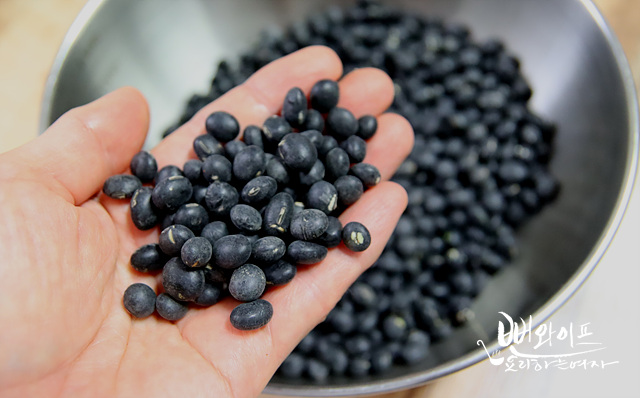
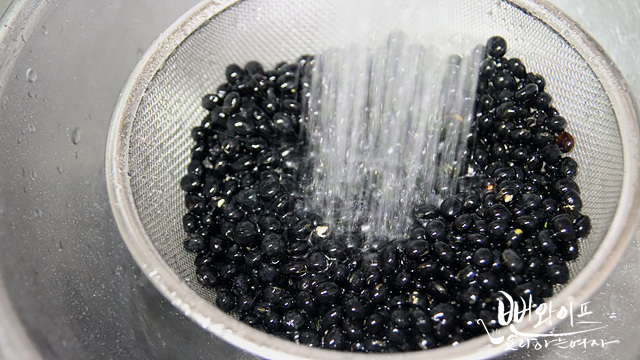
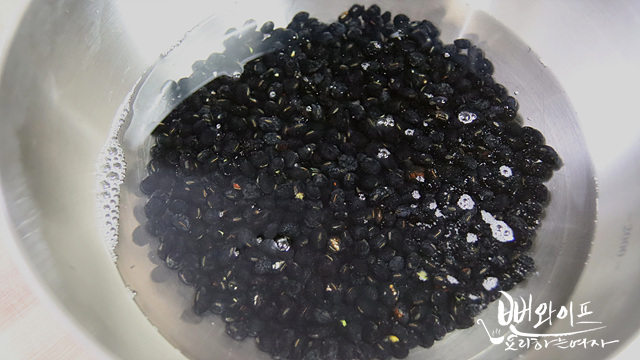
Pick out any debris or bad beans, wash them several times, and pour in at least 10 cups of water to soak.
Soaking them thoroughly in the refrigerator overnight for at least 6 hours helps shorten the boiling time.
The beans absorb a lot of water and expand several times in volume, so use a large container and pour in plenty of water.
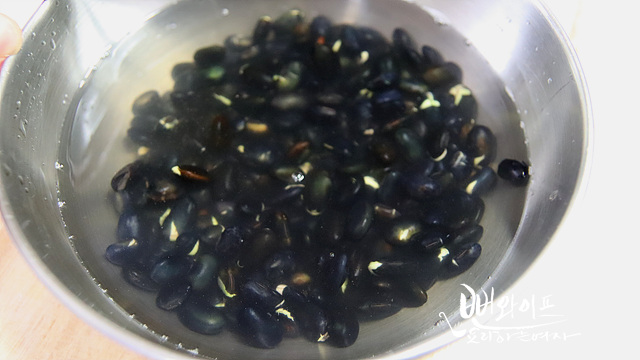
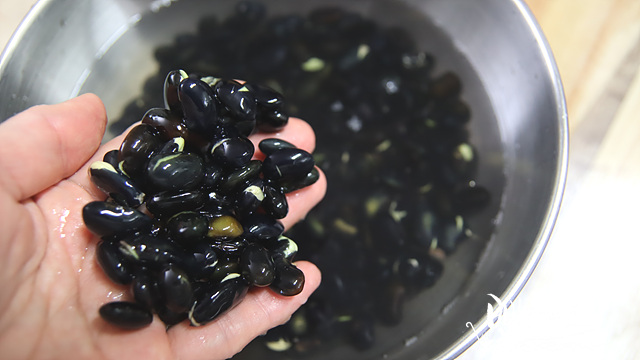
These are the beans soaked for over 7 hours.
The beans will plump up to about 2 to 3 times their size, and their skins will split. Soaking 2 cups of beans yielded 5 cups.
Boil the beans
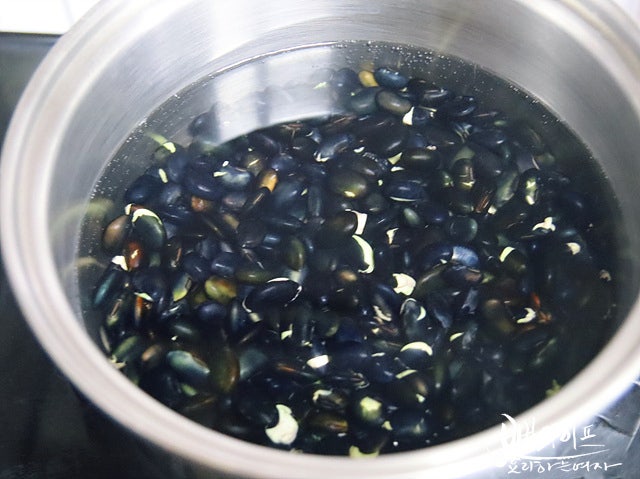
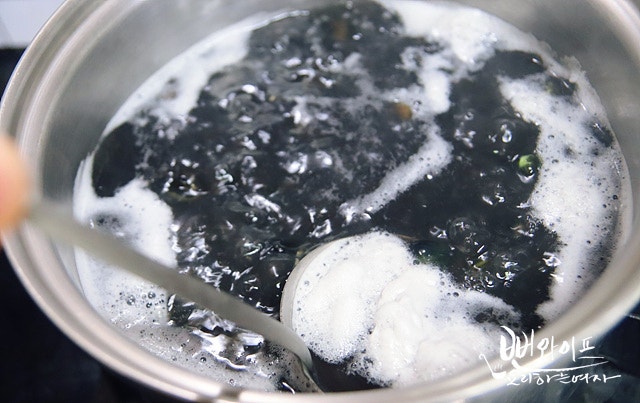
Do not throw away the soaking water; pour it in together to boil the beans.
Once it comes to a boil, skim off the foam and boil gently for about 7 minutes until tender.
Taste a bean while boiling; if it does not smell raw or beany and feels tender, it is cooked well.
Because the beans were soaked thoroughly, their volume does not change after boiling and yields about 5 cups. Leave the cooking liquid in the pot and let it cool down completely.
Blend the beans
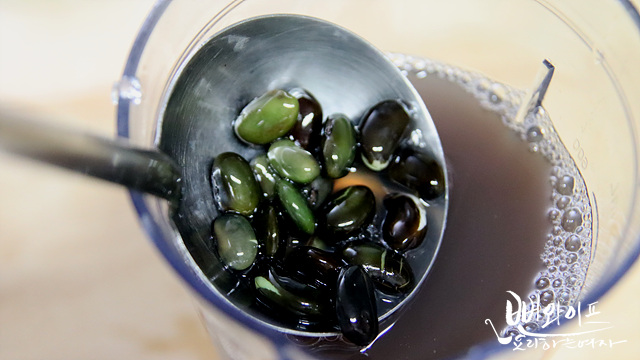
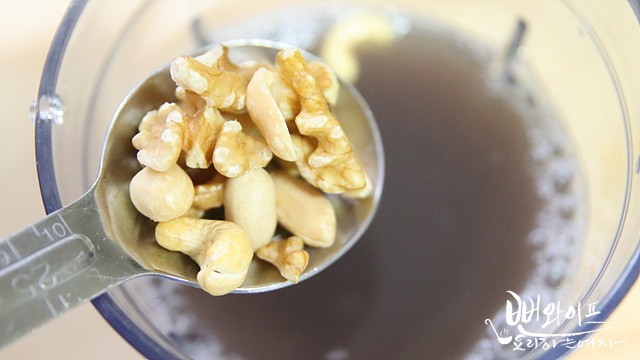
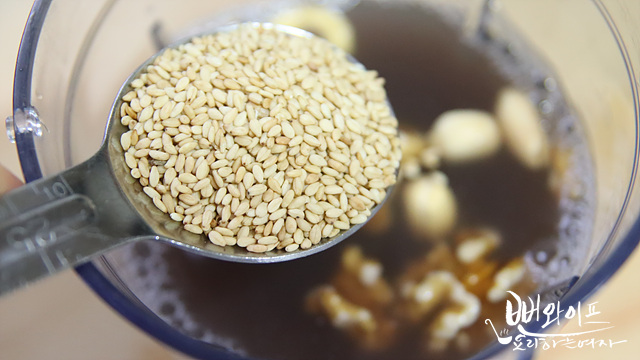
For every 2 cups of boiled beans, pour in at least 5 cups of liquid combining the cooking water and fresh water, add the nuts and sesame seeds together, and blend finely.
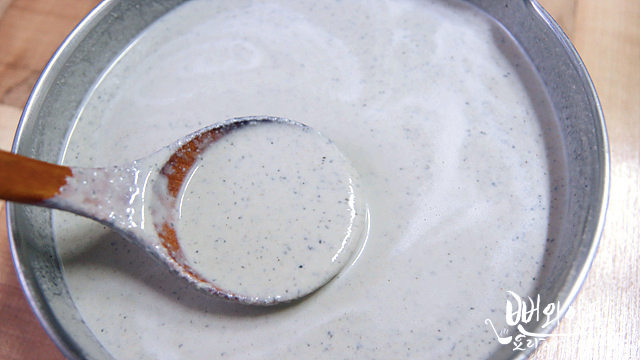
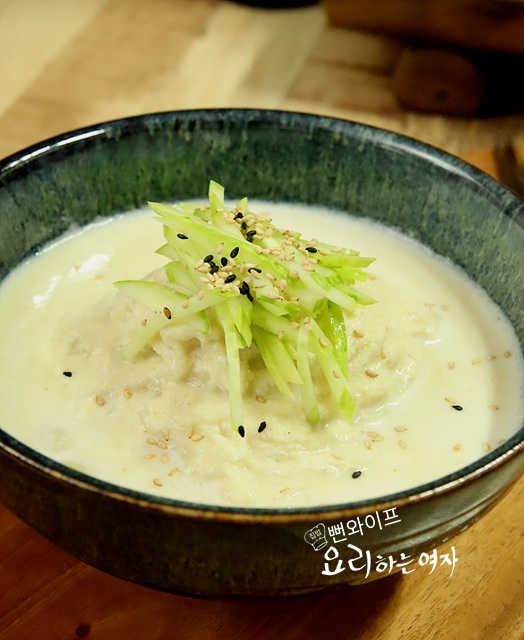
This is the silky soybean broth after blending and straining through a sieve.
Season lightly with salt to taste and chill in the refrigerator for an hour or two.
Boil the noodles
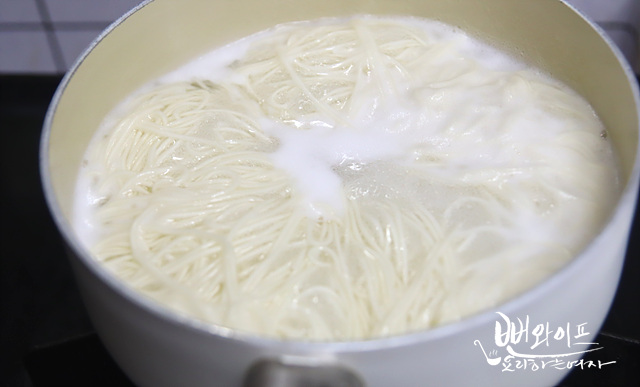
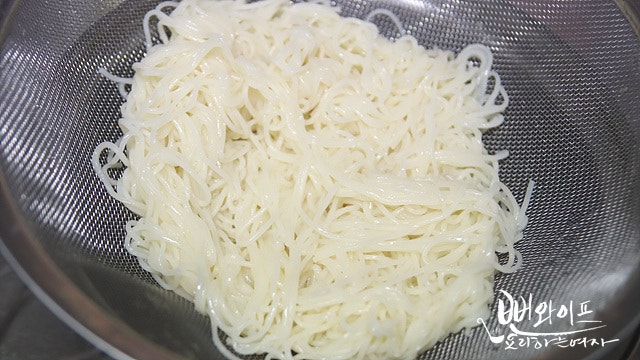
Boil the thin wheat noodles (somyeon) in rolling boiling water for about 3 minutes and 30 seconds, rinse them thoroughly in cold water while rubbing, and drain.
Assemble the dish
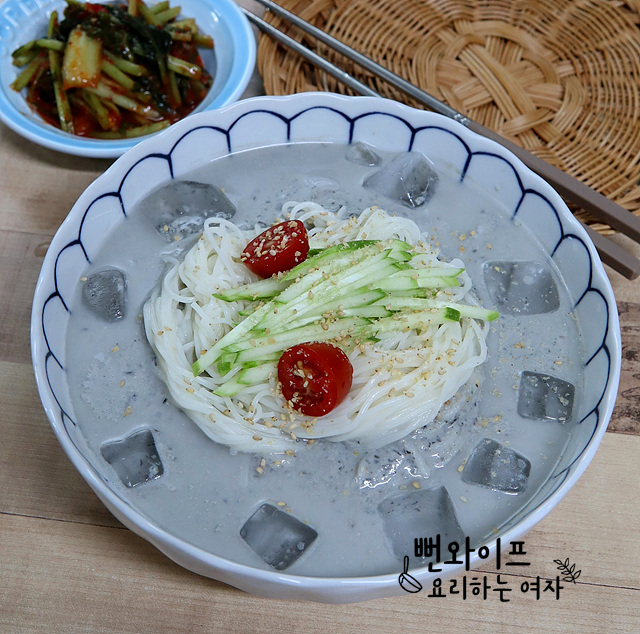
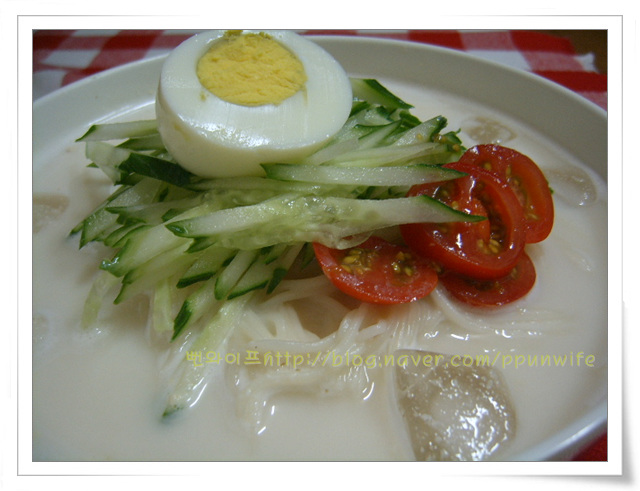
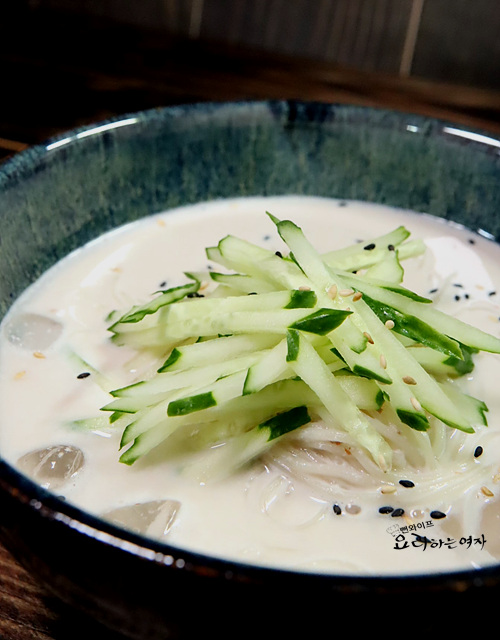
Place the noodles in a bowl, top with julienned cucumber, and pour in the chilled soybean broth.
Float a few ice cubes to keep it cold, and your kongguksu is complete.
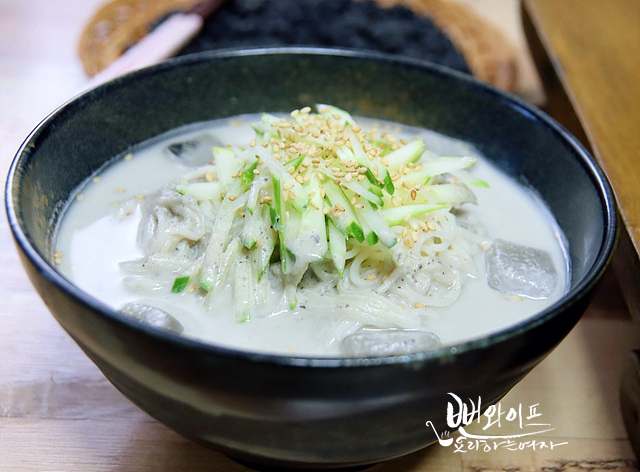
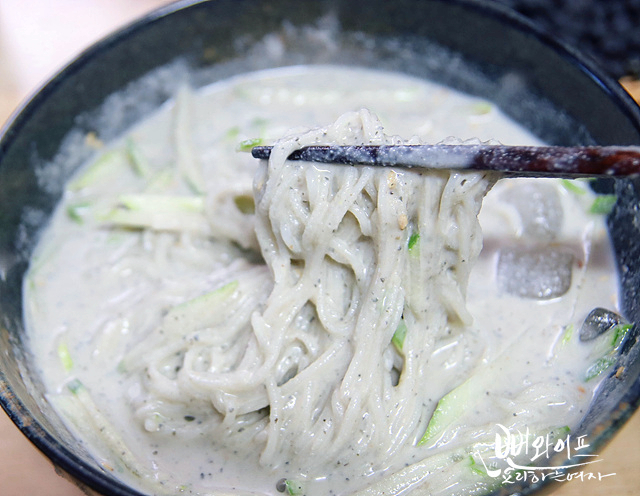
Straining it through a sieve makes the broth clean and pleasantly smooth without any gritty texture.
If you adjust the thickness so the broth is not too watery, it clings thickly to the noodles, letting you enjoy twice the nuttiness.
Beat the summer heat for a while with this refreshing, special treat of kongguksu.
 Ppunwife's tips
- Taste a bean while boiling; if it does not smell raw or beany and feels tender, it is cooked well.
- If you adjust the thickness so the broth is not too watery, it clings thickly to the noodles, letting you enjoy twice the nuttiness.
FAQ
How long should I soak black soybeans?
Soaking them thoroughly in the refrigerator for at least 6 hours will reduce the boiling time.
How can I tell when the beans are properly boiled?
Boil them for about 7 minutes after the water boils while skimming off foam; they are properly cooked when there is no raw beany smell and the texture is soft.
How can I use leftover soybean broth?
In addition to serving it as a chilled noodle broth, you can warm it up and drink it like warm soymilk.