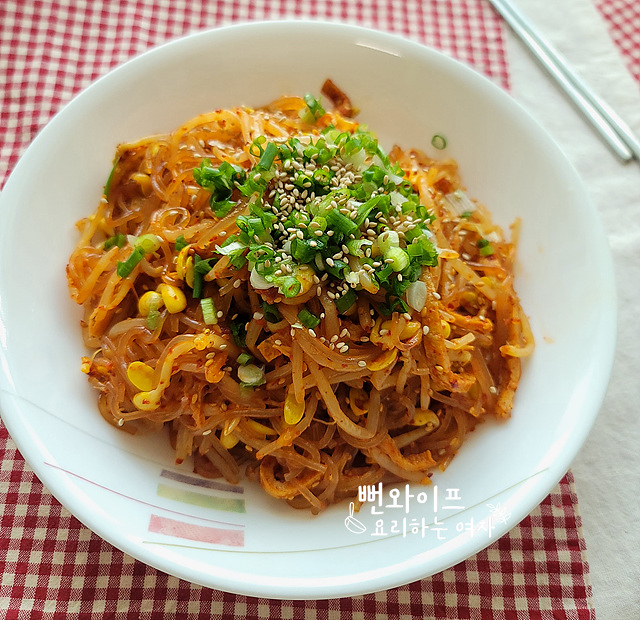
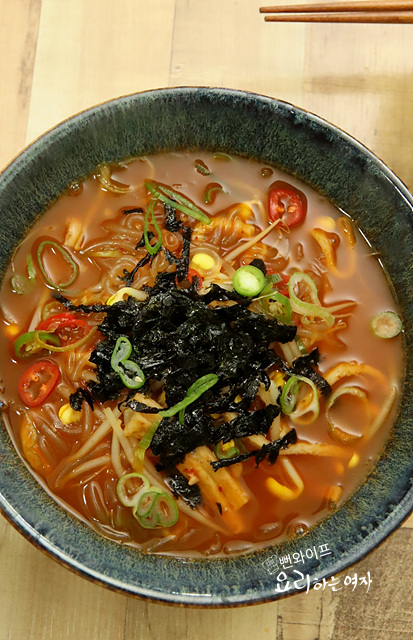
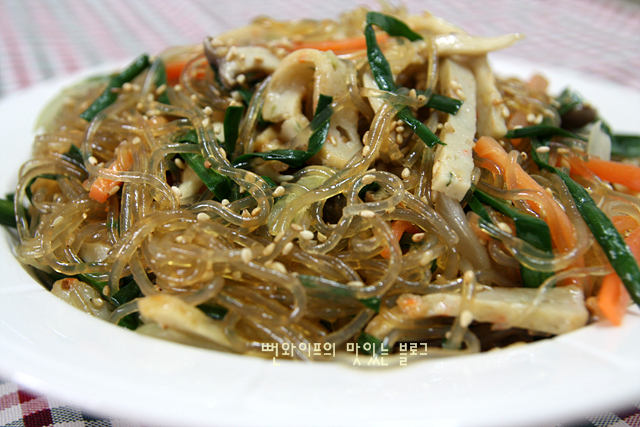
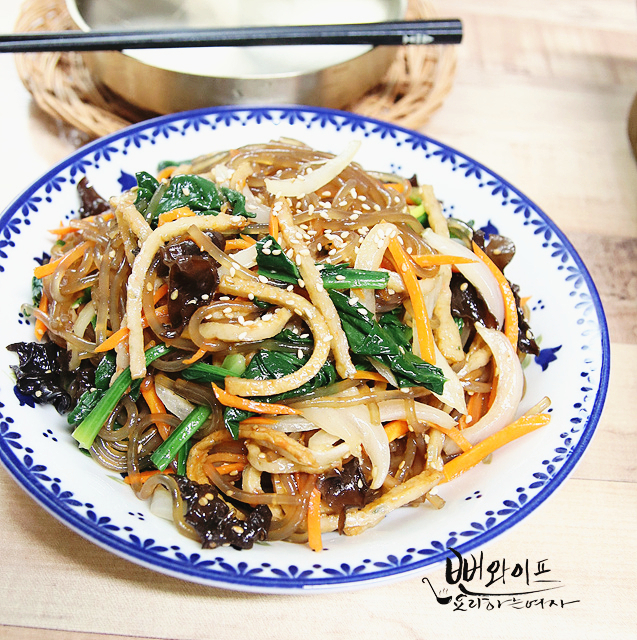
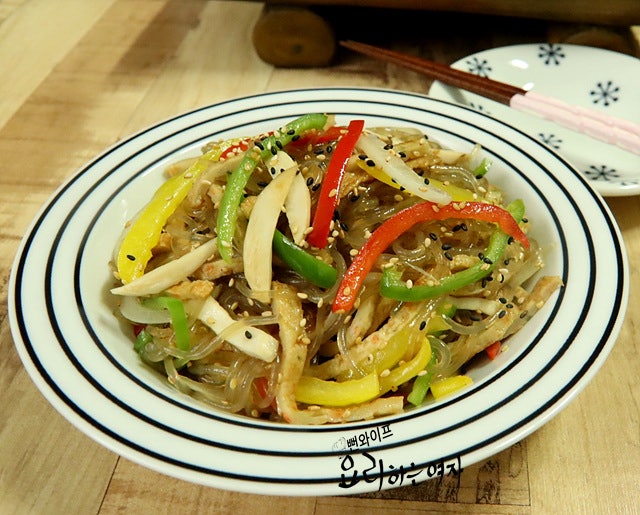
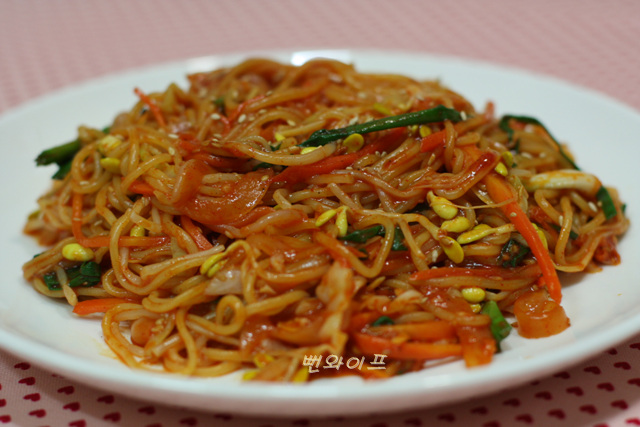
Spicy and Crunchy Kongnamul Japchae
A special japchae dish of crunchy soybean sprouts, chewy glass noodles, and fish cake stir-fried in a spicy seasoning.
Translated from Korean by AI and not yet checked by a native speaker. Amounts and numbers are taken directly from the original recipe. Read the Korean original →
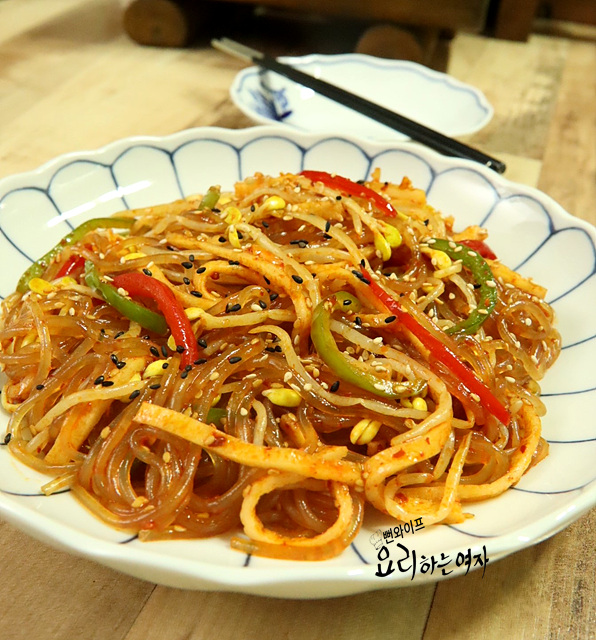
This is a special dish of crunchy soybean sprouts, chewy glass noodles, and fish cake stir-fried in a spicy seasoning so it never feels greasy. The glass noodles are soaked in boiling water and then stir-fried with the seasoning, keeping them chewy without turning soggy. The secret is blanching the soybean sprouts and rinsing them in cold water to keep them crunchy.
- Servings
- 2–3 servings
- Difficulty
- Medium
- Spiciness
- Spicy
Ingredients
Ingredients
- Soybean sprouts200 g
- Sweet potato glass noodles (dangmyeon)100 g
- Square fish cake (eomuk)2 sheets
- Onion1/4
- Green and red bell peppers1/4 each
- Minced garlic1/2 tbsp
- Gochugaru (Korean chili flakes)1 tbsp
Glass noodle seasoning
- Gin (or brewed soy sauce (yangjo-ganjang))1 tbsp
- Oyster sauce1 tbsp
- Mirin (cooking rice wine)1 tbsp
- Sugar1/2 tbsp
- Water1/2 cup
Japchae seasoning
- Gin (or brewed soy sauce (yangjo-ganjang))1 tbsp
- Toasted sesame oil1 tbsp
- Toasted sesame seeds1 tbsp
- Ground black peppera little
- You can also use carrots or mushrooms.
- It tastes better when you use 2 to 3 times more soybean sprouts than glass noodles. Since they wilt while blanching, you will hardly see them in the finished japchae. It is definitely tastier when you use plenty of soybean sprouts.
- It is also delicious made with just fish cake and soybean sprouts without any other vegetables.
- Pour rolling boiling water over the glass noodles and soak them for about 10 minutes.
Steps
Soak the glass noodles
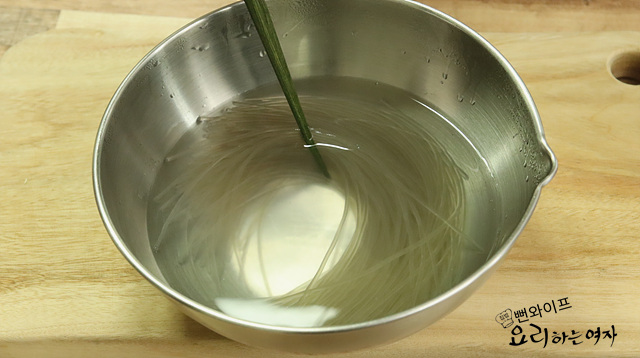
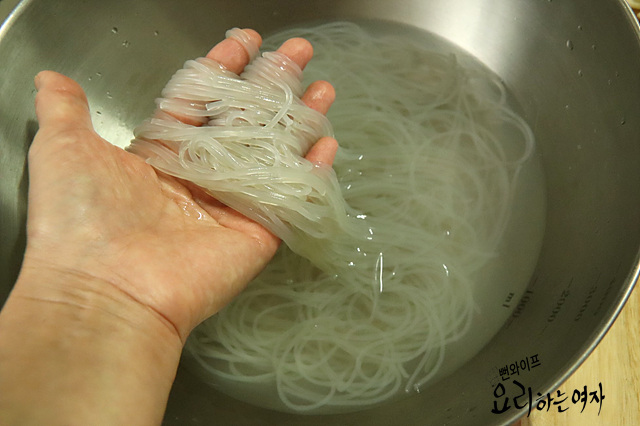
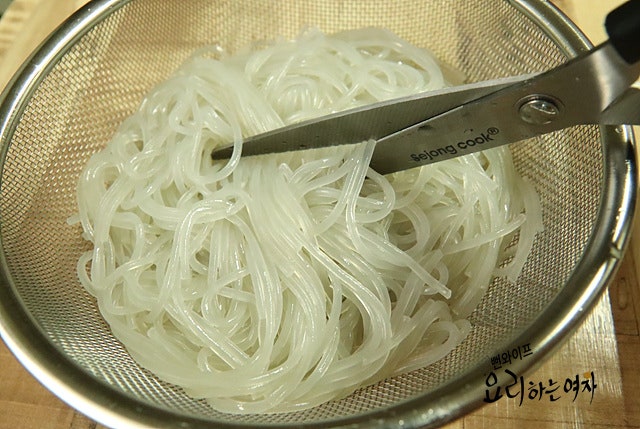
Pour rolling boiling water over the sweet potato glass noodles (dangmyeon) and soak them for about 10 minutes.
Soaking them this way has the same effect as boiling them in water for 7 to 8 minutes.
You can finish cooking them completely while stir-frying, so soaking them makes cooking with glass noodles very easy.
Drain the water and cut them into easy-to-eat lengths.
Blanch the soybean sprouts
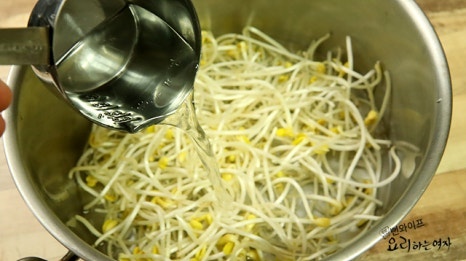
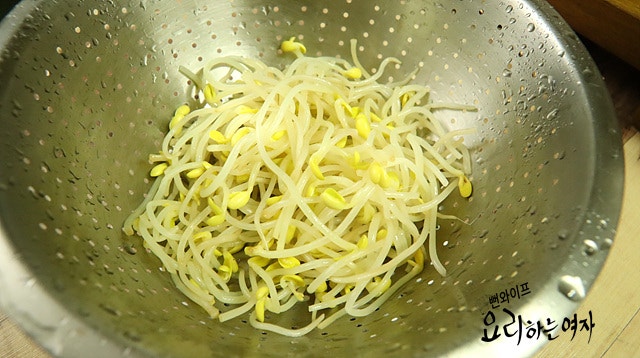
Pour in enough water to cover the soybean sprouts, cover with a lid, and boil over high heat for 5 to 6 minutes until the raw smell disappears.
Turn off the heat and let them steam in the residual heat for 2 to 3 minutes, and they will turn out crunchy without any raw smell.
Rinse them in cold water to remove the heat, then drain them in a colander.
When making seasoned soybean sprouts (kongnamul muchim), you just let them cool without rinsing in cold water and toss them, but here I gave them a cold water shower to stop them from wilting since they will be stir-fried into the japchae.
Slice and stir-fry the fish cake and vegetables
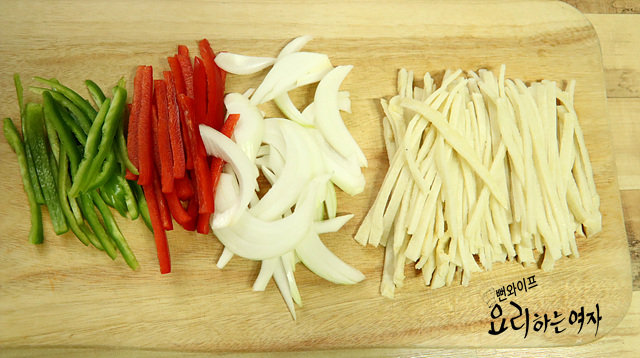
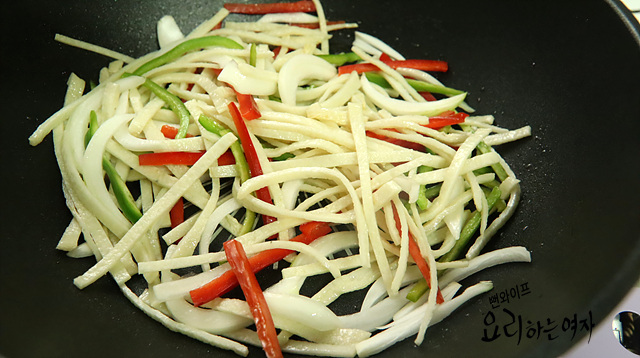
Thinly julienne the square fish cake (eomuk) and vegetables.
Oil a heated pan and stir-fry them so they do not wilt too much.
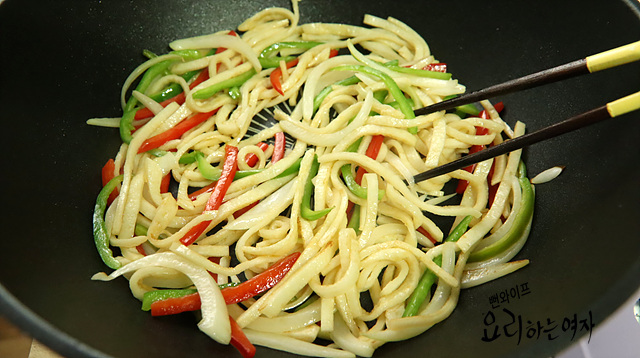
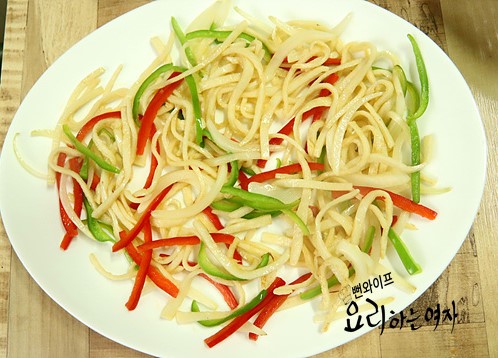
Add 2 to 3 pinches of salt and stir-fry. Once they have wilted slightly, spread them out on a plate to cool off the heat.
Stir-fry the glass noodles
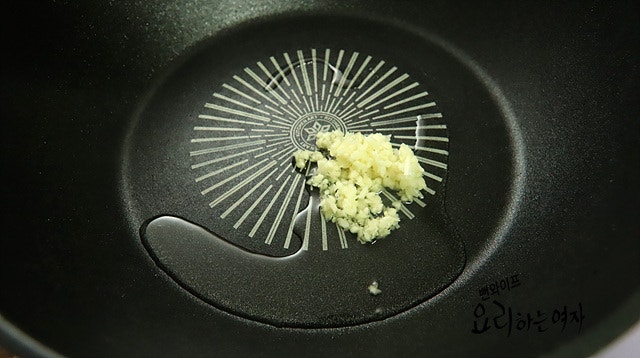
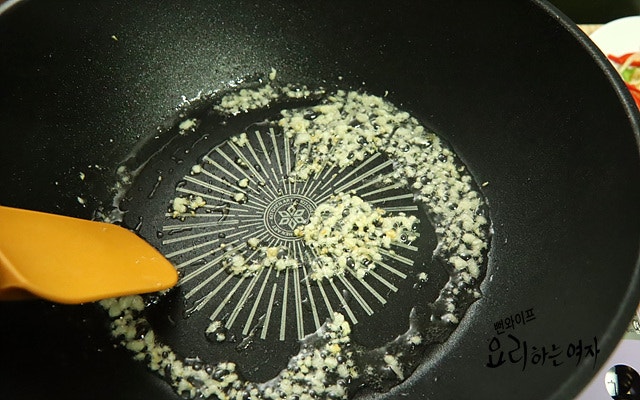
Heat the pan, add cooking oil, and stir-fry 1/2 tbsp of minced garlic until golden to release its aroma.
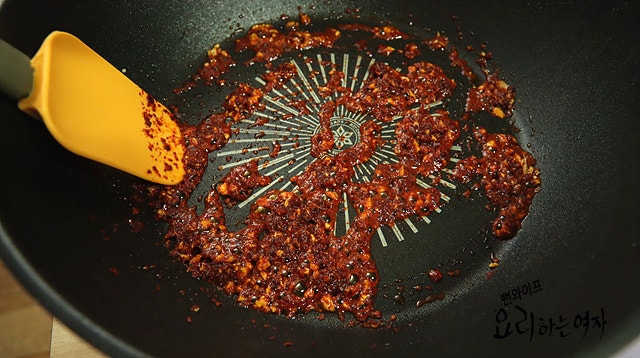
Add 1 tbsp of gochugaru (Korean chili flakes) and stir-fry so it does not burn.
If you have chili oil, you can use 2 tbsp of that instead.
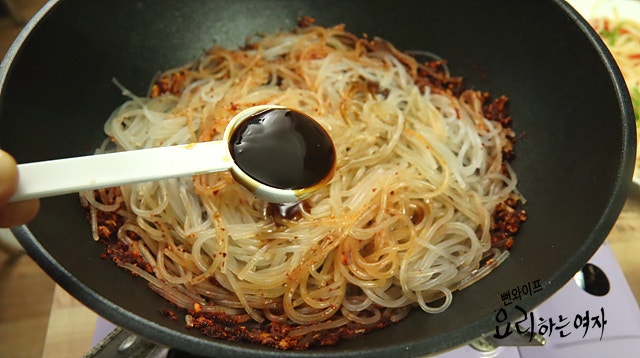
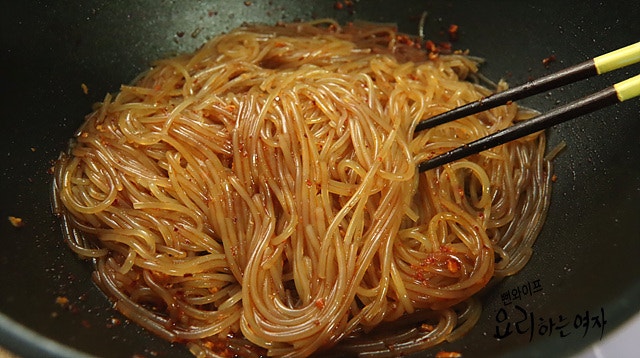
Add the glass noodles along with 1/2 cup of water, 1 tbsp of regular soy sauce (jin-ganjang), 1 tbsp of oyster sauce, 1 tbsp of mirin (cooking rice wine), and 1/2 tbsp of sugar, and stir-fry vigorously.
By the time the moisture has completely evaporated and the seasoning has soaked in, the slightly undercooked glass noodles will be cooked just right.
If you stir-fry fully cooked glass noodles, they will become soggy and have an unpleasant texture once finished.
Stir-frying slightly undercooked glass noodles this way lets you enjoy them chewy and delicious.
Finish the japchae
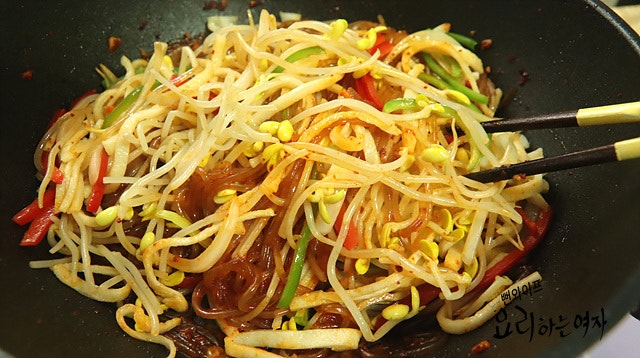
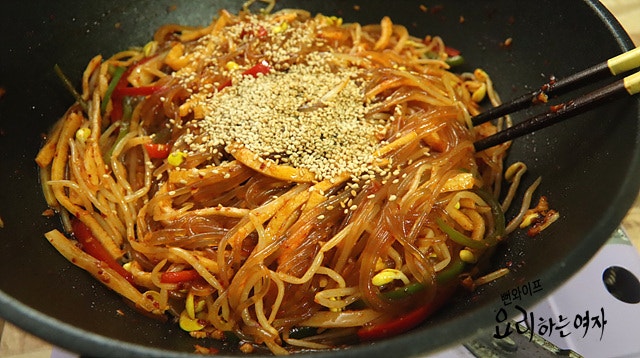
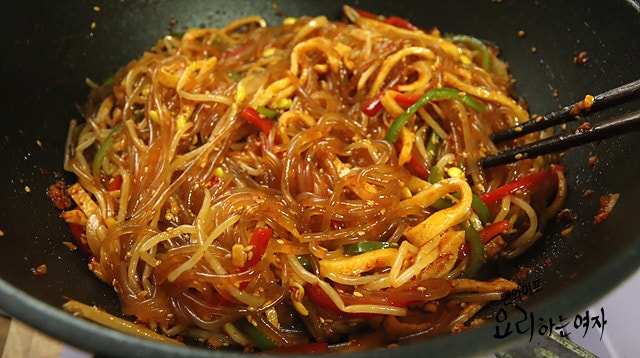
Add all of the stir-fried vegetables and fish cake, and add 1 tbsp of regular soy sauce (jin-ganjang) to make the final seasoning adjustment.
If it tastes bland or lacks sweetness, adjust the seasoning, then toss with 1 tbsp of toasted sesame oil, 1 tbsp of toasted sesame seeds, and a little ground black pepper to finish the kongnamul japchae (glass noodles with soybean sprouts).
 Ppunwife's tips
- Pour in enough water to cover the soybean sprouts, cover with a lid, boil over high heat for 5 to 6 minutes until the raw smell disappears, turn off the heat, and let them steam in the residual heat for 2 to 3 minutes; they will turn out crunchy without any raw smell.
- If you stir-fry fully cooked glass noodles, they will become soggy and have an unpleasant texture once finished. Stir-frying slightly undercooked glass noodles lets you enjoy them chewy and delicious.
FAQ
Can I soak the glass noodles instead of boiling them beforehand?
Soaking them in rolling boiling water for about 10 minutes gives the same result as boiling them in water. Stir-frying them with the sauce afterward cooks them through so they stay chewy without turning soggy.
Why do you rinse the blanched soybean sprouts in cold water?
Rinsing them in cold water removes the heat to keep them from wilting further from residual heat and preserves their distinctive crunchy texture.
Can I use other vegetables instead of bell peppers?
You can add carrots or mushrooms according to your taste, or simply make it with just fish cake and soybean sprouts without extra vegetables and it will still be delicious.