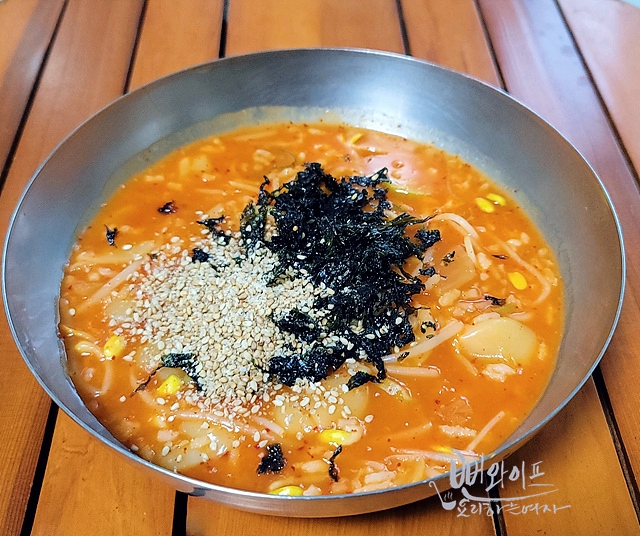
Spicy Kimchi Kongnamul Juk (Kimchi and Soybean Sprout Porridge)
A spicy, refreshing special gaengsigi porridge made by simmering aged sour kimchi and soybean sprouts with webfoot octopus.
Translated from Korean by AI and not yet checked by a native speaker. Amounts and numbers are taken directly from the original recipe. Read the Korean original →

This porridge serves 3 to 4, combining aged sour kimchi and soybean sprouts with chewy webfoot octopus for a refreshing depth and rich umami. It is seasoned with kimchi brine and anchovy broth, and stirred well once the rice grains soften and the broth thickens so it does not scorch. It makes a satisfying, comforting meal for an upset stomach or hangover relief after drinking.
- Servings
- 3–4 servings
- Difficulty
- Easy
- Spiciness
- Spicy
Ingredients
- Aged sour kimchi200 g
- Webfoot octopus (jjukkumi) (or small octopus (nakji), squid)250 g
- Soybean sprouts200 g
- Cooked rice1.5 bowls, 300 g (one and a half bowls)
- Large green onion (daepa)a little
- Cheongyang chili pepper (hot green chili)1
- Anchovy broth (or 6 cups water + 3 broth tablets)6 cups
- Kimchi brine1/2 cup
- Sand lance fish sauce (or anchovy fish sauce, salted fermented shrimp (saeujeot))1 tbsp
- Toasted sesame oil
- Ground toasted sesame seeds
- Seaweed flakes
- Aged sour kimchi or well-fermented mugeonji is essential for gaengsigi, and adding more soybean sprouts than kimchi makes the soup even more refreshing and delicious.
- Adding well-fermented kimchi brine packed with seasonings eliminates the need for separate spices, making the broth refreshing and flavorful.
- You can replace webfoot octopus with small octopus or squid, or simply leave it out if you do not have any.
Steps
Chop the ingredients

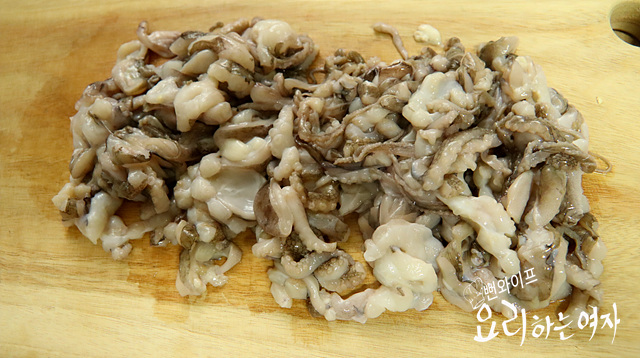

Finely chop the aged sour kimchi into bite-sized pieces, and cut the webfoot octopus (jjukkumi) not too small.
Seafood shrinks as it cooks, so if you cut it too small, it loses its shape entirely.
Finely slice the large green onion (daepa) and Cheongyang chili pepper.
Simmer

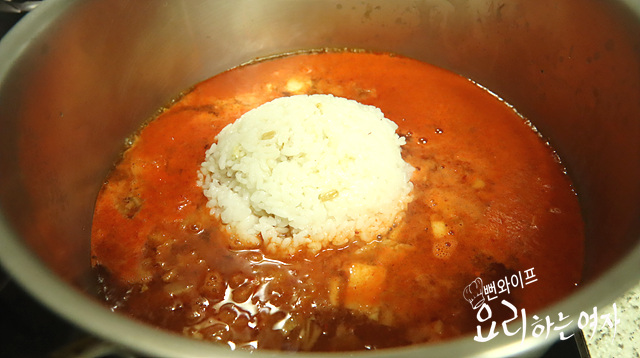
Add 6 cups of anchovy broth to a pot.
I did not have prepared broth ready, so I used 6 cups of water and 3 broth tablets.
Add the cooked rice, kimchi, and 1/2 cup of kimchi brine.


Simmer so the rice breaks apart evenly and cooks until soft.



Once the broth begins to thicken, add the soybean sprouts and webfoot octopus to simmer.
From this point on, stir diligently all the way to the bottom so it does not scorch.
Once the raw sprout smell is gone and they are cooked...



Season by adding 1 tbsp of sand lance fish sauce (or anchovy fish sauce, soup soy sauce, or salted fermented shrimp).
Finally, add the green onion and Cheongyang chili pepper, and turn off the heat once their aroma releases to finish.
Complete

A clean, refreshing bowl of gaengsigi is complete.
Ladle it into a bowl and finish with freshly ground toasted sesame seeds, seaweed flakes, and a touch of toasted sesame oil, and it will taste just as good as store-bought kimchi porridge.
Cook a generous batch and it tastes wonderful the next day, making it an ideal kimchi kongnamul juk for soothing hangovers after heavy drinking.

Adding seafood like webfoot octopus provides a pleasant chew, while giving the broth far deeper flavor and richer umami.

Though it is a simple porridge, it is packed with nutrients and great taste.
This single bowl makes a complete meal, and working up a sweat while eating it will revive you from a hangover and restore your energy.
 Ppunwife's tips
- Seafood shrinks as it cooks and loses its shape if cut too small, so it is best not to chop it too finely.
- Once you add the soybean sprouts and webfoot octopus, stir diligently all the way to the bottom of the pot to prevent scorching.
FAQ
Can I use other ingredients instead of webfoot octopus?
You can substitute small octopus or squid, or you can omit the seafood entirely.
How large should I cut the webfoot octopus?
Seafood shrinks as it cooks, so it is best not to cut it too finely.
How do I keep the porridge from burning at the bottom?
Once the broth begins to thicken, add the soybean sprouts and webfoot octopus, then stir constantly down to the bottom of the pot as it simmers so it does not stick.
Can I use seasonings other than sand lance fish sauce to adjust the saltiness?
You can season it instead with anchovy fish sauce, soup soy sauce (guk-ganjang), or salted fermented shrimp (saeujeot).