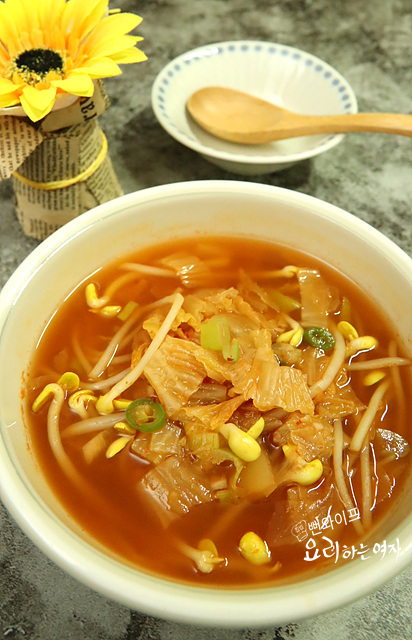
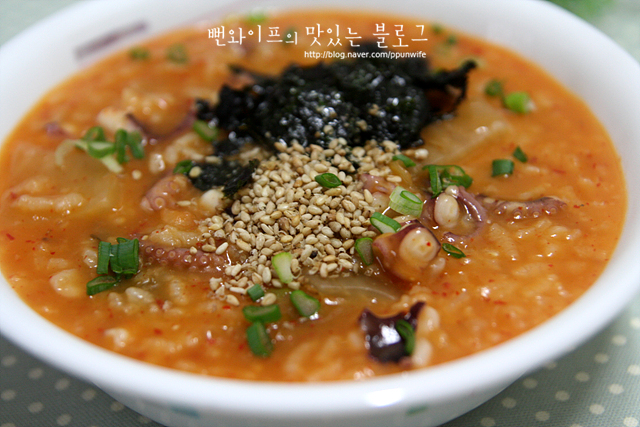
Gaengsigi Juk (Kimchi and Rice Porridge)
A refreshing Gyeongsang-do specialty porridge made by simmering aged sour kimchi and soybean sprouts with cold rice and rice cakes.
Translated from Korean by AI and not yet checked by a native speaker. Amounts and numbers are taken directly from the original recipe. Read the Korean original →
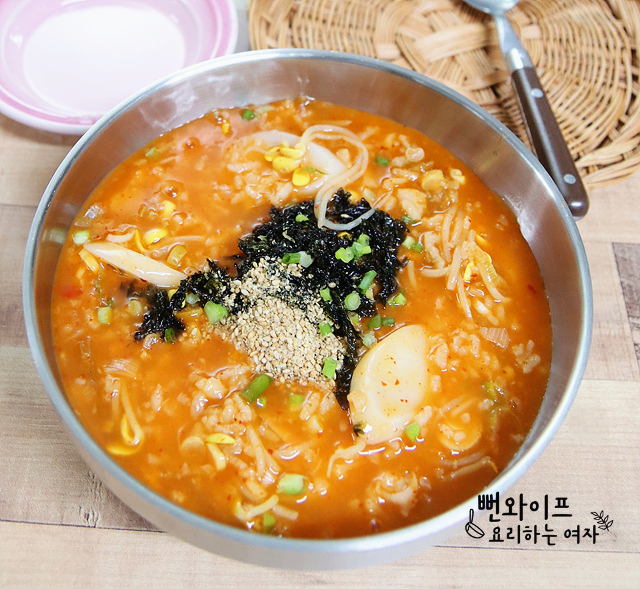
This comforting Gyeongsang-do specialty porridge is made by gently simmering aged sour kimchi, soybean sprouts, and cold rice in broth. Soybean sprouts add a refreshing broth flavor and a crisp texture, making it perfect for soothing the stomach or as a light meal. Depending on your preference, you can also add noodles or ramen noodles instead of rice cakes for a heartier dish.
- Servings
- 2 servings
- Difficulty
- Easy
- Spiciness
- Mildly spicy
Ingredients
- Aged sour kimchi100 g (1/2 cup)
- Soybean sprouts100 g
- Cooked rice1 bowl
- Sliced rice cakes (tteokguk-tteok)100 g
- Large green onion (daepa)1/2 stalk
- Kimchi brine1/2 cup
- Anchovy broth4 cups
- Seaweed flakes
- Ground toasted sesame seeds
- You can also use ramen noodles or thin noodles instead of sliced rice cakes.
Steps
Prepare the ingredients
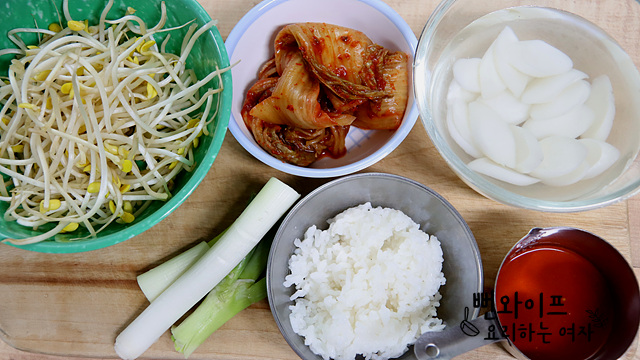
For the gaengsigi juk ingredients, I prepared soybean sprouts, aged sour kimchi, sliced rice cakes (tteokguk-tteok), cold cooked rice, large green onion (daepa), and kimchi brine.
You can also use ramen noodles or thin noodles instead of sliced rice cakes.
Cut the ingredients
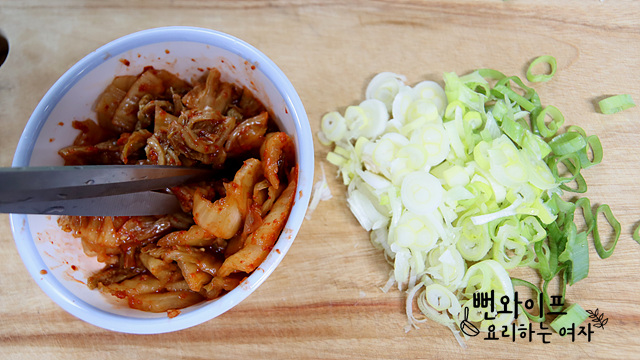
Cut the aged sour kimchi into bite-sized pieces.
Thinly slice the large green onion into rounds.
Boil
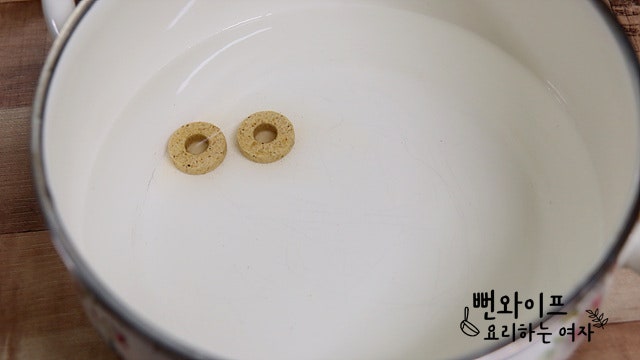
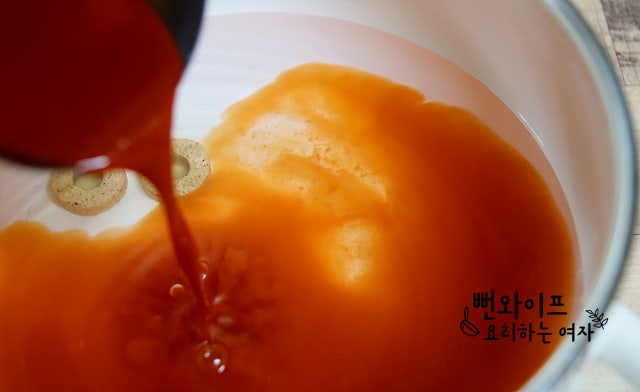
Instead of brewed anchovy broth, I prepared broth tablets for the pot.
Add 2 tablets along with 4 cups of water and 1/2 cup of kimchi brine.
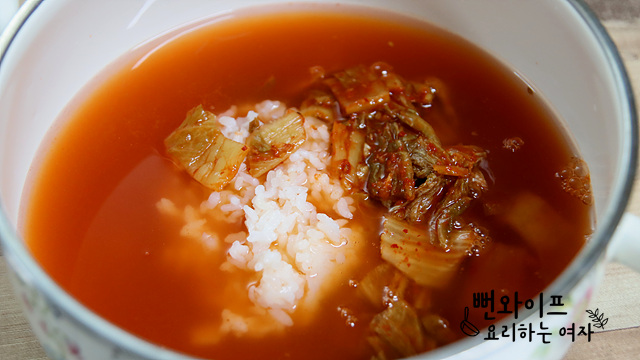
Add the aged sour kimchi and cooked rice, then bring to high heat.
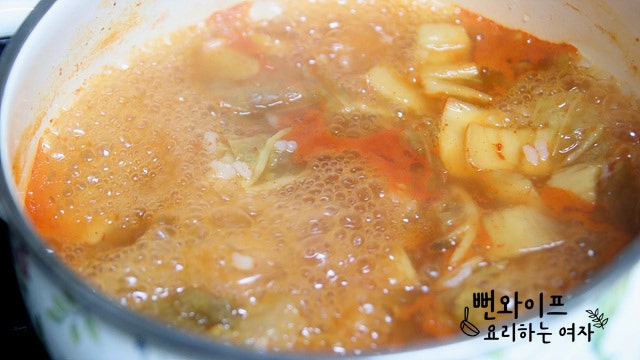
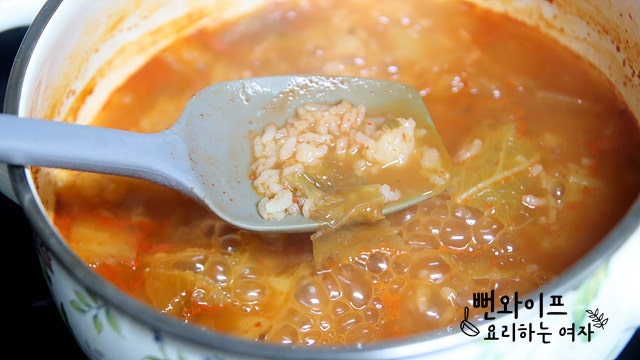
Once it starts boiling vigorously, reduce to medium heat and simmer so the rice softens and spreads out.
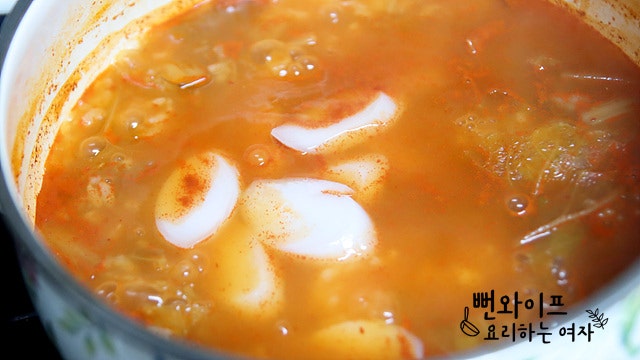
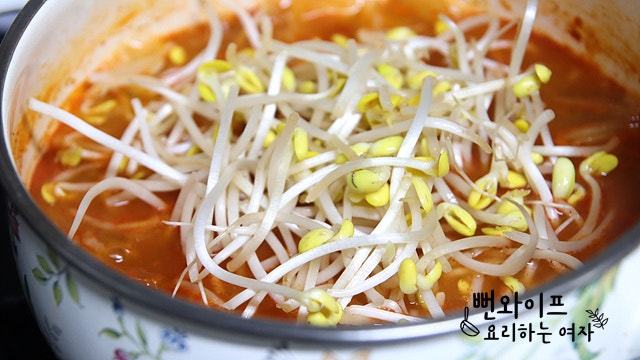
Add the sliced rice cakes and soybean sprouts and cook through.
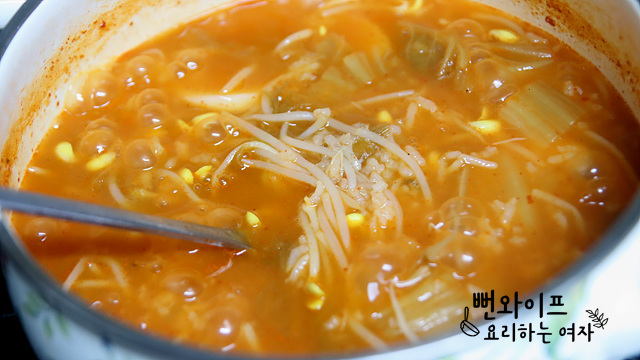
Once the raw bean smell of the soybean sprouts is gone, they are fully cooked.
Because I added kimchi brine, I did not add separate seasoning.
Taste the broth, and if it is bland, season with fish sauce, tuna extract sauce (chamchi-aek), or similar.
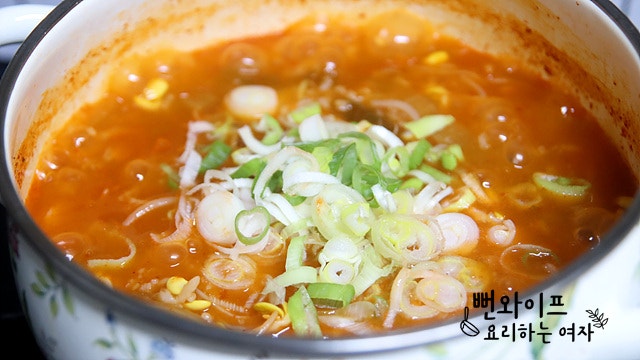
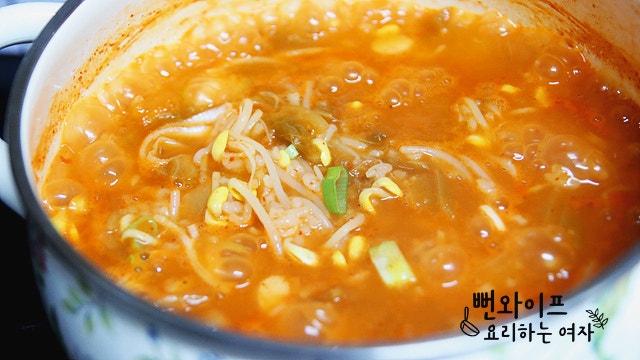
Finish by adding the large green onion and boiling quickly.
Complete
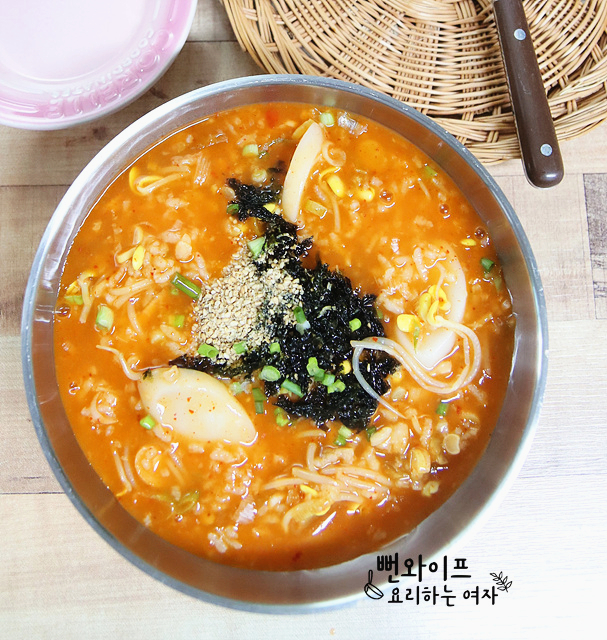
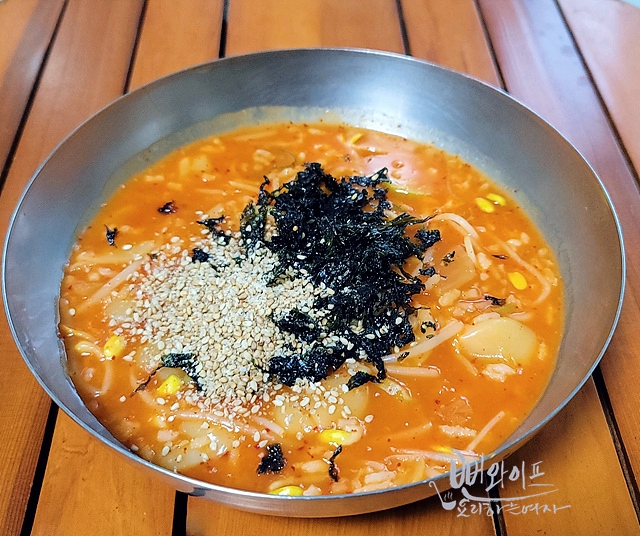
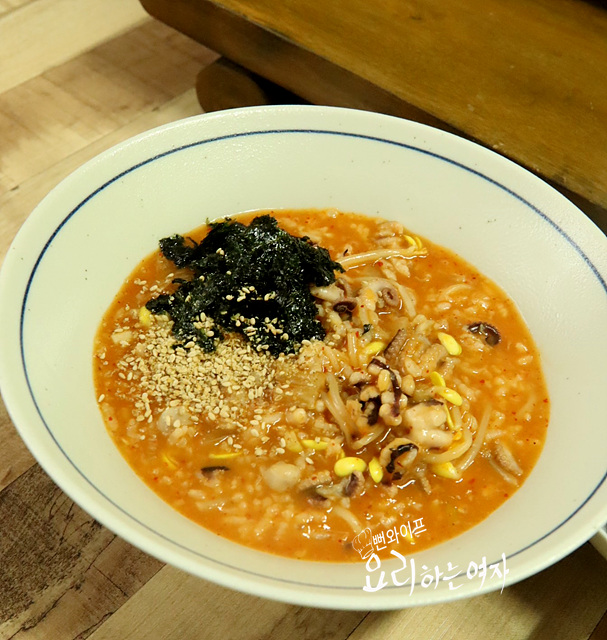
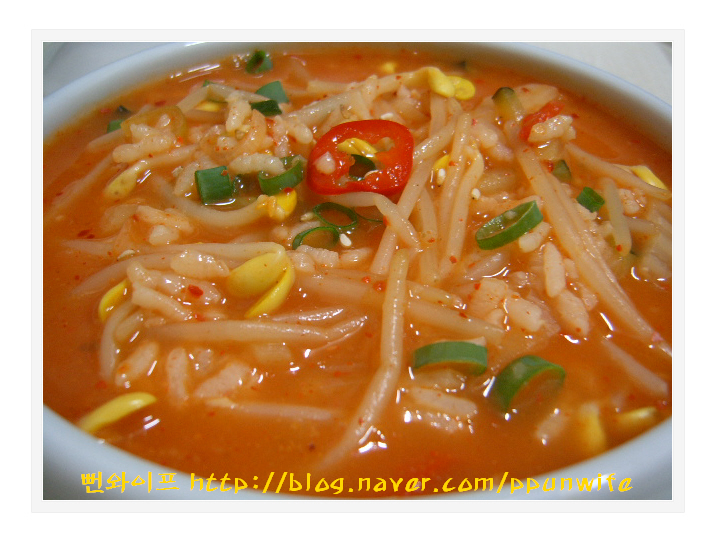
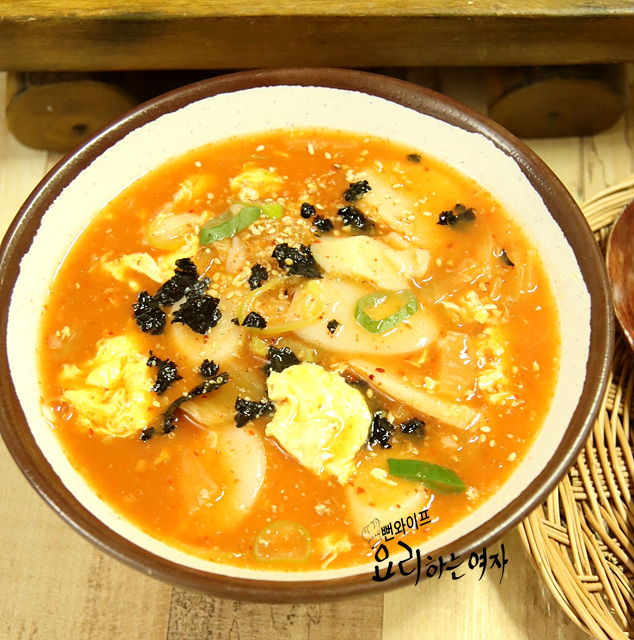
The gaengsigi juk is complete.
Once the ingredients are ready, all you have to do is quickly boil it, so it is truly simple.
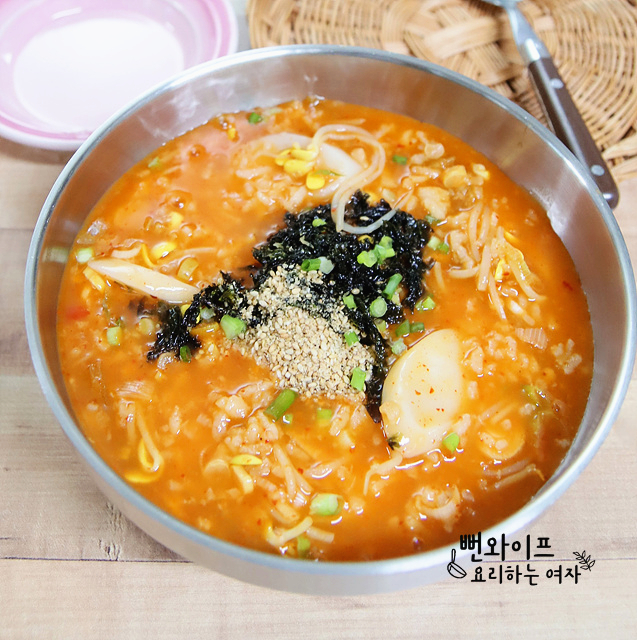
Gaengsigi juk needs soybean sprouts for the broth to taste refreshing and to have a nice chew.
Gyeongsang-do style gaengsigi juk that I often ate growing up to finish off winter kimchi and cold rice, or with noodles added together when there wasn't enough rice to get through a meal...
When my mom put noodles in gaengsigi juk, I used to pout with my lips sticking out.
It is a nostalgic food that I would eat deliciously without a single complaint on days when ramen noodles went in instead.
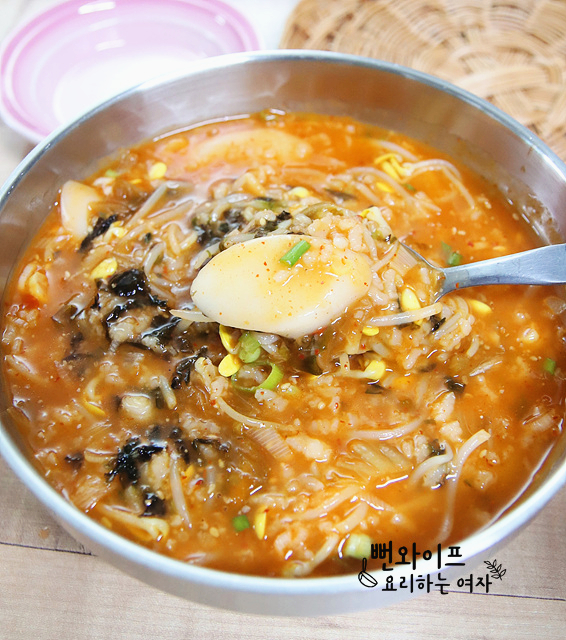
As I grew older, until recently it was my beloved hangover cure gaengsigi juk.
It digests well and is truly perfect for soothing the stomach after drinking.
It is so nice to eat hot on a rainy day like today.
 Ppunwife's tips
- Taste the broth, and if it is bland, season with fish sauce, tuna extract sauce, or similar.
- Gaengsigi juk needs soybean sprouts for the broth to taste refreshing and to have a nice chew.
FAQ
Can I add other noodles instead of sliced rice cakes?
Cooking with ramen noodles or thin noodles instead of sliced rice cakes also pairs very well.
What should I add if it tastes bland after boiling?
Kimchi brine provides the basic seasoning, and if it needs more saltiness, you can adjust it by adding fish sauce or tuna extract sauce.
How do I check if the soybean sprouts are cooked?
They are properly cooked once the distinct raw smell of soybean sprouts disappears.
Can I use another broth instead of broth tablets?
Instead of dissolving broth tablets in water, you can brew and use plain anchovy broth as is.