Sakhin Gochu (Fermented Chili Peppers) for Dongchimi
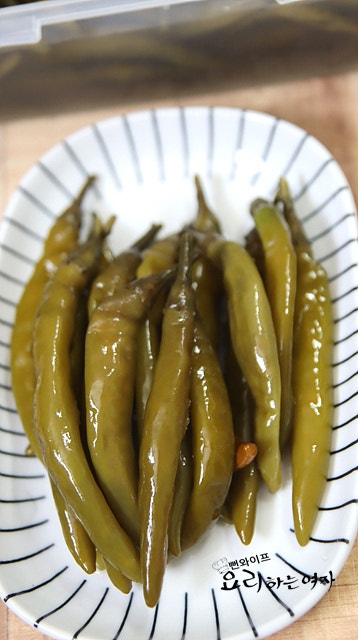
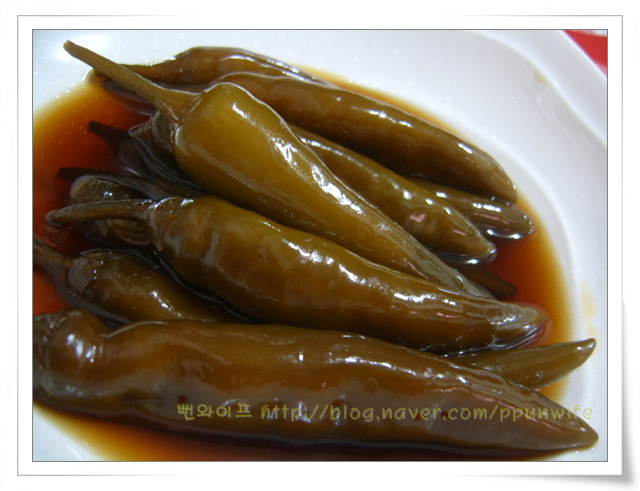
Pickled chili peppers fermented to a yellowish tint by pouring boiling brine over them.
Translated from Korean by AI and not yet checked by a native speaker. Amounts and numbers are taken directly from the original recipe. Read the Korean original →
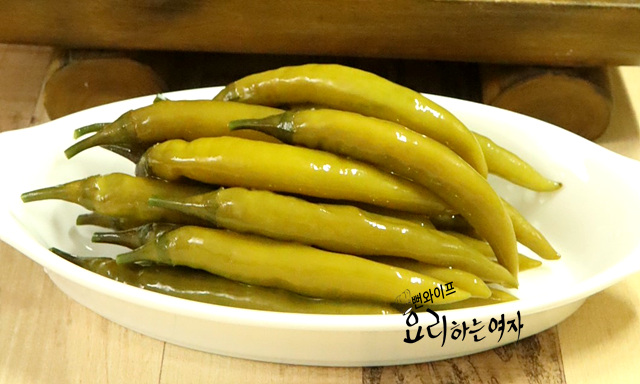
This is a pickled dish where boiling brine is poured over firm late-season chili peppers to ferment them until yellowish. The finished peppers add deep savory flavor to dongchimi broth or can be finely minced and seasoned as a versatile side dish.
- Servings
- about 8–10 servings
- Difficulty
- Easy
- Spiciness
- Spicy
Ingredients
- Cheongyang chili pepper (hot green chili) (or green chili pepper)300 g
- Coarse sea salt2/3 cup
- Water7 cups
- Soak them in vinegar water for about 10 minutes, then rinse.
Steps
Prepare the ingredients
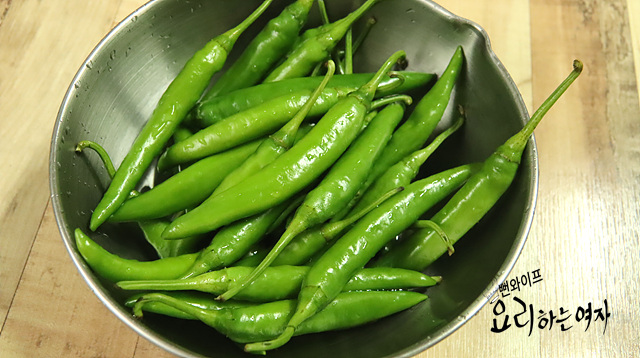
Prepare Cheongyang chili peppers or green chili peppers, soak them in vinegar water for about 10 minutes, and rinse.
Trim the ingredients
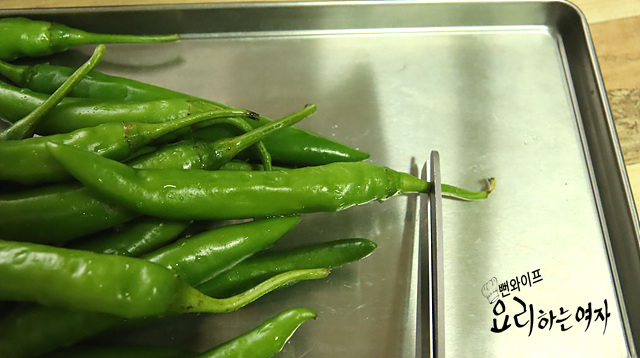
If you remove the stems completely, the chili peppers will turn soft, so trim them leaving a little bit attached.
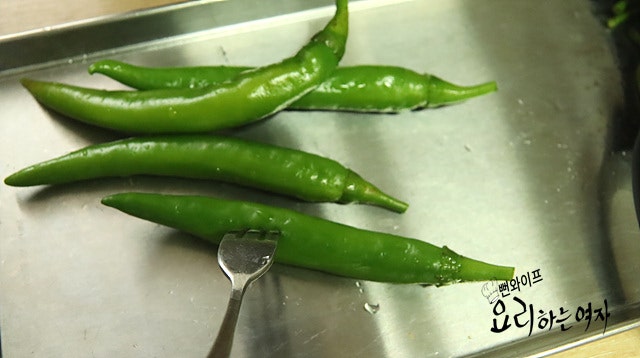
Pierce each pepper with a fork so the brine can penetrate inside.
Pour the brine
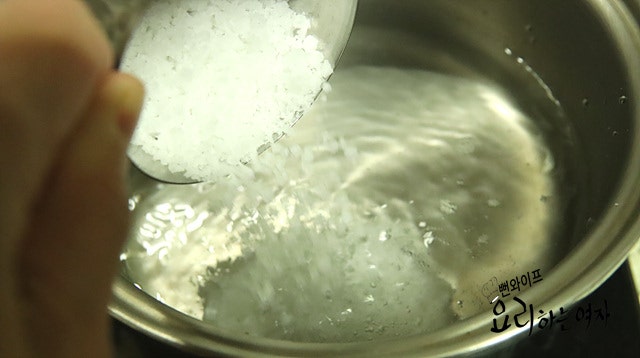
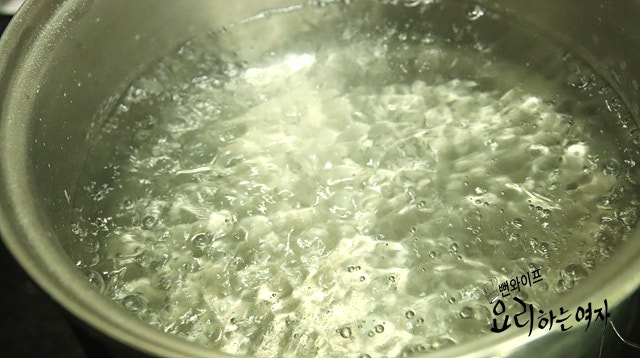
Pour 7 cups of water and 2/3 cup of coarse sea salt into a pot and bring to a rolling boil.
A 10:1 ratio of water to salt allows you to store them for a long time without spoiling.
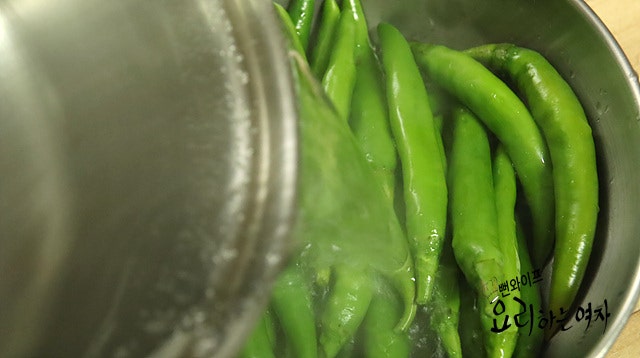
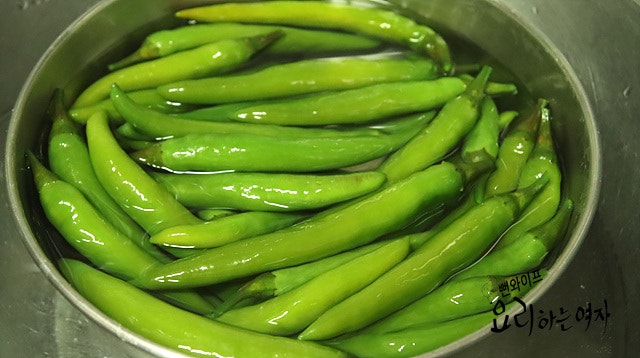
Pour it directly while hot over the chili peppers in the bowl, then let the brine cool.
Ferment the chili peppers
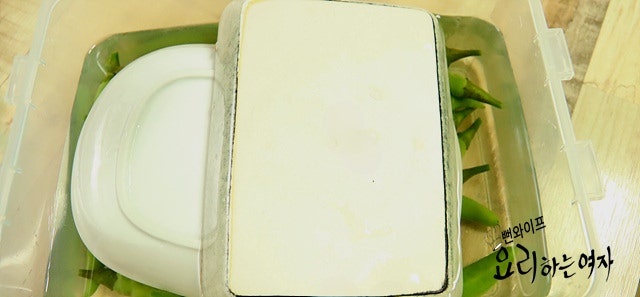
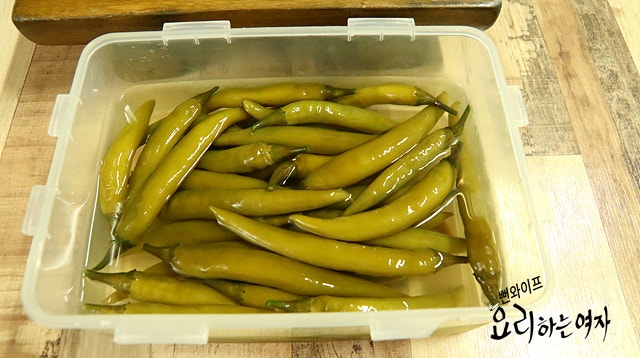
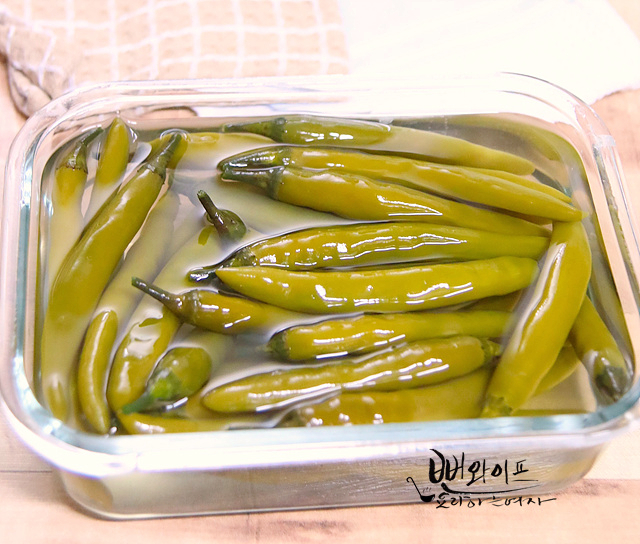
Transfer the chili peppers and brine into a container, then weigh them down with a plate so they do not float.
If the chili peppers float out of the brine, they can rot, so keep a close eye on them while fermenting.
Once they ferment to a yellowish color at room temperature for about 10 days, store them in the refrigerator.
You can lengthen or shorten the fermentation time depending on the temperature.
Complete
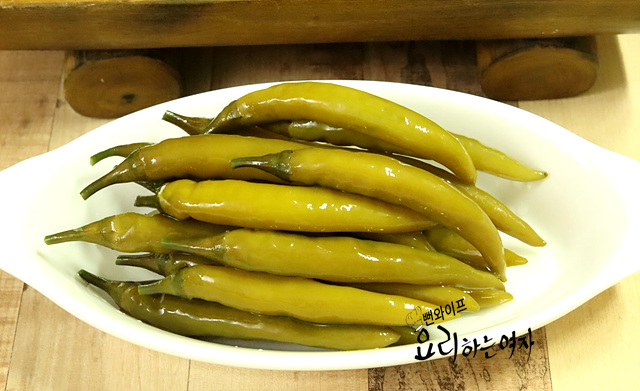
Store them in the refrigerator right in the brine, then rinse under running water before using them when making dongchimi.
The pungent, fermented chili pepper flavor is the highlight of dongchimi broth, so make plenty in advance to use when you find dongchimi radish.
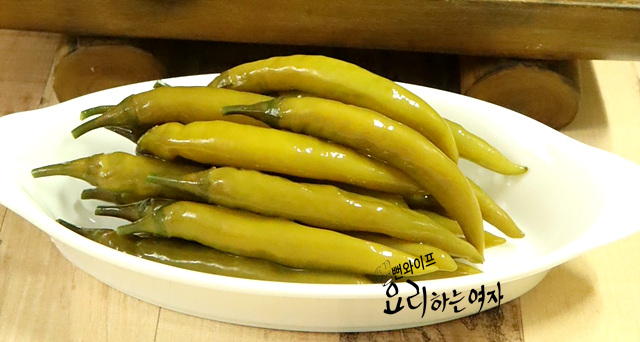
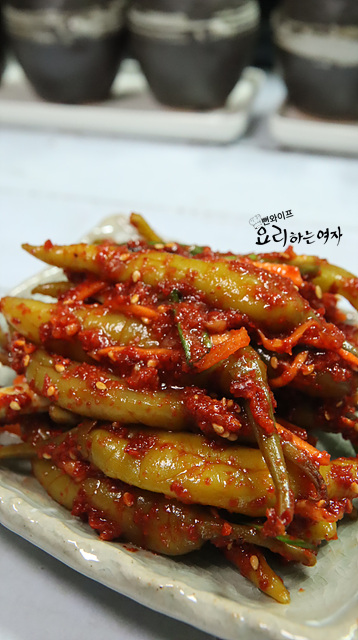
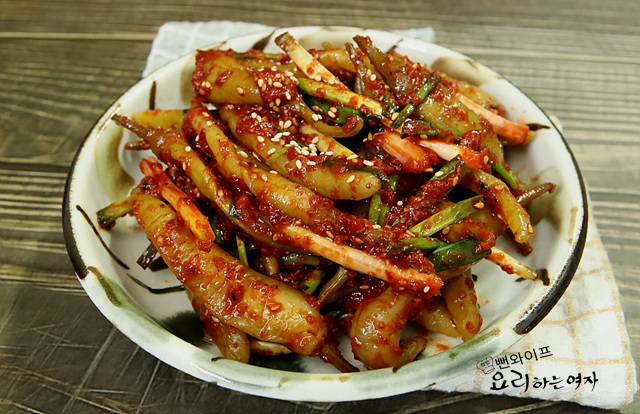
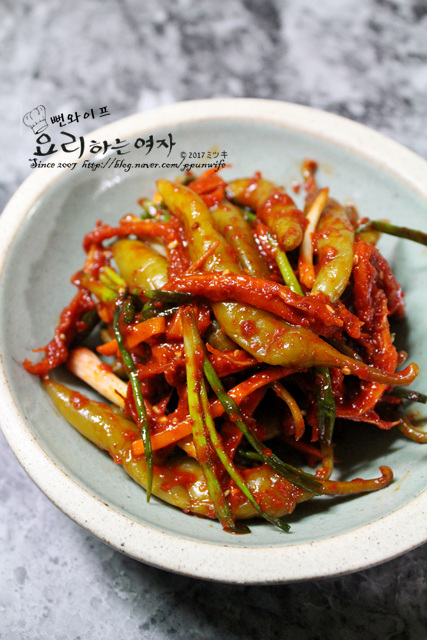
Once the salt is rinsed out, thinly slice and season them for a great side dish with meat.
They are also delicious finely minced and used as a condiment for gukbap or rich soups.
Related post on the blog (Korean)blog.naver.com/ppunwife/222151347457Related post on the blog (Korean)blog.naver.com/ppunwife/222172504556
 Ppunwife's tips
- If you remove the stems completely, the chili peppers will turn soft, so trim them leaving a little bit attached.
- A 10:1 ratio of water to salt allows you to store them for a long time without spoiling.
- If the chili peppers float out of the brine, they can rot, so keep a close eye on them while fermenting.
FAQ
Can I remove the pepper stems completely before pickling?
If you remove the stems completely, the flesh can easily become mushy, so it is best to trim them leaving a little stem attached.
What should I do if the peppers float to the top during fermentation?
If the chili peppers are exposed above the brine, they risk spoiling, so weigh them down with a heavy plate to keep them completely submerged.
What is the brine ratio for long-term storage without spoiling?
Boiling a brine with roughly a 10 to 1 ratio of water to coarse sea salt prevents spoilage and keeps them preserved for a long time.
How long should they ferment at room temperature before moving to the fridge?
Leave them at room temperature for about 10 days until they turn yellowish, then store them in the refrigerator right in the brine.