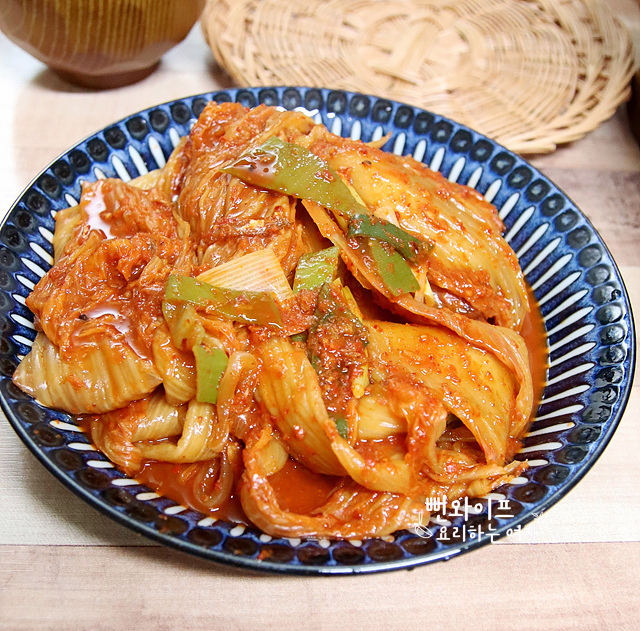
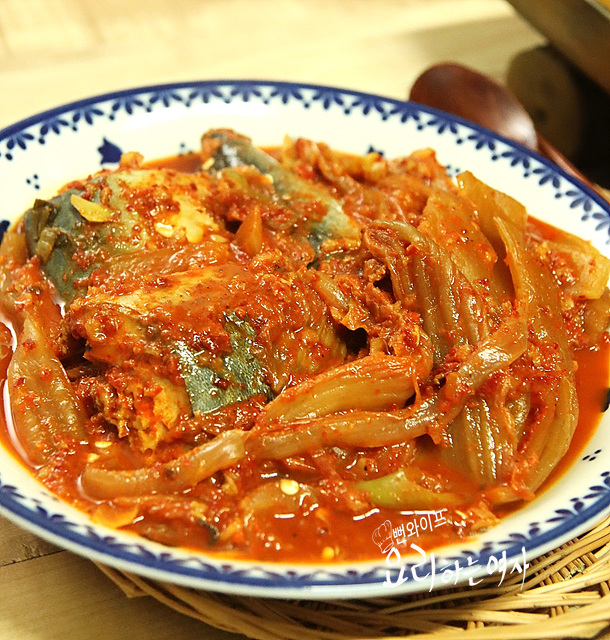
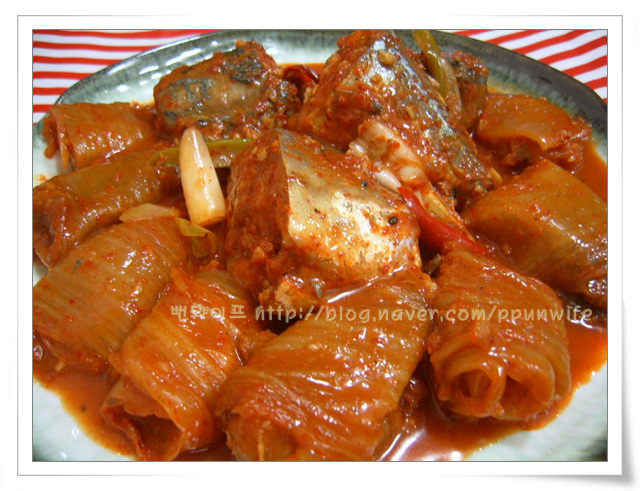
Mugeonji Jijim (Braised Aged Kimchi) with Dried Soup Anchovies
A clean side dish made by thoroughly braising rinsed aged kimchi with doenjang and dried soup anchovies.
Translated from Korean by AI and not yet checked by a native speaker. Amounts and numbers are taken directly from the original recipe. Read the Korean original →
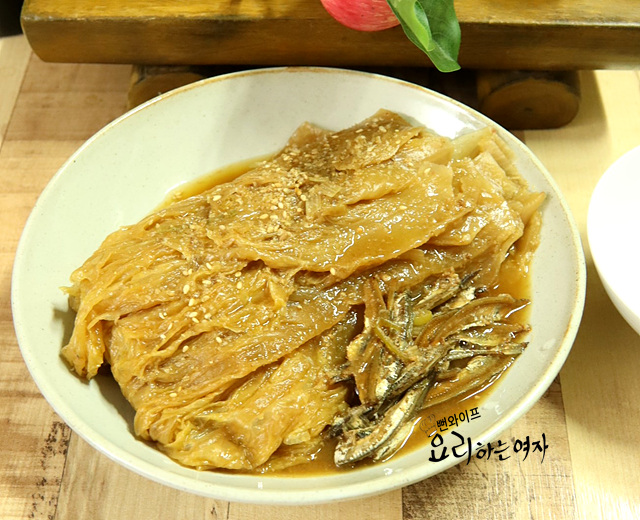
This side dish rinses the seasonings off aged kimchi and simmers it gently with doenjang and dried soup anchovies to remove any stale smell and bring out deep savory flavor. Cooked without meat using an anchovy base, it tastes clean even when cold and pairs wonderfully with tofu pan-fried in perilla oil.
- Servings
- 3–4 servings
- Cook time
- 20 minprep not included
- Difficulty
- Easy
- Spiciness
- Mildly spicy
Ingredients
- Aged kimchi (mugeonji) (or aged sour kimchi)1 clove
- Dried soup anchovies20
- Large green onion (daepa)a little
- Doenjang (Korean soybean paste)1 tbsp
- Mirin (cooking rice wine)2 tbsp
- Minced garlic1 tbsp
- Water3 cups
- Perilla oil (or toasted sesame oil)1 tbsp
- Rinse the seasoning off the aged kimchi under running water, then squeeze out the excess moisture roughly. If the kimchi is very salty or has a strong stale smell, soak it in water to draw out the odor and excess saltiness.
- If you don't have dried anchovies, you can use anchovy broth instead.
Steps
Prepare the ingredients
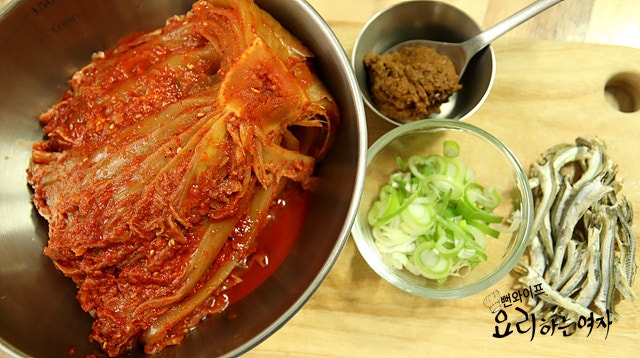
The ingredients are truly simple.
The most important is 1 wedge of aged kimchi or aged sour kimchi, which is 1/4 head of cabbage.
You need 20 dried soup anchovies with the innards removed, 1 tbsp doenjang, and about 4 tbsp chopped green onion.
Prepare the ingredients
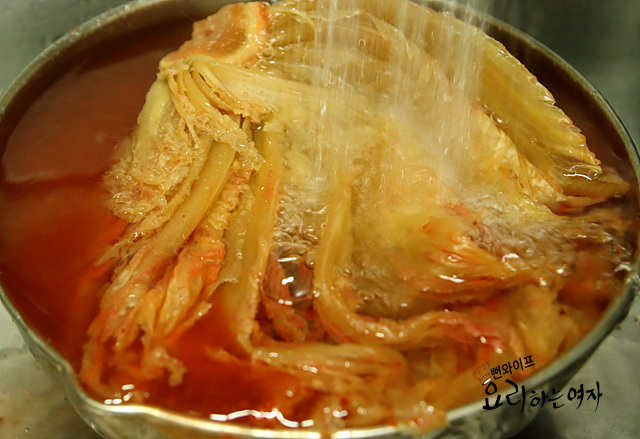
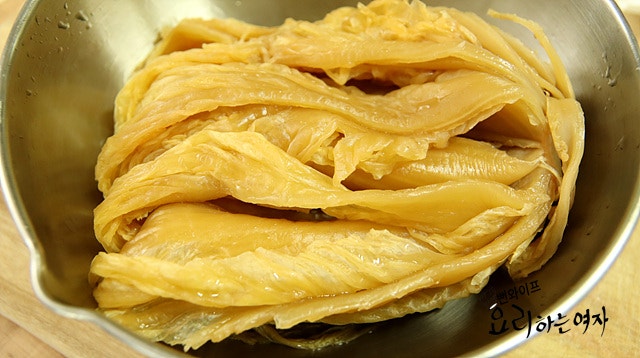
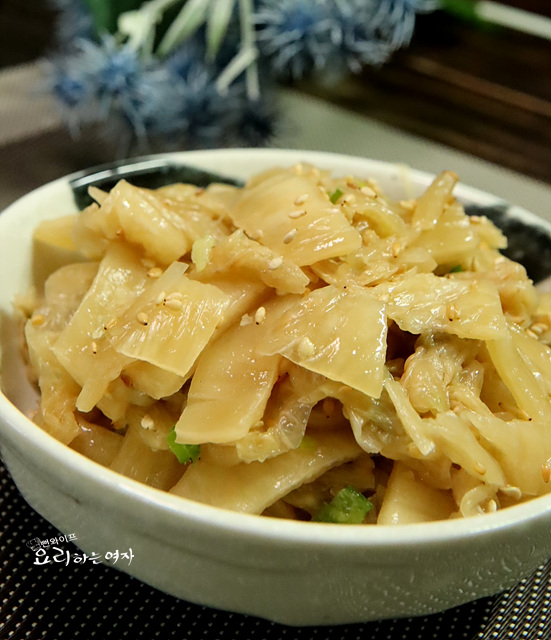
Rinse the seasoning off the aged kimchi under running water, then gently squeeze out excess moisture.
If the kimchi is very salty or smells stale, soak it in water to remove the odor and excess salt.
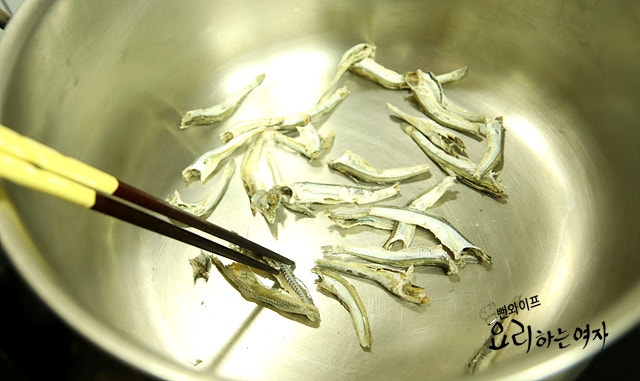
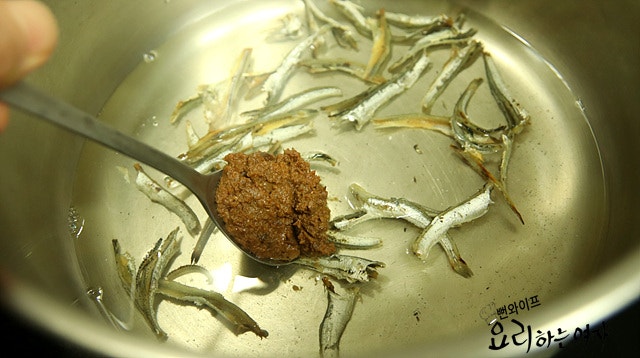
In the pot you plan to cook in, add 20 dried soup anchovies and stir-fry them briskly to remove any fishy smell and bring out their nutty aroma.
Add 3 cups of water, 1 tbsp doenjang, 2 tbsp mirin, and 1 tbsp minced garlic, then stir to dissolve the doenjang.
If you don't have dried anchovies, you can use anchovy broth instead.
Braise the aged kimchi
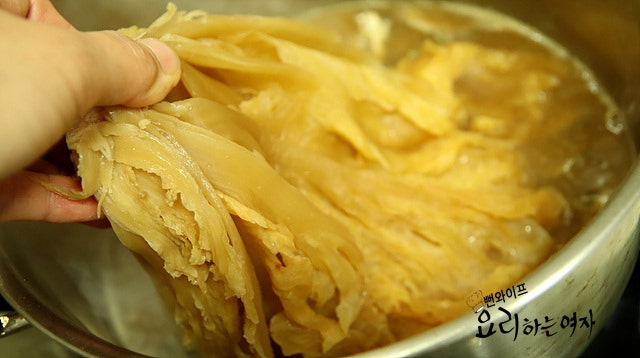
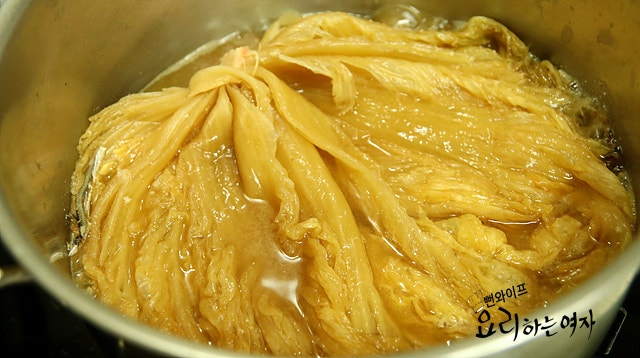
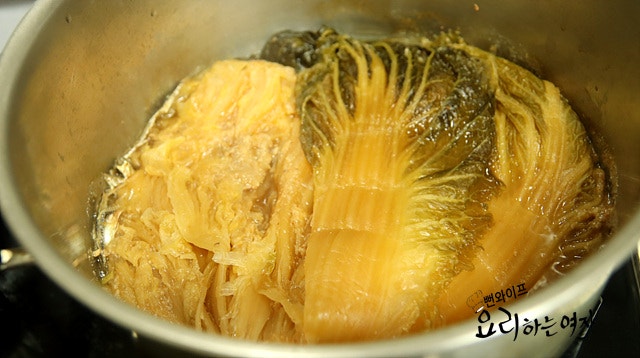
Add the aged kimchi as well. Once it starts boiling, cover with a lid and simmer gently for 10 minutes, then flip it over midway and simmer for another 10 minutes.
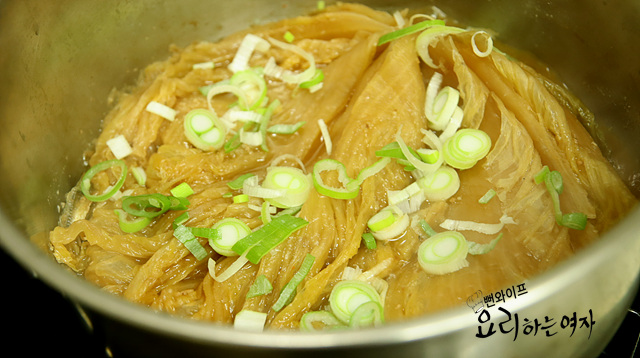
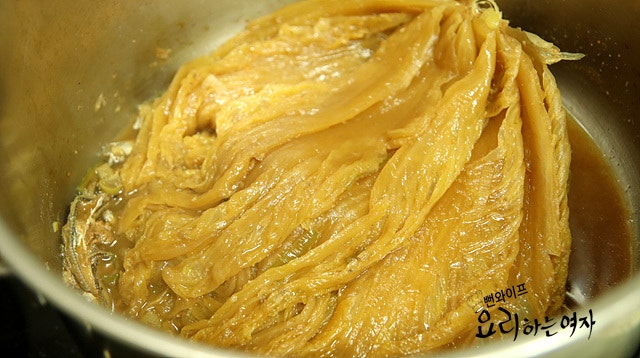
When the liquid has reduced until shallow and the kimchi is tender and easy to eat, taste the kimchi.
If it is bland, add a little tuna extract sauce or soup soy sauce and braise a bit more; if it turned out too salty, add water or anchovy broth and boil a little longer to reduce the saltiness.
Finally, add the large green onion, turn the kimchi over to cook it through and infuse the green onion aroma, and finish by drizzling perilla oil or toasted sesame oil evenly all over.
Finish
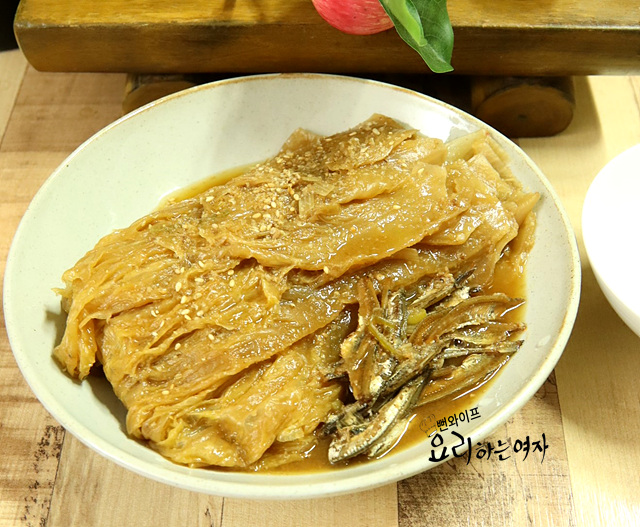
The small amount of doenjang eliminates the stale odor of the aged kimchi while bringing out a savory flavor that really stimulates the appetite.
Because it is rinsed before braising, much of the sourness is gone, and 2 tbsp mirin used in place of sugar takes care of the remaining sourness and off-flavors.
Taste it while braising, and if the sourness is still bothersome, just add about 1 tbsp sugar and simmer.
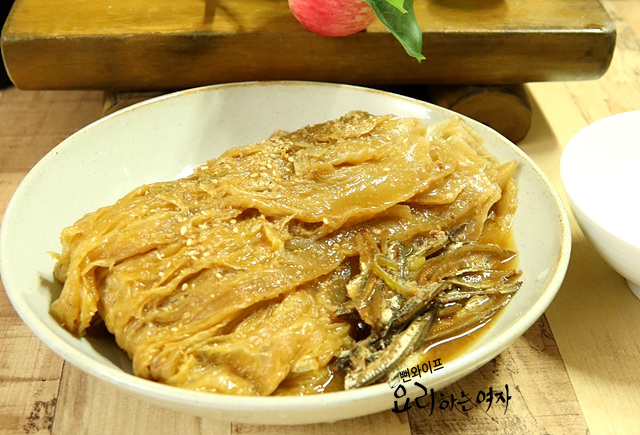
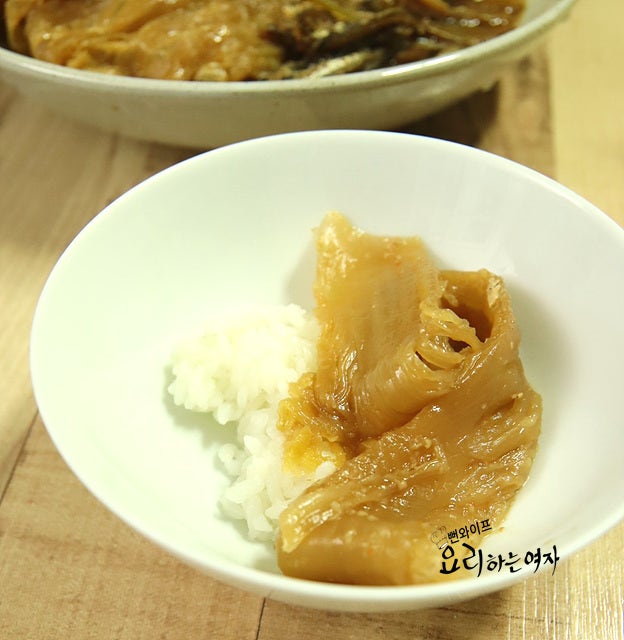
The anchovies that worked hard to flavor the broth are also soft and good to eat.
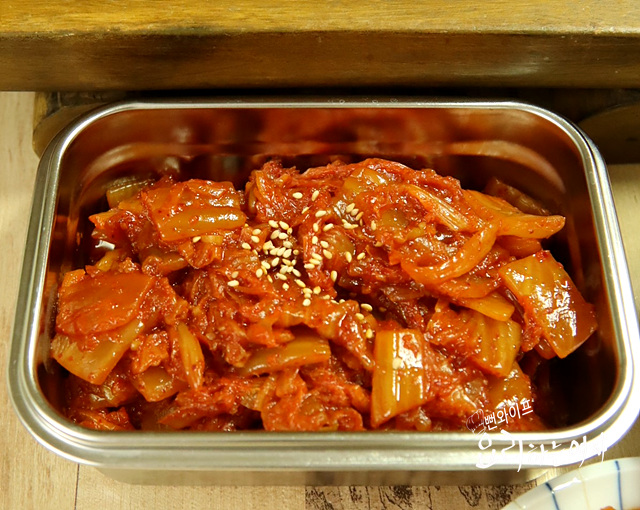
With nothing complicated, just simple braising turns 2-year-old aged kimchi into a first-rate side dish.
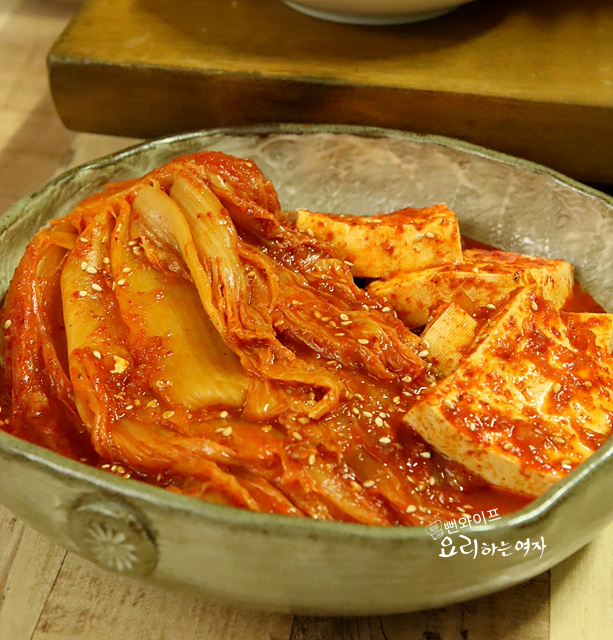
It goes great with rice, and try pan-frying some tofu in perilla oil to wrap with the aged kimchi.
You will find yourself craving makgeolli.
With no harsh seasonings, the flavor is clean, so both children and elders will enjoy it.
 Ppunwife's tips
- In the pot you plan to cook in, stir-fry 20 dried soup anchovies briskly to eliminate off-flavors and bring out their nutty aroma.
- If it tastes bland, add a little tuna extract sauce or soup soy sauce and braise more; if it is too salty, pour in water or anchovy broth and boil briefly to mellow out the saltiness.
- Taste while braising, and if the sourness is bothersome, add about 1 tbsp sugar and continue braising.
FAQ
How do I prep the aged kimchi if the stale odor and saltiness are too strong?
After rinsing off the seasoning, soak it in water for a little while to effectively remove the stale smell and excess salt.
Can I use anchovy broth instead of whole dried soup anchovies?
Instead of stir-frying dried soup anchovies, you can simply pour in store-bought or pre-made anchovy broth to cook.
How do I adjust the seasoning if it ends up too salty or too bland after cooking?
If it is bland, braise it a bit more with tuna extract sauce or soup soy sauce; if it is salty, pour in water or anchovy broth and boil briefly to balance the saltiness.
What should I do if a strong sour taste remains after braising?
Check the taste while braising, and if the sourness is still bothersome, add about 1 tbsp sugar and simmer together.