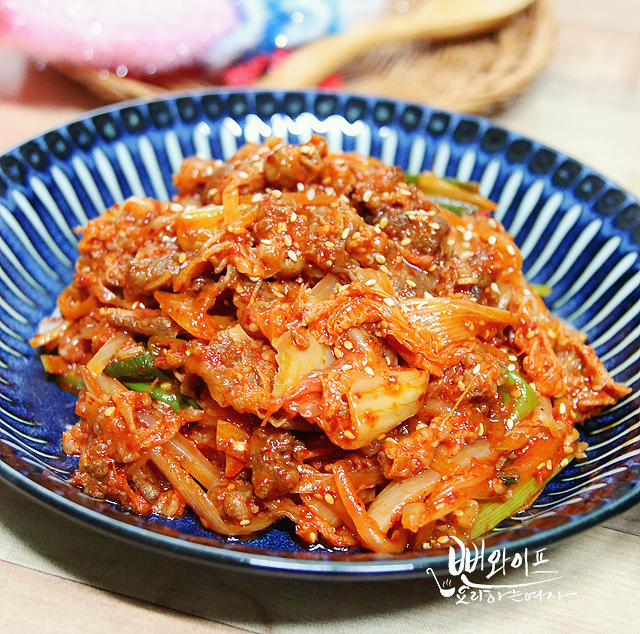
Versatile Bokkeum Kimchi (Stir-Fried Kimchi) with Green Onion Oil
A versatile side dish made by stir-frying aged kimchi in green onion oil to remove any sour off-flavors and keep it moist.
Translated from Korean by AI and not yet checked by a native speaker. Amounts and numbers are taken directly from the original recipe. Read the Korean original →
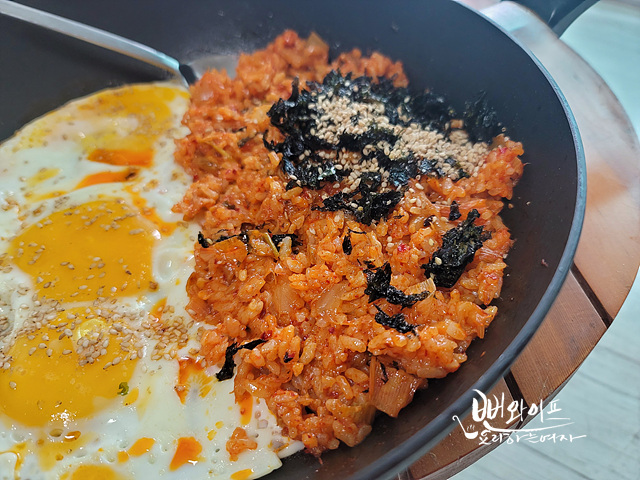
This side dish uses aged kimchi seasoned with sugar and mirin to tame any sourness and off-flavors, then stir-fries it in green onion oil. Covering the pan with a lid to lock in moisture is the secret to getting a tender texture. It also makes a great base ingredient for various dishes like stews and fried rice.
- Servings
- about 5–6 servings
- Difficulty
- Easy
- Spiciness
- Mildly spicy
- Keeps
- 14 days
Ingredients
- Aged kimchi (mugeonji) (or aged sour kimchi)1/2 head, 800 g
- Large green onion (daepa)1 stalk (white part)
- Sugar2 tbsp
- Mirin (cooking rice wine)2 tbsp
- Tuna extract sauce (chamchi-aek)2 tbsp
- Ground black peppera little
- Leave the seasoning paste on the kimchi leaves, scrape away only the stuffing vegetables, and collect them separately to use in stews or other dishes.
- You can adjust the amount of sugar depending on how sour your kimchi is.
- Once the kimchi cooks until tender, taste it; if it needs salt, you can use regular soy sauce or salt instead of 2 tbsp of tuna extract sauce.
- Stir-fry a generous batch, divide it into meal-sized portions, and store it in the refrigerator for about 2 weeks.
Steps
Prepare the ingredients
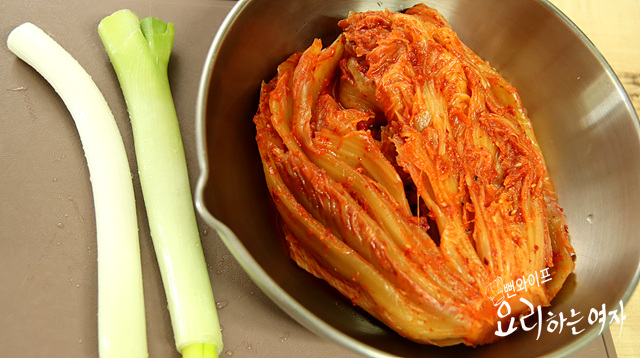
The ingredients are really simple.
This is 1/2 head of aged kimchi or aged sour kimchi, but the head was on the smaller side.
Mine was made without vegetable stuffing, so I used it as is without shaking anything off.
Leave the seasoning paste on the kimchi leaves, scrape away only the stuffing vegetables, and collect them separately to use in stews or other dishes.
Prepare the large green onion using the firm white part and up through the middle.
Cut the ingredients
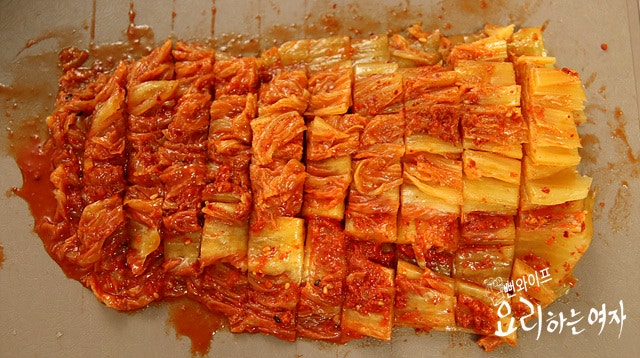
Cut the kimchi into pieces about 1.5 cm wide—neither too big nor too fine—so it works well across fried rice or kimchi jjigae.
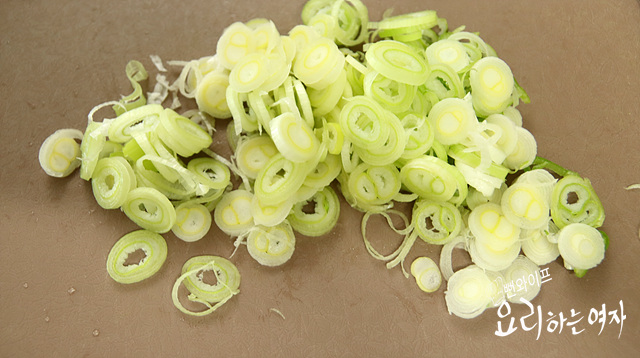
Finely slice the large green onion into thin rounds.
Pre-season the kimchi
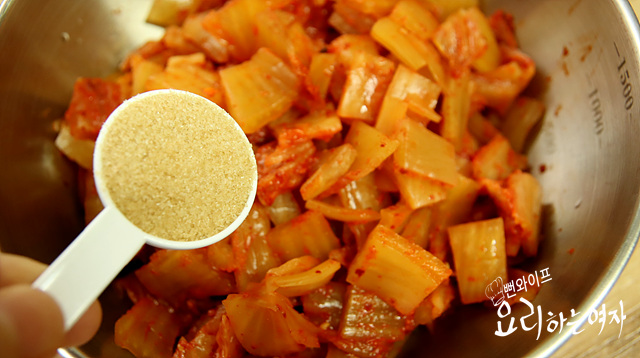
Add 2 tbsp sugar to the sliced kimchi and mix thoroughly to pre-season it, neutralizing the sharp sourness.
You can adjust the amount of sugar depending on how sour your kimchi is.
Stir-fry
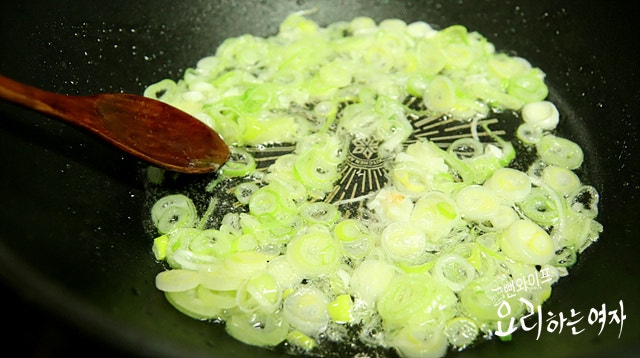
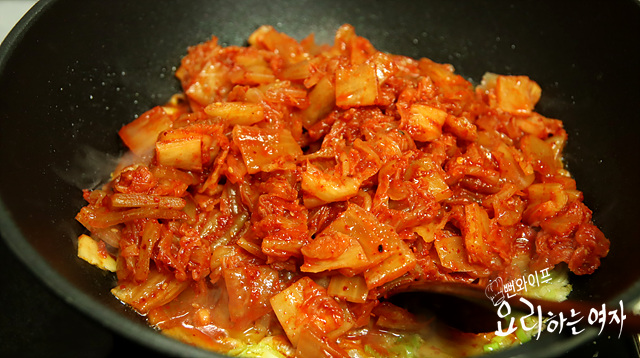
Heat 4 tbsp cooking oil in a pan, add the large green onion, and stir-fry without burning until a fragrant green onion aroma rises.
Add the kimchi and stir-fry for 2 to 3 minutes so it absorbs the green onion oil, then...
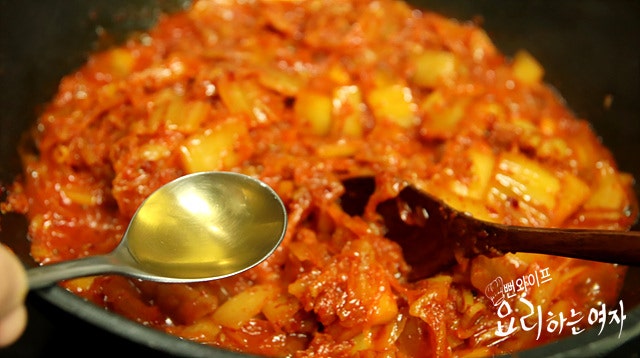
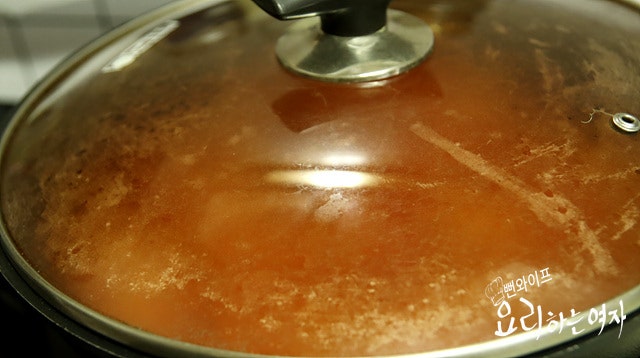
Aged kimchi can sometimes have a stale odor, so add 2 tbsp mirin and mix thoroughly, then cover with a lid to cook until the firm cabbage stems turn tender.
Cooking it too long will make the texture mushy, so check the kimchi's condition and cook for about 3 to 5 minutes, stirring occasionally.
If you shook off a lot of kimchi seasoning and the color looks pale, add gochugaru as well.
If you stir-fry with the lid off, the moisture evaporates quickly, leaving the kimchi dry and tough.
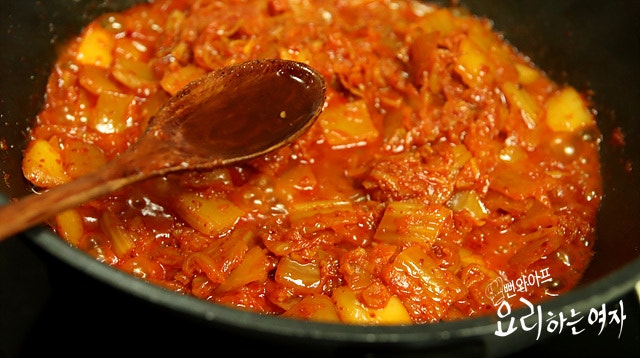
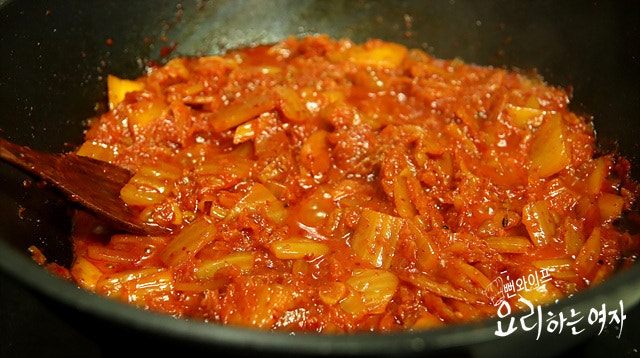
Once the kimchi cooks until pleasantly tender, taste it; if it is bland, adjust the seasoning by adding 2 tbsp tuna extract sauce (= regular soy sauce or salt).
Add ground black pepper as well; stir-fried kimchi is best when some moist juices remain, so do not boil it completely dry.
This is a kimchi stir-fry, not a braised kimchi dish meant to be completely soft, so it is best to stir-fry while keeping some texture.
Finish
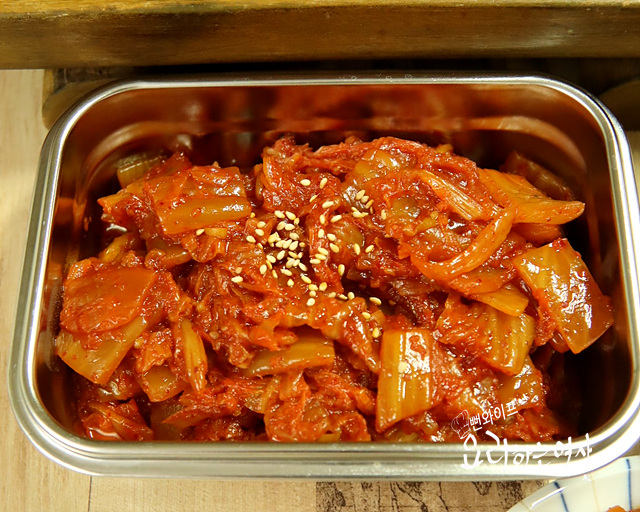
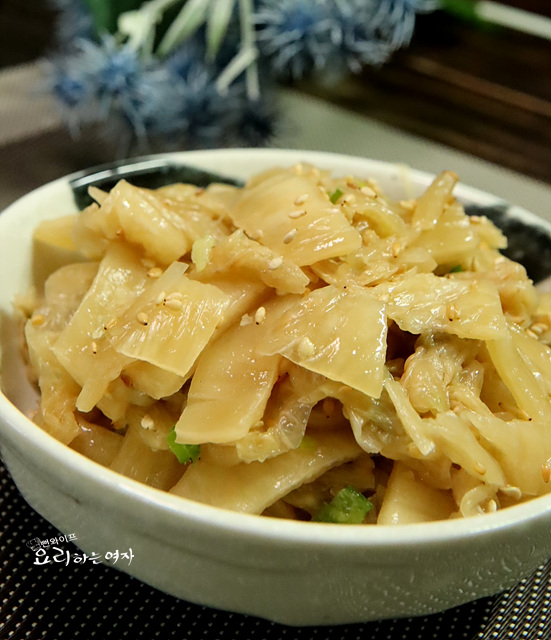
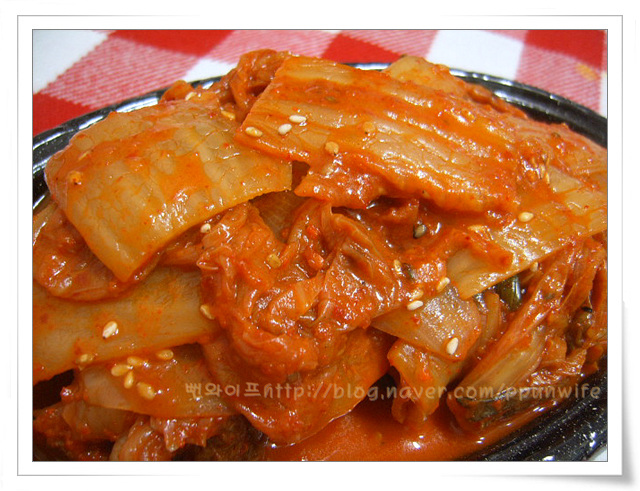
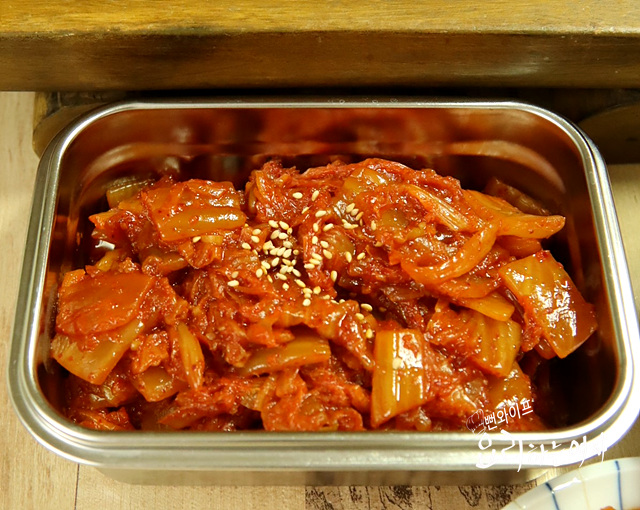
I stir-fried it using the seasoning already clinging to the kimchi without adding extra gochugaru, yet it looks so appetizing.
Because it is stir-fried with minimal seasoning and no toasted sesame oil or perilla oil, it also keeps very well.
You can stir-fry a generous batch, divide it into meal-sized portions, and refrigerate for about 2 weeks to use in all kinds of ways.
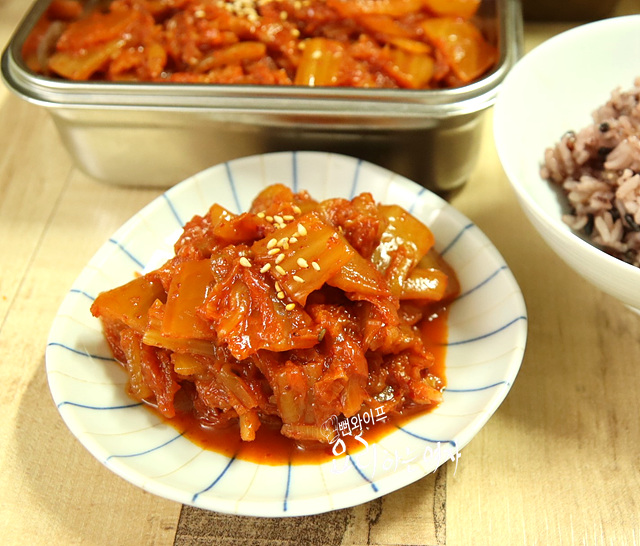
It makes a wonderful side dish all on its own, but it can also be used across various sour kimchi recipes, making it another treasure of an ingredient.
Made with 2-year-old winter kimchi, it is delicious enough to put any convenience store or supermarket stir-fried kimchi to shame.
 Ppunwife's tips
- Stir-frying in green onion oil without toasted sesame oil or perilla oil gives it great shelf life, so you can enjoy it over a long time.
- If you stir-fry with the lid off, moisture quickly evaporates, leaving the kimchi dry and tough.
- Stir-fried kimchi is best when some moist juices remain, so do not boil it completely dry.
FAQ
Is there a reason you do not add toasted sesame oil or perilla oil while stir-frying?
Stir-frying with green onion oil as the base prevents the oil from going rancid, which extends its shelf life. If you want that nutty aroma, it is best to stir it in just before eating after cooking is done.
How long can you store the finished stir-fried kimchi?
If you divide it into airtight containers and store it in the refrigerator, you can keep and enjoy it for about 2 weeks.
Is there a substitute seasoning for tuna extract sauce?
When adjusting the seasoning, you can use regular soy sauce or salt instead of tuna extract sauce.
Why do you cover the pan with a lid when stir-frying the kimchi?
Stir-frying with the lid off causes moisture to evaporate, making the cabbage dry and tough; covering it traps the steam so the cabbage stems cook until tender.