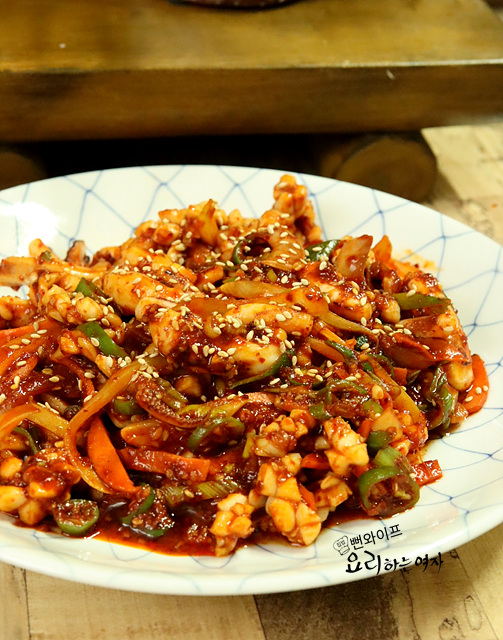
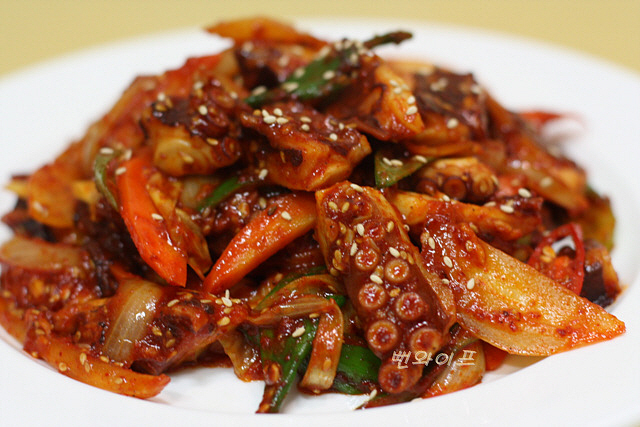
Sweet and Spicy Nakji Bokkeum (Stir-Fried Octopus)
A special main dish of frozen small octopus quickly parboiled with soju and stir-fried over high heat so no excess liquid forms.
Translated from Korean by AI and not yet checked by a native speaker. Amounts and numbers are taken directly from the original recipe. Read the Korean original →
The key is to rub frozen small octopus with flour and coarse sea salt, rinse it clean, and blanch it briefly in boiling water with soju to remove any fishiness and excess moisture. Stir-fry it quickly over high heat with gochugaru and seasoning infused into scallion, garlic, and ginger oil for a spicy finish. It is wonderful served with soybean sprouts or spicy radish salad mixed into rice, or enjoyed as a drinking snack.
- Servings
- 2–3 servings
- Difficulty
- Medium
- Spiciness
- Very spicy
Ingredients
Ingredients
- Frozen small octopus (nakji)4 whole (500 g)
- Onion1/2 (large)
- Large green onion (daepa)1 stalk
- Cheongyang chili pepper (hot green chili)2
- Coarse sea salt1 tbsp
- Flour3 tbsp
- Soju2–3 tbsp
Seasoning
- Minced garlic1 tbsp
- Minced ginger1/2 tsp
- Gochugaru (Korean chili flakes)4 tbsp
- Regular soy sauce (jin-ganjang) (or brewed soy sauce (yangjo-ganjang))3 tbsp
- Mirin (cooking rice wine)2 tbsp
- Sugar1 tbsp
- Salta little
- Ground black peppera little
- Toasted sesame oila little
- Toasted sesame seeds
- You can also prepare cabbage or carrots, which do not release much liquid and have a great texture.
- You can also stir-fry webfoot octopus or squid using this seasoning and method.
Steps
Slice the vegetables
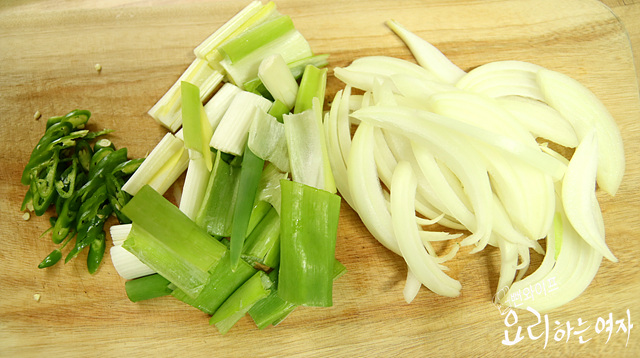
Slice the onion into medium-thick strips, and split the large green onion in half lengthwise and cut into long pieces.
Thinly slice the Cheongyang chili peppers.
How to clean small octopus
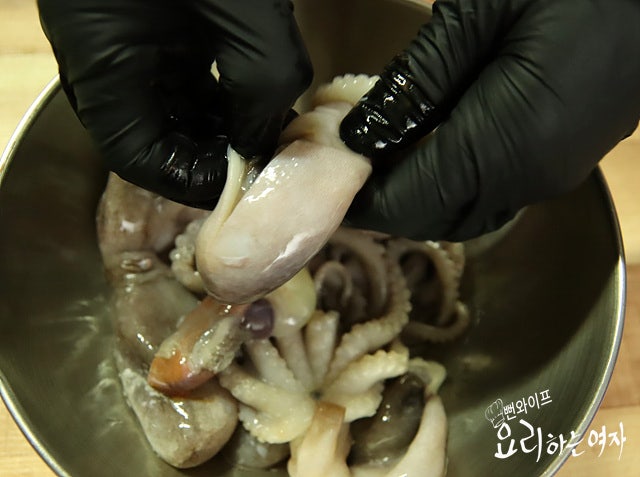
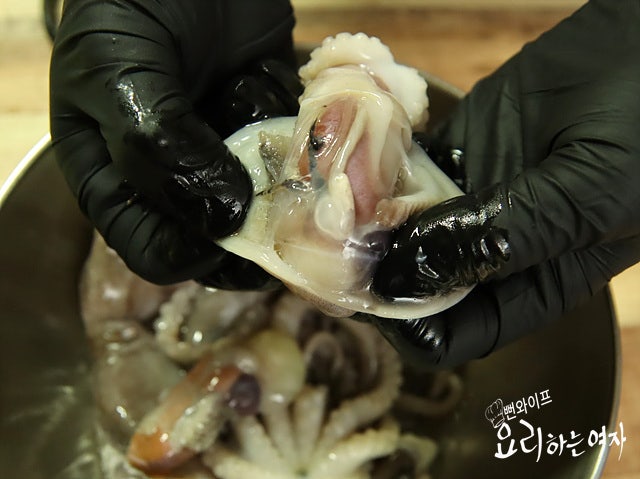
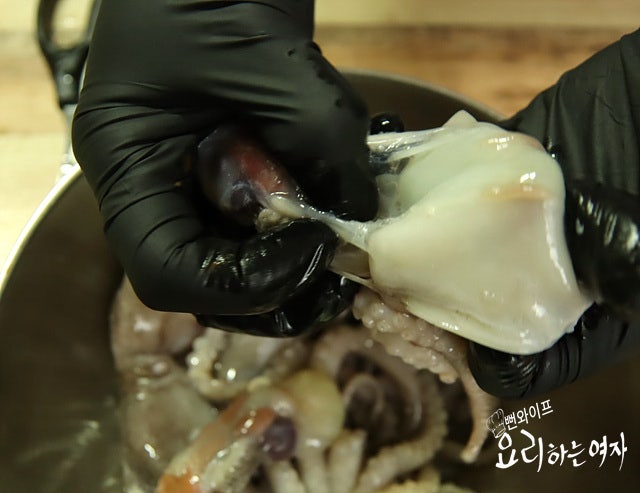
Make a small cut on the head of the thawed octopus, then turn it inside out to reveal the innards.
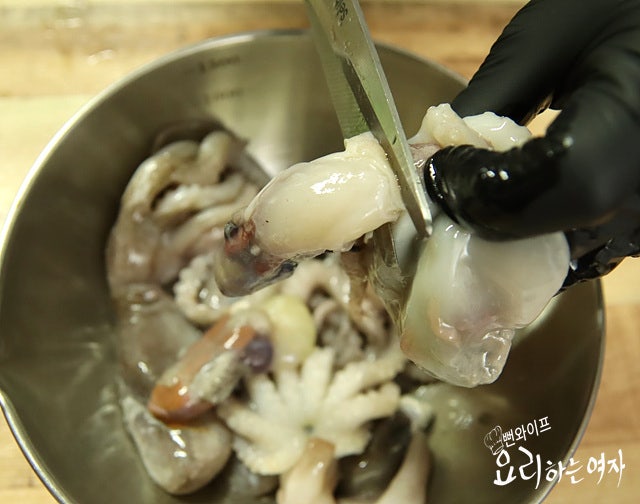
Pull out the innards and cut them off.
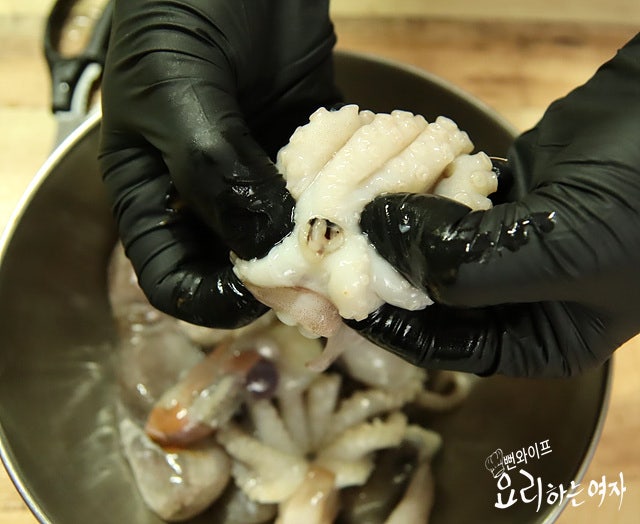
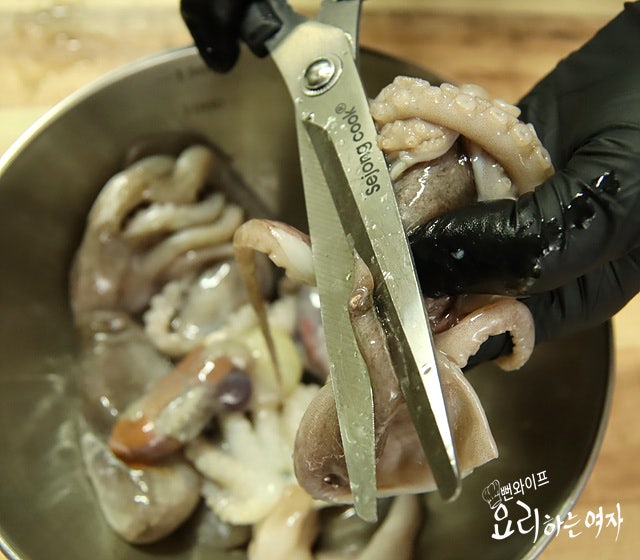
There is a beak right in the center of the octopus body; push it out with your fingers, and cut out the ink-filled eyes as well.
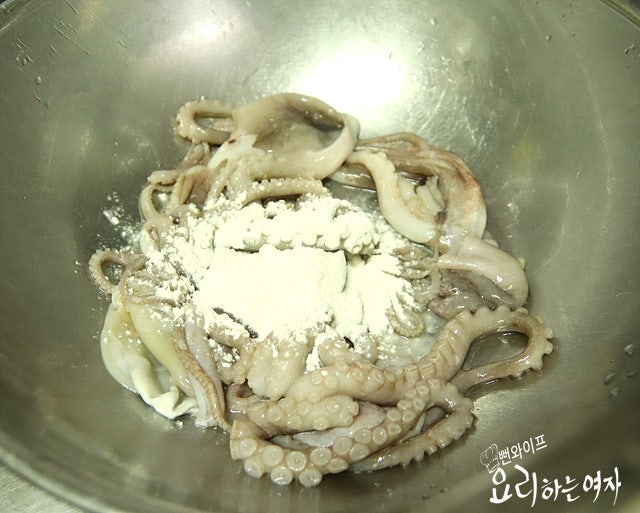
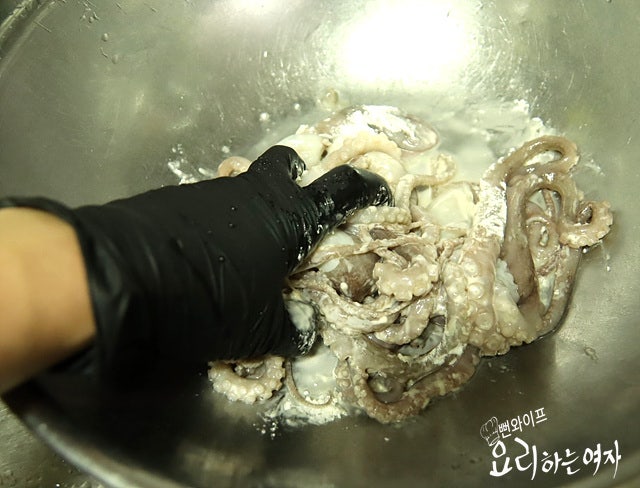
Add 1 tbsp coarse sea salt and 3 tbsp flour and scrub vigorously; this removes the mucus and impurities trapped in the suckers while eliminating the fishy smell.
Rinse thoroughly under running water.
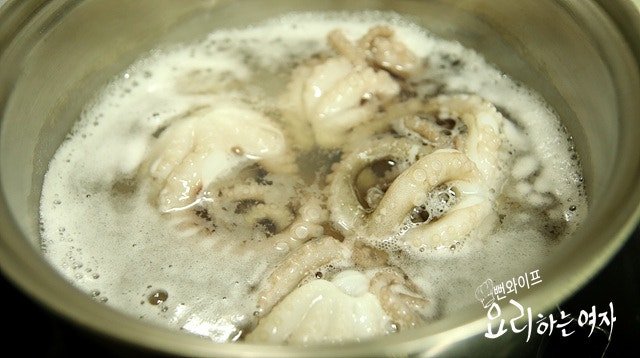
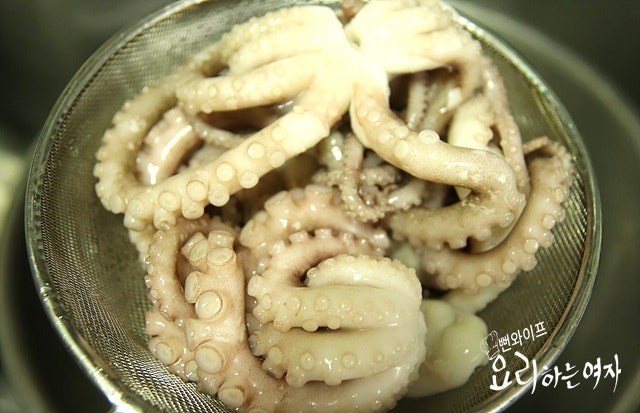
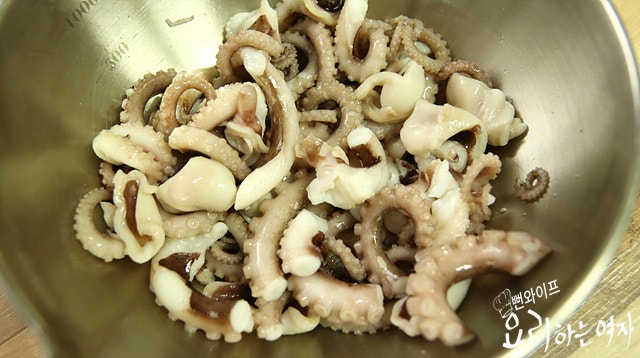
Bring water to a rolling boil, add 2 to 3 tbsp soju and the octopus, and blanch for about 30 seconds until it curls up. Drain well in a strainer.
Cut into bite-sized lengths.
Unlike live or fresh octopus, eliminating fishiness is crucial for frozen octopus; blanching removes any remaining odor and prevents liquid from pooling when stir-fried, allowing the sauce to cling tightly to the octopus so you can enjoy it even more.
For fresh squid or octopus, you can skip the blanching step and stir-fry it very quickly over high heat.
Stir-fry
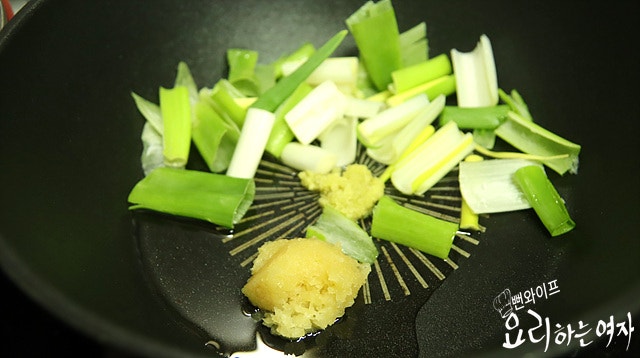
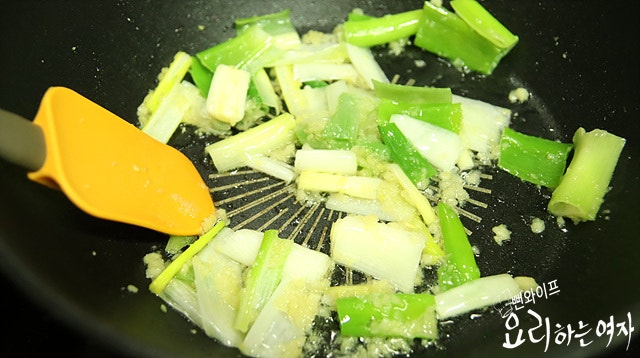
Drizzle cooking oil generously into a pan and add 1/2 tsp minced ginger, 1 tbsp minced garlic, and the large green onion. Stir-fry without burning to release the aromatics.
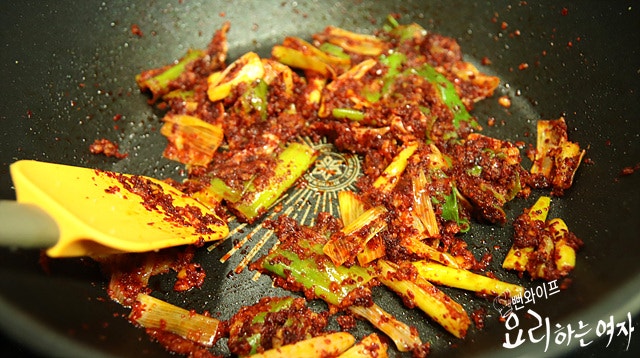
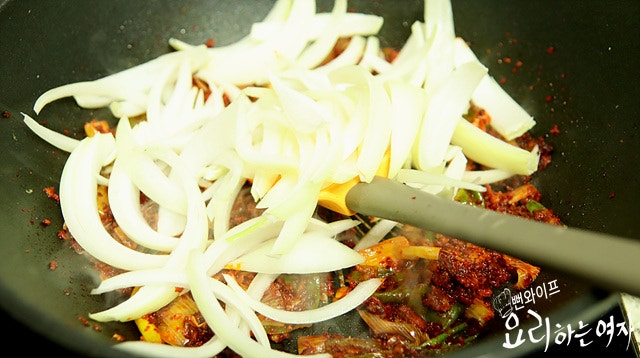

Add 4 tbsp gochugaru to coat it moistly in the aromatic oil, then add the onion and stir-fry until evenly coated and slightly softened.
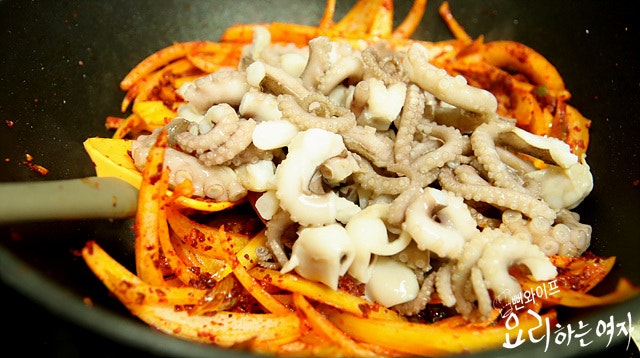
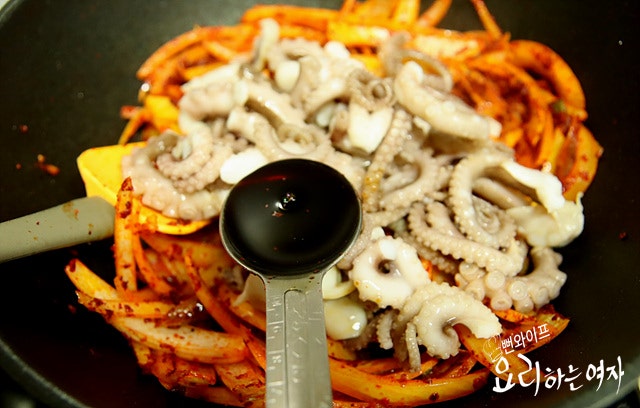
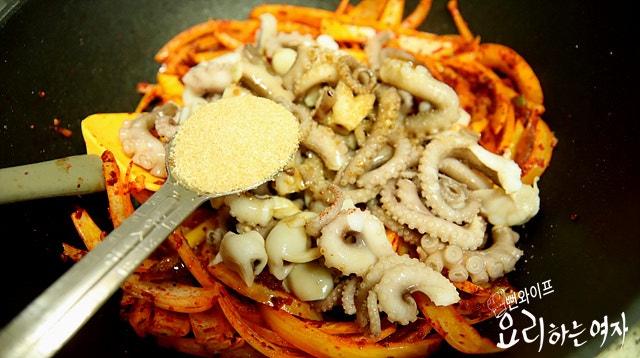
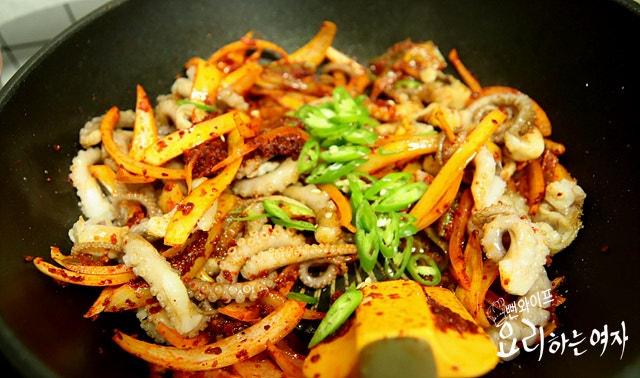
Add the octopus, 3 tbsp regular soy sauce, 1 tbsp sugar, 2 tbsp mirin, and the Cheongyang chili peppers, and stir-fry over high heat from this point on.
Once the sauce clings well to all the ingredients and everything is cooked tender, taste it.
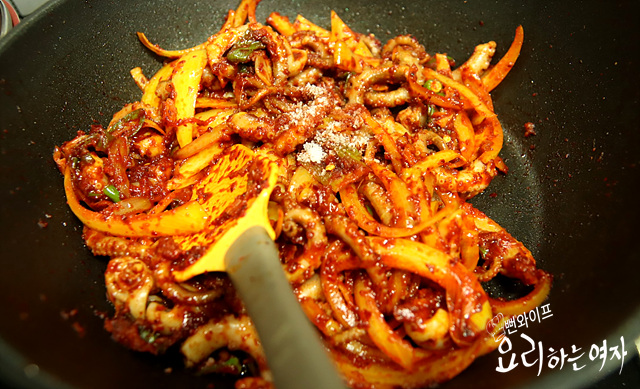
Taste and adjust with salt if it needs more seasoning, add a little more sugar if you want more sweetness, and finish with a little ground black pepper and a little toasted sesame oil.
If you add too much toasted sesame oil to a spicy stir-fry, the heat is muted and the greasiness stands out, which ruins the dish.
Adding just a tiny bit preserves the spicy kick while bringing out the savory aroma.
Finish
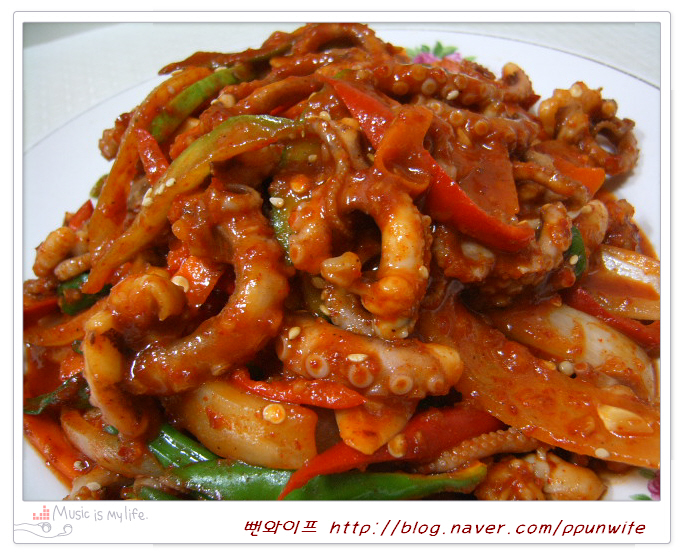
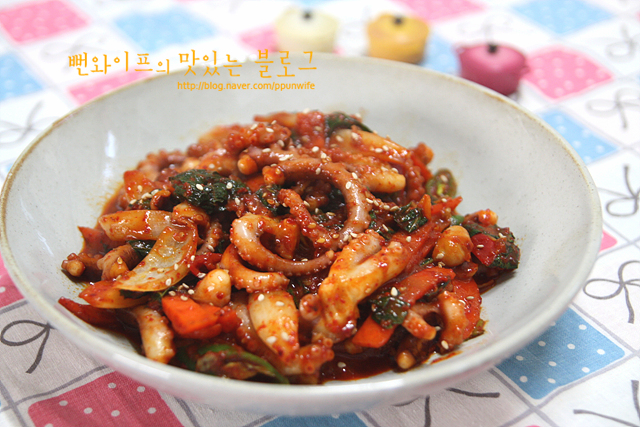
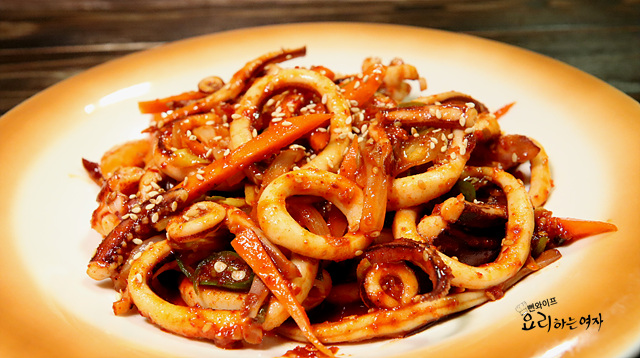
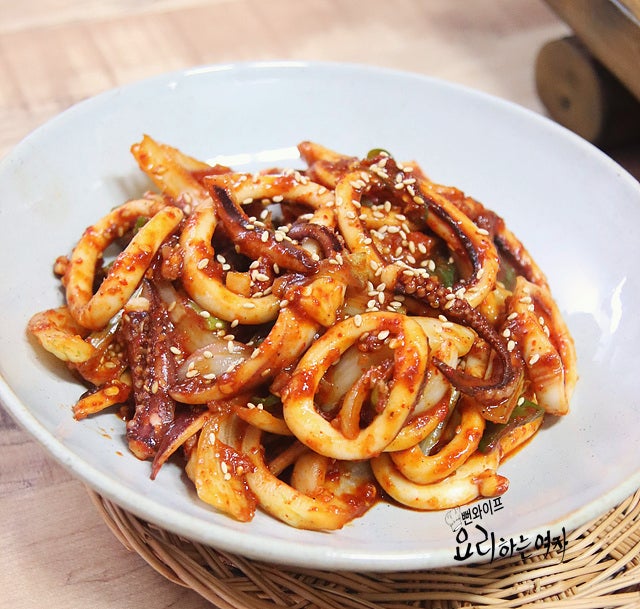
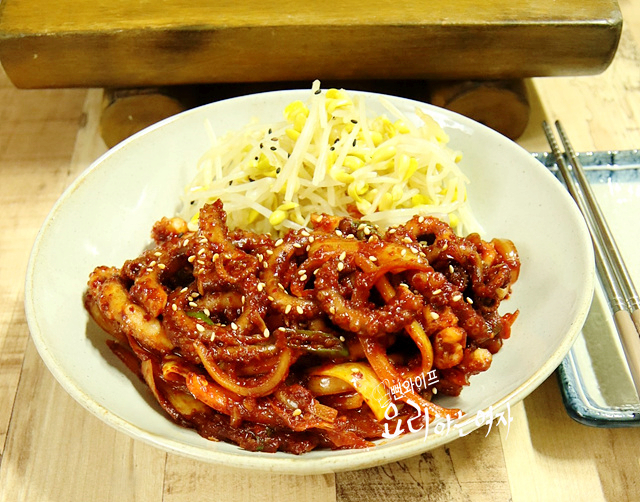
The sweet, spicy, and delicious stir-fried octopus is complete.
I also lightly seasoned some blanched soybean sprouts and plated them together.
It is delicious to pick up bites of spicy octopus together with the nutty seasoned soybean sprouts...
It is also wonderful mixed with rice along with the octopus and soybean sprouts, or wrapped in unseasoned dried seaweed sheets.
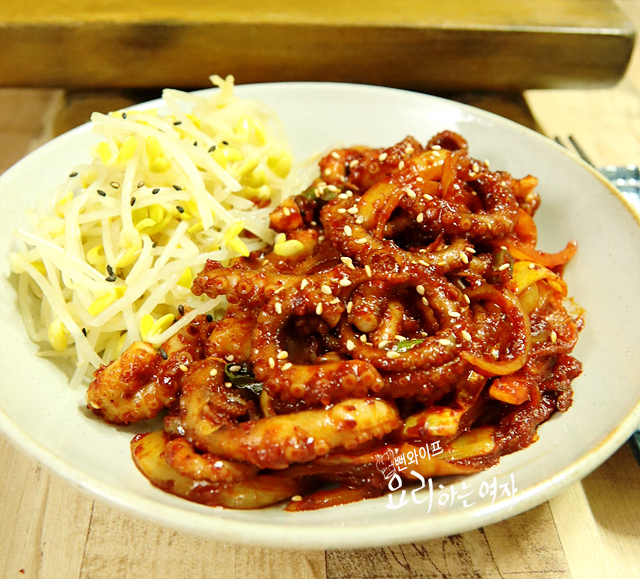
Even though it is frozen octopus, the cleaning method and the sauce are the secrets to making it chewy, tender, and free of any fishy smell.
It takes a little extra effort, but stir-frying it this way keeps water from forming, so you can enjoy it cleanly all through the meal.
Even if you save some for the next day, the sauce will not run watery.
You can also stir-fry webfoot octopus or squid using this seasoning and method.
 Ppunwife's tips
- Unlike live or fresh octopus, eliminating fishiness is crucial for frozen octopus; blanching removes any remaining odor and prevents liquid from pooling when stir-fried, allowing the sauce to cling tightly to the octopus so you can enjoy it even more.
- For fresh squid or octopus, you can skip the blanching step and stir-fry it very quickly over high heat.
- If you add too much toasted sesame oil to a spicy stir-fry, the heat is muted and the greasiness stands out, which ruins the dish. Adding just a tiny bit preserves the spicy kick while bringing out the savory aroma.
FAQ
How do I prevent a lot of liquid from forming after stir-frying?
Blanch the octopus briefly in boiling water with soju for about 30 seconds, shake off the excess moisture, and stir-fry it quickly over high heat to keep it from getting watery.
How do I remove the fishy smell and slippery mucus from small octopus?
After removing the innards, eyes, and beak, scrub it vigorously with coarse sea salt and flour, then rinse thoroughly to clean away impurities and fishiness completely.
Can I use other seafood instead of small octopus?
Squid or webfoot octopus can also be prepared deliciously using the same sauce and cleaning method.
Why shouldn't I add a lot of toasted sesame oil at the end?
If you add too much toasted sesame oil to a spicy stir-fried dish, it can dull the distinctive spiciness and make the dish taste heavy, so drizzle only a small amount.