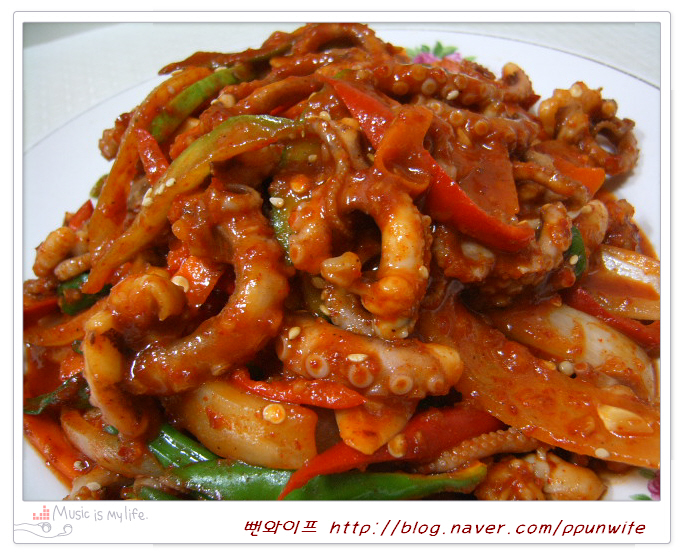
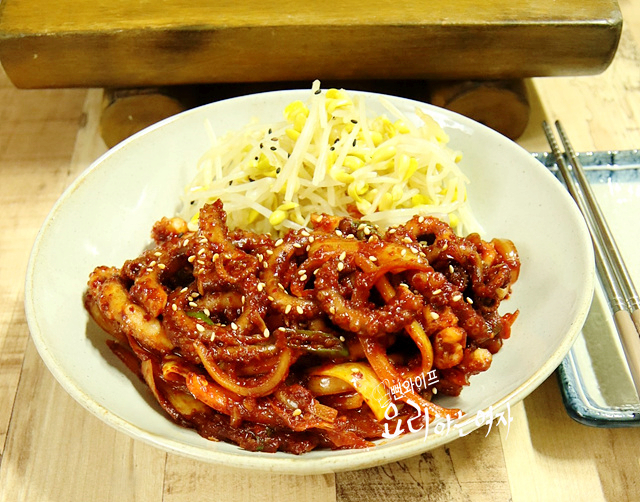
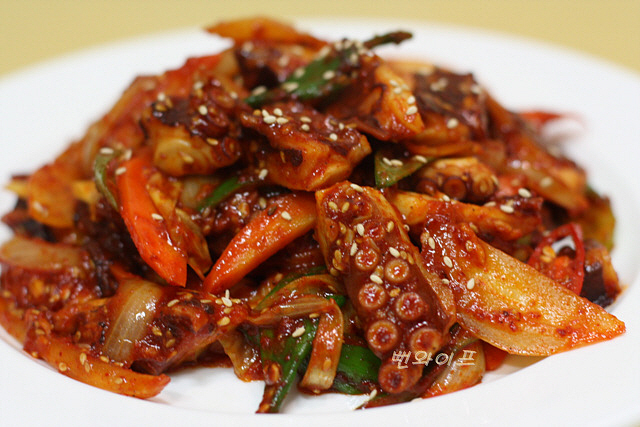
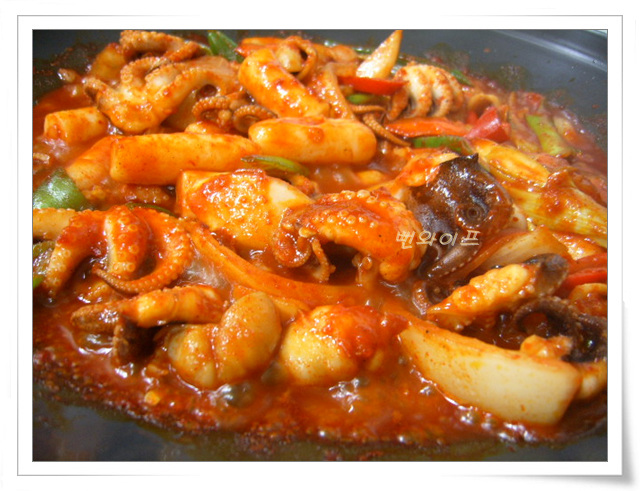
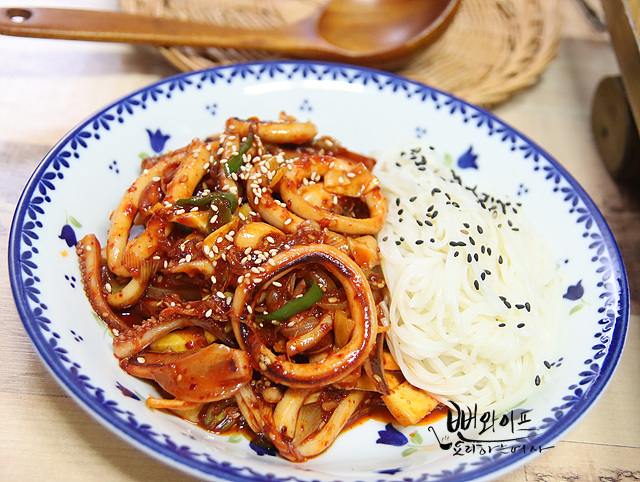
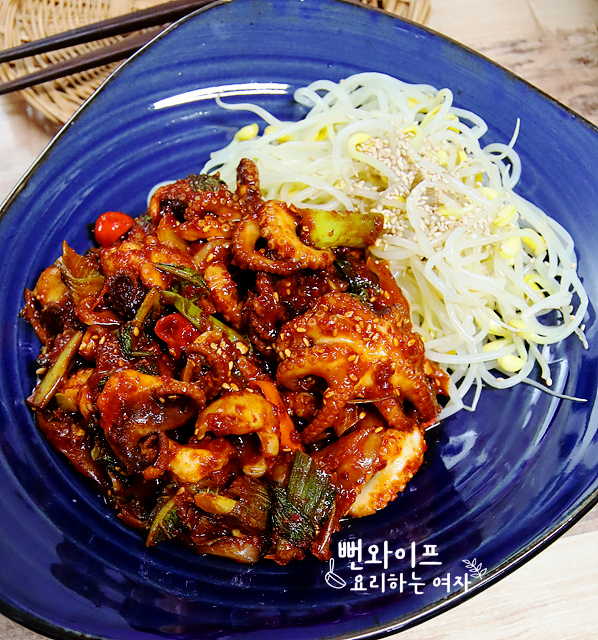
Fiery and Chewy Nakji Bokkeum (Stir-Fried Octopus)
A 2-serving stir-fried octopus dish cooked quickly over high heat to minimize moisture and bring out the spicy flavor.
Translated from Korean by AI and not yet checked by a native speaker. Amounts and numbers are taken directly from the original recipe. Read the Korean original →
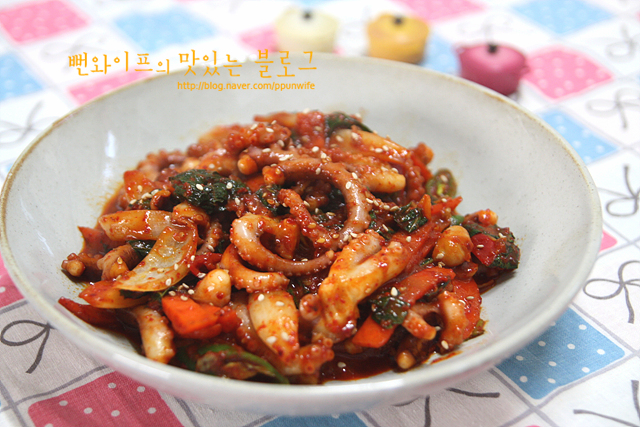
This stir-fried octopus is marinated in a sauce seasoned with Cheongyang chili powder and quickly stir-fried over high heat. Instead of blanching the octopus in boiling water, it is seasoned raw to preserve its natural flavor, and the trick is to stir-fry it briefly so it does not turn tough. With its punchy, spicy kick, it makes a great accompaniment to drinks or a one-bowl meal.
- Servings
- 2 servings
- Difficulty
- Medium
- Spiciness
- Very spicy
Ingredients
Ingredients
- Small octopus (nakji)3 whole, 350 g (medium)
- Onion1/2
- Carrot1/4
- Perilla leaves10 leaves
- Red chili pepper1
- Cheongyang chili pepper (hot green chili)1
Seasoning
- Gochujang (Korean red chili paste)2 tbsp
- Regular soy sauce (jin-ganjang)1 tbsp
- Gochugaru (Korean chili flakes)2 tbsp
- Minced garlic1 tbsp
- Mirin (cooking rice wine)1 tbsp
- Corn syrup (mulyeot)1 tbsp
- Sugar1 tsp
- Ground black peppera little
- Ginger powdera little
- Toasted sesame oil
- Toasted sesame seeds
- You can also use whatever vegetables you have in the fridge, such as cabbage or zucchini.
- Add the sauce to the prepared octopus and let it sit for 30 minutes to absorb the flavors.
Steps
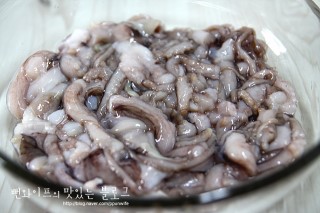
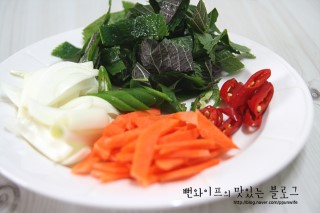
1. Cut the cleaned octopus into bite-sized pieces.
See octopus prep instructions here ⇒ http://blog.naver.com/ppunwife/140127805191
2. Slice all the vegetables diagonally.
You can prepare vegetables according to what you have in the fridge, such as cabbage or zucchini.
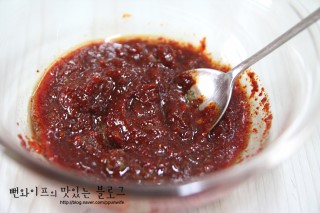
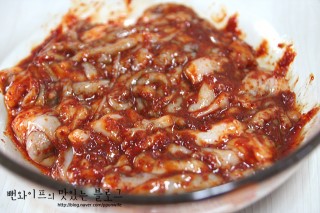
3. Add all the seasoning sauce ingredients and mix them together.
Out of the 2 tbsp of gochugaru, I used 1 tbsp of Cheongyang chili powder.
Making the sauce ahead of time like this allows the chili flakes to hydrate, which produces a much richer color even with a smaller amount
and helps all the seasonings blend well together.
You can also use this sauce for stir-fried squid or webfoot octopus.
4. Add the sauce to the prepared octopus, mix well, and let it sit to absorb the seasoning (30 minutes).
Some people blanch the octopus in boiling water before seasoning, but that causes the flavorful juices of the octopus
to leach into the water, so I season it directly without blanching.
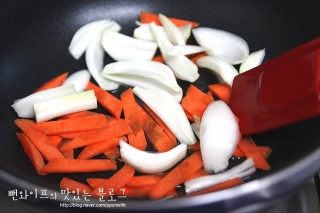
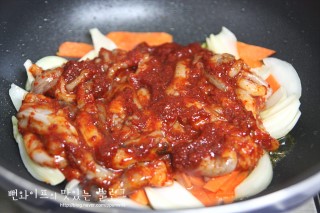
5. Heat oil in a hot pan and stir-fry the carrot and onion (over medium-high to high heat).
6. Once the carrot and onion are partially cooked, stir-fry until the octopus is cooked through.
If you stir-fry octopus over low heat for a long time, it becomes tough and releases liquid.
For stir-fried squid or octopus, the key to keeping it from becoming watery is to stir-fry quickly over high heat.
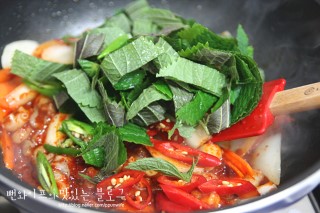

7. Add the perilla leaves and chili peppers, and stir-fry briefly to release their aroma and heat...
8. Finish by adding the toasted sesame oil and toasted sesame seeds.
 Ppunwife's tips
- Making the sauce ahead of time like this allows the chili flakes to hydrate, which produces a much richer color even with a smaller amount and helps all the seasonings blend well together.
- If you stir-fry octopus over low heat for a long time, it becomes tough and releases liquid.
- For stir-fried squid or octopus, the key to keeping it from becoming watery is to stir-fry quickly over high heat.
FAQ
Is it okay to stir-fry the octopus without blanching it first?
Blanching it in boiling water causes its delicious natural flavor components to leach out into the water, so clean it and marinate it directly in the sauce without blanching.
How do I prevent too much liquid from forming while stir-frying?
Stir-frying over low heat for a long time causes moisture to release and can make the octopus tough, so you should stir-fry it quickly over high heat in a short time.
Can I substitute other seafood for the octopus?
You can use this exact same sauce to make stir-fried webfoot octopus (jjukkumi) or squid instead.