Spicy Jjjukkumi bokkeum (stir-fried webfoot octopus)
Marinated webfoot octopus stir-fried quickly over high heat to keep it tender and chewy.
Translated from Korean by AI and not yet checked by a native speaker. Amounts and numbers are taken directly from the original recipe. Read the Korean original →
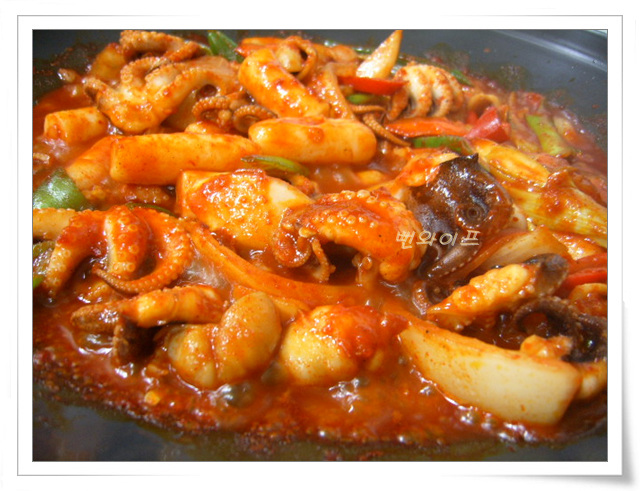
This dish cleans seasonal webfoot octopus with coarse sea salt and flour to eliminate fishy odors before stir-frying it spicy. Marinating it for at least two hours before cooking over high heat ensures the seasoning penetrates deeply instead of sliding off. The leftover sauce is wonderful tossed with thin wheat noodles or rice as a drinking snack.
- Servings
- 2–3 servings
- Difficulty
- Medium
- Spiciness
- Very spicy
Ingredients
Ingredients
- Webfoot octopus (jjukkumi)1 pack, 380 g
- Onion1/2
- Carrot1/4
- Large green onion (daepa)1/2 stalks
- Cheongyang chili pepper (hot green chili)1
- Red chili pepper1
- Rice cakes5
Seasoning
- Gochugaru (Korean chili flakes)4 tbsp (2 fine + 2 coarse)
- Gochujang (Korean red chili paste)2 tbsp
- Regular soy sauce (jin-ganjang)2 tbsp
- Minced garlic1 tbsp
- Mirin (cooking rice wine)1 tbsp
- Sugar1 tbsp
- Corn syrup (mulyeot)1 tbsp
- Ground black peppera little
- Ginger powdera little
- Toasted sesame oila little of each
- Toasted sesame seedsa little of each
- Turn the head inside out to remove the entrails, add 2-3 tbsp coarse sea salt, and scrub vigorously with your hands to thoroughly remove debris from the suction cups. For frozen webfoot octopus, scrub with 2-3 tbsp flour to remove the fishy odor.
- Rinse several times in clean water. Any leftover salt from cleaning can make the stir-fry too salty, so taste a small piece and soak in water if saltiness remains.
- Refrigerate and marinate the seasoned octopus for about 5-6 hours, or at least 2 hours even if you are in a hurry.
- You can also prepare mushrooms or cabbage if you have them.
Steps
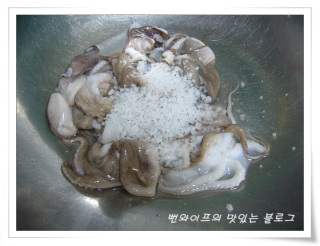
1. The cleaning process for webfoot octopus and small octopus is the same.
There are entrails inside the head, so turn it inside out to remove them.
Add 2-3 tbsp coarse sea salt to the webfoot octopus and scrub vigorously with your hands.
This thoroughly removes debris from the suction cups.
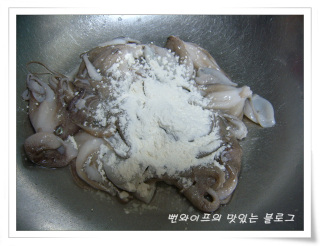
2. You can skip this extra step if using fresh live octopus.
Frozen small octopus or frozen webfoot octopus can carry an odor,
so scrubbing with 2-3 tbsp flour is effective for removing fishy smells.
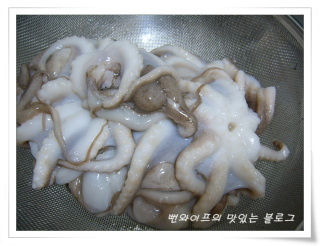
3. Rinse several times in clean water.
If any salt remains from cleaning, the stir-fry can turn out too salty, so taste a piece
and soak in water if saltiness remains.
Drain well, then cut once or twice into bite-sized pieces.
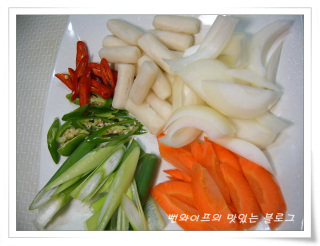
4. Cut the vegetables into thick diagonal slices.
I used mini rice cakes smaller than regular tteokbokki rice cakes, so the count is slightly higher.
Prepare mushrooms or cabbage too if you have them.
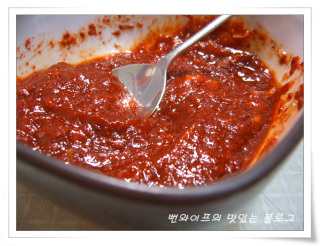
5. Mix all the seasoning ingredients together, except for the toasted sesame seeds and toasted sesame oil.
If you do not have fine gochugaru, grind coarse gochugaru finely in a blender.
Using fine gochugaru alongside coarse gives the sauce a much deeper, prettier color. Try it in braised or stir-fried dishes.
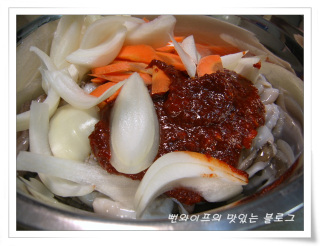
6. Combine the cleaned webfoot octopus with the sauce, carrot, and onion, then toss well.


7. Specialty seafood stir-fry restaurants are said to marinate overnight in the refrigerator,
but 5-6 hours is plenty. Even if you are very busy, let it sit for at least 2 hours so the flavor penetrates well and tastes delicious.
8. Place the well-marinated webfoot octopus into a pan or griddle and stir-fry over high heat.

10

9. Once the webfoot octopus and vegetables are cooked through, finish by tossing in the rice cakes, large green onion, and chili peppers to stir-fry briefly,
then stir in the toasted sesame oil and toasted sesame seeds to finish.
10. After enjoying all the solid ingredients, it is delicious to mix
thin wheat noodles, spaghetti noodles, or rice into the leftover sauce.
 Ppunwife's tips
- Using fine gochugaru together with coarse gives the sauce a much deeper, prettier color. Try using it in braised or stir-fried dishes.
- Letting it marinate keeps the sauce and the octopus from tasting separate, making it far more delicious.
- It tastes even better wrapped in aromatic leaves like perilla leaves.
FAQ
How do I remove debris from the suction cups and eliminate the fishy odor?
First remove the entrails from the head, then add 2-3 tbsp coarse sea salt and scrub with your hands to remove debris. If using frozen octopus, scrubbing with an additional 2-3 tbsp flour is effective for reducing fishy odors.
Can I stir-fry it right after tossing it in the seasoning?
To keep the seasoning from sliding off, marinate it in the refrigerator for at least 2 hours, or 5-6 hours if you have time, so the seasoning absorbs all the way through before cooking.
What should I do if I don't have fine gochugaru?
You can grind coarse gochugaru finely in a spice grinder or blender. Blending in fine flakes makes the color of the sauce much more vibrant and red.
Can I use small octopus instead of webfoot octopus with the same method?
Yes, small octopus can be prepared and cooked the exact same way using the same seasonings.