Smoky Jjjukkumi bokkeum (stir-fried webfoot octopus)
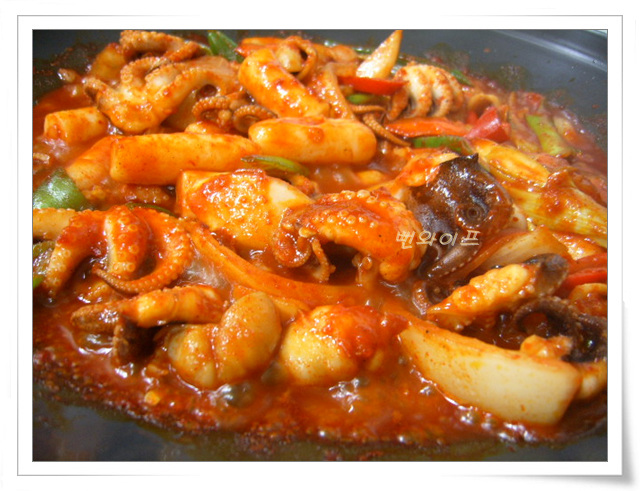
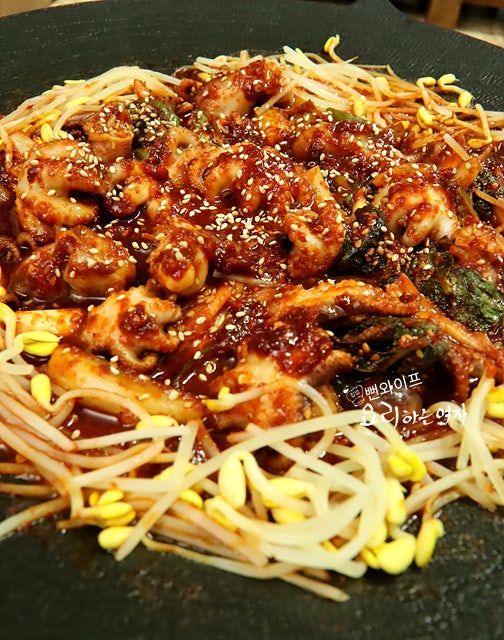
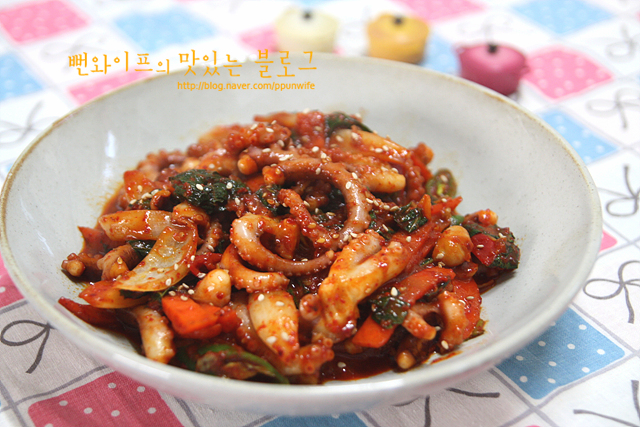
A spicy stir-fry featuring blanched webfoot octopus cooked quickly over high heat to stay juicy without getting watery, infused with smoky aroma.
Translated from Korean by AI and not yet checked by a native speaker. Amounts and numbers are taken directly from the original recipe. Read the Korean original →
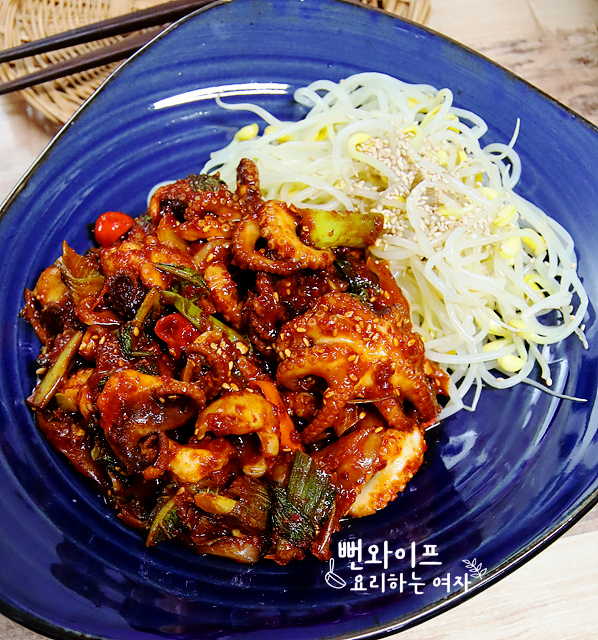
Quickly stir-frying lightly blanched webfoot octopus in a spicy sauce over high heat keeps it tender without releasing excess liquid. Serving it with crisp boiled soybean sprouts tempers the fiery heat, and it is wonderful tossed with rice or thin wheat noodles for a hearty meal.
- Servings
- 4 servings
- Difficulty
- Medium
- Spiciness
- Spicy
Ingredients
Ingredients
- Webfoot octopus (jjukkumi)1 kg
- Soybean sprouts200 g
- Onion1 (medium)
- Large green onion (daepa)1 stalk
- Cheongyang chili pepper (hot green chili)2
- Flour1/2 cup
- Coarse sea salt1/3 cup
Seasoning
- Gochugaru (Korean chili flakes)5 tbsp
- Regular soy sauce (jin-ganjang) (or brewed soy sauce (yangjo-ganjang))4 tbsp
- Gochujang (Korean red chili paste)2 tbsp
- Mirin (cooking rice wine)3 tbsp
- Corn syrup (mulyeot)2 tbsp
- Sugar1 tbsp
- Minced garlic3 tbsp
- Minced ginger1/2 tbsp
- Ground black peppera little
- Toasted sesame oil1 tbsp
- Toasted sesame seeds1 tbsp
- I prepared a generous amount of soybean sprouts because they will be blanched to serve alongside the stir-fried webfoot octopus or mixed together.
- If you have egg-bearing webfoot octopus, white rice-like clusters are attached inside; leave those intact and cut away only the guts.
Steps
Prepare the ingredients
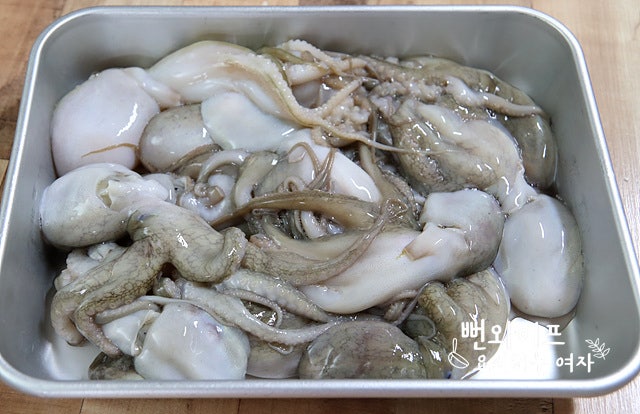
The webfoot octopus includes a mix of large and medium sizes, about 10 pieces in total.
It is 1 kg of webfoot octopus with as much moisture removed as possible.
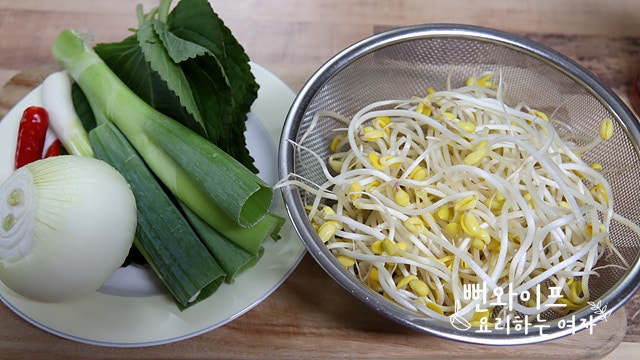
For vegetables, prepare soybean sprouts, onion, large green onion, Cheongyang chili pepper (and red chili pepper), and perilla leaves. (I prepared a generous amount of soybean sprouts because they will be blanched to serve alongside the stir-fried webfoot octopus or mixed together.)
Clean the webfoot octopus
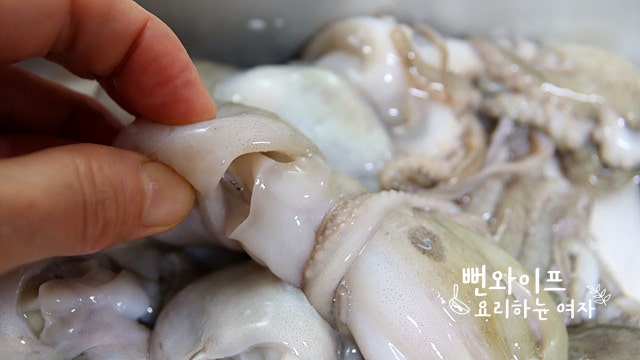
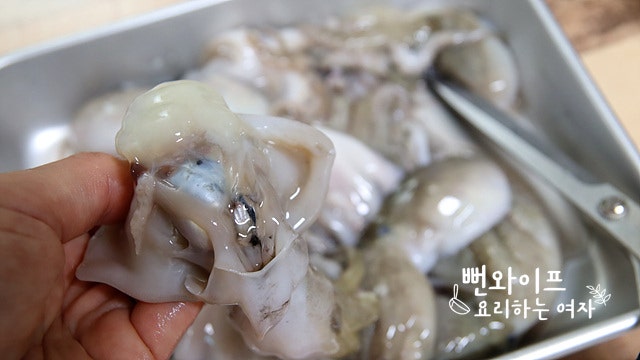
To clean while keeping the head intact, sever the connection between the head and the guts at the back, then turn the head inside out to reveal the innards.
For convenience, I simply snipped one side of the head with kitchen shears and turned it inside out.
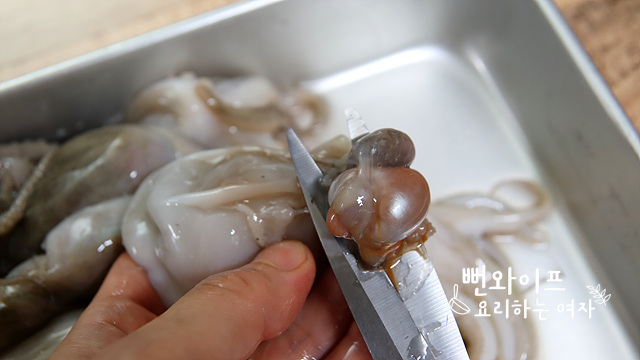
Snip away the innards with scissors.
If you have egg-bearing webfoot octopus, white rice-like clusters are attached inside; leave those intact and cut away only the guts.
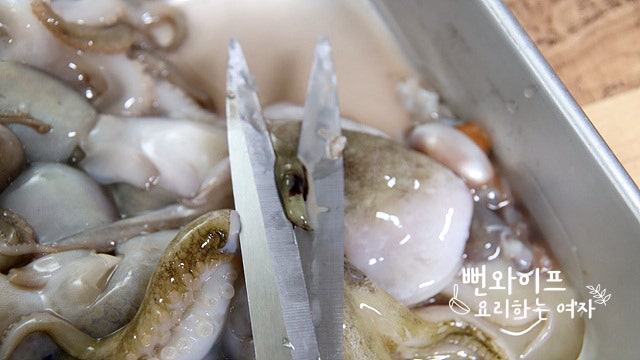
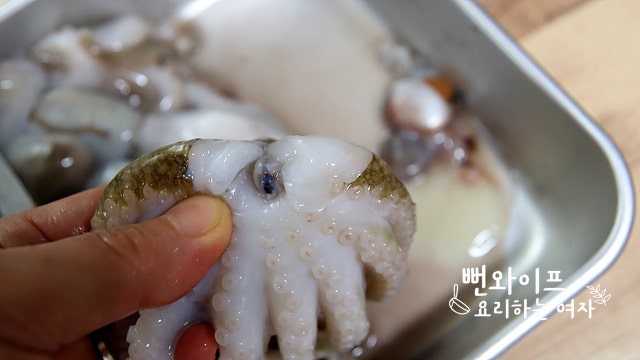
Snip off the eyes below the head, and remove the beak in the center of the octopus legs.
Wash the webfoot octopus
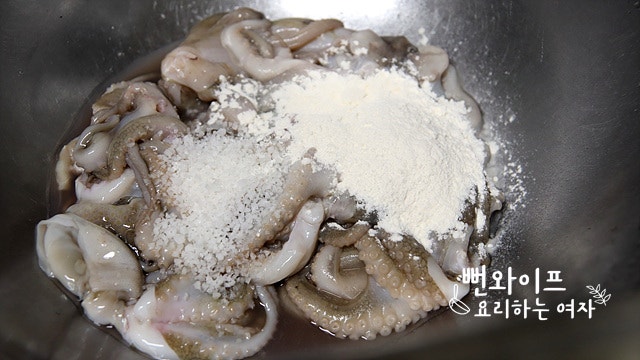
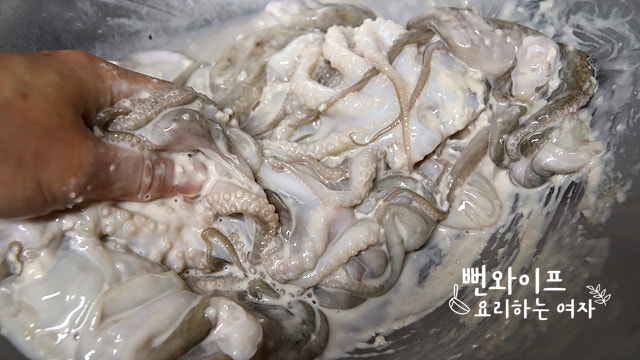
To remove foreign matter trapped in the suckers and eliminate any fishy odor, add the salt and flour, then rub vigorously with your hands.
If it feels too stiff, add a tiny bit of water as you work.
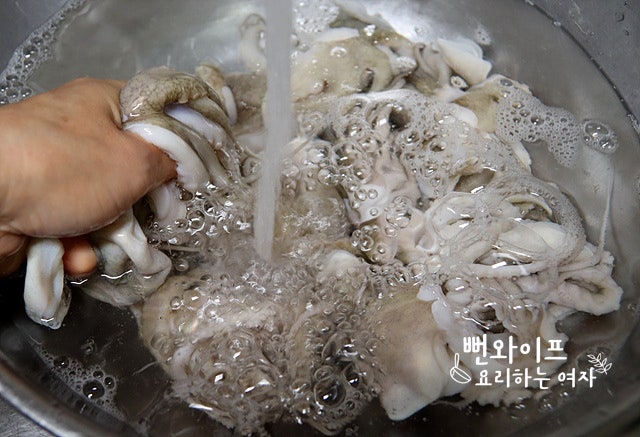
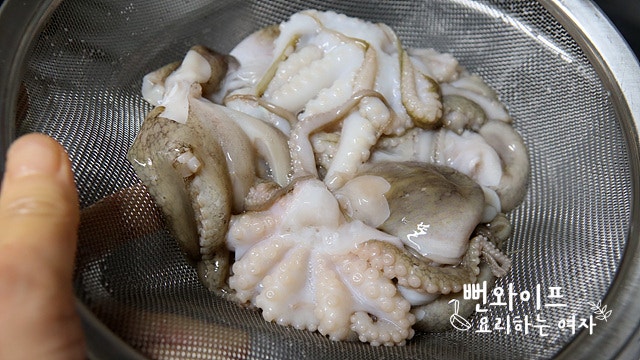
Rinse thoroughly while rubbing to wash away all the flour and salty residue.
Blanch
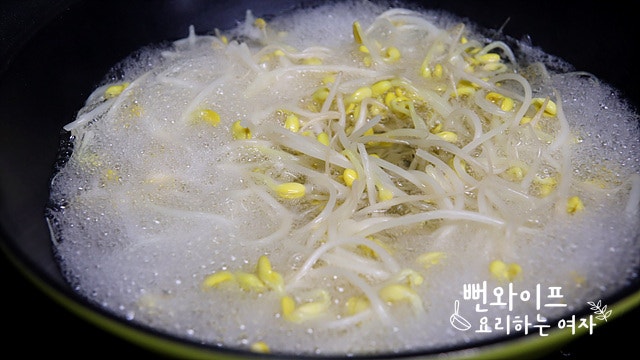
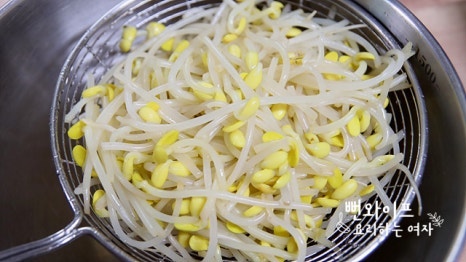
First, blanch the soybean sprouts in rolling boiling water.
Rinse in cold water and drain in a colander.
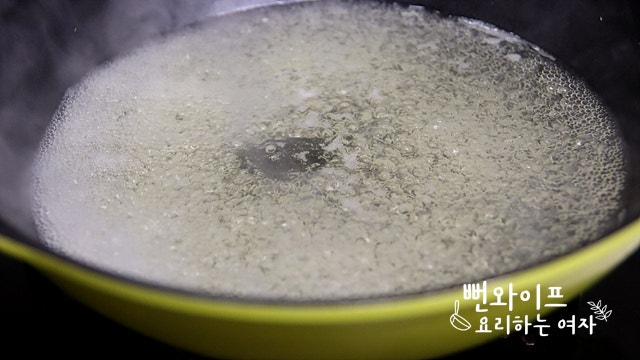
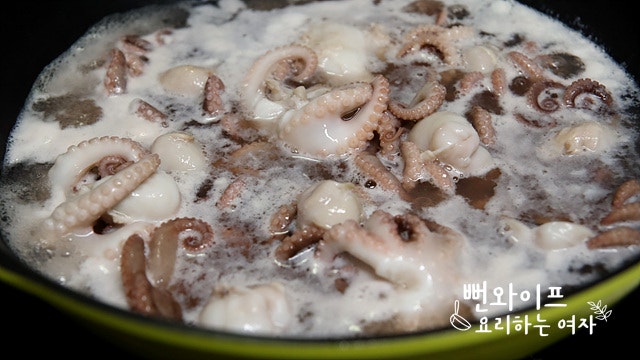
In the same boiling water used for the sprouts, add the webfoot octopus and blanch lightly.
It cooks and turns plump and springy right away; blanch it within 1 minute so it does not turn tough.
Rinse in cold water and drain.
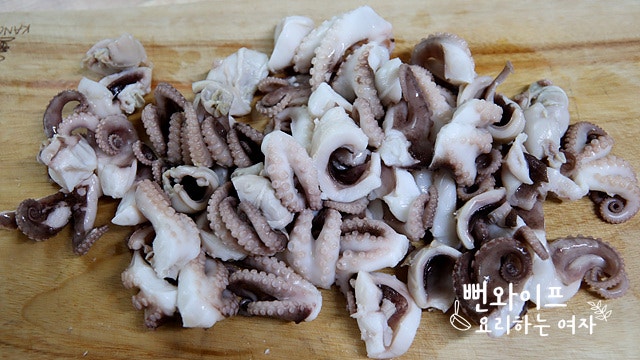
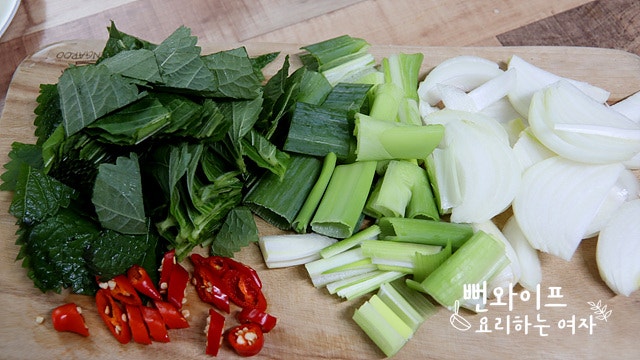
The webfoot octopus was large, so I cut it into bite-sized pieces.
Chop the vegetable ingredients into generous pieces as well.
Make the sauce
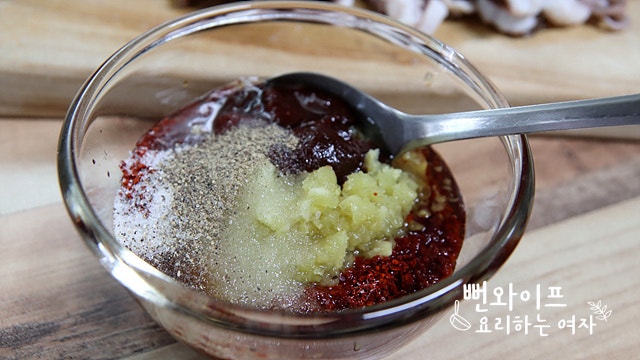
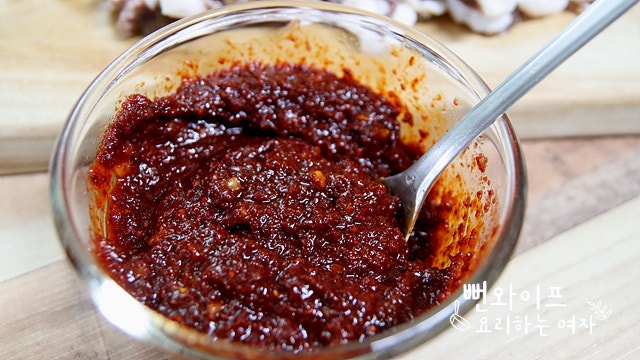
Except for the toasted sesame oil and toasted sesame seeds, combine the sauce ingredients: 5 tbsp gochugaru, 4 tbsp regular soy sauce, 2 tbsp gochujang, 3 tbsp mirin, 2 tbsp corn syrup, 1 tbsp sugar, 3 tbsp minced garlic, 1/2 tbsp minced ginger, and a little ground black pepper.
While mirin helps control fishiness, the flavor of ginger complements seafood beautifully while cutting through unwanted odors.
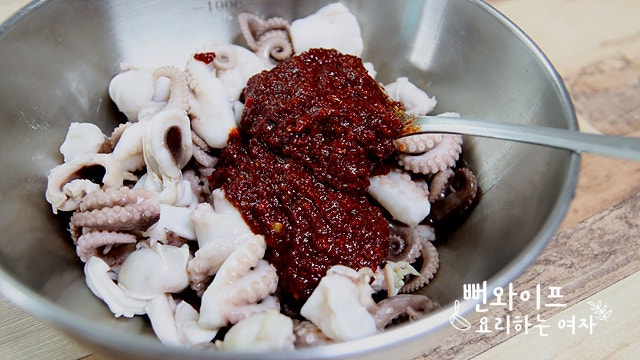
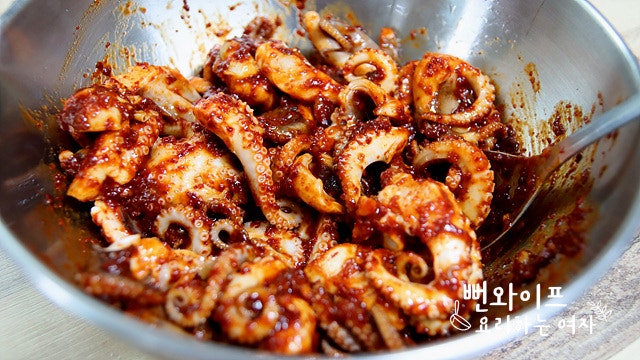
Set aside half of the sauce, add it to the webfoot octopus, and toss to season in advance.
Stir-fry
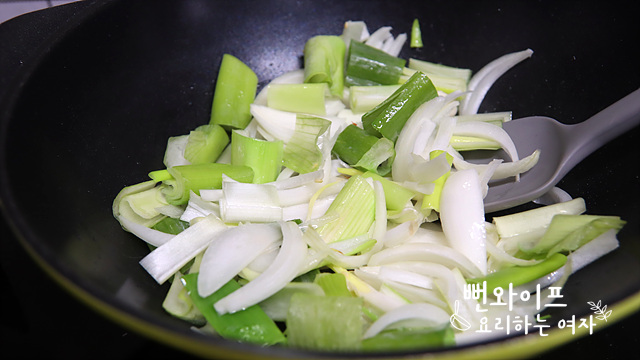
Drizzle cooking oil generously into the pan, add the onion and large green onion, and stir-fry briskly until softened.
Sautéing them first releases vegetable juices so the sauce will not burn easily later.
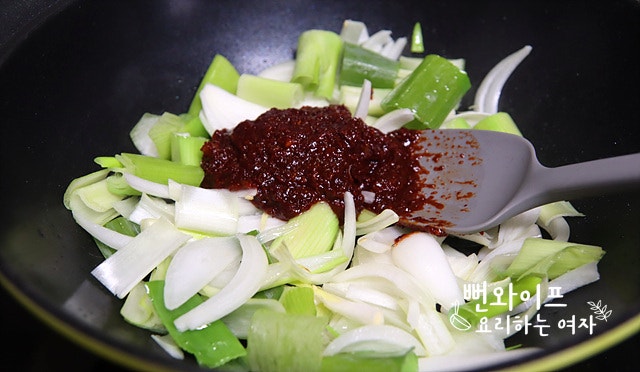
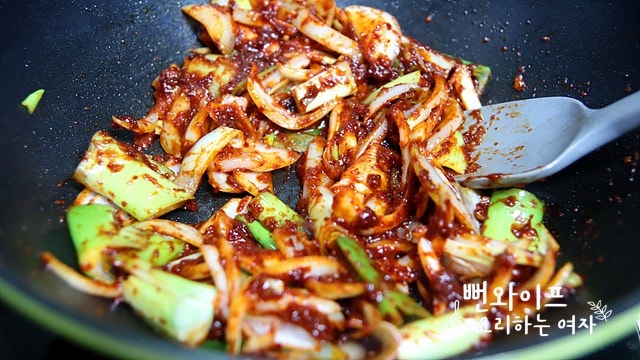
Add the remaining sauce and stir-fry thoroughly so it blends with the aromatic oil without burning, which creates a smoky flavor.
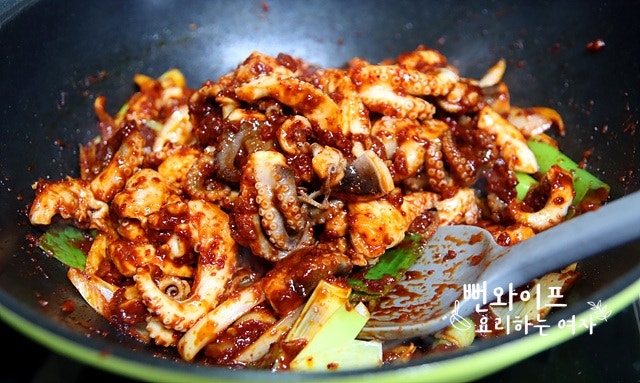
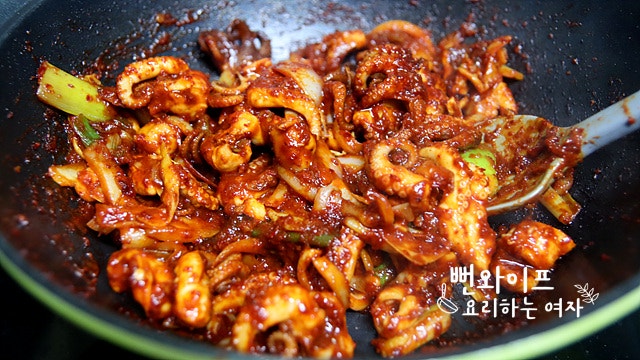
Now add the seasoned webfoot octopus and stir-fry quickly over high heat, almost searing it lightly; this prevents liquid from pooling and keeps the pre-cooked webfoot octopus from getting tough.
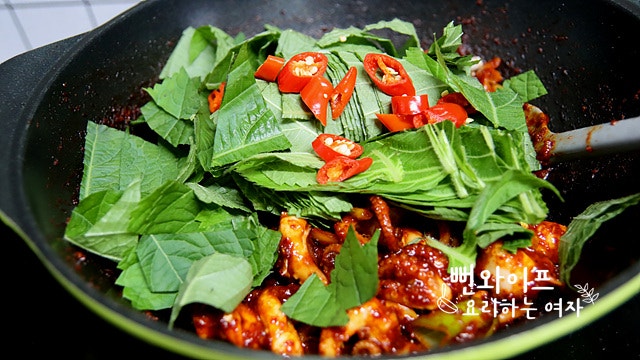
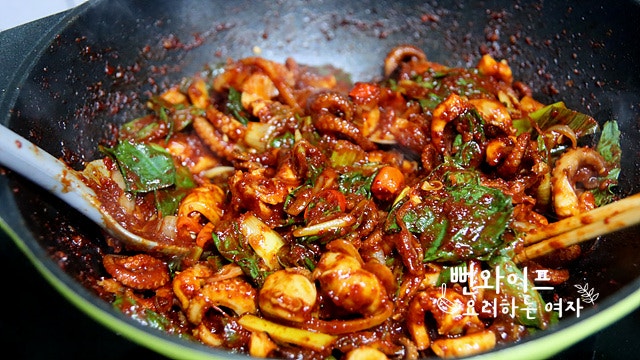
Add the perilla leaves and chilies, toss briefly until slightly wilted, then turn off the heat.
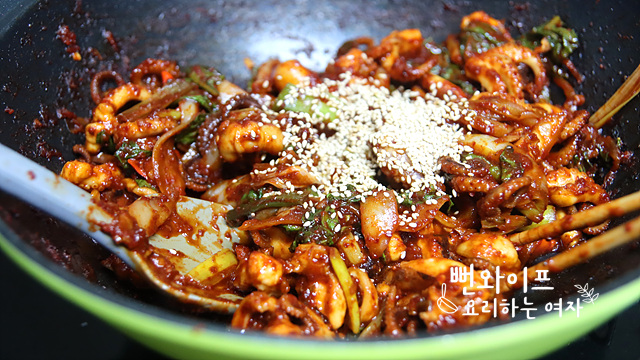
Finish by adding the toasted sesame oil and toasted sesame seeds.
Serve
Plate the stir-fried webfoot octopus on a large dish together with the blanched soybean sprouts to finish.
Just looking at it, you know it is spicy and delicious.
 Ppunwife's tips
- It cooks and turns plump and springy right away; blanch it within 1 minute so it does not turn tough.
- Sautéing the vegetables first releases vegetable juices so the sauce will not burn easily later.
- Stir-fry the remaining sauce thoroughly so it blends with the aromatic oil without burning, which creates a smoky flavor.
- Add the seasoned webfoot octopus and stir-fry quickly over high heat, almost searing it lightly; this prevents liquid from pooling and keeps the pre-cooked webfoot octopus from getting tough.
FAQ
How do I prevent water from pooling while stir-frying?
Blanch the webfoot octopus in boiling water for under 1 minute to release excess moisture, then stir-fry quickly over high heat with a light sear so no liquid accumulates.
How do I remove the fishy smell and dirt from the suckers?
Rub the webfoot octopus vigorously with flour and salt, then rinse thoroughly in cold water to effectively remove impurities and any fishy odor.
Are there good toppings or accompaniments for the leftover sauce and rice bowls?
It pairs wonderfully mixed with rice or thin wheat noodles along with blanched soybean sprouts, dried seaweed flakes, and toasted sesame oil.
Can I use this sauce for other seafood stir-fries?
Yes, you can use the exact same sauce ratio when making stir-fried small octopus (nakji bokkeum) or stir-fried squid (ojingeo bokkeum).