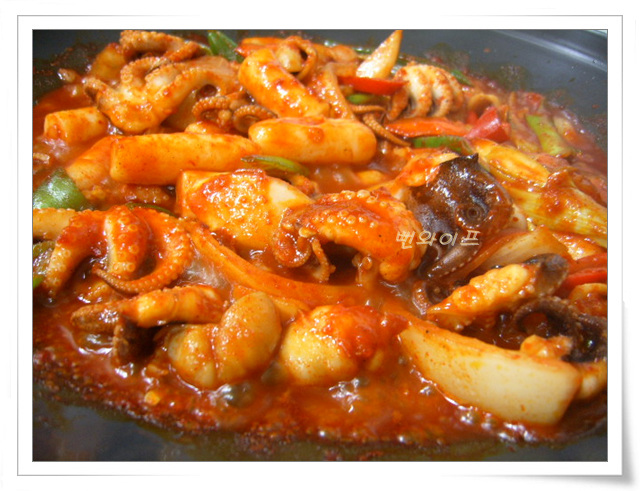
Spicy Jjjukkumi bokkeum (stir-fried webfoot octopus)
A one-dish meal of cleaned webfoot octopus stir-fried in a spicy sauce and served with soybean sprouts and perilla leaves.
Translated from Korean by AI and not yet checked by a native speaker. Amounts and numbers are taken directly from the original recipe. Read the Korean original →
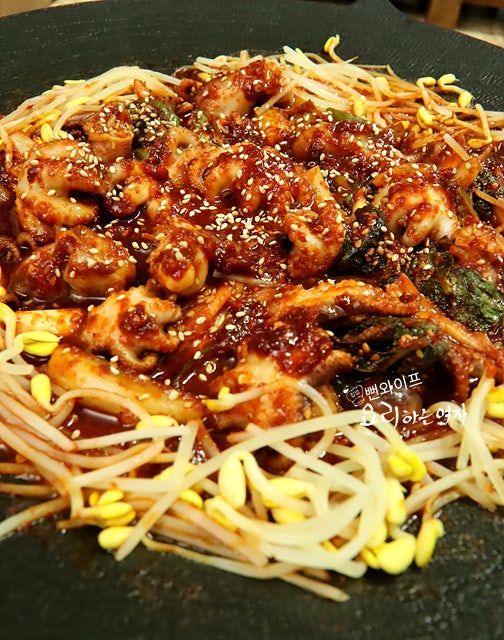
This one-dish meal features in-season webfoot octopus coated in a special spicy seasoning and stir-fried quickly over high heat. Frying part of the sauce first in the pan adds a subtle smoky aroma that makes all the difference. Served alongside crisp soybean sprouts or fragrant perilla leaves, it pairs wonderfully as both a drinking snack and a side dish for rice.
- Servings
- about 2–3 servings
- Difficulty
- Medium
- Spiciness
- Spicy
Ingredients
Ingredients
- Webfoot octopus (jjukkumi)400 g
- Onion1 (small)
- Large green onion (daepa)1/2 stalk
- Cheongyang chili pepper (hot green chili)2
- Perilla leaves20 leaves
- Soybean sprouts150 g
- Flour2 tbsp
- Coarse sea salt1 tbsp
Seasoning
- Gochugaru (Korean chili flakes)4 tbsp
- Regular soy sauce (jin-ganjang) (or brewed soy sauce (yangjo-ganjang))3 tbsp
- Gochujang (Korean red chili paste)1 tbsp
- Mirin (cooking rice wine)2 tbsp
- Corn syrup (mulyeot)1 tbsp
- Sugar1 tbsp
- Minced garlic2 tbsp
- Minced ginger1/2 tsp
- Ground black peppera little
- Toasted sesame oil1 tbsp
- Toasted sesame seeds1 tbsp
- Feel free to use whatever vegetables you have in the fridge to stir-fry together, such as cabbage, carrots, mushrooms, or water dropwort.
- You can also prepare more soybean sprouts than the recipe calls for and serve them on the side.
Steps
Prepare the ingredients
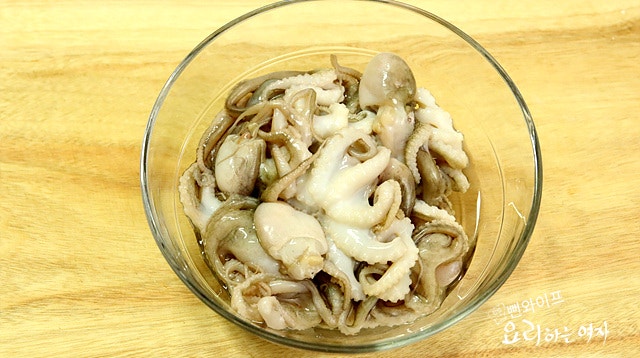
Here is 400g of webfoot octopus. It is about 13 small ones.
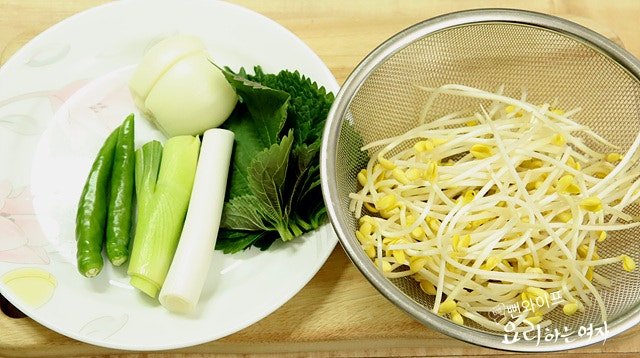
These are the vegetables to stir-fry together: soybean sprouts, onion, perilla leaves, large green onion, and Cheongyang chili peppers.
You can prepare cabbage, carrots, mushrooms, water dropwort, or whatever you have in the fridge.
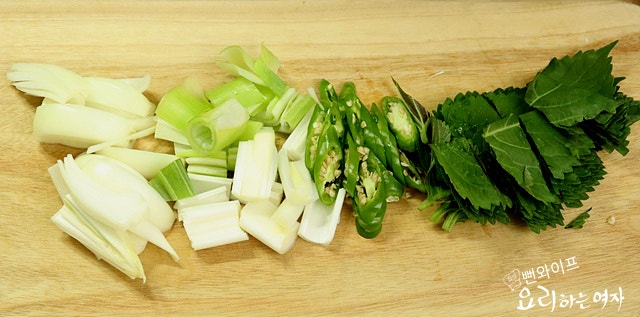
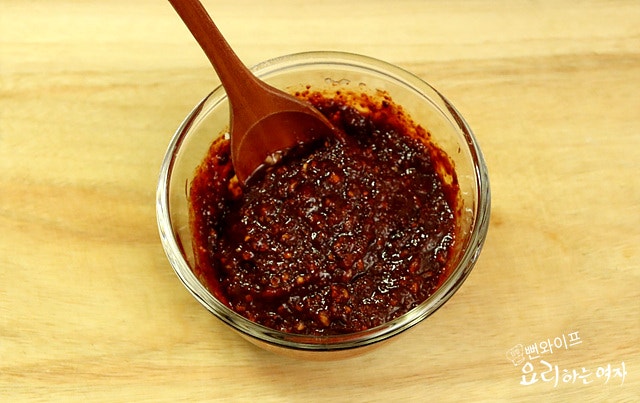
Thickly slice the onion and large green onion, diagonally slice the Cheongyang chili peppers, and cut the perilla leaves into large pieces.
Add all the seasoning ingredients except the toasted sesame oil and toasted sesame seeds, and mix them together.
Cleaning the webfoot octopus
Clean the webfoot octopus
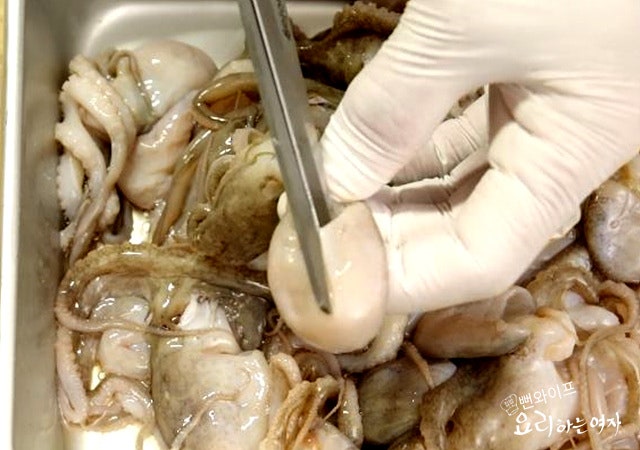
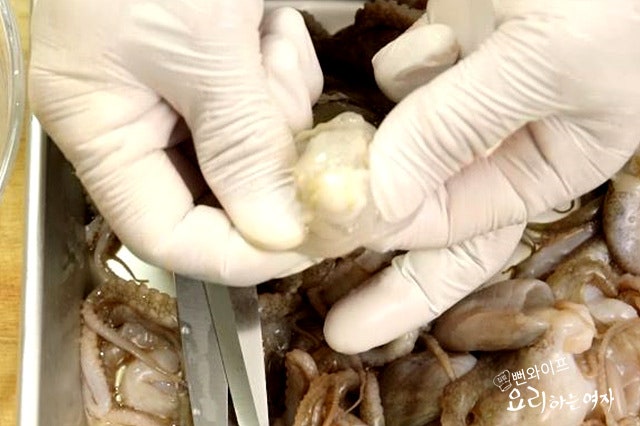
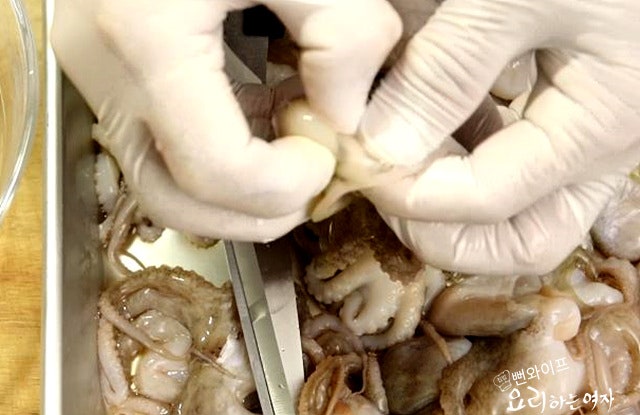
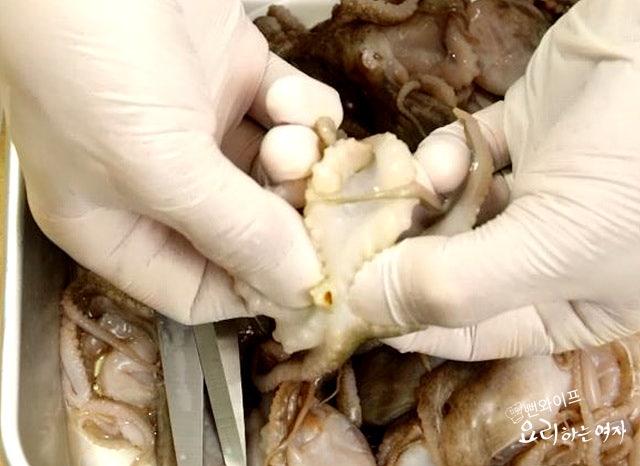
Snip the head of the webfoot octopus with kitchen shears so it is easy to turn inside out, then cut away the innards.
Press with your hands on the center of the body to push out the beak.
These were small so the eyes were barely visible and I skipped them, but you should cut them out because ink can squirt out.
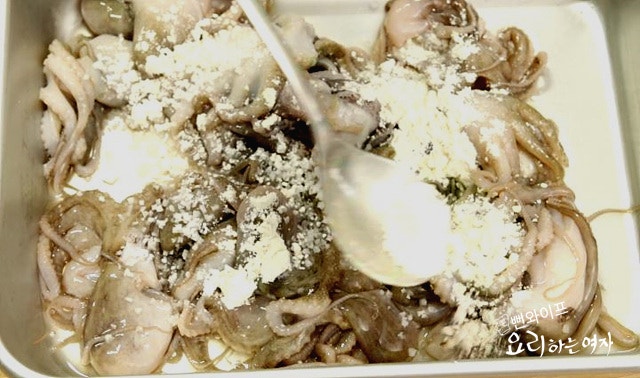
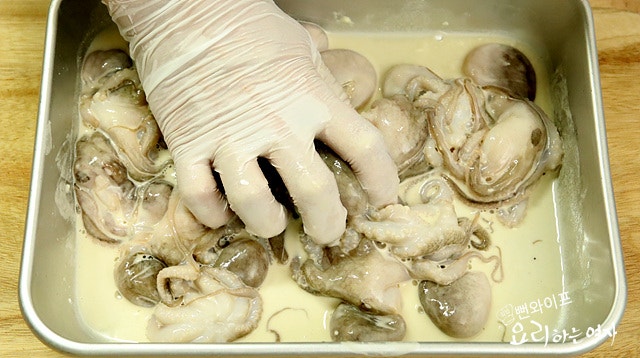
Add 2 tbsp flour and 1 tbsp coarse sea salt and scrub vigorously with your hands; this removes adhering mucus and impurities, and also helps get rid of the fishy odor.
When rinsing in water, strip down the tentacles as you rinse so the clinging flour and impurities come off completely.
Also, seafood naturally retains saltiness, so washing it out as much as possible keeps it from throwing off your seasoning.
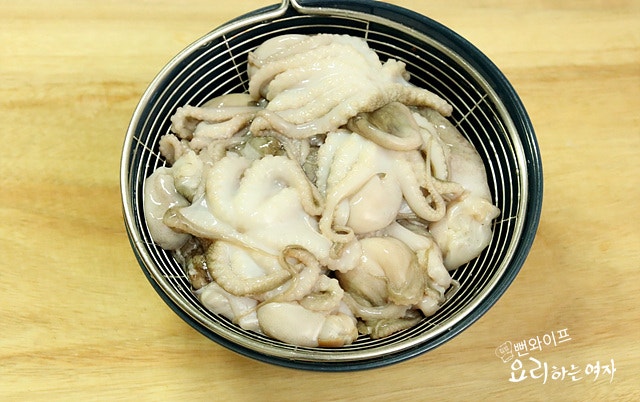
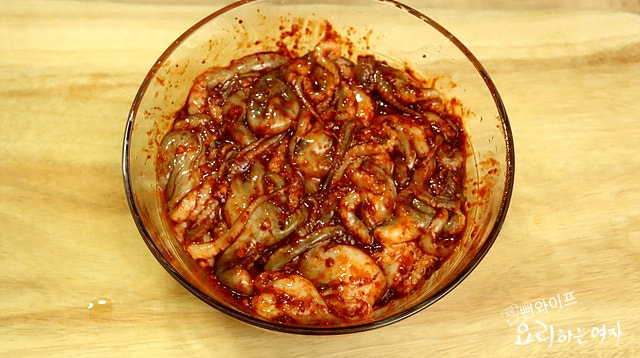
Drain thoroughly in a colander.
Take half of the prepared sauce, add it to the webfoot octopus, and mix well to marinate it.
The remaining sauce will be stir-fried in the pan to create a smoky flavor.
Adding a little ginger to seafood seasoning not only enhances the taste but also helps remove fishiness.
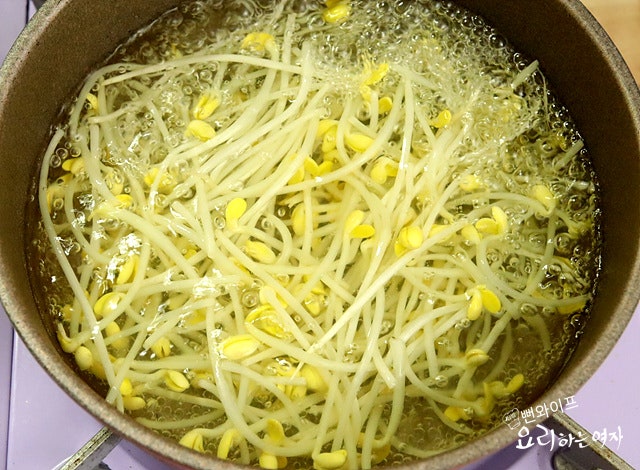
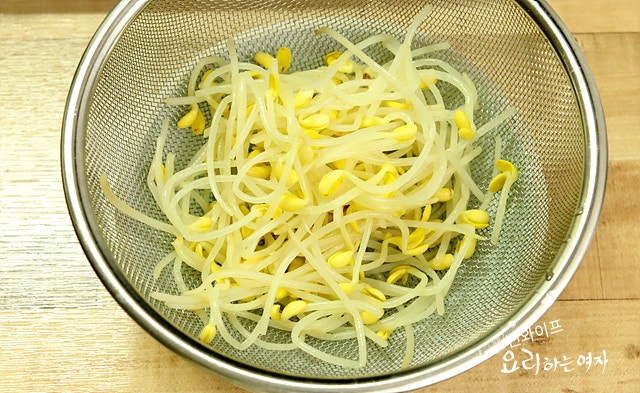
Blanch the soybean sprouts briefly in rolling boiling water, rinse in cold water, and drain.
Stir-frying the webfoot octopus
Stir-fry the webfoot octopus
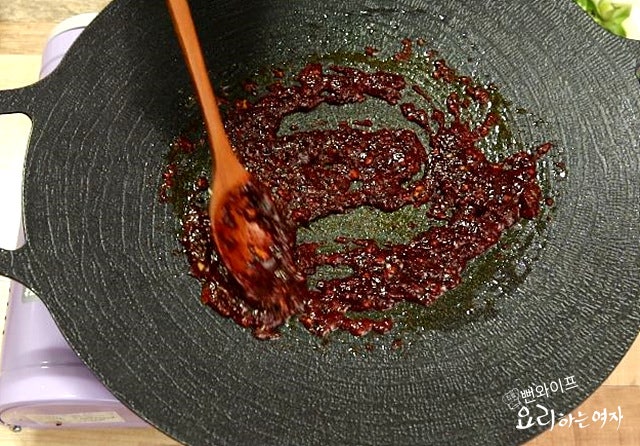
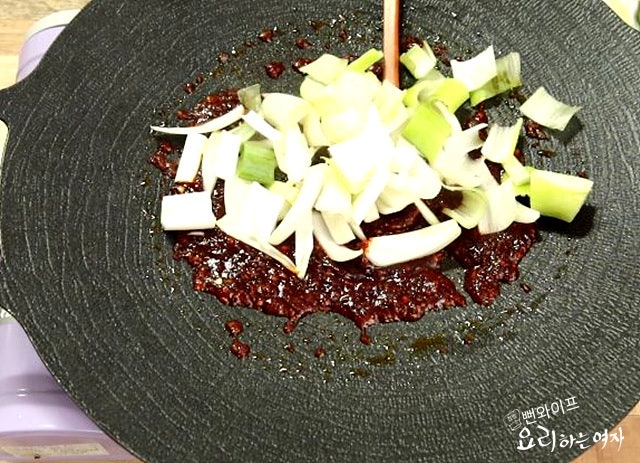

Drizzle a little cooking oil in a pan, add the reserved sauce, and stir-fry thoroughly so it does not burn.
Stir-frying the sauce first brings out a smoky aroma and deepens the flavor. Add the onion and large green onion, and stir-fry until slightly softened.


Add the seasoned webfoot octopus and stir-fry quickly over high heat.
Webfoot octopus cooks quickly, so you do not need to stir-fry it for long.
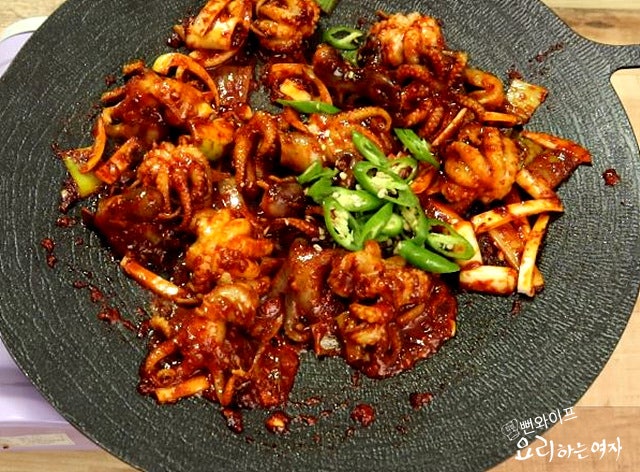
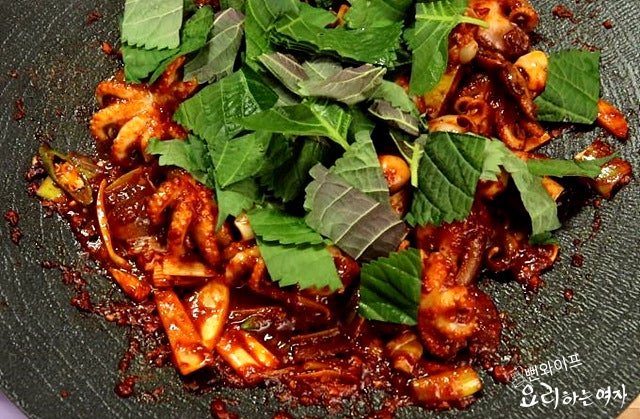

Add the Cheongyang chili peppers, toss briefly to release their spicy aroma, then turn off the heat and stir in the perilla leaves, toasted sesame oil, and toasted sesame seeds to finish.
Save half of the perilla leaves to use later for fried rice.
 Ppunwife's tips
- Seafood naturally retains saltiness, so washing it out as much as possible keeps it from throwing off your seasoning.
- Adding a little ginger to seafood seasoning not only enhances the taste but also helps remove fishiness.
- Stir-frying the sauce first brings out a smoky aroma and deepens the flavor.
- Webfoot octopus cooks quickly, so you do not need to stir-fry it for long.
FAQ
How do I wash away the unique fishy odor and mucus of webfoot octopus?
Add 2 tbsp flour and 1 tbsp coarse sea salt and scrub vigorously with your hands to thoroughly eliminate mucus, impurities, and fishy odors.
Why is the seasoning sauce divided rather than added all at once?
Half of the sauce is used to marinate the webfoot octopus, while the other half is stir-fried first in an oiled pan to bring out a smoky aroma and richer flavor.
Are there recommended ingredients to add when making fried rice afterward?
Finely chop any leftover sauce and octopus pieces, then stir-fry with rice along with sliced perilla leaves or fragrant water dropwort.
Can I add other vegetables like cabbage or mushrooms?
Yes, feel free to add vegetables according to your preference and whatever you have in the fridge, such as cabbage, carrots, mushrooms, or water dropwort.