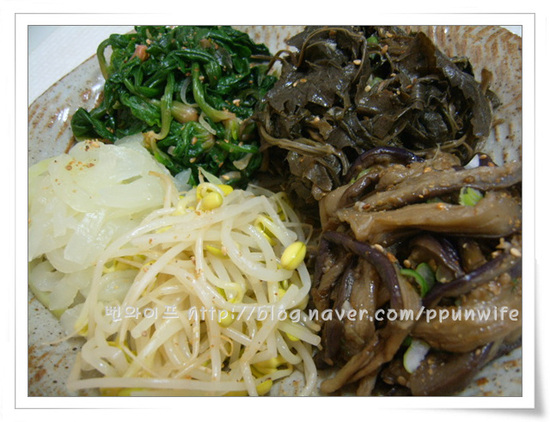
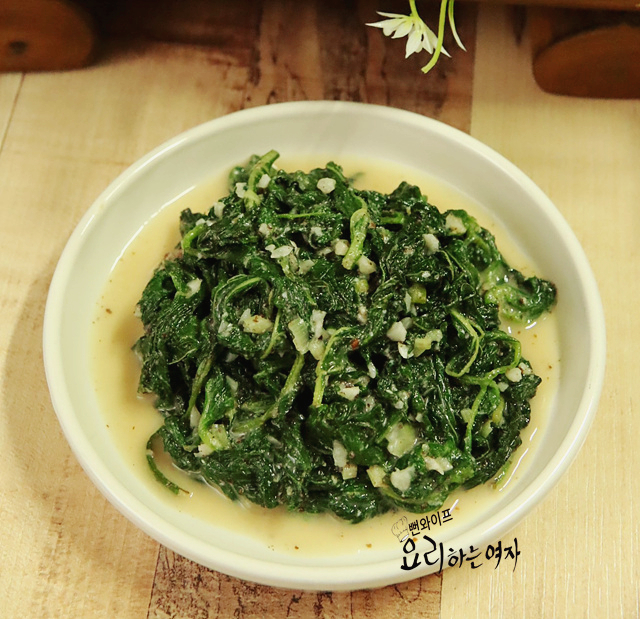
Moist Bongnip Namul Bokkeum (Stir-Fried Mulberry Leaves)
A Jeongwol Daeboreum side dish made by soaking and boiling dried mulberry leaf shoots, then stir-frying them moistly with anchovy broth.
Translated from Korean by AI and not yet checked by a native speaker. Amounts and numbers are taken directly from the original recipe. Read the Korean original →
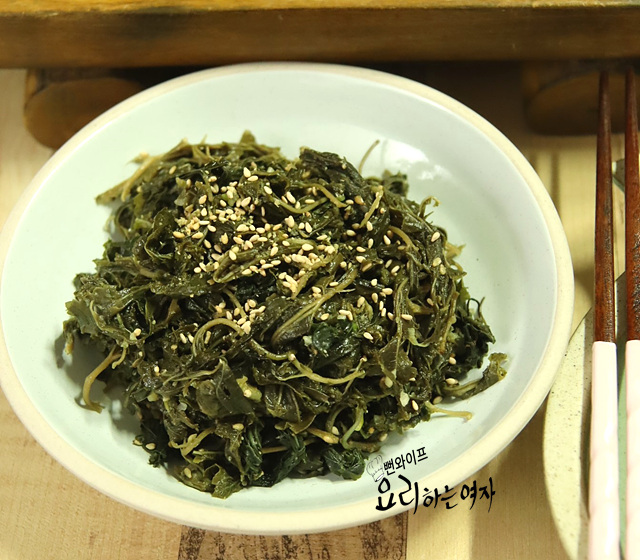
This muknamul side dish brings out a tender texture by thoroughly soaking and boiling dried mulberry leaf shoots. It has no bitter aftertaste, making it easy and pleasant to enjoy, and the secret is drizzling in anchovy broth while stir-frying so it can steam until moist. It makes a clean, elegant addition to your Jeongwol Daeboreum feast.
- Servings
- about 3–4 servings
- Difficulty
- Medium
- Spiciness
- Not spicy
Ingredients
Ingredients
- Dried mulberry leaves50 g (200 g, after cleaning)
Seasoning
- Minced green onion2 tbsp
- Soup soy sauce (guk-ganjang)1 tbsp
- Minced garlic1 tsp
- Anchovy broth4 tbsp
- Salt1/3 tsp
- Toasted sesame oil (or perilla oil)1 tbsp
- Ground toasted sesame seeds1 tbsp (perilla seed powder)
- Pour plenty of cold water over the dried mulberry leaves and let them soak for about 1 to 2 hours.
- They are completely dry, so handle them gently so they do not crumble. Otherwise, the leaves will break into messy pieces when stir-fried.
Steps
Prepare the ingredients
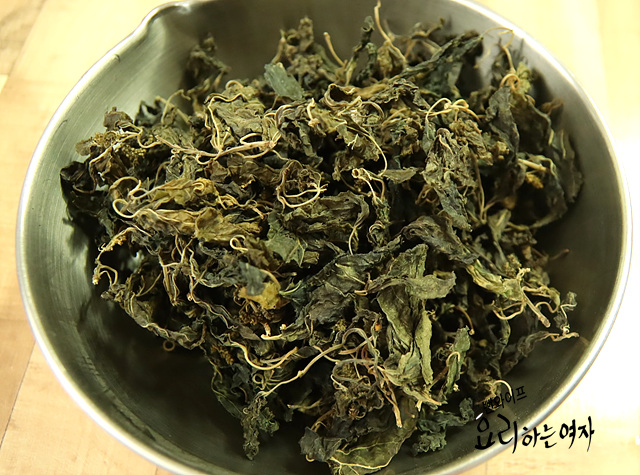
These are dried mulberry leaves.
They are completely dry, so handle them gently so they do not crumble. Otherwise, the leaves will break into messy pieces when stir-fried.
Soak the dried mulberry leaves
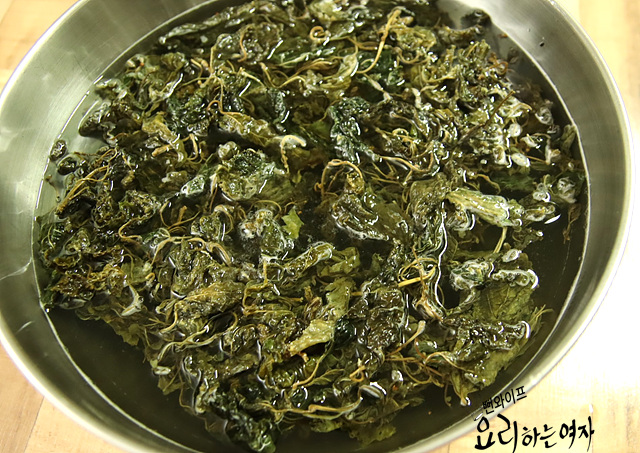
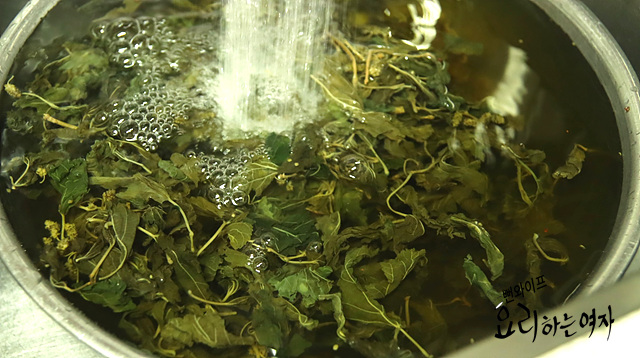
Pour plenty of cold water over the dried mulberry leaves and let them soak for about 1 to 2 hours.
Using lukewarm water can shorten the soaking time.
Once the dried leaves that were stuck together separate smoothly, they are fully soaked, so rinse them several times until the water runs clear.
Boil the mulberry leaves
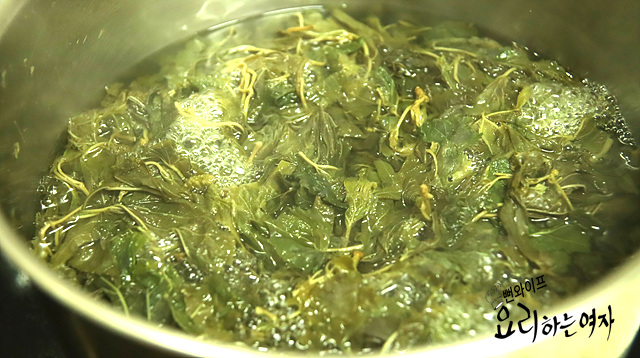
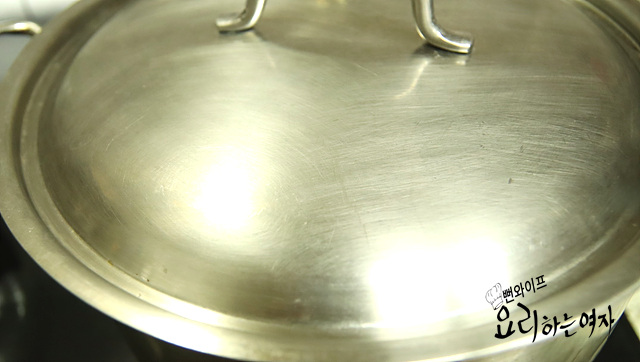
Pour in enough water to submerge the mulberry leaves, and once it comes to a boil, simmer over low heat for about 20 to 30 minutes.
Adjust the boiling time while checking the greens, and once boiled, cover with the lid and let them steam in the residual heat.
Leaf-only dried greens take less time to soak and boil than stem-heavy ones like bracken fern or sweet potato stems.
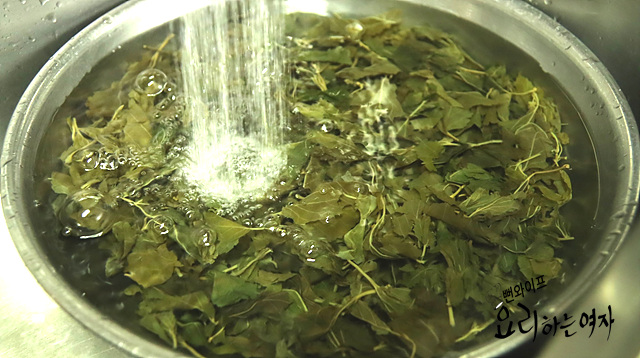
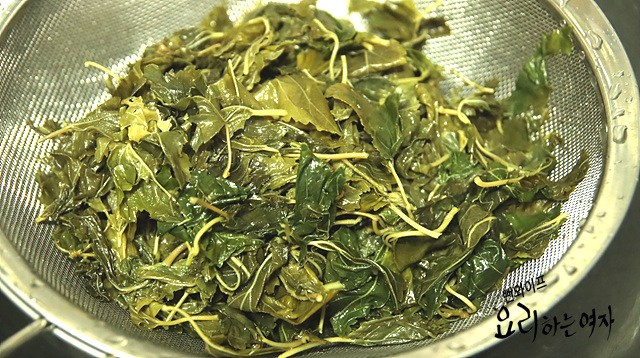
Rinse several times so the musty smell typical of dried aged greens is gone, then squeeze out the water thoroughly.
Season the greens
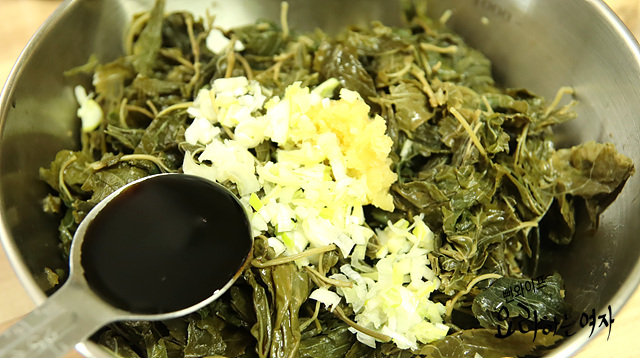
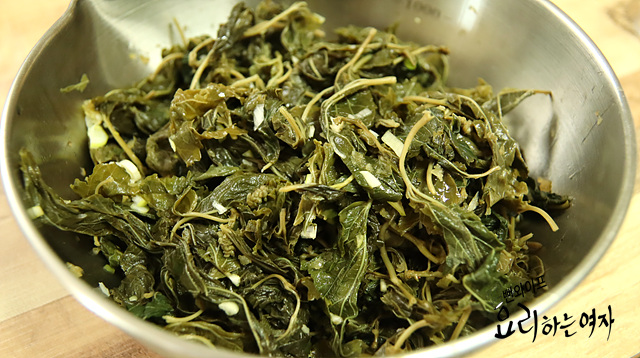
Gently shake apart the clumping mulberry leaves by hand, add 2 tbsp minced green onion, 1 tbsp soup soy sauce (guk-ganjang), and 1 tsp minced garlic, then mix and massage gently.
I skipped it, but dried greens can sometimes carry a slightly musty smell, so adding a little mirin (cooking rice wine) to the seasoning is also great.
Stir-fry
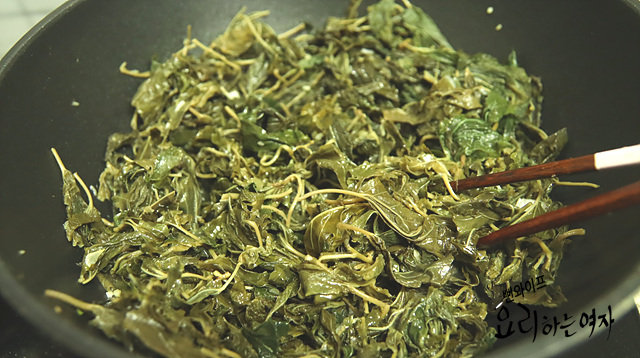
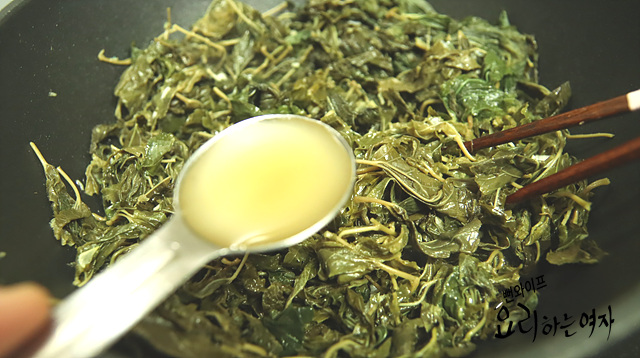
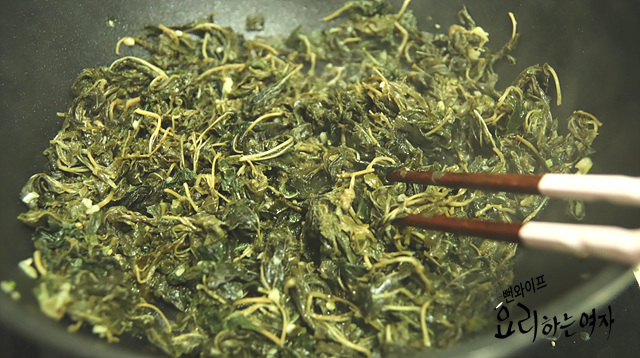
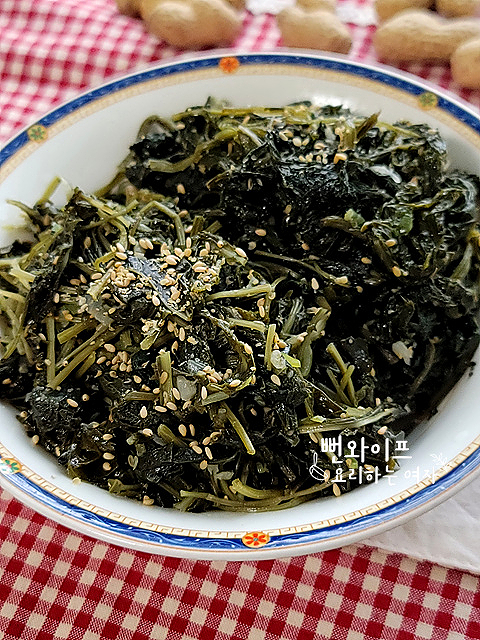
Heat oil in a pan and stir-fry the seasoned mulberry leaves briskly until glossy, then pour in 4 tbsp anchovy broth and stir-fry so they turn moist and tender.
Taste a piece, and if it still feels tough, add more broth, cover with the lid, and let it steam gently over very low heat while stir-frying to make it soft and tender.
Open the lid and stir-fry until just the right amount of moisture remains, cooking off the excess liquid...
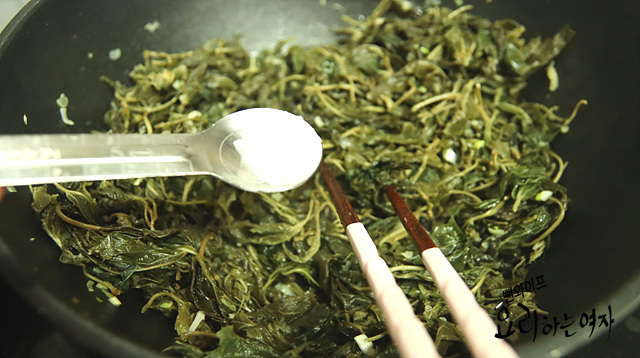
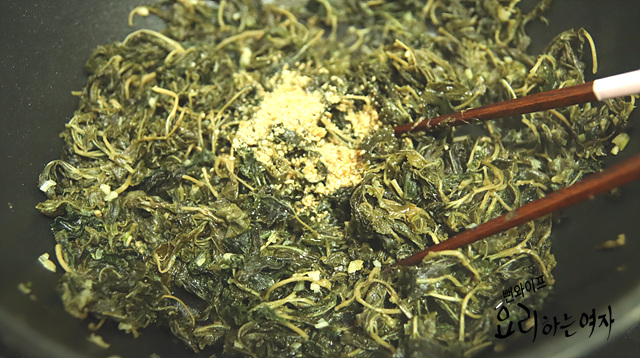
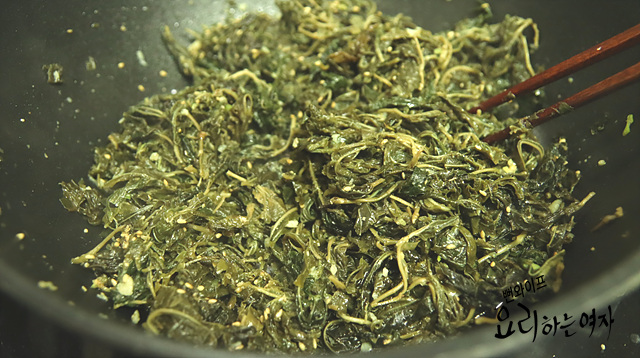
Taste it, and if it is slightly under-seasoned, adjust with 1/3 tsp salt.
Turn off the heat, add 1 tbsp toasted sesame oil and 1 tbsp ground toasted sesame seeds, then mix thoroughly to finish.
Grinding the toasted sesame seeds lightly before adding makes namul much more fragrant and delicious.
You can also swap them for perilla seed powder or perilla oil to suit your taste.
Serve
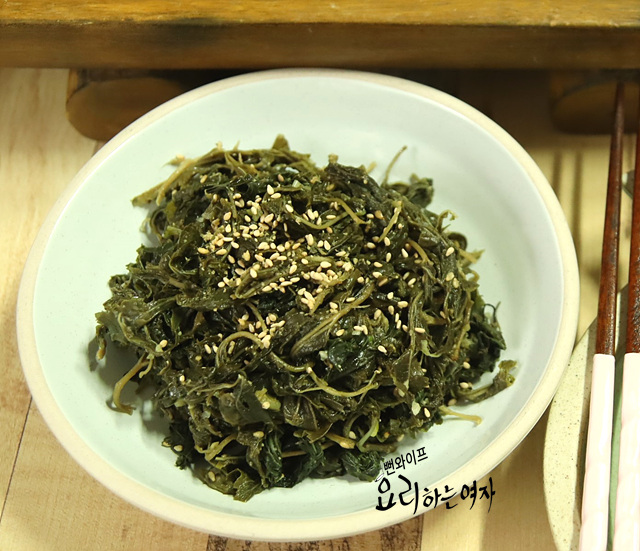
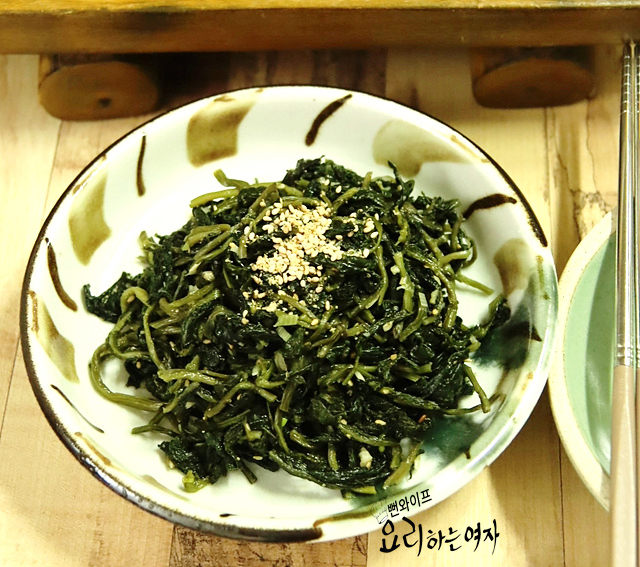
Mulberry greens with a tender, soft chew are truly delicious.
Scooping up a generous mouthful with chopsticks brings pure joy.
 Ppunwife's tips
- Using lukewarm water can shorten the soaking time.
- Adjust the boiling time while checking the greens, and once boiled, cover with the lid and let them steam in the residual heat.
- Dried greens can sometimes carry a slightly musty smell, so adding a little mirin to the seasoning is also great.
- Taste a piece, and if it still feels tough, add more broth, cover with the lid, and let it steam gently over very low heat while stir-frying to make it soft and tender.
- Grinding the toasted sesame seeds lightly before adding makes namul much more fragrant and delicious.
FAQ
Is there a way to cut down the soaking time for dried mulberry leaves?
Using lukewarm water instead of cold water helps shorten the soaking time.
What should I do if the stir-fried greens are not tender enough?
Pour in a little more anchovy broth, cover the pan with a lid, and let them steam gently over very low heat while stir-frying to soften them.
Can I use other ingredients instead of toasted sesame oil and ground toasted sesame seeds for the finish?
Yes, depending on your preference, you can use perilla oil instead of toasted sesame oil, and perilla seed powder instead of ground toasted sesame seeds for a rich, nutty flavor.
Is there a tip for removing the musty smell typical of dried greens?
Rinsing the boiled greens several times in clean water and mixing in a small splash of mirin when seasoning helps reduce any off-flavors.