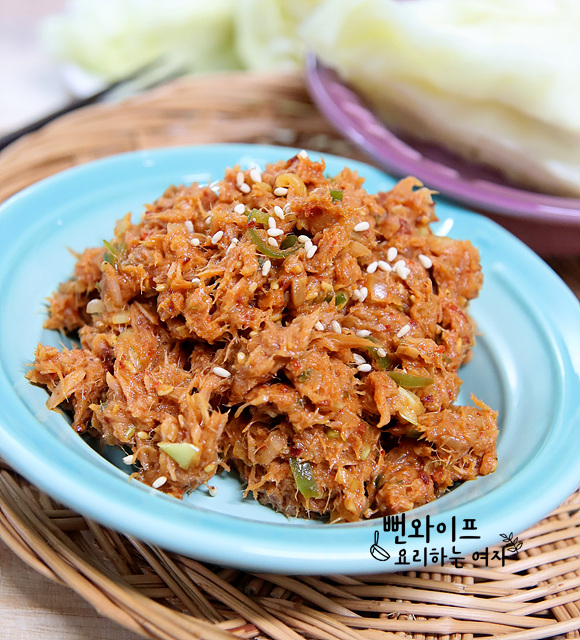
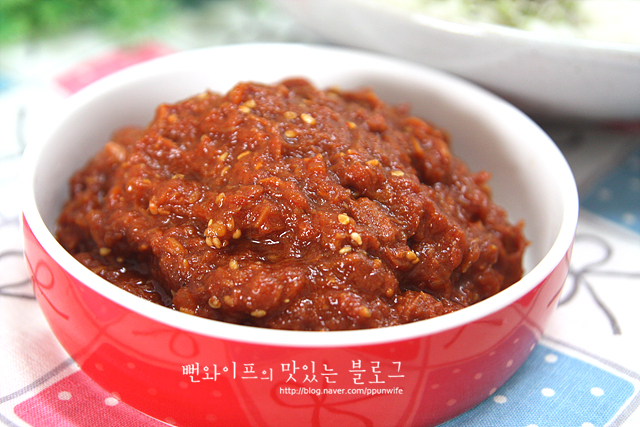
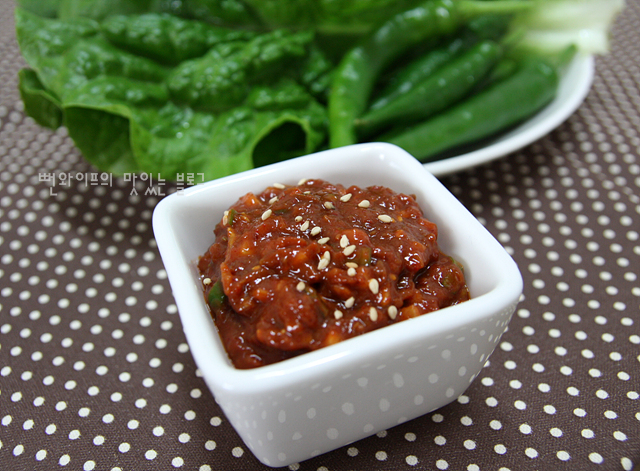
No-Cook Savory Tuna Ssamjang (Seasoned Tuna Dipping Sauce)
A super simple dipping sauce made by mixing canned tuna and vegetables into seasoned soybean paste so it is nutty, savory, and not too salty.
Translated from Korean by AI and not yet checked by a native speaker. Amounts and numbers are taken directly from the original recipe. Read the Korean original →
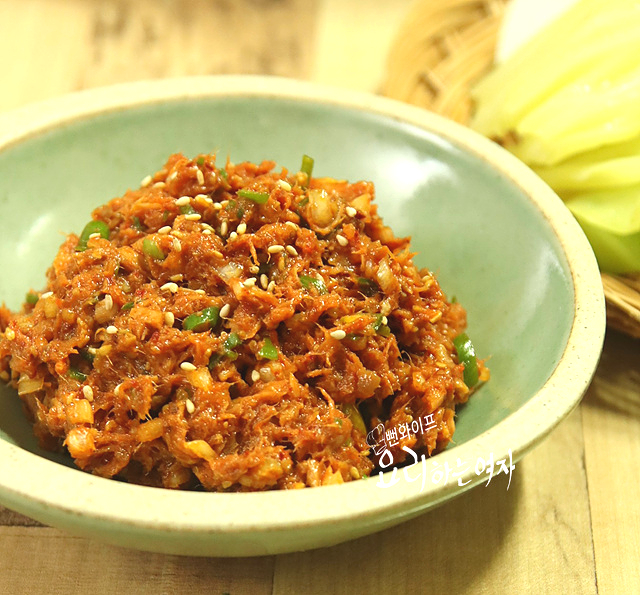
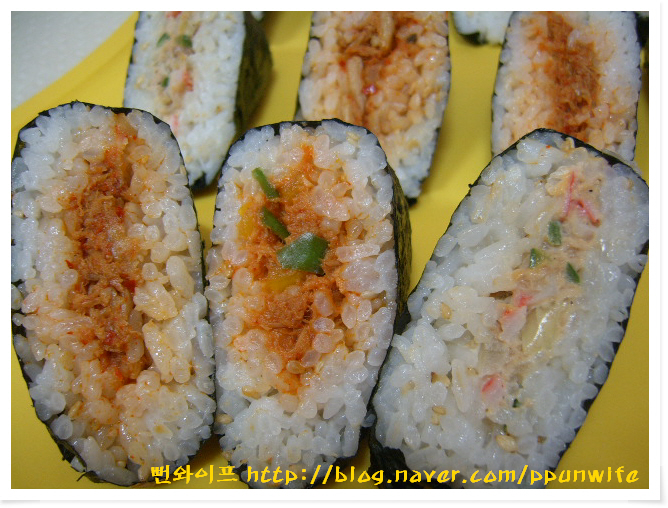
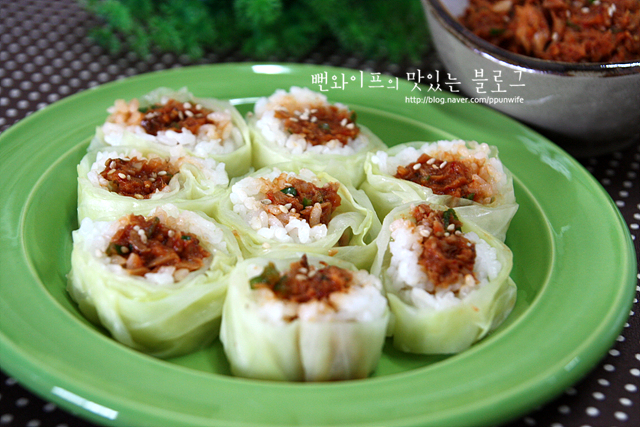
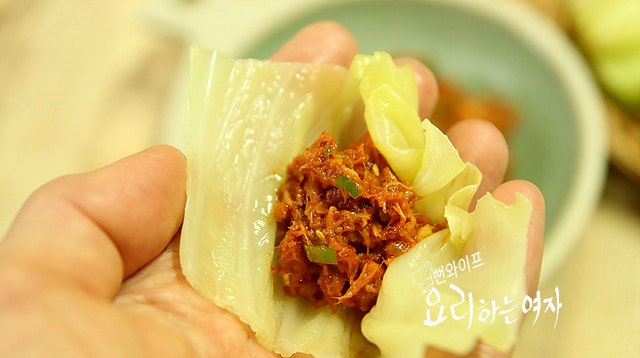
This is a super simple ssamjang made without any cooking over heat, simply by mixing chopped vegetables, canned tuna, and seasonings. The addition of tuna cuts down the saltiness and adds rich savoriness, making it pair wonderfully with spring greens wrap rice. Keeping a 3 to 1 ratio of doenjang to gochujang brings out the best savory, deep flavor.
- Servings
- about 3–4 servings
- Difficulty
- Easy
- Spiciness
- Mildly spicy
Ingredients
Ingredients
- Canned tuna2, 180 g (small cans)
- Onion4 tbsp
- Large green onion (daepa)3 tbsp
- Cheongyang chili pepper (hot green chili)2 tbsp
Ssamjang seasoning
- Doenjang (Korean soybean paste)3 tbsp
- Gochujang (Korean red chili paste)1 tbsp
- Gochugaru (Korean chili flakes)1 tbsp
- Corn syrup (mulyeot)1 tbsp
- Minced garlic1/2 tbsp
- Toasted sesame oila little
- Toasted sesame seeds1 tbsp
- If you are enjoying this with kids, simply leave out the spicy chili pepper and increase the amount of tuna.
- Open two cans of tuna (small cans) and drain the oil lightly in a strainer. Do not throw away all the oil; save about 2 to 3 tbsp, as you will need it to adjust the consistency of the ssamjang.
Steps
Prepare the ingredients
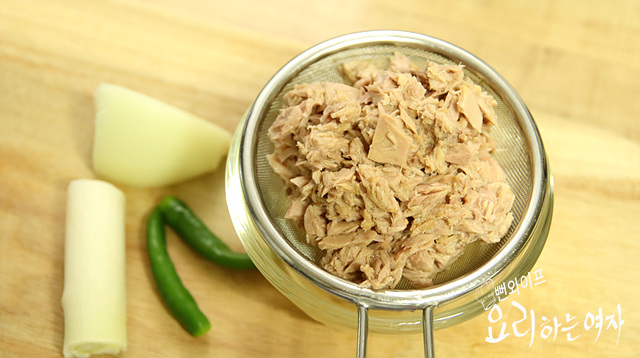
Open two cans of tuna (small cans) and drain the oil lightly in a strainer.
Do not throw away all the oil; save about 2 to 3 tbsp, as you will need it to adjust the consistency of the ssamjang.
Adding onion, large green onion, and Cheongyang chili pepper provides a nice crunchy texture, balances the saltiness, and keeps it from tasting greasy.
Chop the ingredients
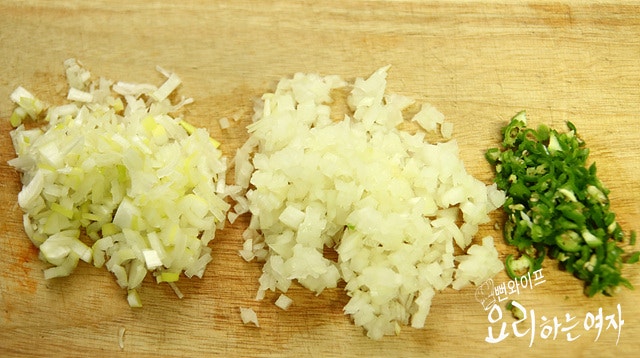
Finely chop the large green onion, onion, and Cheongyang chili pepper, keeping enough texture for a good bite.
Mix the ingredients
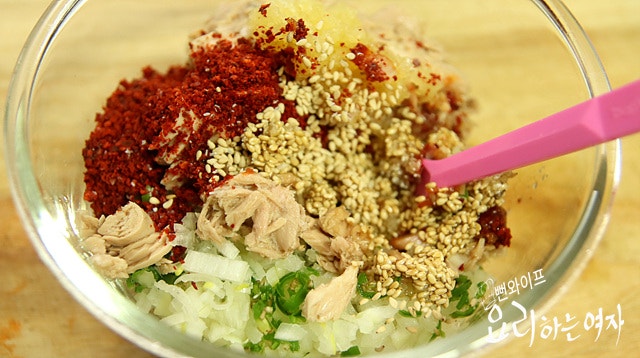
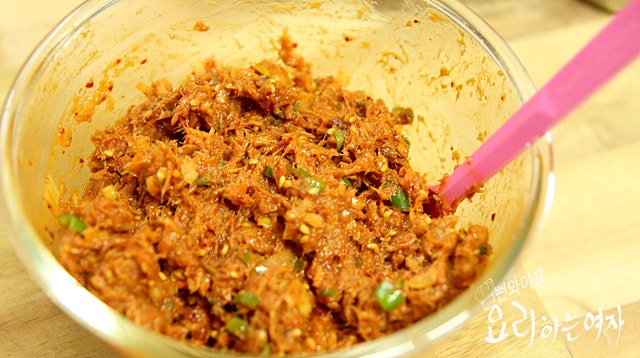
Simply combine all the chopped ingredients and the ssamjang seasonings, then mix them together.
Taste and adjust the seasoning to your preferred saltiness or sweetness, adding the reserved tuna oil little by little to control the consistency.
Finish
When I make ssamjang, I like to use a higher proportion of savory doenjang, and I find it tastes best when the ratio of doenjang to gochujang is 3:1.
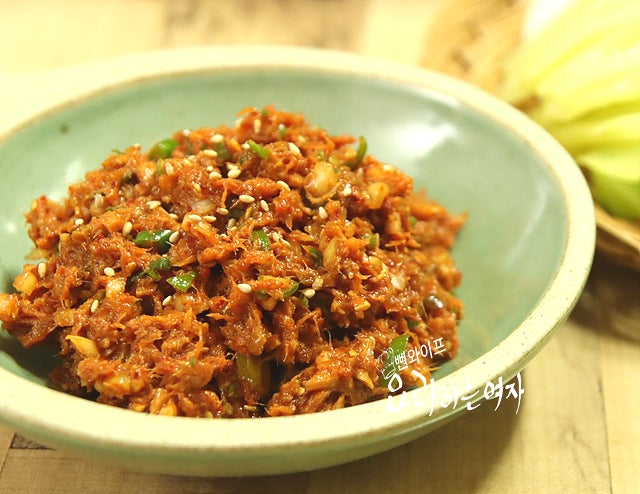
 Ppunwife's tips
- When I make ssamjang, I like to use a higher proportion of savory doenjang, and I find it tastes best when the ratio of doenjang to gochujang is 3:1.
- Do not throw away all the oil; save about 2 to 3 tbsp, as you will need it to adjust the consistency of the ssamjang.
FAQ
How can I adjust this so kids can eat it?
Omit the spicy Cheongyang chili pepper and increase the amount of tuna so children can easily enjoy it.
Should I discard all the canned tuna oil?
After draining it roughly through a strainer, it is best to save about 2 to 3 tbsp to loosen the thick consistency of the ssamjang.
What is the best ratio for mixing doenjang and gochujang?
To bring out the deep savory umami, a 3 to 1 ratio of doenjang to gochujang is recommended.