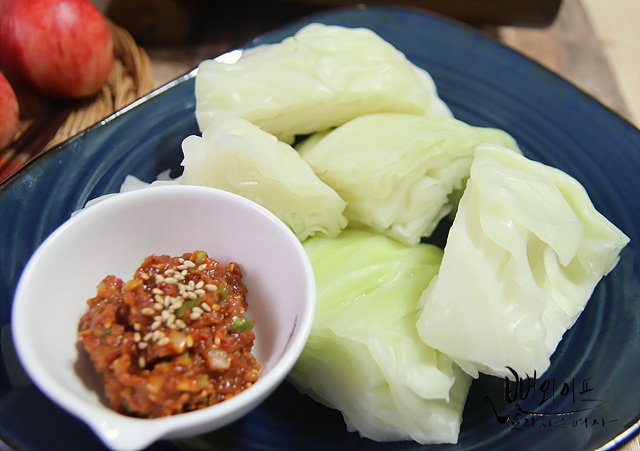
Yangbaechu Ssambap (Steamed Cabbage Rice Rolls)
Bite-sized rice rolls wrapped in steamed cabbage with moist tuna ssamjang.
Translated from Korean by AI and not yet checked by a native speaker. Amounts and numbers are taken directly from the original recipe. Read the Korean original →
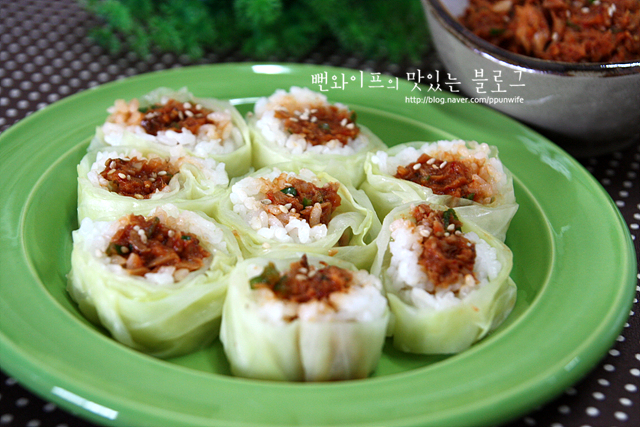
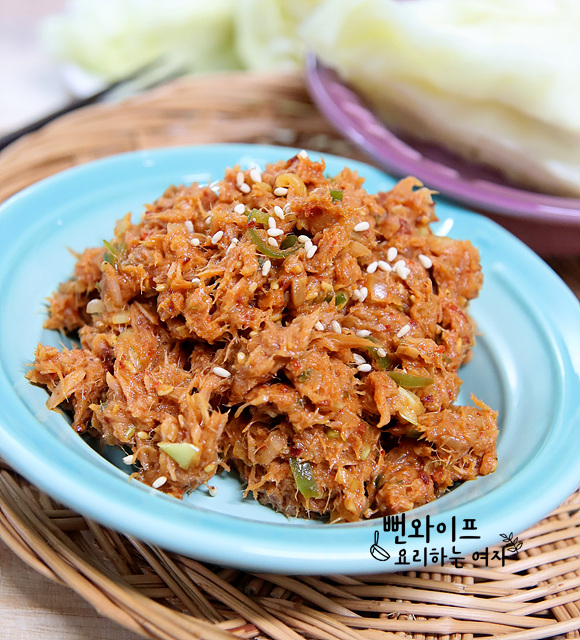
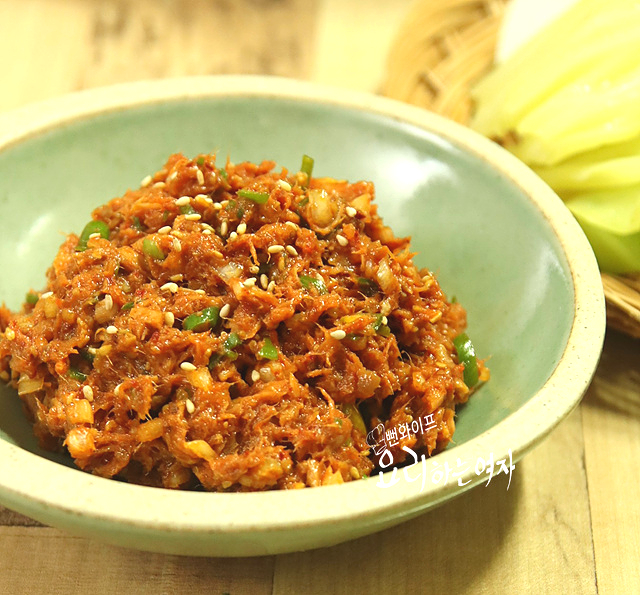
The highlight is the ssamjang made with tuna that keeps a bit of its oil, mixed with doenjang and gochujang to reduce saltiness and bring out a nutty richness. Wrapping the rice in tender cabbage steamed for 5 minutes makes it neat to eat and perfect for a simple lunchbox.
- Servings
- about 3–4 servings
- Cook time
- 5 minprep not included
- Difficulty
- Easy
- Spiciness
- Mildly spicy
Ingredients
- Canned tuna100 g
- Doenjang (Korean soybean paste)2 tbsp
- Gochujang (Korean red chili paste)2 tsp
- Mirin (cooking rice wine)1 tbsp
- Corn syrup (mulyeot)1/2 tbsp
- Gochugaru (Korean chili flakes)1/2 tbsp
- Minced garlic1 tsp
- Minced onion2 tbsp
- Minced green onion1 tbsp
- Minced chili pepper1 tbsp
- Toasted sesame seeds
- Toasted sesame oil
- Drain the canned tuna in a sieve, but only drain a little so the tuna stays moist.
- You can also chop up some nuts and mix them in.
- You can also make this with pumpkin leaves, which are plentiful in summer.
Steps
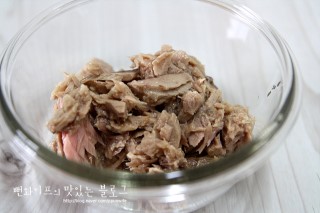
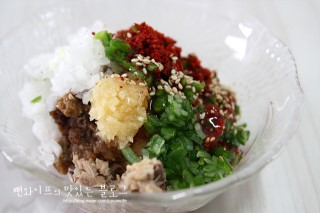
1. Drain the canned tuna in a sieve, but only drain a little so the tuna stays moist.
A little bit of tuna oil keeps the ssamjang moist and nutty.
2. Add all the ingredients along with the tuna and mix together, and it is done.
When making ssamjang, a 3:1 ratio of doenjang to gochujang works best.
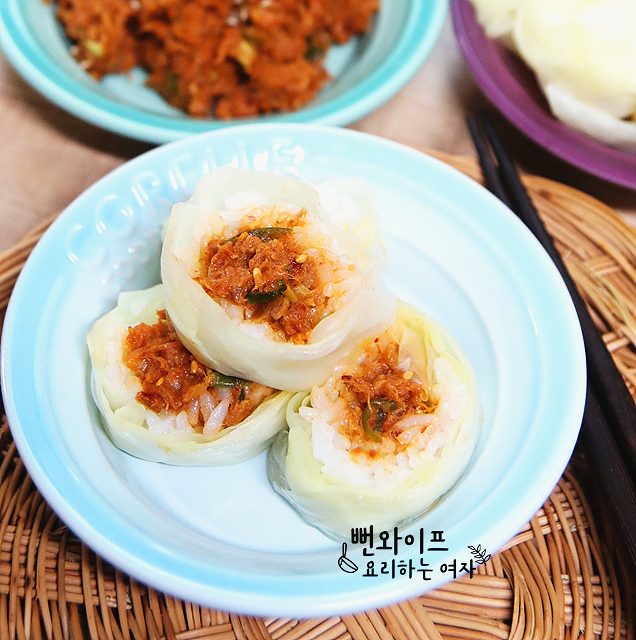
Yangbaechu ssambap (steamed cabbage rice rolls)
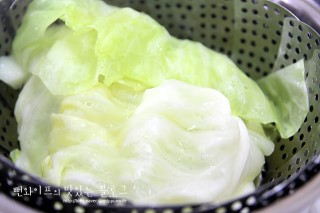
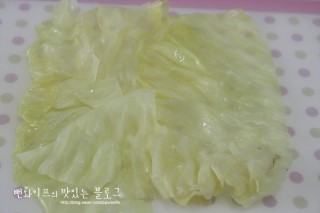
3. Separate the cabbage leaves one by one.
Place the cabbage in a preheated steamer and steam for about 5 minutes.
4. Once cooled, lay out several cabbage leaves into a rectangular shape.
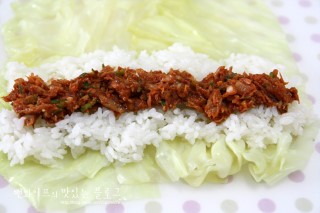
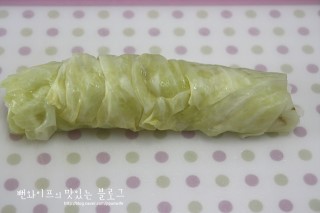
5. Spread rice over the cabbage and top with tuna ssamjang...
6. Roll it up tightly.
 Ppunwife's tips
- A little bit of tuna oil keeps the ssamjang moist and nutty.
- When making ssamjang, a 3:1 ratio of doenjang to gochujang works best.
FAQ
How much oil should I drain from the canned tuna?
Rather than squeezing all the oil out tightly, drain just enough so it stays slightly moist, which keeps the ssamjang nutty and moist.
What is the best ratio of doenjang to gochujang for tuna ssamjang?
A 3-to-1 ratio of doenjang to gochujang works best when mixing the seasoning.
Can I use other wrap vegetables instead of cabbage?
In the summer, you can use in-season pumpkin leaves instead of cabbage for wrapping.
Can I add nuts to the tuna ssamjang?
Finely chopping nuts and mixing them into the ssamjang adds an even richer, nuttier flavor.