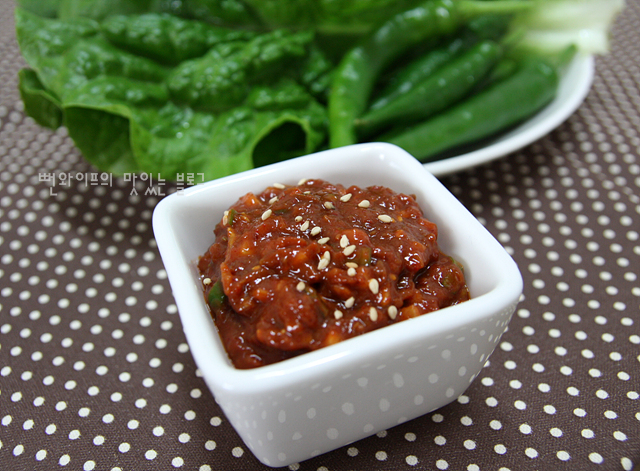
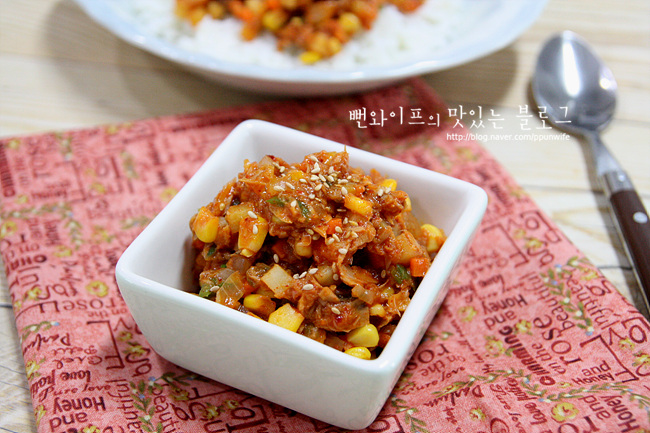
Rich and Savory Tuna Ssamjang (Seasoned Dipping Paste with Tuna)
A rich and nutty seasoned dipping paste made by mixing drained canned tuna and finely chopped vegetables with savory seasonings.
Translated from Korean by AI and not yet checked by a native speaker. Amounts and numbers are taken directly from the original recipe. Read the Korean original →
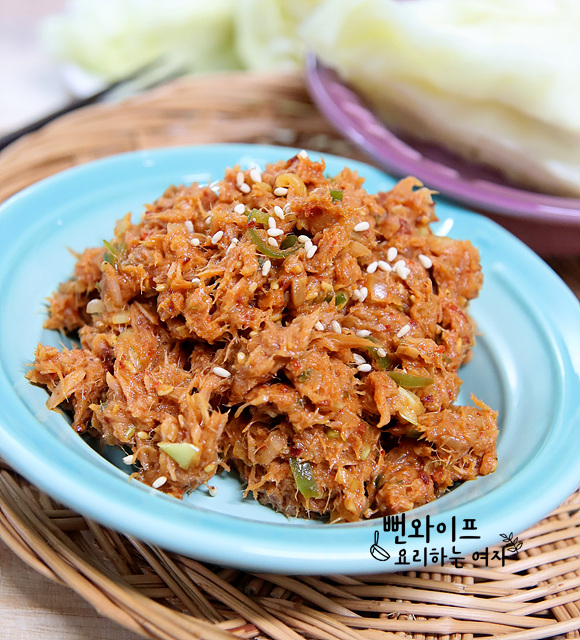
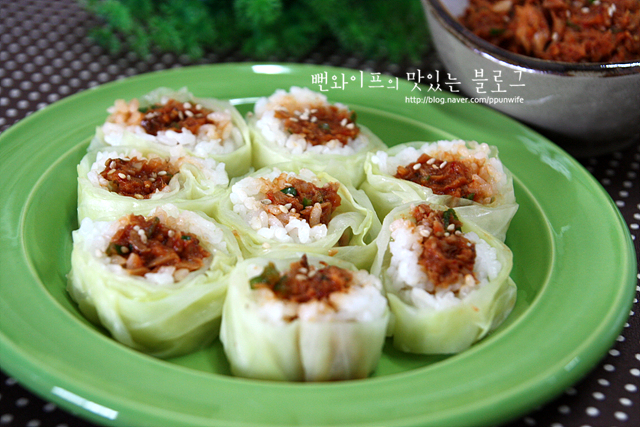
A no-cook dipping paste made by tossing drained canned tuna with doenjang and vegetables. Cheongyang chili peppers cut through the richness of the tuna, making it a great pairing for steamed cabbage wraps or ssambap.
- Servings
- about 4–5 servings
- Difficulty
- Easy
- Spiciness
- Spicy
Ingredients
Ingredients
- Canned tuna1 can, 200 g (large)
- Oniona little of each
- Large green onion (daepa)a little of each
- Cheongyang chili pepper (hot green chili)2
Seasoning
- Doenjang (Korean soybean paste)3 tbsp
- Gochujang (Korean red chili paste)1 tbsp
- Gochugaru (Korean chili flakes)1 tbsp
- Corn syrup (mulyeot) (or 3 to 4 tbsp green plum syrup (maesil-cheong))2 tbsp
- Minced garlic1/2 tbsp
- Ground black peppera little
- Toasted sesame oil1 tbsp
- Toasted sesame seeds1 tbsp
- If you do not like spicy food, leave out the chili peppers and increase the amount of onion or large green onion. If you want to store it longer, you can omit the onion, which releases a lot of moisture.
Steps
Prepare the ingredients
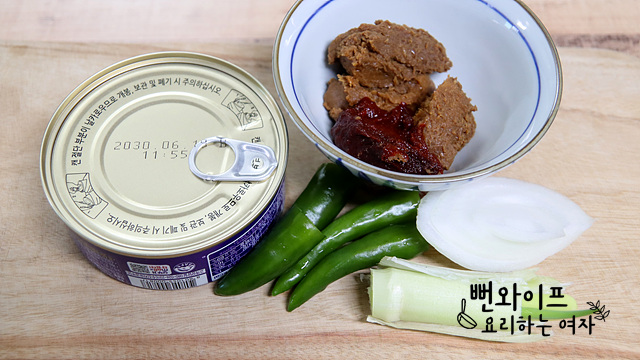
Use 1 large can of solid tuna.
Prepare a small amount of doenjang, gochujang, and vegetables. Since tuna goes into the ssamjang, adding spicy Cheongyang chili peppers keeps it from tasting too greasy.
Chop the ingredients
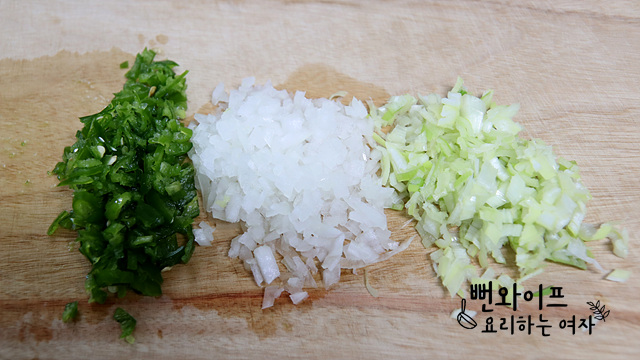
It is best to mince all the vegetables finely so you have about 2 to 3 tbsp of each.
If you do not like spicy food, leave out the chili peppers and increase the amount of onion or large green onion. If you want to store it longer, you can omit the onion, which releases a lot of moisture.
Drain the tuna
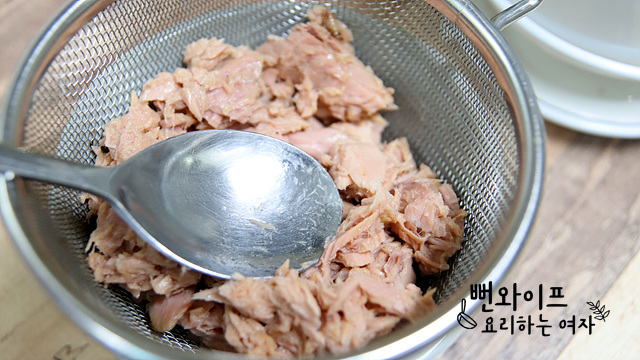
Drain the oil from the tuna using a sieve.
Mix the ssamjang
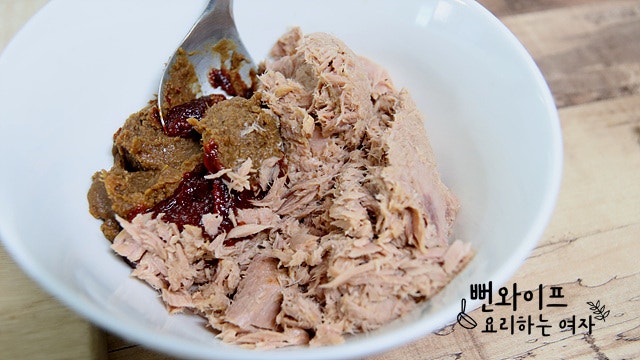
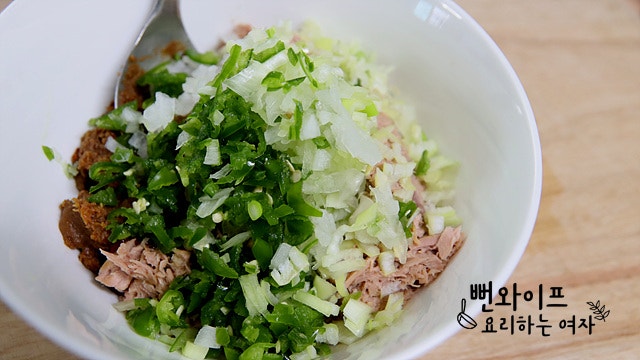
In a bowl, add the drained tuna, 3 tbsp doenjang, 1 tbsp gochujang, minced onion, large green onion, and Cheongyang chili peppers.
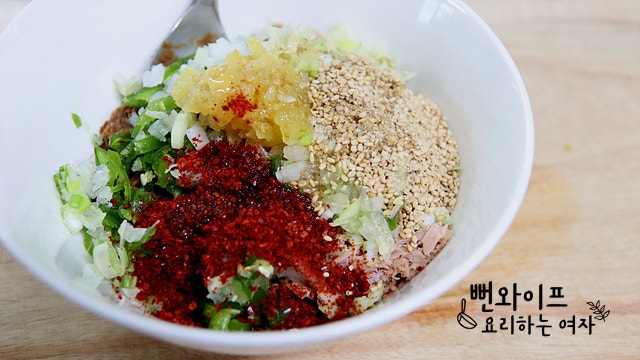
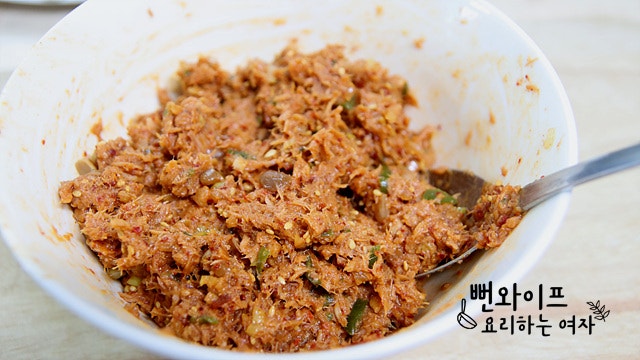
For the seasonings, add 1 tbsp gochugaru, 1/2 tbsp minced garlic, and 2 tbsp corn syrup or about 3 to 4 tbsp green plum syrup to mellow out the saltiness and give it a nice gloss.
If using salty homemade doenjang, you will likely need to add more green plum syrup.
Add 1 tbsp toasted sesame oil, 1 tbsp toasted sesame seeds, and a pinch of ground black pepper to complement the tuna, then mix everything thoroughly.
Finish
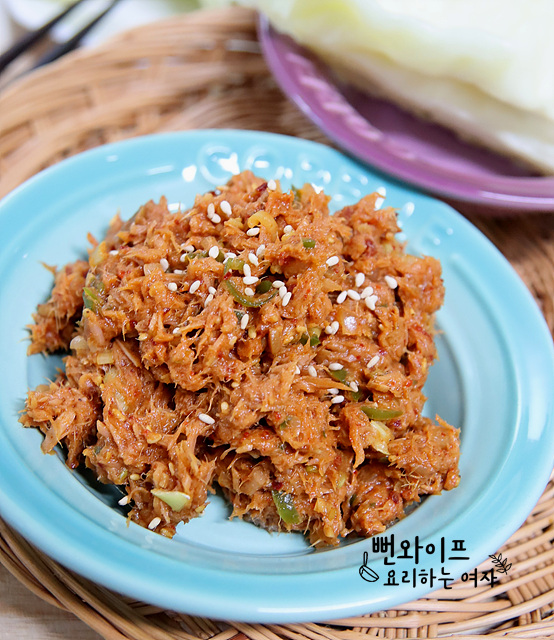
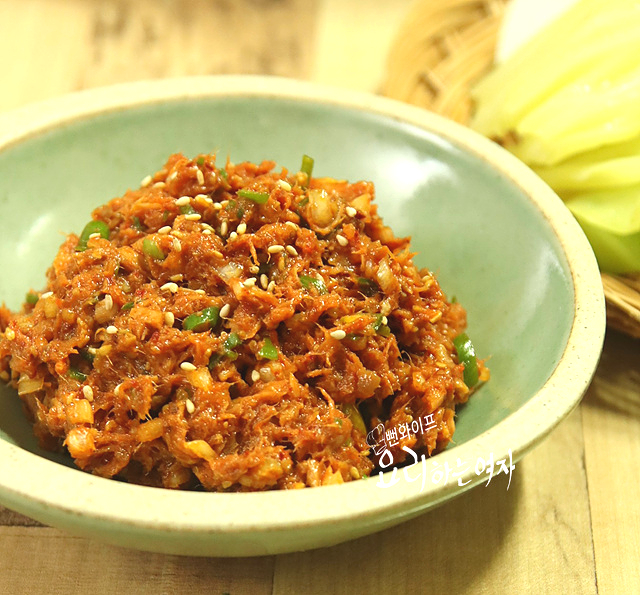
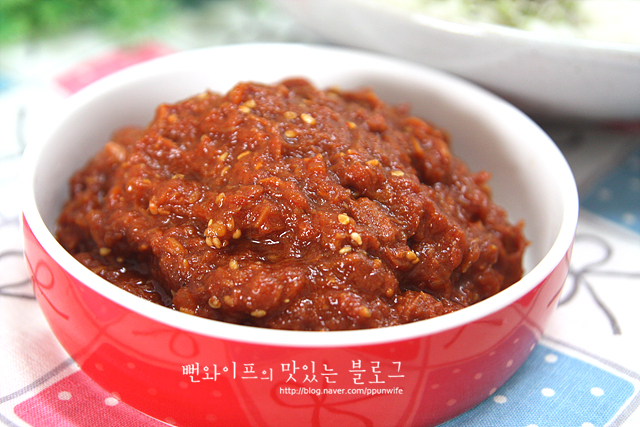
The tuna ssamjang is ready.
While clean, classic ssamjang is great, draining the oil from tuna and turning it into this spicy ssamjang makes it packed with nutrition and rich, nutty flavor.
 Ppunwife's tips
- If using salty homemade doenjang, you will likely need to add more green plum syrup.
FAQ
How can I make this if I cannot eat spicy food well?
You can leave out the Cheongyang chili peppers and increase the amount of onion or large green onion instead.
How can I make it last longer in storage?
Leaving out the onion, which tends to release a lot of moisture, helps it keep longer.
How do I balance the saltiness if using homemade doenjang?
If using a very salty homemade doenjang, adding more green plum syrup helps neutralize the saltiness.