Yangbaechu Ssambap (Steamed Cabbage Rice Rolls)
A simple one-bowl meal of naturally sweet steamed cabbage rolled with cooked rice and ssamjang.
Translated from Korean by AI and not yet checked by a native speaker. Amounts and numbers are taken directly from the original recipe. Read the Korean original →
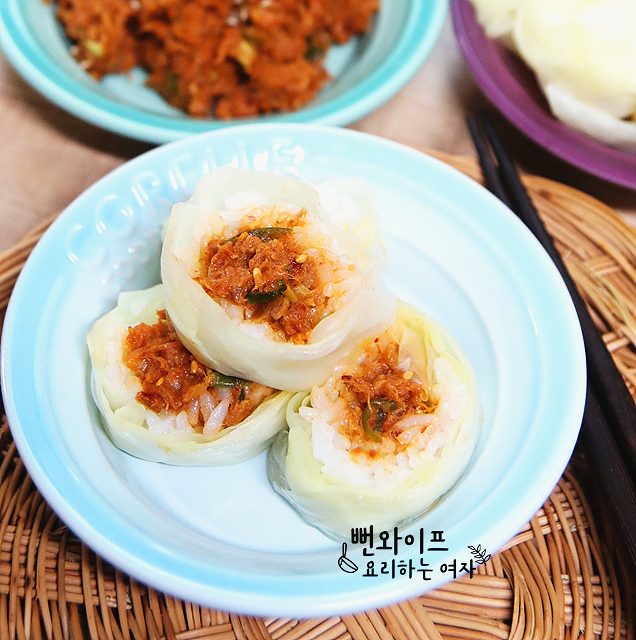
This easy dish features cabbage steamed over medium heat for about 5 minutes to keep it crisp-tender, then rolled up with cooked rice and ssamjang. Rinsing it in cold water to stop the residual heat is the key secret to preserving the crisp texture. Satisfying yet light, it makes a wonderful simple meal or lunchbox item.
- Cook time
- 5 minprep not included
- Difficulty
- Easy
- Spiciness
- Not spicy
Ingredients
- Cabbage
- Cooked rice
- Ssamjang (seasoned soybean paste)
- I prepared 1/4 head of cabbage.
- It is also great to make ssamjang with canned chicken breast, nuts, or tofu to use as filling for the rice rolls.
Steps
Prepare the ingredients
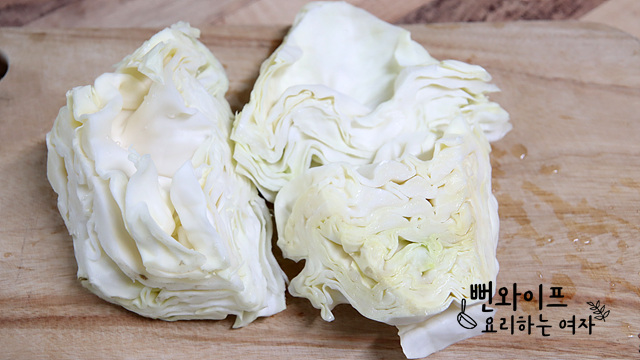
I prepared 1/4 head of cabbage.
Steam the cabbage
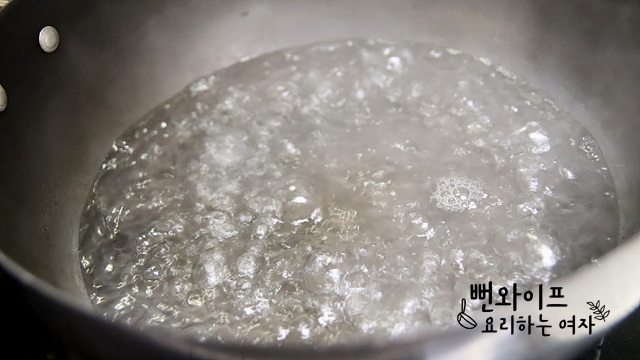
Pour water into the steamer pot, and once it comes to a rolling boil...
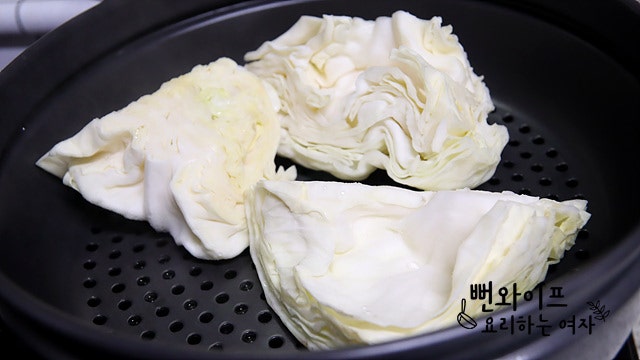
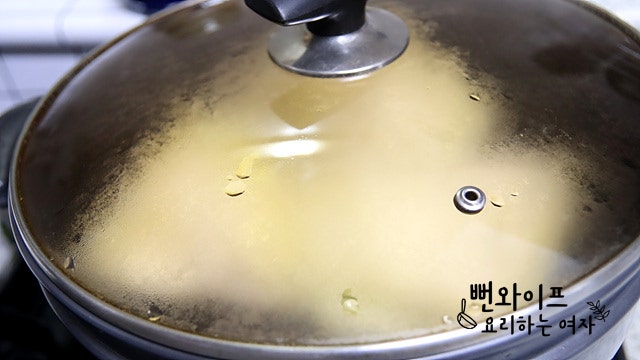
Place the cabbage in the steamer basket and cover with the lid.
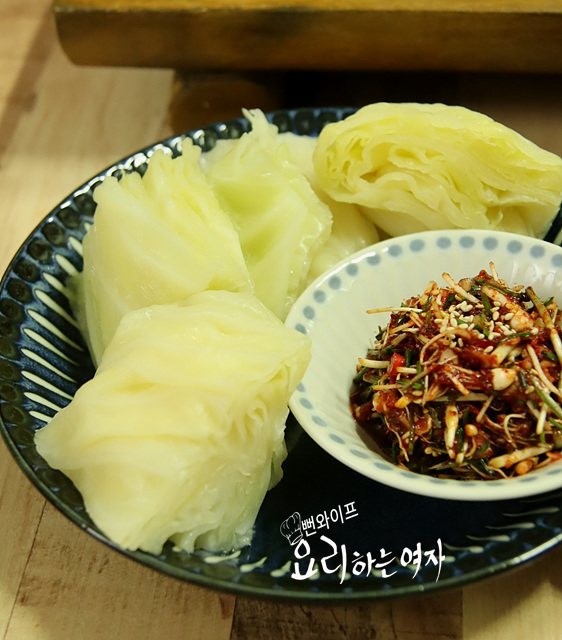
Steam over medium heat for 5 minutes.
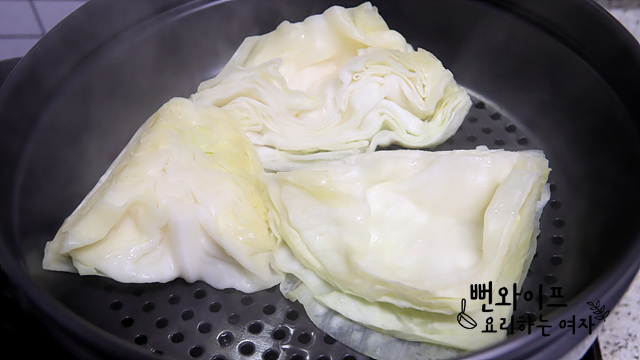
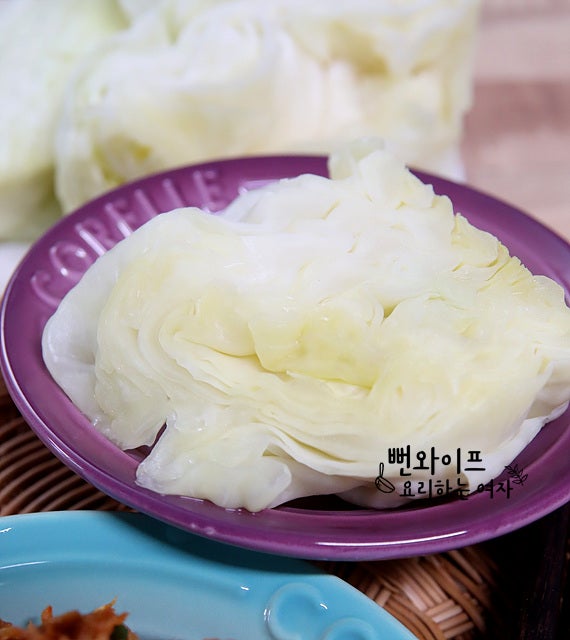
For a crisp texture, exactly 5 minutes is ideal, and just rinse it in cold water so the residual heat does not cook it further.
For a soft texture, steam for 6 minutes or longer.
Roll the cabbage rice rolls
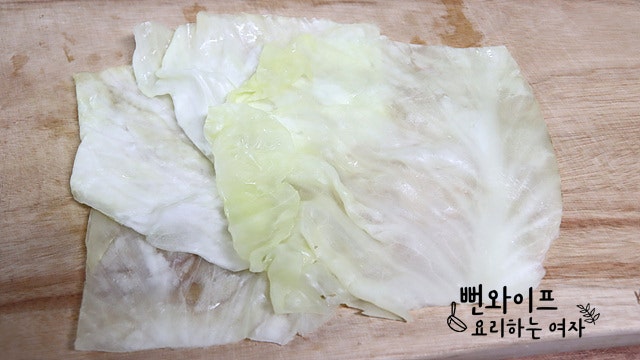
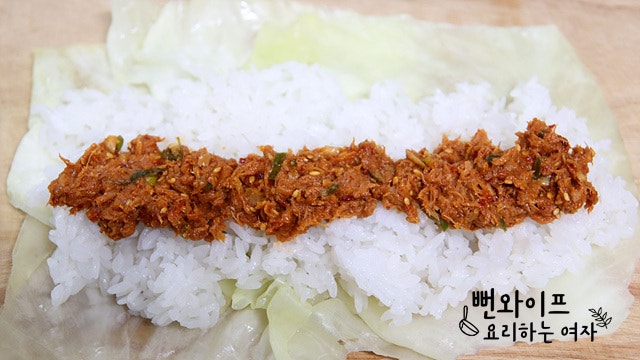
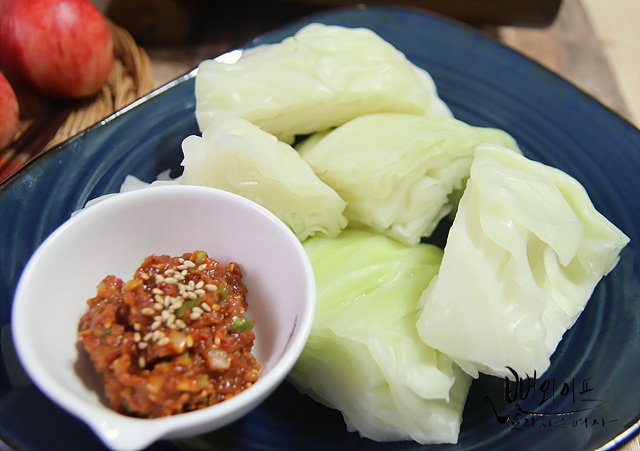
The outer cabbage leaves are thin and broad, making them great for rice rolls.
Overlap a few leaves so they are easy to roll, spread the cooked rice thinly, and place the ssamjang (seasoned soybean paste) in the center without spreading it out.
This ssamjang is the tuna ssamjang I made and posted yesterday.
It is also great to make ssamjang with canned chicken breast, nuts, or tofu to use as filling for the rice rolls.
I have posted a few ssamjang recipes, so please take a look.
Related post on the blog (Korean)blog.naver.com/ppunwife/223910983592Related post on the blog (Korean)blog.naver.com/ppunwife/223488803854Related post on the blog (Korean)blog.naver.com/ppunwife/224330515944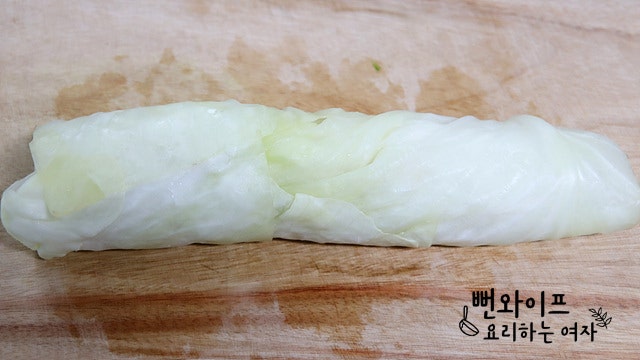
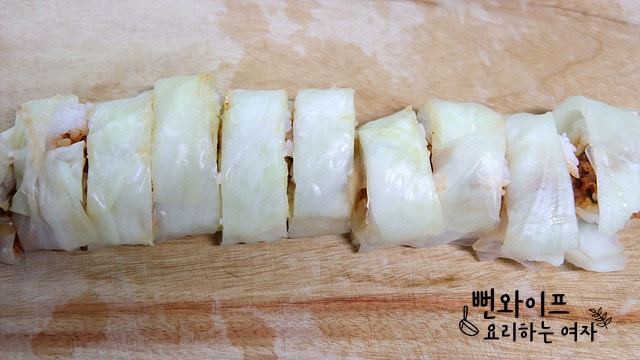
Roll it up gently to shape it.
If you wrap it once more with rice paper, it will not lose its shape and will hold together much more securely.
Finish
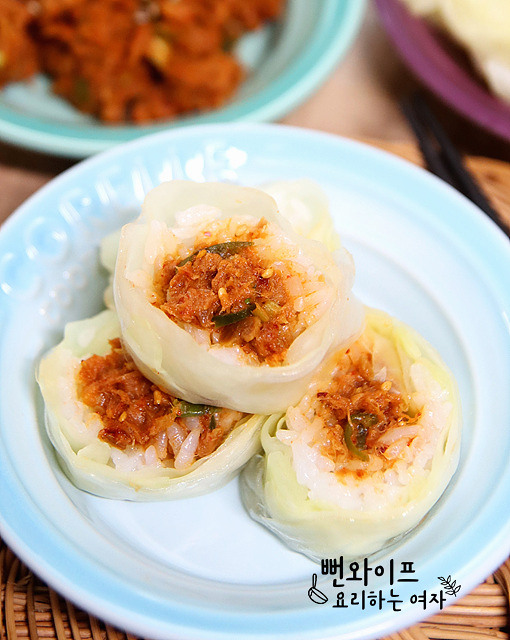
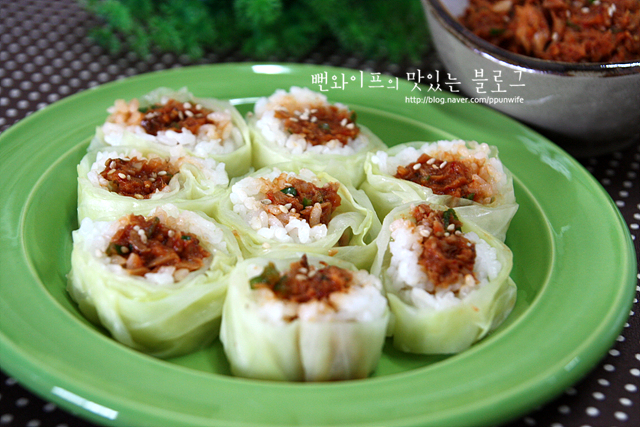
It tastes delicious and is quite filling on its own.
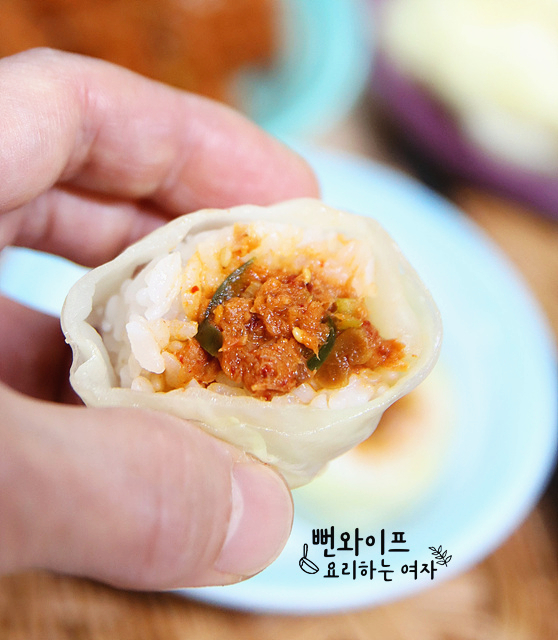
It is wonderful not only as an easy home-cooked meal, but also packed in a lunchbox.
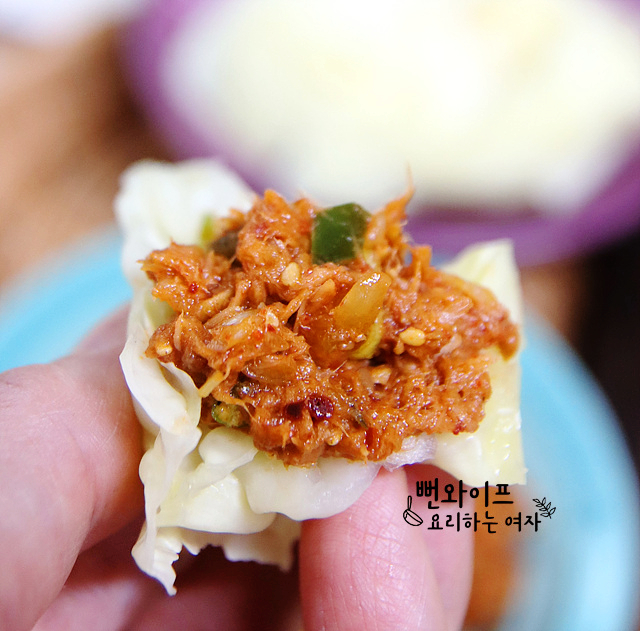
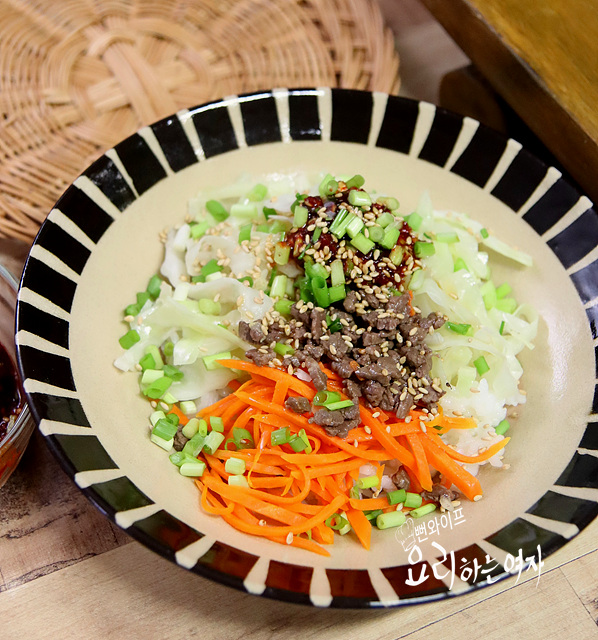
Just enjoying steamed cabbage simply topped with cooked rice and ssamjang like this is also very good.
 Ppunwife's tips
- For a crisp texture, exactly 5 minutes is ideal, and just rinse it in cold water so the residual heat does not cook it further.
- For a soft texture, steam for 6 minutes or longer.
- If you wrap it once more with rice paper, it will not lose its shape and will hold together much more securely.
FAQ
How many minutes should I steam the cabbage to keep it crisp?
Place it in a steaming basket once the steam rises, steam over medium heat for exactly 5 minutes, and rinse in cold water to remove the residual heat. If you prefer a softer texture, steam for 6 minutes or longer.
Is there a trick to keep the rice rolls from falling apart?
After rolling the rice in cabbage, wrapping it once more with rice paper will hold it securely so it does not unravel.
Are there other ssamjang variations that pair well instead of basic ssamjang?
It pairs wonderfully with tuna ssamjang, or ssamjang made with canned chicken breast, tofu, or nuts.