Fluffy and Fragrant Ssuk Beomuri (Mugwort Rice Cake)
A fluffy steamed rice cake snack made by tossing fragrant seasonal spring mugwort with rice flour and dried persimmon strips.
Translated from Korean by AI and not yet checked by a native speaker. Amounts and numbers are taken directly from the original recipe. Read the Korean original →
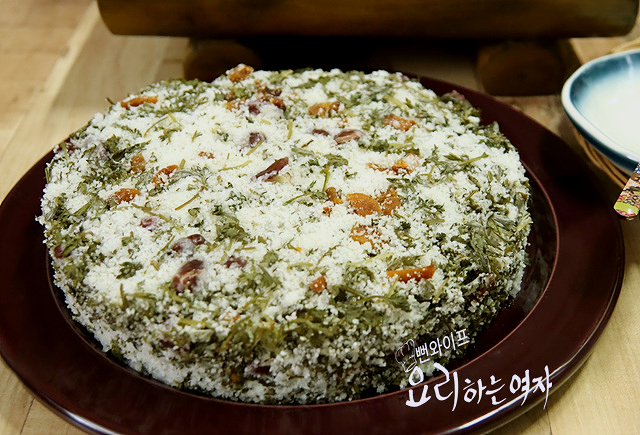
A special snack made by steaming seasonal mugwort with rice flour, sweet dried persimmons, and boiled beans. Properly hydrating the dry-milled rice flour and sifting it through a sieve keeps it from turning gummy and gives it a delightfully fluffy texture.
- Servings
- about 3–4 servings
- Cook time
- 25 minprep not included
- Difficulty
- Medium
- Spiciness
- Not spicy
Ingredients
- Mugwort100 g (after cleaning)
- Dry-milled rice flour3 cups (300 g)
- Dried persimmon strips (gammallaengi)70 g (1 cup, sliced)
- Boiled cowpeas1 cup
- Water7 tbsp
- Salt1/2 tsp
- Sugar2 tbsp
- Soak the cowpeas for about 1 hour, then boil them for about 20 to 30 minutes.
- Instead of cowpeas, red beans or green peas work well, or you can substitute nuts.
- Wet-milled rice flour ground at a mill already contains moisture, so skip hydrating it or use very little water.
Steps
Prepare the ingredients
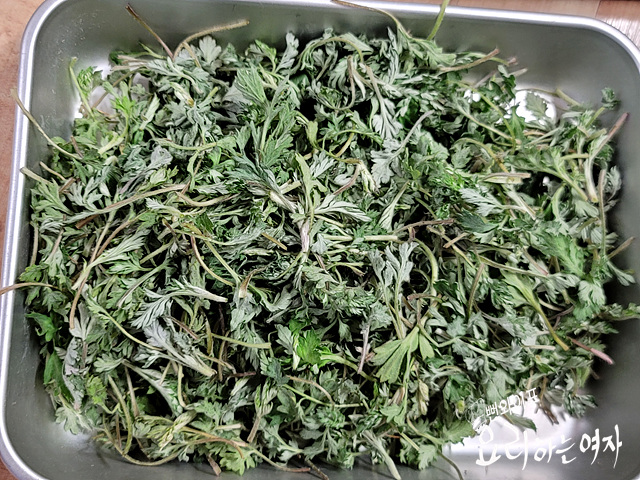
Here is mugwort, the most important ingredient in ssuk beomuri.
It is tender, not overgrown, and has a very rich aroma.
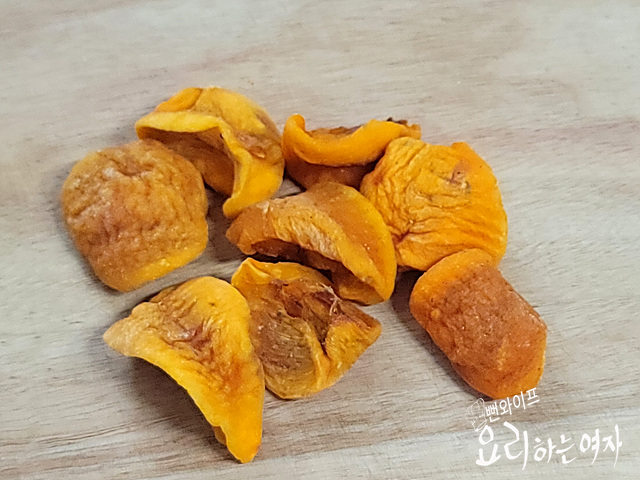
Here are dried persimmon strips (gammallaengi), which add natural sweetness and chewiness to the ssuk beomuri. (Slice them finely and prepare about 1 cup.)
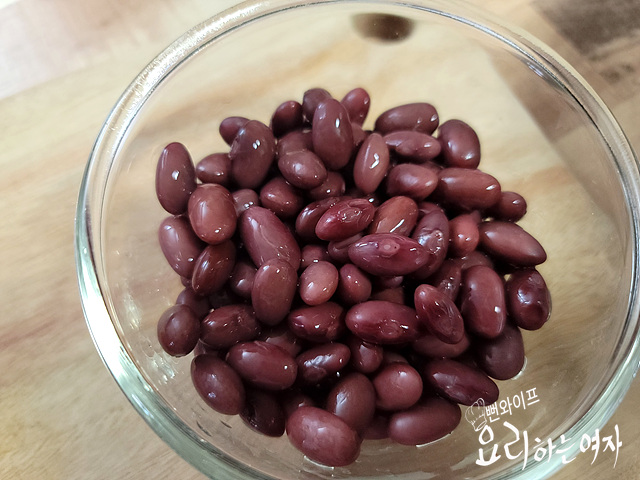
Here is 1 cup of boiled cowpeas. (Soak them for about 1 hour, then boil for about 20 to 30 minutes.)
Red beans or green peas work well, or you can substitute nuts.
Clean the mugwort
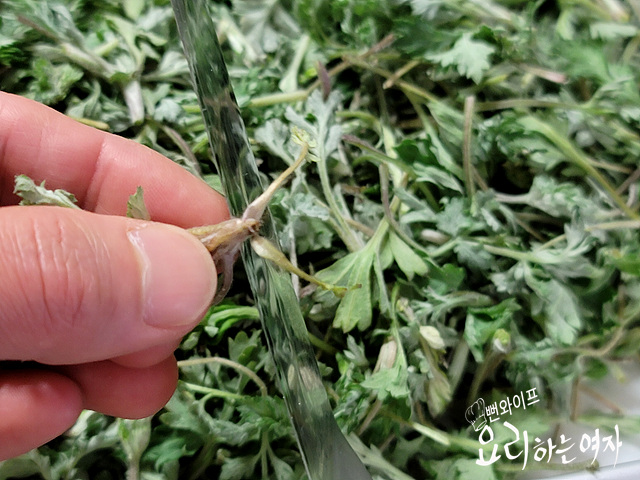
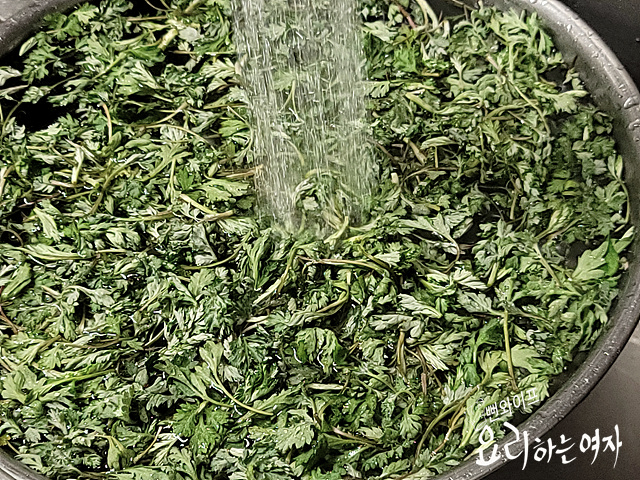
The mugwort needs to be cleaned first.
Trim off yellowed leaves and tough stems so it feels soft and pleasant to chew without any tough bits.
Soak it in plenty of water so dried debris loosens and comes off naturally.
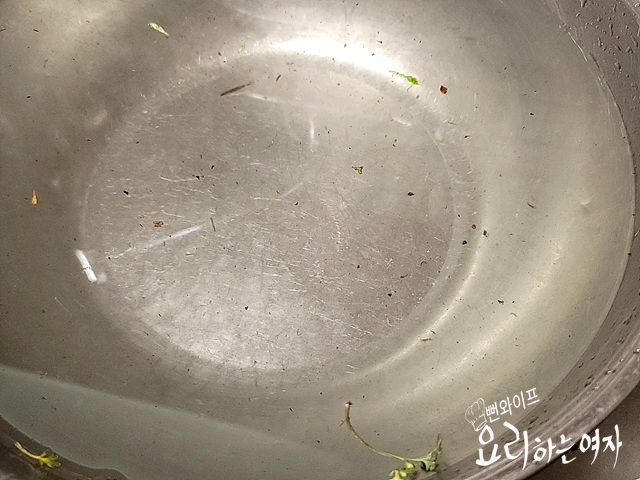
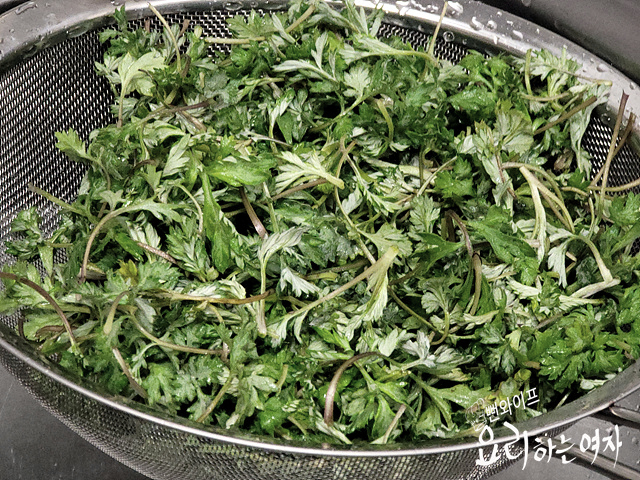
Even if it looks clean, a lot of residue comes out during rinsing, so rinse it several times and drain in a sieve.
Cut the ingredients
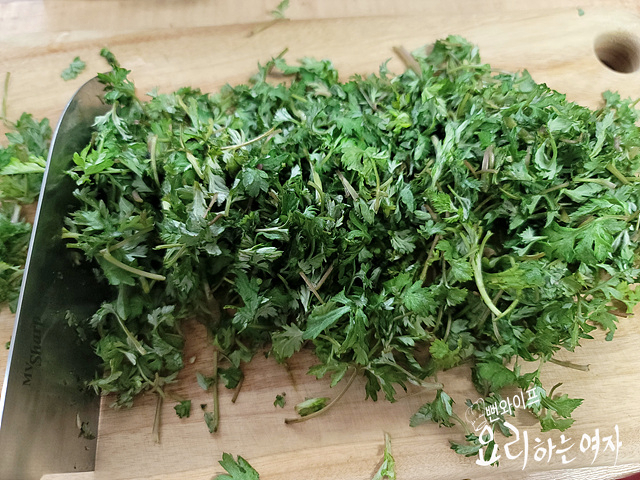
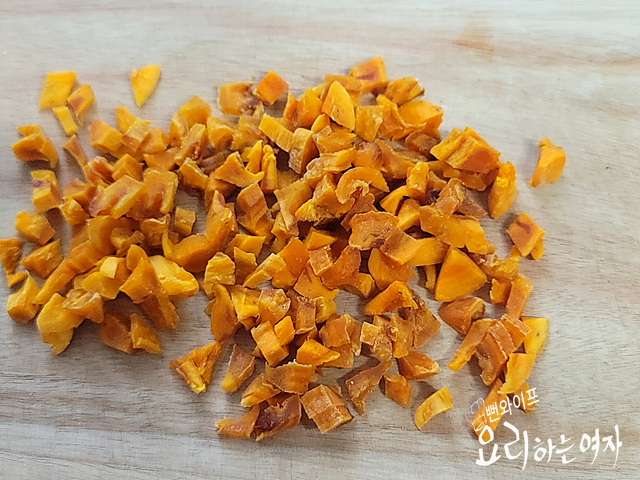
Long mugwort is awkward to eat, so cut it finely. Cutting it this way also brings out a much richer aroma.
Finely slice the dried persimmon strips.
Hydrate the dry-milled rice flour
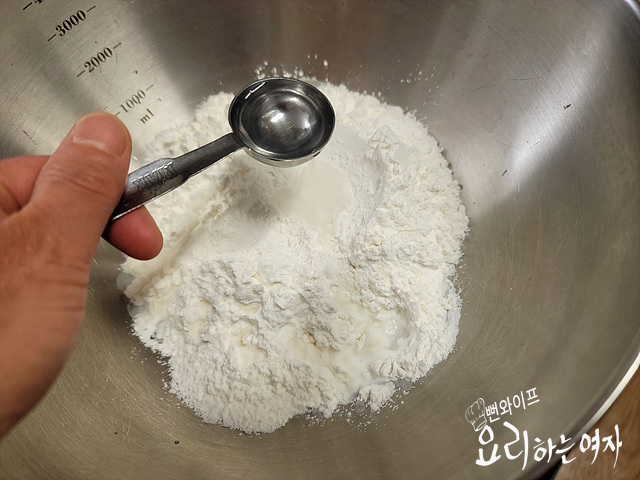
Wet-milled rice flour ground at a mill already contains moisture, so skip hydrating it or use very little water.
Store-bought dry-milled rice flour lacks moisture like wheat flour, so it must be hydrated with water.
For 3 cups (300g) of store-bought dry-milled rice flour, I added 7 tbsp of cold water and mixed it evenly.
Do not pour in all 7 tbsp of cold water at once; add it gradually while checking the condition of the flour.
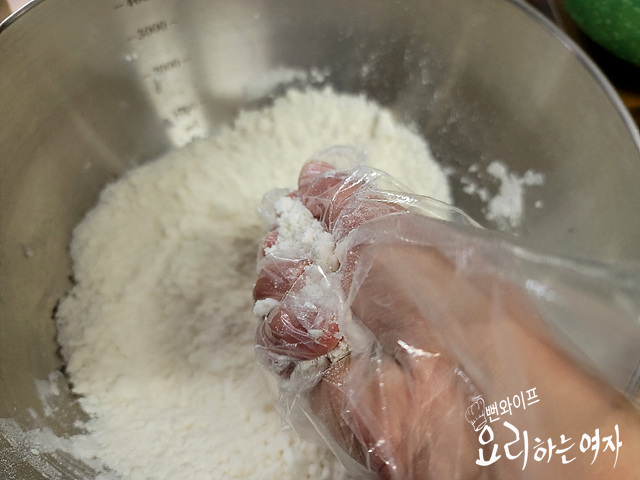
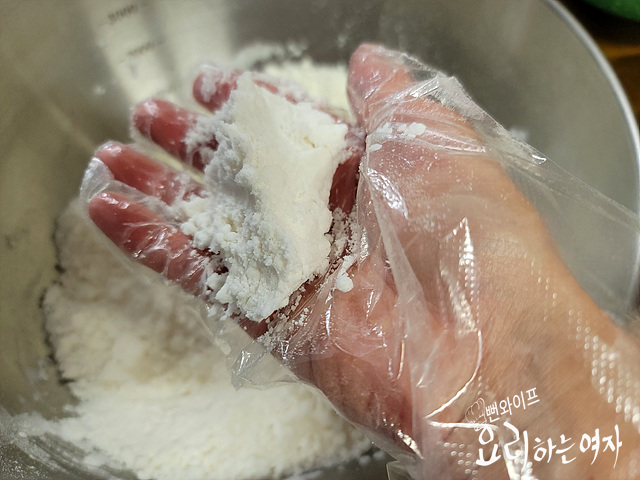
You want to create a moist yet crumbly texture; when you squeeze it firmly in your hand and it holds together, but then crumbles easily when gently pressed, it is properly hydrated.
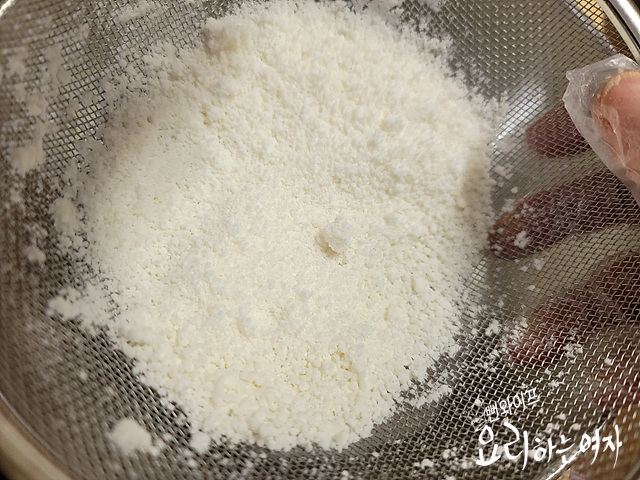
Since clumps form during the hydration process, sift it finely through a sieve so that the finished beomuri turns out neat without any dense clumps.
Season the rice flour
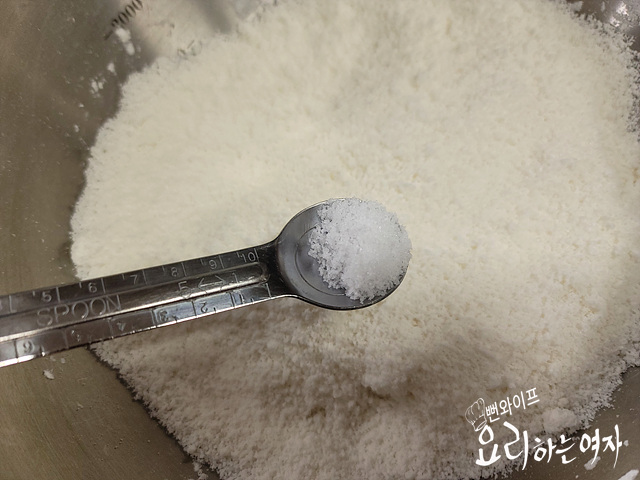
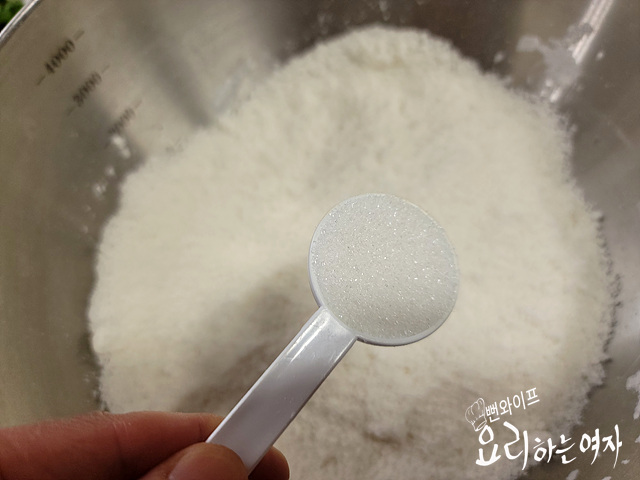
When making rice cakes, sweetness is important, but adding a small amount of salt provides seasoning and makes it much tastier.
Add 1/2 tsp of salt and 2 tbsp of sugar to the sifted rice flour and mix thoroughly.
Add ingredients and toss
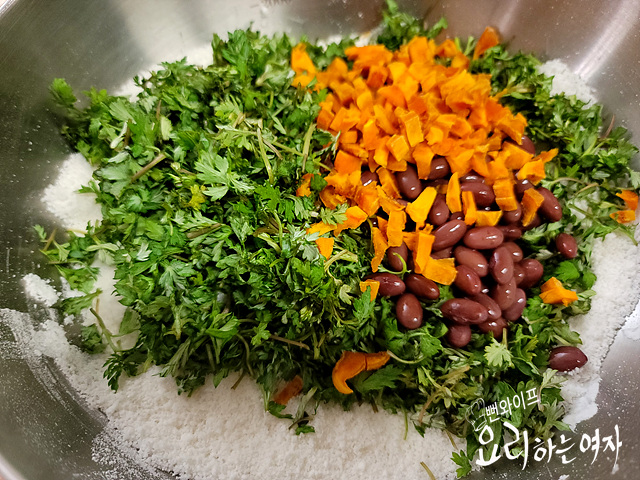
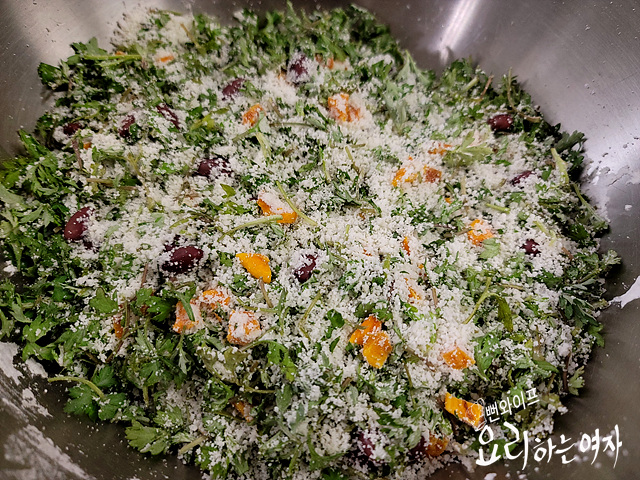
Add the mugwort, dried persimmon strips, and boiled cowpeas to the rice flour and toss until evenly combined.
Steam in a steamer
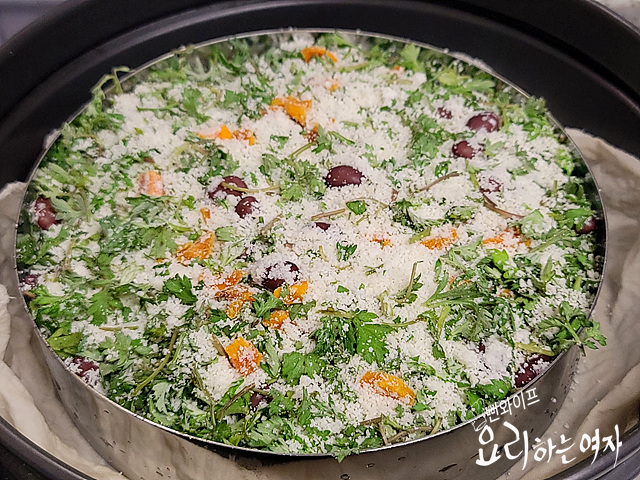
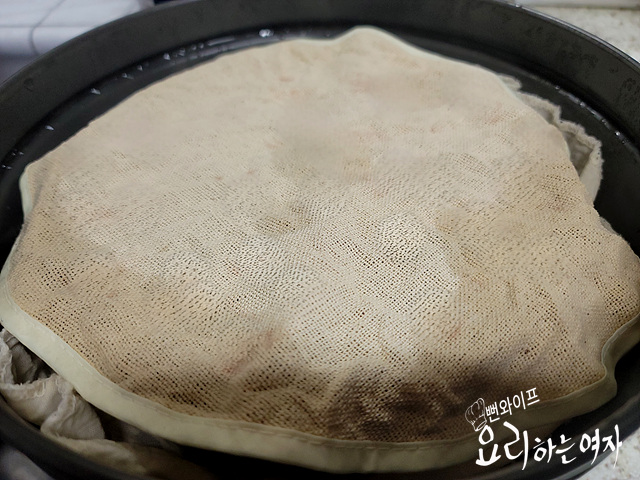
Line a vigorously boiling, steaming pot with a cheesecloth, place the ring mold inside, and fill it with the prepared ingredients.
Be sure to cover the top with a cheesecloth as well.
This is to prevent condensed water droplets from dripping down and making it soggy while steaming.
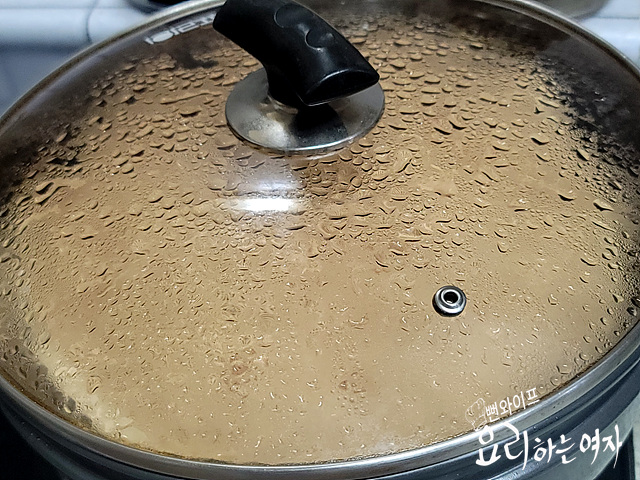
Cover with the lid and steam over medium heat for 15 to 20 minutes, then turn off the heat and let it rest for 5 minutes.
Finish
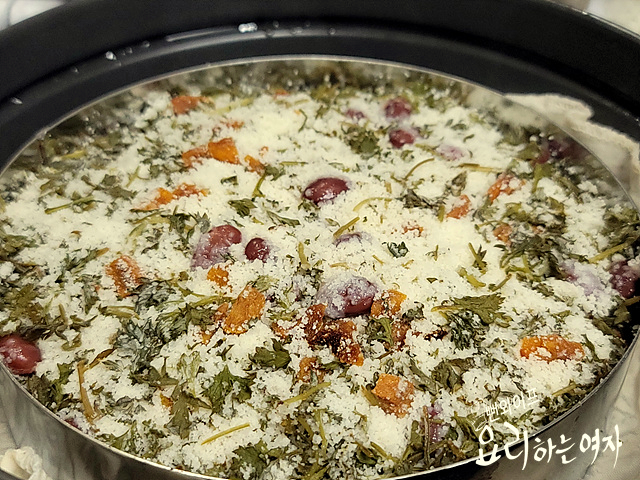
The ssuk beomuri is finished.
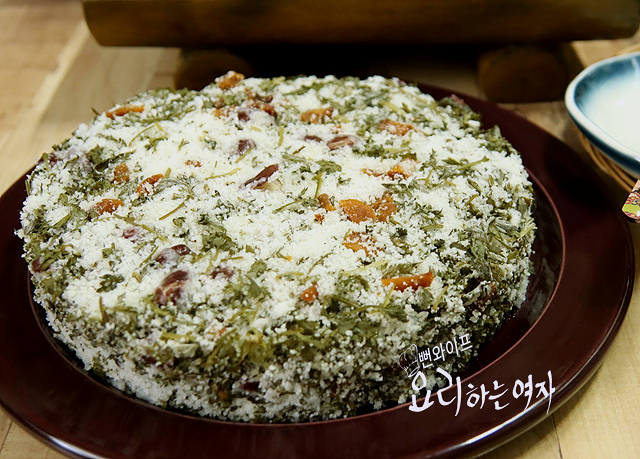
I served it on a plate.
Made with fresh green mugwort and my favorite ingredients, does it not look colorful and so appetizing?
This is what a wholesome wellness snack is all about.
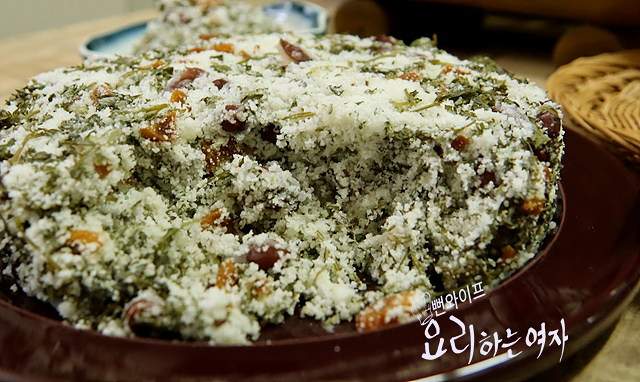
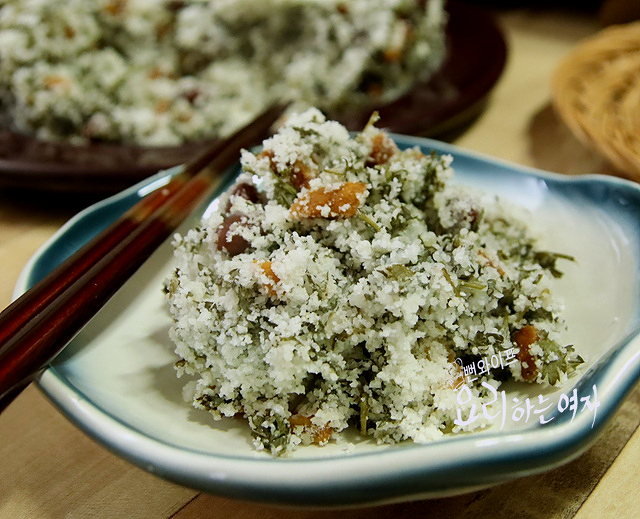
 Ppunwife's tips
- Do not pour in all 7 tbsp of cold water at once; add it gradually while checking the condition of the flour.
- Since clumps form during the hydration process, sift it finely through a sieve so that the finished beomuri turns out neat without any dense clumps.
- Cover the top with a cheesecloth so that steam droplets generated during cooking do not drip and make it soggy.
FAQ
Do I need to add the same amount of water when using mill-ground rice flour?
Wet-milled rice flour ground at a mill already contains moisture, so you should skip hydrating it or reduce the amount of water.
How can I tell if the rice flour has the right amount of water?
It is just right when it clumps into a lump when squeezed firmly in your hand, but crumbles smoothly when pressed lightly with your fingertips.
Why do you cover the top with a cheesecloth after placing the ingredients in the steamer?
It prevents condensation that forms on the inside of the lid from dripping directly onto the rice cake and making it soggy during steaming.
Can I use other ingredients instead of cowpeas?
You can use red beans or green peas instead of cowpeas, or substitute various nuts to suit your taste.