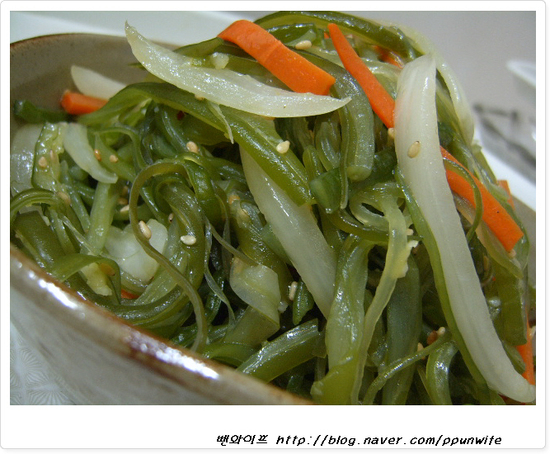
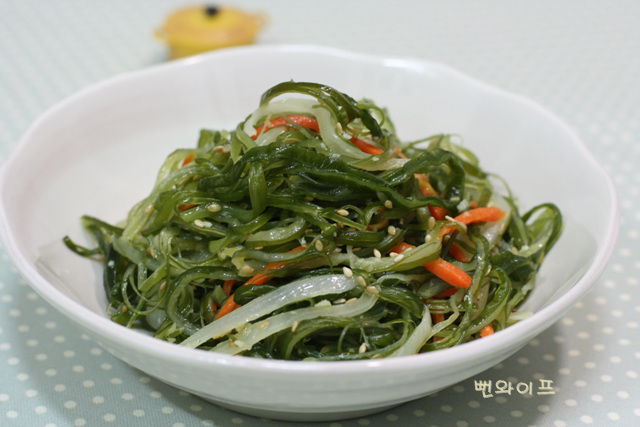
Miyeok Julgi Bokkeum (Stir-Fried Seaweed Stems)
Miyeok julgi bokkeum (stir-fried seaweed stems) cooked in scallion-garlic oil with mirin to remove any fishiness, and seasoned with tuna extract sauce for deep savory flavor.
Translated from Korean by AI and not yet checked by a native speaker. Amounts and numbers are taken directly from the original recipe. Read the Korean original →
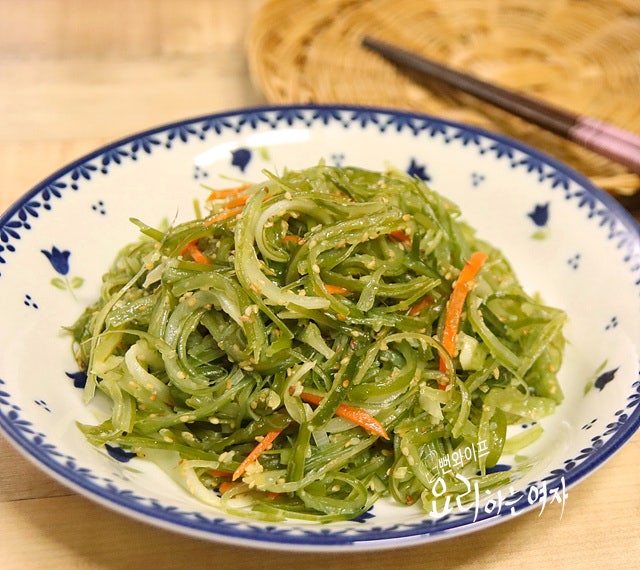
After soaking salted seaweed stems to remove the excess salt, they are stir-fried in fragrant green onion and garlic oil with a splash of mirin to cleanly remove any fishy taste. Using tuna extract sauce instead of soup soy sauce adds rich savory depth, and adding a splash of broth at the end yields a moist, tender side dish.
- Servings
- about 3–4 servings
- Difficulty
- Easy
- Spiciness
- Not spicy
Ingredients
Ingredients
- Salted seaweed stems250 g (after cleaning)
- Onion1/4
- Carrota little
- Large green onion (daepa)a little
Seasoning
- Minced garlic1 tbsp
- Mirin (cooking rice wine)2 tbsp
- Tuna extract sauce (chamchi-aek) (or soup soy sauce (guk-ganjang))1 tbsp
- Water (or anchovy broth)2–3 tbsp
- Toasted sesame oil1 tbsp
- Toasted sesame seeds1 tbsp
- Soak the seaweed stems in water for about 30 minutes, changing the water several times, until they taste mildly salted when chewed, then drain well.
- Split thick stems in half lengthwise, and trim away any tough or stiff stems as well as attached seaweed fronds.
Steps
Prepare the ingredients
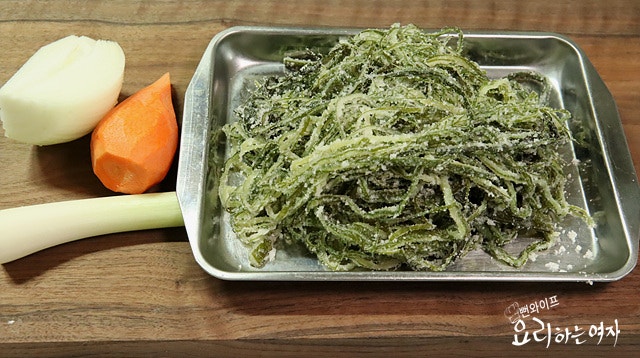
Here is 300 g of salted seaweed.
Also prepare the onion, carrot, and large green onion.
Clean and prep the salted seaweed stems
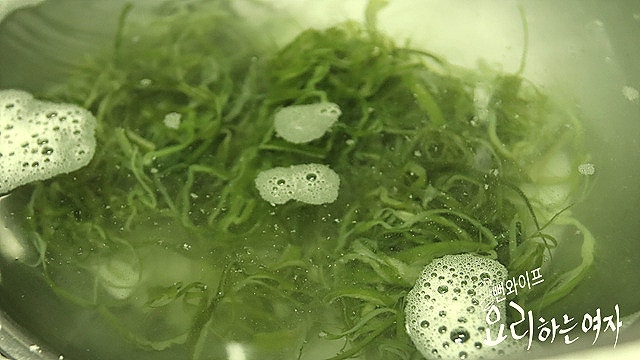
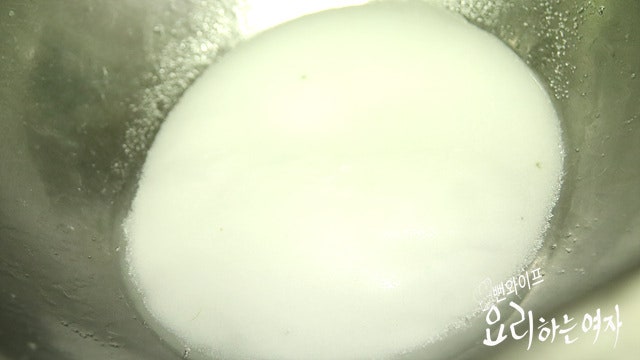
When you dip the salted seaweed stems in water and lift them out, salt settles at the bottom.
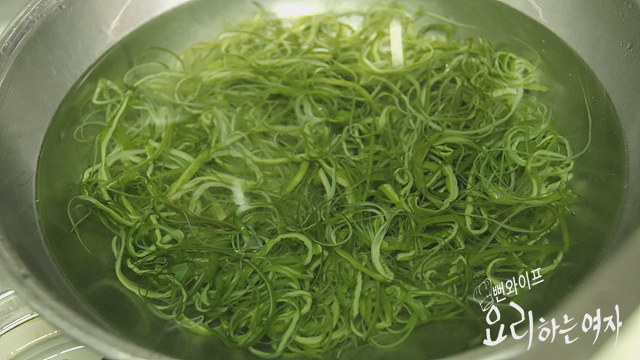
Fill the bowl with fresh water again and soak the seaweed stems to remove the salt, changing the water several times.
Soak for about 30 minutes until they taste mildly seasoned when chewed, then drain.
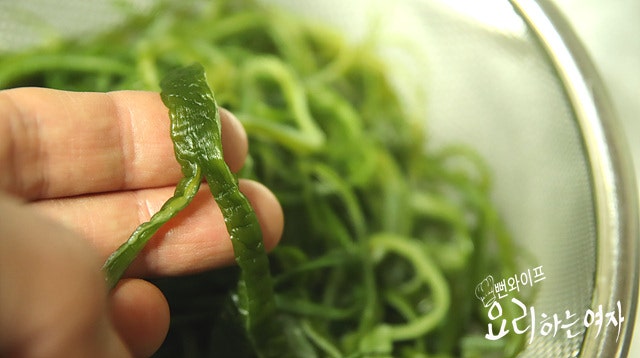
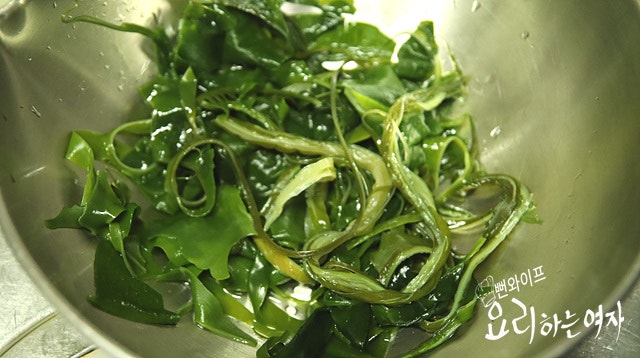
Split thick stems in half, and trim away any stiff or tough stems as well as attached seaweed fronds.
Slice the vegetables
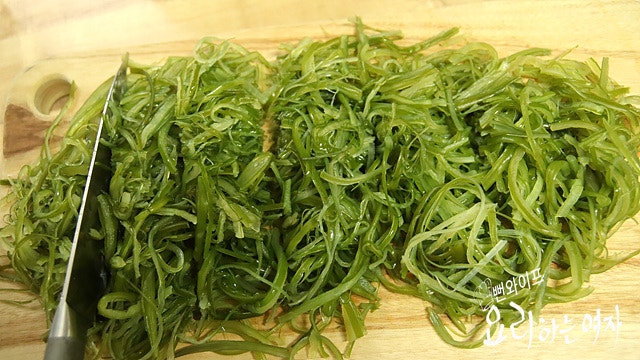
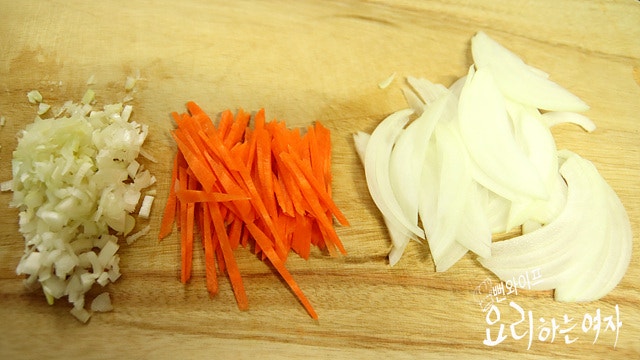
Cut the cleaned seaweed stems into bite-sized lengths, and julienne the onion and carrot into similar lengths.
Finely mince the large green onion.
Stir-fry
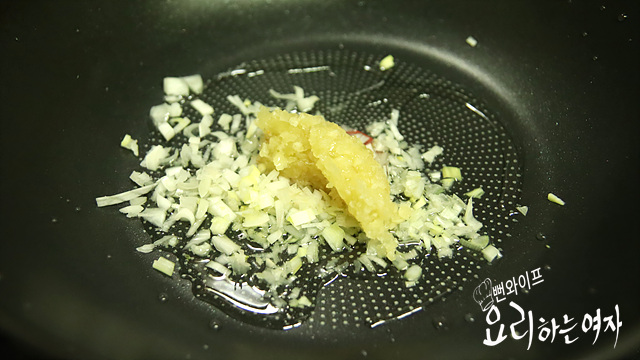
Heat oil in a hot pan, then add the minced large green onion and 1 tbsp of minced garlic.
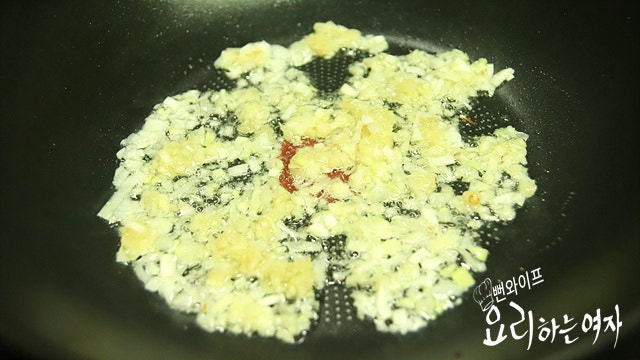
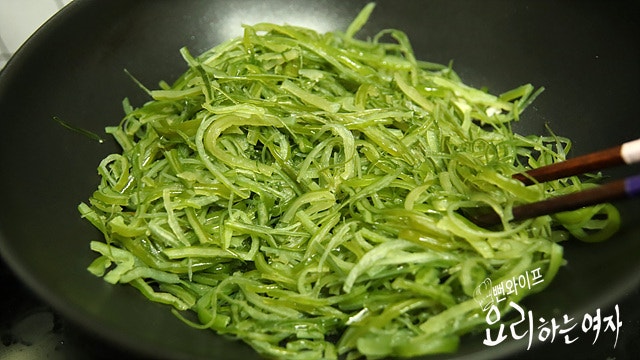
Stir-fry without burning, and once fragrant, add the seaweed stems...
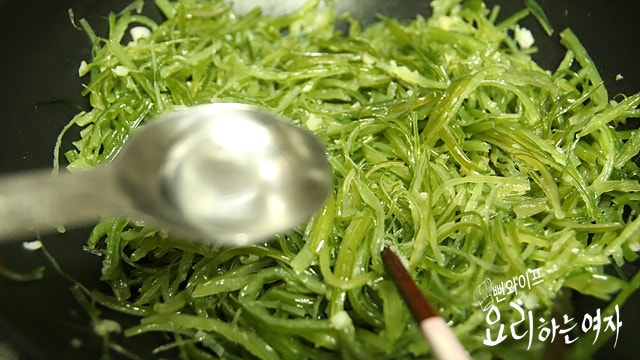
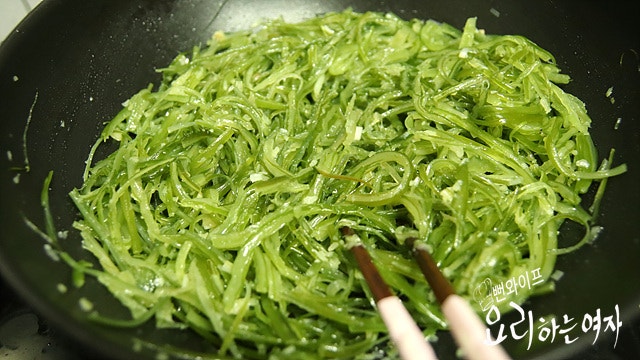
Add 2 tbsp of mirin and stir-fry briskly.
Stir-frying with mirin in the oil infused first with garlic and green onion removes the fishy smell from the seaweed stems.
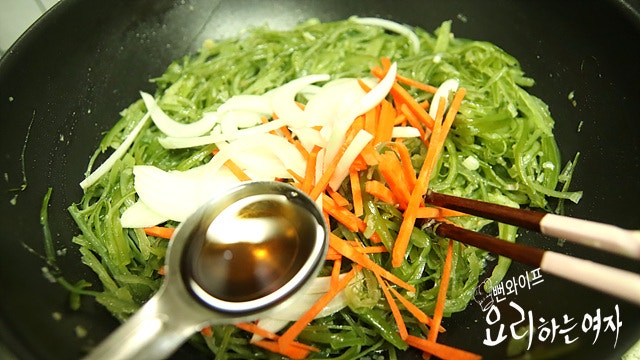
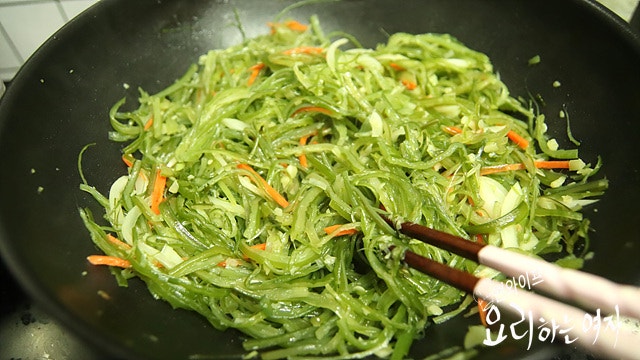
Once the seaweed stems become tender, add the onion, carrot, and tuna extract sauce (or soup soy sauce), adjusting the amount depending on how salty your seaweed stems are so it does not become too salty.
I added 1 tbsp to season and stir-fried.
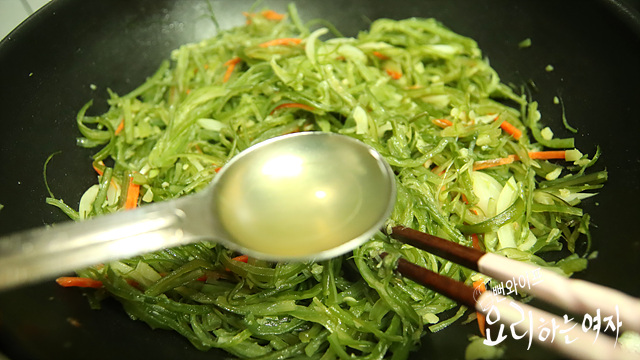
Once all the ingredients are tender and cooked through, add 2 to 3 tbsp of anchovy broth or water and stir-fry so it turns out moist.
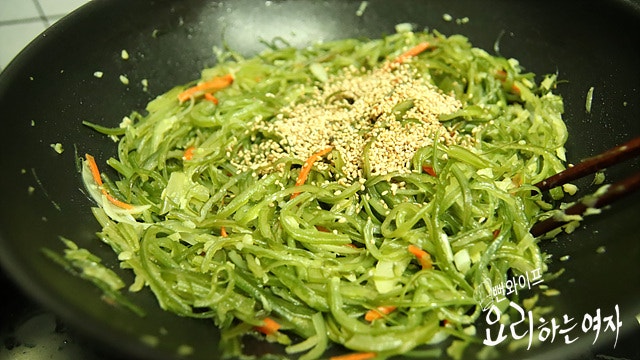
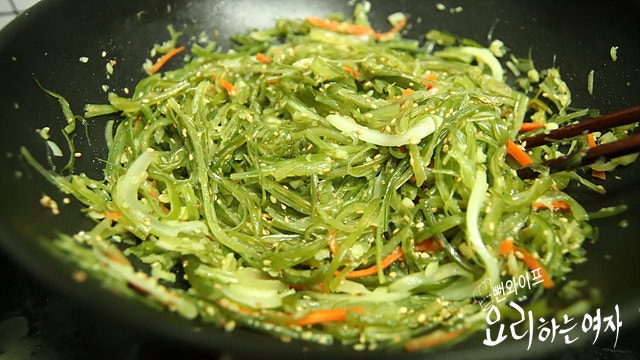
Give it a final taste, adjust with salt if it is too bland, turn off the heat, and finish by mixing in 1 tbsp of toasted sesame oil and 1 tbsp of toasted sesame seeds thoroughly.
Complete
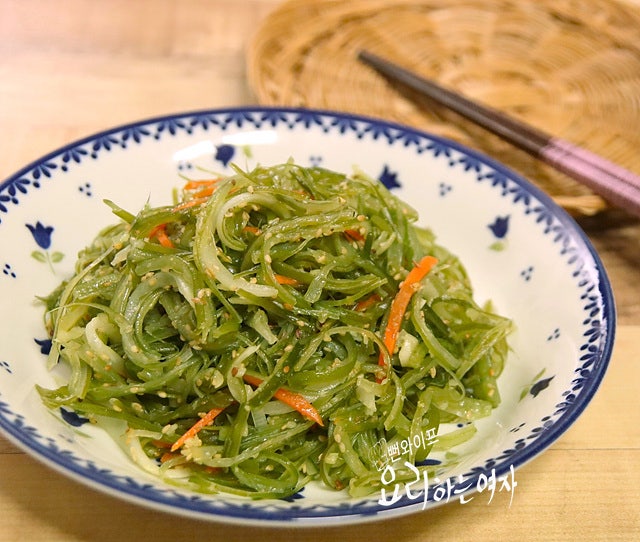
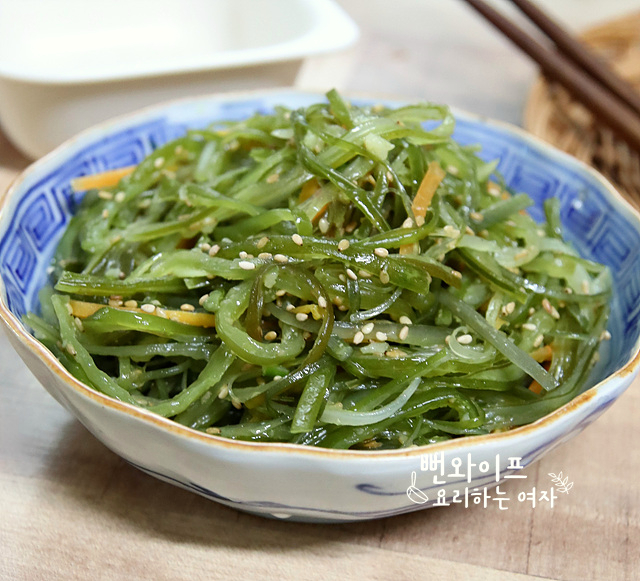
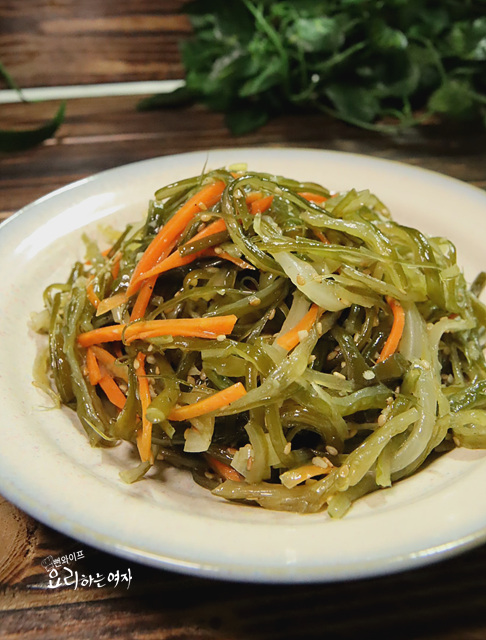
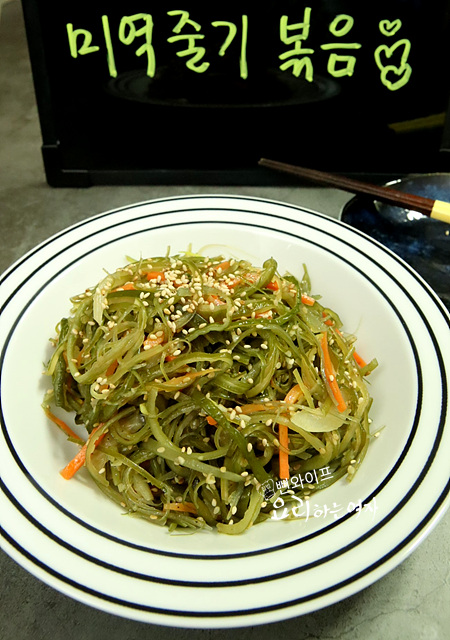
Deliciously finished stir-fried seaweed stems, one of my absolute favorite side dishes.
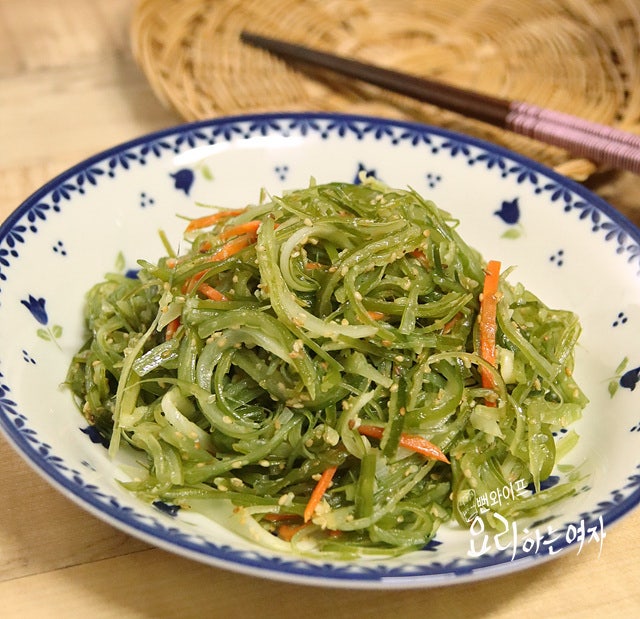
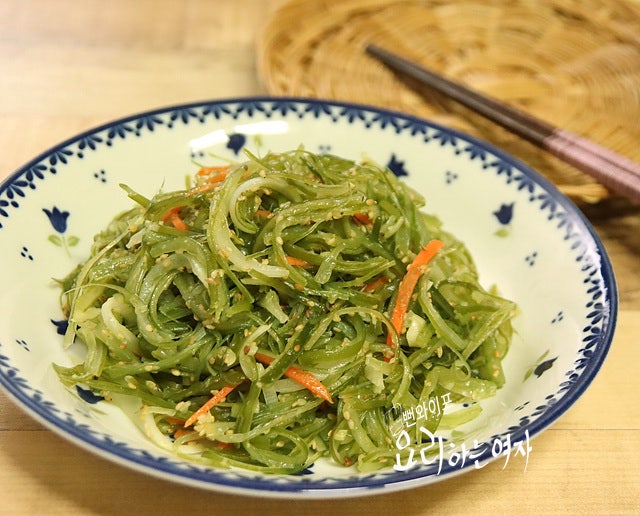
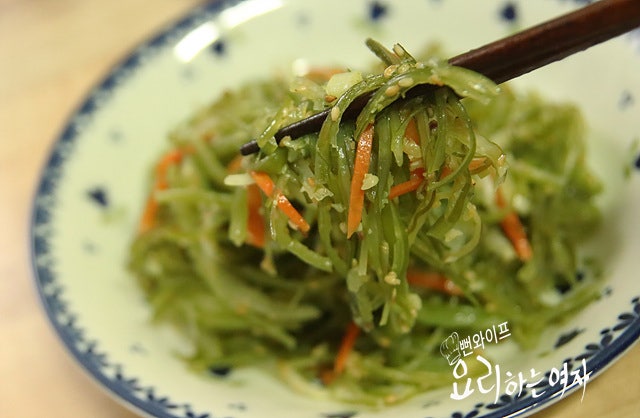
Whenever I make stir-fried seaweed stems, I pile heaps of them over rice and scarf it down like noodles.
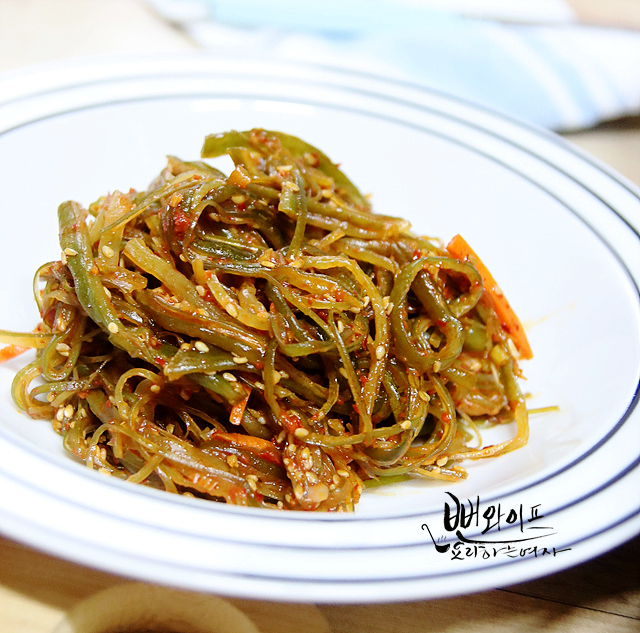
It tastes so wonderful mixed with rice and just a spoonful of gochujang.
 Ppunwife's tips
- Stir-frying with mirin in oil infused first with garlic and green onion eliminates the fishy smell of the seaweed stems.
- When adding tuna extract sauce (or soup soy sauce), adjust the amount based on the saltiness of the seaweed stems so it does not turn out too salty.
- Once all ingredients are cooked tender, stir in 2 to 3 tbsp of anchovy broth or water so the dish stays nicely moist.
FAQ
How do you get rid of the fishy taste in seaweed stems?
Stir-fry minced green onion and garlic first in heated oil until fragrant, then add the seaweed stems along with 2 tbsp of mirin to effectively reduce any fishiness.
How long should salted seaweed stems be soaked in water?
Soak them for about 30 minutes while changing the water several times to draw out the salt, checking by chewing a piece until it tastes mildly seasoned, then drain.
Can I use soup soy sauce instead of tuna extract sauce?
Yes, soup soy sauce is listed as an alternative to tuna extract sauce and can be substituted. However, be sure to adjust the quantity based on the saltiness of the seaweed stems so the dish is not too salty.
Why do you add water or broth while stir-frying?
Adding 2 to 3 tbsp of water or anchovy broth once the ingredients are cooked keeps the dish from drying out and ensures a moist finish.