Sweet and Spicy Bibim Guksu Sauce (Spicy Noodle Sauce)
A large-batch spicy noodle sauce made by mixing seasonings with gochujang and gochugaru and letting it age.
Translated from Korean by AI and not yet checked by a native speaker. Amounts and numbers are taken directly from the original recipe. Read the Korean original →
This is an all-purpose spicy sauce made simply by mixing basic seasoning ingredients together. Aging it in the refrigerator for at least a day allows the gochugaru to hydrate, deepening both its color and flavor. It is great to keep on hand for quick and refreshing summer noodle bowls.
- Servings
- about 10–12 servingsOriginal: 6 bottles of 250 ml
- Difficulty
- Easy
- Spiciness
- Spicy
- Keeps
- 60 days
Ingredients
- Gochujang (Korean red chili paste)2 cups
- Fine gochugaru (Korean chili flakes)1 cup
- Regular soy sauce (jin-ganjang) (or brewed soy sauce (yangjo-ganjang))1 cup
- Corn syrup (mulyeot)1 1/2 cups
- Sugar1 cup
- Vinegar1 1/2 cups
- Mirin (cooking rice wine)1 cup
- Minced garlic1/2 cup
- To store this for one or two months, omit toasted sesame oil and toasted sesame seeds, which can turn rancid; just add them when serving the noodles.
- Use fine gochugaru if you have it. If you use coarse flakes like I did, aging it for one or two days makes the color much prettier and deepens the flavor.
Steps
Make the bibim guksu sauce
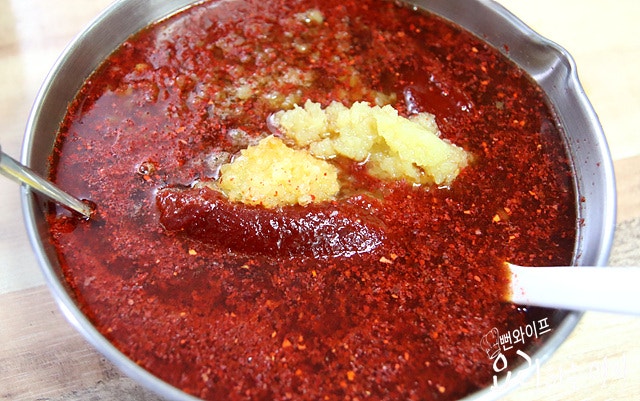
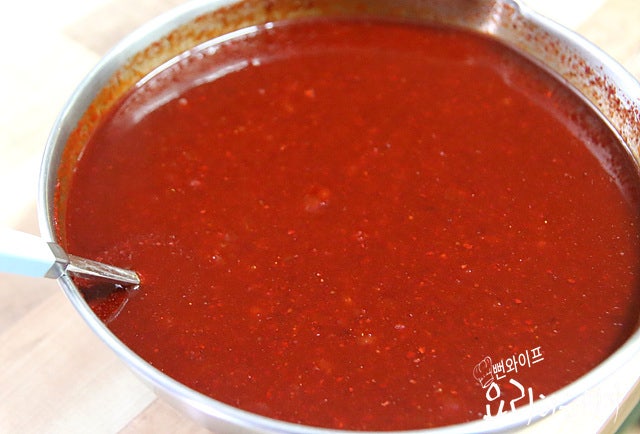
Simply add all the ingredients for the bibim guksu sauce together and mix well.
Use fine gochugaru if you have it. If you use coarse flakes like I did, aging it for one or two days makes the color much prettier and deepens the flavor.
If the consistency feels too runny, adjust it by adding more gochugaru; it also thickens naturally as it ages.
Since preferences for sourness vary widely, I reduced the amount of vinegar compared to my previous recipe, so you can add about 1 tbsp when serving if you like it more tangy.
To store this for one or two months, omit toasted sesame oil and toasted sesame seeds, which can turn rancid; just add them when serving the noodles.
Finish
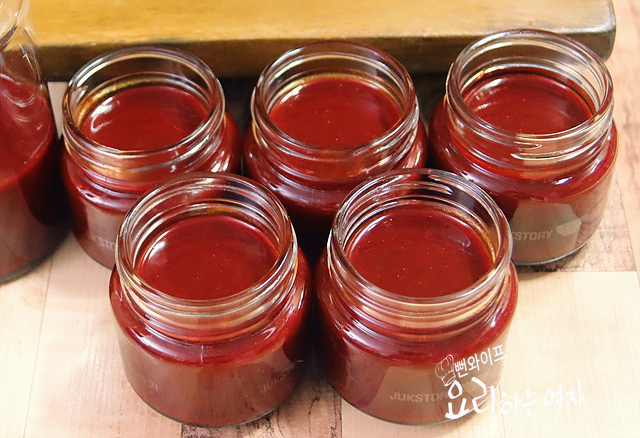
This yields 6 glass jars of 250ml each. 1 bottle holds enough for 4~5 servings.
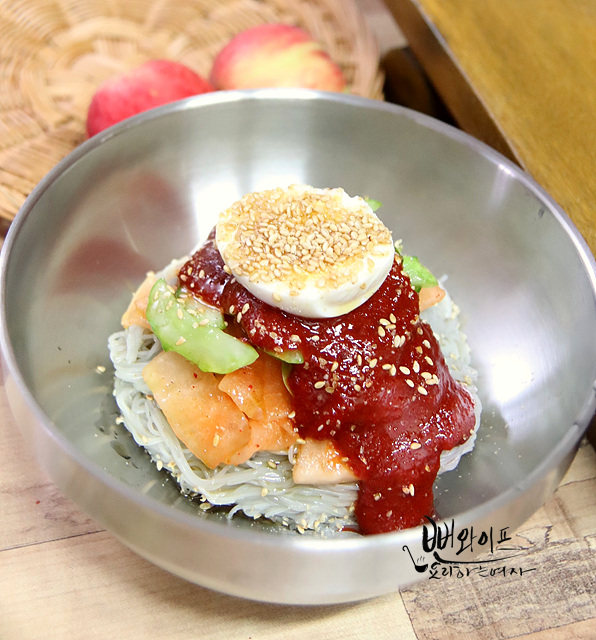
This is bibim guksu sauce aged in the refrigerator for two days.
It tastes even better if you eat it after letting it age for at least a day, as the gochugaru swells sufficiently, the seasoning blends well, and it begins to develop a deep flavor.
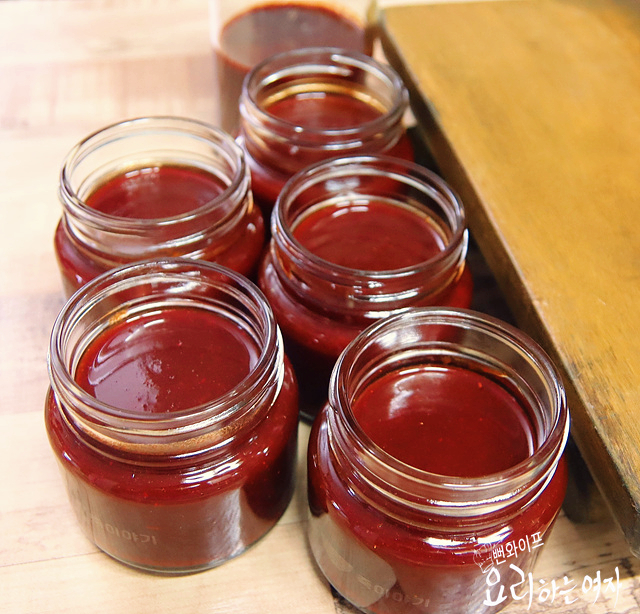
If you portion it into small containers and seal them tightly so they are not exposed to air from opening and closing the lid frequently, it keeps well for up to two months without spoiling.
If you want to keep it longer than that, moving it to the freezer will extend the shelf life even further.
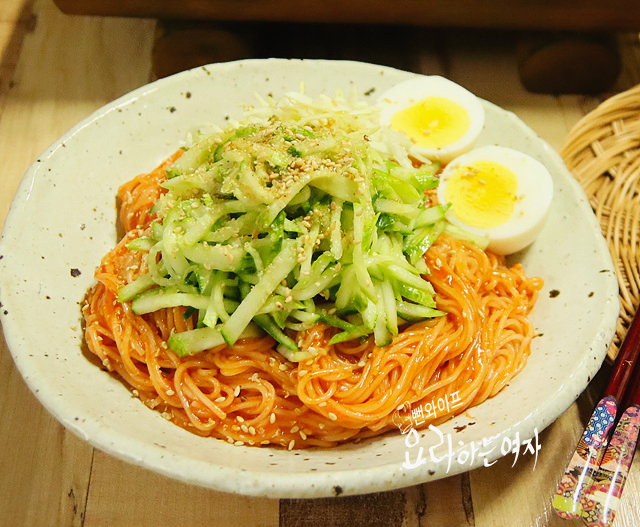
I enjoy bibim guksu so much during the summer. Even now, I boil noodles for bibim guksu once every two days...
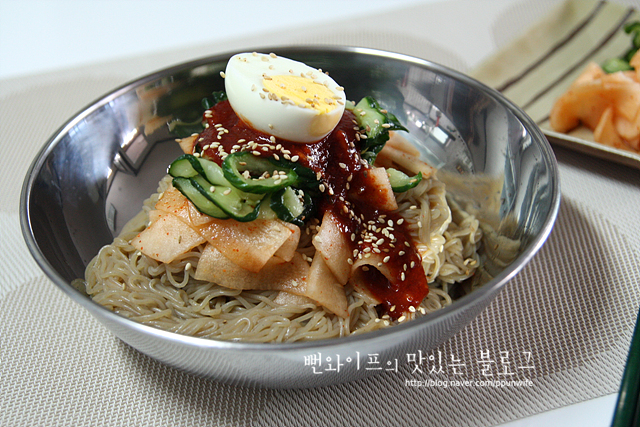
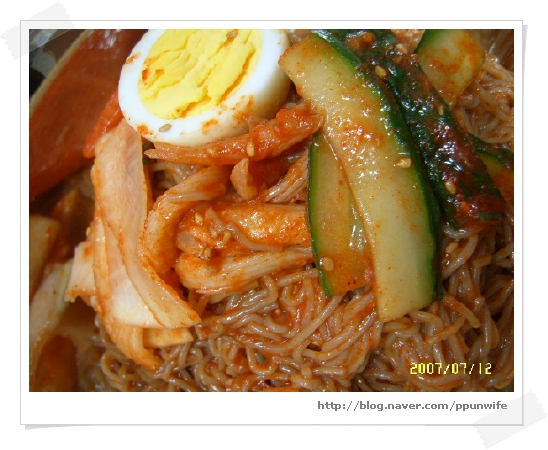
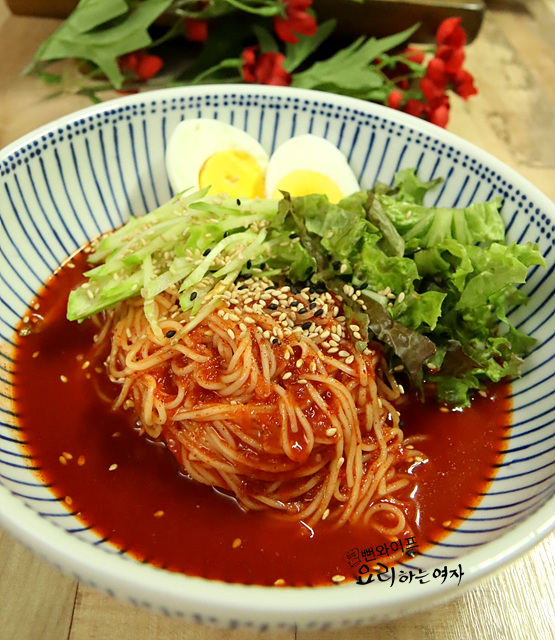
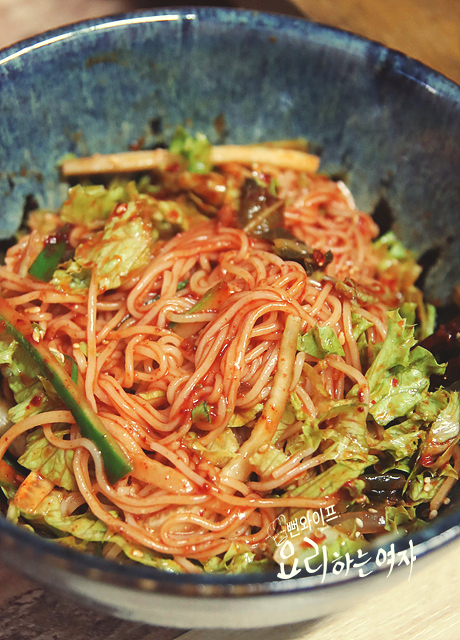
Having this sauce ready makes tossing together bibim guksu so quick and effortless.
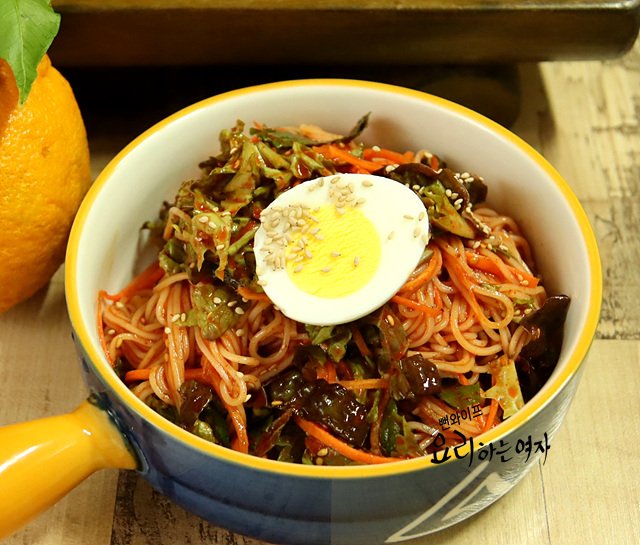
I tossed the noodles with simple ingredients, added toasted sesame oil and ground toasted sesame seeds, and even without any special seasonings, it is delicious.
 Ppunwife's tips
- If the consistency feels too runny, adjust it by adding more gochugaru; it also thickens naturally as it ages.
- It tastes even better if you age it for at least a day, as the gochugaru thoroughly hydrates, the seasonings meld together, and the flavors develop depth.
- If you portion it into small containers and seal them tightly so they are not exposed to air from opening and closing the lid frequently, it keeps well for up to two months without spoiling.
FAQ
Why shouldn't I add toasted sesame oil and toasted sesame seeds ahead of time?
Oil can turn rancid during long-term storage, so it is best to leave them out when making the sauce and add them separately when tossing the noodles.
How can I store the sauce for a long time?
Dividing the sauce into small airtight containers to minimize exposure to air allows you to store it in the refrigerator for about two months. For longer storage, keep it in the freezer.
How do I fix the consistency if the sauce is too thin?
If the sauce feels too runny, you can adjust it by adding more gochugaru, and it will also naturally thicken as it ages.
Can I use the finished sauce right away?
You can eat it right away, but letting it age in the refrigerator for at least a day allows the gochugaru to hydrate properly and the flavors to meld, giving it a much deeper taste.