Daseulgi Haejang Guk (Freshwater Snail Hangover Soup)
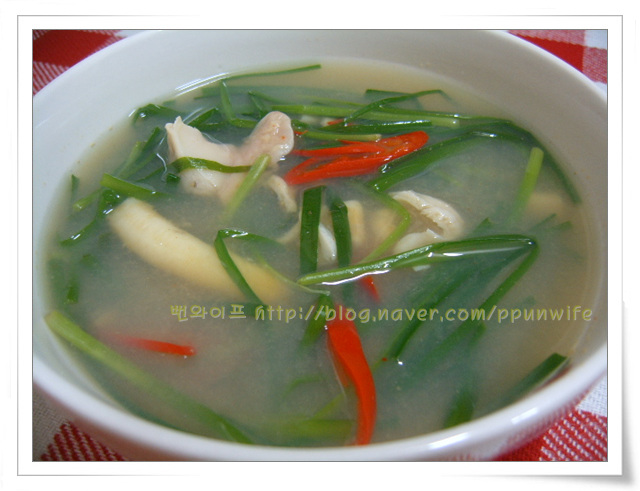
A refreshing freshwater snail hangover soup simmered with boiled cabbage and garlic chives in a light doenjang broth flavored with Cheongyang chili peppers.
Translated from Korean by AI and not yet checked by a native speaker. Amounts and numbers are taken directly from the original recipe. Read the Korean original →
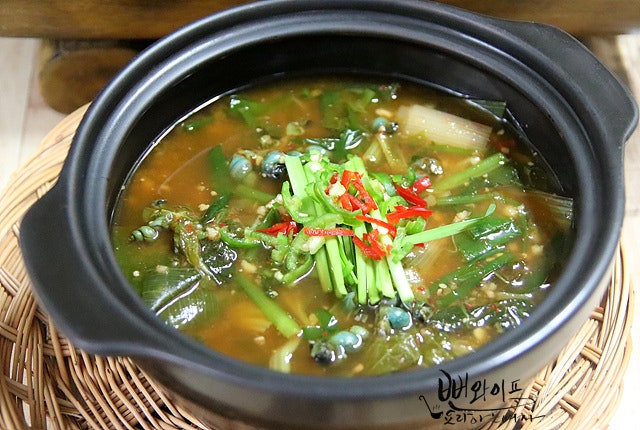
This soup dish is simmered in snail-cooking broth with a light doenjang seasoning, tender cabbage, and fragrant garlic chives. Rather than using too much gochugaru, adding Cheongyang chili peppers gives it a clean, spicy kick, making it wonderful to enjoy as a soothing hangover soup.
- Servings
- 5–6 servings
- Difficulty
- Medium
- Spiciness
- Spicy
Ingredients
Ingredients
- Freshwater snails (daseulgi)2 cups
- Water boiled with freshwater snails (daseulgi)5 cups
- Bottled water7 cups
- Young napa cabbage (danbaechu)1 bunch, 550 g (blanched)
- Large green onion (daepa)2 stalks
- Garlic chives (buchu)150 g
- Red chili pepper2
- Cheongyang chili pepper (hot green chili)5
Seasoning
- Gochugaru (Korean chili flakes)3 tbsp
- Doenjang (Korean soybean paste)3 tbsp
- Soup soy sauce (guk-ganjang)2 tbsp
- Tuna extract sauce (chamchi-aek)2 tbsp
- Minced garlic2 tbsp
- Saltfor final seasoning
- Ground black pepper
- When young napa cabbage or winter-grown cabbage is cheap, blanching and freezing it makes it very convenient whenever you cook doenjang soup.
- If cleaning live snails feels too intimidating, cleaned domestic freshwater snails sold at large supermarkets also work very well.
Steps
Prepare the ingredients
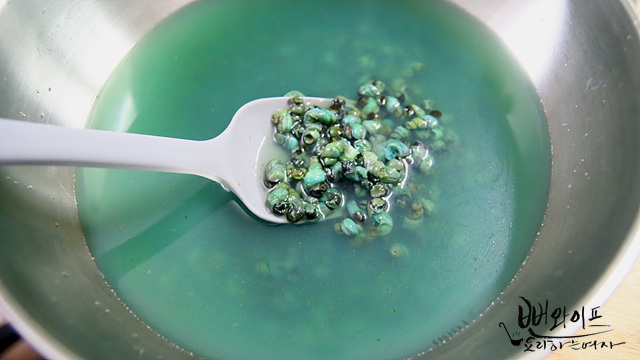
An acquaintance caught wild freshwater snails, boiled them, cleaned them, and sent them to me.
I haven't seen freshwater snails at traditional markets yet, but once I come across them, I'll also post the process of purging and boiling them.
There are about 2 cups of freshwater snails and about 5 cups of their cooking broth, and I will add more bottled water to cook.
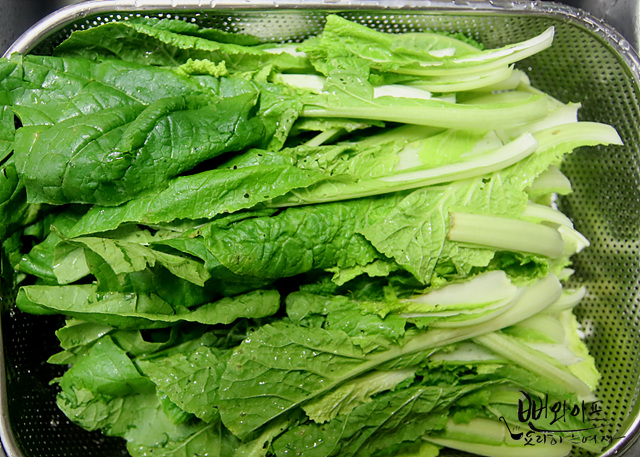
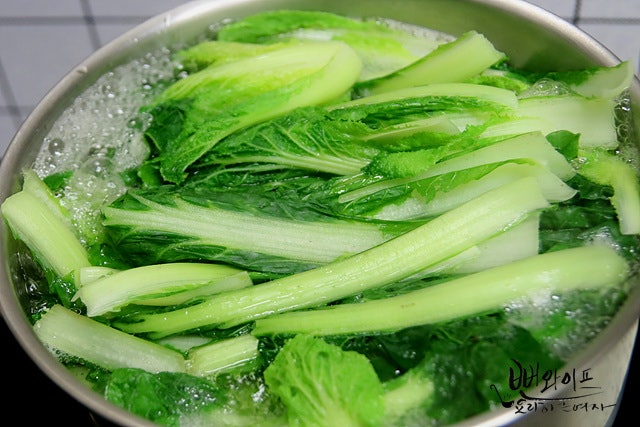
Blanch 1 bunch of young napa cabbage until tender and set aside.
When young napa cabbage or winter-grown cabbage is cheap, blanching and freezing it makes it very convenient whenever you cook doenjang soup.
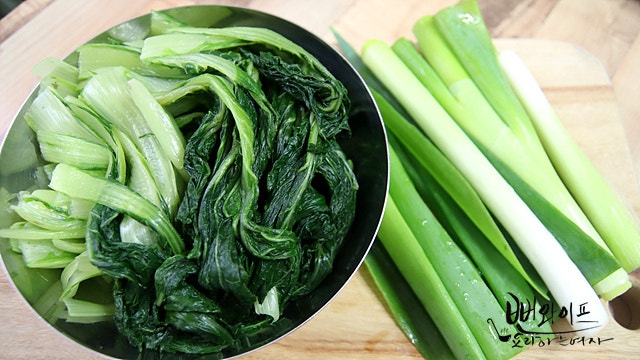
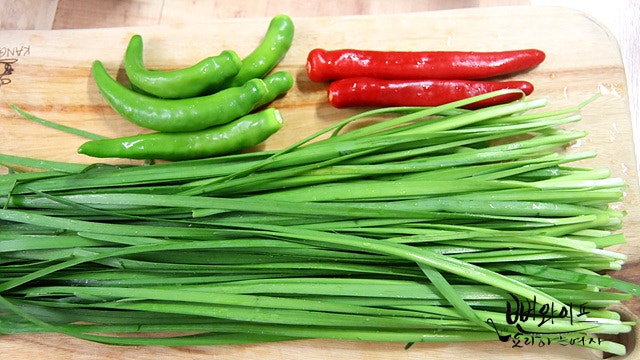
After boiling, the young napa cabbage comes to about 550g.
You need 2 large green onions, a handful of garlic chives (150g), 5 Cheongyang chili peppers, and 2 red chili peppers.
Slice the ingredients
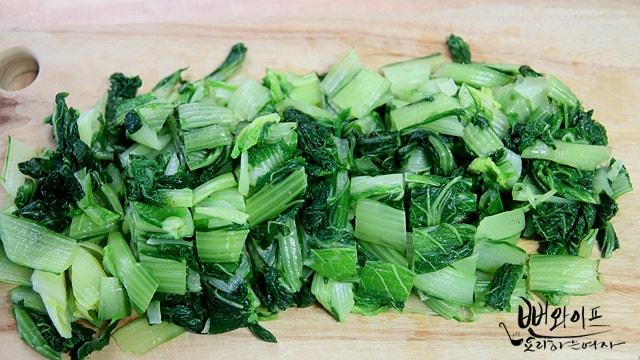
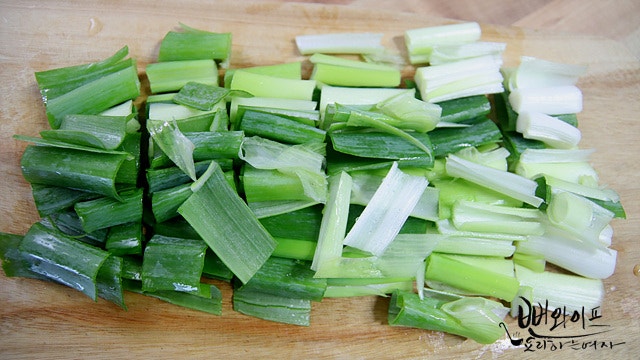
Cut the blanched cabbage into bite-sized lengths of about 3 to 4 cm, and split the large green onions in half lengthwise before cutting them to a similar length.
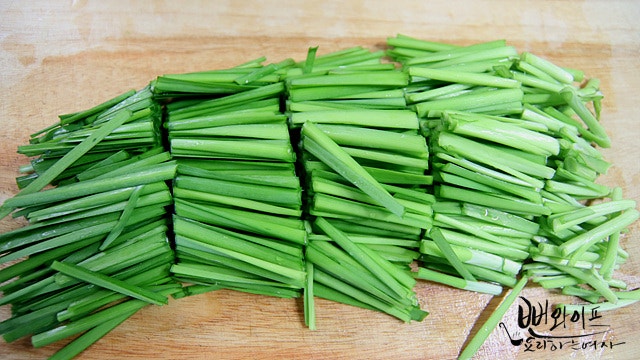
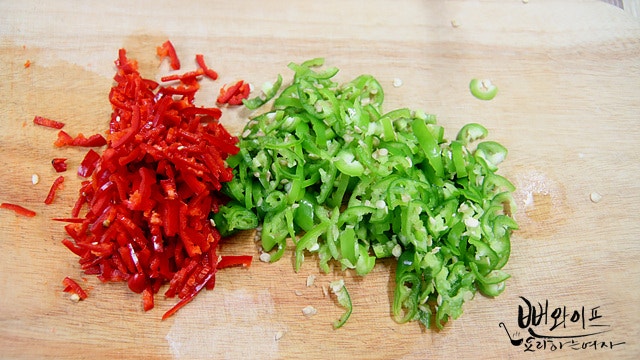
Cut the garlic chives to a similar length as well, and finely slice the Cheongyang chili peppers and red chili peppers.
Season
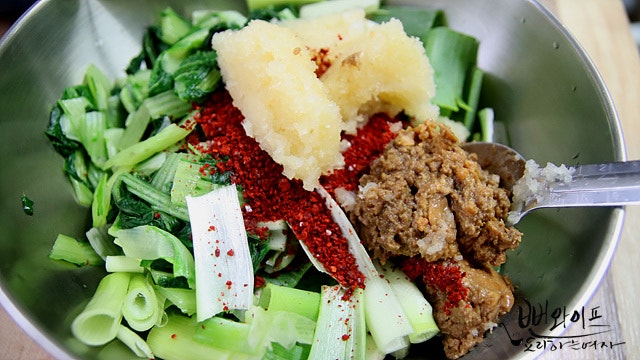
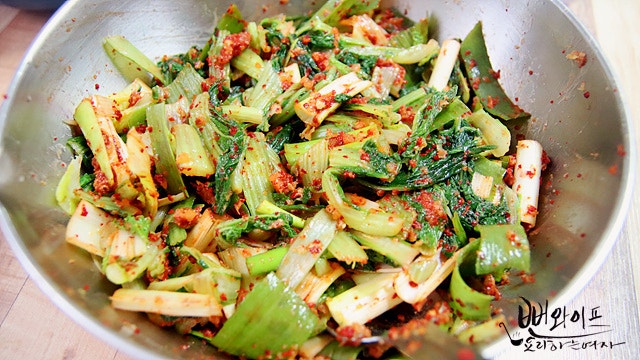
Put the cabbage and large green onions in a bowl, add 3 tbsp doenjang, 2 tbsp minced garlic, 3 tbsp gochugaru, and 2 tbsp soup soy sauce, then toss and massage gently by hand.
Simmer
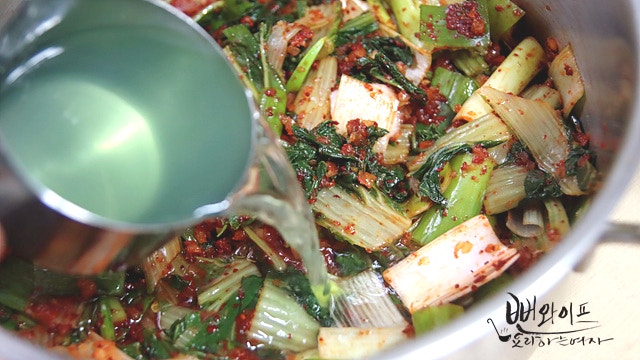
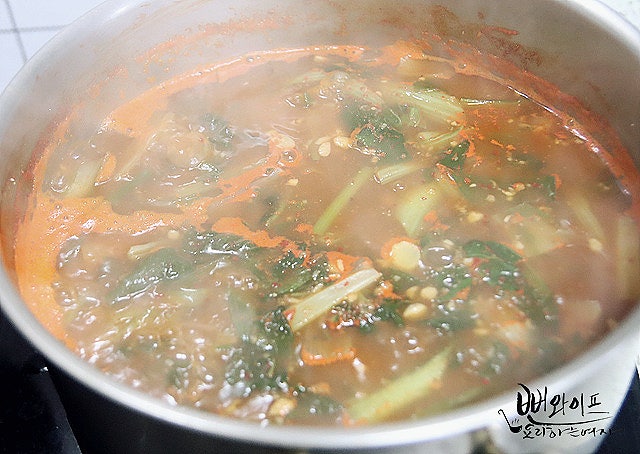
Place the seasoned ingredients in a pot, add 5 cups of the snail-cooking water and 7 cups of bottled water, and bring to a boil.
Simmer gently for about 20 minutes until the ingredients become tender, and I also added 2 tbsp tuna extract sauce to give the broth savory depth.
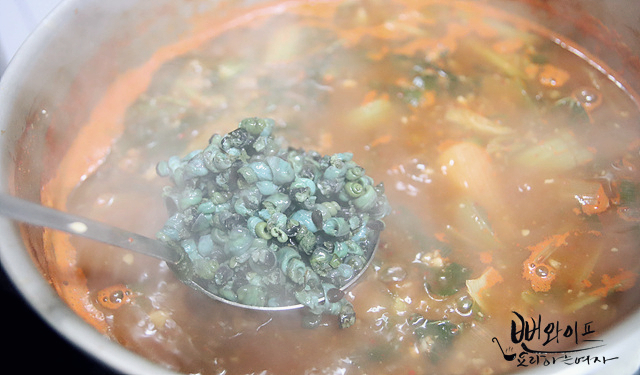
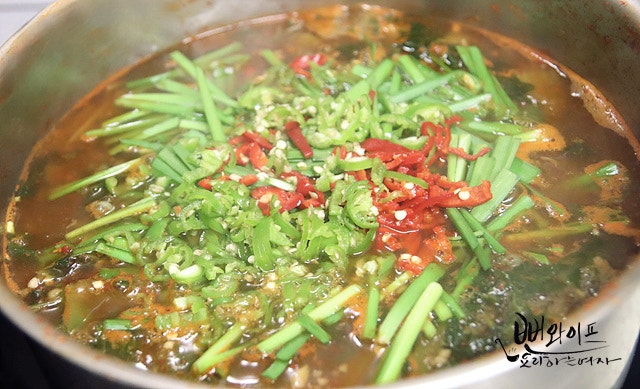
Add all of the freshwater snails, garlic chives, and chili peppers, then finish by simmering until the spicy heat infuses into the broth and the garlic chives become tender.
If you feel there are too many solid ingredients, you can replenish with water and adjust the seasoning with salt.
 Ppunwife's tips
- Rather than adding a lot of gochugaru to make it fiery red and spicy, adding spicy flavor with Cheongyang chili peppers makes it much more delicious.
- Some people also lightly dust the freshwater snails with flour to simmer the soup with a slightly thicker broth.
- If you feel there are too many solid ingredients, you can replenish with water and adjust the seasoning with salt.
FAQ
What should I do if cleaning live freshwater snails is too difficult?
You can also buy and use cleaned domestic freshwater snails sold at large supermarkets.
Is there a secret to giving the broth a clean, refreshing spiciness without making it heavy?
Rather than adding lots of gochugaru, slicing and adding Cheongyang chili peppers makes the broth much more refreshing.
How do I adjust the soup if there are too many solid ingredients while simmering?
Simply add a suitable amount of water, then adjust the seasoning with salt to taste.
Can I prep and store the cabbage in advance?
If you blanch young napa cabbage or winter-grown cabbage until tender and keep it in the freezer, you can conveniently use it whenever making doenjang soup.