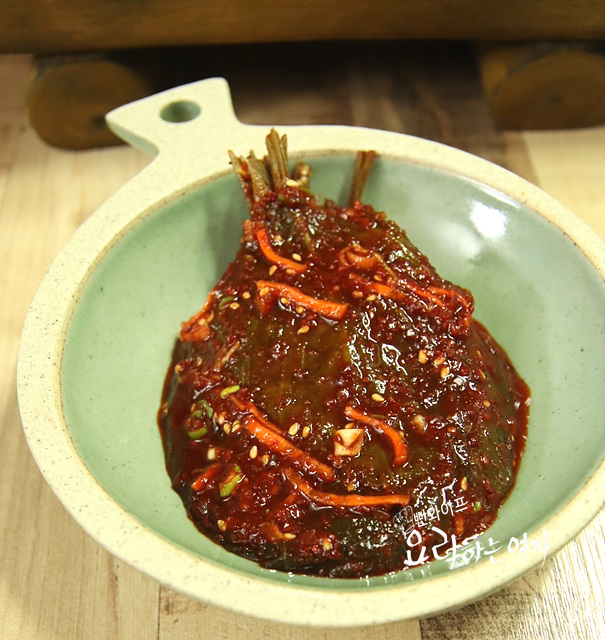
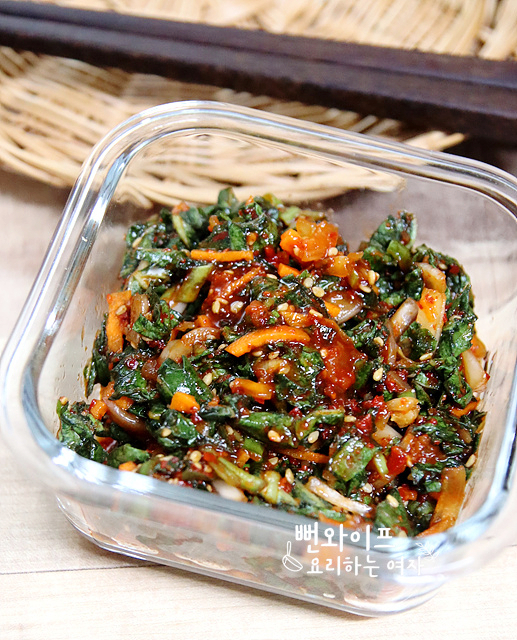
Sweet and Savory Kkaennip Kimchi (Perilla Leaf Kimchi)
A summer side dish made by layering sweet and savory seasoning paste onto perilla leaves until they wilt down.
Translated from Korean by AI and not yet checked by a native speaker. Amounts and numbers are taken directly from the original recipe. Read the Korean original →
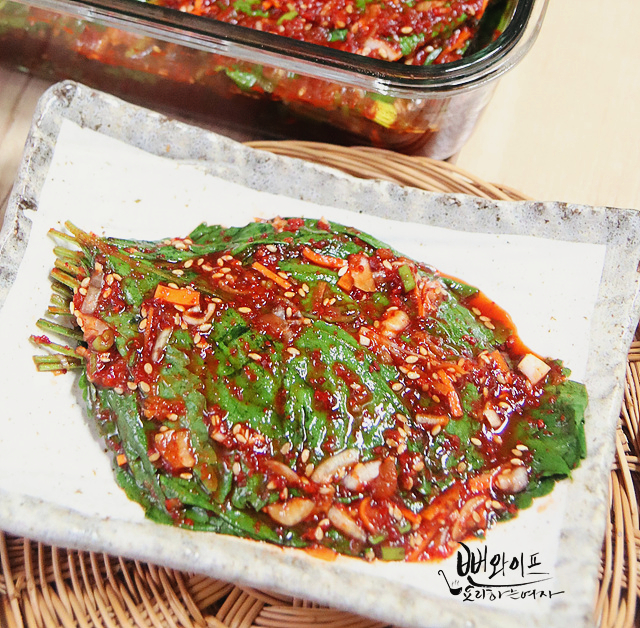
This hearty side dish is made by spreading a sweet and savory seasoning paste over fragrant in-season perilla leaves. By stacking the leaves 2 to 3 at a time and alternating their direction as you spread the seasoning, you can keep the pile neatly level in your container. After about 2 hours, once the leaves have wilted, store them in the refrigerator to enjoy right away.
- Servings
- about 10–12 servings
- Difficulty
- Medium
- Spiciness
- Mildly spicy
Ingredients
Ingredients
- Perilla leaves400 leaves
- Onion2, 1 1/2 cups (small, minced)
- Carrot1/2, 1 cup (minced)
- Large green onion (daepa)1/2 stalk, 1 cup (minced)
Seasoning
- Gochugaru (Korean chili flakes)2 cups
- Sand lance fish sauce (or dried anchovies)1 1/2 cups
- Anchovy broth (or water)2 cups
- Minced garlic1/2 cup
- Minced ginger1 tbsp
- Corn syrup (mulyeot)1/2 cup
- Sugar3 tbsp
- Toasted sesame seeds5 tbsp
- Soak the perilla leaves in water mixed with a little vinegar for about 10 minutes, then wash them leaf by leaf under running water.
- You can use scallions instead of large green onion, and red chili pepper instead of carrot.
- The onion is 2 mini pickling onions, but you can use 1 medium onion instead.
- If you do not like a strong fish sauce flavor, you can replace half the fish sauce with regular soy sauce (jin-ganjang).
Steps
Prepare the perilla leaves
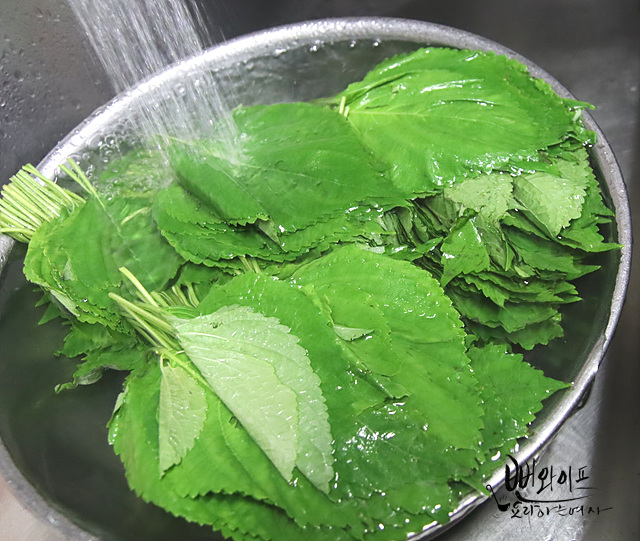
Soak the perilla leaves in water mixed with a little vinegar for about 10 minutes, then wash them leaf by leaf under running water.
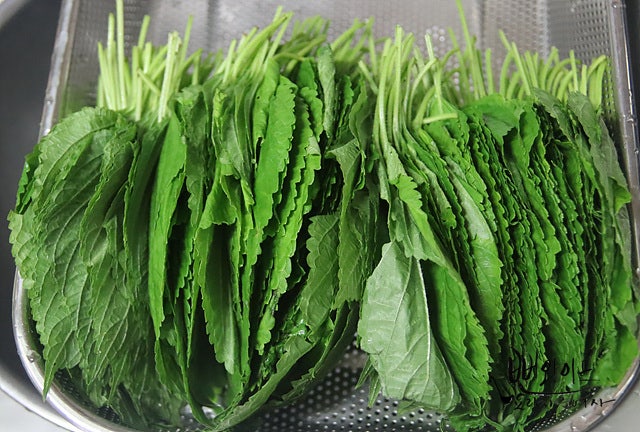
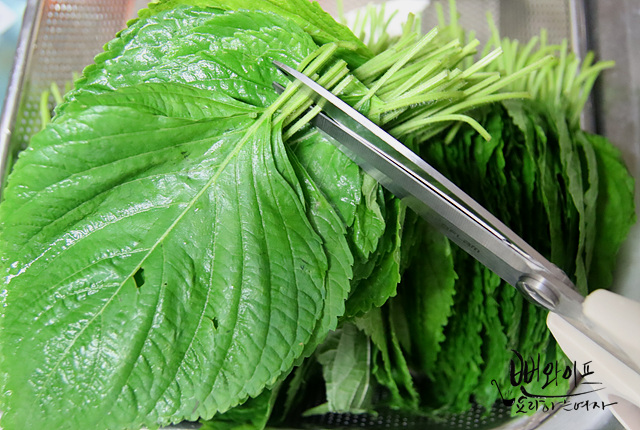
Drain them thoroughly in a colander, then hold them in your hand and shake off any remaining water.
Trim the stems, leaving just enough length to grab easily with chopsticks.
Make the seasoning paste
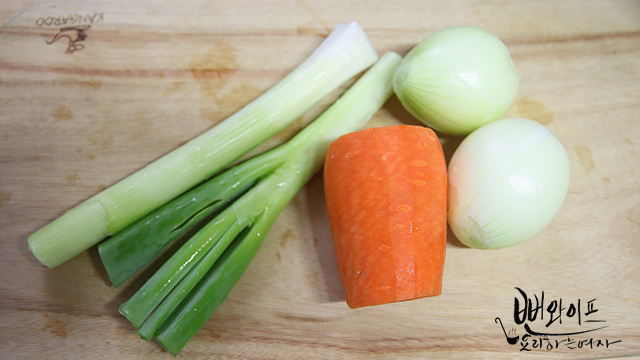
Here are the large green onion, onion, and carrot for the perilla leaf seasoning paste.
You can use scallions instead of large green onion, and red chili pepper instead of carrot.
The onion is 2 mini pickling onions, but you can use 1 medium onion instead.
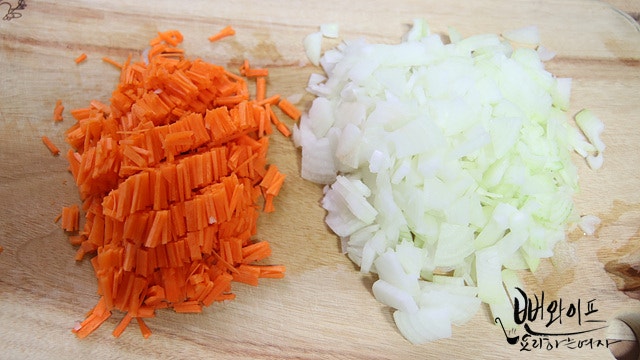
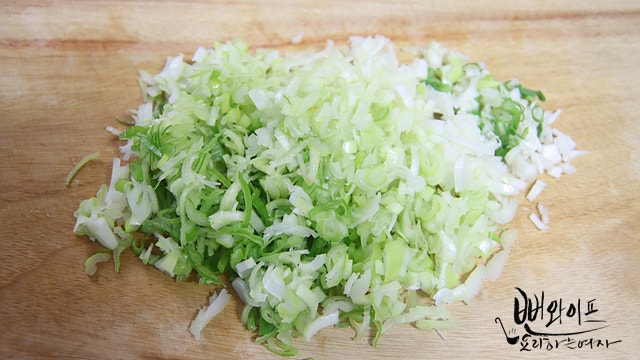
Finely julienne the carrot and onion, then chop them small. The carrot just needs to be finely minced.
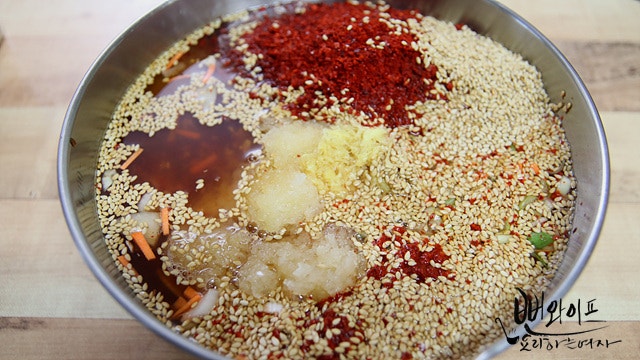
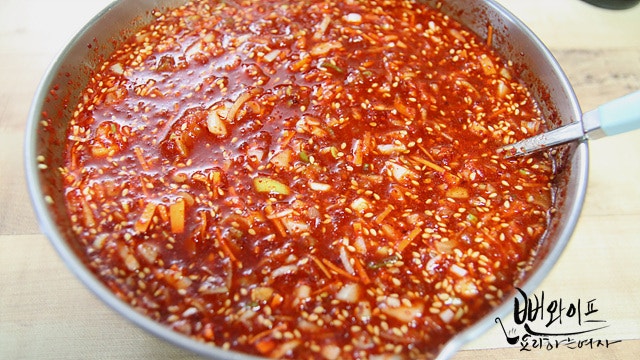
Place the finely chopped carrot, onion, and large green onion into a bowl, add all the seasoning ingredients, and mix well.
Let it sit for a moment so the gochugaru swells and the flavors blend together.
Taste and adjust the seasoning so it is slightly sweet and savory.
If you do not like a strong fish sauce flavor, you can replace half the fish sauce with regular soy sauce (jin-ganjang).
Spread the seasoning
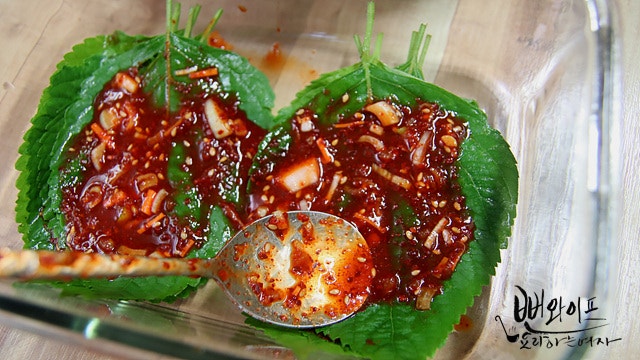
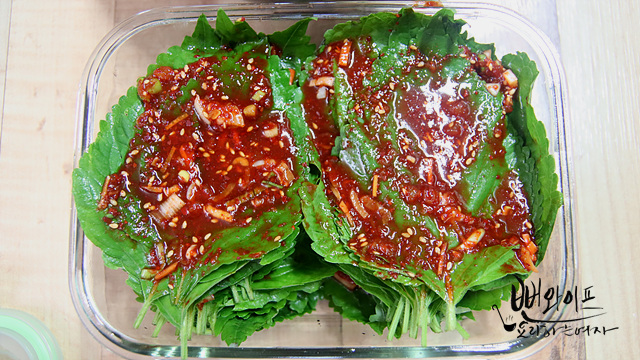
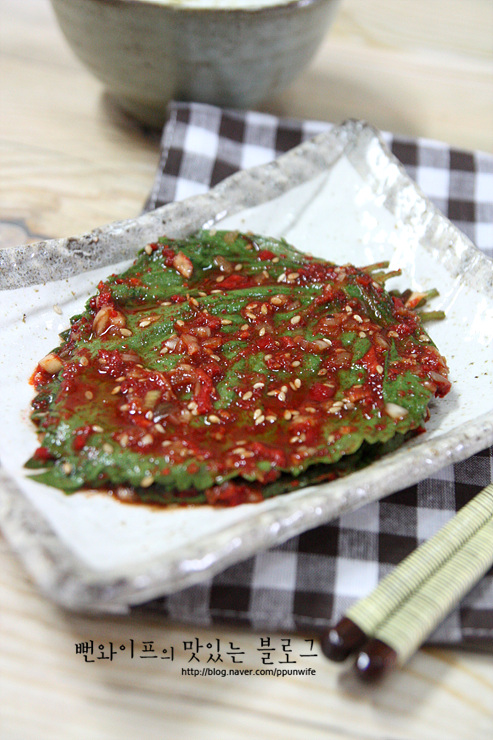
Stack 2 to 3 perilla leaves at a time and spread 1 tbsp of seasoning over them with a spoon.
Once the stack reaches about the middle of your container, turn the leaves in the opposite direction before spreading the seasoning to keep the pile level rather than lopsided.
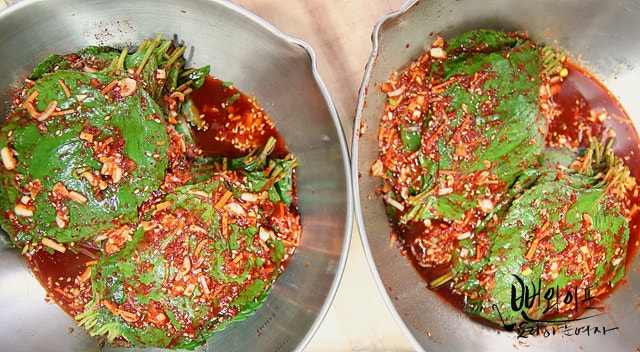
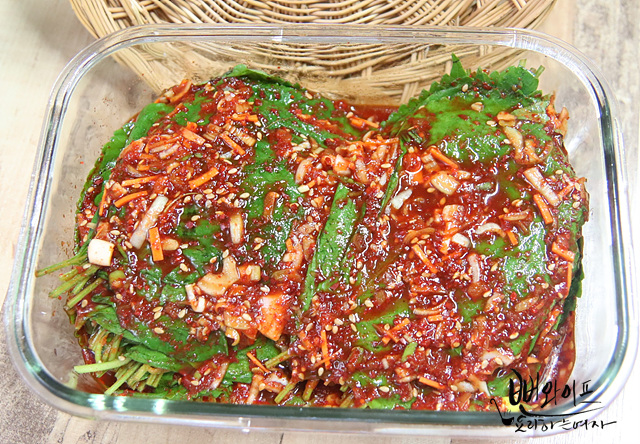
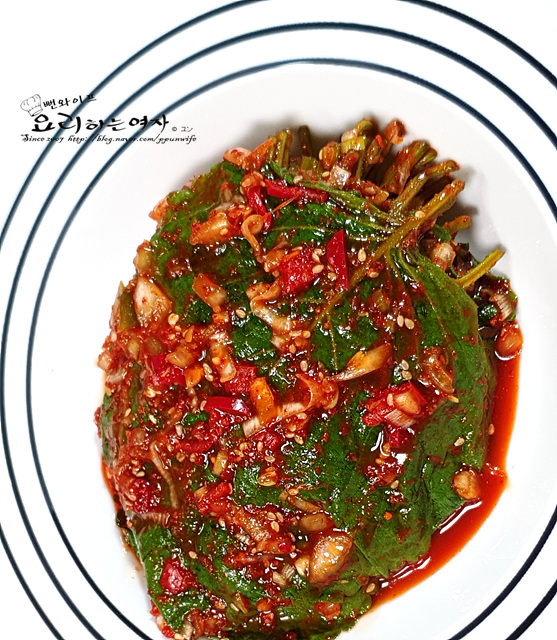
My glass container was too small, so I moved the seasoned perilla leaves to a stainless steel bowl first; after 2 hours they wilted down and fit perfectly.
When transferring them to the container, reverse the leaves from bottom to top, then pour the remaining seasoning paste over them to keep them moist.
Store them in the refrigerator and enjoy right away.
Finish
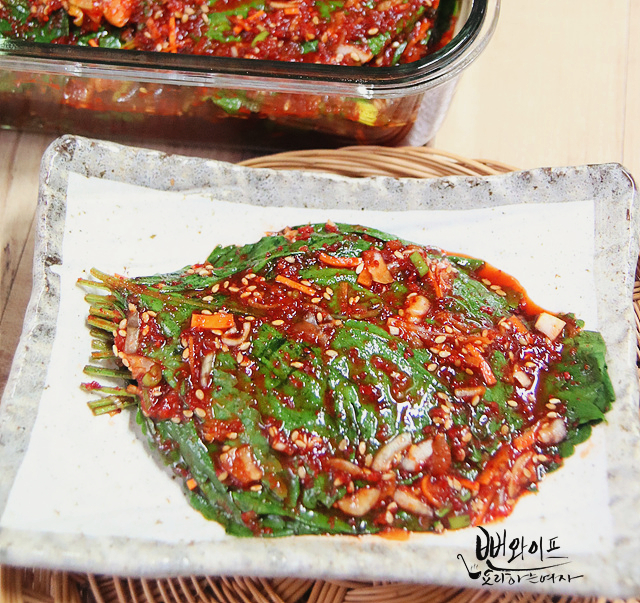
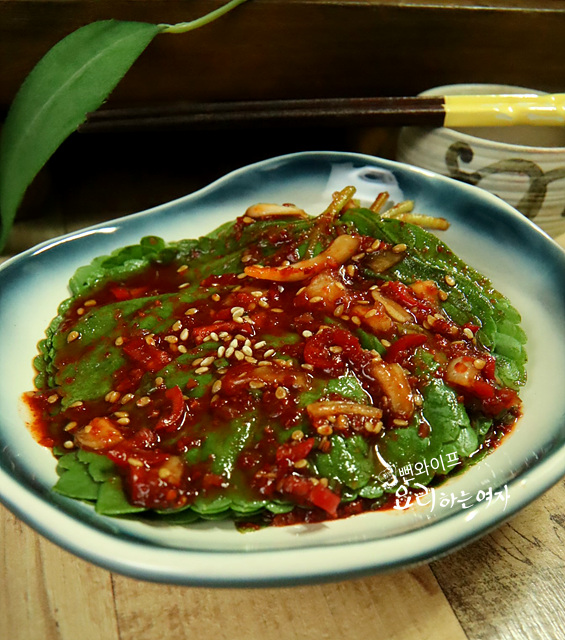
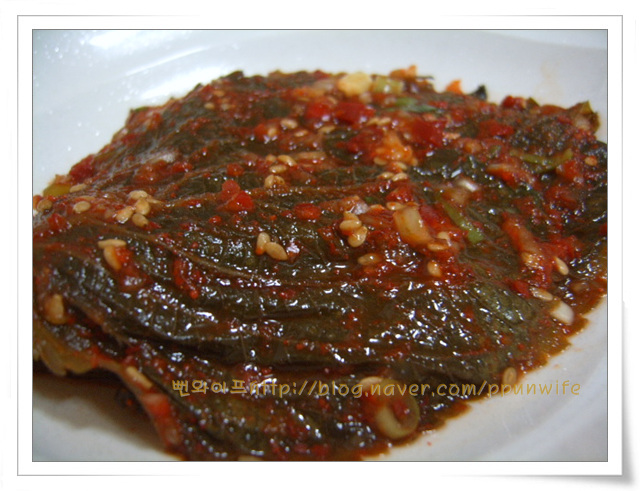
This is after 2 hours; the seasoning has soaked in nicely and the leaves have wilted down soft and tender, making them great to eat.
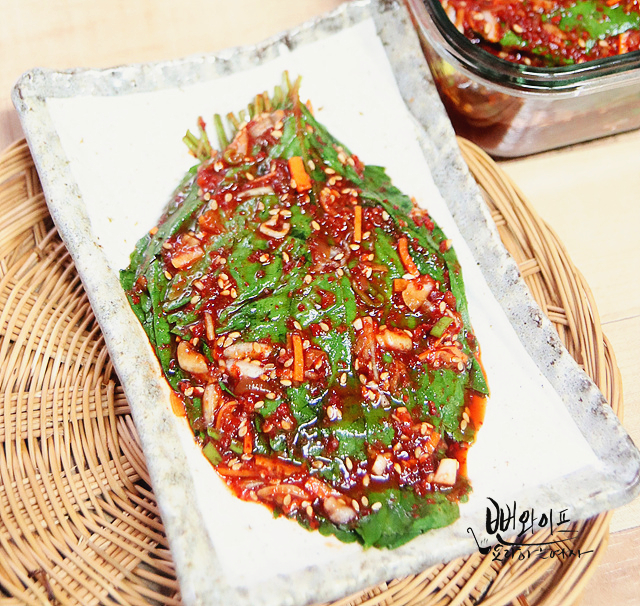
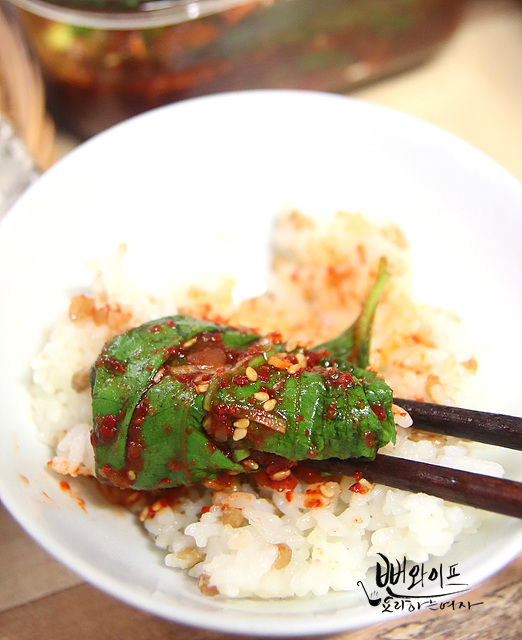
Place a seasoned perilla leaf over warm rice, wrap it up, and take a bite—it will instantly revive your appetite.
In-season perilla leaves are amazingly fragrant, not tough at all, and truly delicious.
Make a generous batch as a side dish to stock up and boost your summer appetite.
 Ppunwife's tips
- Once the stack reaches about the middle of your container, turn the leaves in the opposite direction before spreading the seasoning to keep the pile level rather than lopsided.
- When transferring them to the container, reverse the leaves from bottom to top, then pour the remaining seasoning paste over them to keep them moist.
FAQ
How can I tone down the strong fish sauce smell?
If the strong fish sauce flavor is too much for you, simply replace half of the fish sauce in the seasoning paste with regular soy sauce (jin-ganjang).
Can I substitute the vegetables in the seasoning?
You can use scallions instead of large green onion, and minced red chili pepper instead of carrot.
How do you wash and trim the perilla leaves?
Soak them in water diluted with a little vinegar for about 10 minutes, rinse under running water, and shake off excess moisture. Trim the stems, leaving just enough to grip easily with chopsticks.
How soon after seasoning can I eat it?
Once you have spread the seasoning and let them sit for about 2 hours to wilt, you can store them in the refrigerator and eat them right away.