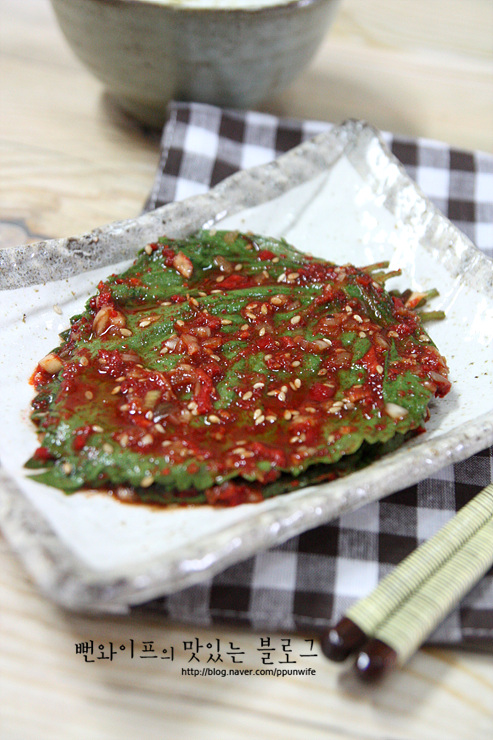
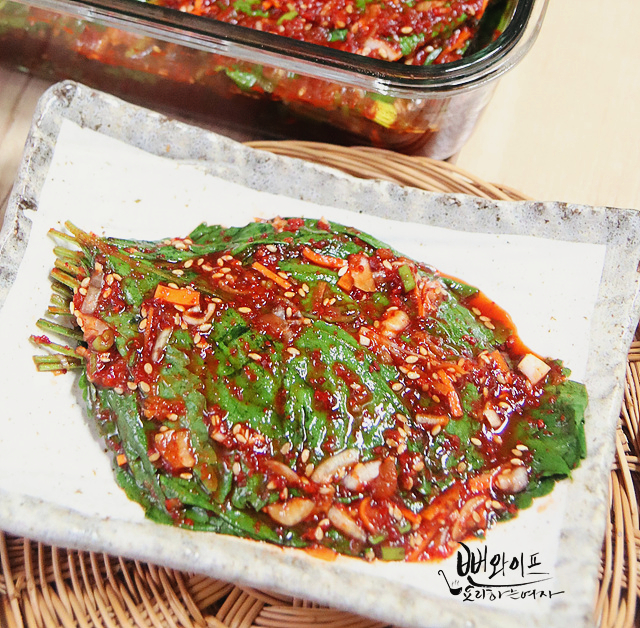
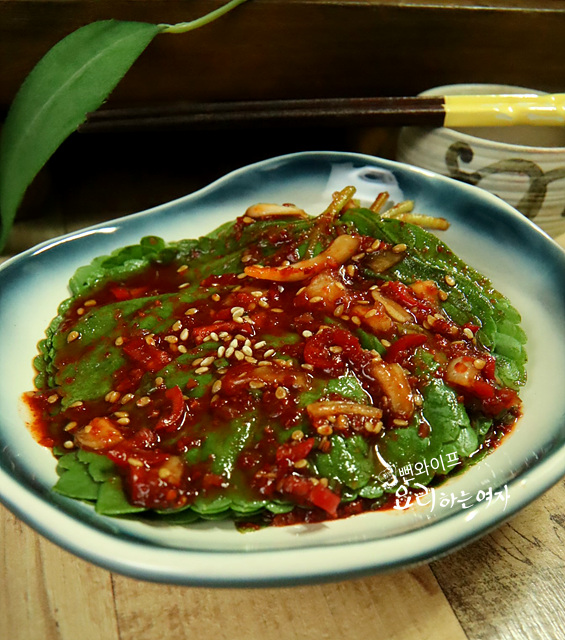
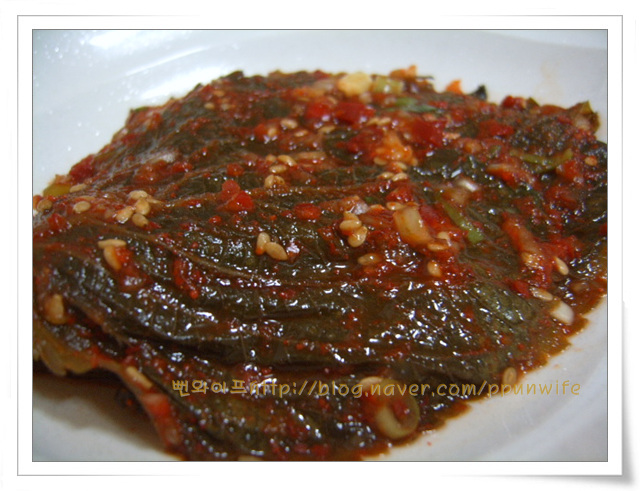
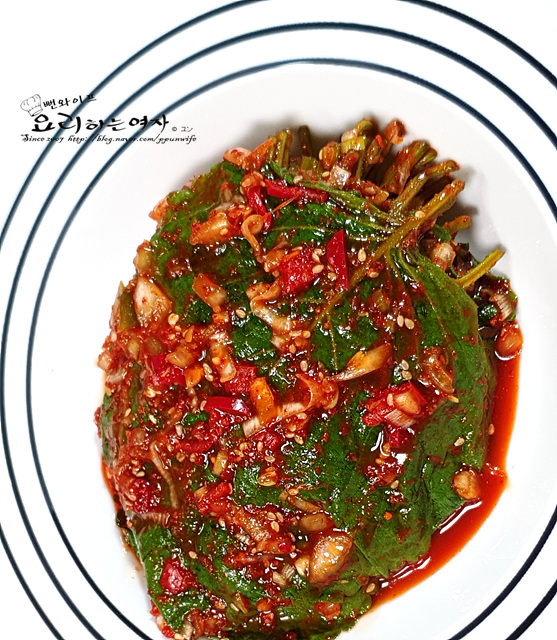
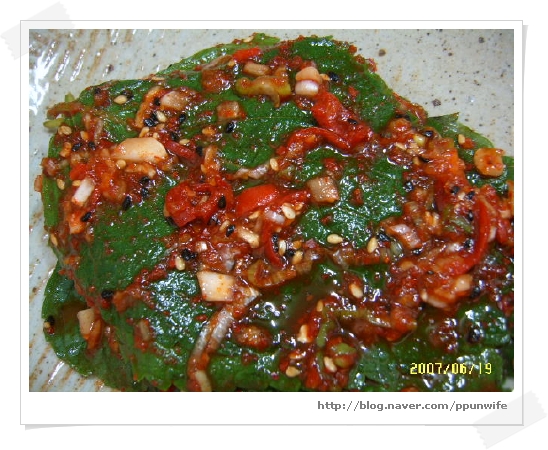
Sakhin Kkaennip Kimchi (Fermented Perilla Leaf Kimchi)
A reassuring side dish made by layering tender, blanched fermented perilla leaves with a sweet and salty seasoning, enjoyed without further fermentation.
Translated from Korean by AI and not yet checked by a native speaker. Amounts and numbers are taken directly from the original recipe. Read the Korean original →
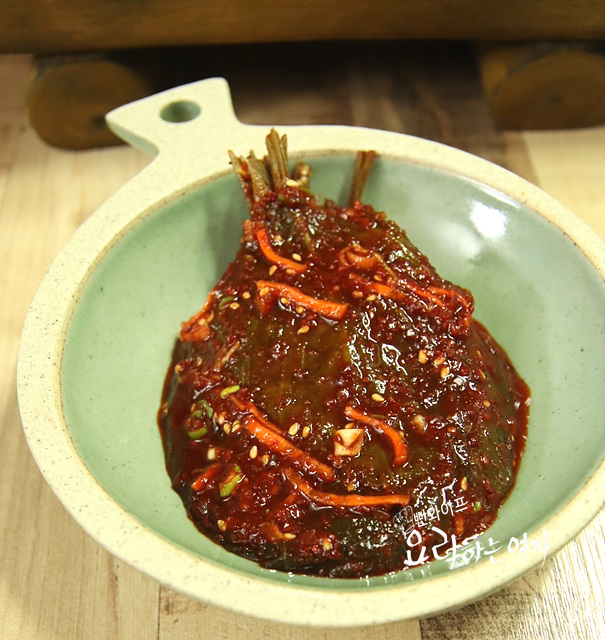
Fermented perilla leaves are boiled tender in water, then layered with a sweet and savory seasoning blended with anchovy broth and fish sauce. Instead of glutinous rice paste, anchovy broth is used so it does not turn sour, and low-moisture large green onion is added to extend shelf life. Making a generous batch with simple ingredients and keeping it in the refrigerator gives you a reliable side dish for everyday meals.
- Servings
- about 10–12 servings
- Cook time
- 5 minprep not included
- Difficulty
- Medium
- Spiciness
- Mildly spicy
Ingredients
Ingredients
- Fermented perilla leaves300 leaves, 450 g
- Large green onion (daepa)2 stalks (white parts)
- Carrot1/3, 80 g
Seasoning
- Anchovy broth1 cup
- Gochugaru (Korean chili flakes)1 cup
- Sand lance fish sauce (or dried anchovies)1 cup
- Rice syrup (jocheong) (or corn syrup (mulyeot))1/2 cup
- Sugar2 tbsp
- Minced garlic4 tbsp
- Minced ginger1/2 tbsp
- Toasted sesame seeds2 tbsp
- Red chili pepper or chili threads work well in place of carrot.
- For perilla leaf kimchi you want to keep for a long time, large green onion is better than watery onion.
Steps
Prepare the fermented perilla leaves
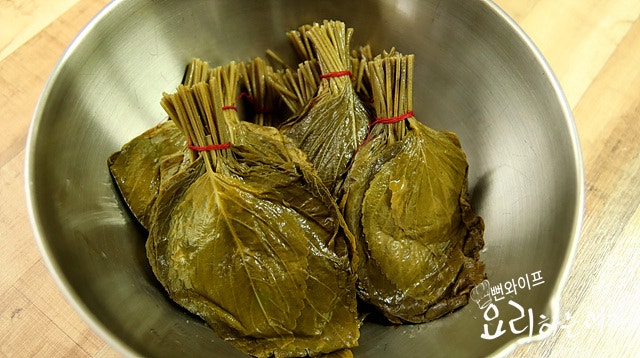
These are fermented perilla leaves bought from the market.
There are 10 bundles with 30 leaves per 1 bundle, making 300 leaves in total. Weighed after draining the moisture, they come out to 450 g.
If you want to ferment them yourself, use a 10:1 ratio of water to salt and leave them at room temperature for about 10 days until they turn yellowish, though the fermentation period may take longer depending on the temperature.
Related post on the blog (Korean)blog.naver.com/ppunwife/140053629419For a detailed method on how to ferment perilla leaves, please click the image for help.
Blanch and wash the perilla leaves
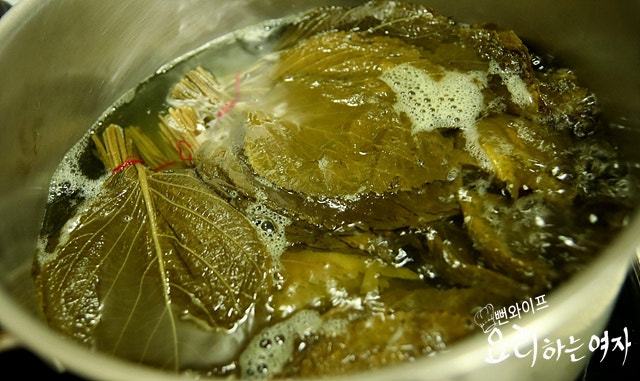
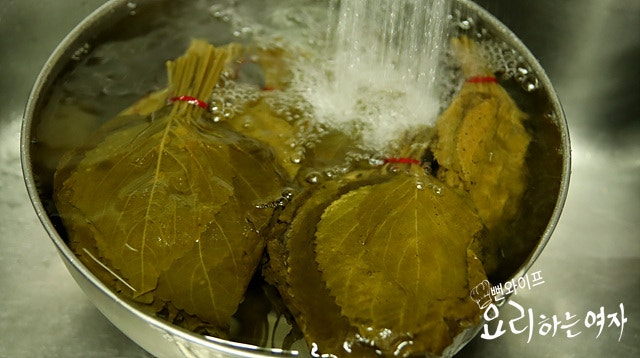
Boil the fermented perilla leaves for at least 5 minutes to remove the pungent smell and soften the tough leaves.
Chew a leaf as they boil, and once they reach your desired texture, rinse them.
Because they have been sitting in salt water for a long time, you must wash them thoroughly.
Hold them by the stems, gently shake them in water, and rinse several times until the water runs clear, then soak in water to draw out the excess salt.
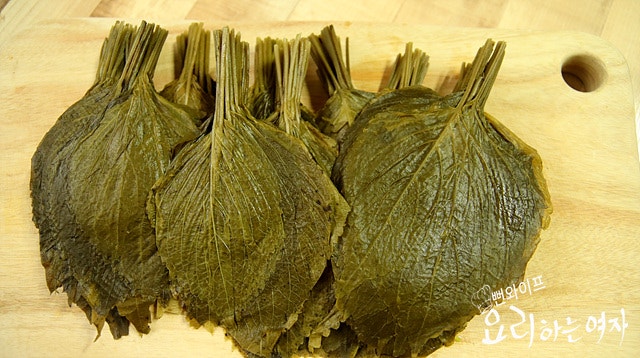
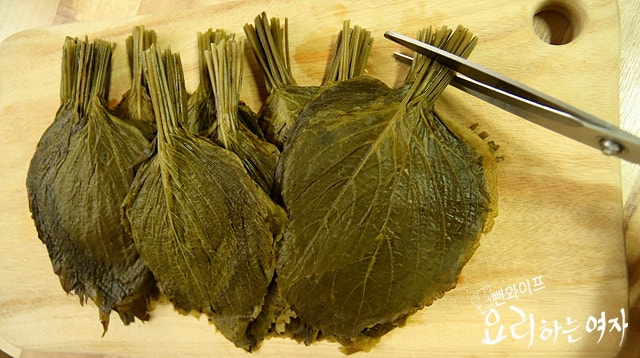
Do not wring the washed perilla leaves by twisting them or they may tear; instead, press firmly with both hands to squeeze out the water.
If there is too much moisture, the seasoning gets diluted, will not spread well, and the shelf life decreases.
Trim the stems with scissors, leaving a comfortable length to pick them up.
Make the seasoning
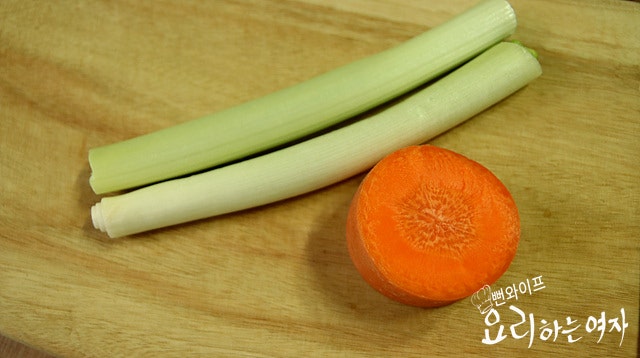
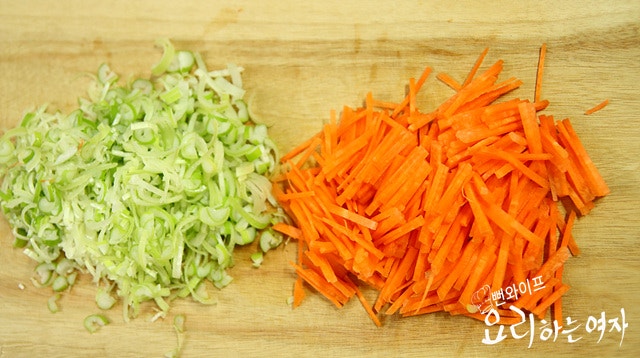
For perilla leaf kimchi you want to keep for a long time, large green onion is better than watery onion.
Prepare the large green onion and carrot. Halve the large green onion lengthwise and slice finely, then julienne the carrot thinly and cut to a manageable length.
Red chili pepper or chili threads work well in place of carrot.
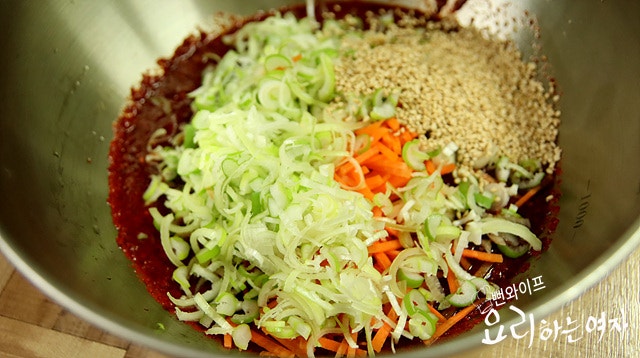
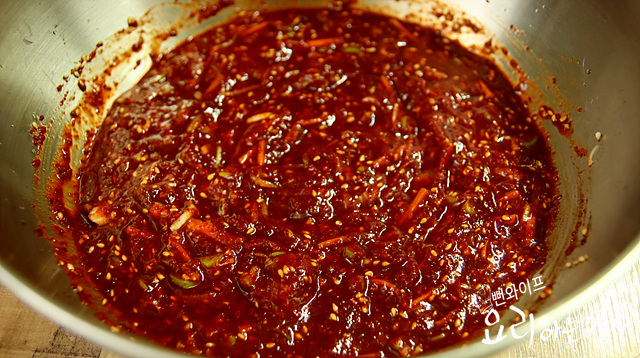
Add the sliced large green onion, carrot, and all seasoning ingredients together and mix. Let it sit briefly so the flavors meld and the gochugaru blooms in color, then taste it.
Spread a little seasoning on one perilla leaf and taste it to check the seasoning accurately.
It needs to be seasoned slightly salty so it tastes just right when laid over rice and does not spoil during long storage.
Apply the seasoning
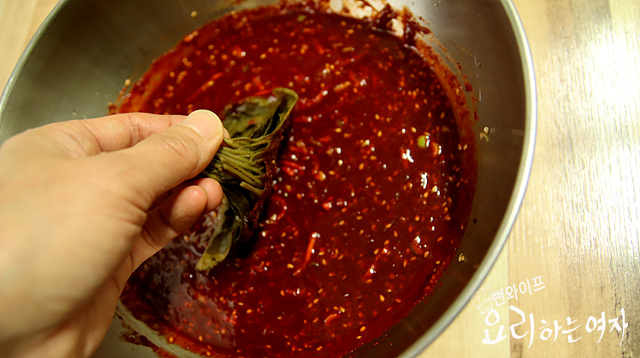
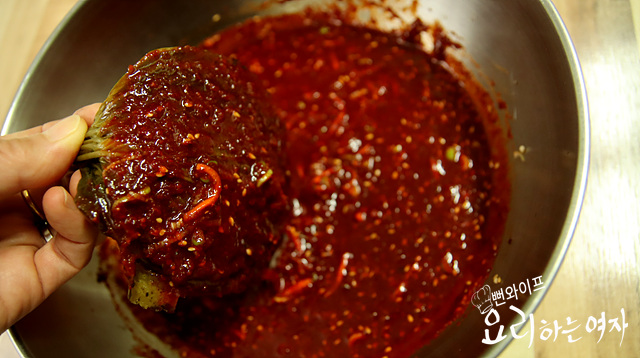
Hold a bundle of perilla leaves in one hand and scoop the seasoning over them to coat everything evenly.
Applying seasoning with one hand and peeling away about 3 leaves with the other makes the work quick and easy.
You can also lay 3 leaves at a time in the container and spread it with a spoon or your hand.
Store
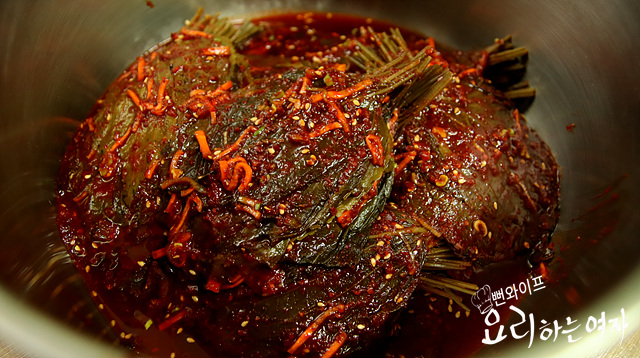
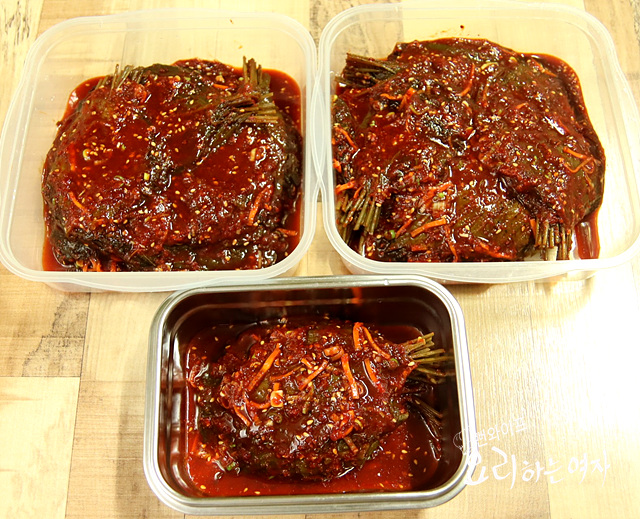
Do not put the seasoned perilla leaves directly into the storage container; place them into a large bowl first.
When moving them to the container after finishing all the seasoning, invert the top and bottom positions so the seasoning does not pool to one side and every leaf stays evenly moist.
Also, if you make a large batch, divide it among several containers and cover with plastic wrap or bags so it is not exposed to air, preventing any off-flavor and improving shelf life.
Perilla leaf kimchi loses its best flavor if it ferments, so put it in the refrigerator right away and eat it after about 3 days, once the seasoning has soaked in well.
Finish
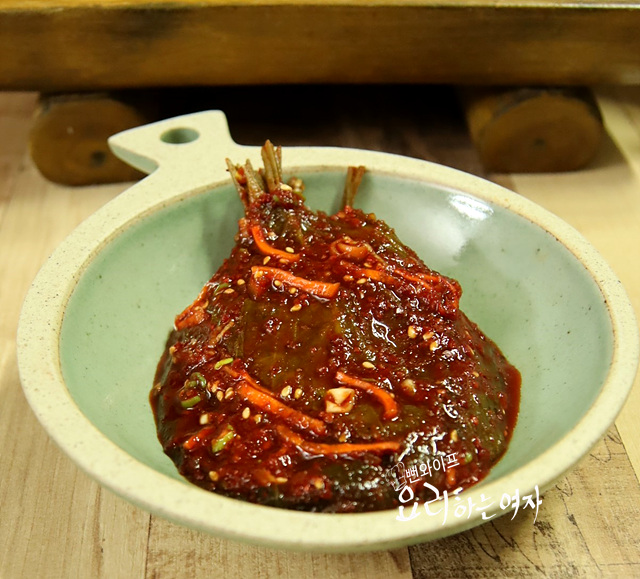
It is not good if it ferments sour, so boiling hot anchovy broth is better than adding glutinous rice paste.
Fermented perilla leaf kimchi was a side dish I loved even during my picky childhood.
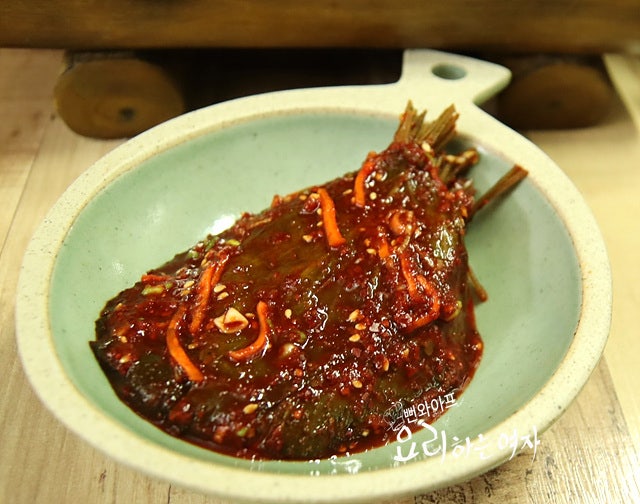
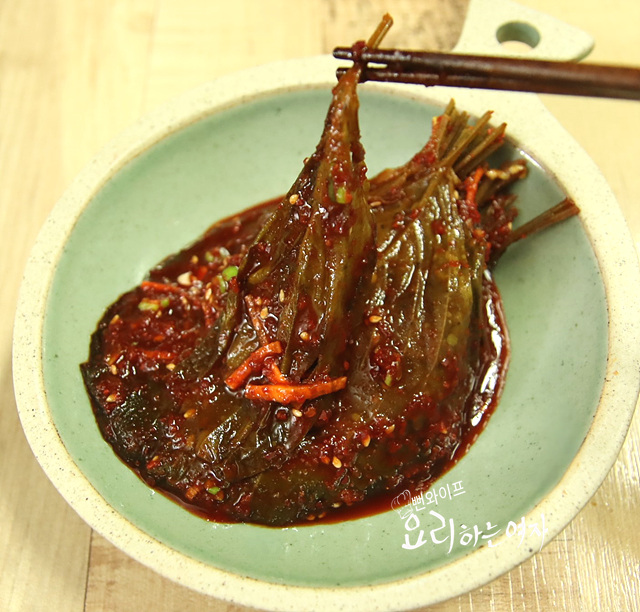
The rich fish sauce flavor and sweet-salty seasoning tempt you to grab a bowl of rice.
Would you like to try making a delicious side dish with fermented perilla leaves?
 Ppunwife's tips
- Do not twist the washed perilla leaves or they may tear; press firmly with both hands to squeeze out the moisture.
- Season it slightly on the saltier side so it tastes just right over rice and keeps well without spoiling.
- When transferring the seasoned leaves to the storage container, flip the top and bottom layers so the seasoning distributes evenly and keeps them moist.
- Perilla leaf kimchi loses flavor if it ferments, so refrigerate it immediately and enjoy it after about 3 days once the seasoning has soaked through.
- Anchovy broth made by boiling vigorously is better than using glutinous rice paste, which can cause it to ferment sour.
FAQ
Why do you blanch fermented perilla leaves in boiling water?
They are boiled for at least 5 minutes to remove their pungent, musty odor and to soften their tough texture.
Why do you use large green onion instead of regular onion in the seasoning?
Onions have high water content that can release liquid during long storage, so using large green onion with less moisture improves the shelf life.
When is the best time to eat the prepared perilla leaf kimchi?
Because the flavor declines if it ferments, place it in the refrigerator immediately after making it and start eating after about 3 days, once the seasoning has thoroughly permeated the leaves.
Can I use another fish sauce instead of sand lance fish sauce, or another sweetener instead of rice syrup?
As specified in the ingredient notes, you can substitute anchovy fish sauce for sand lance fish sauce, or corn syrup for rice syrup in equal amounts.