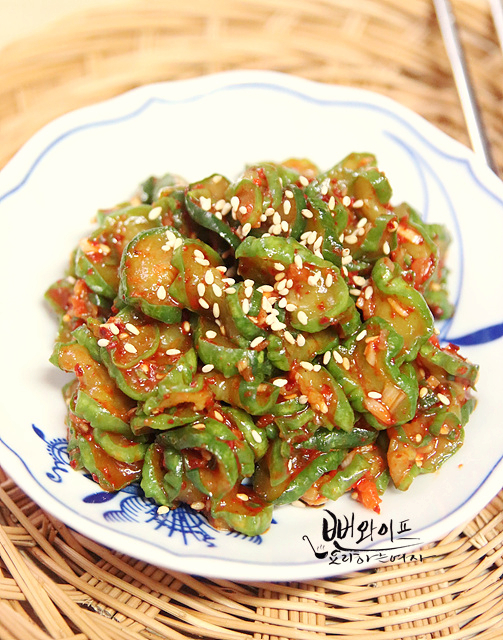
Crisp Nogak Muchim (Seasoned Old Cucumber)
A refreshing summer side dish made by salting and firmly squeezing overripe cucumber, then tossing it in a sweet and tangy seasoning.
Translated from Korean by AI and not yet checked by a native speaker. Amounts and numbers are taken directly from the original recipe. Read the Korean original →
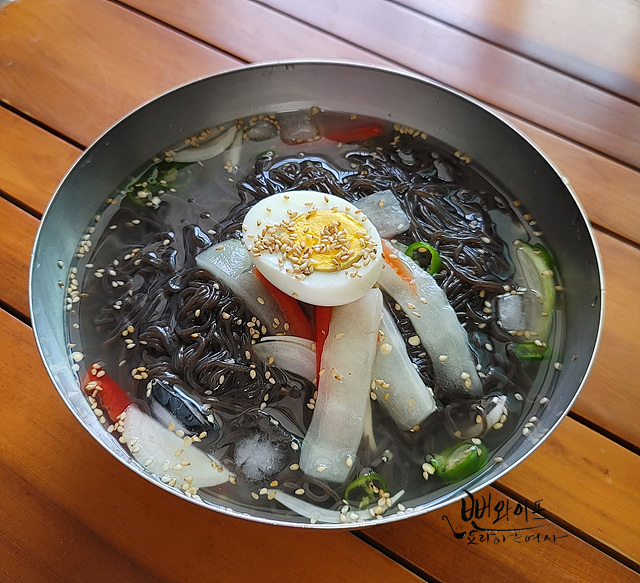
This side dish features in-season overripe cucumber salted with salt, sugar, and vinegar to draw out moisture, then tossed in a sweet and tangy dressing. Adding vinegar during the pickling stage and squeezing out the moisture thoroughly with a cotton cloth prevents excess liquid from pooling, keeping the texture wonderfully crisp. It is delicious as a side dish for rice and also makes a fantastic topping for bibim naengmyeon.
- Servings
- about 4–5 servings
- Cook time
- 20 minprep not included
- Difficulty
- Easy
- Spiciness
- Mildly spicy
Ingredients
Ingredients
- Overripe cucumber (nogak)1, 1 kg (750 g, after cleaning)
- Salt1 tbsp
- Sugar2 tbsp
- Vinegar4 tbsp
Seasoning
- Gochugaru (Korean chili flakes)1 tbsp
- Gochujang (Korean red chili paste)1/2 tbsp
- Minced garlic1/2 tbsp
- Sugar1 tsp
- Minced green onion2 tbsp
- Salta little
- Toasted sesame oil1/2 tbsp
- Toasted sesame seeds1/2 tbsp
- Fresh overripe cucumbers have distinct white net-like patterns, thick yellowish skin, and a faint hint of green.
Steps
Prepare the cucumber
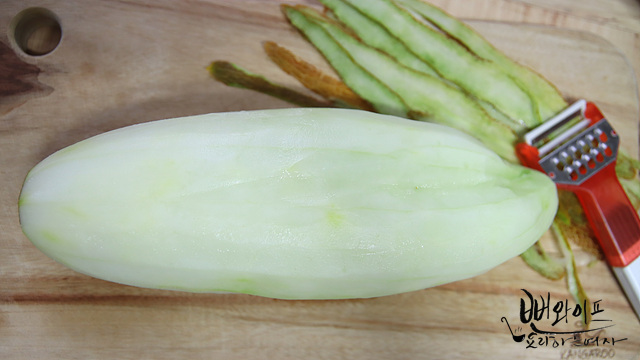
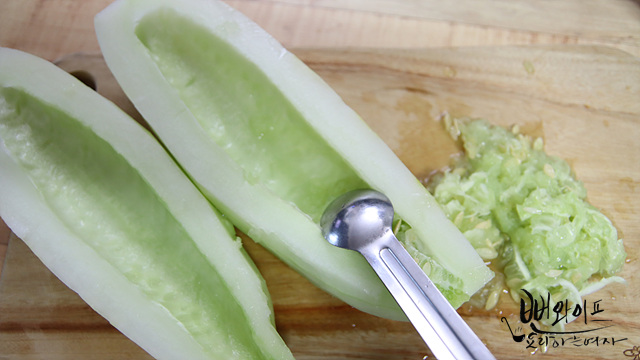
Peel the overripe cucumber with a vegetable peeler, cut it in half lengthwise, and scrape out the seeds cleanly with a spoon.
Slice
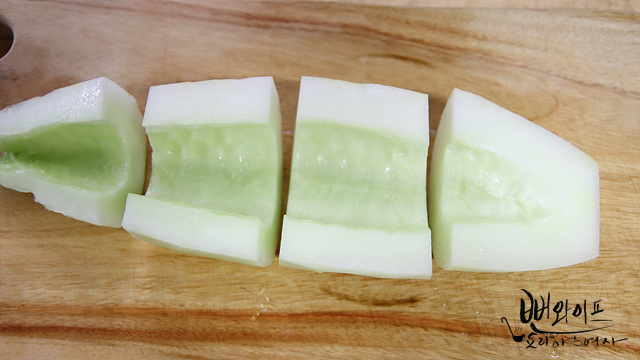
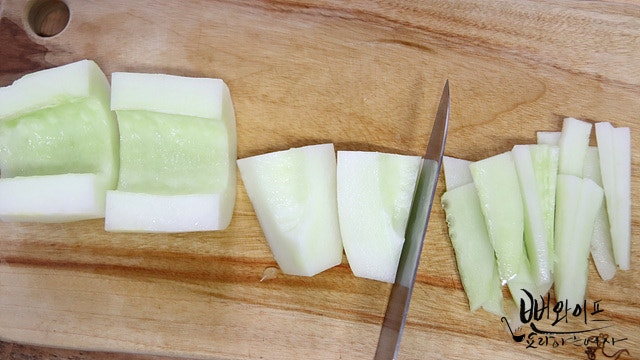
Trim off both ends, as they can taste bitter.
You can slice it thinly into half-moons...
Or cut it into 4 lengthwise wedges and slice crosswise.
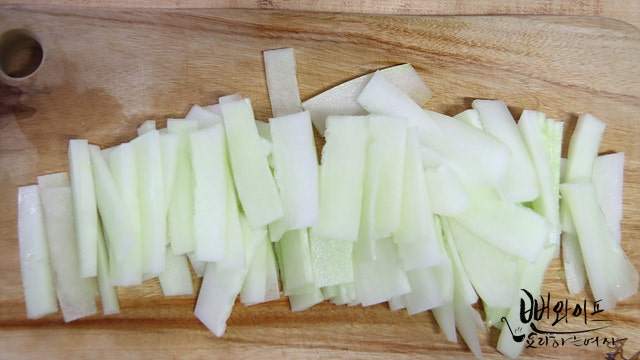
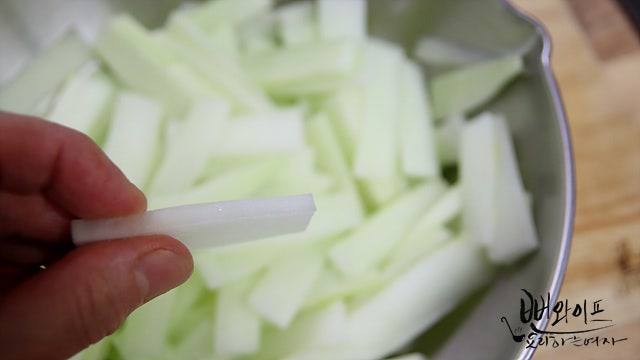
Slice it to a thickness of 0.5 cm so it is not too thin.
Salt the cucumber
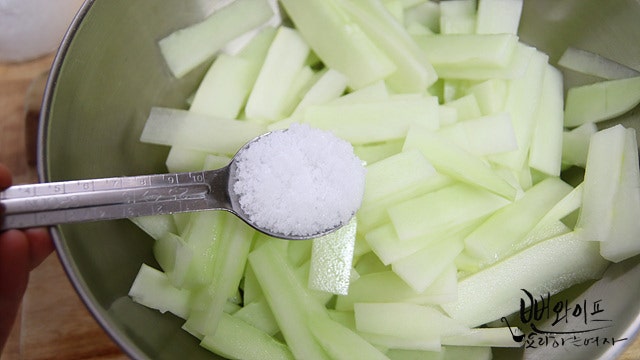
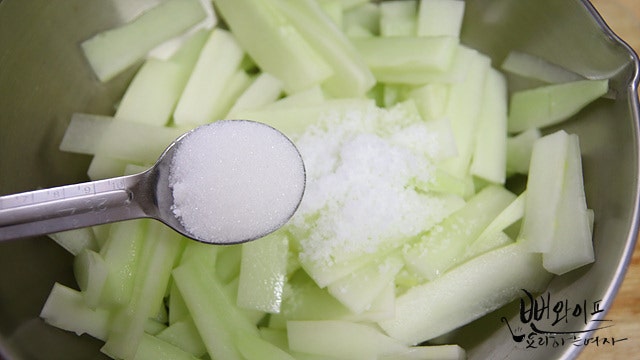
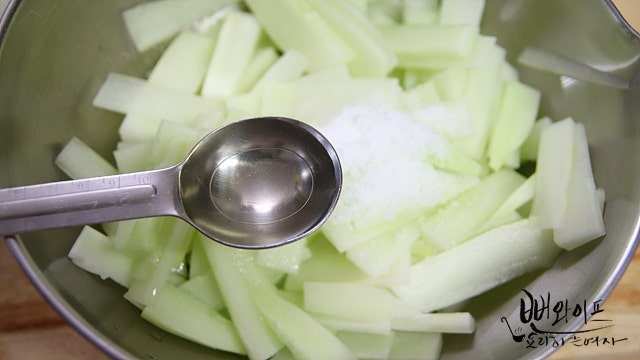
Place the cucumber in a bowl and mix thoroughly with 1 tbsp salt, 2 tbsp sugar, and 4 tbsp vinegar.
The salt and sugar draw out moisture while wilting the cucumber, so it will not end up overly salty or sweet once drained.
Adding vinegar during pickling rather than to the final seasoning adds tartness while preventing excess liquid from pooling later.
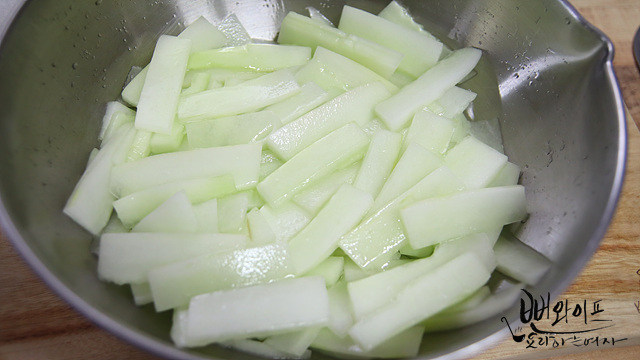
Let it pickle for about 20 minutes, giving it a toss halfway through.
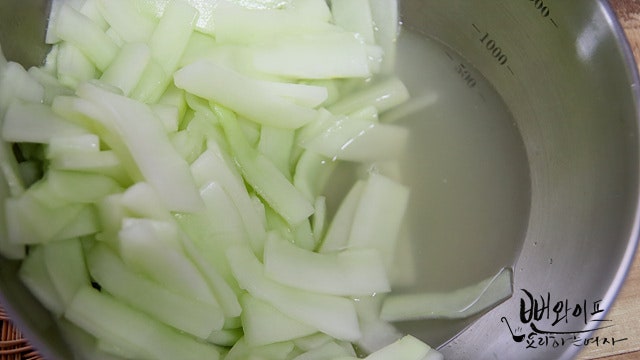
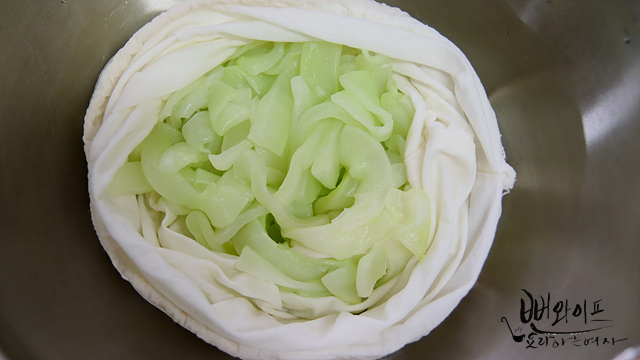
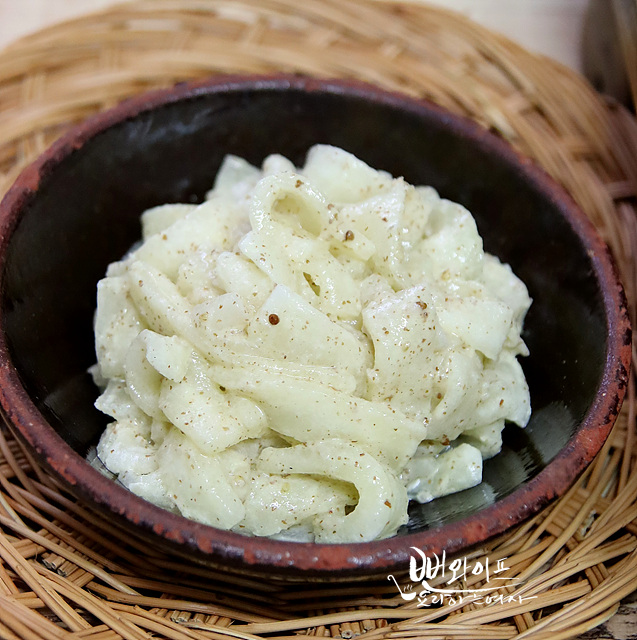
The cucumber will soften and release a pool of liquid.
Do not rinse it with water; lift it straight out and squeeze out as much moisture as possible using a cotton cloth, just like squeezing pickled cucumbers.
A lot of liquid comes out during pickling, but just as much comes out when you squeeze it.
Toss with seasonings
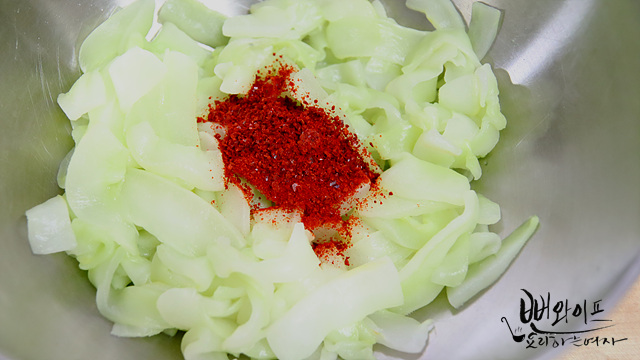
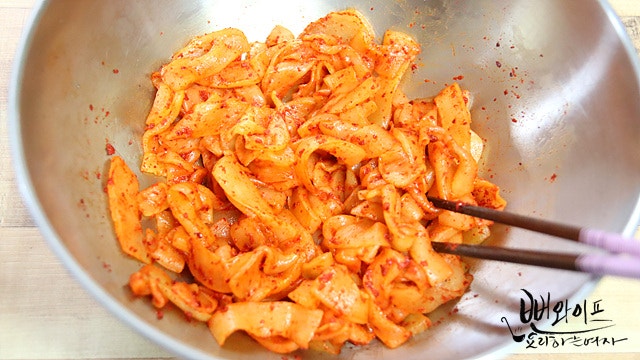
Add 1 tbsp gochugaru (Korean chili flakes) and mix well; this gives it a lovely color while the dry chili flakes absorb any residual moisture from the cucumber.
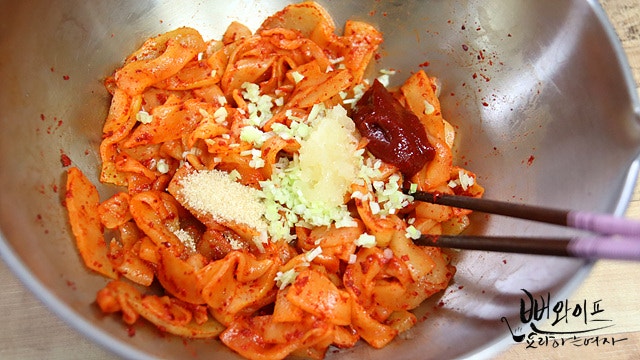
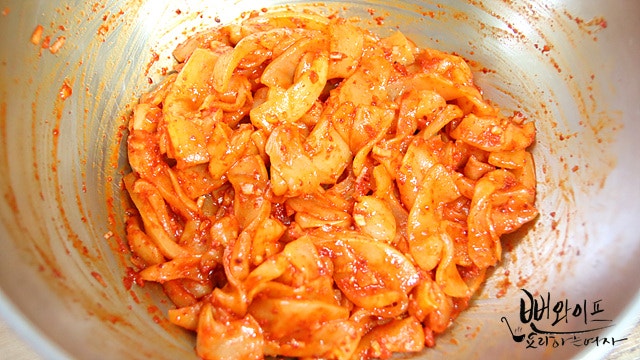
Now add the remaining seasonings: 1/2 tbsp gochujang (Korean red chili paste), 1/2 tbsp minced garlic, 1 tsp sugar, and 2 tbsp minced green onion, then toss gently with your hands.
Taste and season with salt if needed, or add more sugar or vinegar to taste.
I added about three pinches of salt.
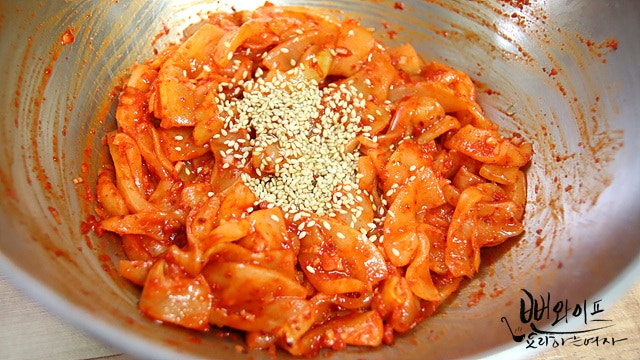
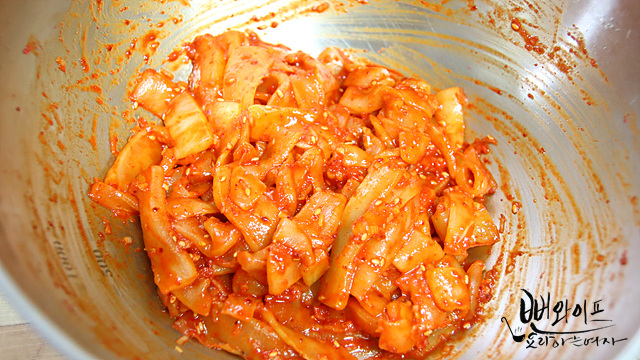
Once the seasoning is balanced, finish with toasted sesame oil and toasted sesame seeds.
When making a sweet, tangy, and refreshing salad, it is best not to use too much toasted sesame oil.
Finish
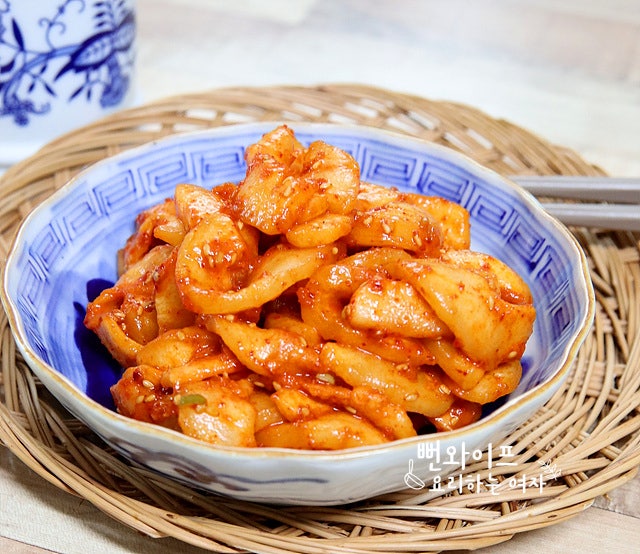
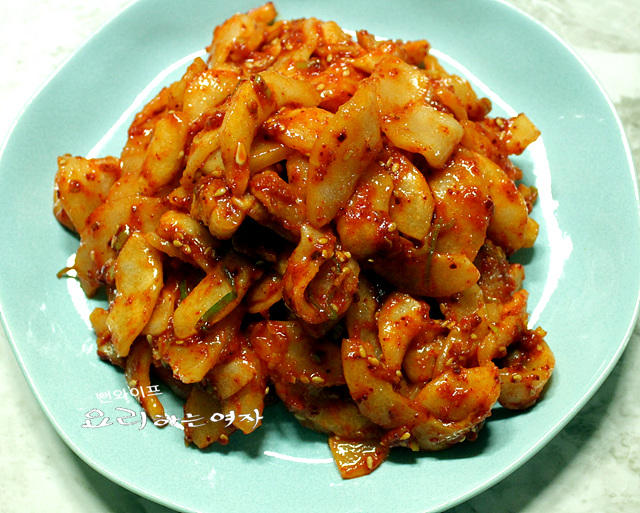
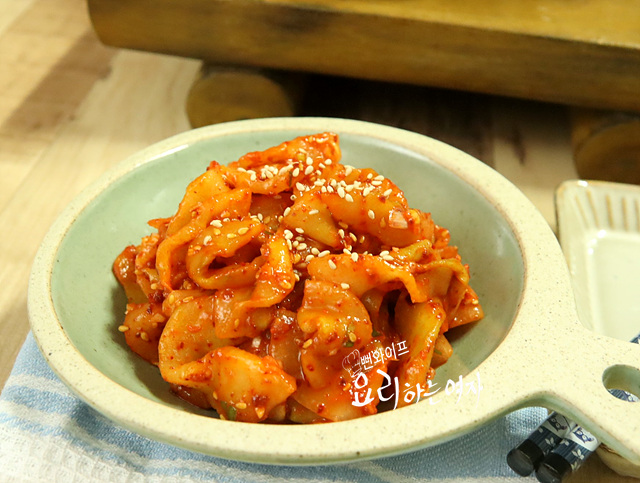
Even after tossing, liquid does not pool in the dish; the seasoning clings well, leaving it pleasantly moist.
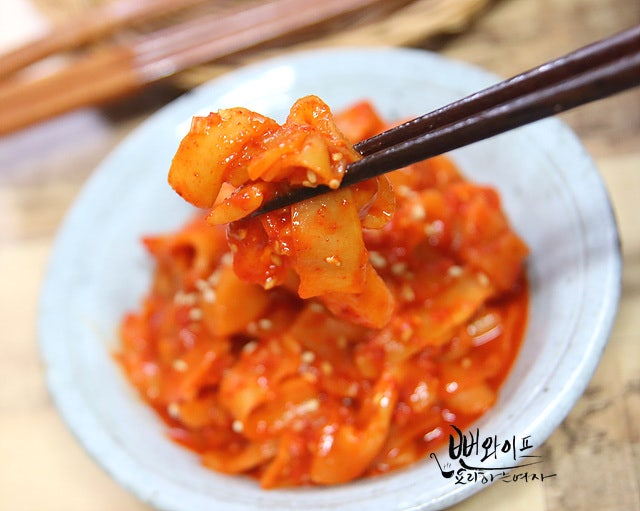
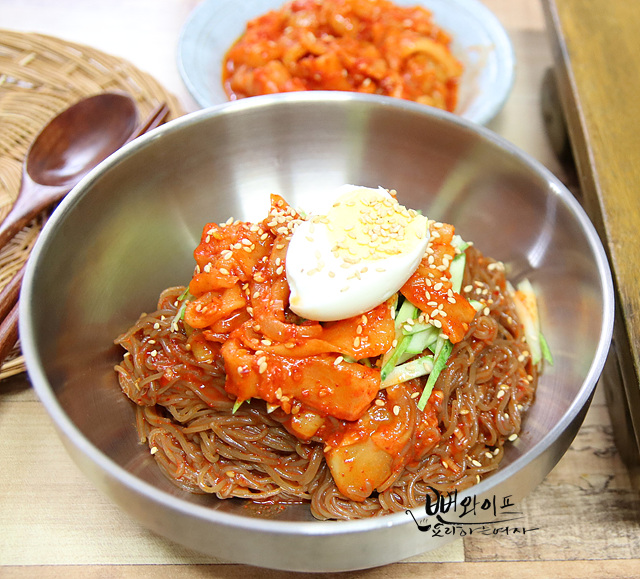
The portion looks disappointingly small compared to the effort put in, but one bite makes you completely forgiving.
Try topping bibim naengmyeon (spicy cold noodles) with this nogak muchim instead of radish kimchi, and you will discover a whole new world of texture.
Even without meat or fancy ingredients, this nogak muchim does wonders for flavor, texture, and crisp refreshment—experience its true charm with bibim naengmyeon.
 Ppunwife's tips
- Trim off both ends of the cucumber, as they can taste bitter.
- The salt and sugar draw out moisture while wilting the cucumber, so it will not taste overly salty or sweet once drained.
- Adding vinegar during pickling rather than to the final seasoning infuses tartness while preventing excess liquid from pooling later.
- Mixing in the dry gochugaru (Korean chili flakes) first gives the dish a lovely color and helps absorb residual moisture from the cucumber.
- When making a sweet, tangy, and refreshing seasoned dish, it is best not to use too much toasted sesame oil.
FAQ
Why is vinegar added during the pickling stage?
Adding vinegar during the pickling stage instead of the seasoning stage infuses the tart flavor early on and prevents excess water from pooling after the dish is tossed.
How can I reduce bitterness when prepping the overripe cucumber?
Both ends of the cucumber can taste bitter, so it is best to trim them off before cooking.
Why is gochugaru tossed in before the other seasonings?
Mixing in the dry gochugaru first coats the cucumber evenly in a vibrant color and helps absorb any remaining excess moisture.
Should the pickled cucumber be rinsed in cold water before squeezing?
No, do not rinse it in water; simply remove it from the pickling liquid and squeeze out as much moisture as possible using a cotton cloth.