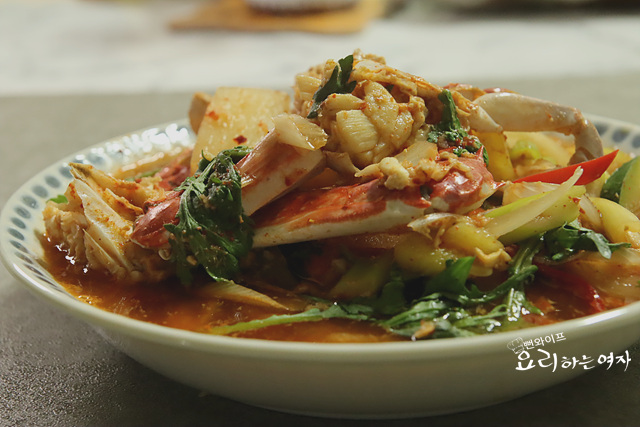
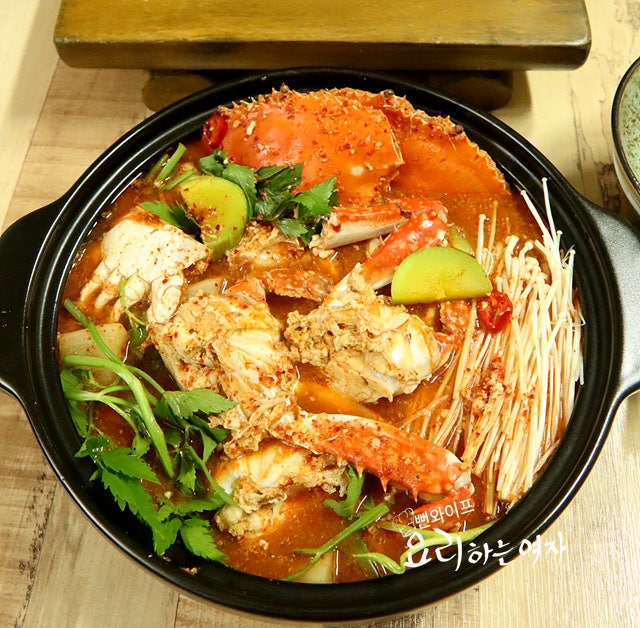
Tender and Savory Seasonal Kkotge Jjim (Steamed Blue Crab)
A savory, tender steamed dish made by drizzling cheongju over cleaned autumn male blue crabs and steaming them.
Translated from Korean by AI and not yet checked by a native speaker. Amounts and numbers are taken directly from the original recipe. Read the Korean original →
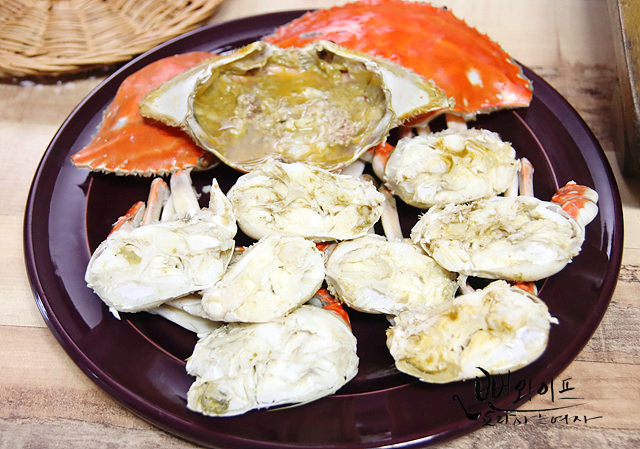
This is a standout dish made by cleanly prepping plump autumn male blue crabs to eliminate any fishy odor before steaming. Place them belly-side up in a steaming pot, drizzle with cheongju, steam for 15 minutes, and let them rest off the heat to fully enjoy the tender meat and rich tomalley.
- Servings
- 2–3 servings
- Cook time
- 20 minprep not included
- Difficulty
- Easy
- Spiciness
- Not spicy
Ingredients
- Male blue crab4 whole, 1.2 kg (approx.)
- Cheongju (Korean rice wine) (or soju)4 tbsp
- Crabs should feel firm and heavy when handled so that the inside and tomalley are fully packed; the belly should be clean and white, and the 8 small legs should not be translucent or soft.
- Wash the detached claw legs and leg tips, freeze them, and use them in soups or doenjang jjigae.
Steps
How to clean the crabs
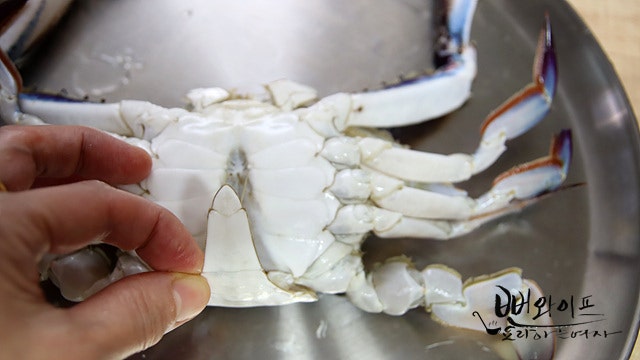
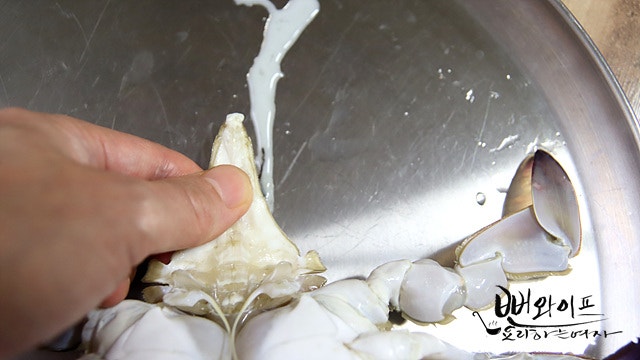
The elongated flap on the belly is the reproductive organ and holds waste. Pull it back slightly and press down firmly with your hand; a thread-like black substance will emerge, followed by a cloudy liquid.
If you pull it back too far, the top shell might detach, so only pull it back slightly.
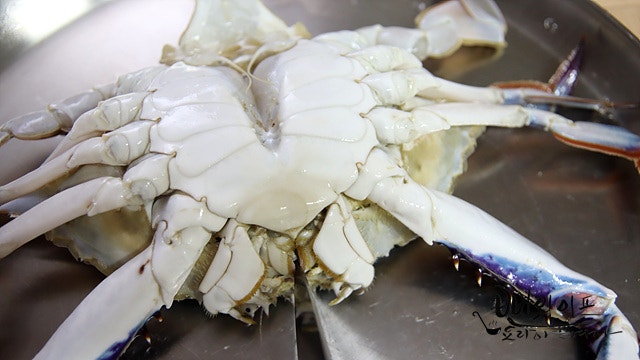
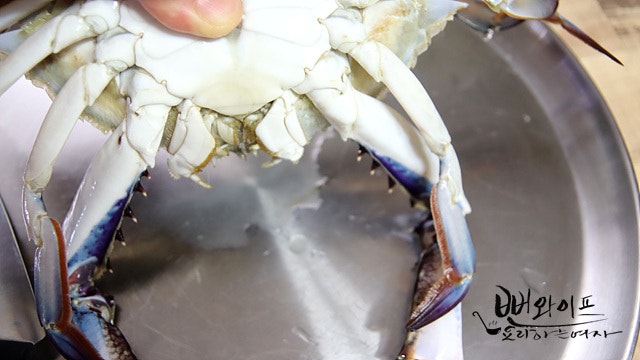
Next, insert a knife into the mouth, twist it, and lift the crab so the blood drains out like water.
I did not know this in the past, but doing this helps remove any fishy odor that might come from the crab.
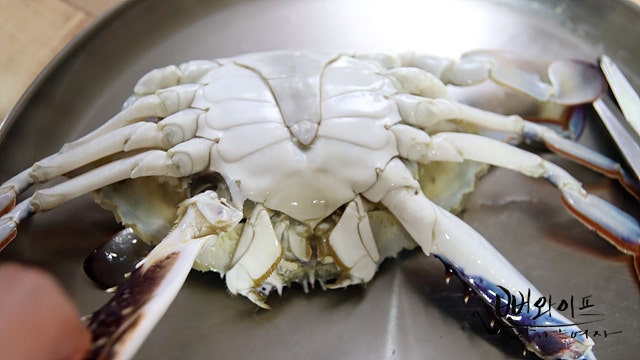
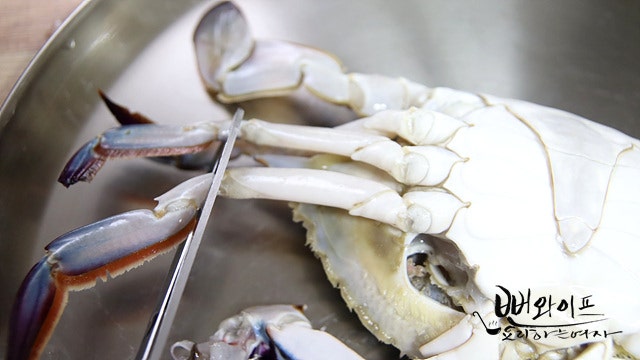
The large claws are the hardest part and difficult to pick meat from, so detach them to use in doenjang jjigae or broth.
Twist them off the body with your hands.
Using kitchen shears, trim off only the meatless tips of the 8 small legs. Leave the rest of these legs attached so they can be easily chewed and eaten after steaming.
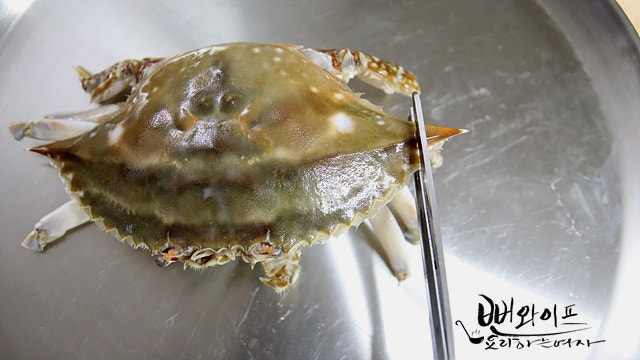
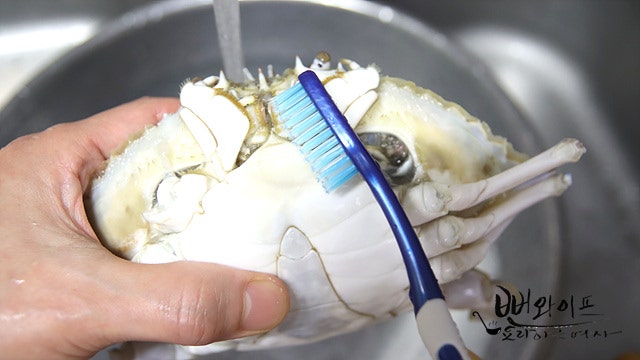
Trim off just the sharp pointed ends on both sides of the top shell so you do not poke yourself. If you cut off too much, the tomalley will leak out.
Using a brush or toothbrush, scrub them clean under running water.
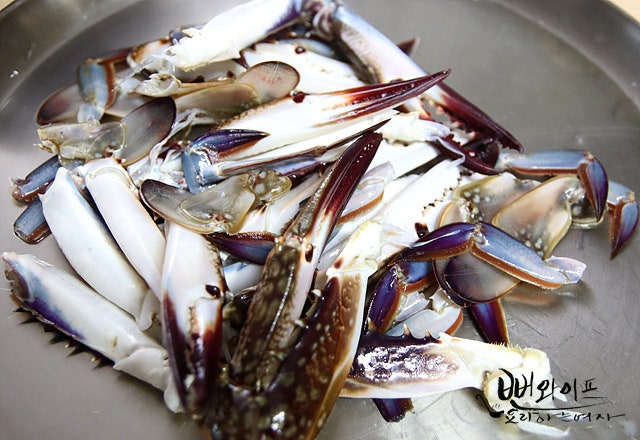
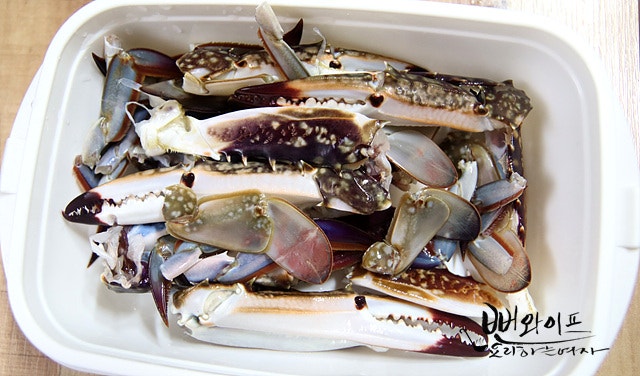
The claw legs removed from the 4 crabs will go into doenjang jjigae, and the small leg tips will be used for broth.
Wash them, store them in the freezer, and use them whenever you make soup dishes.
How to steam the crabs
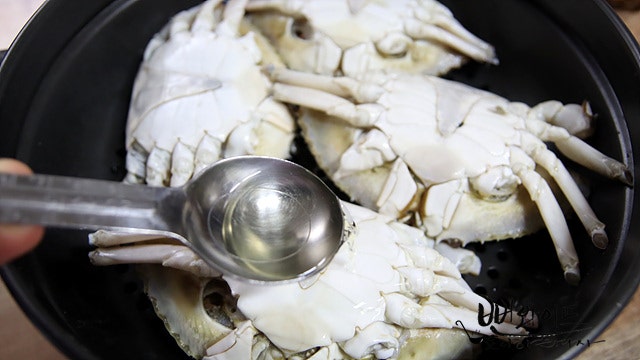
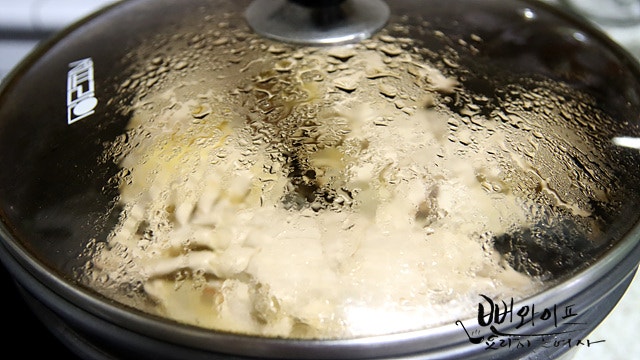
Place the crabs in the steamer with their bellies facing up, pour a tablespoon of cheongju (Korean rice wine) or soju over each one, and steam for 15 minutes once the water boils and steam rises.
Adjust the time depending on the size or number of crabs, and once steamed, turn off the heat and let them rest in the pot for 5 minutes.
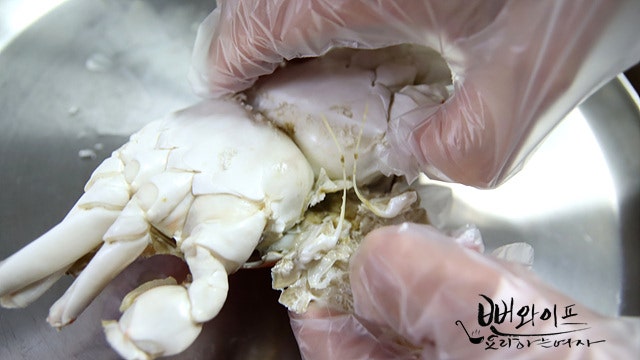
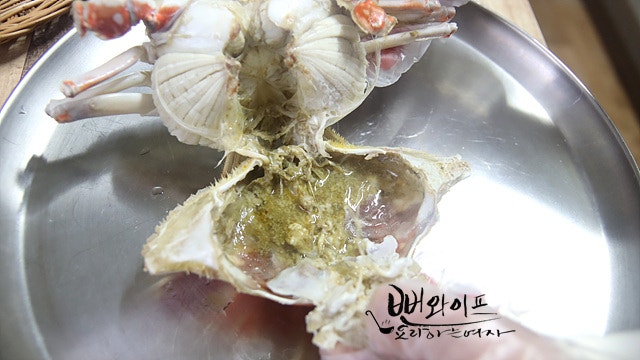
Separate the top shell from the steamed crab...
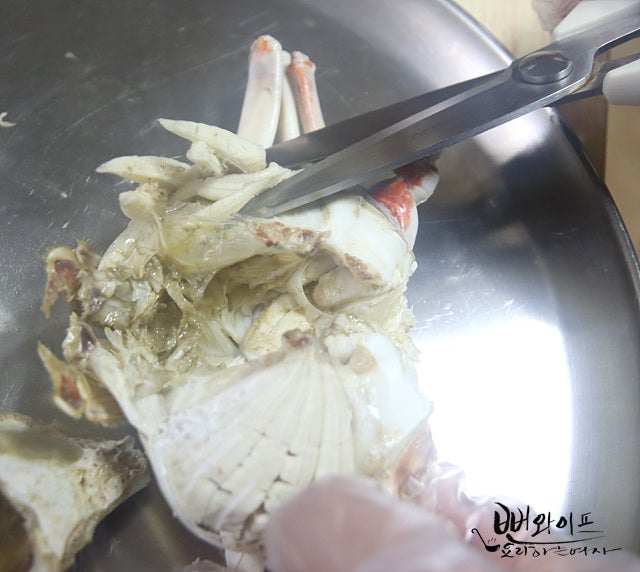
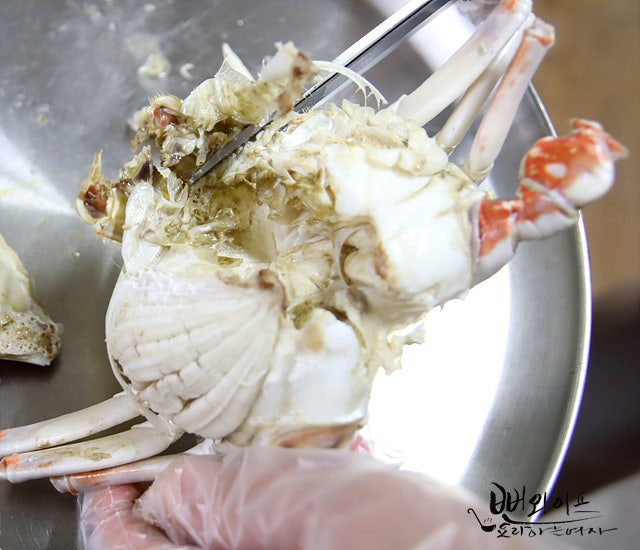
Cut away the sponge-like gills covering both sides with scissors, and neatly snip off the sand sac at the bottom.
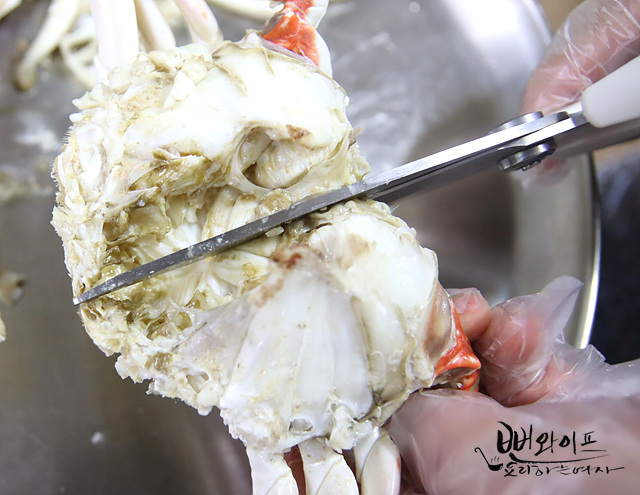
Cut into bite-sized pieces and serve.
Serving
Plate the top shell carefully so the tomalley does not spill, add the crab pieces, and finish.
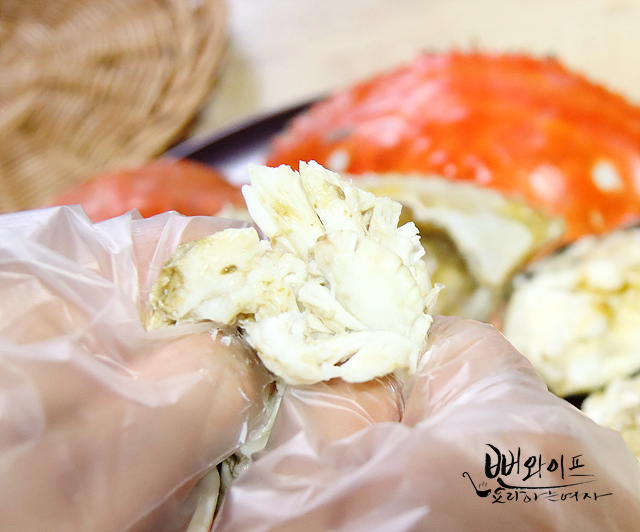
Press down firmly with both hands, and a feast of crab meat bursts out like popcorn.
As expected of seasonal crab, the savory flavor and delightfully tender texture are wonderful.
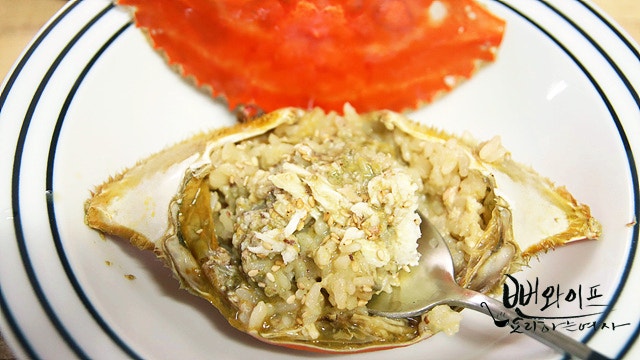
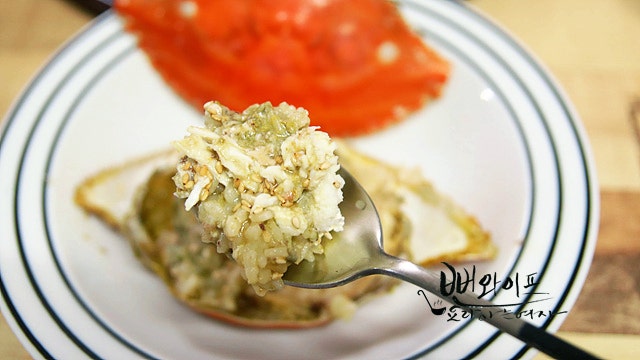
Mixing rice with the tomalley inside the top shell is the real way to enjoy crab.
With several times the richness and savory depth, the crab's natural saltiness seasons it perfectly without any extra seasoning.
It is fantastic mixed simply with a sprinkle of sesame seeds, even without adding toasted sesame oil.
Related post on the blog (Korean)naver.me/5yWhKw15
 Ppunwife's tips
- When pressing out the waste, do not pull the flap back too far or the top shell may separate; only lift it slightly.
- Piercing the mouth with a knife to drain the blood helps remove fishy odors from the crab.
- If you trim too much off the pointed tips of the shell, the tomalley will leak out.
- Place the crabs belly-side up in the steamer so the tomalley does not run out.
FAQ
Should crabs be placed belly-up when steaming?
You must steam them belly-up so that the tomalley does not leak out.
What prep step helps eliminate the fishy odor?
Pierce the mouth with a knife, twist and lift to drain the blood, and pour cheongju or soju over the crabs when steaming.
How do you use the detached claws and leg tips?
Wash and freeze them, then use them to flavor broth in doenjang jjigae or various soup dishes.
Can I use soju instead of cheongju?
Yes, you can substitute soju for cheongju in equal measure.