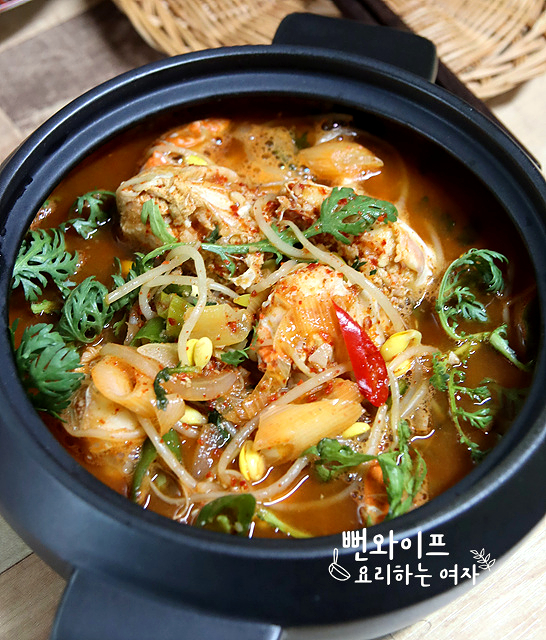
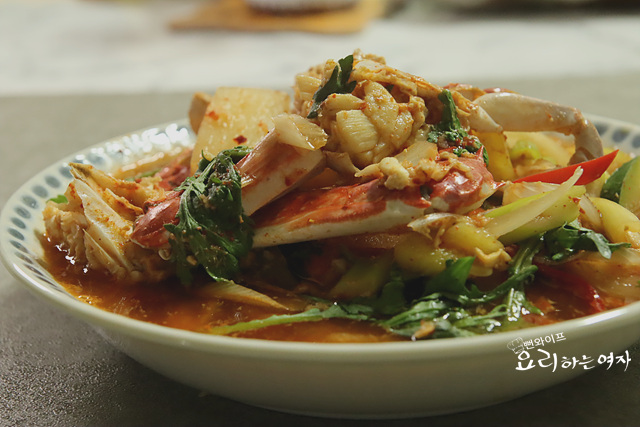
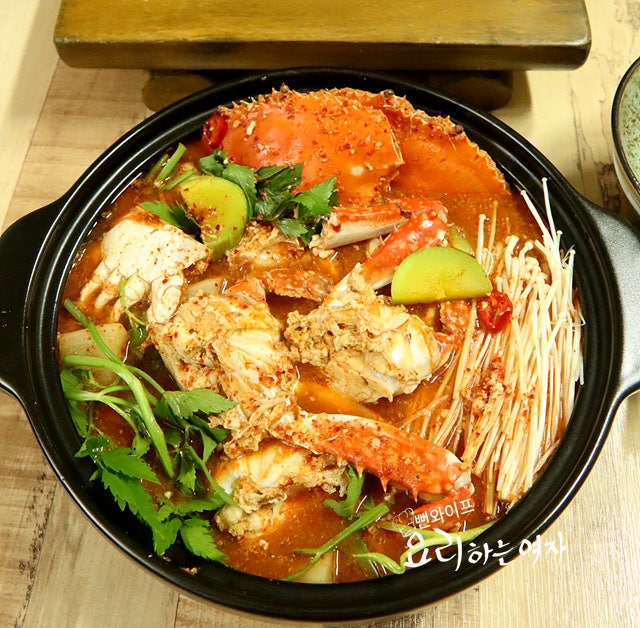
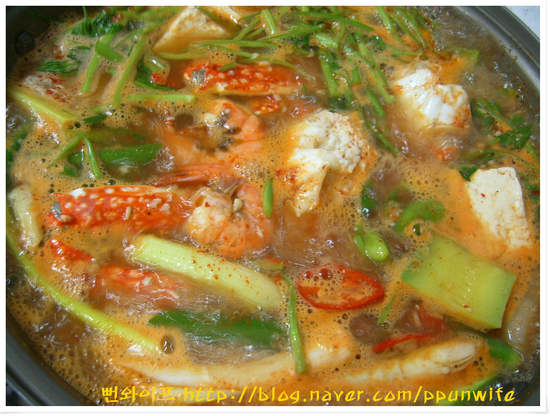
Spicy Kkotgetang (Spicy Blue Crab Stew)
A spicy stew made by simmering cleaned blue crab and vegetables in anchovy broth.
Translated from Korean by AI and not yet checked by a native speaker. Amounts and numbers are taken directly from the original recipe. Read the Korean original →
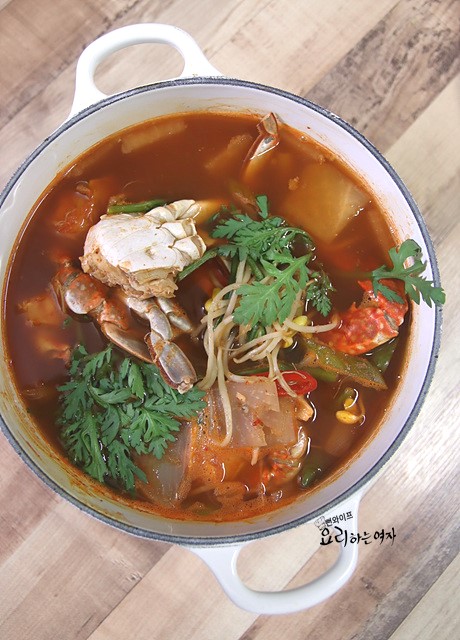
This stew combines Korean radish and blue crab in anchovy broth with a spicy seasoning paste. The key is to boil the crab only until the meat turns completely white so it stays tender and does not dry out. Spicy and refreshing, it is great as a drinking snack or hangover cure.
- Servings
- 2–3 servings
- Difficulty
- Medium
- Spiciness
- Spicy
Ingredients
Ingredients
- Frozen male blue crab2 whole, 700 g
- Korean radish (mu)200 g
- Onion1/2
- Soybean sprouts100 g
- Large green onion (daepa)1/3 stalk
- Cheongyang chili pepper (hot green chili)2
- Red chili pepper1
- Ssukgat (crown daisy)6 stalks
- Anchovy broth6 cups
Seasoning
- Gochugaru (Korean chili flakes)2 tbsp
- Doenjang (Korean soybean paste)1 tbsp
- Gochujang (Korean red chili paste)1 tbsp
- Soup soy sauce (guk-ganjang)1 tbsp
- Mirin (cooking rice wine)2 tbsp
- Minced garlic1 1/2 tbsp
- Minced ginger1 tsp
- Ground black peppera little
- Rinse frozen blue crabs under running water right before cooking, then drain them in a strainer.
- You can prepare vegetables based on what you have in the fridge, but if you want a refreshing broth, Korean radish is a must. Aromatic vegetables also help remove any fishiness and keep the broth tasting clean. Instead of the ssukgat (crown daisy) I used, water dropwort (minari) or perilla leaves work great too. Zucchini or mushrooms are also very welcome.
Steps
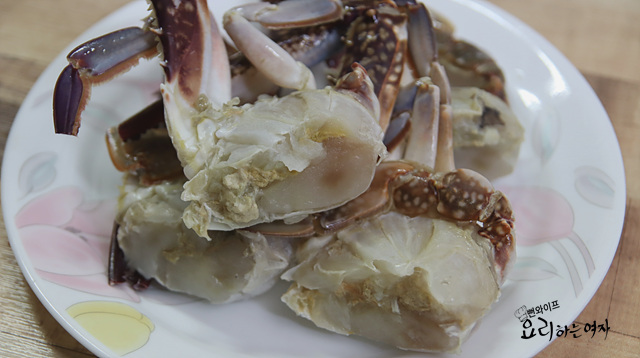
I bought flash-frozen male blue crabs that were already cleaned. They are a good size and very easy to eat, which makes things so convenient. Rinse frozen blue crabs under running water right before cooking, then drain them in a strainer. This is roughly the weight of 2 large fresh male blue crabs.
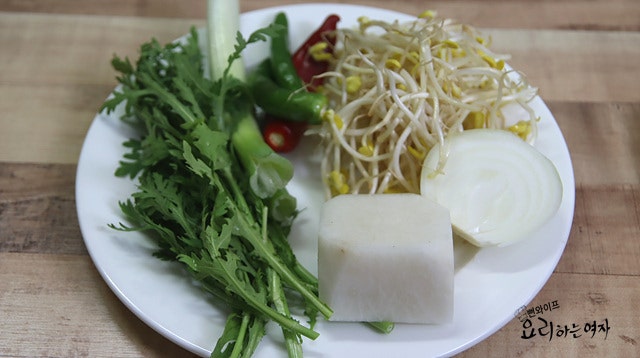
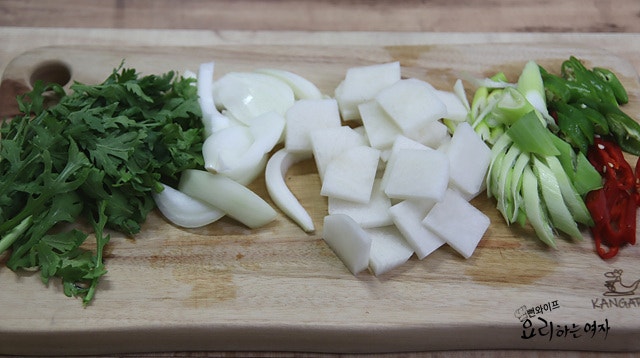
You can prepare vegetables based on what you have in the fridge, but if you want a refreshing broth, Korean radish is a must. Aromatic vegetables also help remove any fishiness and keep the broth tasting clean. Instead of the ssukgat (crown daisy) I used, water dropwort (minari) or perilla leaves work great too. Zucchini or mushrooms are also very welcome.
Cut the radish into thin squares and slice the other vegetables diagonally into large pieces.

It is convenient to mix all the seasoning ingredients together in advance.
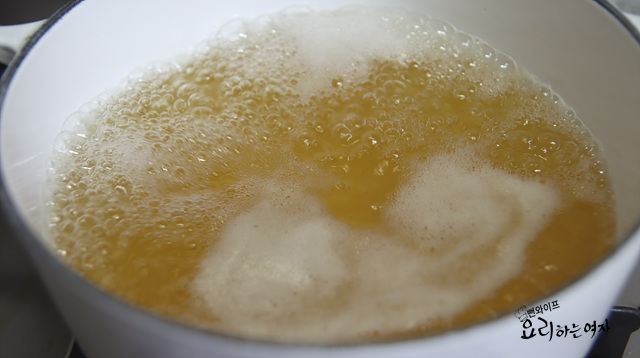
Anchovy broth is essential if you want a deeper, more flavorful broth. Pour about 6 cups of broth brewed with dried anchovies and dried kelp into a pot and bring it to a rolling boil.
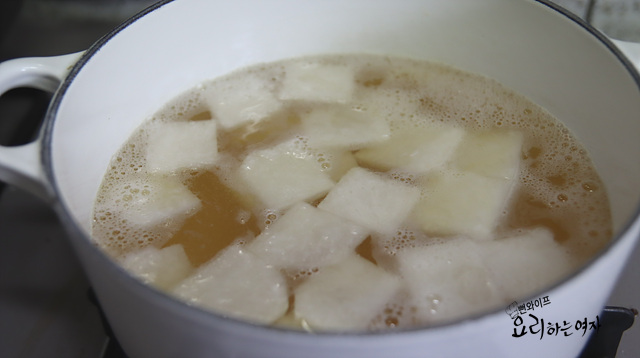
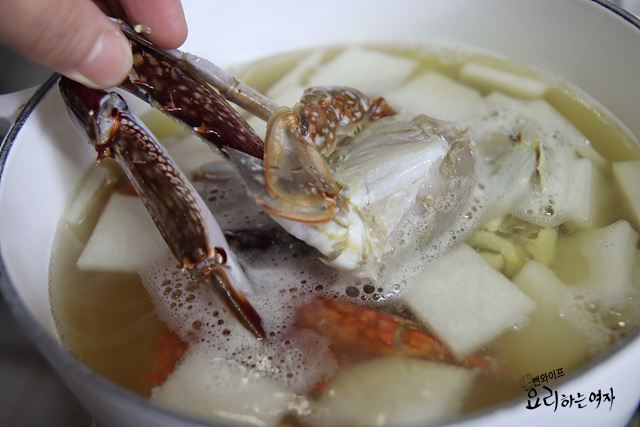
Add the Korean radish to the boiling broth, and once it has cooked partway, add the blue crab.
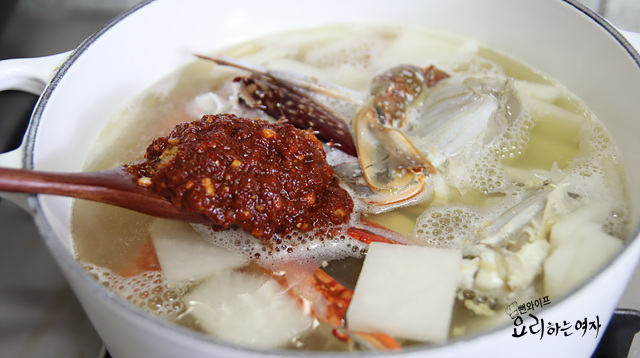
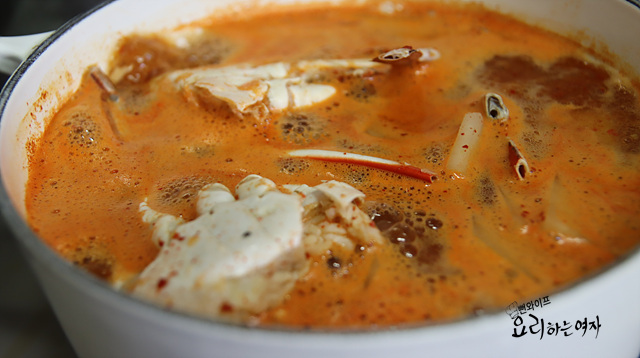
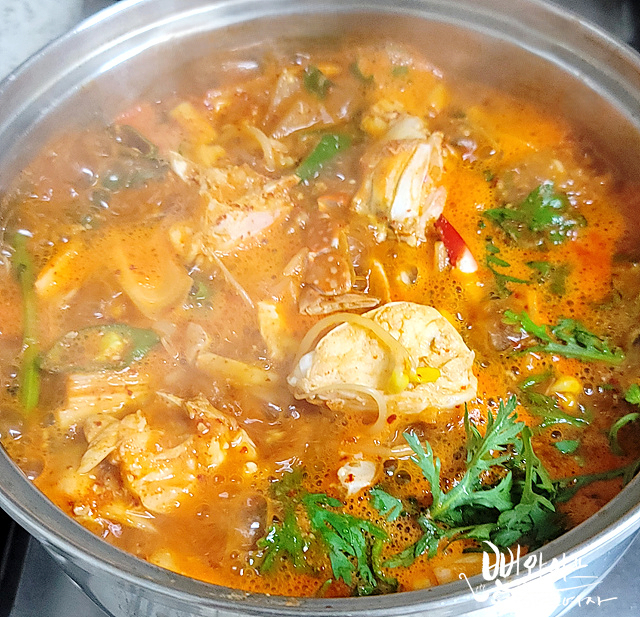
Add the prepared seasoning paste and boil until the blue crab is cooked through. If you boil it for too long, the crab meat will become tough, so once the inner meat turns completely white...
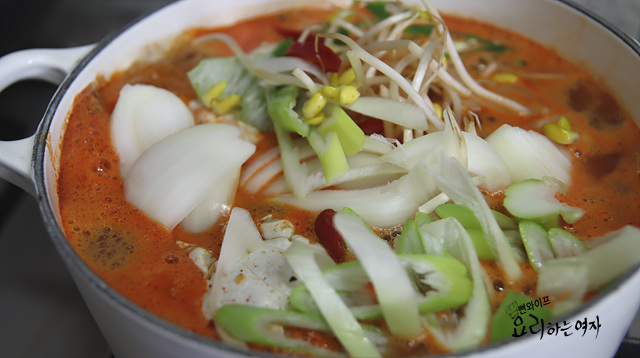
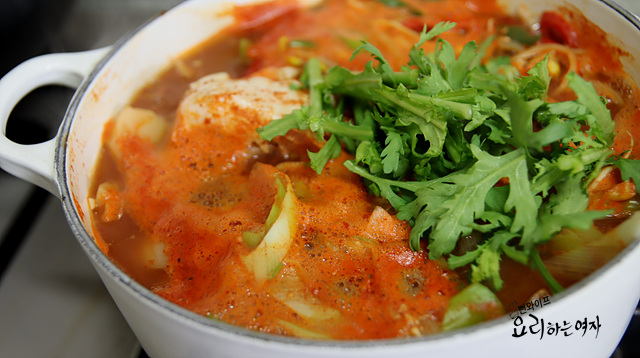
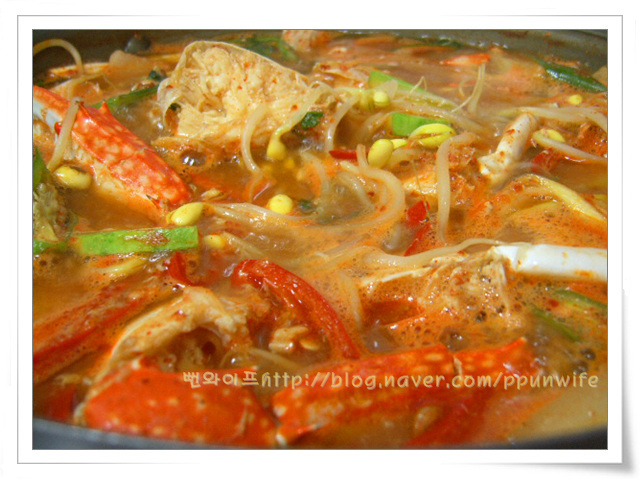
Add the onion, large green onion, soybean sprouts, and chili peppers to cook through. Taste and season with salt if it is bland, and finally, add the ssukgat (crown daisy) and turn off the heat to finish.
Cooking blue crab stew is really quite simple.
 Ppunwife's tips
- If you boil it too long, the crab meat will turn tough, so move on to the next ingredients once the inner meat turns completely white.
FAQ
Is there a vegetable I can substitute if I do not have ssukgat (crown daisy)?
You can substitute water dropwort (minari) or perilla leaves to add aroma and keep the broth clean. You can also add zucchini or mushrooms to your liking.
How long should I boil the blue crab to keep the meat tender?
Cook it only until the inner crab meat turns completely white so that it stays tender and does not dry out.
How do I prep and use frozen blue crab?
Lightly rinse the crabs under running water right before cooking, then drain them in a strainer before adding them to the pot.
What should I add if the broth tastes bland at the end?
Taste it in the final step and adjust the seasoning by adding salt as needed.