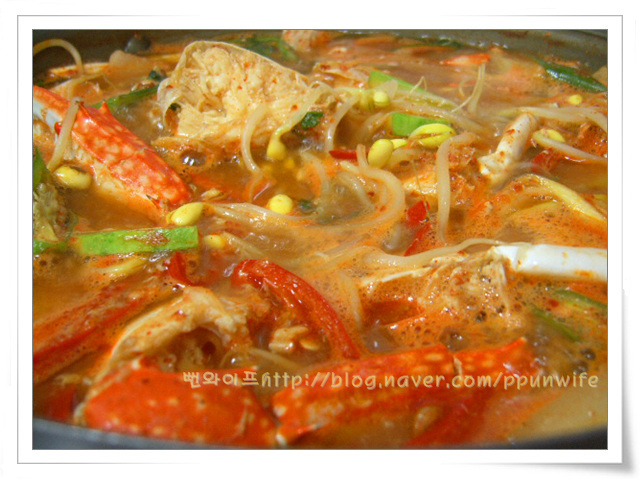
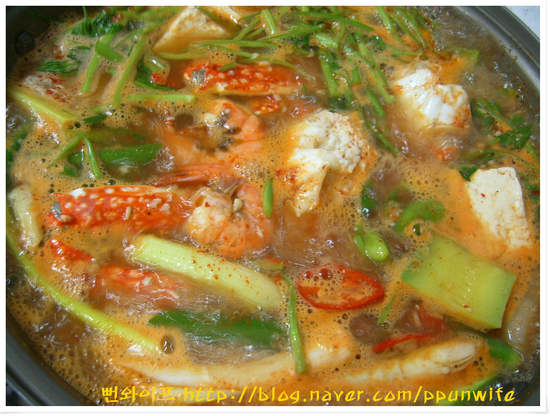
Refreshing Kkotgetang (Spicy Blue Crab Stew) with Radish
A refreshing stew made by simmering blue crab and Korean radish in a broth seasoned with doenjang and gochujang.
Translated from Korean by AI and not yet checked by a native speaker. Amounts and numbers are taken directly from the original recipe. Read the Korean original →
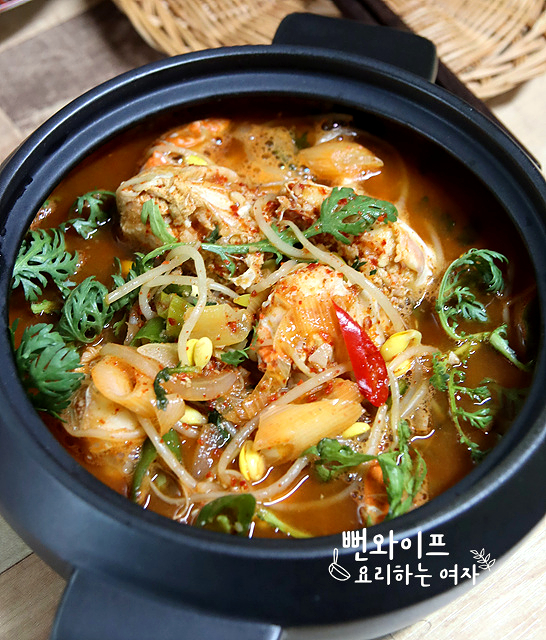
A refreshing soup dish infused with the sweetness and savory richness of in-season autumn blue crab. Simmer the crab shells first to create a deep broth, and avoid boiling the crab body meat for too long to keep its tender, chewy texture. Seasoned with a blend of doenjang and gochujang, it finishes spicy and deeply comforting.
- Servings
- 3–4 servings
- Difficulty
- Medium
- Spiciness
- Spicy
Ingredients
Ingredients
- Blue crab3, 750 g (medium)
- Korean radish (mu)200 g
- Soybean sprouts200 g
- Onion1/2
- Ssukgat (crown daisy)1 handful
- Large green onion (daepa)1/2 stalk
- Cheongyang chili pepper (hot green chili)2
- Red chili pepper1
- Anchovy broth6 cups
Seasoning
- Gochujang (Korean red chili paste)1 tbsp
- Doenjang (Korean soybean paste)1 tbsp
- Soup soy sauce (guk-ganjang)2 tbsp
- Gochugaru (Korean chili flakes)2 tbsp
- Minced garlic1 tbsp
- Sand lance fish sauce1 tbsp
- Ground black peppera little
- Wash and clean the blue crabs, then cut them into bite-sized pieces.
- You can use water dropwort (minari) instead of ssukgat for a refreshing taste, and tofu is also a great addition.
- Instead of 6 cups of anchovy broth, you can use 6 cups of plain water with 2 broth tablets.
- Use 1 tbsp of commercial doenjang, but reduce to 1/2 tbsp if using homemade doenjang.
Steps
Prepare the ingredients
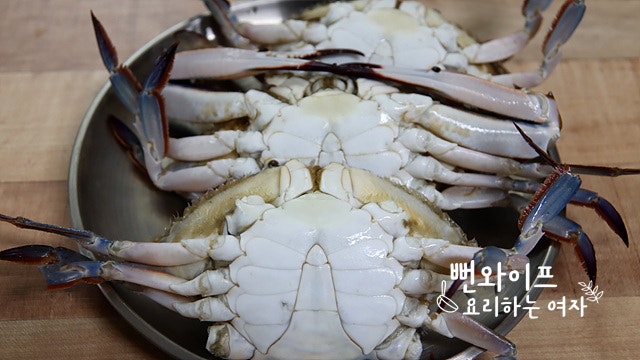
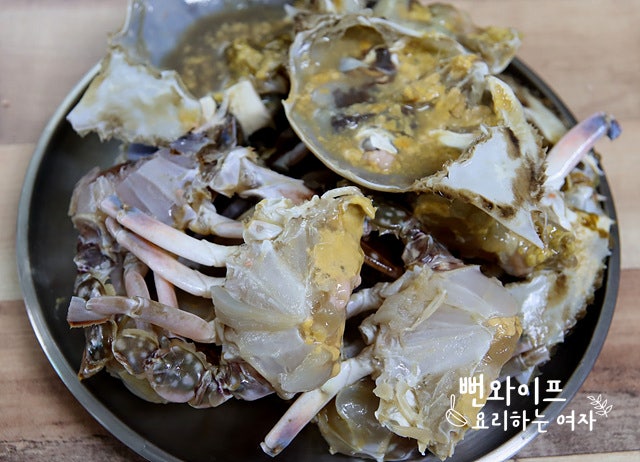
These are 3 male blue crabs of about medium size.
I washed and cleaned the blue crabs, then cut them into bite-sized pieces.
See the photo below for how to clean blue crab.
Related post on the blog (Korean)blog.naver.com/ppunwife/223994697820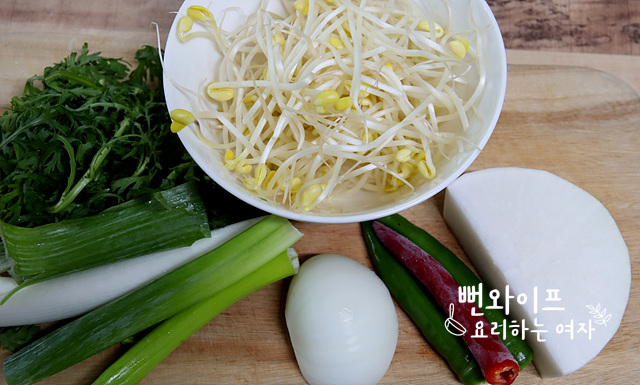
These are the secondary ingredients for the blue crab stew.
Korean radish (mu), soybean sprouts, onion, large green onion (daepa), Cheongyang chili peppers, red chili pepper, and ssukgat (crown daisy).
You can also use water dropwort (minari) instead of ssukgat for a refreshing taste. Preparing tofu alongside them is also great.
Slice the ingredients
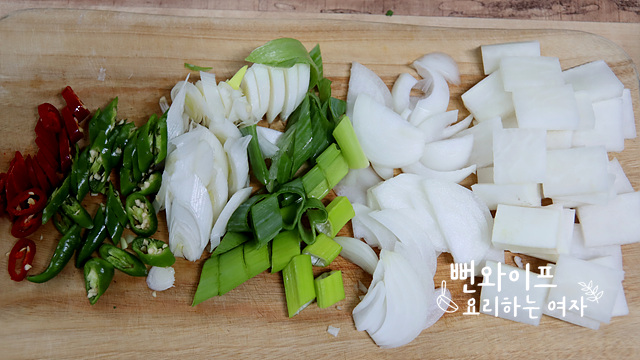
Cut the radish into thin square bite-sized slices and thinly slice the onion.
Thinly slice the green onion and chili peppers on a bias.
Simmer
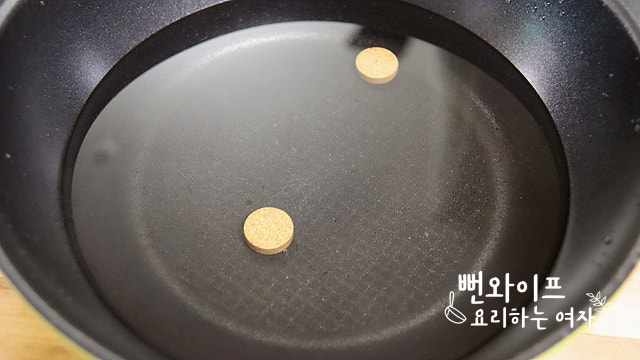
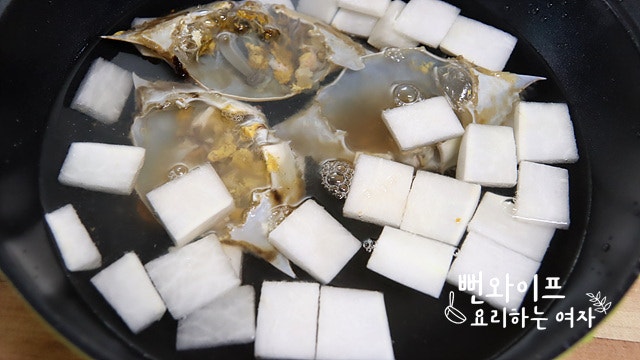
Pour in 6 cups of anchovy broth (or 6 cups of plain water with 2 broth tablets), then add the radish and the blue crab top shells.
We will boil the crab shells first to draw out their rich flavor into the broth, and remove them halfway through.
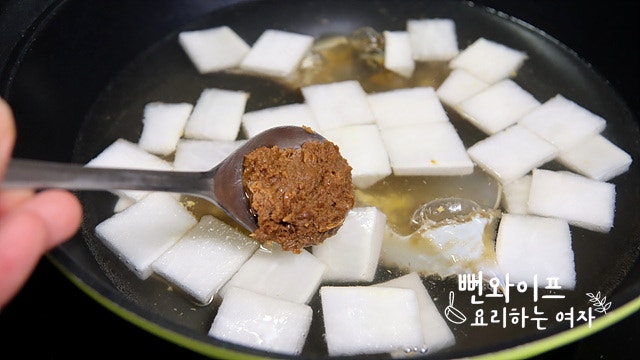
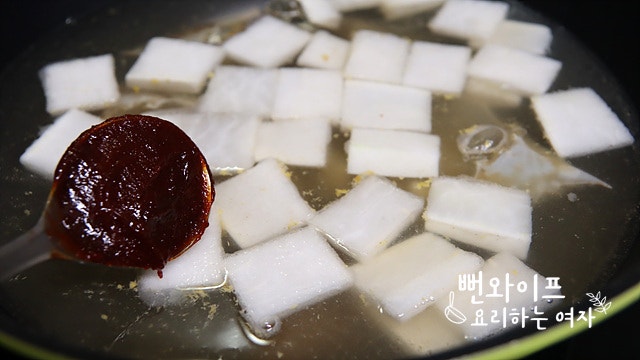
Add 1 tbsp of doenjang (Korean soybean paste) (use 1/2 tbsp if using homemade doenjang) and 1 tbsp of gochujang (Korean red chili paste)...
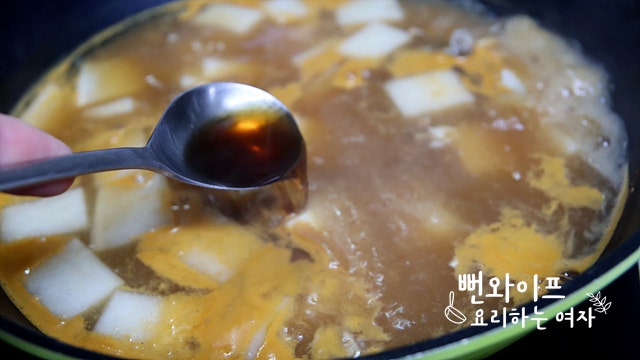
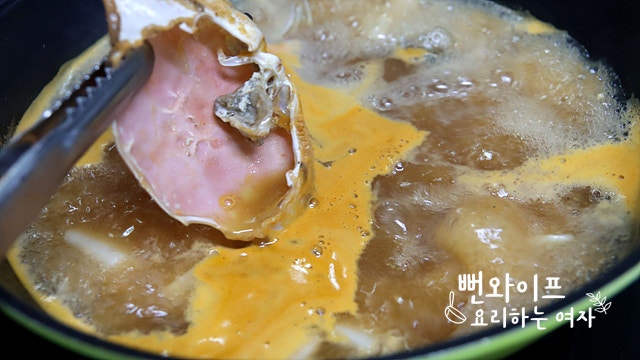
Add 2 tbsp of soup soy sauce (guk-ganjang) and bring to a boil.
Once it boils, lower the heat to medium and let the radish cook thoroughly.
Now take out the crab shells and discard them.
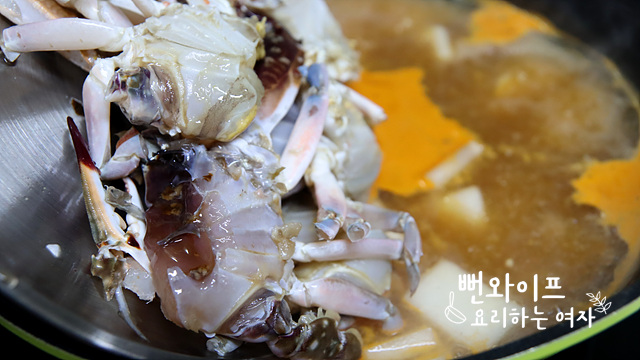
Add the prepared blue crab body pieces.
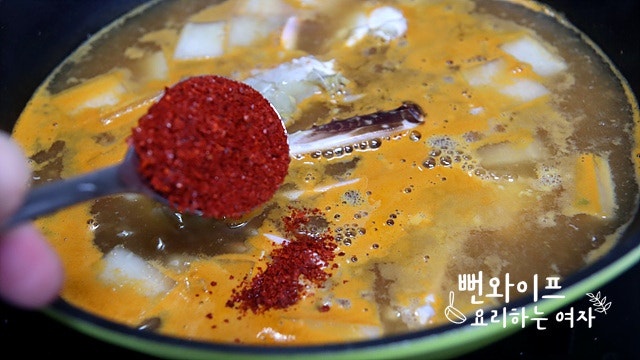
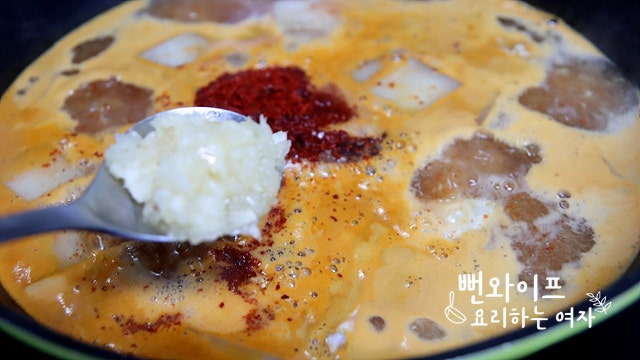
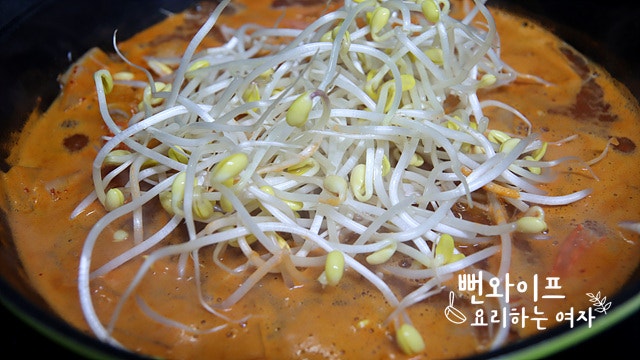
Next, add the seasonings: 2 tbsp of gochugaru (Korean chili flakes) and 1 tbsp of minced garlic...
Add the soybean sprouts as well, letting the crab and sprouts cook through while the seasonings blend into the broth.
Crab cooks quickly, so do not simmer it for too long if you want to enjoy tender, chewy meat.
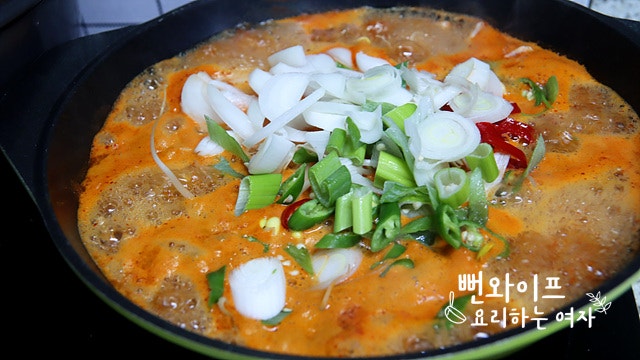
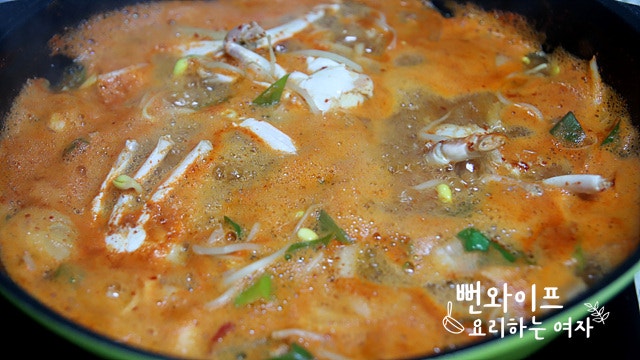
Taste the broth, and if it needs more saltiness, adjust with 1 tbsp of sand lance fish sauce or salt...
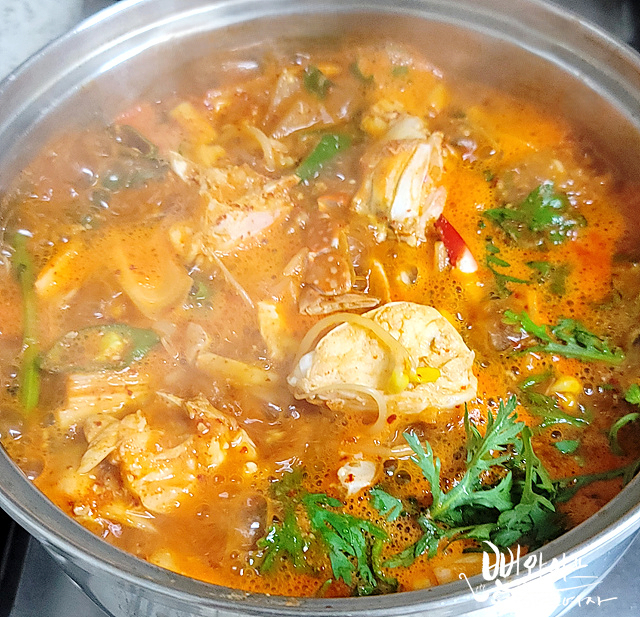
Add the onion, green onion, chili peppers, and a little ground black pepper, then bring to a quick boil until the vegetables soften.
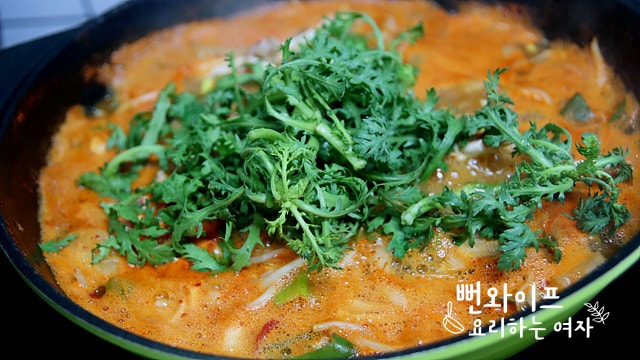
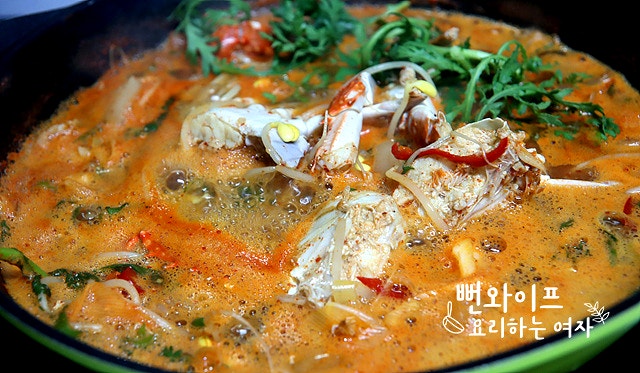
Add the ssukgat at the very end, turn off the heat within 30 seconds, and finish.
Complete
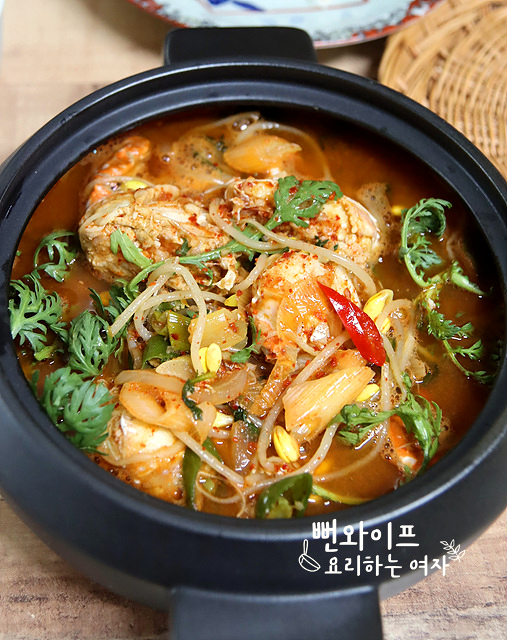
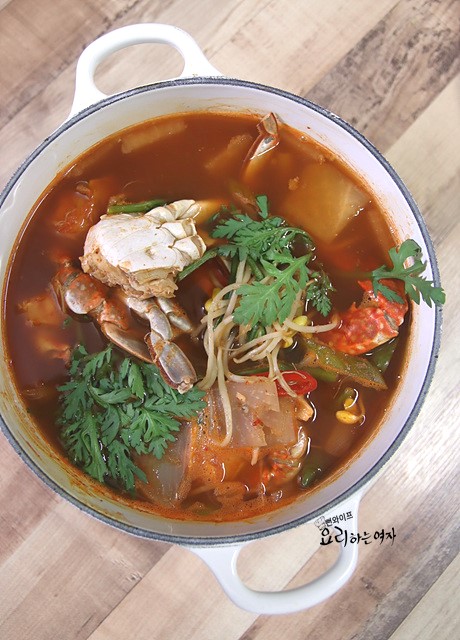
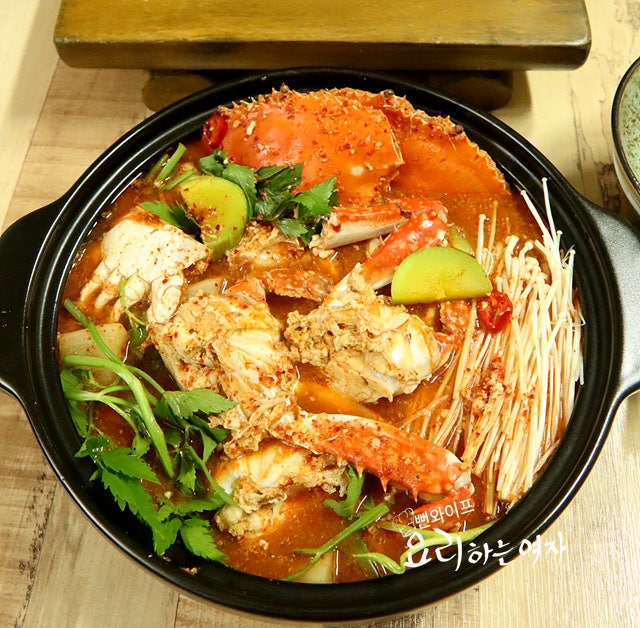
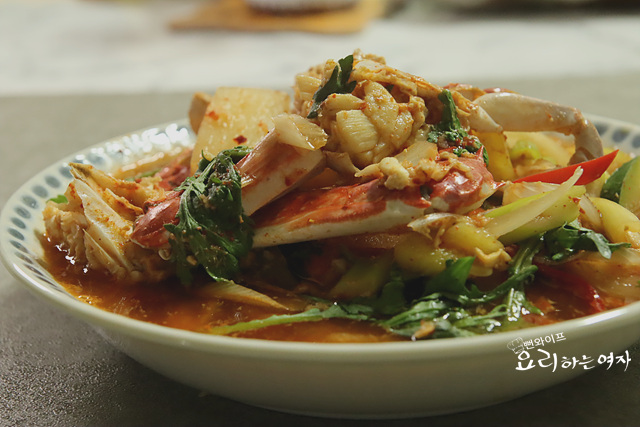
The blue crab stew is complete.
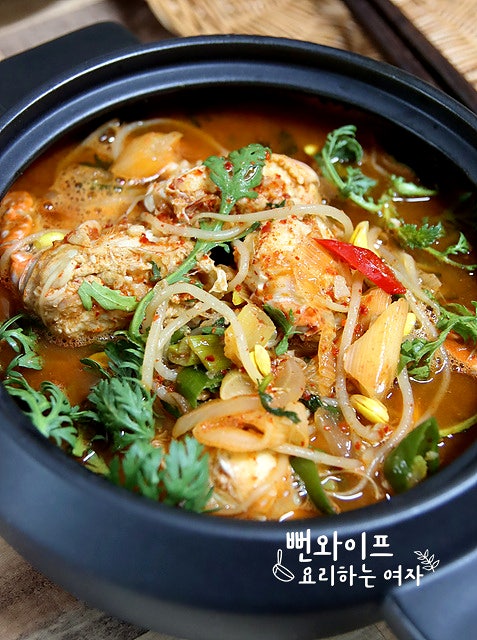
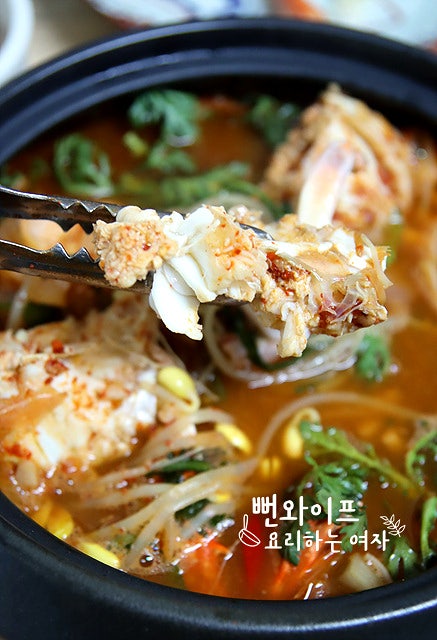
Because it is in-season fresh blue crab, the meat is tender and wonderfully chewy.
The broth infused with crab flavor is remarkably refreshing and deeply savory.
Prepare a delicious dinner and enjoy your meal.
 Ppunwife's tips
- To fully enjoy the tender, chewy texture of the crab meat, simply avoid simmering it for too long from the start.
- Boil the blue crab shells first to extract a rich, delicious broth, and then remove them halfway through.
- Crab cooks quickly, so avoid overcooking it to keep the meat tender and chewy.
- Add the ssukgat at the end and turn off the heat within 30 seconds to finish.
FAQ
Is there a cooking tip to keep the crab meat tender and chewy?
Blue crab cooks quickly, so the secret is not to simmer it for too long from the beginning.
How long should I boil the crab shells before removing them?
Add them at the start with the radish to extract the flavorful broth, then remove them once the radish is thoroughly cooked.
Is there a vegetable substitute if I do not have ssukgat?
You can use water dropwort (minari) instead of ssukgat for a refreshing broth, and adding tofu is also great according to your preference.
How should I adjust the amount when using homemade doenjang?
Use 1 tbsp for commercial doenjang, but reduce it to 1/2 tbsp when using saltier homemade doenjang.