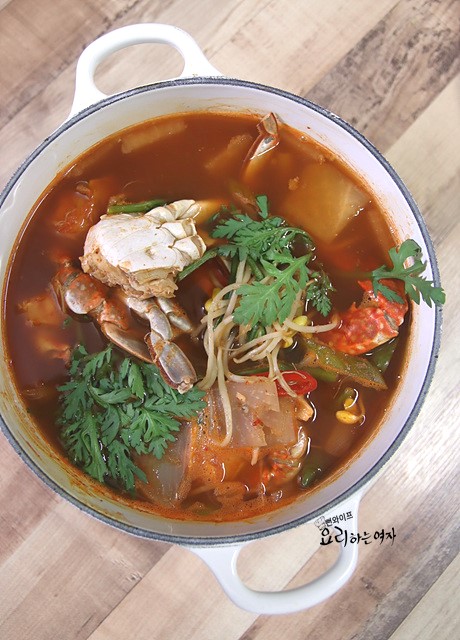
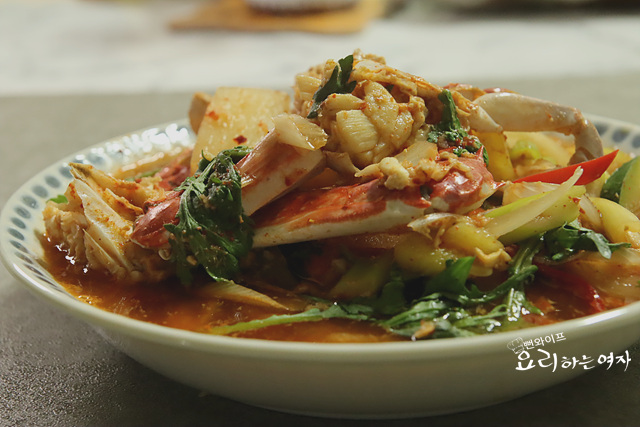
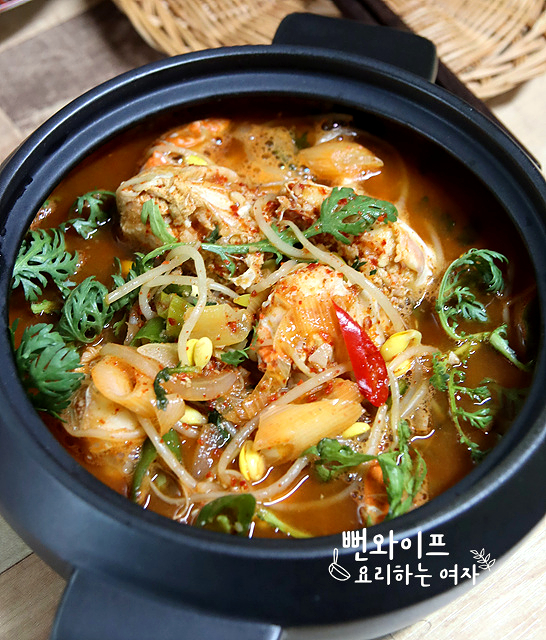
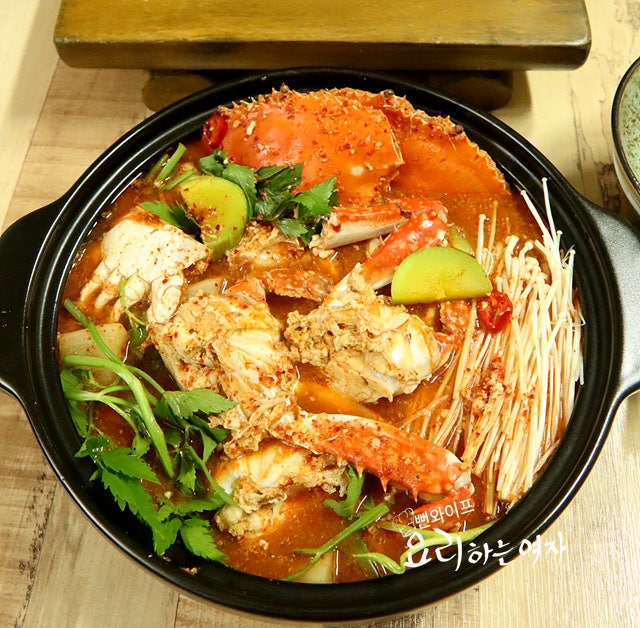
Kkotgetang (Spicy Blue Crab Stew) with Rich Broth
A spicy Korean stew made by simmering fresh blue crab and vegetables in a savory doenjang-infused broth.
Translated from Korean by AI and not yet checked by a native speaker. Amounts and numbers are taken directly from the original recipe. Read the Korean original →
This generous 4-serving Kkotgetang features a rich, spicy broth built on anchovy-kelp stock with doenjang for deep savory flavor. Simmering the crab shells extracts extra depth, while plenty of vegetables keep it clean and refreshing—perfect with drinks or for entertaining guests. To finish the meal, you can drop sujebi into the leftover concentrated broth for a hearty treat.
- Servings
- 4 servings
- Difficulty
- Hard
- Spiciness
- Spicy
Ingredients
Ingredients
- Blue crab2 whole (large)
- Korean radish (mu)1/5
- Squash1/4
- Soybean sprouts1 handful
- Ssukgat (crown daisy)1 handful
- Large green onion (daepa)1/2 stalks
- Cheongyang chili pepper (hot green chili)2
- Red chili pepper1
Seasoning sauce
- Doenjang (Korean soybean paste)1 tbsp
- Gochugaru (Korean chili flakes)2 tbsp
- Soup soy sauce (guk-ganjang)2 tbsp
- Minced garlic1.5 tbsp
- Mirin (cooking rice wine)1 tbsp
- Ginger powder0.5 tsp
- Ground black peppera little
- Saltfor final seasoning
Broth
- Water8 cups
- Dried anchovies2 handfuls
- Dried kelp (dasima)2 pieces (5 cm square)
- Large green onion (daepa)1/2 stalks
- Soak 2 pieces of dried kelp in 8 cups of water for about 1 hour.
- It is best to cut the cleaned blue crabs into 4 pieces each for easy eating.
- You can also use blue crabs caught in season and frozen.
- If you do not have enough blue crab, try adding shrimp as well.
- You can also prepare tofu, onion, water dropwort, or other ingredients according to your preference.
Steps
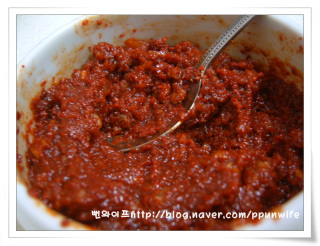
1. For any dish, it is best to mix the sauce first and let the flavors meld before cooking.
Mix all sauce ingredients together, except for the doenjang and salt.
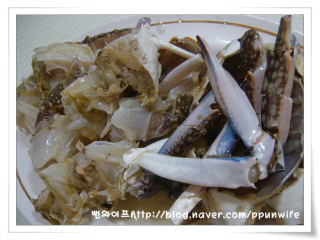
2. I used two blue crabs, but they are large ones roughly equivalent to four medium crabs.
Since I bought them live, there is almost nothing to discard except for simple cleaning. We will also add the top shells to the broth to extract flavor and remove them later.
If you do not have enough blue crab, try adding shrimp as well. It is best to cut the cleaned blue crabs into 4 pieces each for easy eating.
Instructions for cleaning blue crab and shrimp are here ⇒ http://blog.naver.com/ppunwife/140043367432
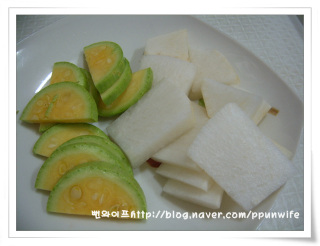
3. Slice the Korean radish and squash to the same thickness and size.
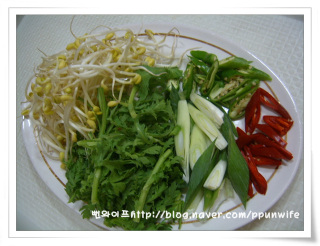
4. For a refreshing broth flavor, I prepared a handful of soybean sprouts. Also prepare a handful of ssukgat, and slice half a stalk of large green onion and the chili peppers diagonally.
You can also prepare tofu, onion, water dropwort, or other ingredients according to your preference.
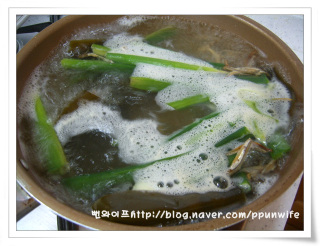
5. Bring to a boil 8 cups of water soaked with 2 pieces of dried kelp for about 1 hour, along with two handfuls of dried anchovies and the large green onion.
Once it starts to boil, remove the dried kelp and simmer over low heat for about 15 minutes.
Strain through a sieve to collect only the clear broth.
Boiled like this, it will yield about 6 cups of broth. (I made a generous amount of broth because I plan to cook sujebi in it at the end.)
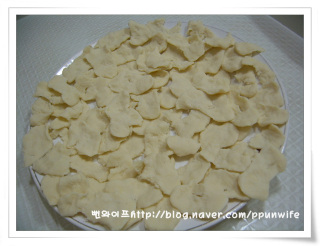
6. I also made sujebi dough in advance to cook in the leftover broth.
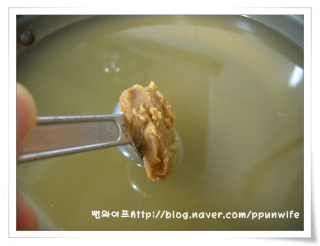
7. I will season the broth base with doenjang for a deep, savory, and refreshing flavor, though you can use gochujang instead to suit your taste.
Dissolve one tablespoon of doenjang into the broth, and once it boils...
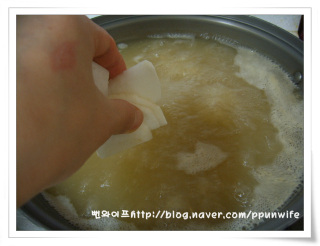
8. Add the hardest Korean radish first...
10
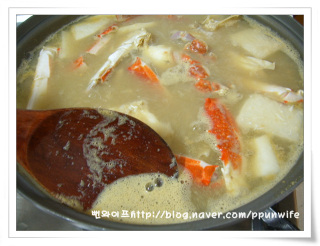
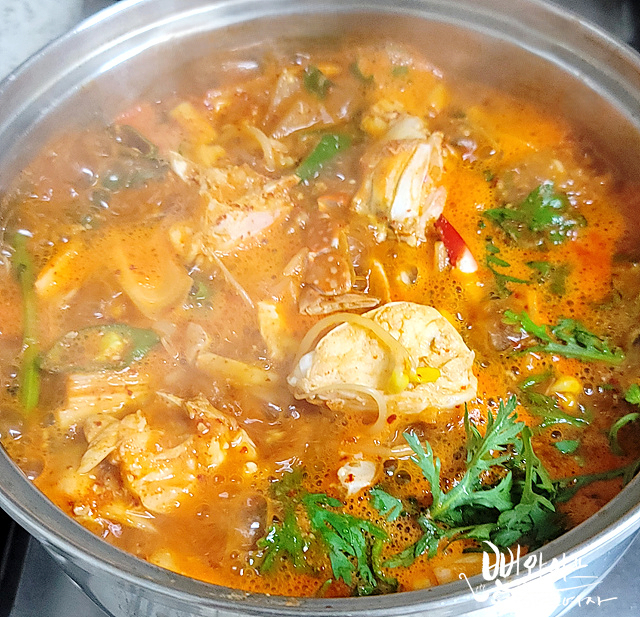
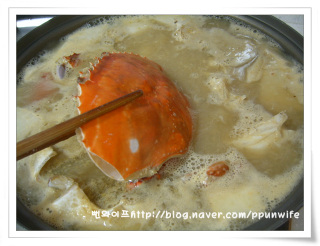
9. Add the blue crab and boil. After boiling for 2-3 minutes, take out the top shells...
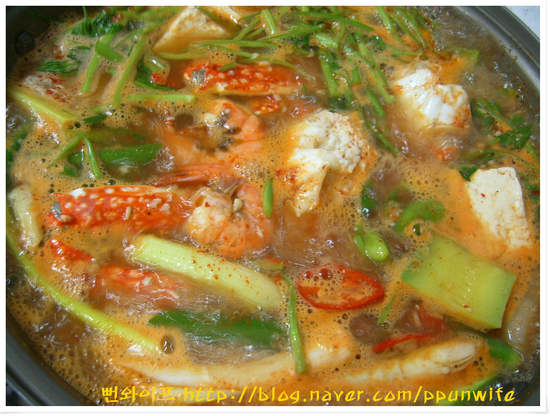
10. Skim off all the foam that rises to the top.
11
12
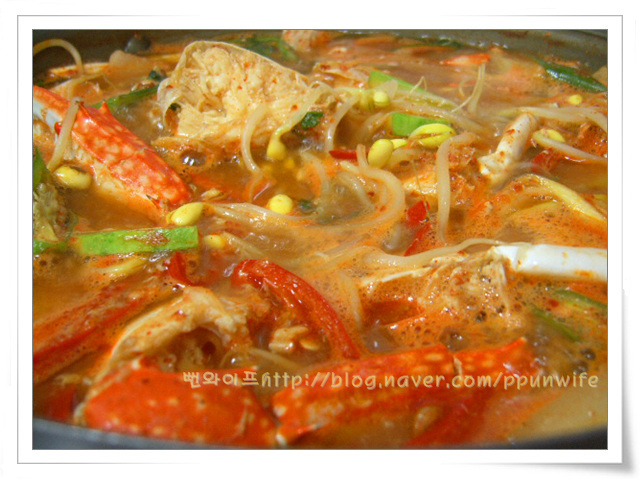
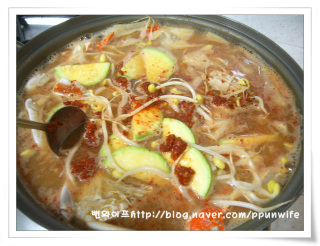
11. Add the soybean sprouts, squash, and prepared sauce, stir to dissolve, and then...
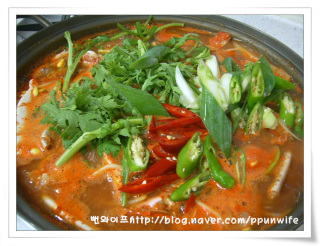
12. Add the remaining vegetables and boil until cooked through. Adjust any remaining seasoning with salt.
 Ppunwife's tips
- For any dish, it is best to mix the sauce first and let the flavors meld before cooking.
- The top shells will also be boiled in the broth to extract flavor and removed later.
- The broth base is seasoned with doenjang for a savory and refreshing taste, but you can use gochujang instead to suit your taste.
- Once you have eaten most of the blue crab and vegetables, finish the meal by adding sujebi and vegetables to the remaining broth and boiling them. If you run low on broth, add more anchovy broth to cook.
FAQ
Can I use frozen blue crab instead of live fresh crab?
Yes, using blue crabs that were flash-frozen in season will turn out plenty delicious.
Do the top crab shells stay in the pot the entire cooking time?
They are boiled together to infuse rich flavor into the broth, but you remove them after 2 to 3 minutes of boiling.
What can I add if I don't have enough blue crab?
If you are short on blue crab, it is great to add shrimp alongside it.
Can I add other noodles instead of sujebi to the leftover broth?
Kalguksu (knife-cut wheat noodles) work wonderfully in place of sujebi.