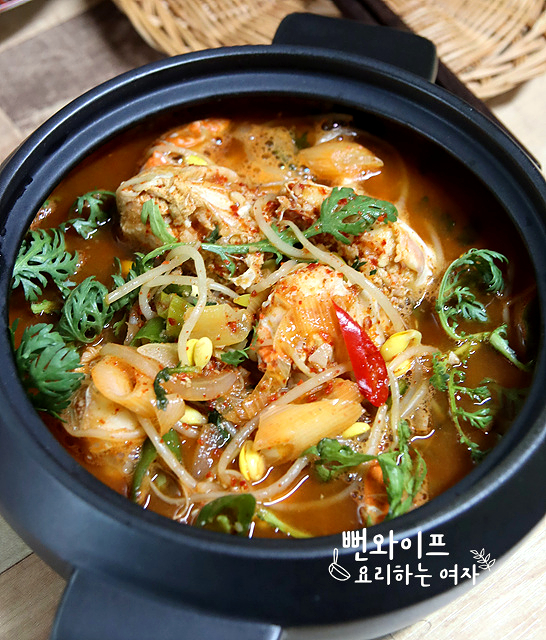
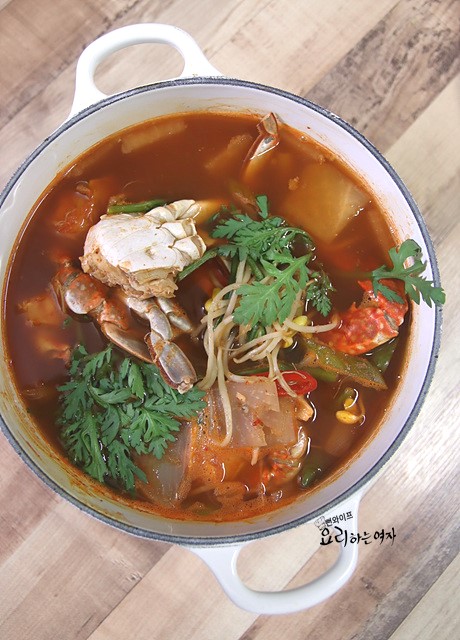
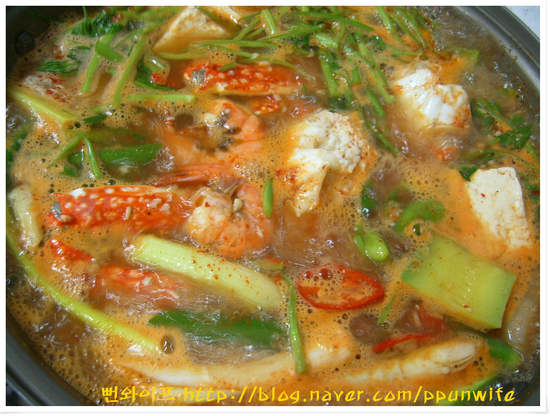
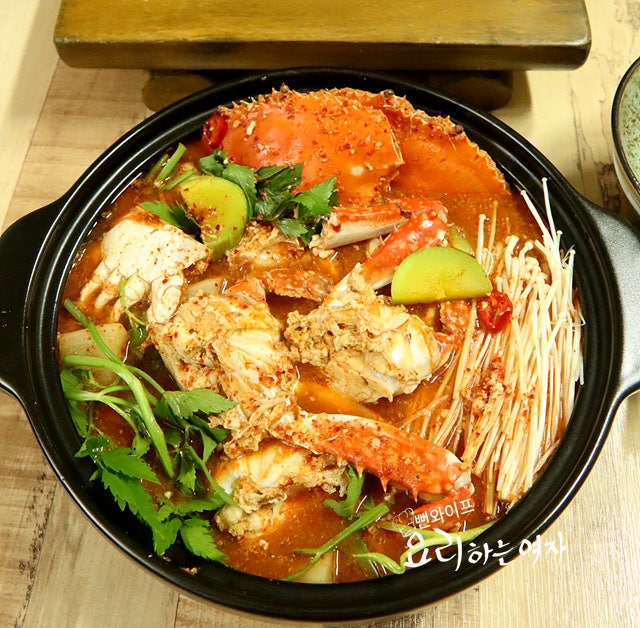
Refreshing and Savory Kkotgetang (Spicy Blue Crab Stew)
A refreshing, deep-flavored spicy blue crab stew for 2 to 3 servings made with Korean radish, soybean sprouts, and crab tomalley.
Translated from Korean by AI and not yet checked by a native speaker. Amounts and numbers are taken directly from the original recipe. Read the Korean original →
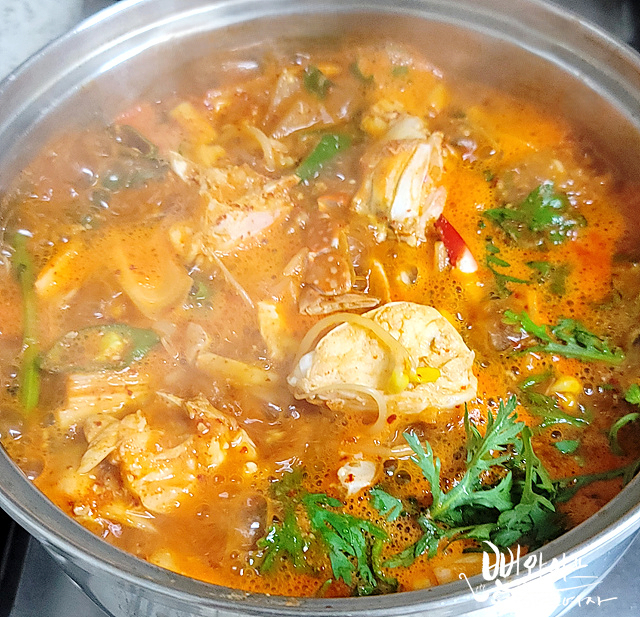
With Korean radish and plenty of soybean sprouts, this stew has a refreshing broth that works wonderfully as a drinking snack or a hangover cure. Scraping out the tomalley from the crab shell beforehand and adding it at the end is the secret to a rich umami flavor. Once the blue crab goes in, it is best not to boil it for too long to keep the tender texture of the meat.
- Servings
- 2–3 servings
- Difficulty
- Medium
- Spiciness
- Spicy
Ingredients
Ingredients
- Blue crab2, 700 g (large)
- Korean radish (mu)150 g
- Squash100 g
- Onion1/2
- Soybean sprouts200 g
- Ssukgat (crown daisy)1/2 handful
- Large green onion (daepa)1/2 stalk
- Cheongyang chili pepper (hot green chili)1
- Red chili pepper1
- Anchovy broth6 cups
Seasoning
- Gochugaru (Korean chili flakes)2 tbsp
- Homemade doenjang (Korean soybean paste) (or store-bought doenjang 1 tbsp)1/2 tbsp
- Gochujang (Korean red chili paste)1 tbsp
- Soup soy sauce (guk-ganjang)2 tbsp
- Mirin (cooking rice wine)1 tbsp
- Minced garlic1 tbsp
- Sand lance fish sauce1 tbsp
- Ground black peppera little
- Instead of ssukgat, water dropwort (minari) or perilla leaves are also great.
- Separate the body and legs into bite-size pieces and scrape together the tomalley inside the crab shell. Boiling whole crab shells is cumbersome and takes up too much room, so adding just the tomalley at the end makes it much easier to cook.
Steps
Prepare ingredients
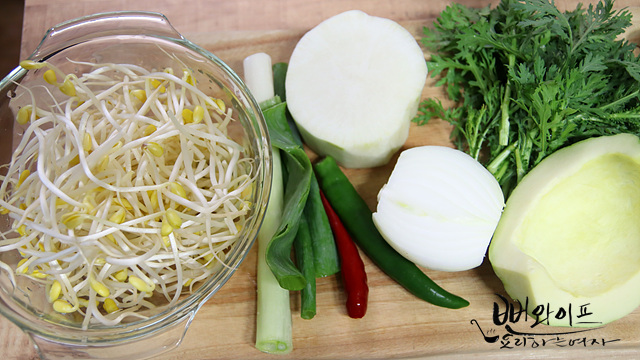
When Korean radish or soybean sprouts are added to kkotgetang, the broth becomes much more refreshing and delicious.
I prepared basic vegetables including squash, onion, large green onion, and chili peppers, along with fragrant ssukgat (crown daisy), but water dropwort (minari) or perilla leaves are also great.
Cut vegetables
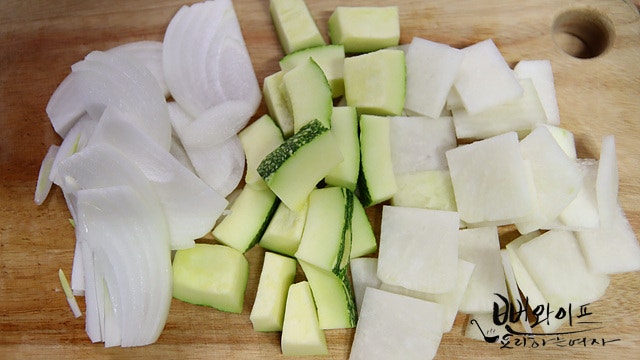
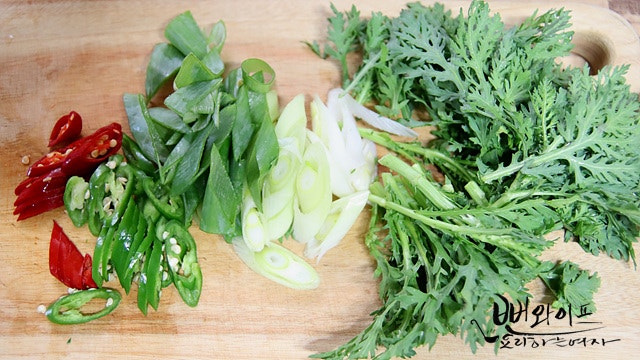
Cut the Korean radish into flat bite-size squares, slice the squash slightly thick, and thinly slice the onion.
Cut the ssukgat to manageable lengths, and diagonally slice the large green onion and chili peppers.
Clean blue crab
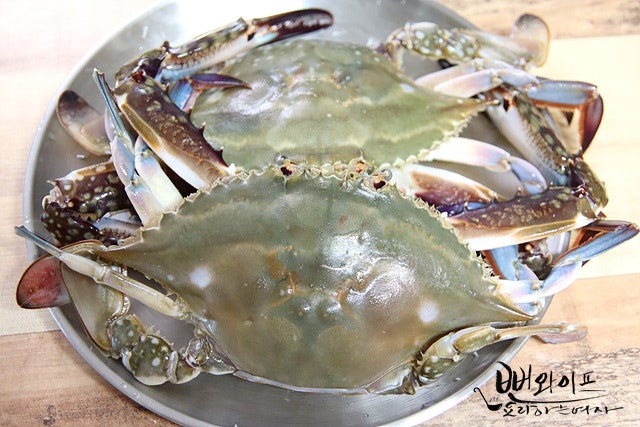
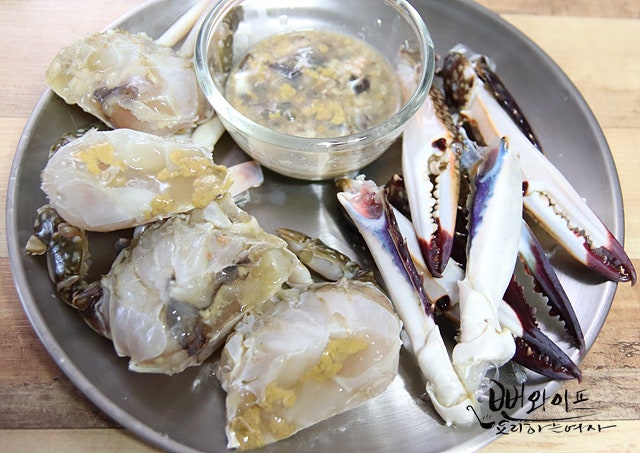
These are 2 large male blue crabs.
I separated the bodies and legs into bite-size pieces and scraped together the tomalley from the crab shells.
Boiling with whole shells is cumbersome and takes up a lot of room, so scraping out the tomalley and adding it at the end makes cooking much easier.
Related post on the blog (Korean)blog.naver.com/ppunwife/223994697820For how to clean blue crab, please refer to the steamed crab recipe above.
Season broth
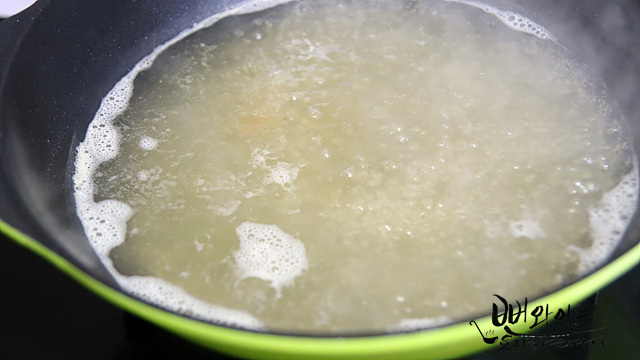
Pour 6 cups of anchovy broth (water + 2 broth coin tablets) into a pot, and once it boils...
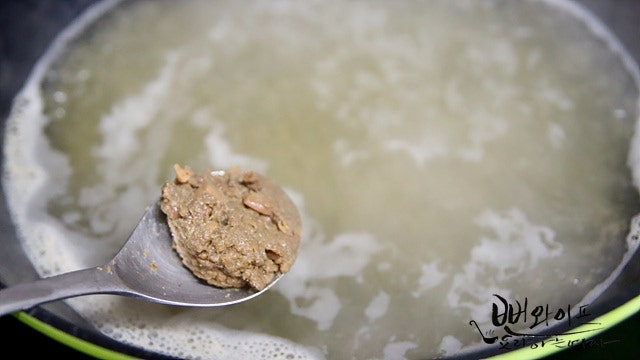
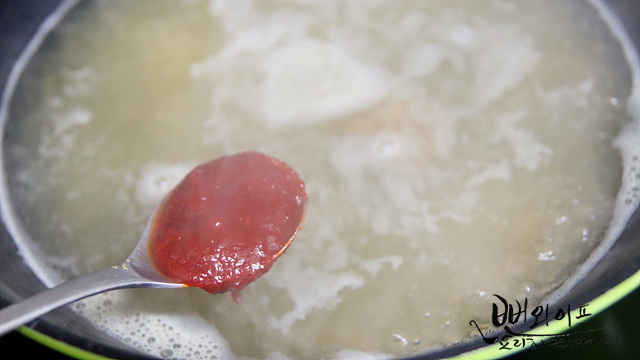
Add 1/2 tbsp of homemade doenjang (= store-bought doenjang) and 1 tbsp of gochujang, dissolving them into the broth.
Add ingredients and boil
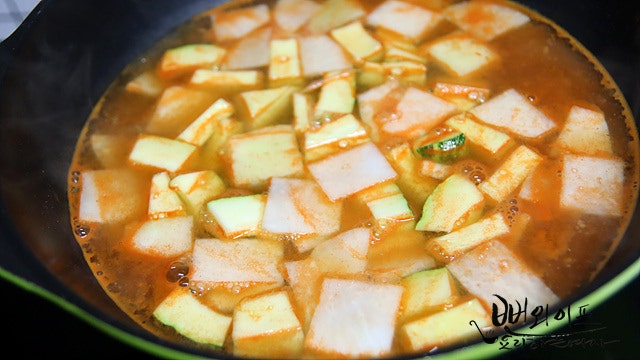
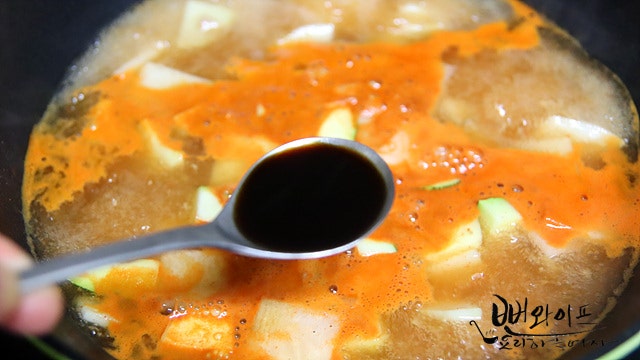
Add the squash and Korean radish, then season with 2 tbsp of soup soy sauce.
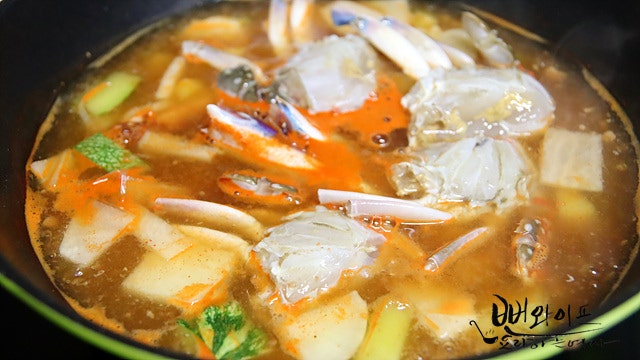
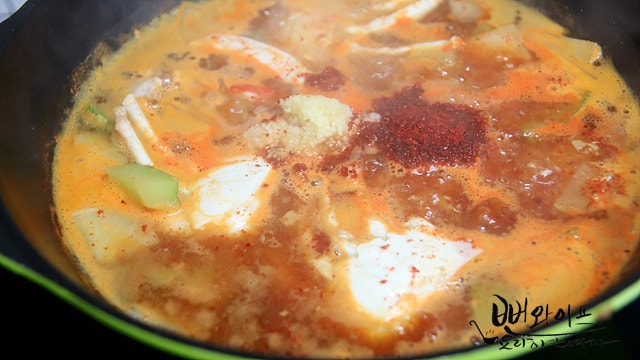
Once the radish is cooked, add the blue crab, 2 tbsp of gochugaru, 1 tbsp of minced garlic, 1 tbsp of mirin...
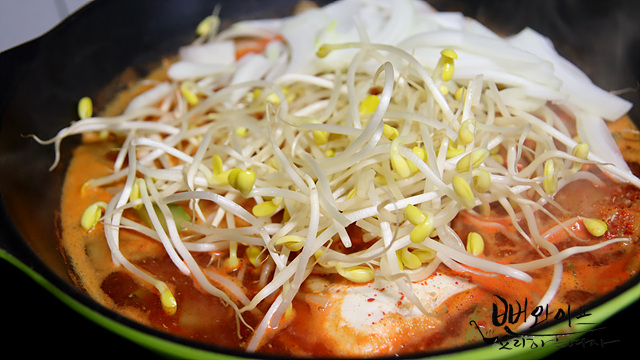
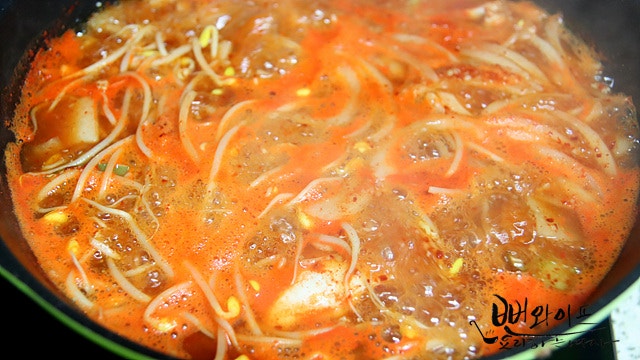
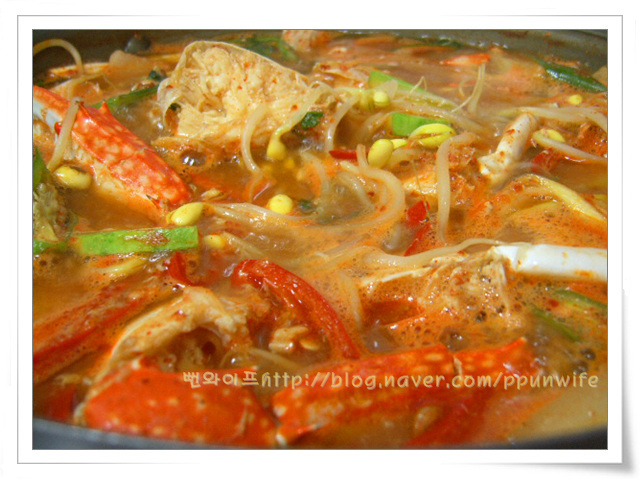
Add the soybean sprouts as well and boil until the ingredients are cooked through and the seasonings blend nicely into the broth.
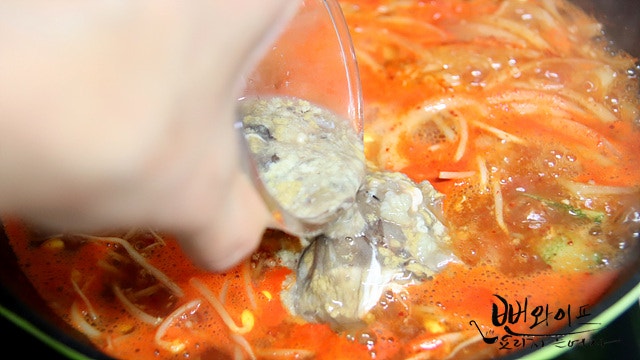
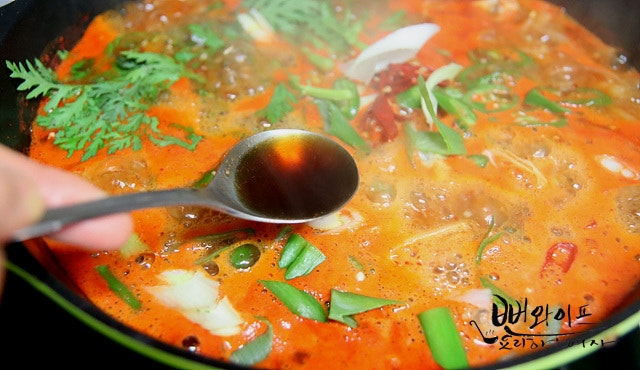
At the end, add the scraped tomalley from the crab shells and let it boil, adjust the final seasoning with salt or fish sauce, and finish with a pinch of ground black pepper and the ssukgat.
Whether you add the tomalley or not makes a huge difference in the broth's flavor.
Make sure to scrape every bit of tomalley from the crab shells and add it.
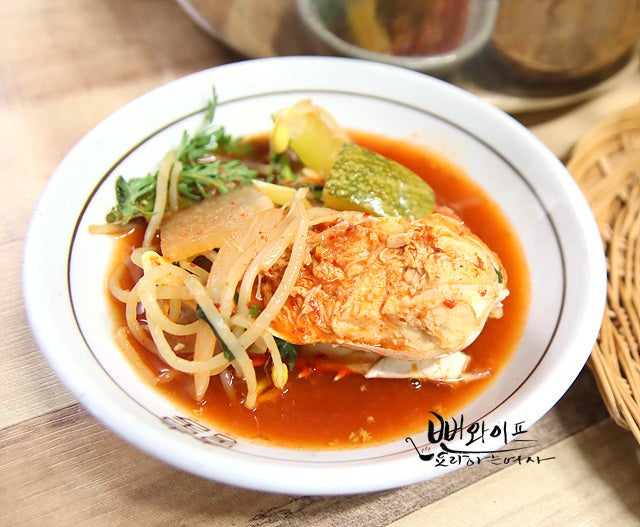
Finish
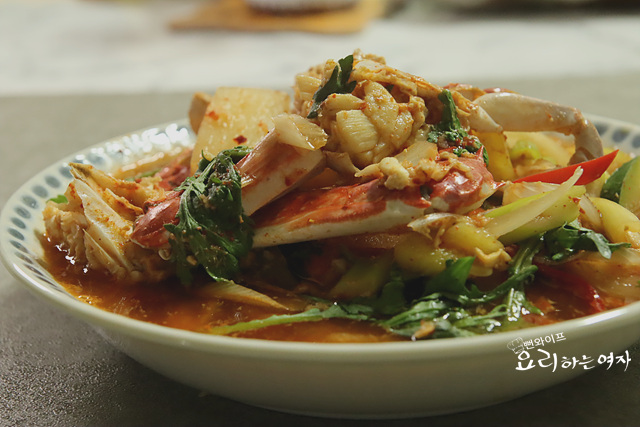
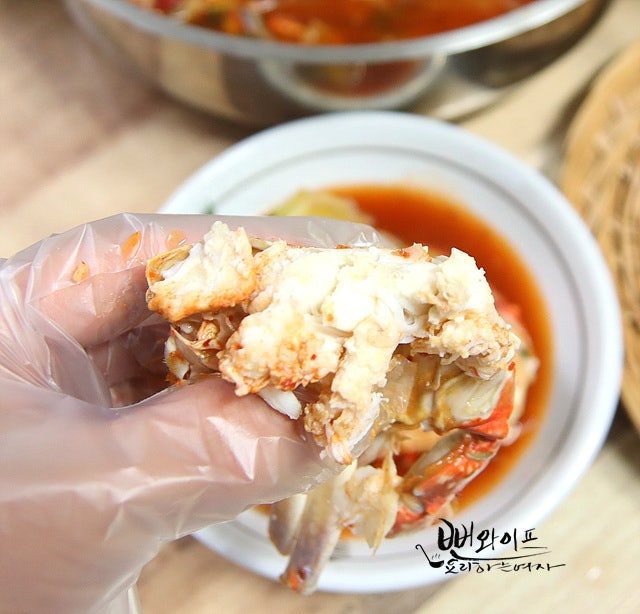
After adding the blue crab, along with the seasoning and the remaining ingredients, do not boil it for too long so you can enjoy the plump crab meat together with the refreshing, savory broth.
 Ppunwife's tips
- Whether you add the tomalley or not makes a huge difference in the broth's flavor. Make sure to scrape every bit of tomalley from the crab shells and add it.
- After adding the blue crab, along with the seasoning and the remaining ingredients, do not boil it for too long so you can enjoy the plump crab meat together with the refreshing, savory broth.
FAQ
Why don't you boil the stew with the crab shells whole?
Crab shells take up a lot of space and make boiling cumbersome, so scraping the inner tomalley out and adding it at the end of cooking is much easier.
Can I use other vegetables instead of ssukgat?
You can add water dropwort (minari) or perilla leaves instead of ssukgat to bring extra aroma.
How should I boil it to keep the crab meat tender?
After adding the blue crab along with the remaining ingredients and seasoning, do not overboil it so you can fully enjoy the plump texture of the meat.