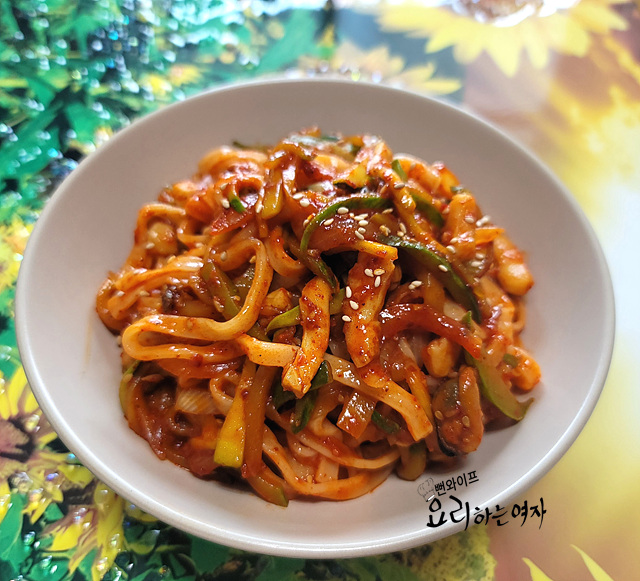
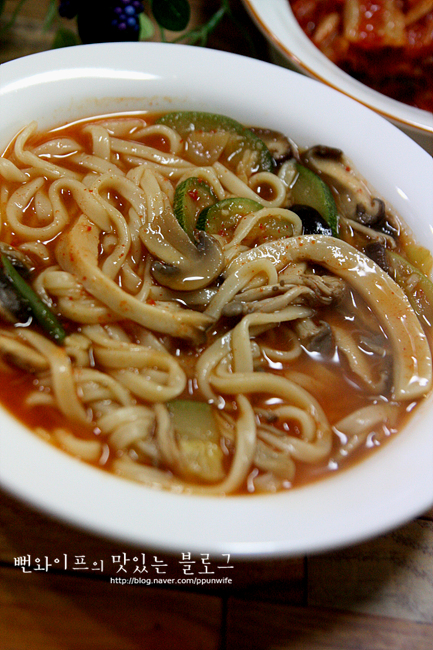
Spicy Jang Kalguksu (Spicy Soybean Paste Noodle Soup) with Squash
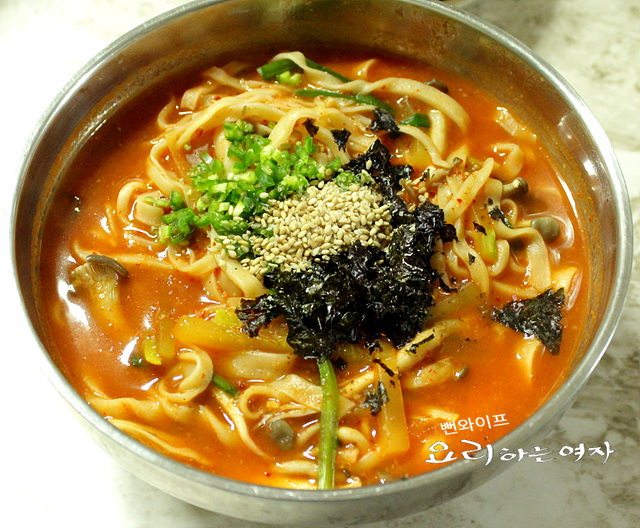
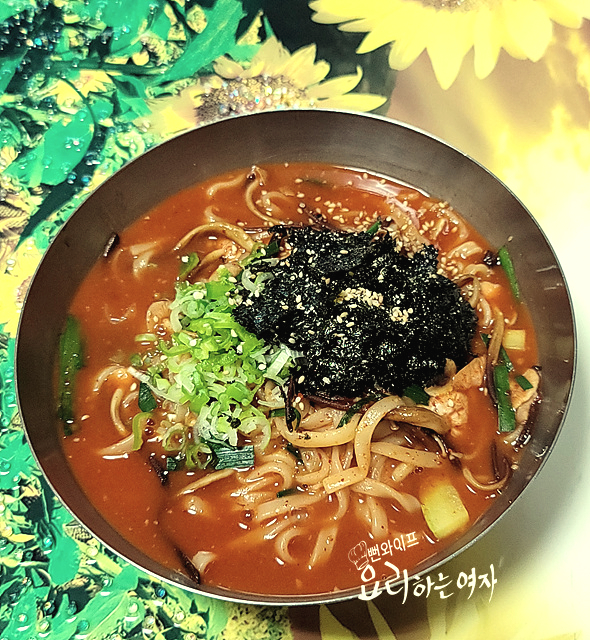
Spicy jang kalguksu cooked with plenty of squash in a gochujang and doenjang broth base.
Translated from Korean by AI and not yet checked by a native speaker. Amounts and numbers are taken directly from the original recipe. Read the Korean original →
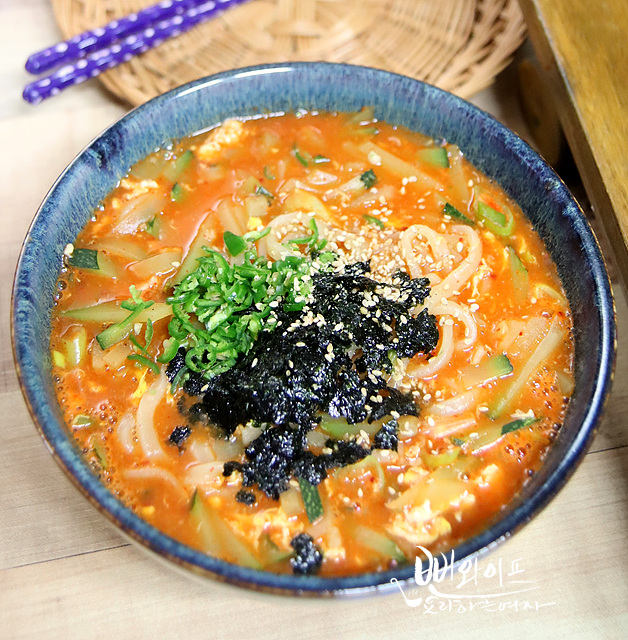
This 1-serving noodle dish blends gochujang and doenjang in harmony to bring out a deep, spicy broth flavor. Thickly cut sweet squash adds a pleasant texture, making it hearty and satisfying to enjoy even without meat or seafood.
- Servings
- 1 serving
- Cook time
- 7 minprep not included
- Difficulty
- Medium
- Spiciness
- Spicy
Ingredients
Ingredients
- Kalguksu noodles (knife-cut noodles)120 g
- Squash100 g
- Large green onion (daepa)1/4 stalk
- Cheongyang chili pepper (hot green chili)1
- Egg1
- Seasoned dried seaweed sheets
- Anchovy broth3 cups
Seasoning
- Gochujang (Korean red chili paste)1 tbsp
- Doenjang (Korean soybean paste)1/2 tbsp
- Mirin (cooking rice wine)1 tbsp
- Gochugaru (Korean chili flakes)1 tbsp
- Minced garlic1 tsp
- Sand lance fish sauce (or soup soy sauce (guk-ganjang), tuna extract sauce (chamchi-aek))1/2 tbsp
- Ground black peppera little
- If using Korean zucchini (aehobak), use 1/4 to 1/3 of one.
- Mushrooms are great, and aromatic crown daisy is also really delicious added to kalguksu.
Steps
Prepare the ingredients
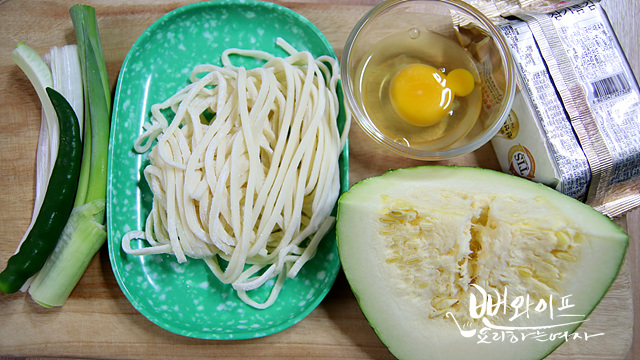
The ingredients for jang kalguksu are 1 serving of kalguksu noodles, 100g squash, large green onion, Cheongyang chili pepper, seasoned dried seaweed sheets, and an egg.
If using Korean zucchini (aehobak), use 1/4 to 1/3 of one.
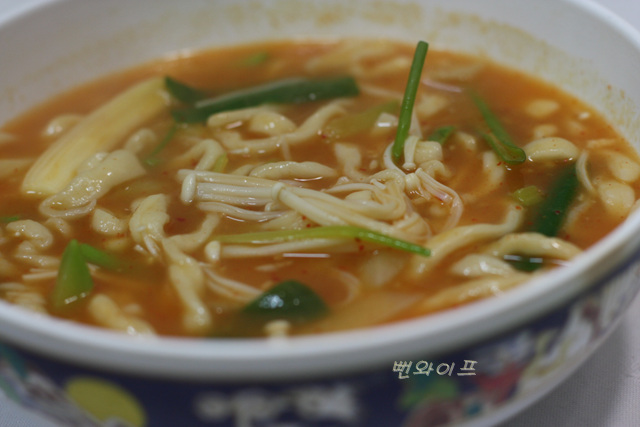
Mushrooms are great, and aromatic crown daisy is also really delicious added to kalguksu.
Cut the ingredients
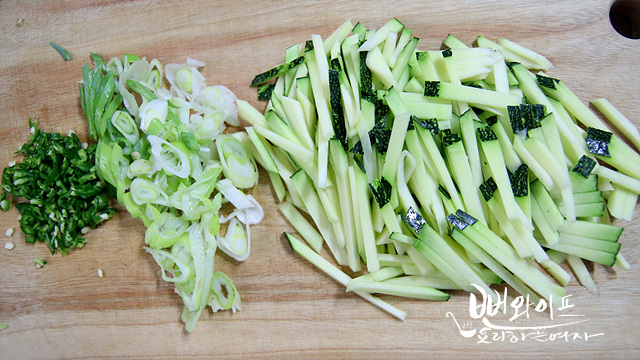
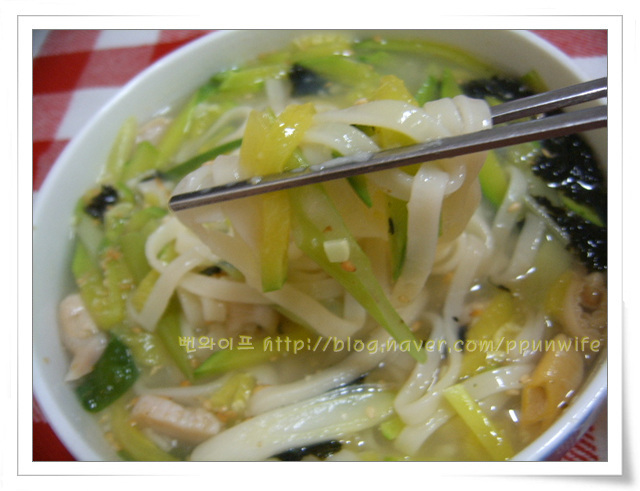
Scrape out the seeds of the squash and cut it into slightly thick matchsticks so it keeps its texture.
Slice the large green onion diagonally, and finely mince the Cheongyang chili pepper since it will be used as a garnish.
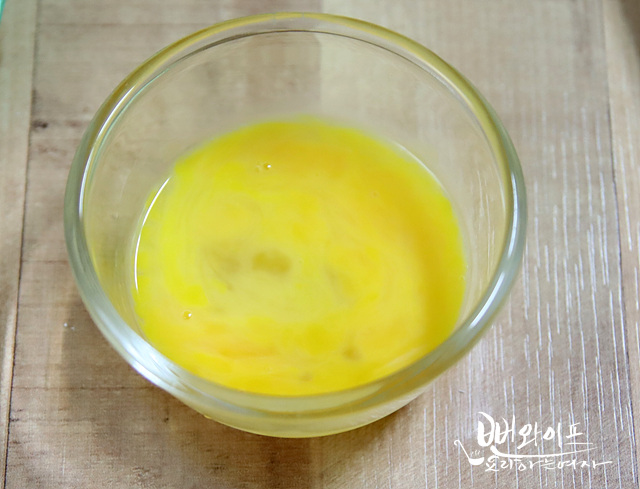
Beat the egg.
Boil the noodles
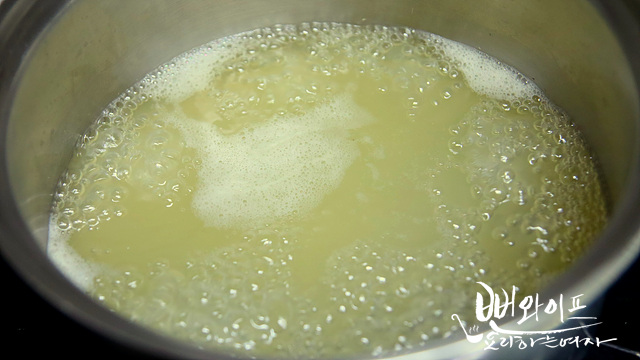
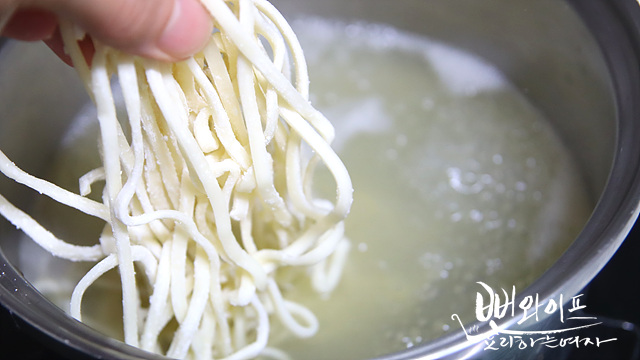
Add 3 cups of anchovy broth, and once it boils, add the kalguksu noodles.
If you do not like the broth to become thick, you can boil the noodles separately or rinse them under running water before adding them.
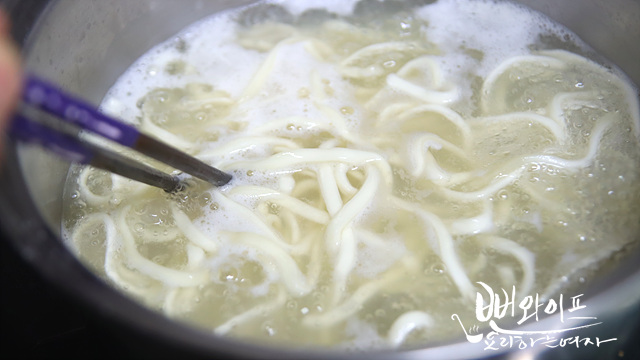
Stir well so they do not stick together...
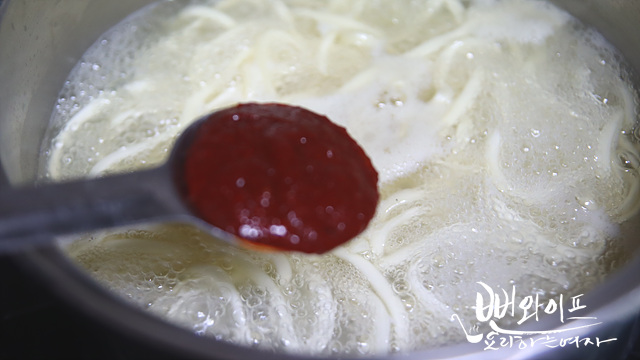
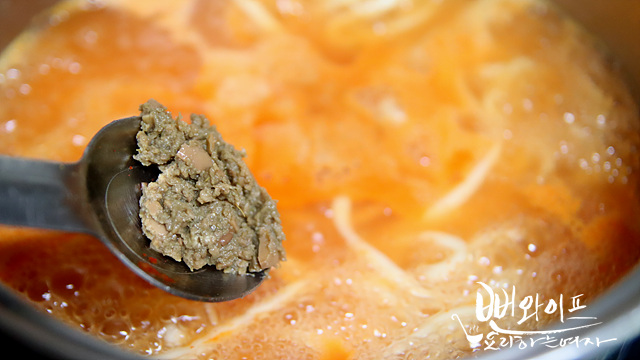
Add 1 tbsp gochujang and 1/2 tbsp doenjang, then boil.
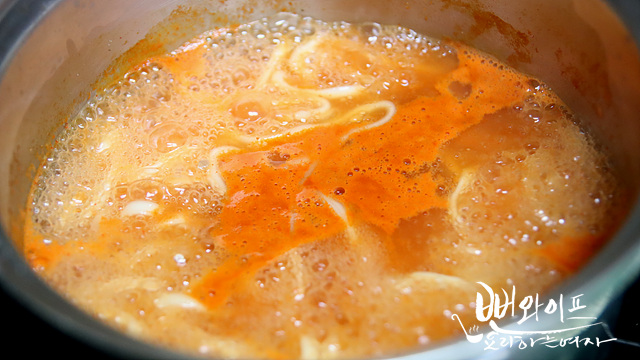
Boil for about 4 minutes until the noodles are about 70% cooked.
It depends on the thickness of the noodles, but kalguksu noodles are fully cooked in 6 to 7 minutes.
Season
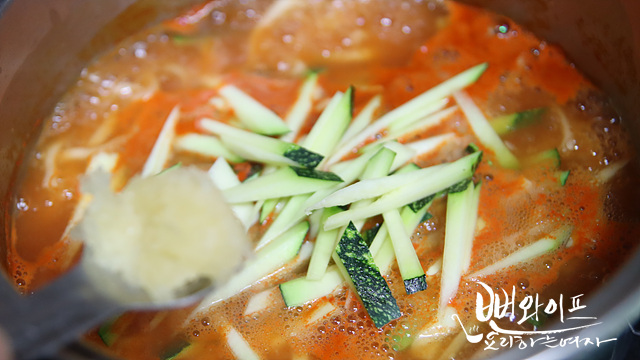
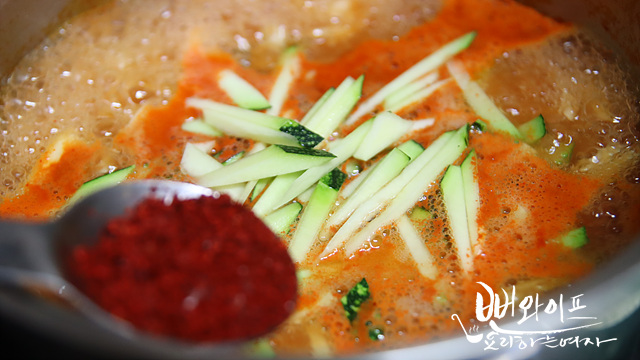
Add the sliced squash, 1 tsp minced garlic, and 1 tbsp gochugaru...
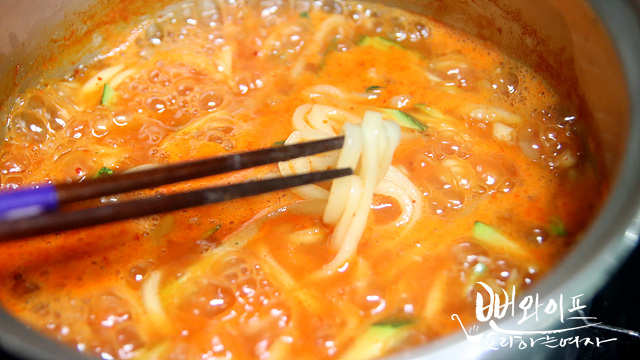
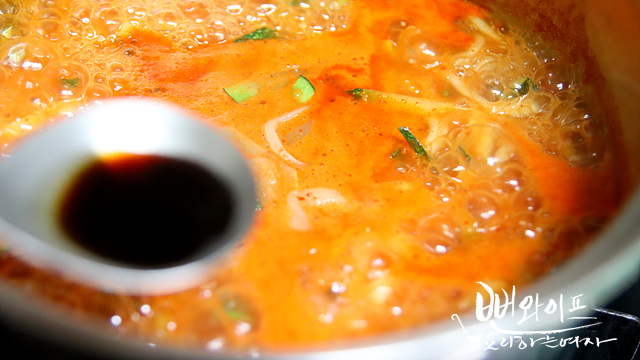
Boil for 2 to 3 minutes more, and once the noodles are fully cooked, taste and adjust the seasoning with 1/2 tbsp sand lance fish sauce or soup soy sauce (guk-ganjang).
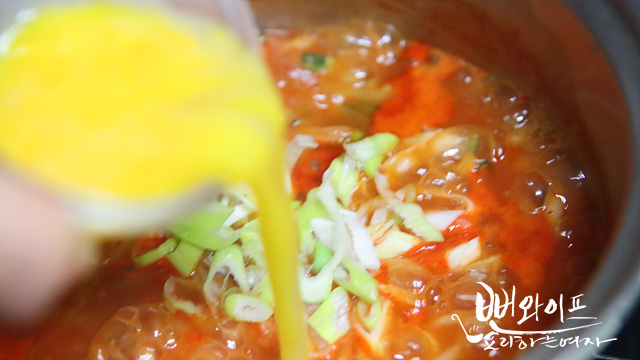
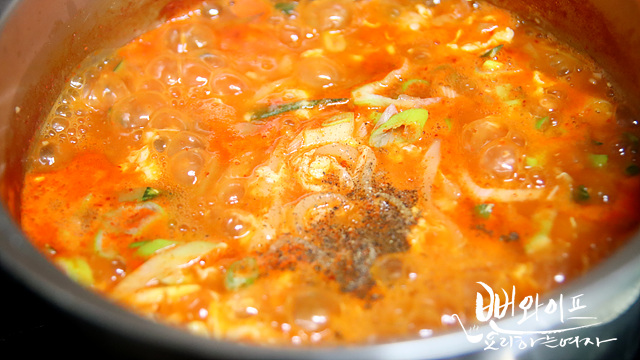
At the end, add the large green onion, swirl in the beaten egg all over, and finish with ground black pepper.
Complete
Top with seasoned seaweed flakes or shredded seaweed, minced Cheongyang chili pepper, and ground toasted sesame seeds to finish.
 Ppunwife's tips
- If you do not like the broth to become thick, you can boil the noodles separately or rinse them under running water before adding them.
FAQ
How can I make the broth clear and light?
If you are concerned about the broth becoming thick, you can boil the kalguksu noodles separately in boiling water, or rinse them under cold running water before adding them to cook.
Can I use Korean zucchini instead of squash?
If using Korean zucchini (aehobak), slice about 1/4 to 1/3 of one thickly and add it.
If I don't have sand lance fish sauce, what seasoning can I substitute?
When adjusting the seasoning, you can use soup soy sauce (guk-ganjang) or tuna extract sauce (chamchi-aek) instead of sand lance fish sauce.