Jeonbokjuk (Abalone Porridge) with Viscera
A nourishing porridge made rich by simmering crushed live abalone viscera and given a pleasantly chewy texture with glutinous rice.
Translated from Korean by AI and not yet checked by a native speaker. Amounts and numbers are taken directly from the original recipe. Read the Korean original →
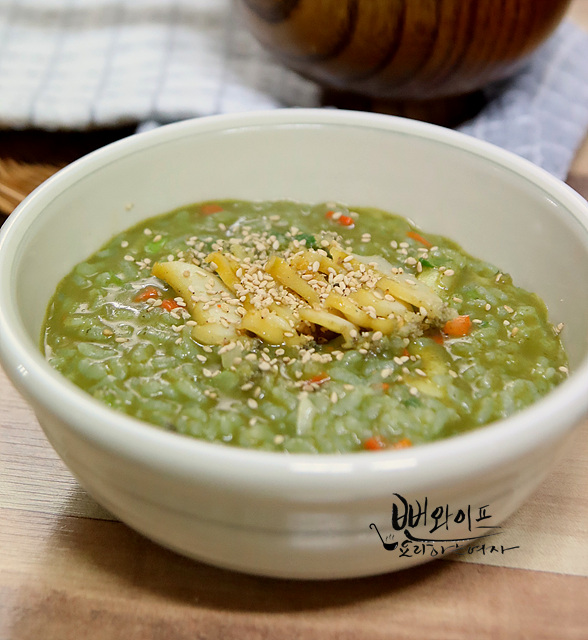
This nourishing dish brings out a deep, savory flavor using in-season live abalones and their viscera. Soaking glutinous rice together with short-grain white rice gives it a soft yet pleasantly chewy texture, while sautéing the abalone meat separately to serve on top adds a nice bite.
- Servings
- 3–4 servings
- Cook time
- 20 minprep not included
- Difficulty
- Medium
- Spiciness
- Not spicy
Ingredients
Ingredients
- Abalone4, 400 g
- Glutinous rice1/2 cup
- Short-grain white rice1/2 cup
- Onion1/2
- Carrot1/4
- Large green onion (daepa)1/2 stalk
- Water6 cups to 7 cups
- Toasted sesame oil3 tbsp
Seasoning
- Soup soy sauce (guk-ganjang)1 tbsp
- Tuna extract sauce (chamchi-aek)1 tbsp
- Salta little
- Ground black peppera little
- Ground toasted sesame seeds
- When making porridge, use equal parts glutinous rice and short-grain white rice, wash the rice, pour in plenty of water, and soak for about 1 hour.
- Depending on your preference, you may use only glutinous rice or only short-grain white rice.
- Instead of water, you can add anchovy broth or kelp broth, or simmer with water and 1 broth coin tablet.
Steps
Prepare the ingredients
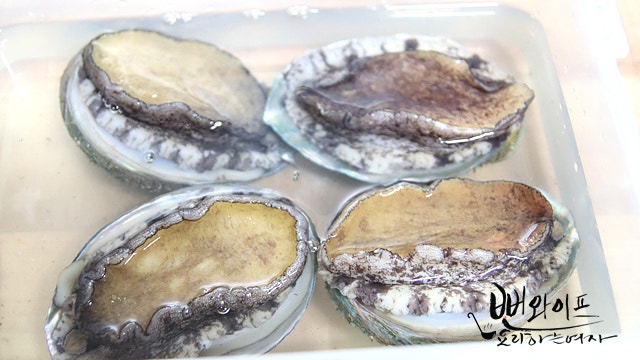
Here are 4 live abalones.
Because abalones delivered alive have lived in seawater for several years, there is a lot of mud and foreign matter attached to them.
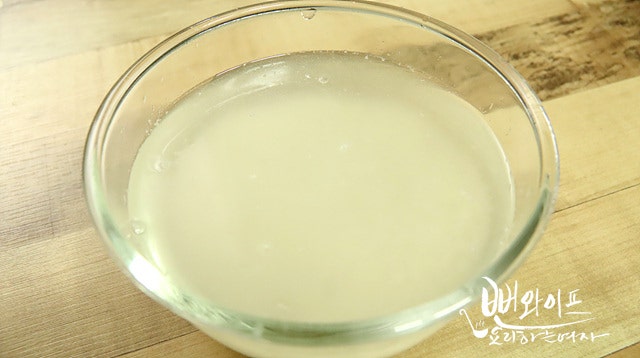
When making porridge, use equal parts glutinous rice and short-grain white rice, wash the rice, pour in plenty of water, and soak for about 1 hour.
Depending on your preference, you may use only glutinous rice or only short-grain white rice.
Clean the abalone
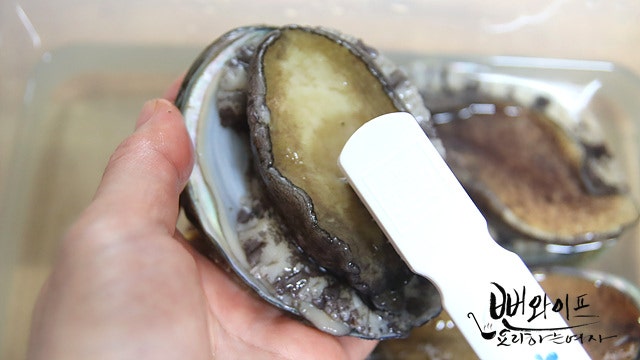
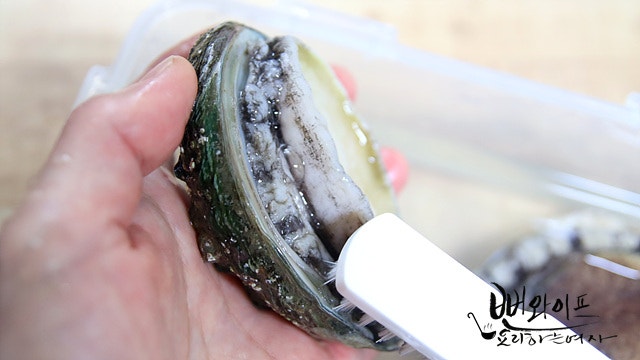
Using a brush, scrub the body and sides of the abalones thoroughly to remove any impurities.
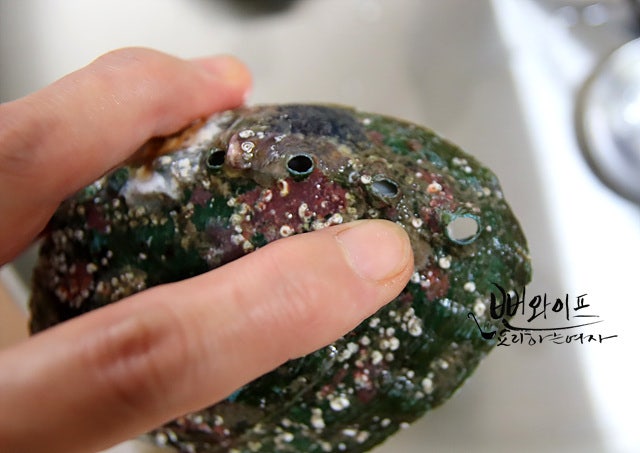
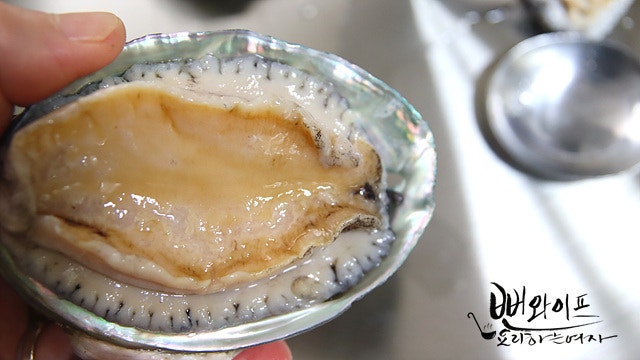
If you flip the abalone shell over, the side with the breathing holes on the back is where the abalone's teeth are located.
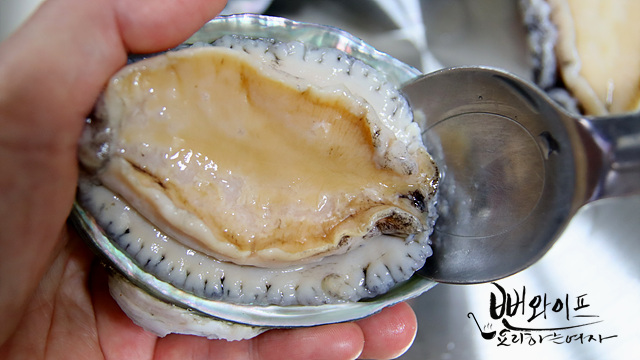
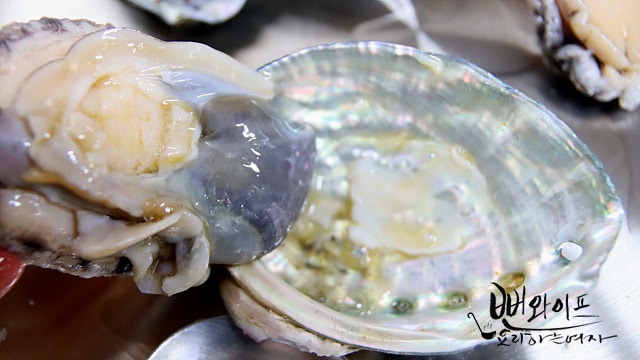
Using a spoon, gently push it in, and when you reach the adductor muscle near the middle, press the spoon firmly against the shell and wiggle it to separate the meat.
Once you feel the muscle release, flip the abalone over and pull, and it will come off naturally.
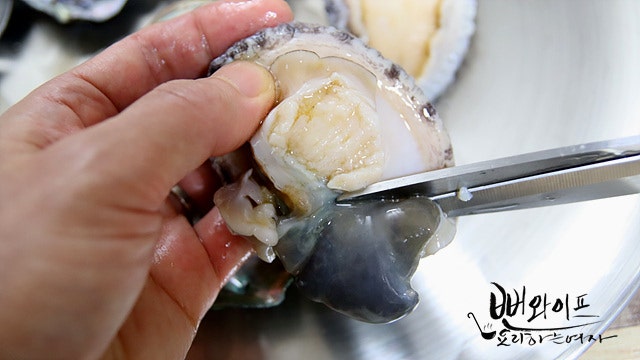
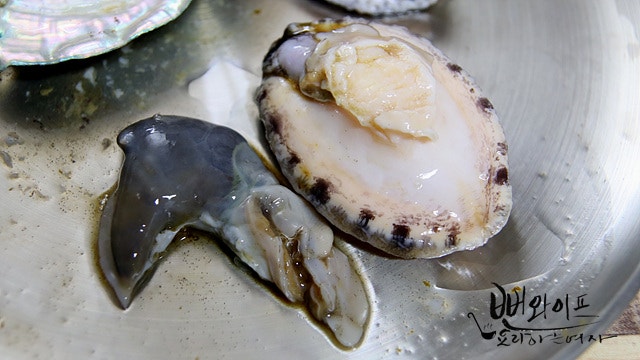
Neatly remove the viscera using scissors.
Abalone viscera can be green or dark brown depending on whether it is male or female.
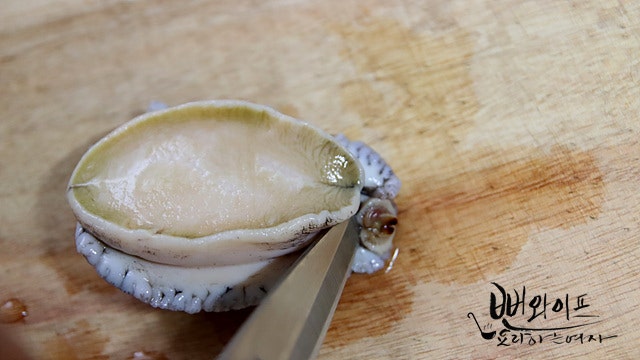
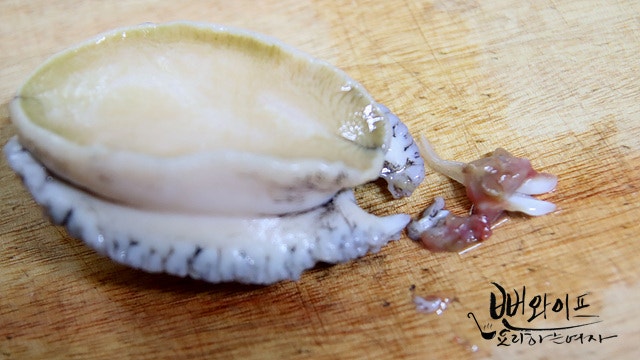
If you press firmly on the reddish tooth section with scissors or a knife, the teeth will pop out along with this long tongue.
Rinse it once under running water.
Slice the ingredients
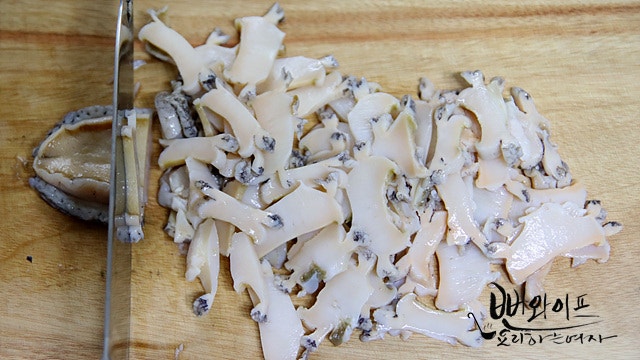
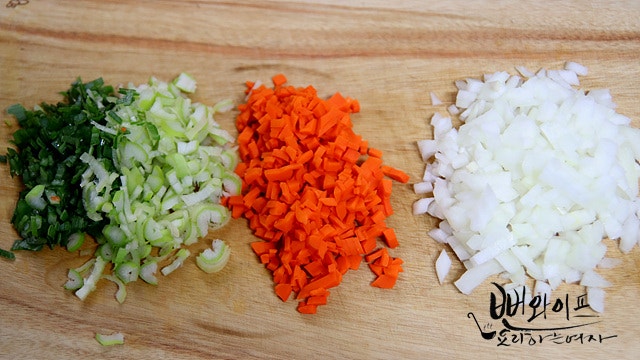
Slice the abalone meat to your desired thickness.
To remove any fishiness from the abalone and add rich flavor, it is good to finely mince aromatic vegetables; I finely minced onion, carrot, and large green onion (daepa).
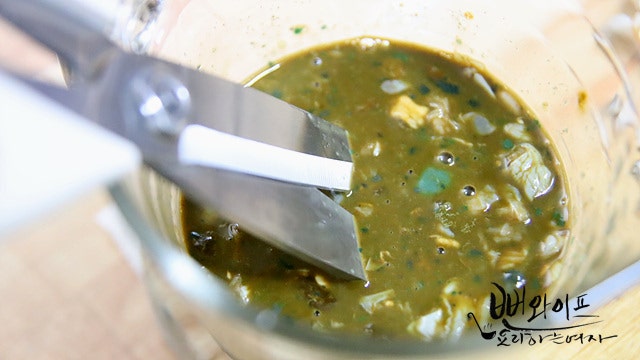
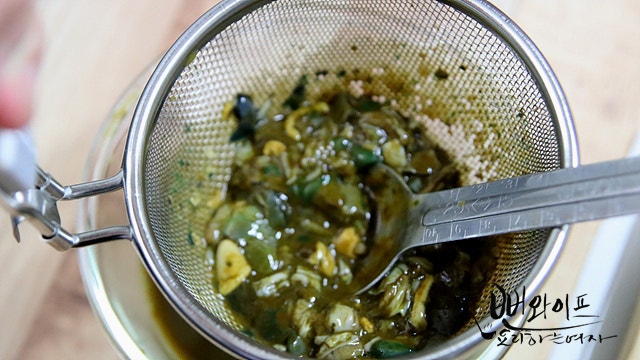
Gather the abalone viscera and finely cut them with scissors or a knife.
Set them in a strainer submerged in 1 to 2 cups of water, and press down firmly while mashing with a spoon so the visceral essence extracts well.
Sauté the ingredients
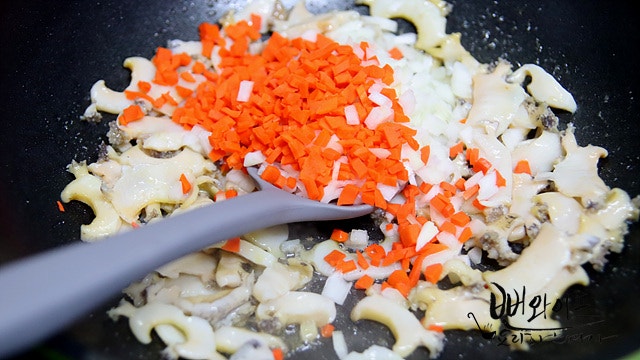
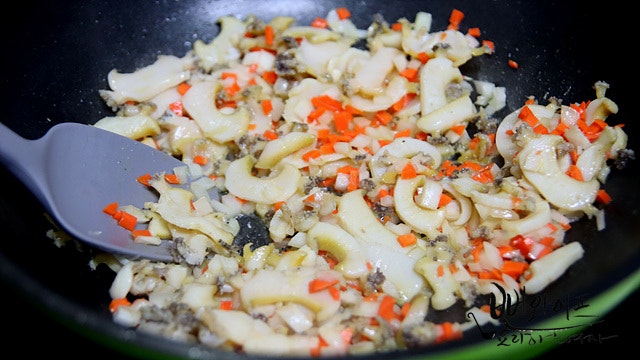
Drizzle 1 tbsp of toasted sesame oil, add the abalone and vegetables, and sauté them until cooked through.
Instead of adding everything at once when simmering the porridge, sautéing them separately and adding them at the end gives a better texture to chew.
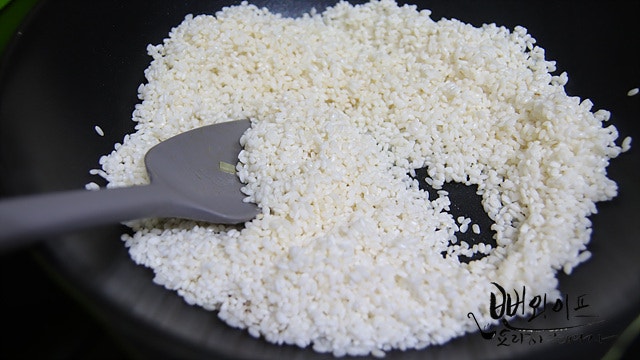
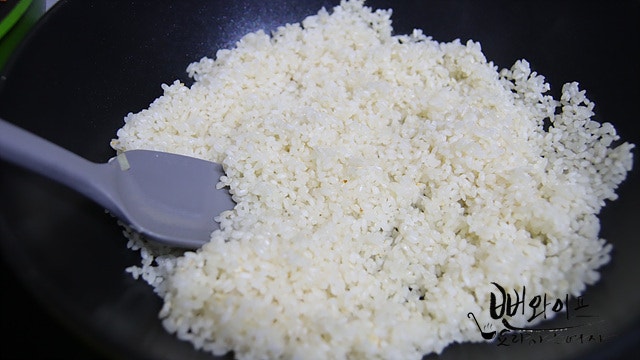
Drizzle 2 tbsp of toasted sesame oil in a pan and sauté the soaked rice.
Take your time sautéing so that the rice gets coated in toasted sesame oil and turns translucent all over.
(It is also nice to sauté it until lightly golden so it takes on a toasted rice aroma.)
Simmer
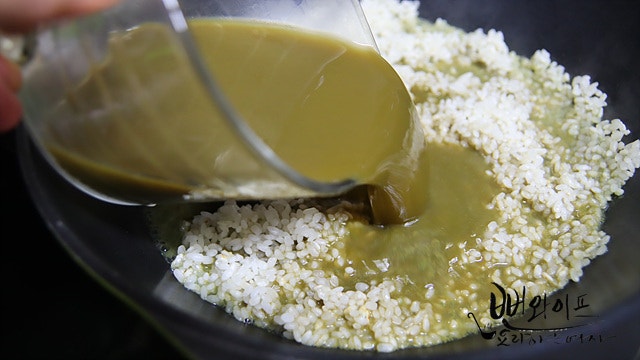
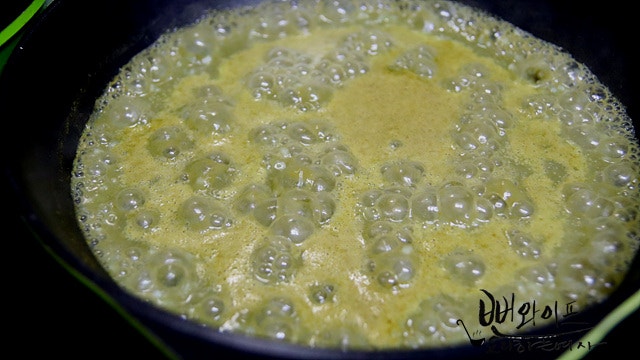
Pour in 5 cups of water first, including the abalone-infused water, and bring to a rolling boil.
Instead of water, you can add anchovy broth or kelp broth, or simmer with water and 1 broth coin tablet.
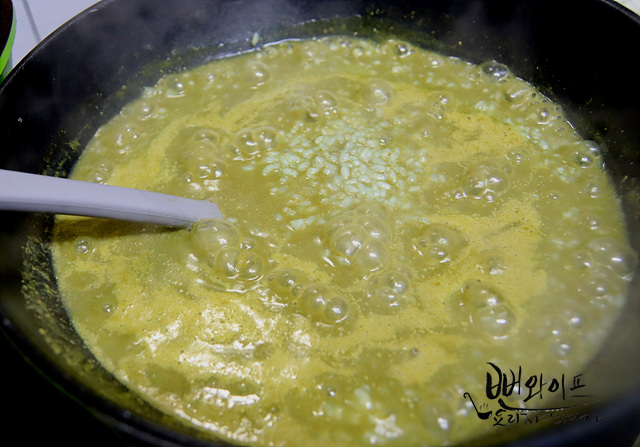
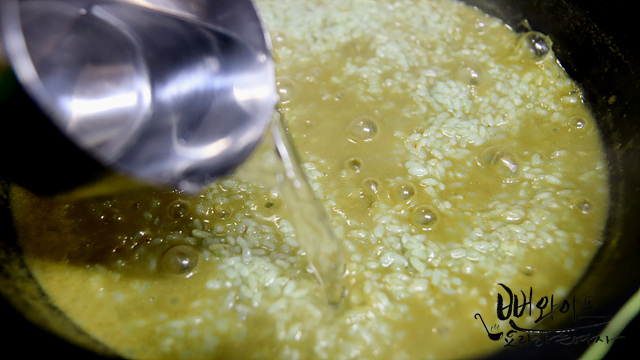
Lower the heat and simmer gently for about 20 minutes; as the rice swells, the water will reduce, so if it feels too thick, add 1 to 2 cups of hot water.
To keep the gently boiling porridge from losing its momentum, it is good to boil water in advance in an electric kettle or pot and pour it in.
As the rice cooks, the liquid thickens, so you must stir and scrape the bottom while simmering so it does not scorch.
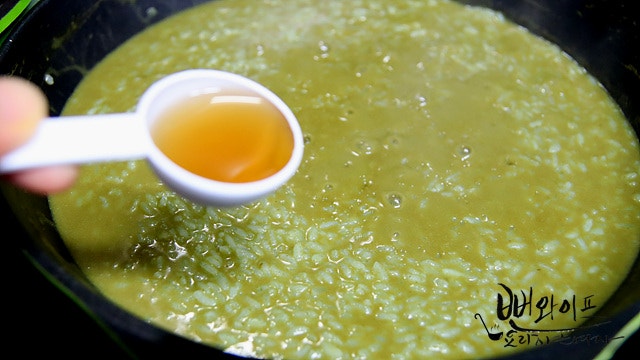
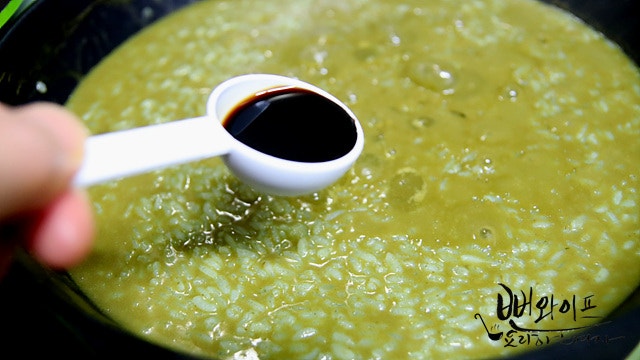
Once the rice is soft and fully cooked through...
Season with 1 tbsp of tuna extract sauce (chamchi-aek) and 1 tbsp of soup soy sauce (guk-ganjang).
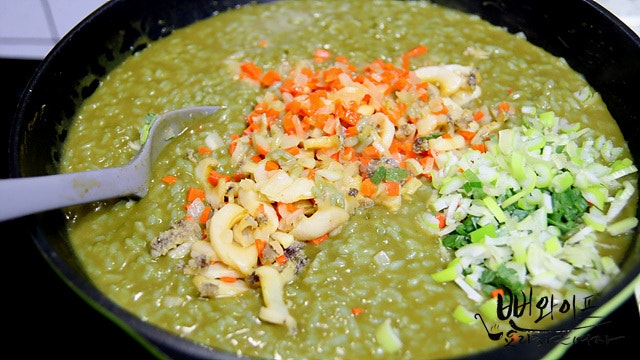
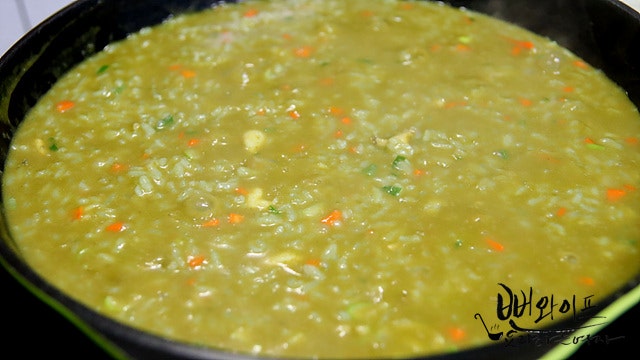
Add all of the sautéed ingredients, simmer so everything melds together, and if it feels too thick, add more boiled water.
Taste to check the seasoning, add a little salt and ground black pepper, simmer briefly, and finish.
Finish
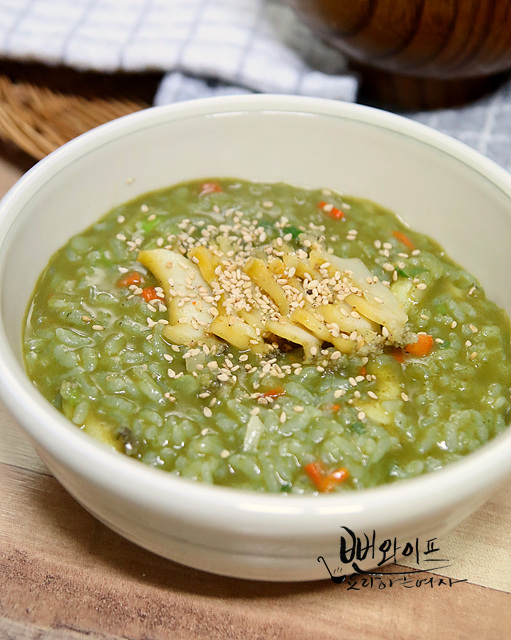
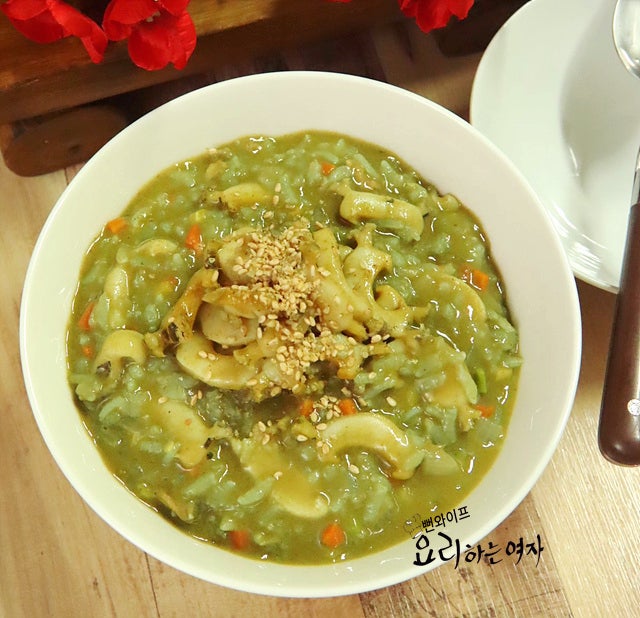
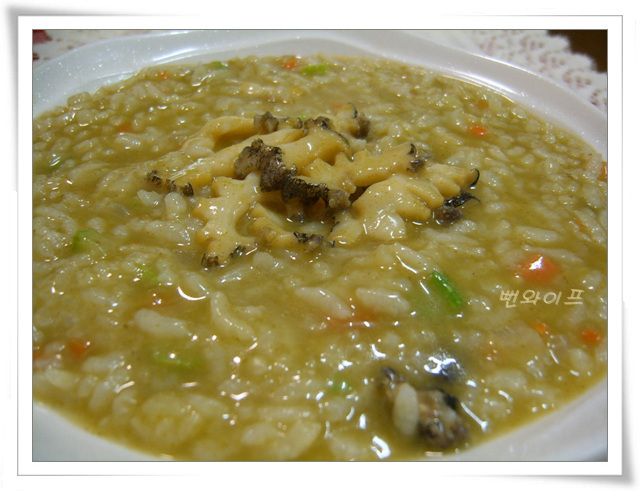
Ladle the porridge into a bowl and garnish with the abalone meat and ground toasted sesame seeds.
You may also top it with shredded dried seaweed sheets (gim) or green laver.
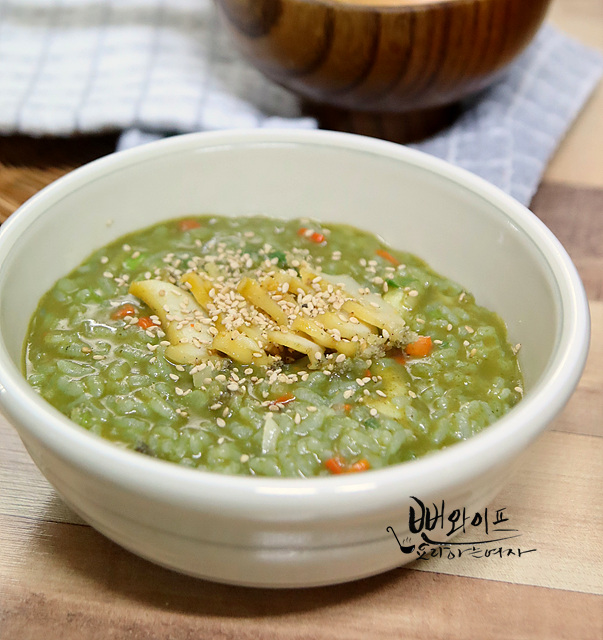
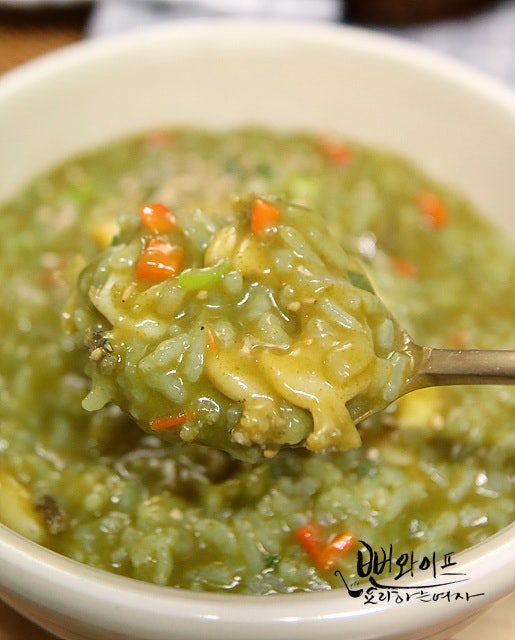
Stir well and take a warm spoonful into your mouth; deep, savory richness and unctuous flavor will fill your entire palate.
Whether you feel sick or perfectly fine, you will easily finish a whole bowl, and after eating, you feel nourished just like having enjoyed a restorative meal.
 Ppunwife's tips
- Instead of adding everything at once when simmering the porridge, sautéing them separately and adding them at the end gives a better texture to chew.
- To keep the gently boiling porridge from losing its momentum, it is good to boil water in advance in an electric kettle or pot and pour it in.
- As the rice cooks, the liquid thickens, so you must stir and scrape the bottom while simmering so it does not scorch.
FAQ
Do I have to mix glutinous rice and short-grain white rice together?
Depending on your preference, it is perfectly fine to cook with only glutinous rice or only short-grain white rice.
Is there a reason to sauté the abalone meat and vegetables separately instead of boiling them with the rice?
Instead of boiling all the ingredients together from the start, sautéing them separately and mixing them in at the end yields a much better texture.
Can I use another broth instead of plain water?
Instead of plain water, pouring in anchovy broth or water infused with kelp, or cooking with 1 store-bought broth coin tablet, works very well.
What should I do if the water runs low and the porridge becomes too thick while simmering?
To avoid interrupting the cooking process, add about 1 to 2 cups of hot water boiled in advance to adjust the consistency.