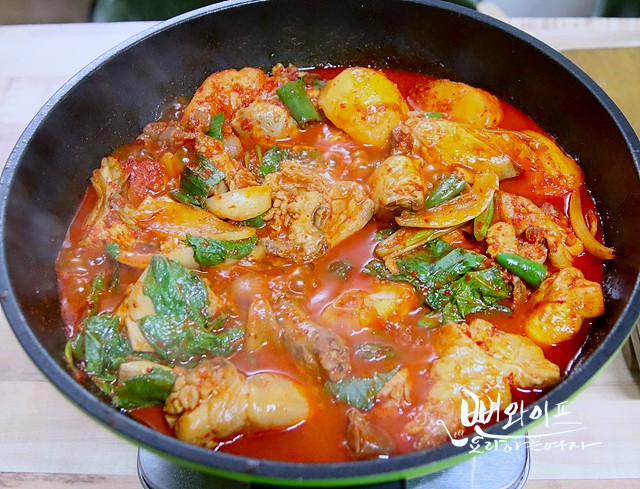
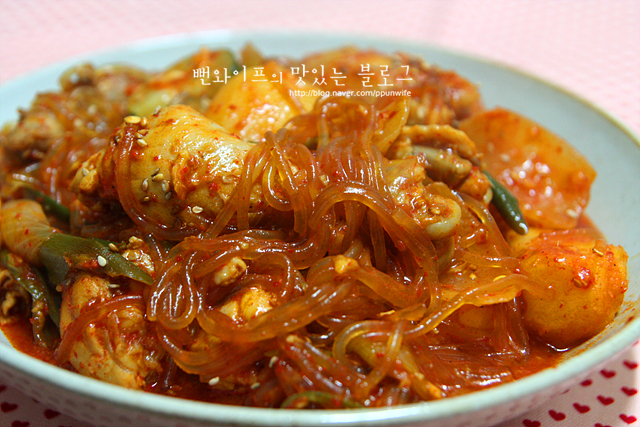
Dak Bokkeum Tang (Spicy Braised Chicken) with Radish
A refreshing and rich dak bokkeum tang (spicy braised chicken) braised with starch-coated seared chicken and Korean radish instead of potatoes.
Translated from Korean by AI and not yet checked by a native speaker. Amounts and numbers are taken directly from the original recipe. Read the Korean original →
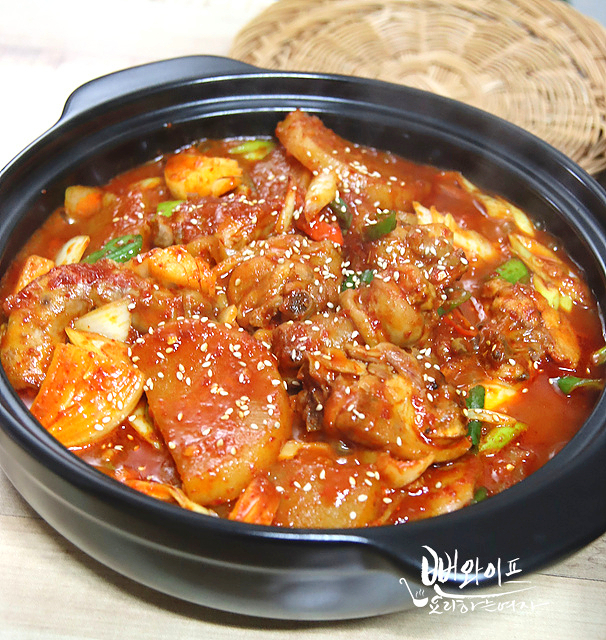
This dak bokkeum tang brings out a clean, refreshing flavor by adding plenty of Korean radish instead of potatoes. Coating the chicken in starch and searing it first renders out excess fat properly, giving the broth a savory and rich body. Braised sweet and spicy, it is wonderful to enjoy for dinner or as a dish alongside drinks.
- Servings
- 3–4 servings
- Cook time
- 25 minprep not included
- Difficulty
- Medium
- Spiciness
- Spicy
Ingredients
Ingredients
- Chicken1 whole, 1 kg
- Korean radish (mu)400 g
- Onion1/2
- Large green onion (daepa)1/2 stalk
- Cheongyang chili pepper (hot green chili)2
Meat marinade
- Salta little of each
- Ground black peppera little of each
- Potato starch2 tbsp
- Water3 cups
Seasoning
- Gochugaru (Korean chili flakes)3 tbsp
- Gochujang (Korean red chili paste)3 tbsp
- Regular soy sauce (jin-ganjang)3 tbsp
- Mirin (cooking rice wine) (or mirin (cooking rice wine))3 tbsp
- Sugar3 tbsp
- Oyster sauce1 tbsp
- Minced garlic1 tbsp
- Ground black peppera little
- Rub away any remaining viscera inside the chicken cavity by hand to clean it thoroughly.
Steps
Prepare the ingredients
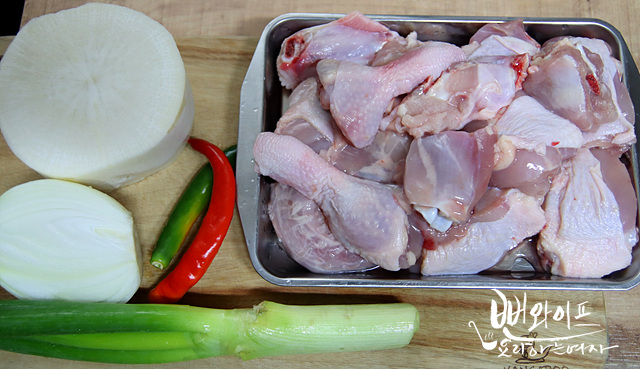
I have 1 large whole chicken, cut into braising pieces, weighing 1 kg. Here are the Korean radish, onion, and large green onion.
Although not in Kim Kang-woo's recipe, I also prepared 2 Cheongyang chili peppers for spicy heat.
Slice the vegetables
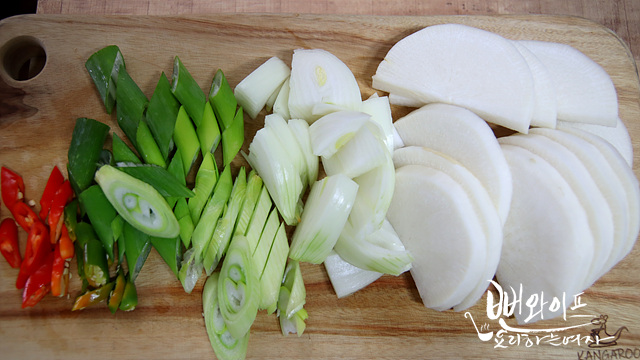
Cut the Korean radish into thick, large chunks, and cut the onion, large green onion, and chili peppers into thick diagonal slices.
Clean and season the chicken
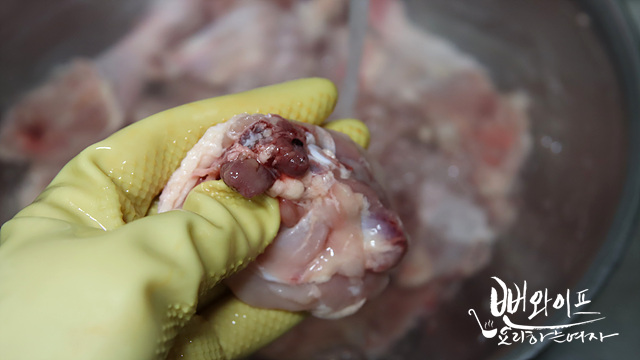
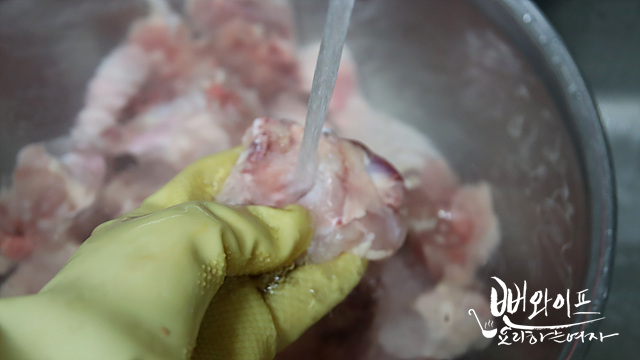
Rub away any remaining viscera inside the chicken cavity by hand to clean it thoroughly.
The first secret to eliminating gamey chicken odor is cleaning the chicken thoroughly.
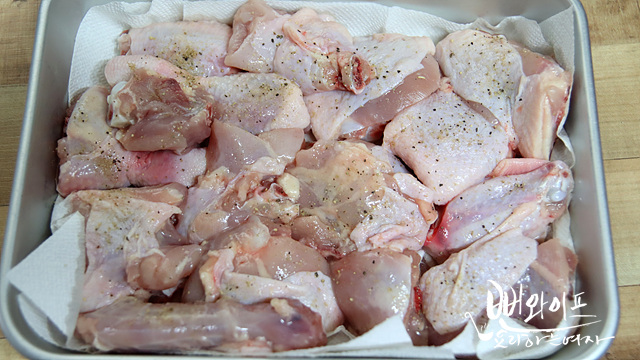
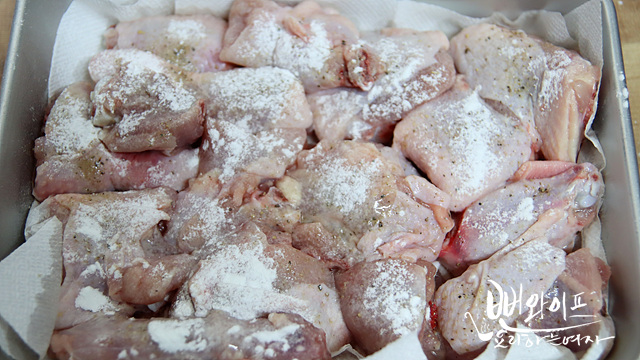
From here comes Kim Kang-woo's special trick.
Thoroughly pat the chicken dry, season with two pinches of salt and a bit of ground black pepper, then evenly coat all the chicken in 2 tbsp of potato starch.
This helps remove any gamey odor, keeps the meat tender, and helps the sauce cling well.
Make the sauce
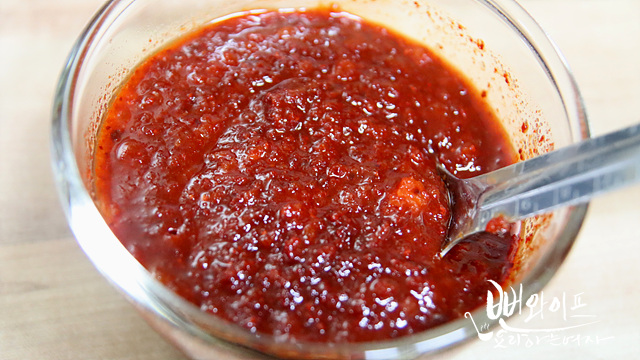
Add all the seasoning ingredients together and mix well.
Sear the chicken and radish
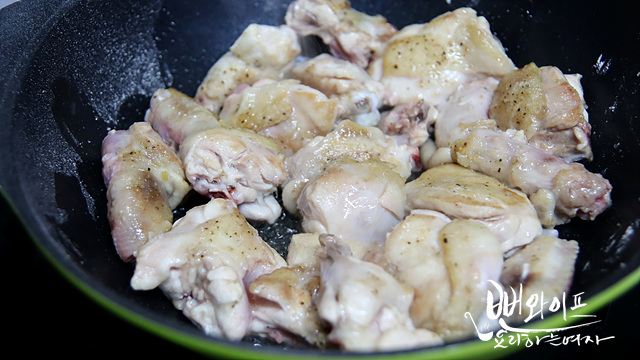
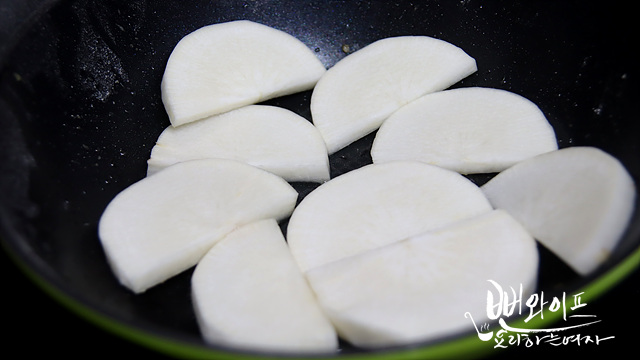
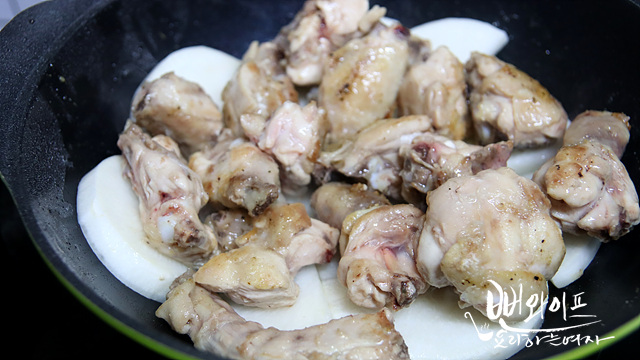
Drizzle a little cooking oil, then sear the chicken on both sides until golden brown so the fat renders out.
Arrange the radish on the bottom of the pan, sprinkle about two pinches of salt over it, place the seared chicken back on top, and let the radish cook until golden brown in the rendered chicken fat.
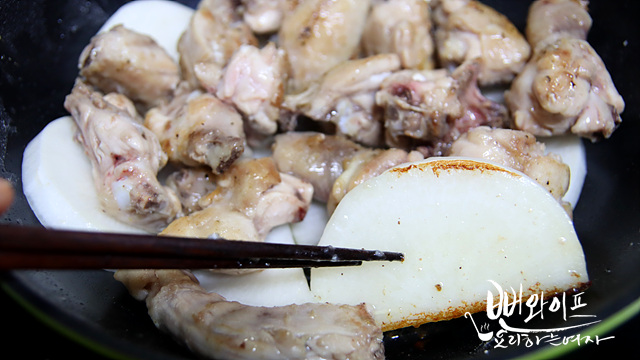
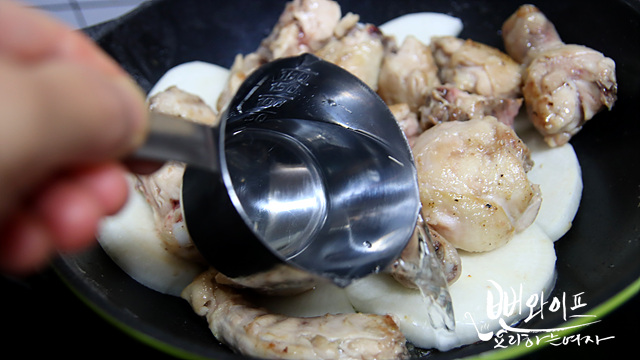
Once the surface is nicely browned like this, pour in 3 cups of water.
Simmer
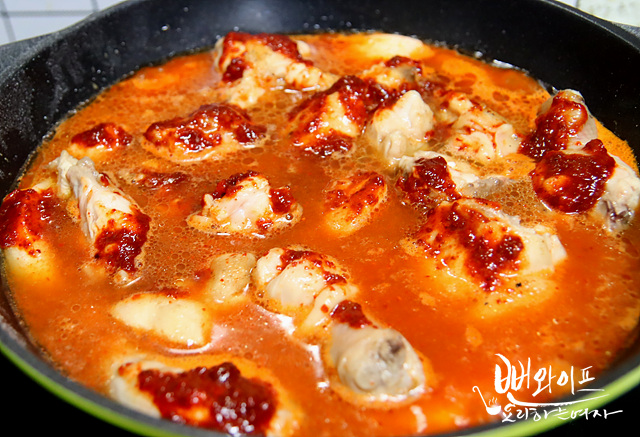
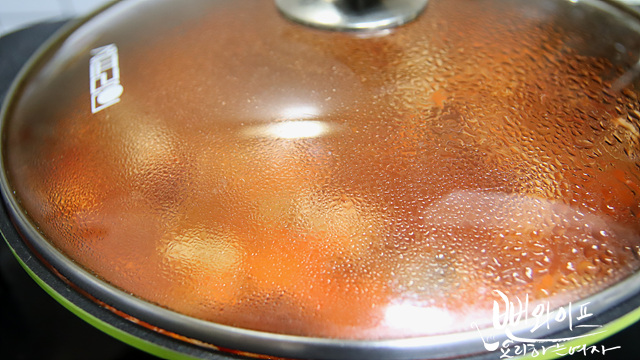
Spoon the sauce evenly over the top, turn the heat to high, and once it comes to a rolling boil, cover with a lid, reduce to medium heat, and cook for 20 minutes.
The sauce is thick, so check periodically so the bottom does not stick and scorch.
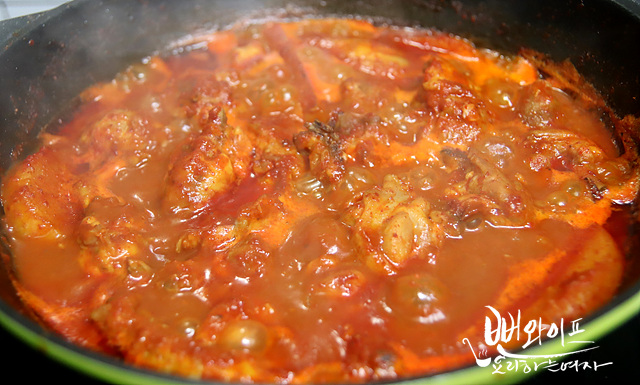
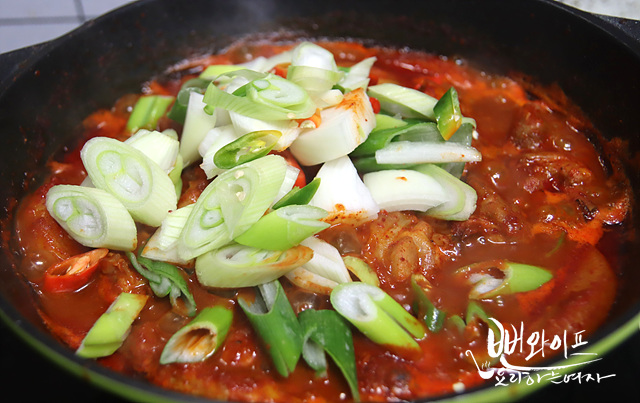
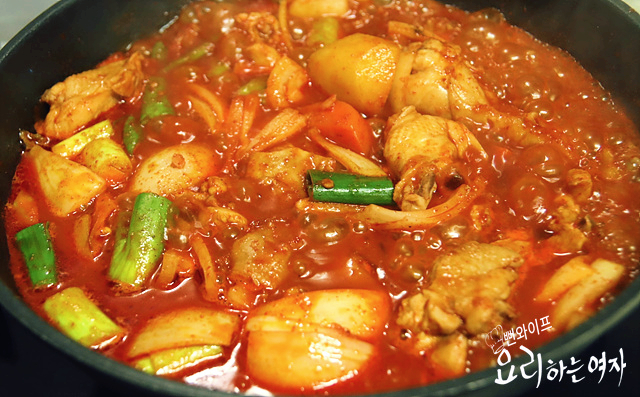
To reduce the broth, uncover and simmer for 5 minutes more; once it reduces down to a shallow simmer, finish by adding the onion, large green onion, and Cheongyang chili peppers.
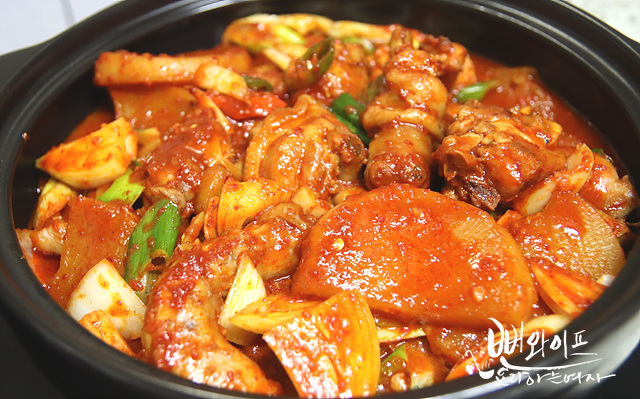
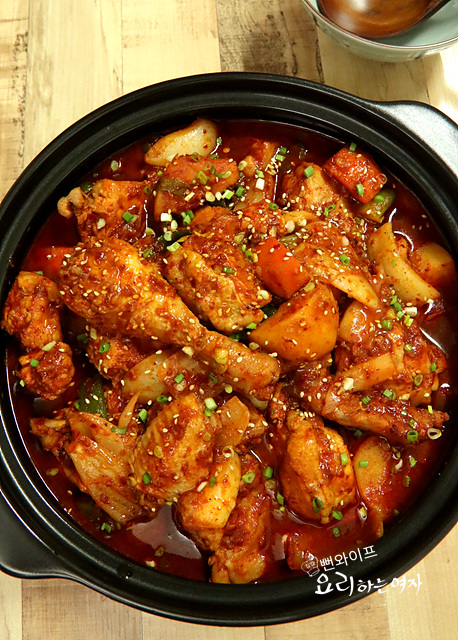
To eat it piping hot, I transferred it to an earthenware pot and simmered it just a bit more to finish.
Serve
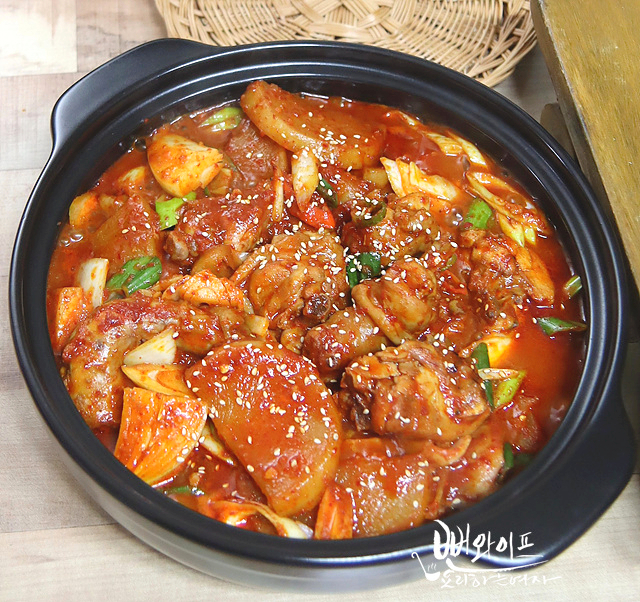
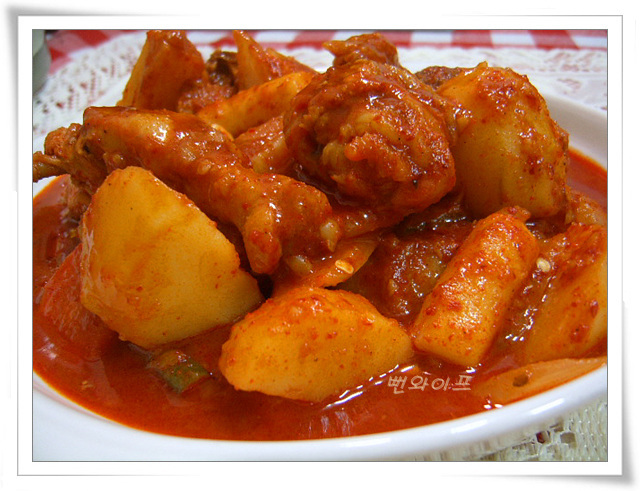
Adding thick, generous slices of Korean radish makes the broth wonderfully refreshing.
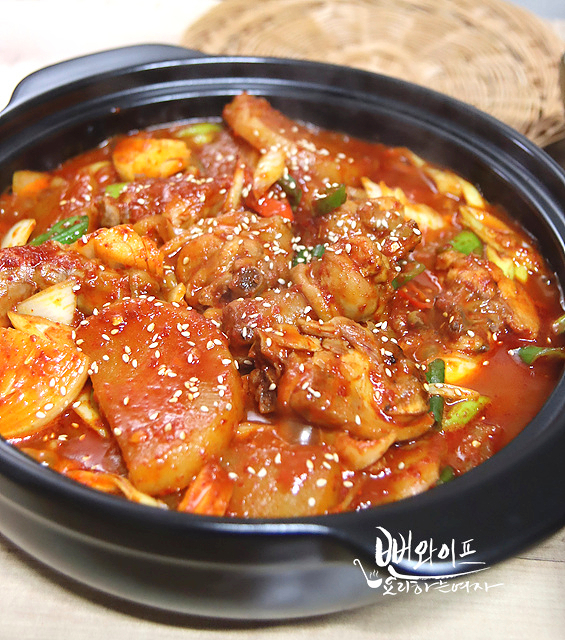
I used radish instead of potatoes, and it is so delicious that you will not miss the potatoes at all.
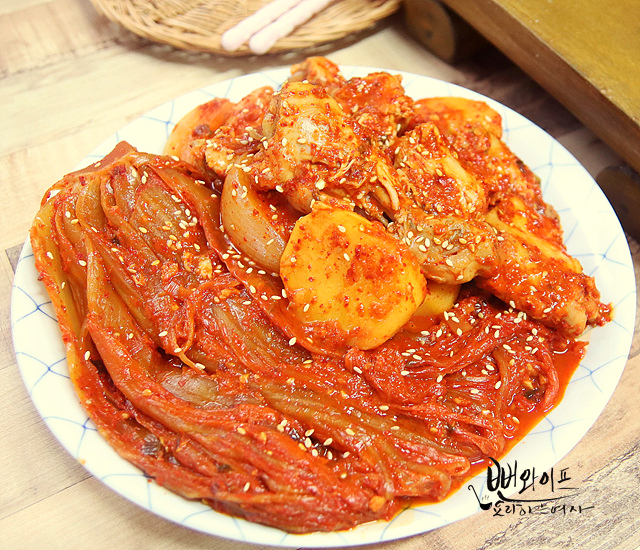
It is also delicious when you ladle the broth over rice and mix it in.
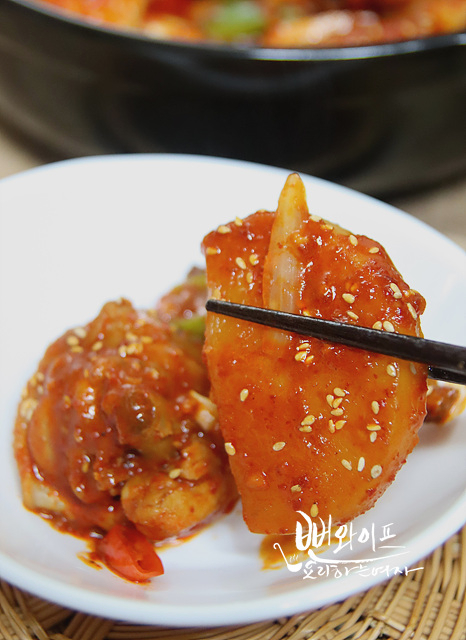
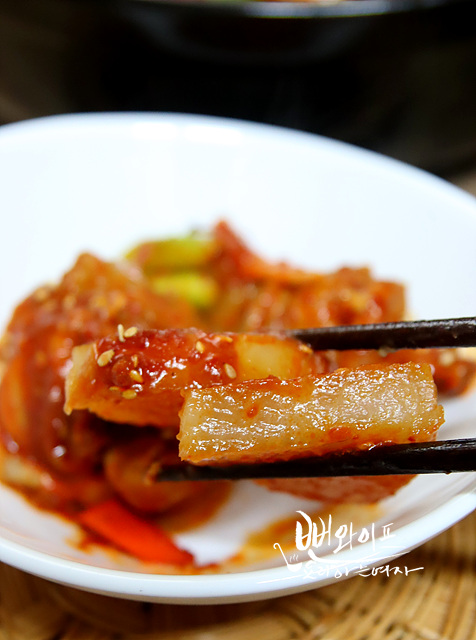
The chicken absorbs the seasoning thoroughly and is soft and tender.
You can never give up the radish in a braised dish like this.
I am 1 person who actually loves the tender, slightly crisp radish soaked in seasoning even more than the meat.
How about making mudoritang with radish instead of potatoes today?
 Ppunwife's tips
- The first secret to eliminating gamey chicken odor is cleaning the chicken thoroughly.
- The sauce is thick, so check periodically so the bottom does not stick and scorch.
FAQ
Why coat the chicken in potato starch?
It helps remove any gamey chicken odor, keeps the meat tender, and allows the sauce to cling nicely to the surface.
How do I prevent the bottom from burning while simmering the chicken?
Because the sauce is quite thick, it is best to check frequently while cooking over medium heat to make sure the bottom does not catch.
Is there a cleaning tip to reduce any off-flavors in chicken?
Rubbing and washing away the bits of viscera clinging to the inner cavity with your hands is the key to minimizing off-odors.
What are the benefits of using Korean radish instead of potatoes?
Thickly sliced Korean radish absorbs the rendered chicken fat and spicy sauce as it cooks tender-crisp, adding a refreshing, clean depth of flavor to the broth.