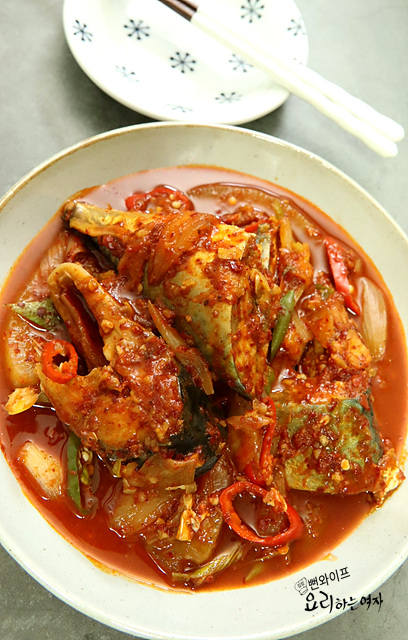
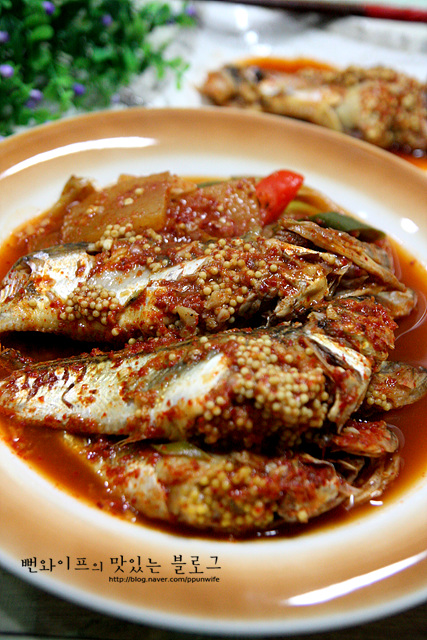
Yangmiri Jorim (Braised Sand Lance) with Roe
A braised fish side dish of refreshing Korean radish and savory in-season sand lance simmered down until sweet and spicy.
Translated from Korean by AI and not yet checked by a native speaker. Amounts and numbers are taken directly from the original recipe. Read the Korean original →
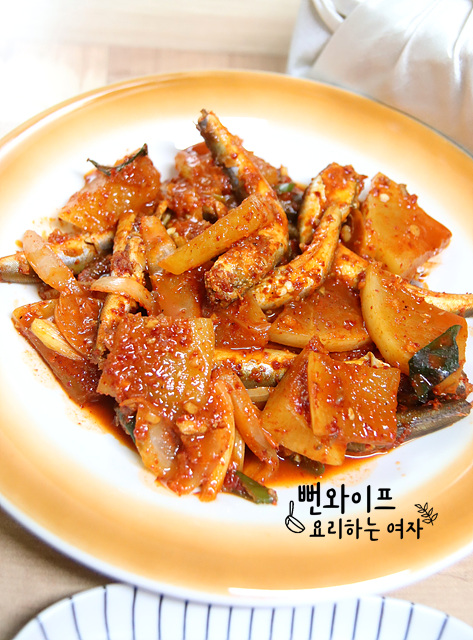
A winter delicacy of savory, mild in-season sand lance packed with roe, braised down with Korean radish until the sauce is reduced. Adding rice water and vegetables takes away any fishiness, making this spicy braise a wonderful side dish for rice.
- Servings
- 3–4 servings
- Cook time
- 10 minprep not included
- Difficulty
- Medium
- Spiciness
- Spicy
Ingredients
Ingredients
- Sand lance (yangmiri)1 bundle (20)
- Korean radish (mu)300 g
- Onion1/2
- Large green onion (daepa)1/2 stalk
- Cheongyang chili pepper (hot green chili)1
- Water (or water from washing rice)2 1/2 cups
Seasoning
- Gochugaru (Korean chili flakes)4 tbsp
- Regular soy sauce (jin-ganjang) (or brewed soy sauce (yangjo-ganjang))4 tbsp
- Gochujang (Korean red chili paste)1 tbsp
- Mirin (cooking rice wine)3 tbsp
- Corn syrup (mulyeot)3 tbsp
- Sugar1 tbsp
- Minced garlic1 1/2 tbsp
- Minced ginger1 tsp
- Ground black peppera little
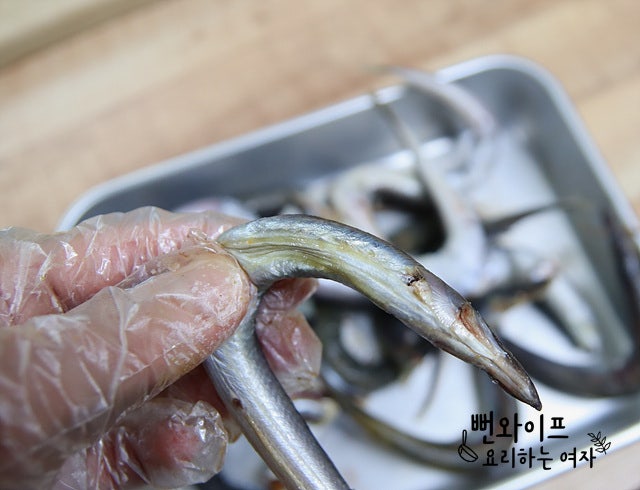
- Looking at the belly, sand lance full of roe are firm and plump. Some do not have roe, and those are relatively slender.
- If you snip about halfway through near the base of the sand lance's head with scissors, the innards will pull right out. Those with roe will yield only the innards, while those without roe will have bellies full of innards that you need to scrape out.
Steps
Prepare the ingredients
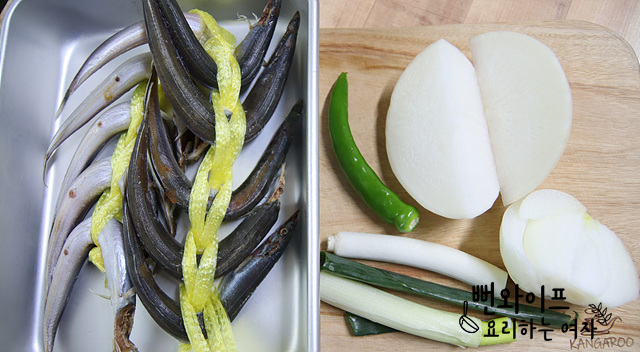
I am going to braise a bundle of 20 sand lance (yangmiri).
I set half aside to clean them, so only 10 are visible.
Here are the Korean radish (mu), onion, large green onion (daepa), and Cheongyang chili pepper (hot green chili) that give it a refreshing flavor.
You can think of these as the standard ingredients that go into braised fish.
Slice the ingredients
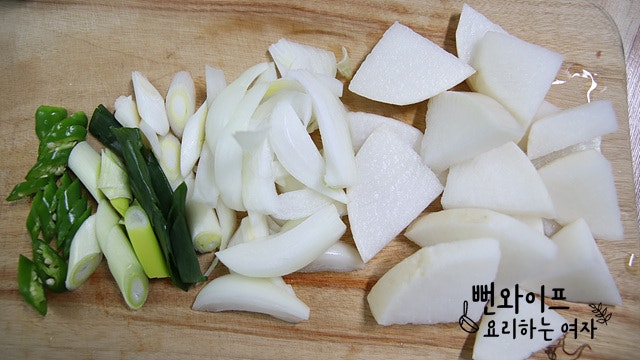
Cut the radish into small, thin squares, and thickly slice the onion, large green onion, and chili pepper on a diagonal.
Clean the sand lance
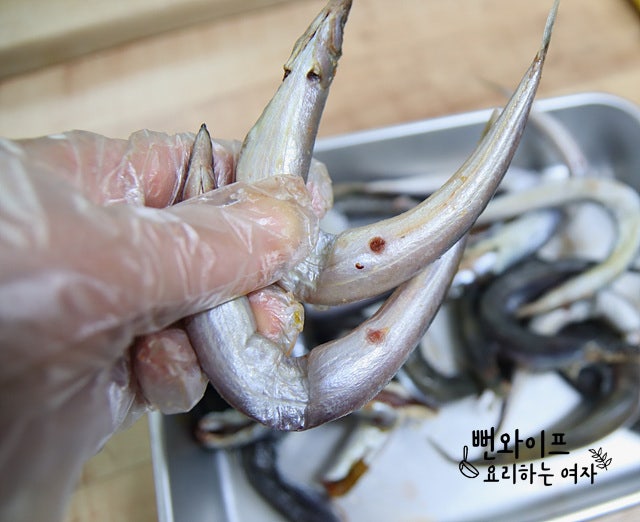
Looking at the belly, sand lance full of roe are firm and plump.
Some do not have roe, and those look slender like this in comparison.
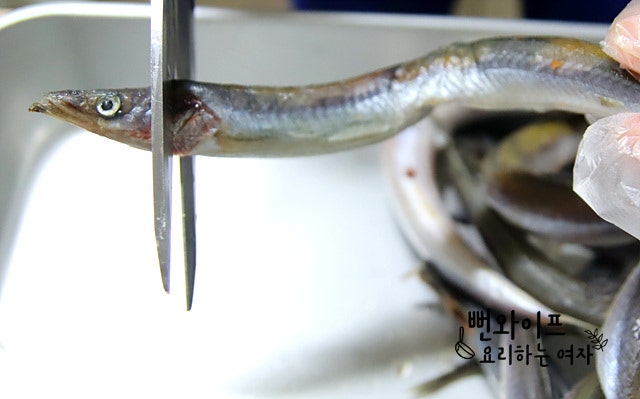
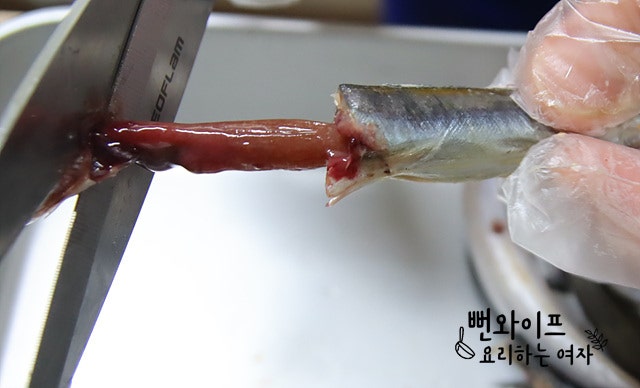
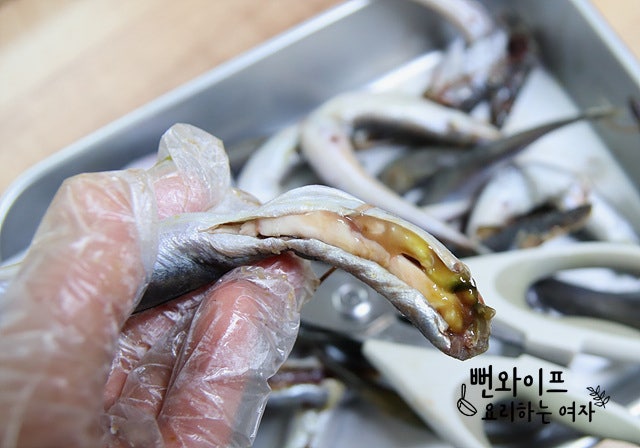
If you snip about halfway through near the base of the head with scissors, the innards will pull out along with it like this.
In those with roe, only the innards come out; when you cut open those without roe, the belly is full of innards, so you need to scrape them out.
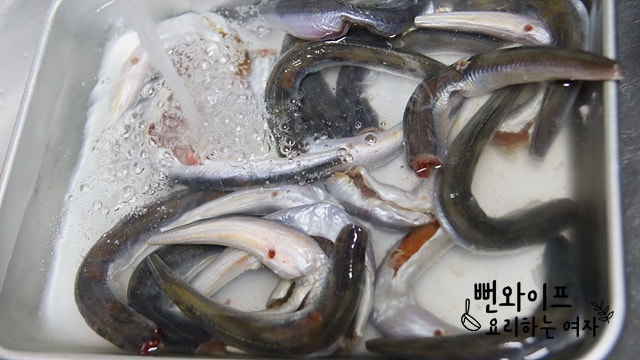
Once the innards are removed, wash them several times under running water.
Make the seasoning sauce
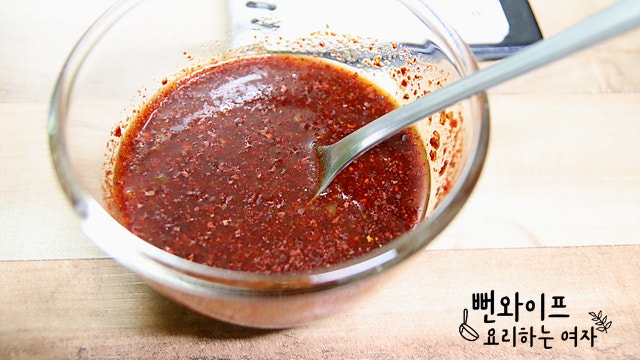
Add all the seasoning sauce ingredients and mix them together in advance.
Add ingredients and sauce
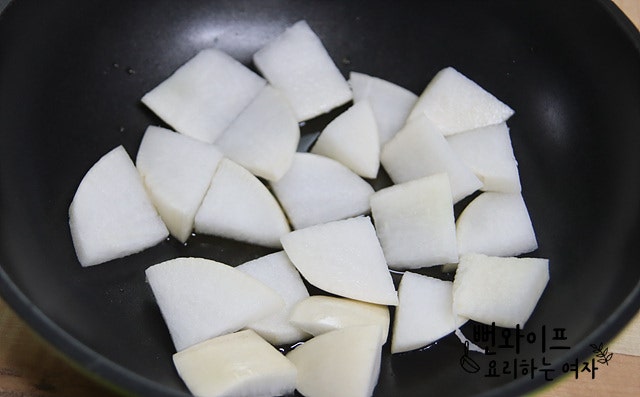
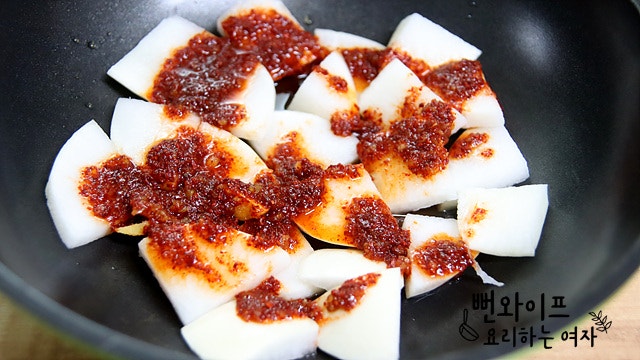
Place the radish on the bottom of the braising pan and pour half of the sauce evenly over it.
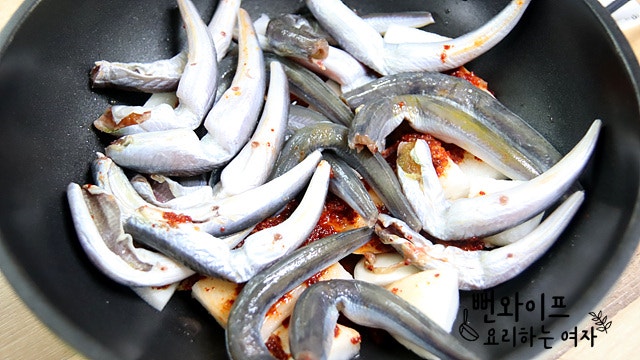
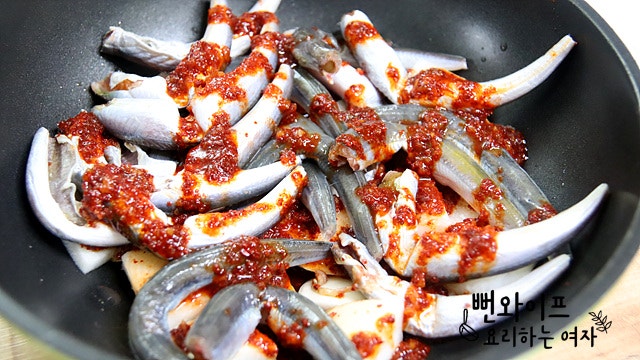
Place the sand lance on top and pour all of the remaining sauce evenly over them.
Simmer
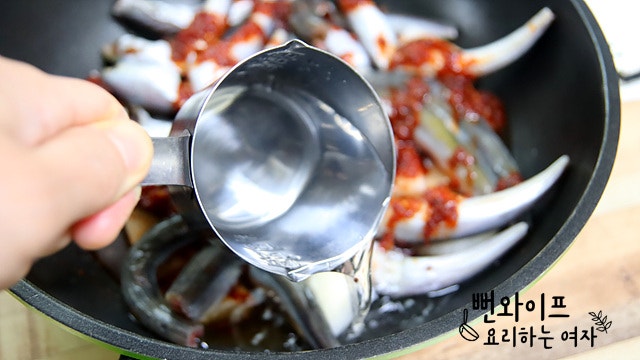
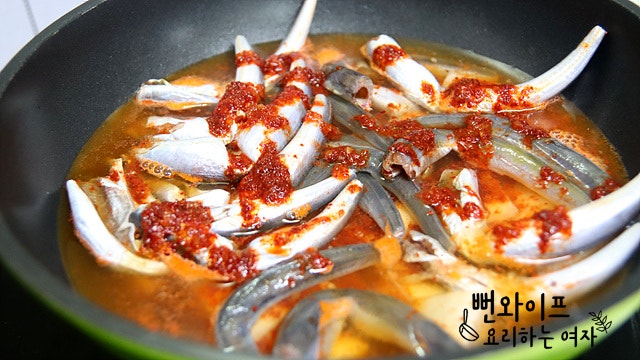
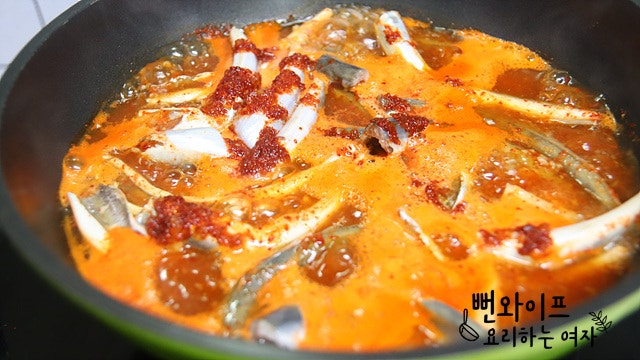
Pour 2 1/2 cups of water (or rice-washing water) around the edges. You can also save rice-washing water to use here.
Pour in just enough so the sand lance are barely submerged, and once it starts boiling vigorously over high heat, lower the heat to medium-low and simmer gently.
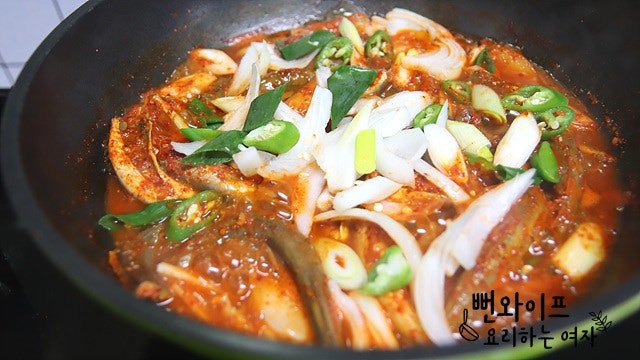
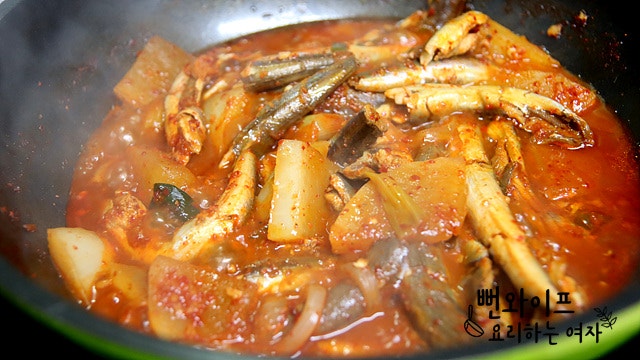
If you simmer it for more than 10 minutes, the liquid will reduce down until just shallow.
Add the onion, large green onion, and Cheongyang chili pepper, turn the fish over once so the aroma of the vegetables penetrates evenly into the sand lance, and finish braising.
Done
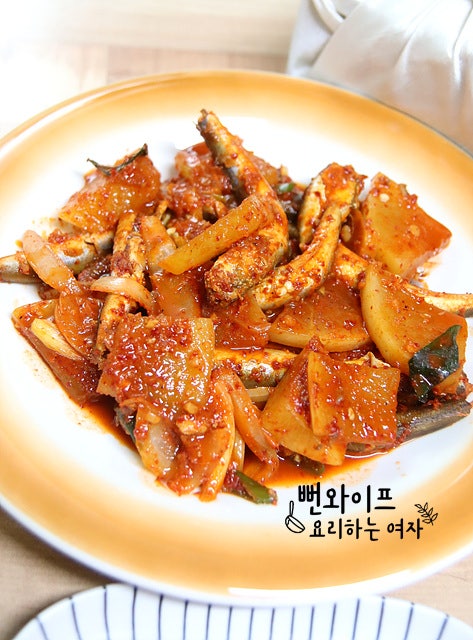
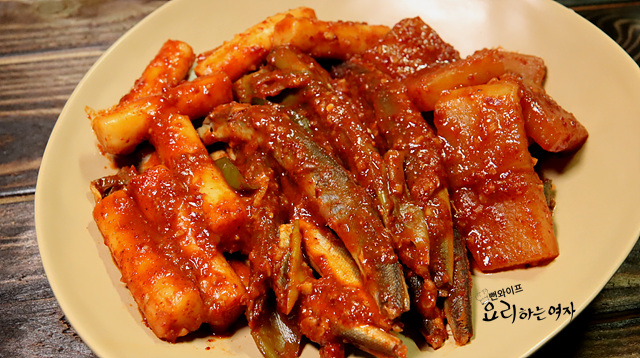
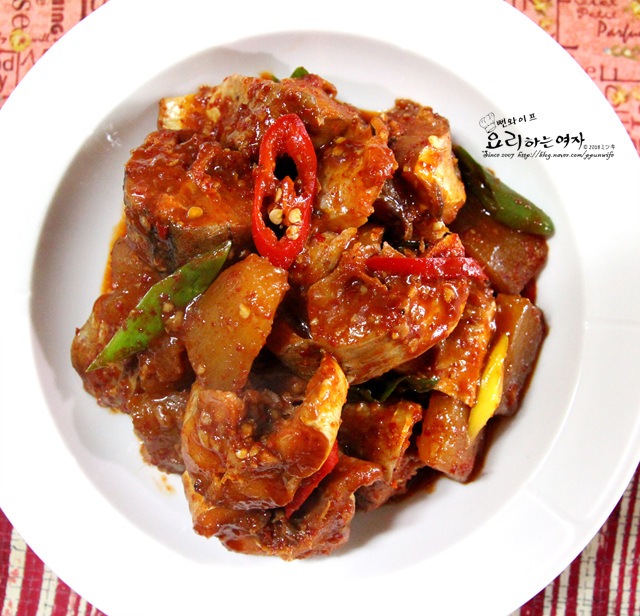
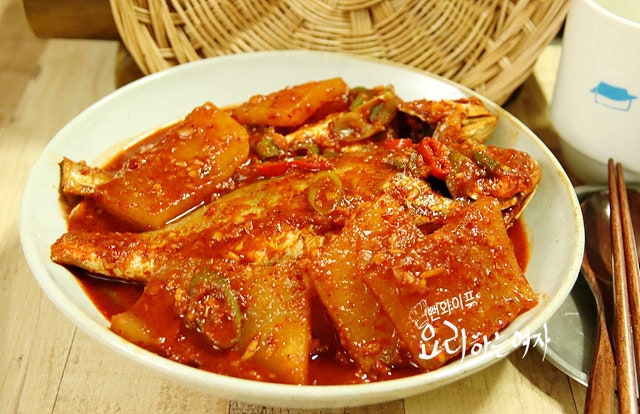
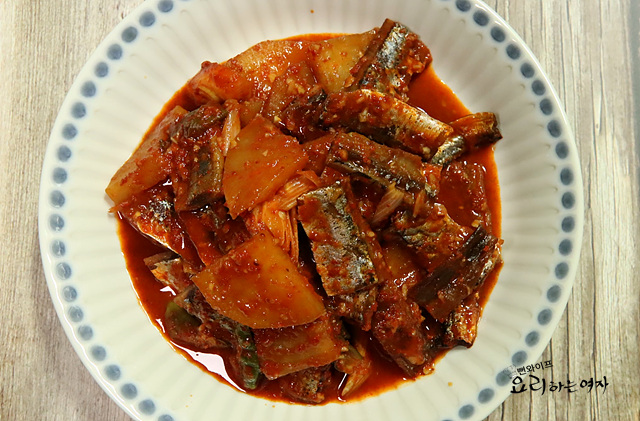
The sand lance is delicious, and the radish soaks up all the sauce, making it a true rice thief.
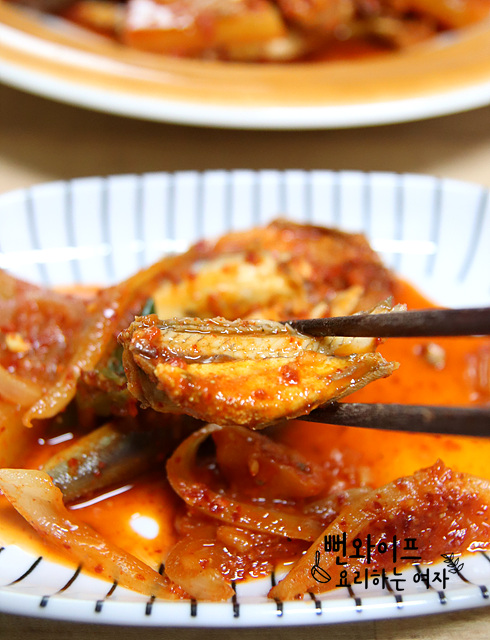
The small sand lance bellies are packed full of roe.
They pop gently with every bite and are delightfully savory.
Be sure to enjoy this sand lance dish often during the cold season.
 Ppunwife's tips
- Pour 2 1/2 cups of water (or rice-washing water) around the edges, adding just enough so the sand lance are barely submerged. Once it starts boiling vigorously over high heat, lower the heat to medium-low and simmer gently.
FAQ
How do you clean the innards of sand lance?
Snip about halfway through near the base of the head with scissors and pull, and the innards will come out along with it. For sand lance without roe, the belly is filled with innards, so scrape them out directly to remove them.
Can I use rice-washing water instead of water when braising?
You can save the water from washing rice and pour that in instead to braise.
How do you tell from the outside if sand lance have roe?
When you look at the belly area, the sand lance with firm, plump, and swollen bodies are the ones filled with roe.
How do I control the heat when braising?
Once it begins boiling vigorously over high heat, reduce the heat to medium-low and simmer gently until the liquid reduces down to a shallow braise.