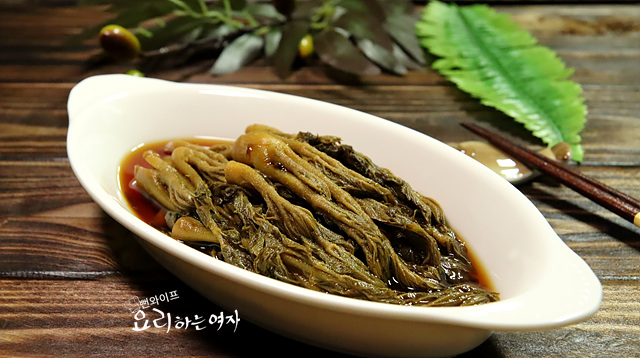
Aromatic Meowi Jangajji (Pickled Butterbur)
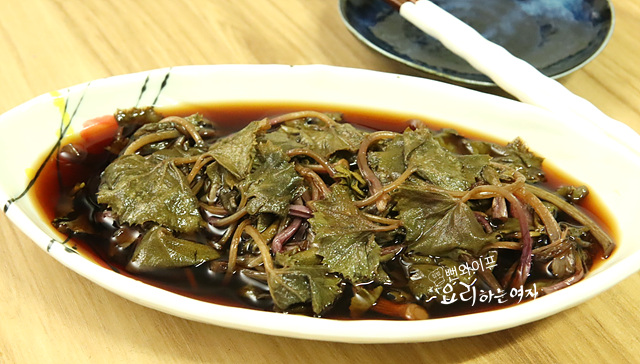
A springtime side dish of meowi jangajji (pickled butterbur) with a pleasant bitterness, made by pouring boiling soy sauce brine over fresh greens.
Translated from Korean by AI and not yet checked by a native speaker. Amounts and numbers are taken directly from the original recipe. Read the Korean original →
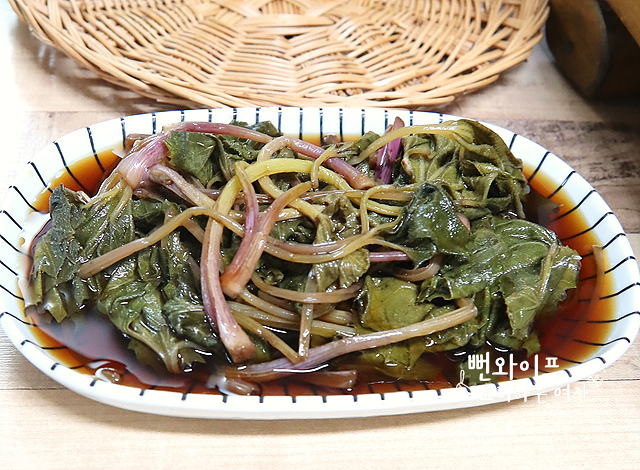
This pickled side dish is made by pouring a rolling-boil soy sauce brine over tender spring butterbur shoots, giving them a crisp yet tender texture. Adding soju at the end preserves them longer, while the bitterness naturally mellows over time. It pairs wonderfully with meat dishes or serves as a reliable side dish to enjoy all year round.
- Servings
- about 5–6 servings
- Cook time
- 1 minprep not included
- Difficulty
- Easy
- Spiciness
- Not spicy
Ingredients
Ingredients
- Butterbur (meowi)350 g
Soy sauce brine
- Water1 cup
- Regular soy sauce (jin-ganjang) (or brewed soy sauce (yangjo-ganjang))1 cup
- Sugar1/2 cup
- Vinegar1/3 cup
- Soju1/3 cup
- The leaves should be small, about palm-sized, so the stems won't be tough and the leaves stay tender rather than coarse.
- You can also prepare Cheongyang chili pepper (hot green chili) or dried red chili pepper to add some heat.
Steps
Prepare the ingredients
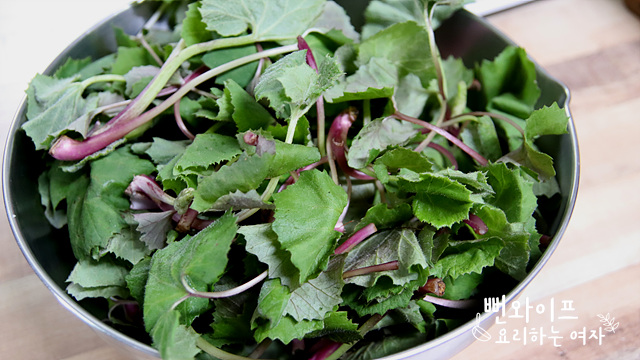
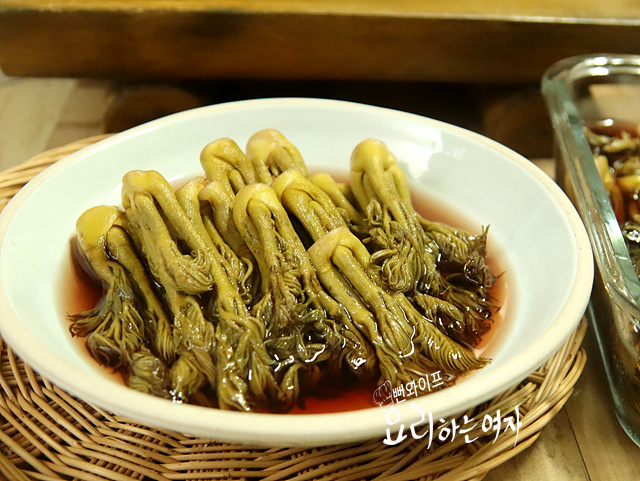
These are young, tender butterbur shoots where you can eat both the leaves and stems.
The leaves should be small, about palm-sized, so the stems won't be tough and the leaves stay tender rather than coarse.
You can also prepare Cheongyang chili pepper (hot green chili) or dried red chili pepper to add some heat.
Trim and wash the butterbur
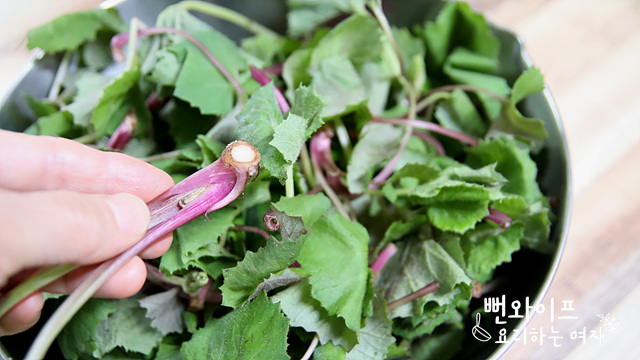
Pluck off any yellowed or damaged leaves and trim away dirty base ends with a knife.
If the butterbur stems are thick, they can be tough and fibrous, so you should peel off the outer fibers.
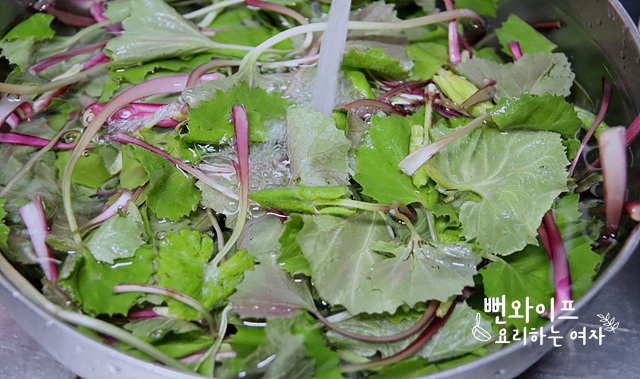
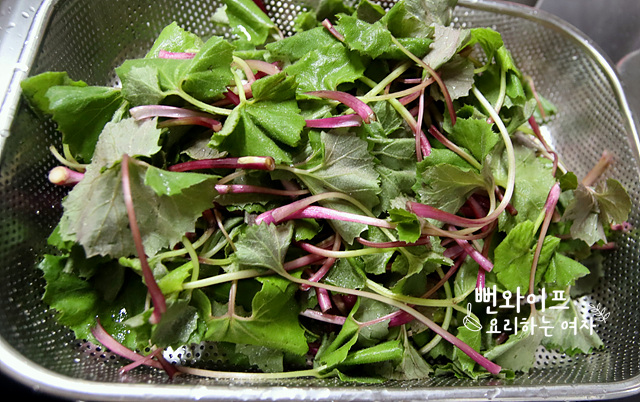
Soak in water briefly so dirt and debris loosen easily, then rinse several times and drain the water thoroughly.
Boil the soy sauce brine
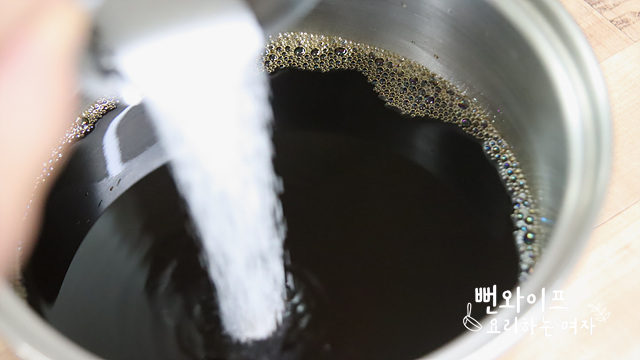
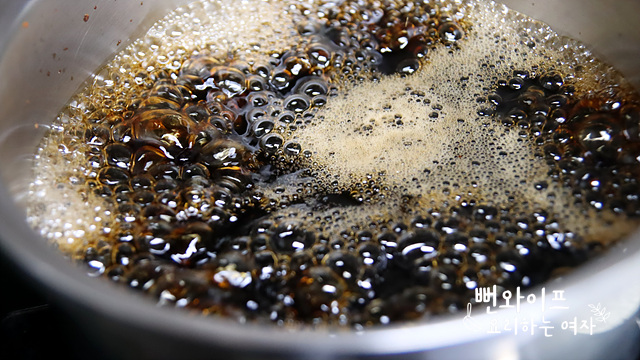
Pour 1 cup water, 1 cup regular soy sauce (jin-ganjang), 1/2 cup sugar, and 1/3 cup vinegar into a pot and bring to a rolling boil.
Boil for under 1 minute until the sugar dissolves completely.
Pour the soy sauce brine
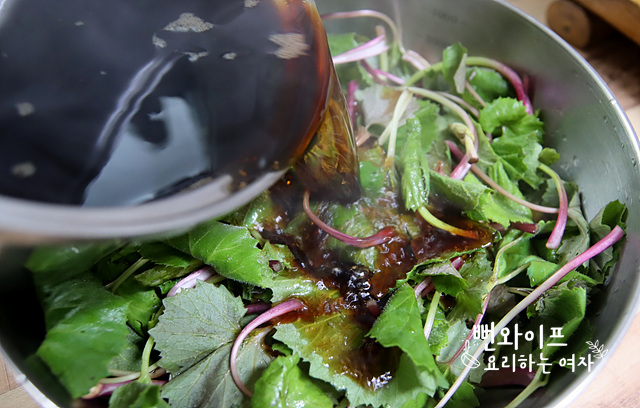
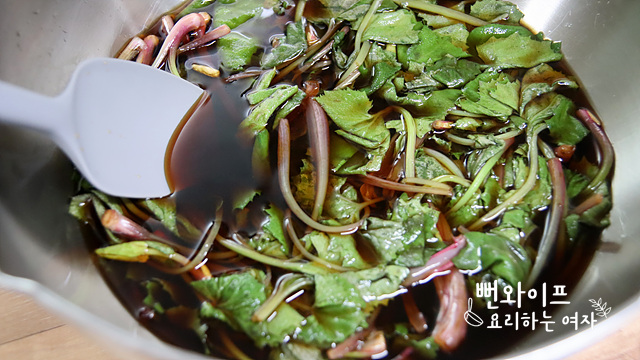
Pour the boiled soy sauce brine directly into the bowl with the butterbur.
Pouring the brine at a rolling boil quickly wilts them and makes them tender.
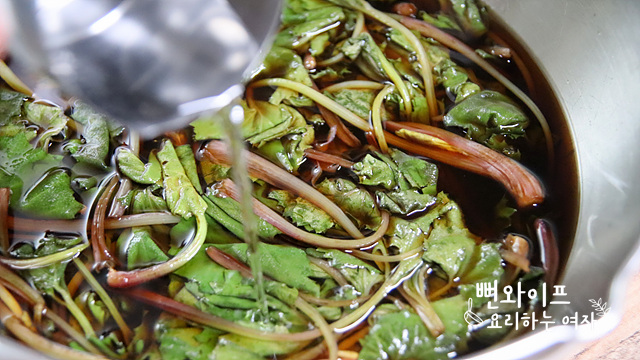
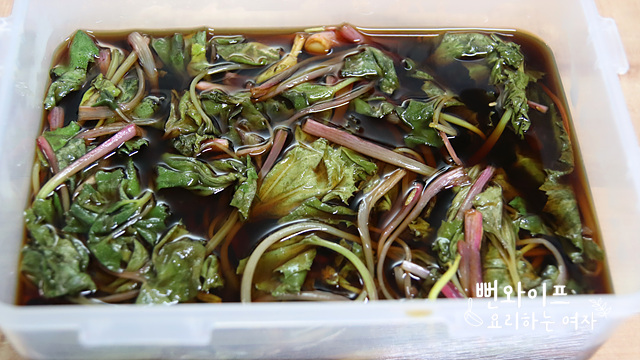
Toss occasionally while the soy sauce brine cools, and once completely cooled, pour in 1/3 cup soju and transfer to a storage container.
Adding soju gives a sterilizing and preserving effect, so you can enjoy them all the way through without needing to reboil the brine later.
Finish
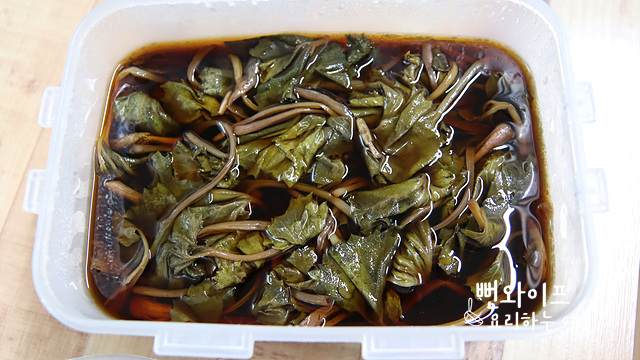
This is what the meowi jangajji looks like after 2 weeks in the refrigerator.
Starting after ten days, the flavors soak in well and it is delicious to eat.
 Ppunwife's tips
- If the butterbur stems are thick, they can be tough and fibrous, so you should peel off the outer fibers.
- Pouring the brine at a rolling boil quickly wilts them and makes them tender.
- Adding soju gives a sterilizing and preserving effect, so you can enjoy them all the way through without needing to reboil the brine later.
- Do not discard any leftover soy sauce brine after eating; use it as a dressing for thinly sliced onions or seasoned green onions, and if you still have plenty left, bring it to a rolling boil to supplement other pickled vegetables.
FAQ
Why do you add soju to the soy sauce brine?
Soju provides sterilizing and preserving effects, allowing you to store the pickles for a long time without the hassle of reboiling and repouring the brine partway through.
When can you start eating meowi jangajji after making it?
When kept refrigerated, the flavors soak in evenly after about ten days, so you can enjoy it deliciously.
How can I reuse leftover pickle brine?
Rather than throwing it out, use it as a sauce for seasoned green onions or sliced onions, or boil it once to use when making other pickled vegetables.
What ingredients can I add if I want a spicy kick?
You can add Cheongyang chili pepper (hot green chili) or dried red chili pepper to suit your taste for a spicy kick.