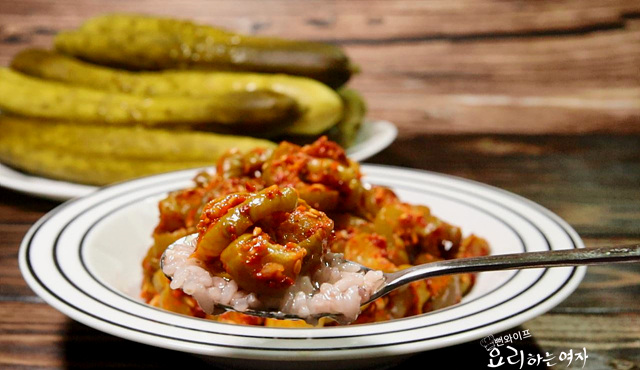
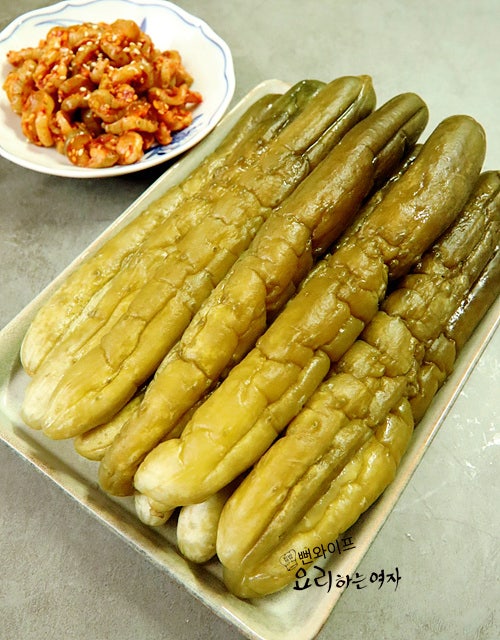
Traditional Oiji (Korean Pickled Cucumbers)
A traditional preserved side dish fermented at a cool room temperature to a golden-yellow hue by repeatedly pouring boiled brine over the cucumbers.
Translated from Korean by AI and not yet checked by a native speaker. Amounts and numbers are taken directly from the original recipe. Read the Korean original →
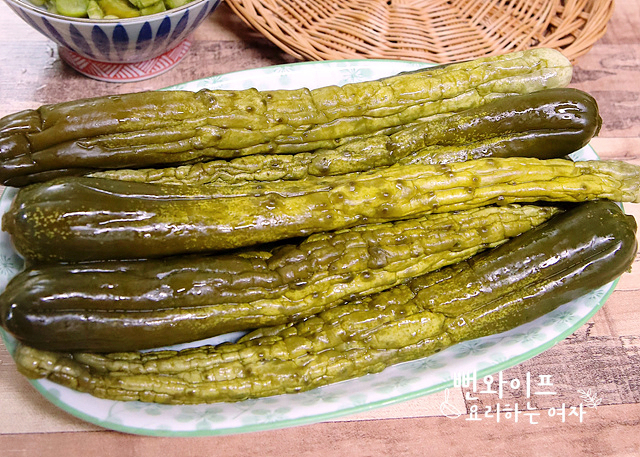
This is a traditional pickle made by pouring boiling brine over white cucumbers with immature seeds and fermenting them at a cool room temperature. Regularly reboiling, cooling, and repouring the brine—diluted by moisture drawn from the cucumbers—keeps them from spoiling while developing a wrinkled texture and deep flavor.
- Servings
- about 10–12 servings
- Difficulty
- Medium
- Spiciness
- Not spicy
Ingredients
- White cucumber20
- Coarse sea salt2 cups
- Water15 cups
- Soju1/2 cup
- Slim white cucumbers that are not too thick are suitable for oiji, and firm cucumbers from month 5 with less developed seeds are ideal.
Steps
Prepare the ingredients
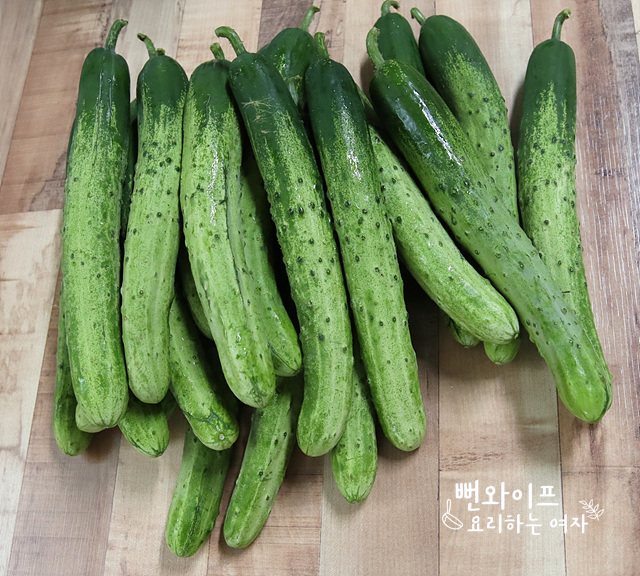
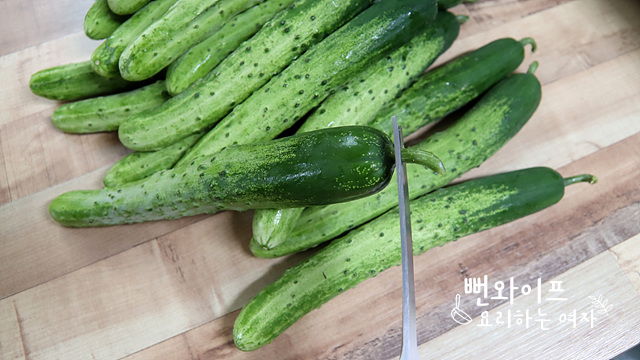
For oiji, slim white cucumbers that are not too thick are ideal.
Trim off the stem ends.
Wash the cucumbers
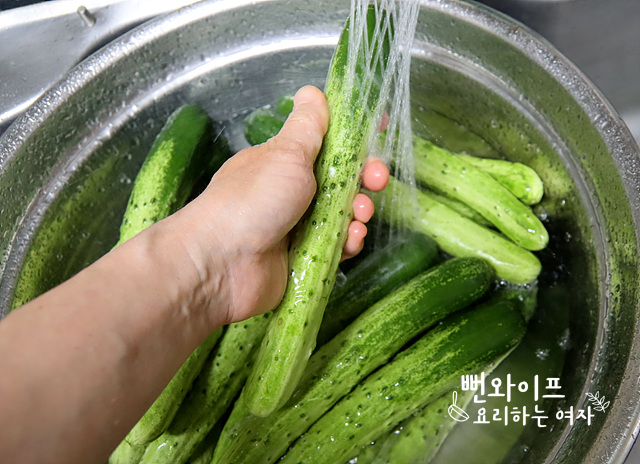
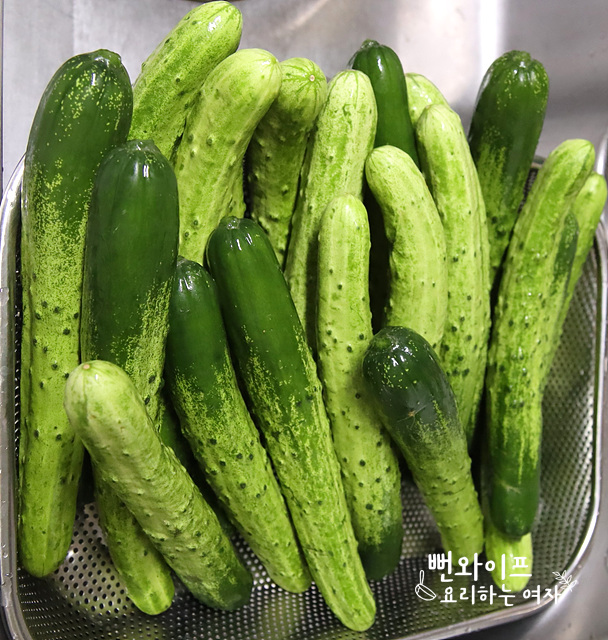
Gently scrub the cucumbers with a soft sponge or your hands while washing them, then stand them up to roughly drain off the water.
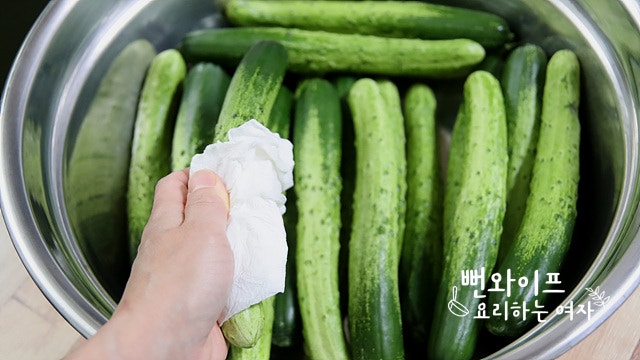
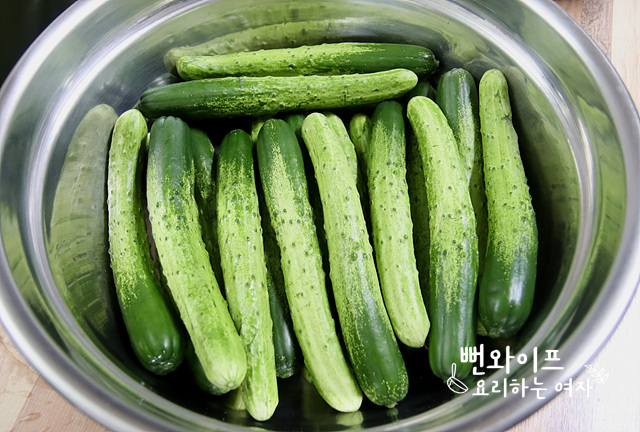
Wipe away any remaining moisture with paper towels and arrange the cucumbers neatly in a stainless steel basin.
Make the brine
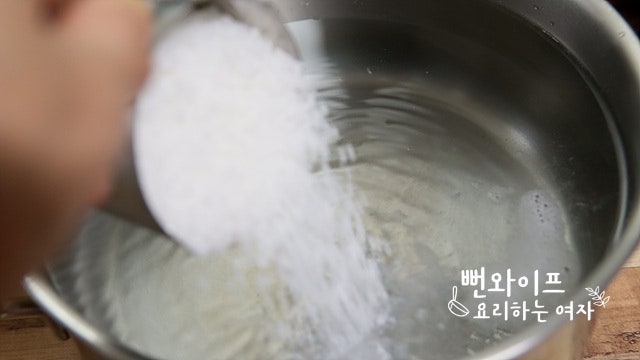
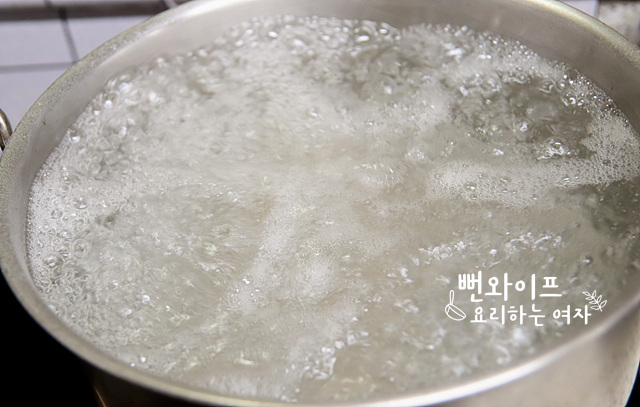
Add 2 cups of coarse sea salt to 15 cups of water and bring to a rolling boil.
(A 10:1 ratio of water to salt is usually suitable for brine concentration. Make sure the salt ratio is equal to or higher than this, never more diluted, so it does not spoil easily.)
Pour the brine
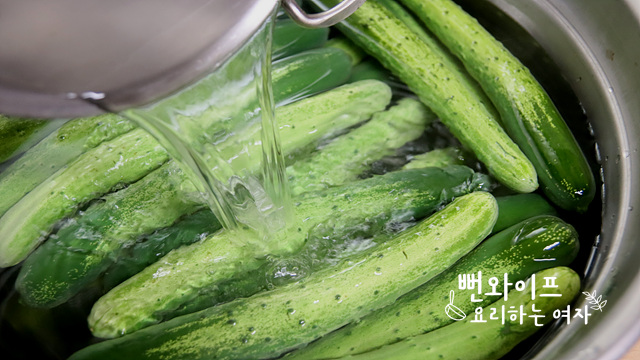
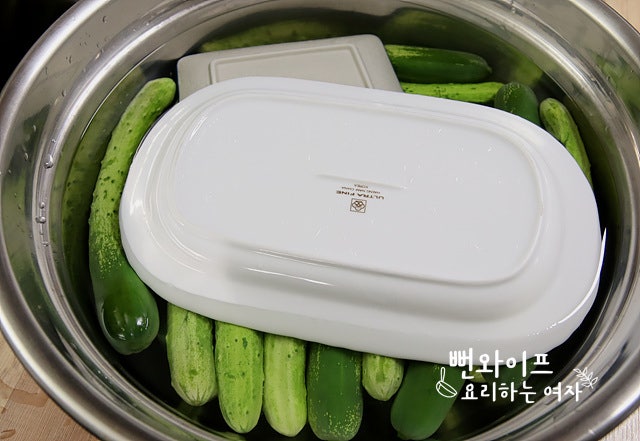
Pour the boiling brine straight over the cucumbers.
Press down with a heavy plate so the cucumbers do not float.
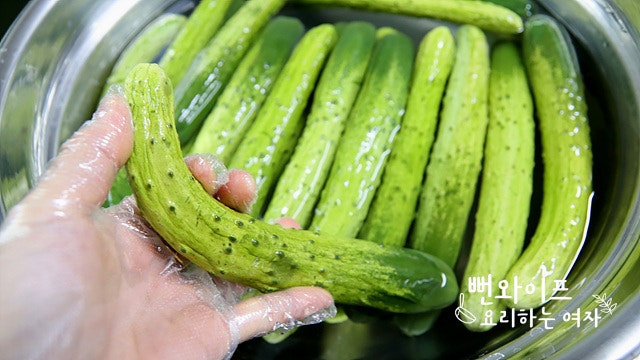
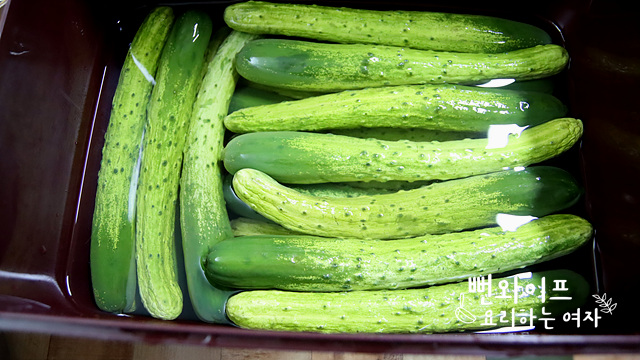
The brine has now cooled completely.
Having been scalded in hot brine, the surface is slightly wrinkled and the cucumbers bend easily.
Transfer the cucumbers and brine into a container, press down with a heavy plate or pressing stone, and let them ferment at a cool room temperature away from direct sunlight.
When fermenting jangajji pickles or oiji, ferment them at room temperature rather than in the refrigerator, and move them to the refrigerator once the flavor has properly developed.
Ferment in brine
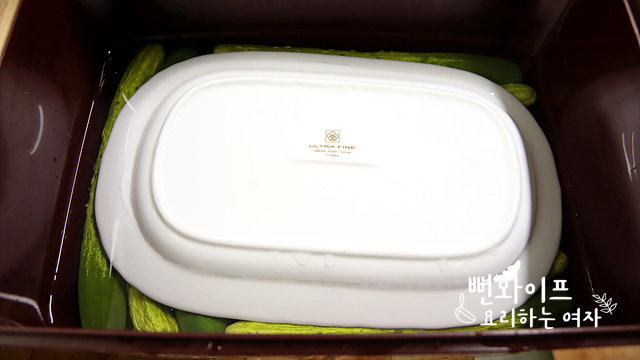
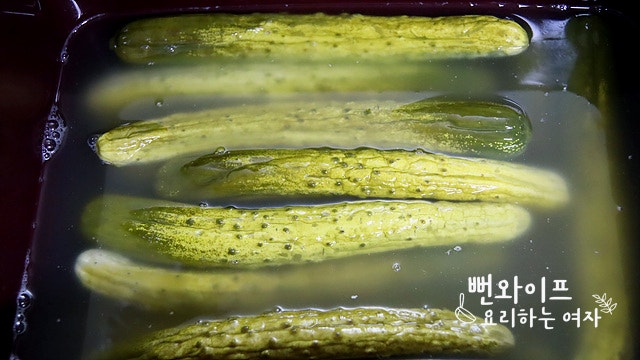
When I opened it after 4 days, the brine had turned slightly cloudy...
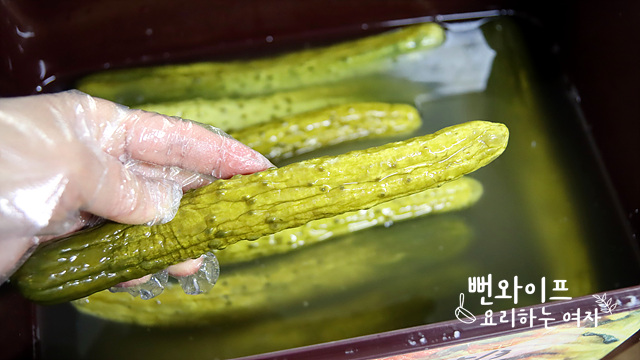
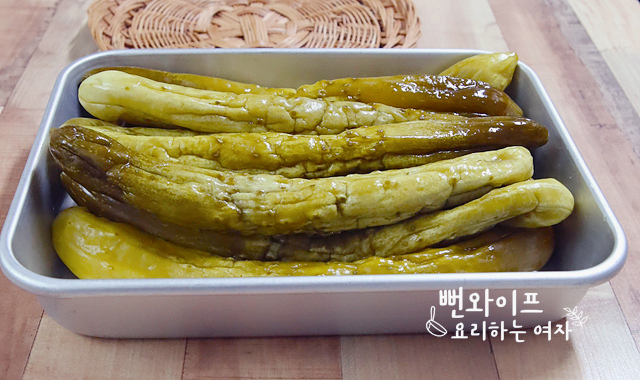
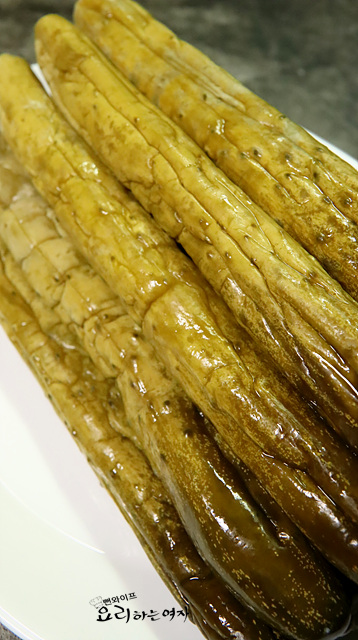
The surface became quite wrinkled, and the color turned yellowish.
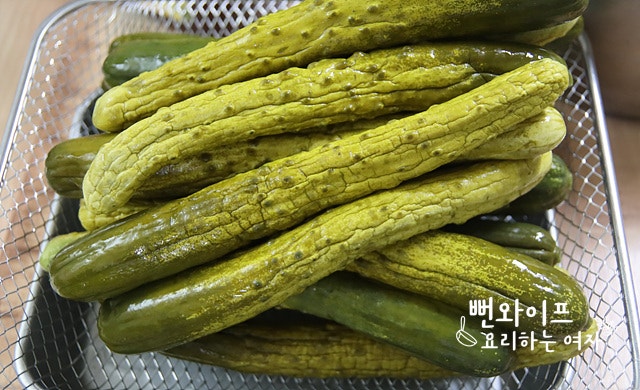
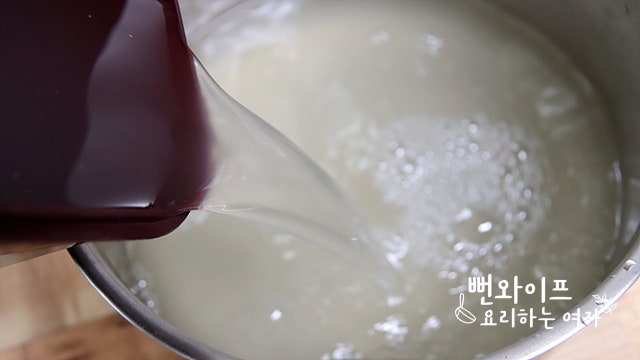
Remove the cucumbers, then pour the brine into a pot.
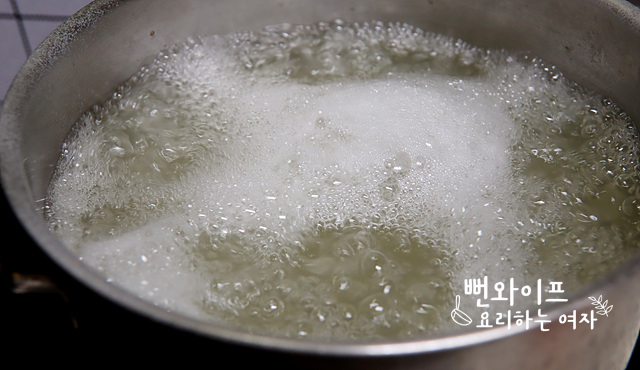
Because a lot of moisture has been drawn out of the cucumbers, you need to bring the brine to a rolling boil to concentrate it.
Boil for about 5 minutes and let it cool completely.
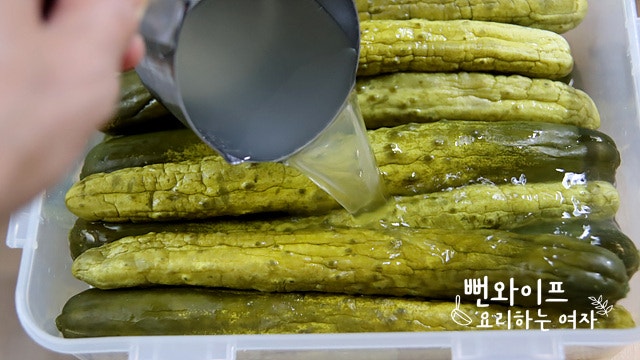
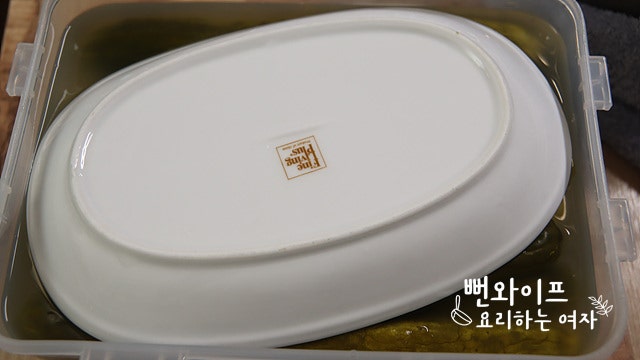
Since the cucumbers shrank in volume, I transferred them to a smaller container.
Pour in the brine and weigh them down with a pressing stone or plate so the cucumbers do not float.
If cucumbers float above the brine, they can soften or spoil and ruin the entire liquid, so you need to pay close attention to this.
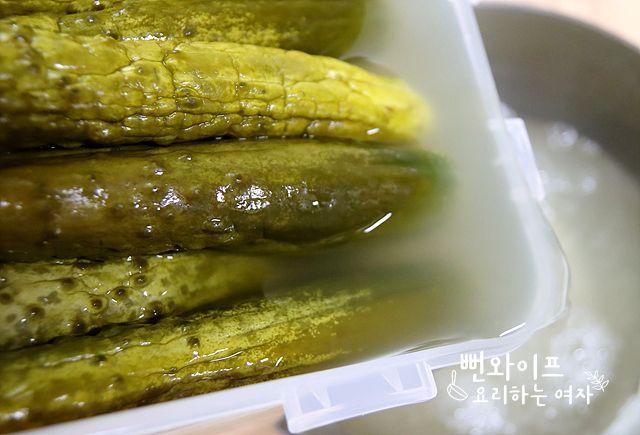
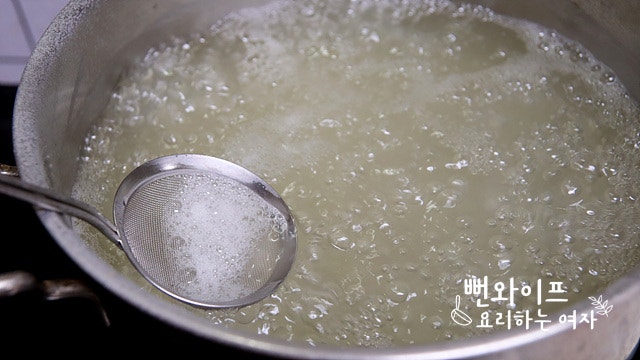
After a second 4 days of fermentation at room temperature, I poured out the brine and boiled it again.
At this point, a little white yeast film was visible, so I skimmed it off as it boiled.
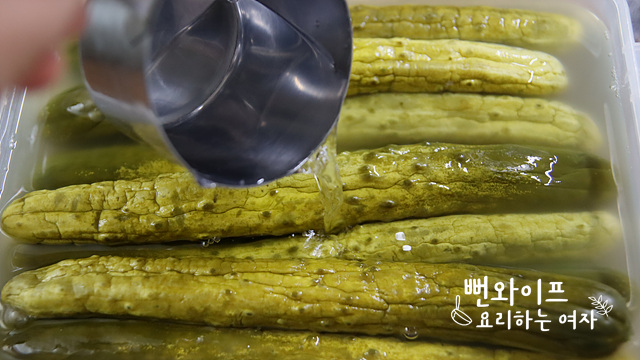
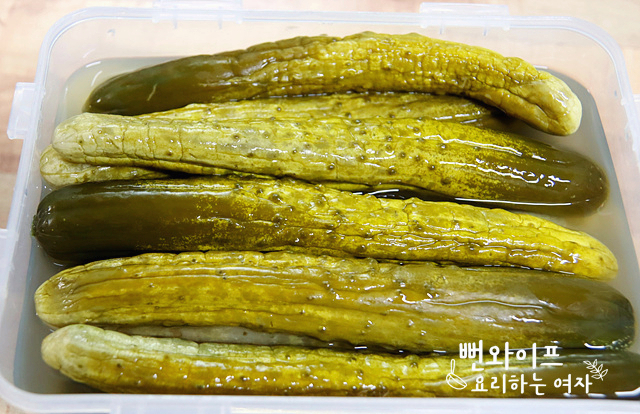
Cool the boiled brine and pour it back in. Since white yeast film appeared, add 1/2 cup of soju to act as a preservative.
I fermented it for another 4 to 5 days (third fermentation), boiled and poured the brine one more time, and put it in the refrigerator.
Throughout the fermentation, the brine was boiled and poured 3 times in total.
If the temperature rises and it feels hot, shorten or adjust the fermentation period and check the state of the cucumbers often.
Finish
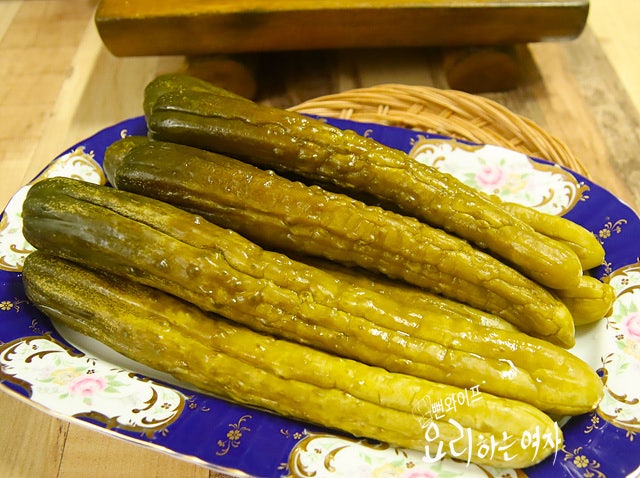
I opened the oiji after 2 weeks.
The wrinkling and color are just right, and it fermented well with that distinct pungent, fermented oiji flavor.
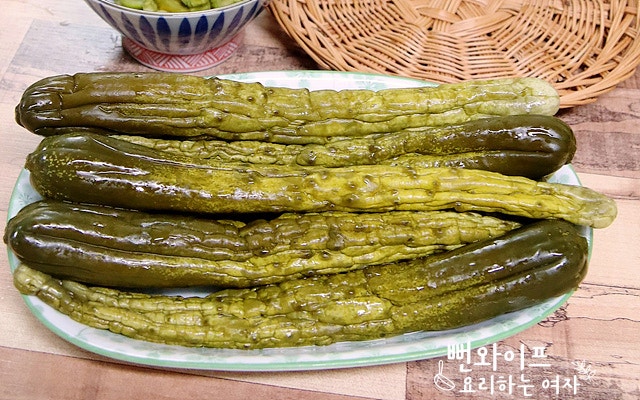
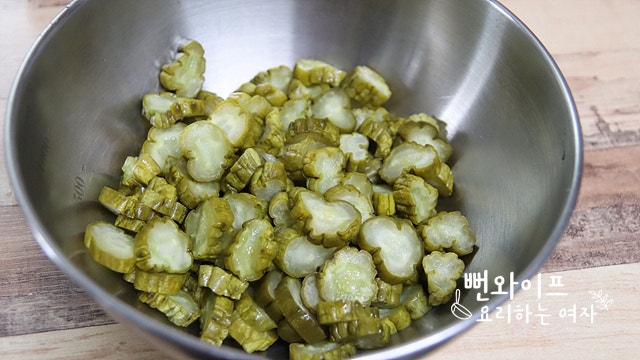
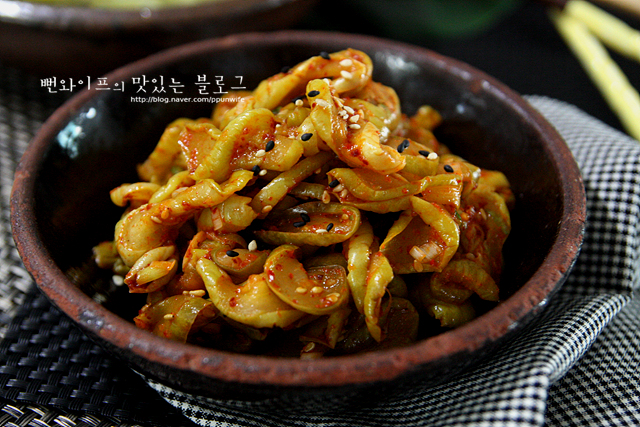
Finely slice it, soak it in water to draw out the excess saltiness, and toss with seasonings for the ultimate rice thief.
I made oiji using the traditional method.
Although boiling the brine repeatedly is a bit of work, so many people love this distinct oiji flavor that I am sharing this recipe.
 Ppunwife's tips
- If cucumbers float above the brine, they can soften or spoil and ruin the entire liquid, so you need to pay close attention to this.
- If the temperature rises and it feels hot, shorten or adjust the fermentation period and check the state of the cucumbers often.
FAQ
What kind of cucumbers should I choose when making oiji?
It is best to use slim white cucumbers that are not too thick.
Is the temperature different between pouring the brine the first time and pouring it later on?
The first time, pour the rolling-boiling brine directly over the cucumbers; for subsequent times to boil off moisture, boil the brine for about 5 minutes and make sure to cool it completely before pouring it in.
What happens if the cucumbers float above the brine during fermentation?
If the cucumbers float above the brine, they can easily soften or spoil and ruin the entire liquid, so you must press them down firmly with a heavy plate or pressing stone.
What should I do if a white yeast film forms on the surface during fermentation?
Skim off the film while reboiling the brine, and add half a cup of soju when pouring the cooled brine back in to help preserve it.