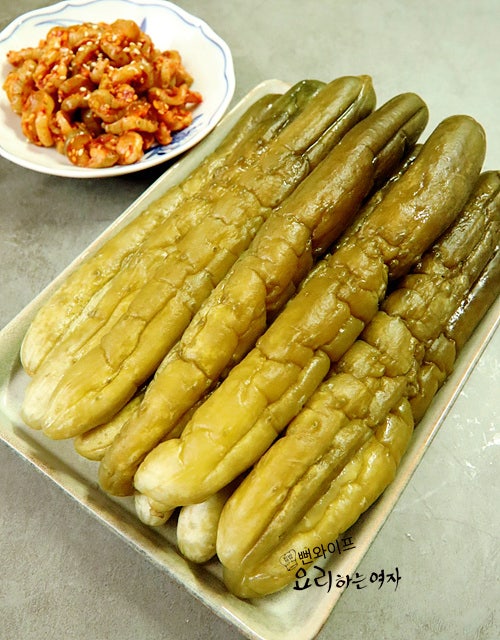
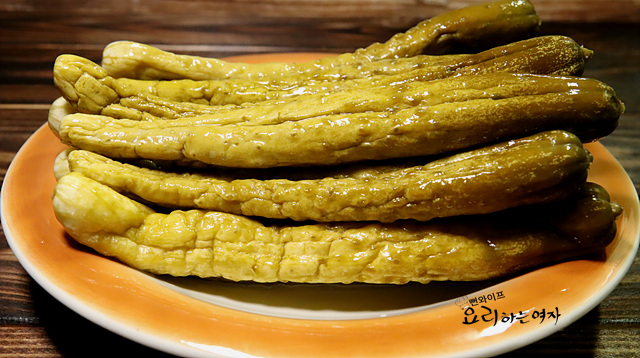
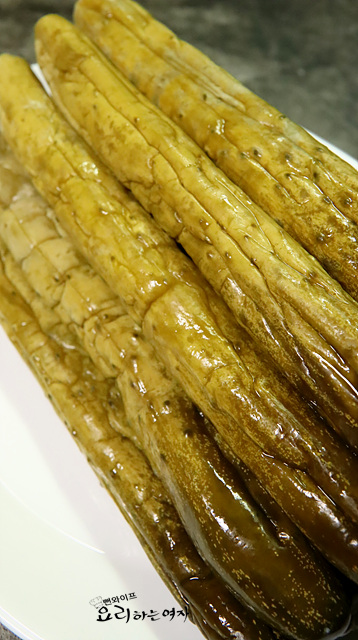
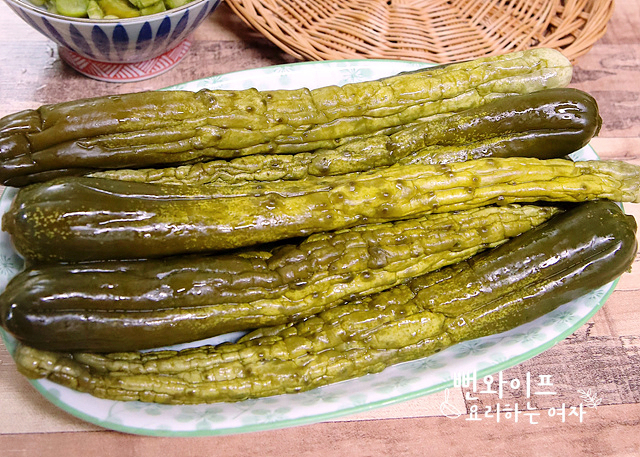
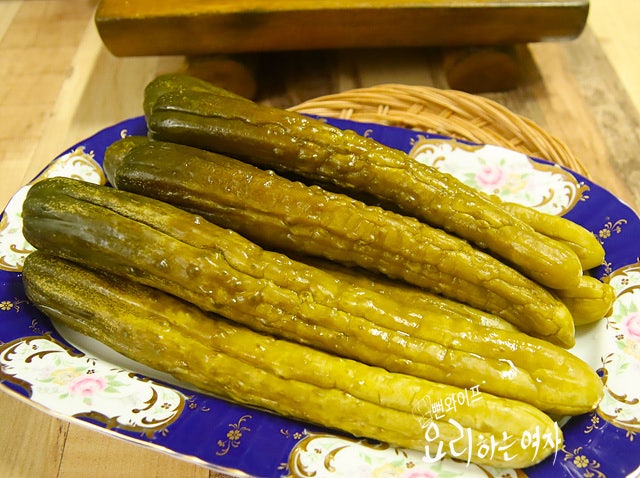
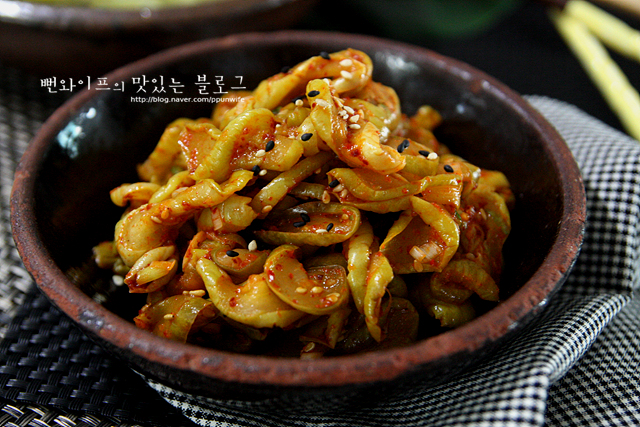
Crunchy Waterless Oiji (Korean Pickled Cucumbers)
A summery side dish of Korean pickled cucumbers, cured without water using salt and corn syrup to achieve an extra-crunchy texture.
Translated from Korean by AI and not yet checked by a native speaker. Amounts and numbers are taken directly from the original recipe. Read the Korean original →
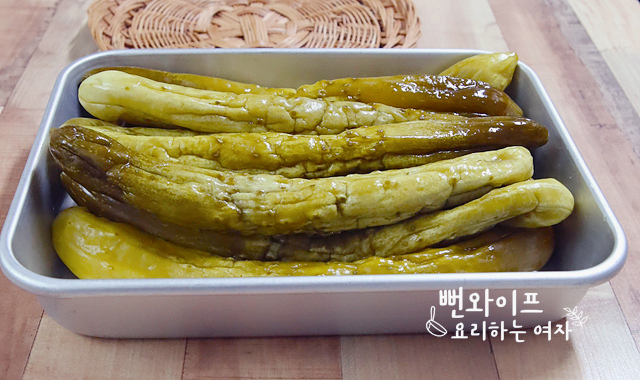
This is an easy white cucumber pickle made without boiling brine, using coarse sea salt, vinegar, sugar, soju, and corn syrup. The corn syrup quickly draws out moisture, yielding a crunchy texture without excessive saltiness. The key is to ferment them at room temperature, turning the cucumbers top to bottom once a day so they stay completely submerged in the pickling liquid.
- Servings
- about 10–12 servings
- Difficulty
- Easy
- Spiciness
- Not spicy
Ingredients
Ingredients
- White cucumber50
Pickling ingredients
- Coarse sea salt4 cups
- Brewed vinegar4 cups
- Sugar2 cups
- Corn syrup (mulyeot)2 cups
- Soju2 cups
- Use slender white cucumbers rather than overly plump ones; cucumbers that have matured slowly and are firm will keep from turning mushy even when stored for a long time, compared to ones that are simply oversized.
Steps
Prepare and wash the cucumbers
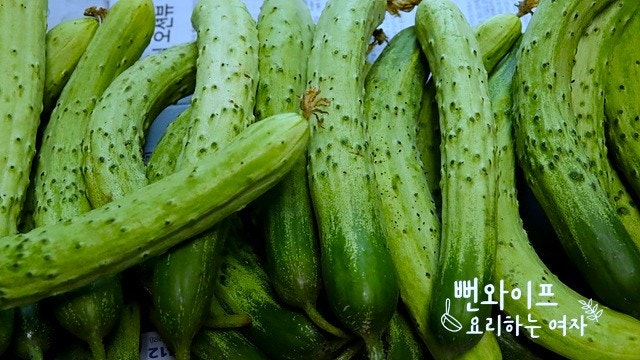
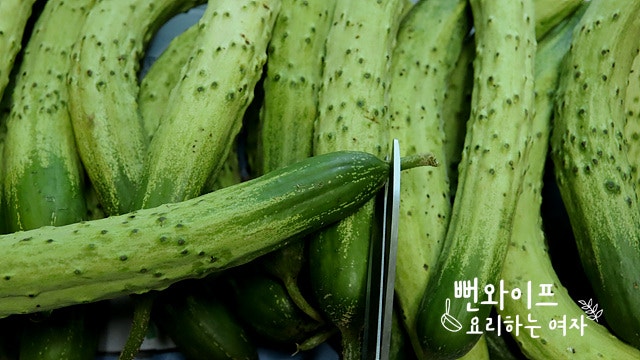
Cucumbers that were picked recently still have blossoms on the tips.
That is proof of how fresh they are.
Trim off the stem ends so the cucumbers do not bruise each other.
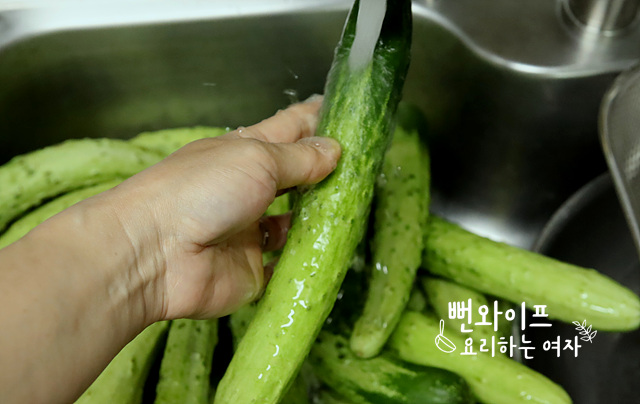
Wash them cleanly by rubbing gently with a soft cloth or your hands so the cucumbers do not get damaged.
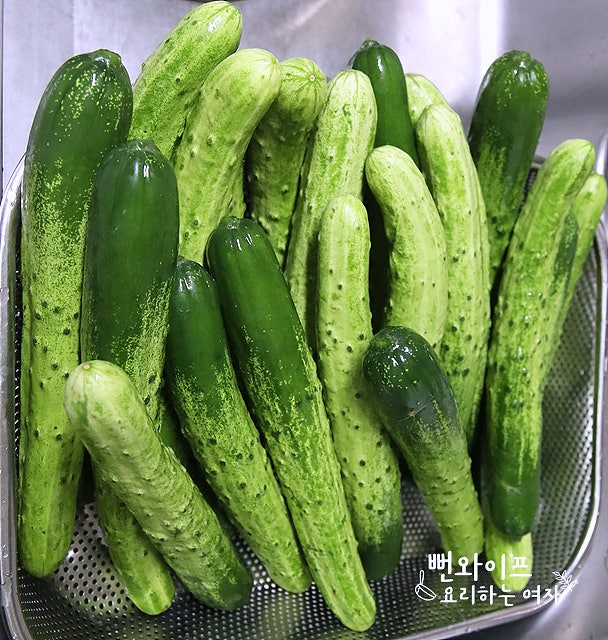
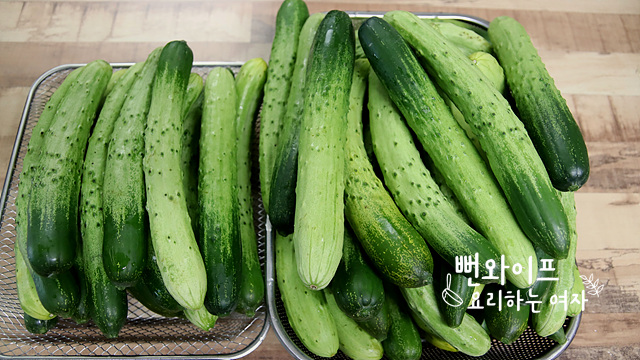
Meticulously remove all moisture so no water remains on the cucumbers.
If you stand them upright in alternating directions, the water drains quickly, and you can wipe off any remaining moisture with a dry cloth or paper towels.
Pour in the pickling ingredients
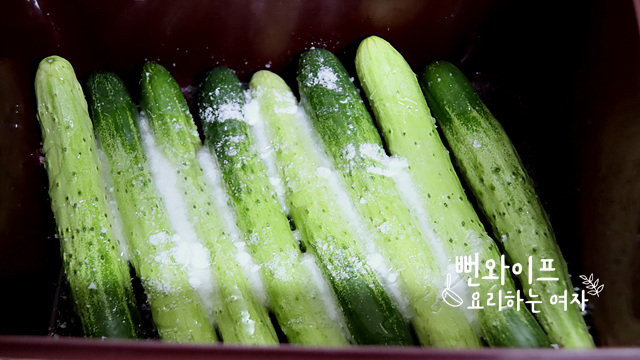
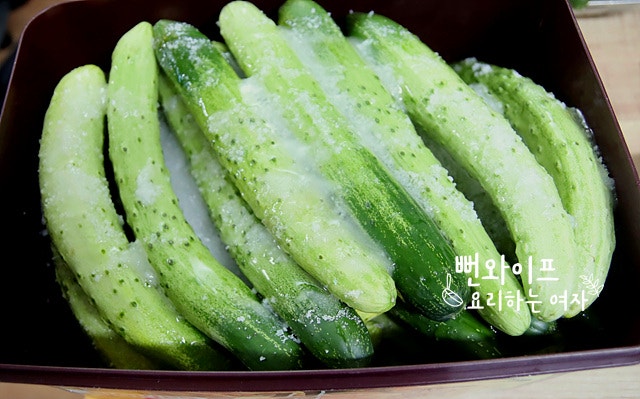
Lay the cucumbers side by side in a single layer in a large kimchi container.
Evenly distribute and pour 4 cups coarse sea salt, 4 cups brewed vinegar, 2 cups sugar, 2 cups corn syrup (mulyeot), and 2 cups soju over them.
Up until last year, I made them with just the 4 ingredients—salt, vinegar, sugar, and soju—but this year I added corn syrup to help make the oiji even crunchier.
Close the lid and keep it at room temperature out of direct sunlight. (This shows how it looked when put up on 5/13.)
Ferment
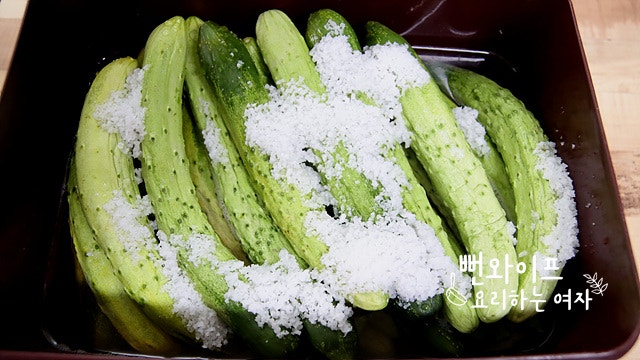
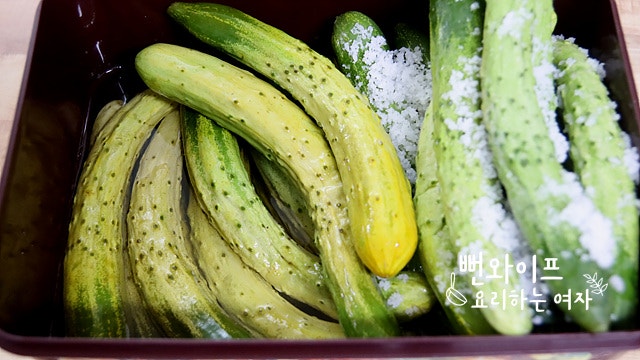
This is how it looks on 5/14, one day later. The salt and sugar are not fully dissolved yet.
The cucumbers at the bottom are more than halfway pickled and have turned yellowish.
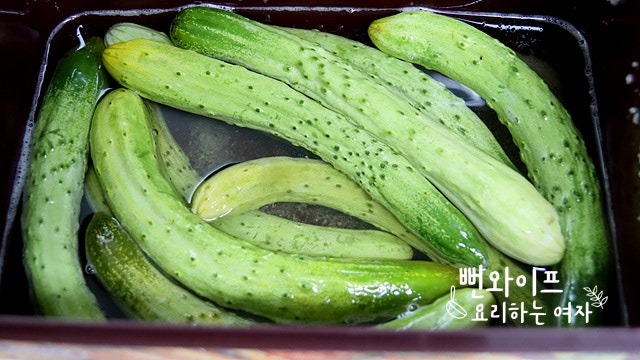
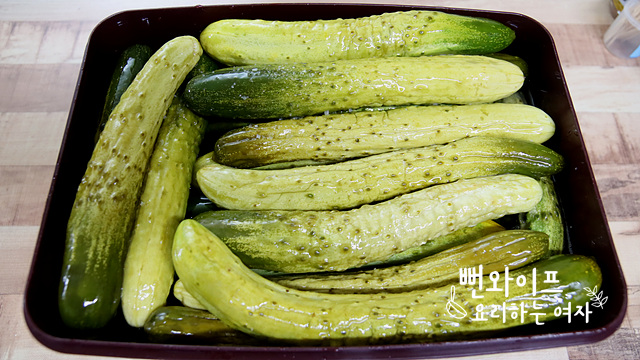
Roughly taking out the cucumbers from the bottom, quite a lot of liquid has come out. Stir to dissolve the undissolved salt and sugar at the bottom...
Stack the cucumbers back in, swapping their positions.
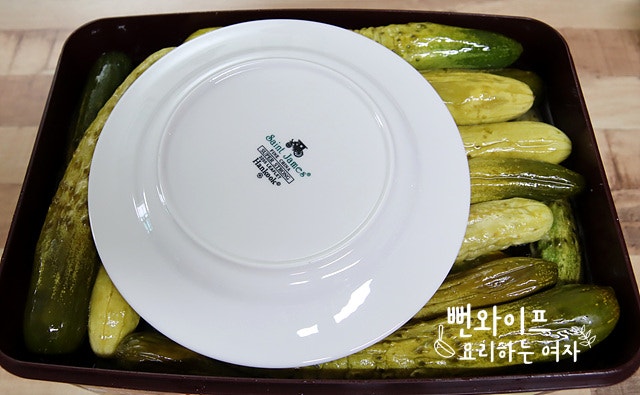
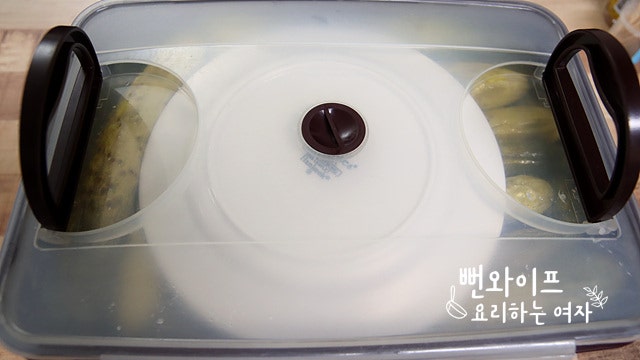
If you place a deep, large plate on top and close the lid, the raised part of the plate gets pressed by the lid, keeping the cucumbers completely submerged in the pickling liquid.
Pressing the cucumbers well like this so they are fully submerged speeds up the pickling process.
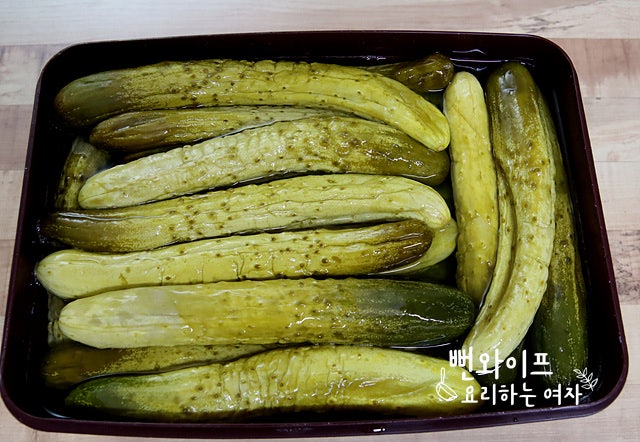
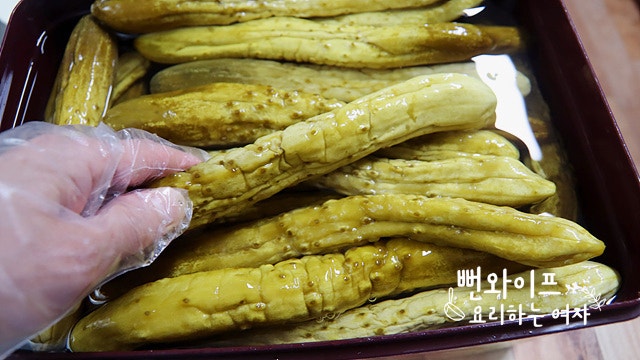
This is how it looks on 5/15, the day after rearranging them.
Only two days have passed, and while just the very top stem ends are slightly greenish, the rest has turned yellowish overall and is pickling nicely.
All you need to do until they are fully pickled is check on them and swap their positions just like this once a day.
This is the most important part:
Make sure no water or foreign substances get in, and keep them well weighted down because if they are not fully submerged in the pickling liquid, the cucumbers will turn mushy and inedible.
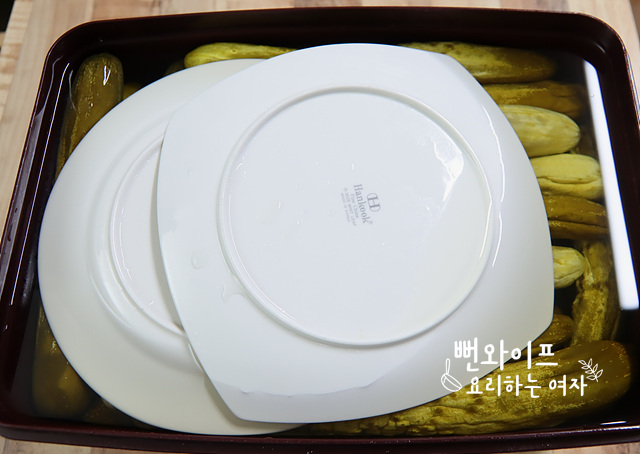
Close the lid again, and the cucumbers will stay thoroughly submerged in the pickling liquid.
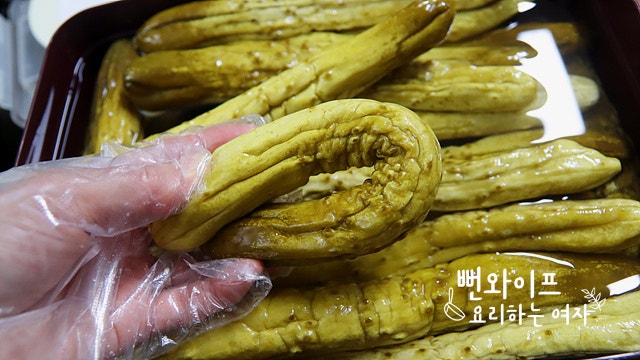
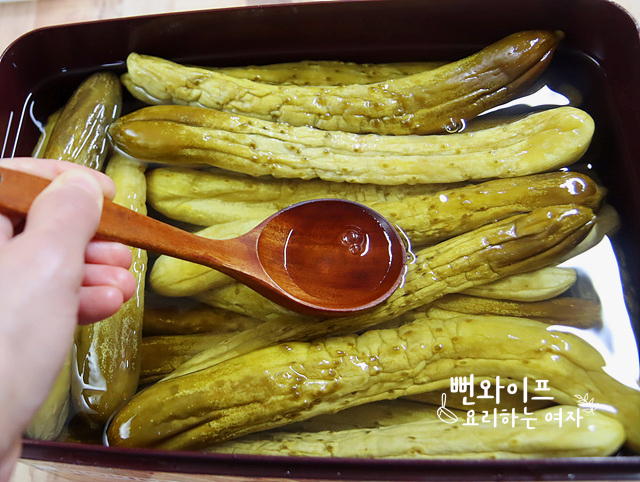
Two days later, on 5/17, the yellow color has deepened, and they are pickled enough to bend without snapping.
The liquid is clear and clean without a trace of white mold film.
The surface of the cucumbers has turned crunchy, almost all the moisture has been drawn out, and there is a whole river of liquid.
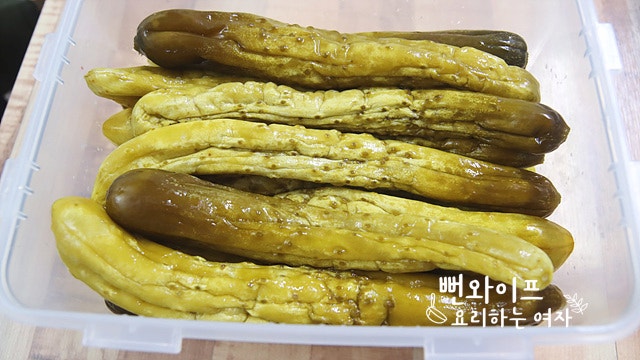
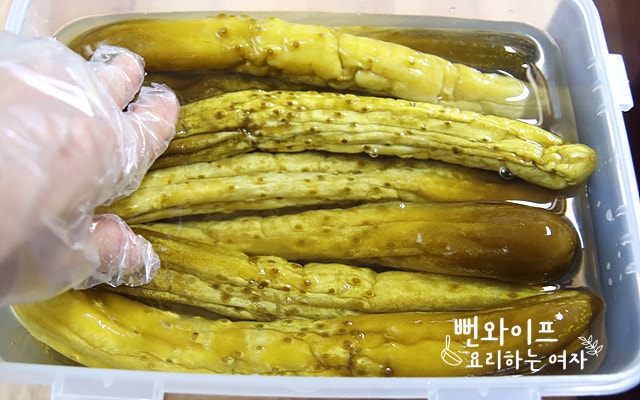
Now that they are fully pickled, you can transfer them to the refrigerator.
The volume of the cucumbers has shrunk dramatically, so you can move them into a smaller container. Pour in enough of the pickling liquid to submerge them...
Discard the remaining liquid.
 Ppunwife's tips
- Make sure no water or foreign substances get in, and keep the cucumbers well weighted down; if they are not fully submerged in the pickling liquid, they will turn mushy and inedible, so that is the main thing to watch.
- Place a deep, large plate on top and close the lid; the raised part of the plate will be pressed down by the lid, keeping the cucumbers completely submerged in the pickling liquid. Pressing them down well so they stay fully submerged speeds up the fermentation.
- Even though sugar and corn syrup are added to the pickling liquid, the oiji will not taste sweet. They only serve to draw out moisture from the cucumbers in a short period of time, so you do not need to worry.
FAQ
Won't the oiji taste sweet with corn syrup and sugar added?
Sugar and corn syrup serve to quickly draw out moisture from the cucumbers, so the finished oiji will not taste sweet.
How do I keep the cucumbers from turning mushy during fermentation?
Be careful not to let any water or foreign substances get in, and keep the cucumbers weighted down with a heavy plate or similar object so they stay completely submerged in the pickling liquid.
How should I store the fermented oiji?
Once the oiji has fermented nicely to a yellow color and shrunk in volume, transfer it to a smaller container, pour in enough pickling liquid to cover the cucumbers, store it in the refrigerator, and discard the rest of the liquid.