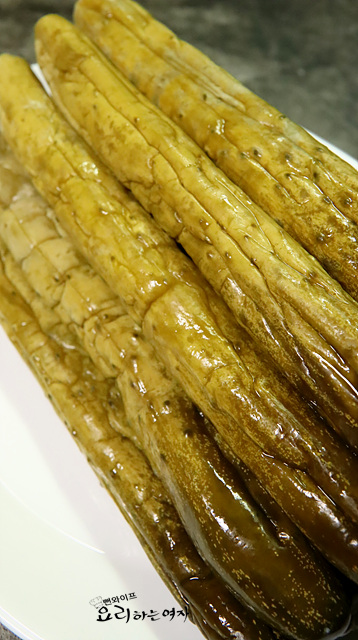
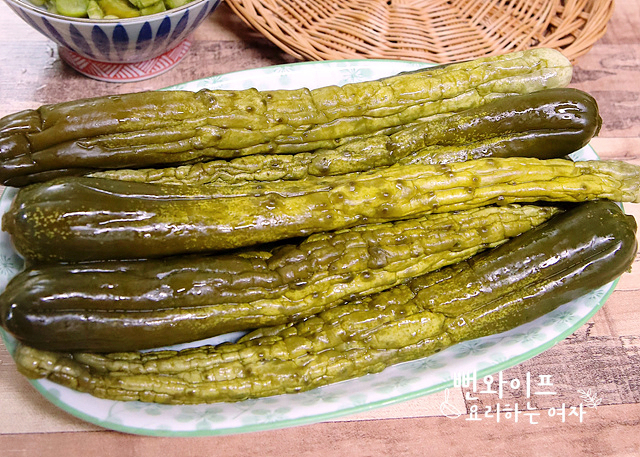
Crunchy Oiji (Korean Pickled Cucumbers) Without Water
A simple side dish of oiji pickled by pouring seasonings directly over cucumbers without boiling brine.
Translated from Korean by AI and not yet checked by a native speaker. Amounts and numbers are taken directly from the original recipe. Read the Korean original →
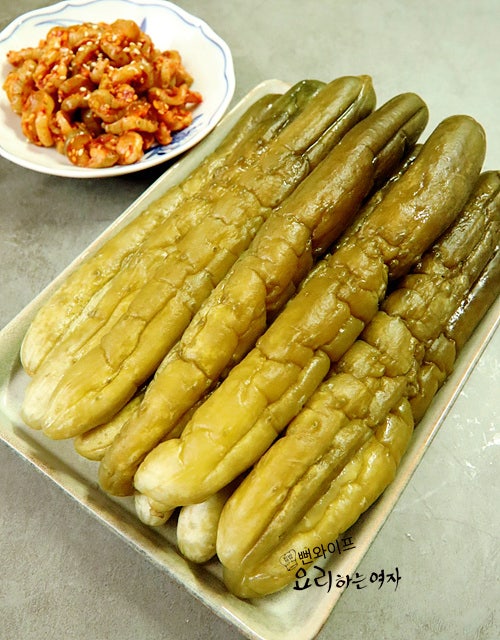
This easy pickling recipe requires no water or boiled brine, using just coarse sea salt, sugar, vinegar, and soju poured evenly over the cucumbers. Making them before the rainy season in months 5–6 helps them stay firm and retain a crisp texture for a long time. After fermenting at room temperature for 3–5 days, keep the cucumbers submerged and refrigerate to enjoy clean pickles without white mold.
- Servings
- about 10–12 servings
- Difficulty
- Easy
- Spiciness
- Not spicy
- Keeps
- 180 days
Ingredients
Ingredients
- Cucumber25
Pickling Liquid
- Coarse sea salt2 cups
- Vinegar2 cups
- Sugar2 cups
- Soju1 cup
- Cucumbers for pickling should be slender and on the shorter side; if they are too thick and large, they will have many seeds and thick skins, which slows down the pickling process and can cause them to become mushy after curing.
Steps
Prepare the cucumbers
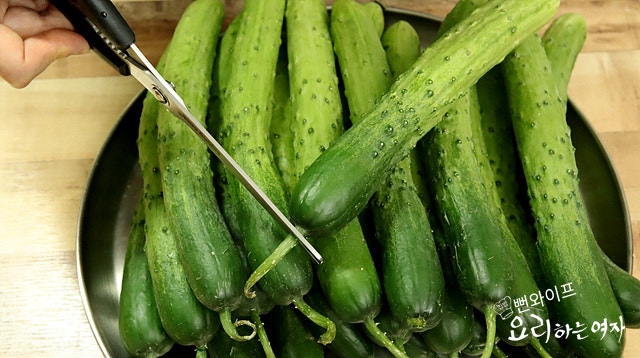
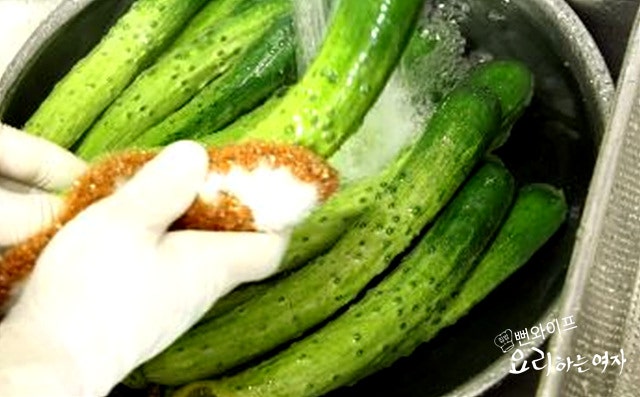
Trim off the stem ends and gently wash the cucumbers using a soft sponge to avoid bruising or scratching the skin.
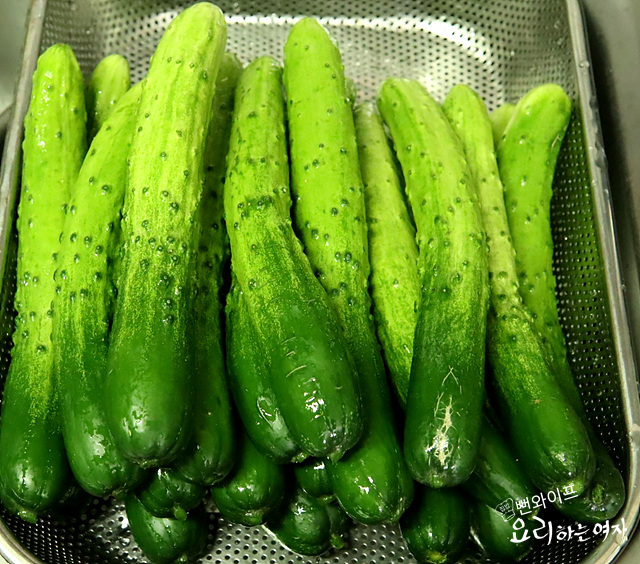
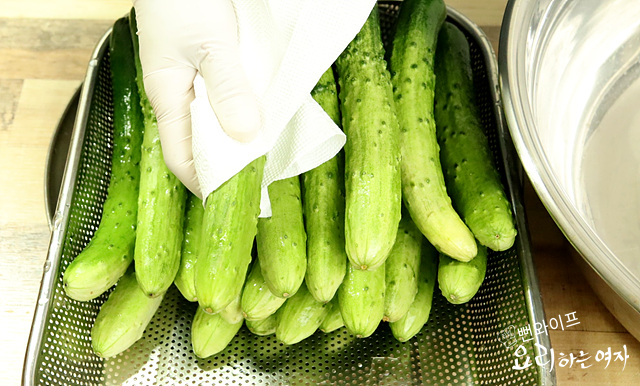
Let them drain roughly, then pat off any remaining moisture with paper towels.
Pouring the pickling liquid
Pour the pickling liquid
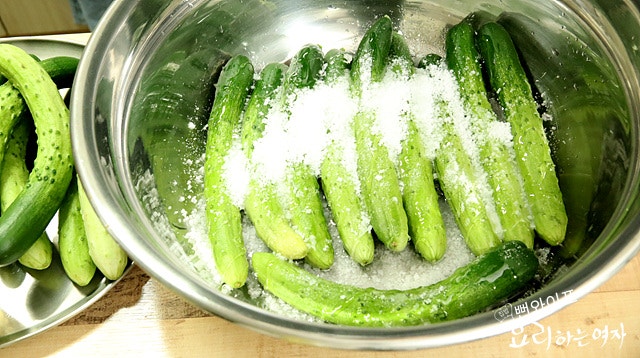
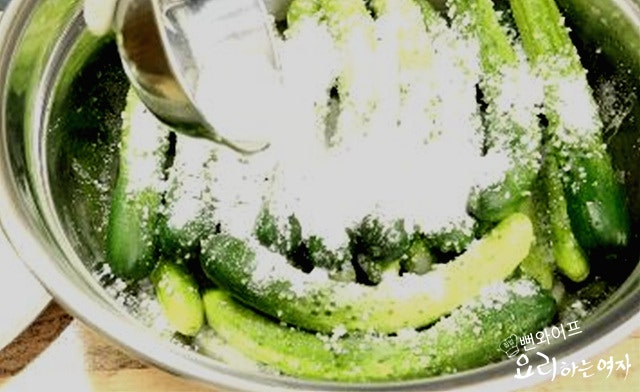
I used a kimchi basin. A food-grade plastic bag for kimchi or a kimchi container also works fine.
Arrange the cucumbers neatly, then simply sprinkle the coarse sea salt, sugar, vinegar, and soju over them.
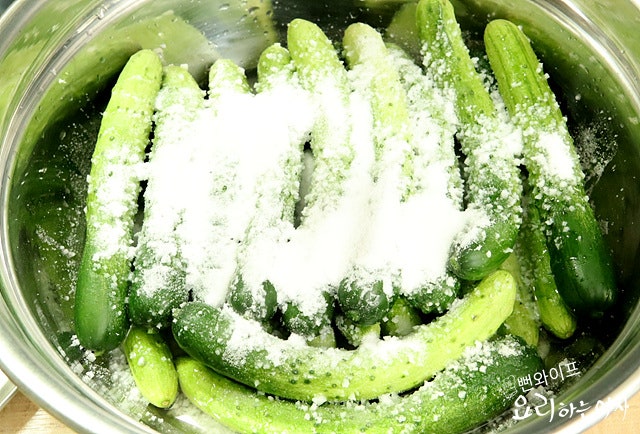
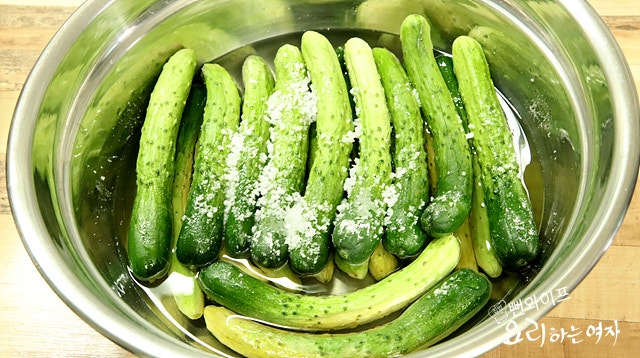
Since there is a large quantity, if you are stacking them in layers, divide the coarse sea salt, sugar, vinegar, and soju and sprinkle them evenly layer by layer.
After one night at room temperature, plenty of liquid will start to draw out and the cucumbers at the bottom will begin turning yellowish.
Storing the pickled cucumbers
Store the pickled cucumbers
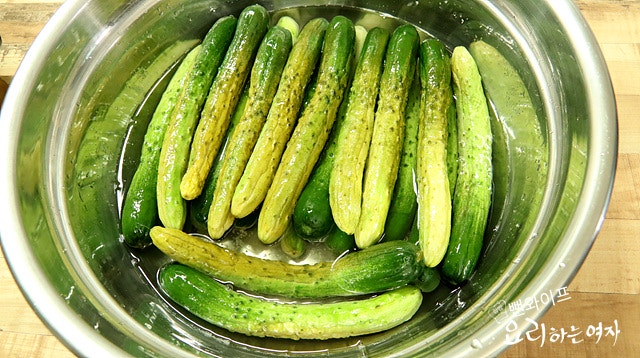
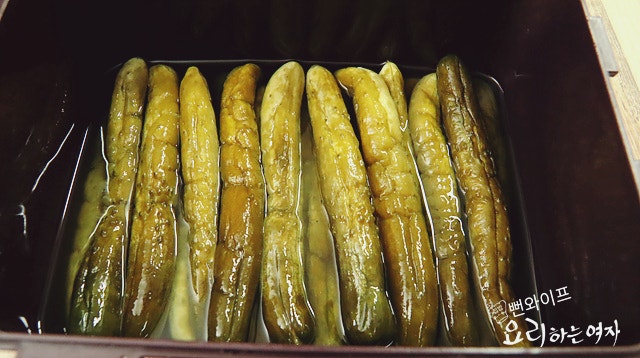
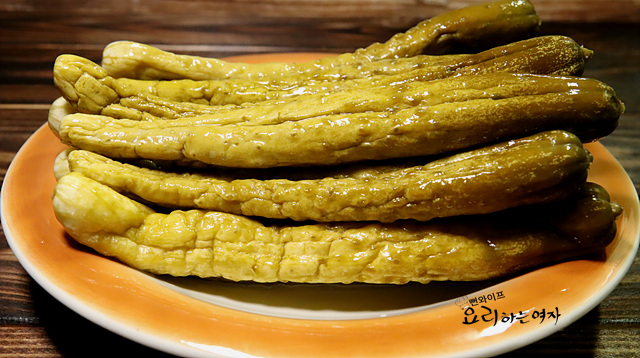
Keep them at room temperature while rotating the positions of the cucumbers until all of them turn yellowish and wrinkled.
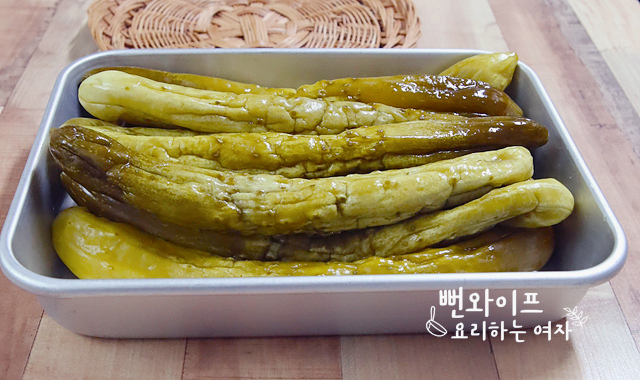
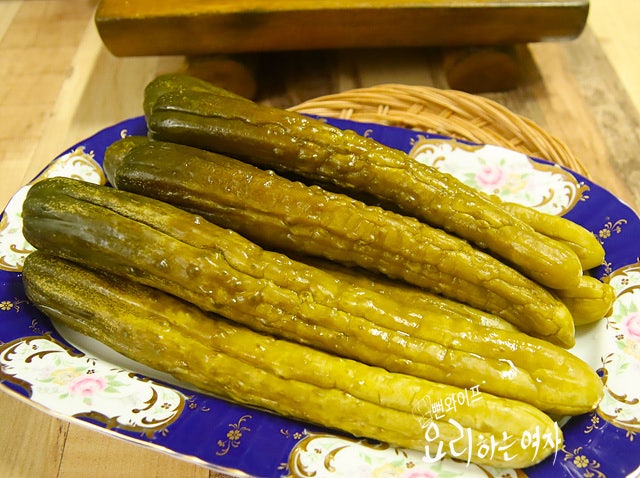
After 3 days, enough liquid has drawn out from the cucumbers to submerge them, and their color has completely turned golden.
It may vary depending on the temperature, but 3 to 5 days should be just right to pickle them.
Pack them neatly into a container, weigh them down with a plate so the cucumbers are completely submerged for better preservation, and store them in the refrigerator.
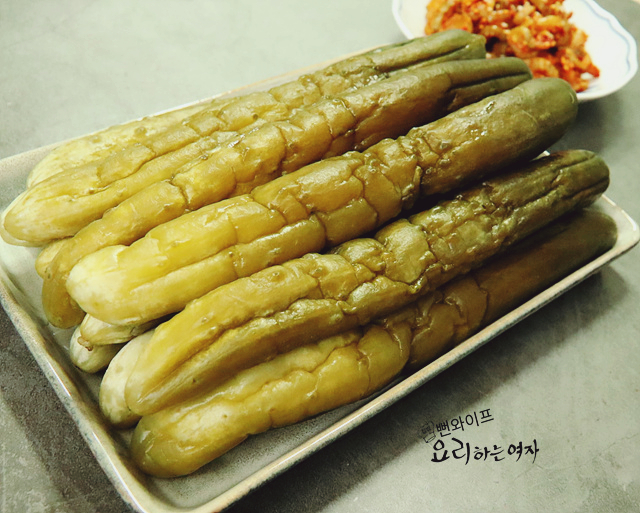
The brine stays clean with no white mold forming until the very end, all without ever boiling the brine.
I have kept and eaten them for up to 6 months after pickling, and I never boiled the liquid even once in between.
They say it keeps fine for 1 year too, though in our home, none ever lasts that long.
 Ppunwife's tips
- Months 5–6 before the rainy season begins is the best time to pickle oiji so that the cucumbers do not turn mushy.
- For better shelf life, weigh the cucumbers down with a plate so they remain completely submerged in the brine, then store in the refrigerator.
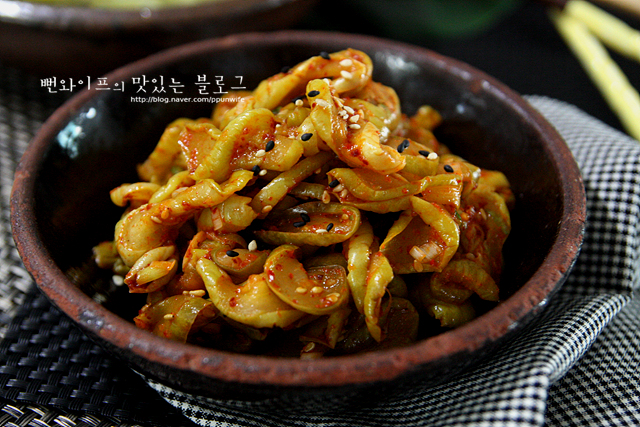
- Even pickled without water, these cucumbers have a high salt content, so slice them into rounds and soak in water to draw out some of the salt before using.
FAQ
When is the best time to make oiji?
To prevent the cucumbers from turning mushy, the best time to pickle them is between months 5 and 6, before the rainy season begins.
What size of cucumber is best to pick for oiji?
Overly thick and large cucumbers have a lot of seeds and thick skins that can turn soft easily, so it is best to choose cucumbers that are slender and somewhat short.
How long does finished oiji keep?
Even without boiling and pouring the pickling liquid, they can be stored cleanly in the refrigerator for over 6 months without any white mold forming.
How do you reduce the saltiness when cooking with finished oiji?
Because they are pickled without water, the salinity is high. We recommend slicing them into rounds, soaking them briefly in cold water to draw out some of the saltiness, and then squeezing out excess moisture thoroughly before seasoning.