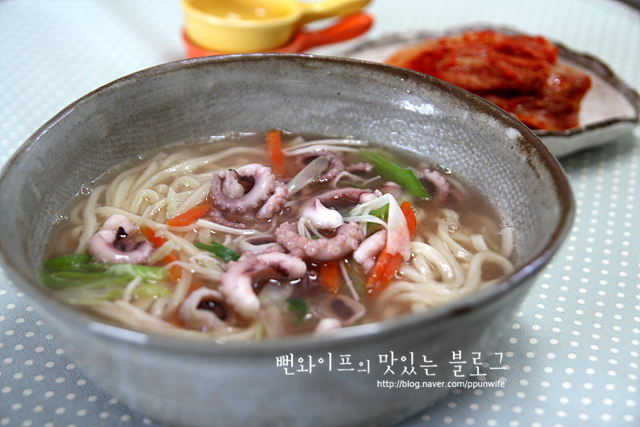
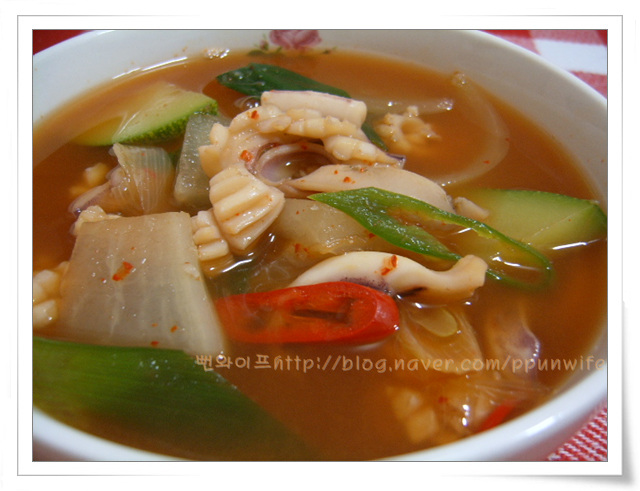
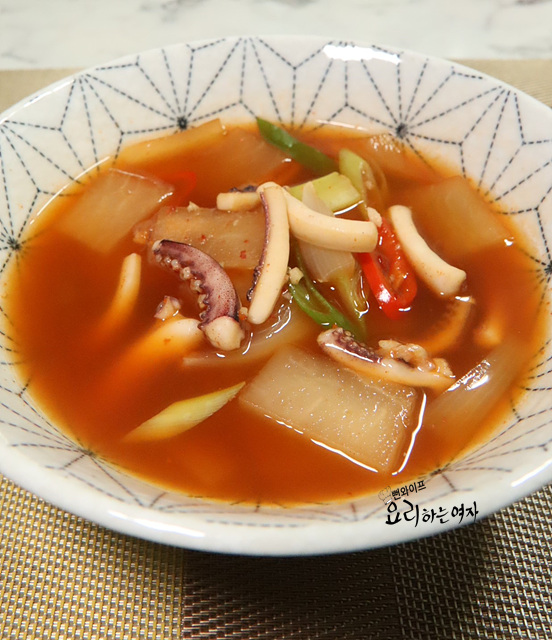
Clear Nakji Yeonpo Tang (Clear Octopus Soup)
A refreshing, nourishing soup made by simmering small octopus, Korean radish, and water dropwort in a clear broth.
Translated from Korean by AI and not yet checked by a native speaker. Amounts and numbers are taken directly from the original recipe. Read the Korean original →
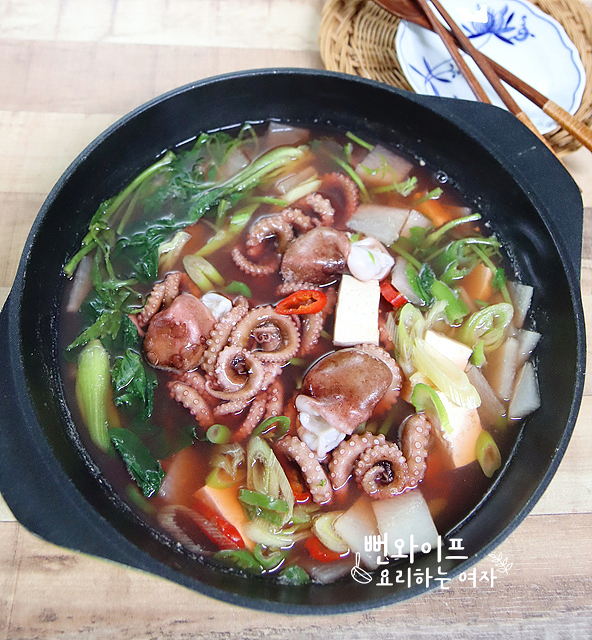
This soup is simmered clear and clean with minimal seasoning to bring out the natural flavor of octopus in season. Korean radish and water dropwort are added for extra refreshing depth, while the octopus is only lightly cooked to keep it tender and chewy. It makes 3 to 4 servings and is wonderful enjoyed warm whenever you need to restore your energy or soothe your stomach after drinking.
- Servings
- 3–4 servings
- Difficulty
- Medium
- Spiciness
- Mildly spicy
Ingredients
Ingredients
- Fresh small octopus (nakji)3, 500 g (after cleaning)
- Korean radish (mu)150 g
- Tofu200 g
- Water dropwort (minari)50 g
- Bok choy2
- Large green onion (daepa)1/2 stalk
- Red chili pepper1
- Cheongyang chili pepper (hot green chili)1
- Anchovy broth (or 6 cups water + 2 broth tablets)6 cups
Seasoning
- Minced garlic1/2 tbsp
- Soup soy sauce (guk-ganjang) (or tuna extract sauce (chamchi-aek))1 tbsp
- Cheongju (Korean rice wine) (or mirin (cooking rice wine))1 tbsp
- Salta little
- Ground black peppera little
- Instead of bok choy, you can also use napa cabbage, mushrooms, or crown daisy.
- To remove the slippery coating, mud, and foreign matter from the suckers of the octopus, rub it with 3 tbsp flour and 1 tbsp salt, then rinse under running water.
Steps
Slice the ingredients
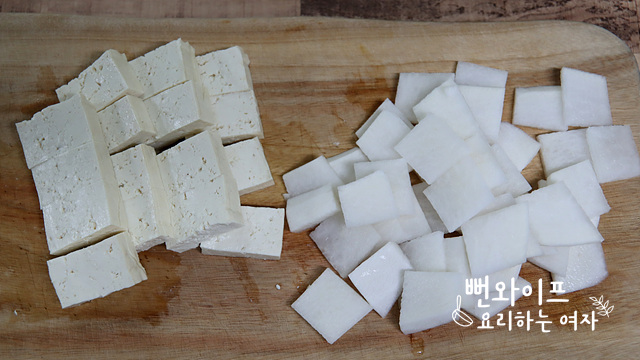
Slice the tofu and Korean radish into bite-sized flat squares.
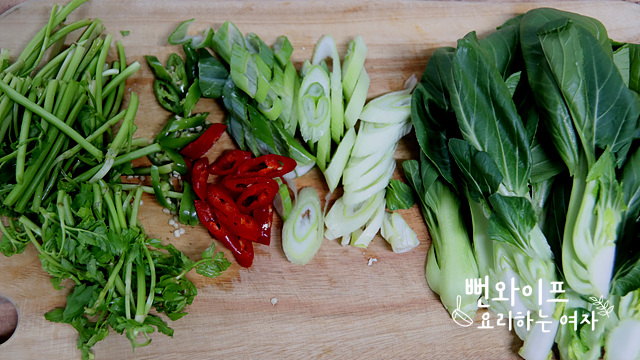
Quarter the bok choy lengthwise, cut the water dropwort into 4 to 5 cm lengths, and slice the large green onion and chili peppers diagonally.
Related post on the blog (Korean)blog.naver.com/ppunwife/223725280767If you need a guide on cleaning octopus, please refer to the photos above.
Wash the octopus
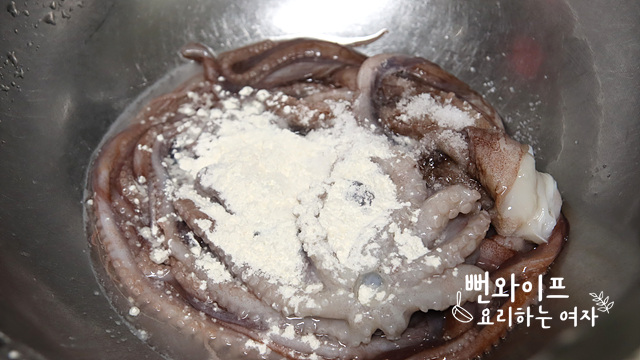
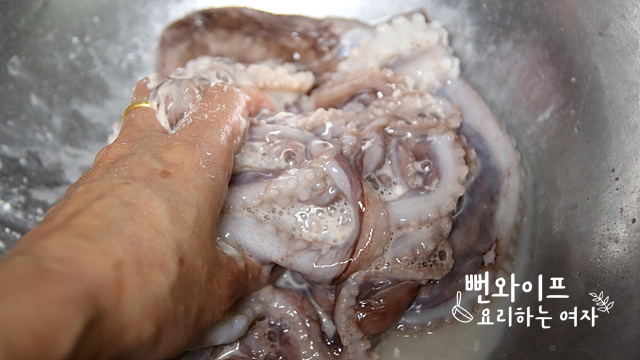
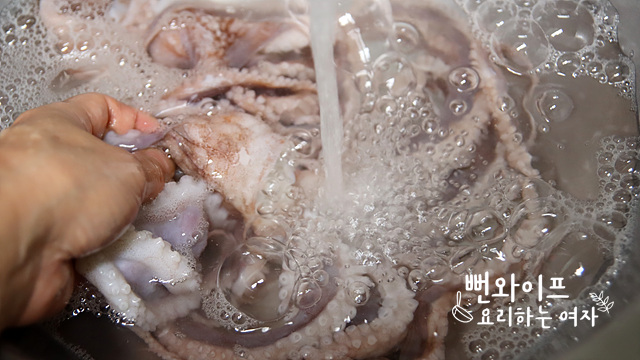
The slippery slime on octopus can cause a fishy odor, so rub it with 3 tbsp flour and 1 tbsp salt to clean it off.
This also cleanly removes any mud or debris trapped inside the suckers.
Rinse several times under running water while rubbing gently.
Simmer
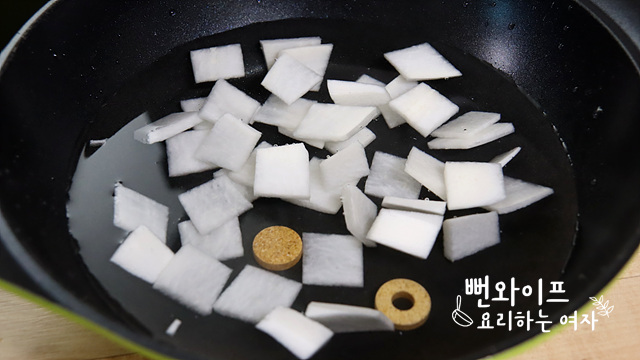
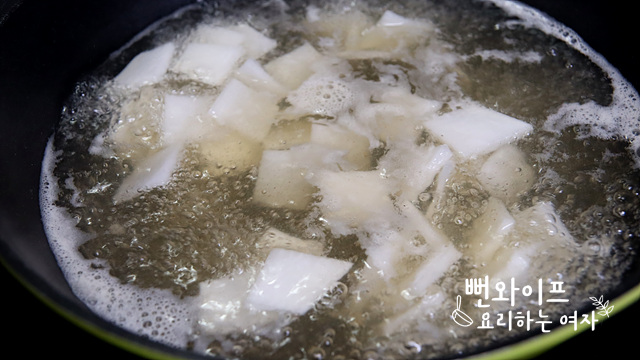
Add 6 cups water, 2 broth tablets, and the Korean radish to a pot, then bring to a boil over high heat.
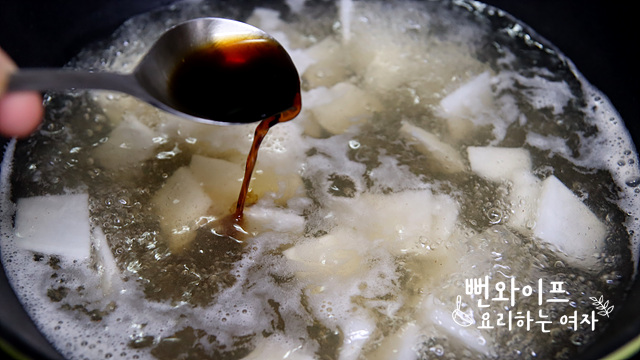
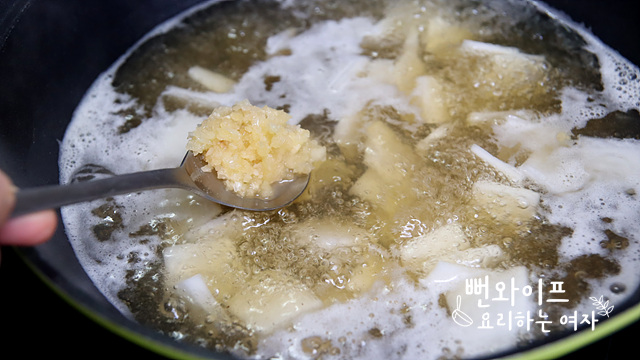
Season the broth while boiling until the radish is cooked through.
Add 1 tbsp soup soy sauce (guk-ganjang) or tuna extract sauce (= fish sauce), and add 1/2 tbsp minced garlic so the aroma remains light for a clean, refreshing broth...
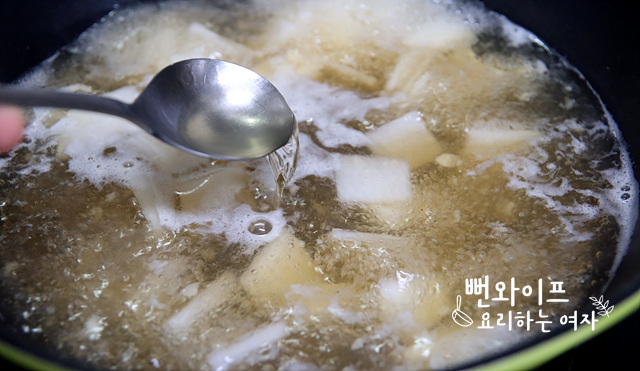
Add 1 tbsp cheongju (Korean rice wine) (= mirin) and let it simmer so the radish cooks until tender.
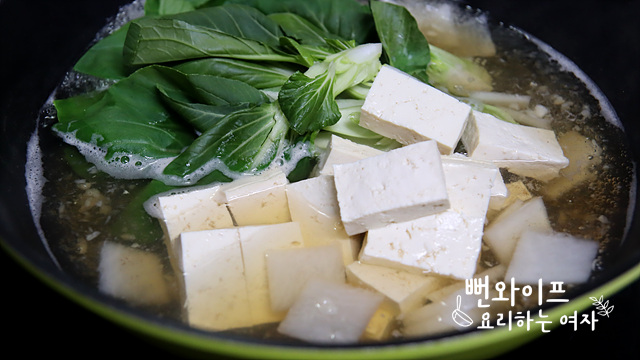
From this point, there is no need to simmer for long; just cook everything briskly.
Add the tofu and bok choy and let them cook briefly...
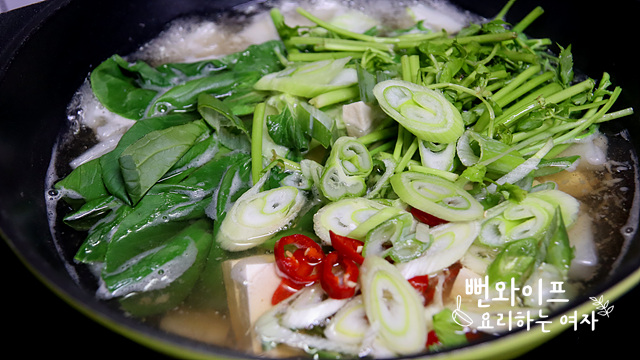
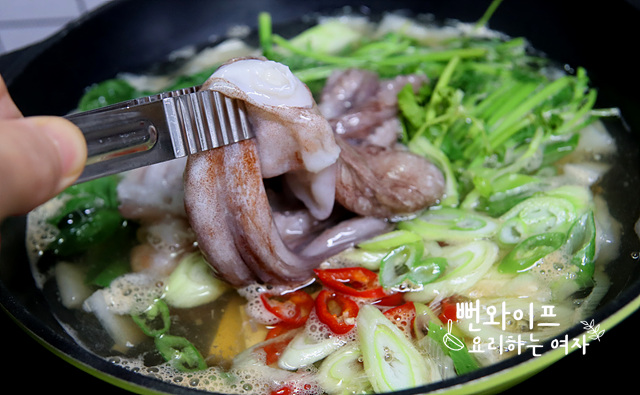
Add the water dropwort, large green onion, and chili peppers, and once it comes to a boil, add the octopus and a little ground black pepper at the very end.
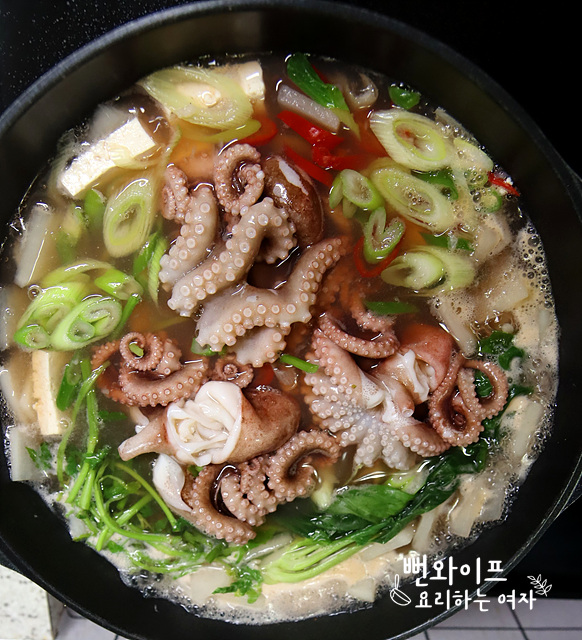
Octopus becomes tough if boiled for too long, so turn off the heat as soon as it turns slightly reddish and plumps up.
If the broth tastes under-seasoned, adjust with salt to finish.
Finish
The Nakji yeonpo tang is complete.
The color from the octopus has infused into the broth, giving it a deeper hue.
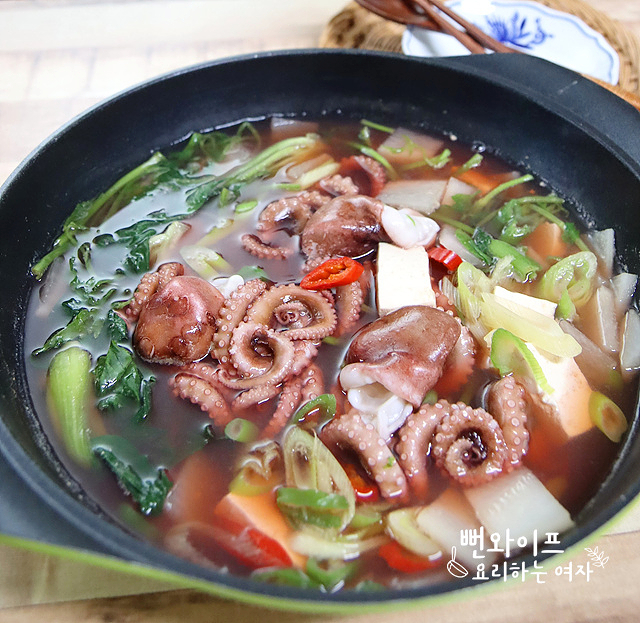
The broth tastes wonderfully clean, refreshing, and amazing.
To let the natural flavor of the main ingredient shine, it is best kept simply seasoned and enjoyed for its clear, light taste.
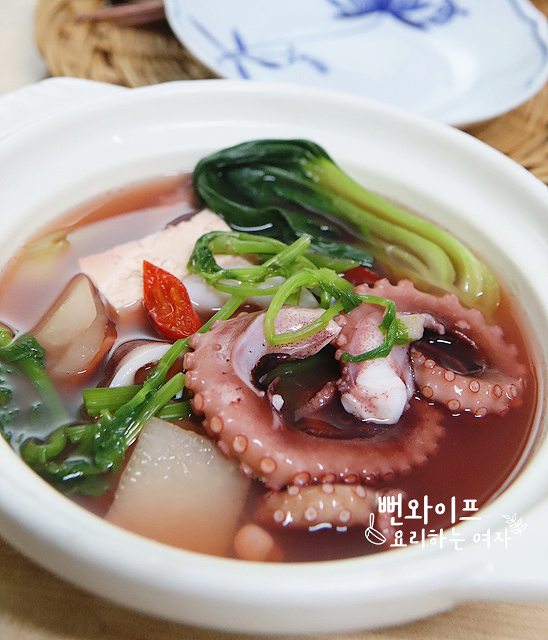
Because the octopus was quickly blanched, it is tender, chewy, and so delicious.
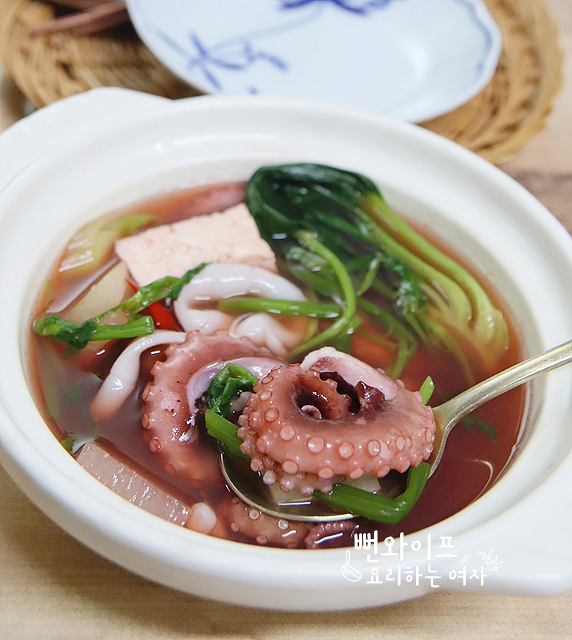
With so many solid ingredients, it is wonderful dipped in wasabi sauce or cho-gochujang.
It digests much more easily than meat and leaves you feeling invigorated. You can really see why autumn octopus is called a restorative food.
 Ppunwife's tips
- Water dropwort helps with heavy metal excretion and detoxification, and Korean radish aids digestion, making them great partner ingredients for Nakji yeonpo tang, so be sure to cook them together.
- Octopus becomes tough if boiled for too long, so turn off the heat as soon as it turns slightly reddish and plumps up.
FAQ
How do I cook the octopus so it doesn't get tough?
Octopus develops a tough texture if cooked too long. Turn off the heat and finish as soon as the flesh shrinks, plumps up, and turns reddish.
How do I clean off the fishy smell and debris from the octopus suckers?
Rubbing it with 3 tbsp flour and 1 tbsp salt cleans away the slippery slime and trapped debris in the suckers thoroughly. Rinse it several times under running water before using.
Can I substitute another vegetable if I don't have bok choy?
Instead of bok choy, you can add napa cabbage, mushrooms, or crown daisy to suit your preference.
Is there a good dipping sauce for the solid ingredients?
The generous octopus and vegetable pieces taste even better dipped in wasabi sauce or cho-gochujang (spicy sweet vinegar gochujang).