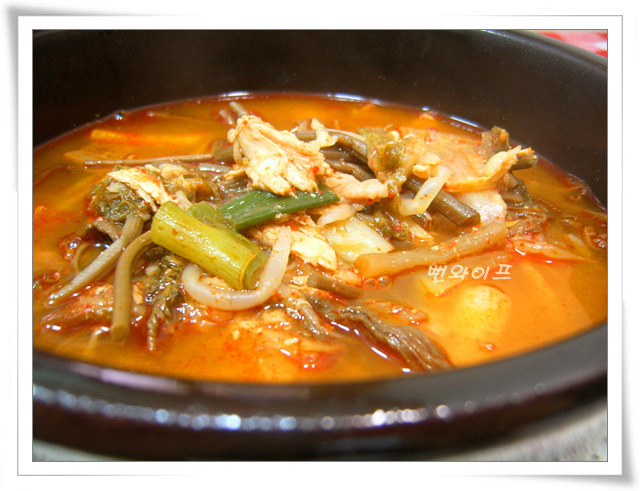
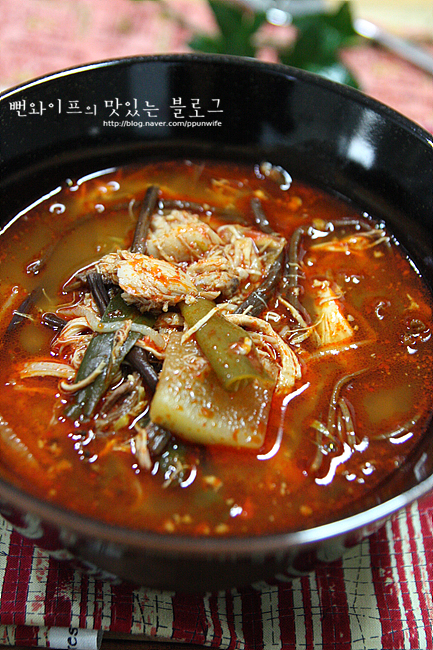
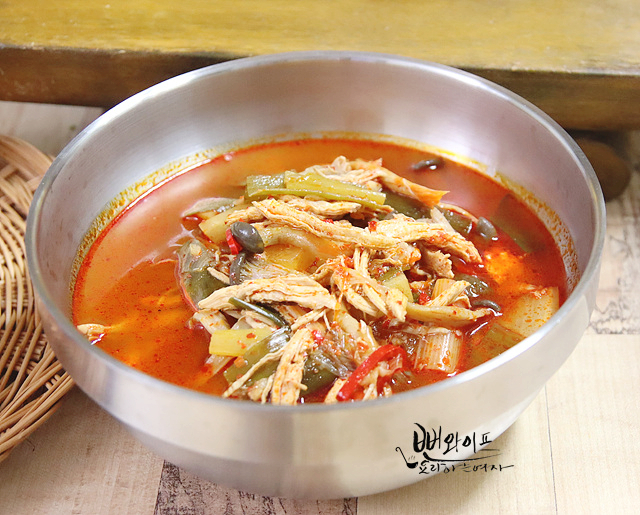
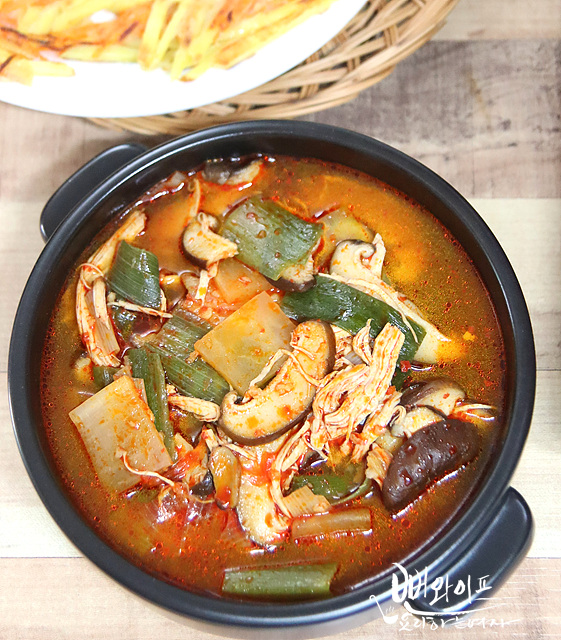
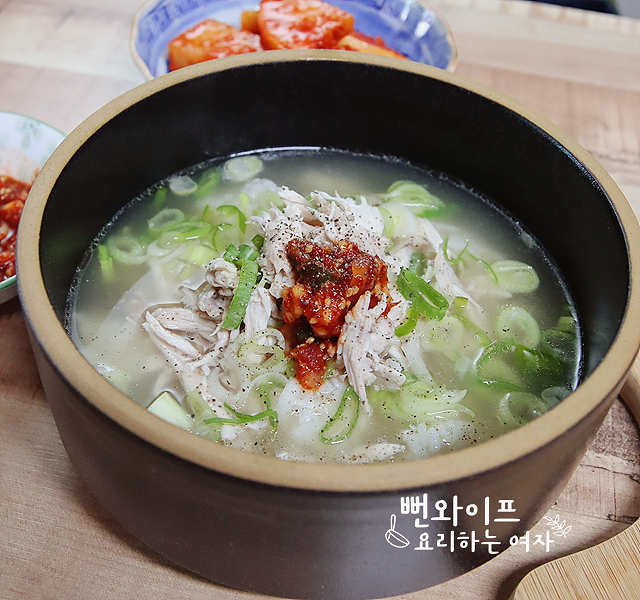
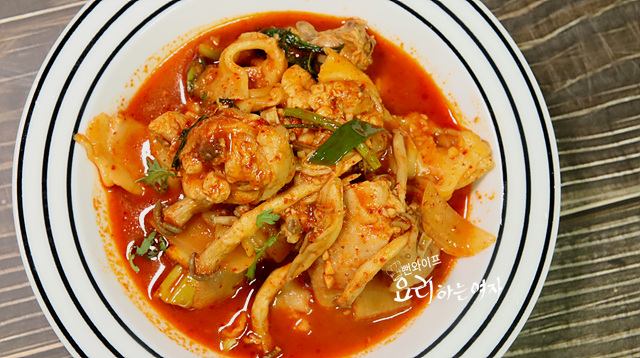
Dakgaejang (Spicy Chicken Soup) with Radish and Scallions
A 3-serving hangover soup made with seasoned chicken and vegetables simmered in chicken broth.
Translated from Korean by AI and not yet checked by a native speaker. Amounts and numbers are taken directly from the original recipe. Read the Korean original →
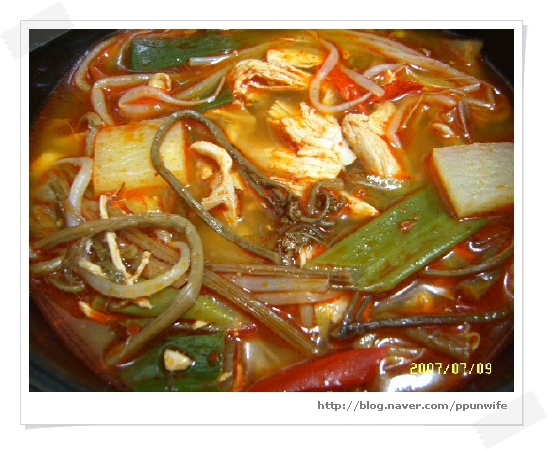
This is a spicy soup made by simmering an assortment of vegetables in a rich broth brewed from chicken breast and bones. Adding doenjang to the seasoning brings out a deep, savory richness, and it refreshes the stomach, making it perfect for a hangover cure.
- Servings
- 3 servings
- Difficulty
- Medium
- Spiciness
- Spicy
Ingredients
Ingredients
- Chicken1/2 (large)
- Korean radish (mu)150 g
- Large green onion (daepa)2 stalks
- Mung bean sprouts100 g
- Bracken fern (gosari)100 g
- Taro50 g
- Water1.5 L
Seasoning
- Garlic1 tbsp
- Gochugaru (Korean chili flakes)3 tbsp
- Doenjang (Korean soybean paste)1 tbsp
- Salt1 tsp
- Mirin (cooking rice wine)1 tbsp
- Ground black pepper1 tsp
- From a large chicken, I save the drumsticks and wings separately for stir-fries, and make dakgaejang with the breast and remaining meat. It is great to save up dry breast meat that often gets left behind and occasionally make soup like this.
Steps
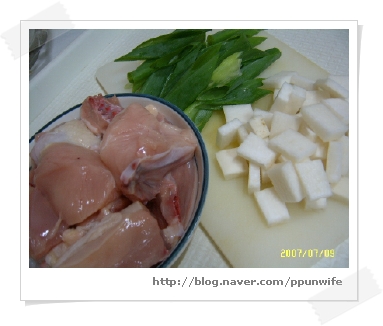
From a large chicken, I save the drumsticks and wings separately for stir-fries, and make dakgaejang with the breast and remaining meat.
It is great to save up dry breast meat that often gets left behind and occasionally make soup like this.
I cut the meat into large pieces. Dice the Korean radish into cubes,
and slice the large green onion diagonally.
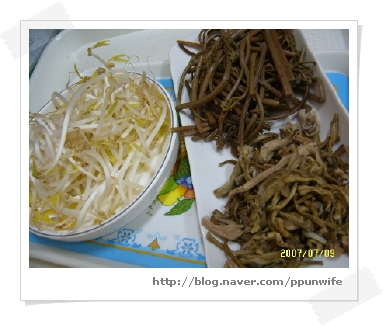
Wash the mung bean sprouts and prepare them raw, and I bought bracken fern that was already soaked in water.
Since I bought boiled taro stems, I just washed them clean. Cut them into bite-sized lengths.
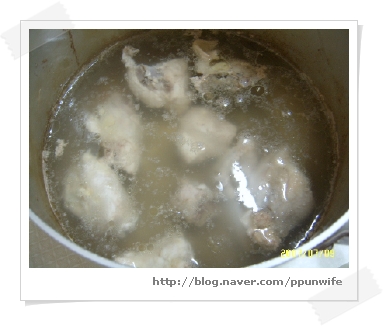
Add about 1.5 L of water, along with whole black pepper, mirin, and the cut chicken, then boil.
You only need to cook it until the meat is done.
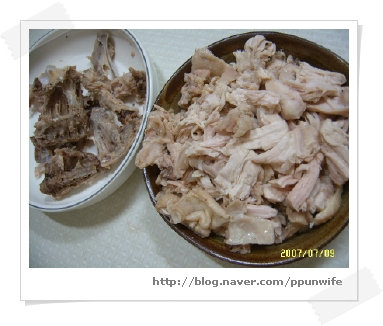
Debone the cooked meat and shred the chicken meat into bite-sized pieces.
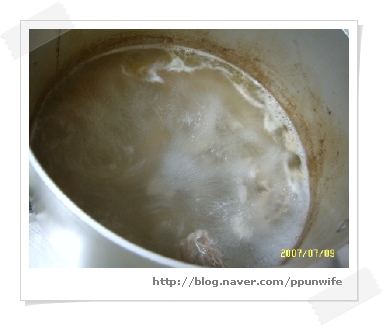
Add the stripped bones back into the water where the chicken was boiled, bring it back to a rolling boil,
and simmer over low heat for about 10 minutes. This will be the broth for the dakgaejang.
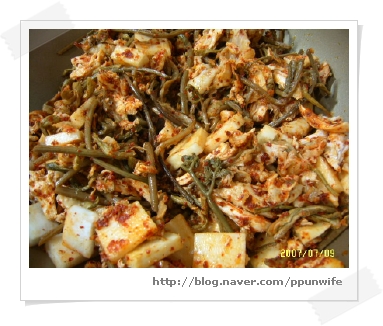
Except for the mung bean sprouts and large green onion, place the chicken meat, bracken fern, radish, and taro in the pot for cooking, then mix with the seasoning above.
Adding doenjang rather than just soy sauce or salt brings out a savory and deep, rich flavor.
Turn on the heat and stir-fry until the radish is slightly cooked...
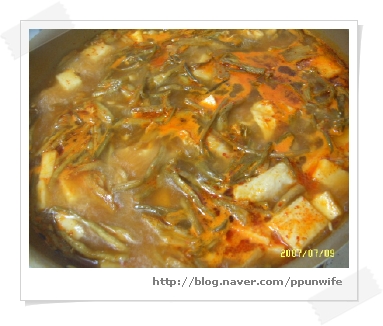
Pour in the broth simmered with the chicken bones. Bring to a boil over high heat, then reduce to low heat.
Simmer long enough until the bracken fern and taro become tender.
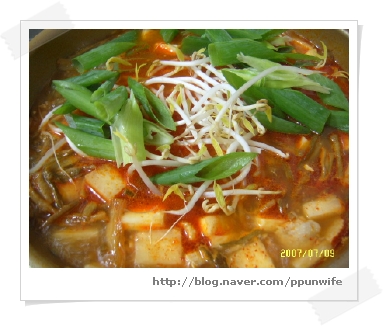
Add the mung bean sprouts and large green onion, then simmer for a few more minutes. If the soup tastes bland, adjust the seasoning with more salt.
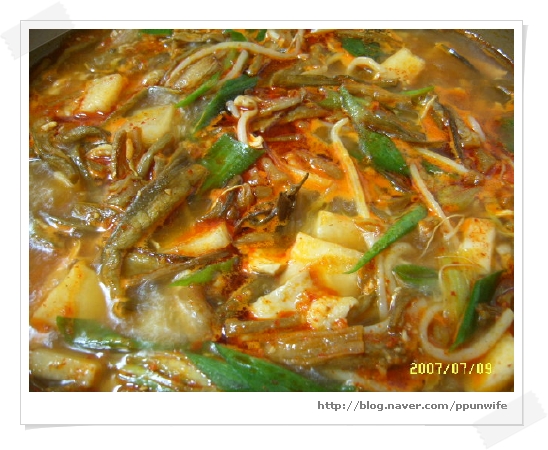
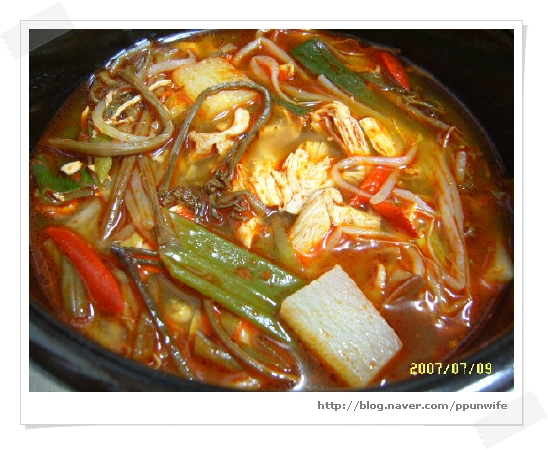
Ladle a portion into an earthenware bowl (ttukbaegi) and bring it to a boil over heat again, and you can enjoy hot soup until you finish eating.
This would also be fantastic as a hangover soup, right?
Honestly, this is how my husband and I cure our hangovers.
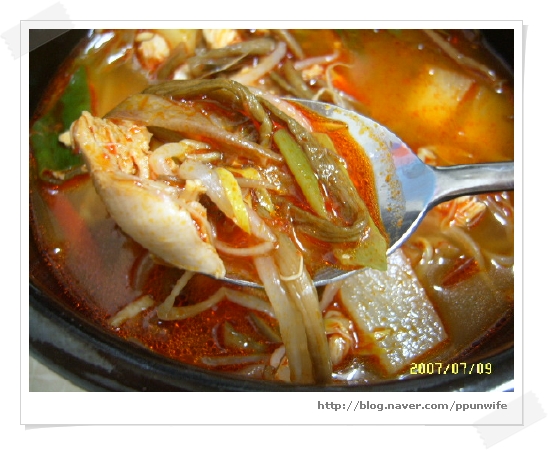
 Ppunwife's tips
- Adding doenjang rather than just soy sauce or salt brings out a savory, rich flavor.
- Ladle a portion into an earthenware bowl and bring it to a boil over heat again, and you can enjoy hot soup until you finish eating.
FAQ
Why do you add doenjang to the soup seasoning?
Adding doenjang rather than using only soy sauce or salt creates a much deeper, more savory flavor.
How do you prepare the chicken broth?
After boiling the chicken and stripping off the meat, return the bones to the cooking water and simmer over low heat for about 10 minutes.
How do you prepare the taro stems?
If you purchased pre-boiled taro stems, simply rinse them clean and cut them into bite-sized lengths before using.
Can I use soybean sprouts instead of mung bean sprouts? AI-generated
Generally, using soybean sprouts instead of mung bean sprouts will also yield a clean, refreshing broth flavor.