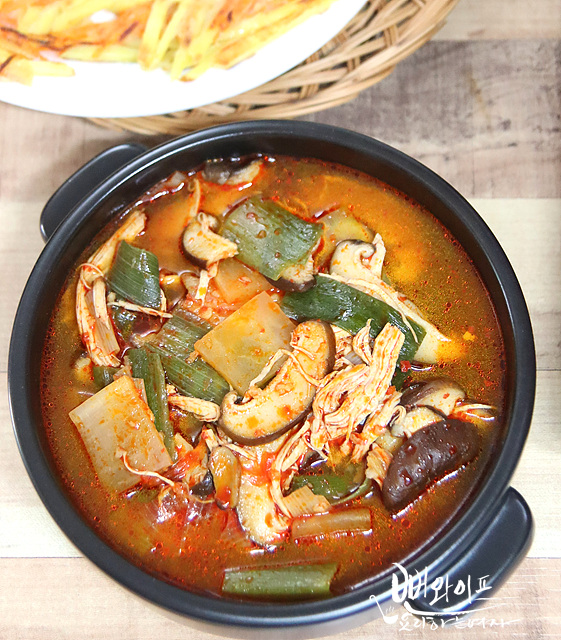
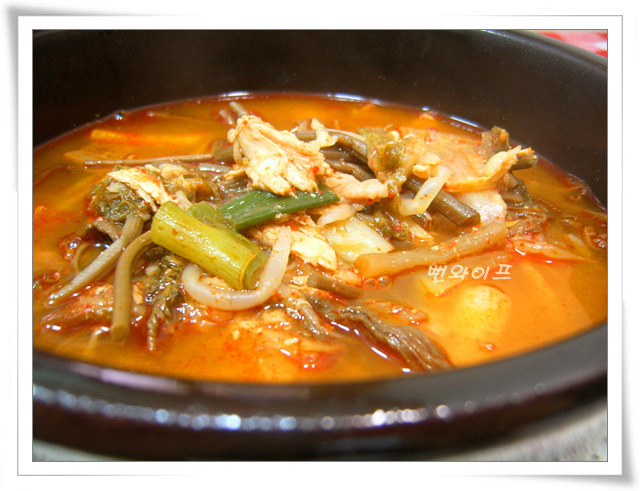
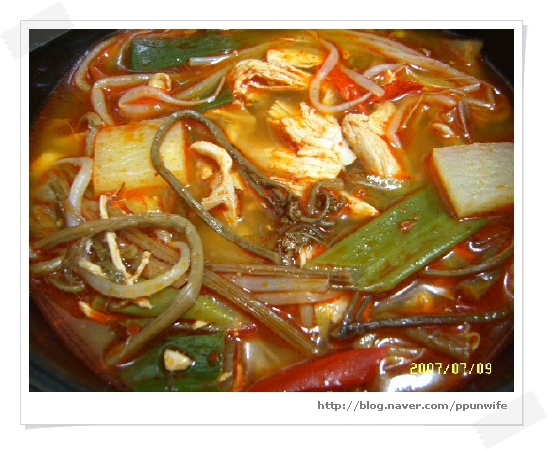
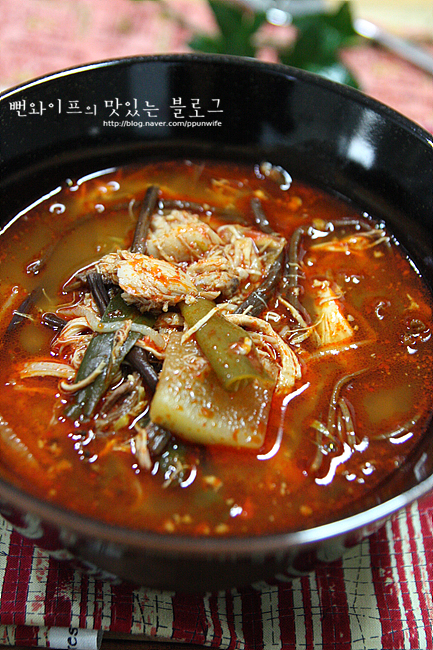
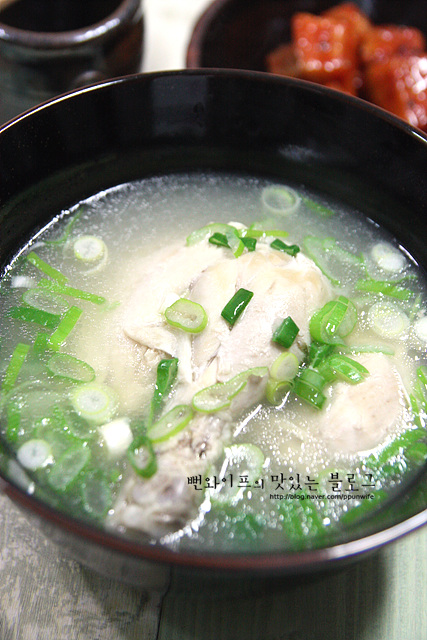
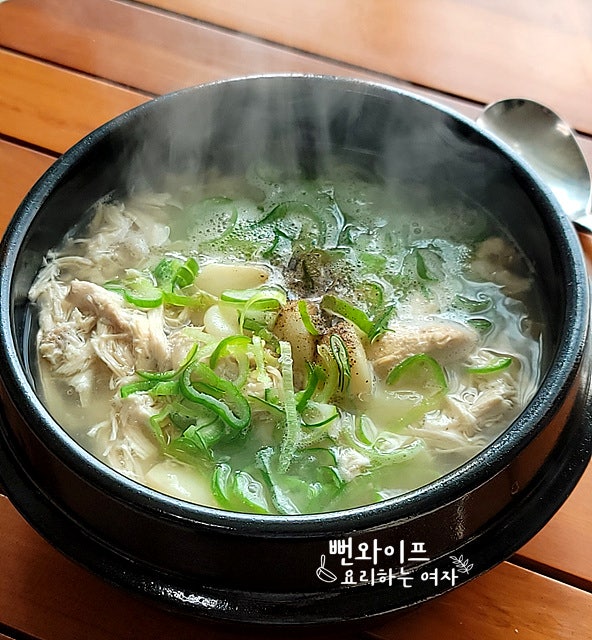
Spicy and Rich Dakgaejang (Spicy Chicken Soup)
A hearty soup for 5 to 6 servings made by simmering boiled chicken breast and vegetables in a spicy, flavorful broth.
Translated from Korean by AI and not yet checked by a native speaker. Amounts and numbers are taken directly from the original recipe. Read the Korean original →
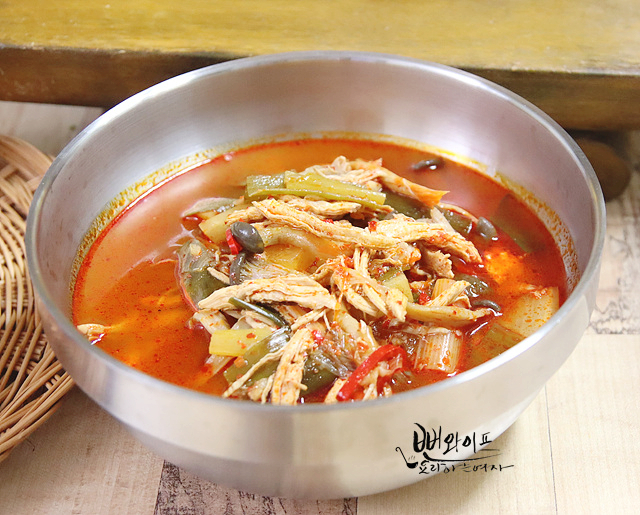
Radish and gochugaru are stir-fried in chicken broth brewed from boiling chicken breast to create a spicy soup. Simmering the shredded meat and oyster mushrooms gently yields tender, rich flavor without any dryness.
- Servings
- 5–6 servings
- Cook time
- 30 minprep not included
- Difficulty
- Medium
- Spiciness
- Spicy
Ingredients
Ingredients
- Chicken breast450 g
- Korean radish (mu)200 g
- Baby oyster mushrooms1 pack, 200 g
- Large green onion (daepa)1 stalk
- Water10 cups
- Ginger1 knob
- Whole black peppercorns1 tbsp
Seasoning
- Gochugaru (Korean chili flakes)3 tbsp
- Soup soy sauce (guk-ganjang)2 tbsp
- Tuna extract sauce (chamchi-aek)2 tbsp
- Mirin (cooking rice wine)2 tbsp
- Salt1 tsp
- Ground black peppera little
- You can substitute soybean sprouts, mung bean sprouts, or other mushrooms, and bracken fern or taro stems are also great.
Steps
Prepare the ingredients
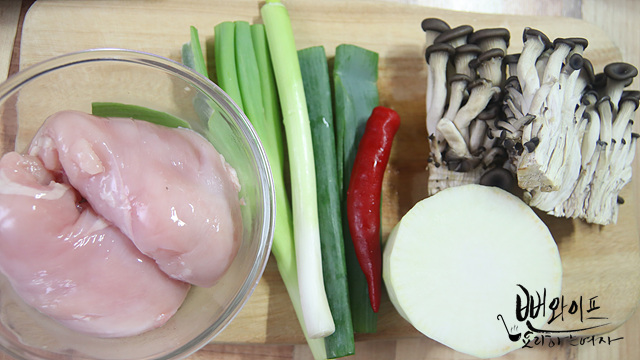
Prepare 450g chicken breast, Korean radish (mu), baby oyster mushrooms, large green onion (daepa), and red chili pepper.
You can substitute soybean sprouts, mung bean sprouts, or other mushrooms, and bracken fern or taro stems are also great.
Slice the ingredients
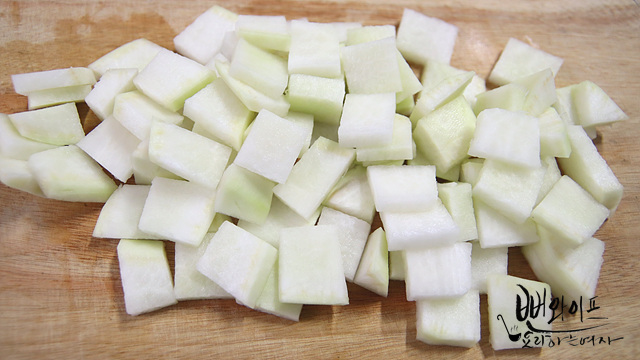
Cut the Korean radish into bite-sized, thin flat squares, making sure they are not too thin.
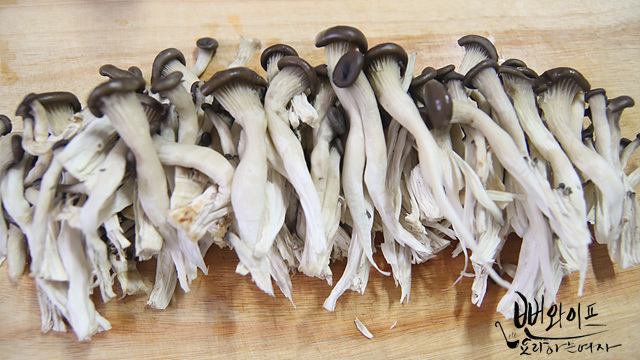
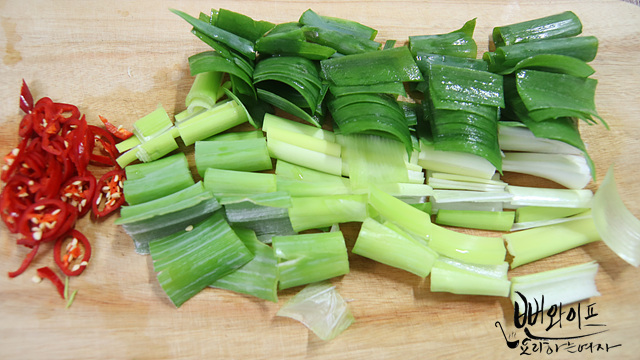
Tear the baby oyster mushrooms into individual strands, split the large green onion in half lengthwise and cut into 2 to 3 cm lengths, and slice the red chili pepper diagonally.
Boil the chicken breast
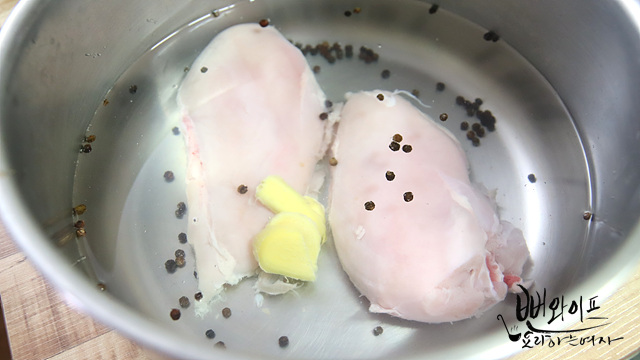
Add the chicken breast, 1 knob ginger, and 1 tbsp whole black peppercorns to a pot, then pour in a generous 10 cups of water.
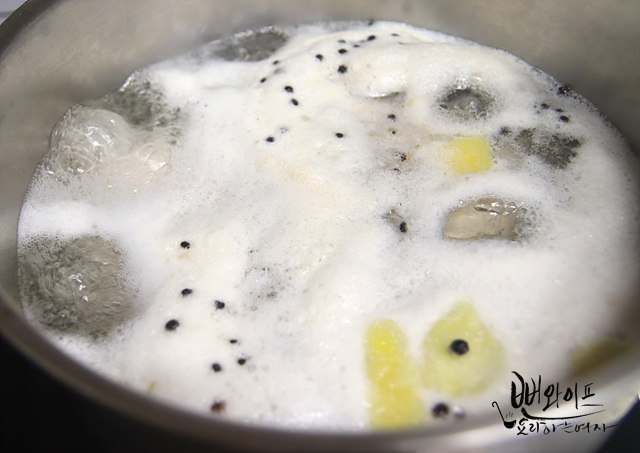
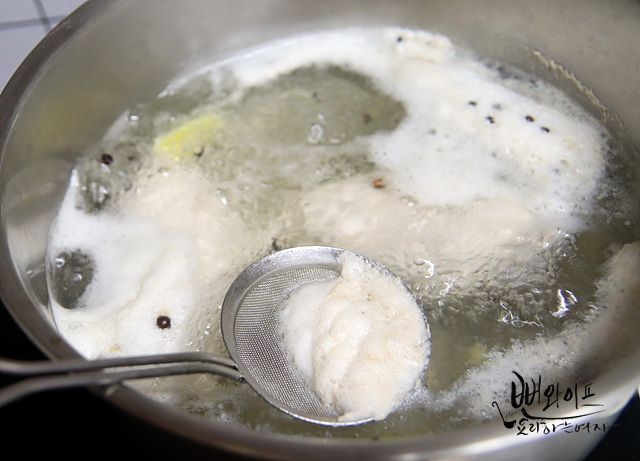
When it comes to a rolling boil over high heat, neatly skim off the messy foam.
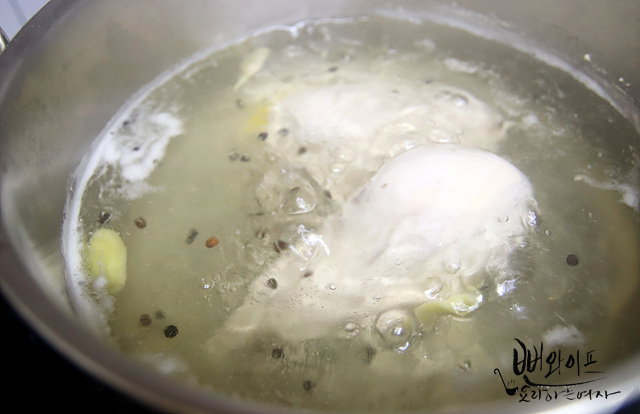
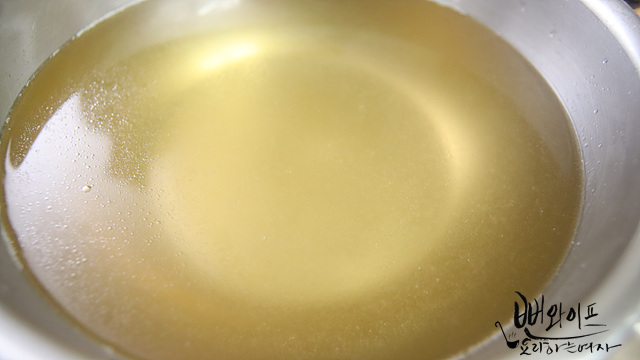
Reduce the heat to low and simmer gently for over 10 minutes until cooked through.
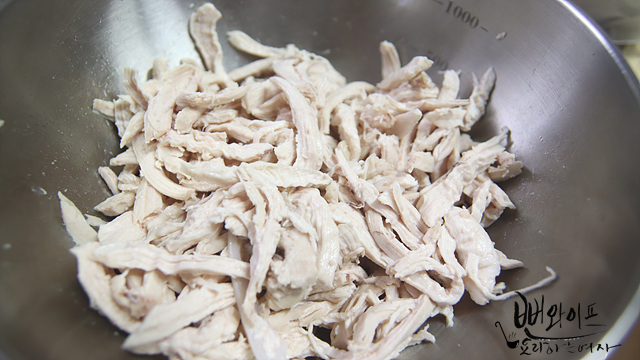
Tear the chicken breast into bite-sized strips, strain out and discard the ginger and peppercorns used while boiling, and save only the broth.
The 10 cups will reduce during the boiling process to about 7 to 8 cups of chicken broth.
Cook the dakgaejang
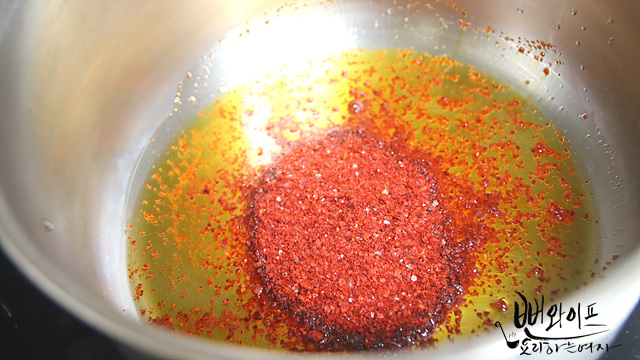
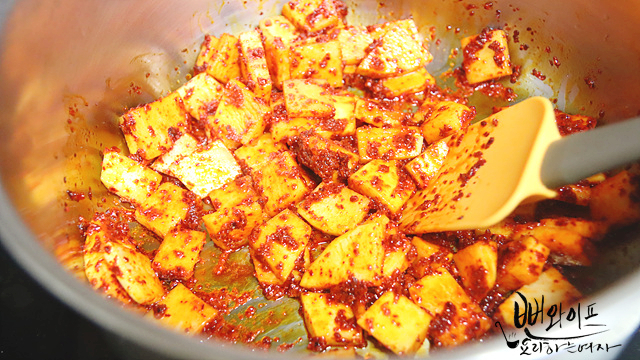
Add 2 tbsp cooking oil, 3 tbsp gochugaru (Korean chili flakes), and the radish to a pot, then stir-fry briskly so it does not burn.
This step makes the chili oil first; if it feels too dry and seems likely to burn, stir-fry while adding a little bit of water at a time.
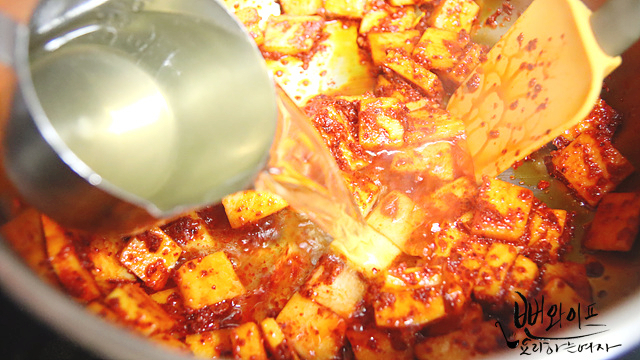
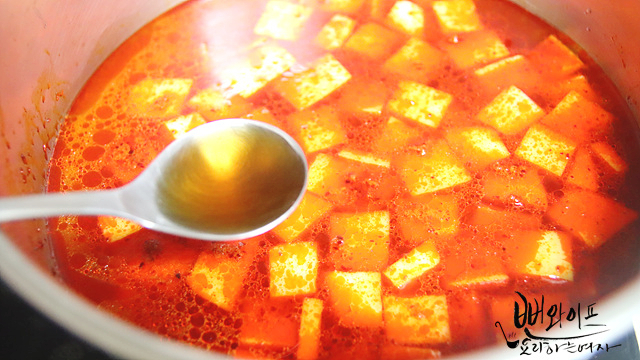
Pour in the chicken broth, add 2 tbsp soup soy sauce (guk-ganjang) and 2 tbsp tuna extract sauce (chamchi-aek), and once it begins to boil over high heat...
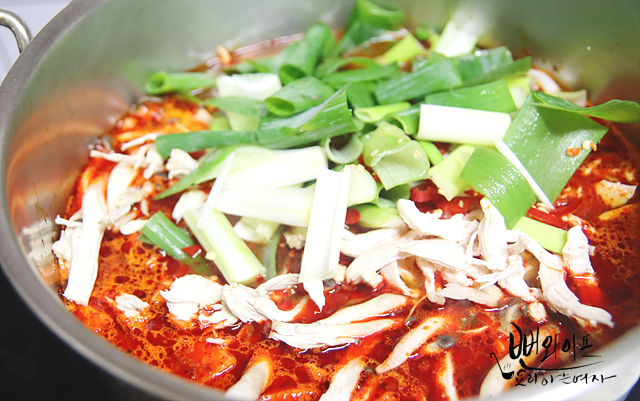
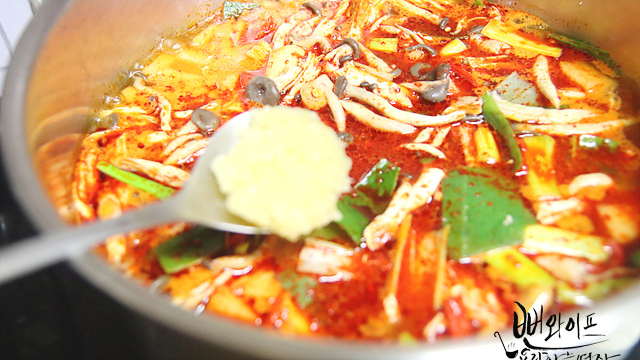
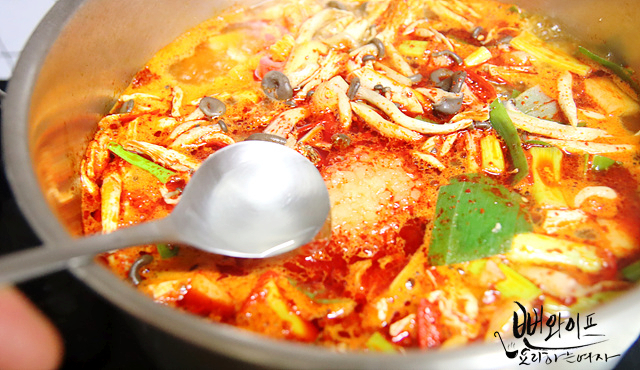
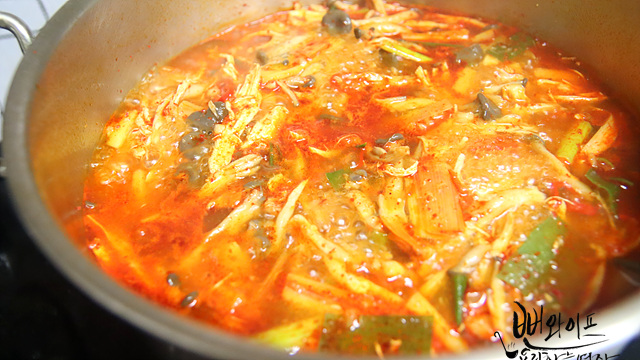
Add the shredded chicken breast, mushrooms, large green onion, 2 tbsp minced garlic, and 2 tbsp mirin (cooking rice wine), then simmer gently for about 20 minutes.
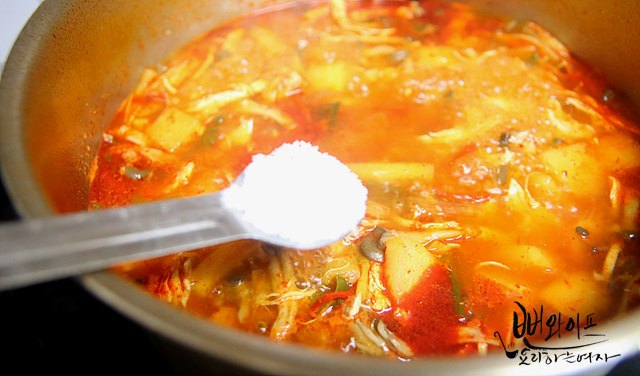
Once all the ingredients are tender and cooked through, season to finish with 1 tsp salt, adding more if it feels lacking.
After simmering briefly, finish with a pinch of ground black pepper at the very end.
You may also beat an egg at the end and cook it lightly.
Finish
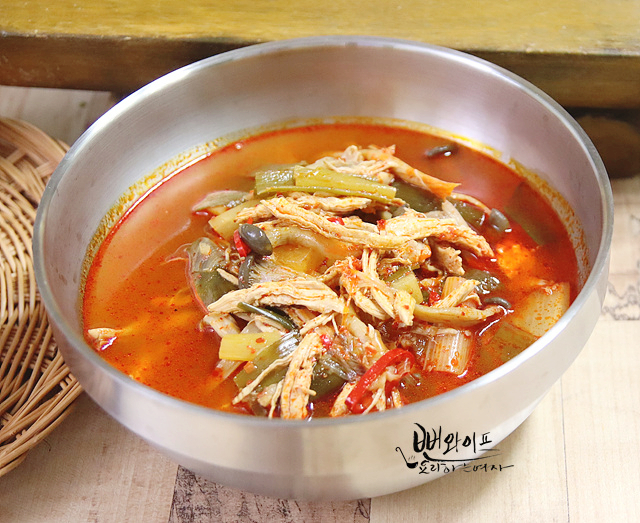
When you simmer naturally dry chicken breast like this, it turns moist and tender so it goes down easily.
The chewy mushrooms make up for any missing texture, flavor, and nutrition.
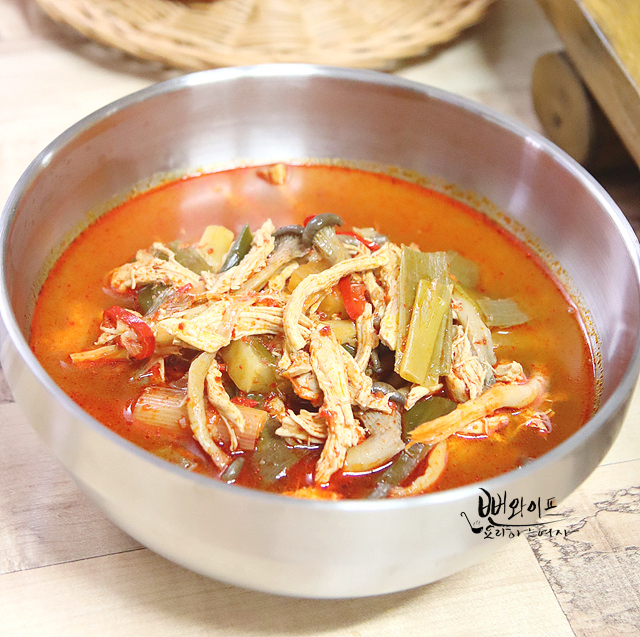
Even though it is dakgaejang, it is plenty delicious made with simple ingredients.
With frequent rain, morning and nighttime temperatures drop, so a warm soup comes to mind morning and evening.
If you have chicken breast sitting neglected, try turning it into piping hot dakgaejang like I do.
 Ppunwife's tips
- This step makes the chili oil first; if it feels too dry and seems likely to burn, stir-fry while adding a little bit of water at a time.
- You may also beat an egg at the end and cook it lightly.
FAQ
Can I add other ingredients instead of oyster mushrooms?
You can substitute soybean sprouts, mung bean sprouts, bracken fern (gosari), taro stems, or other types of mushrooms.
What should I do if the gochugaru and radish seem likely to burn while stir-frying?
In the process of making chili oil, if the pot becomes too dry and seems about to burn, stir-fry while pouring in a little bit of water at a time.
Does adding an egg at the end go well with it?
Lightly beating an egg and letting it cook just before turning off the heat, after adjusting the seasoning, goes very well with it.