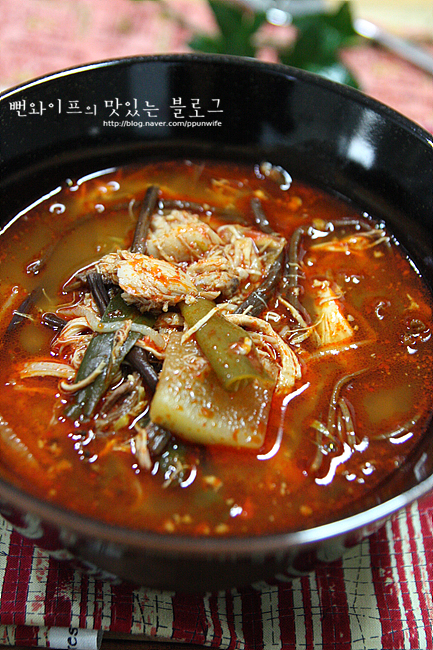
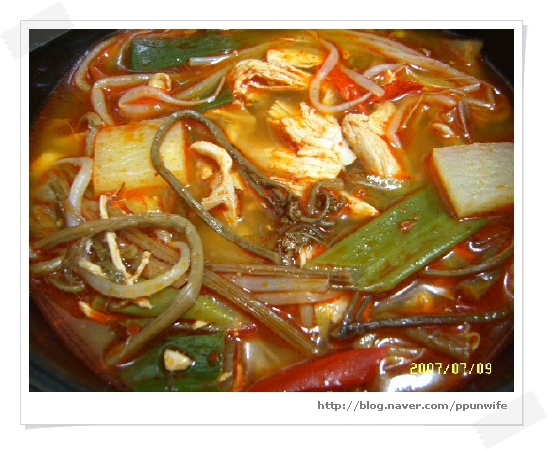
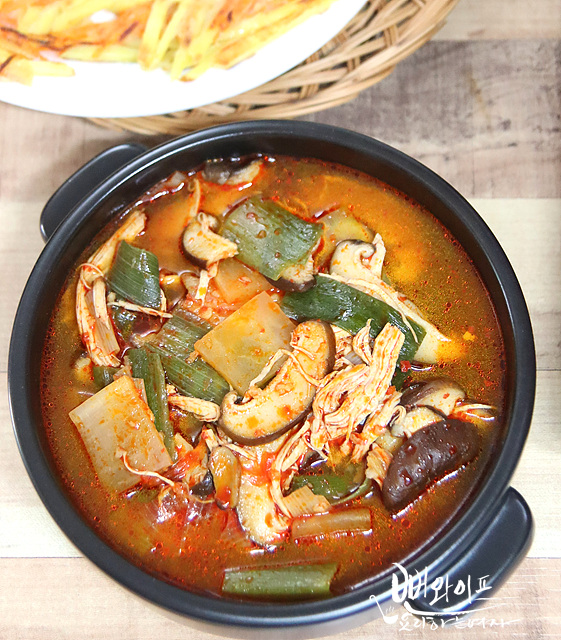
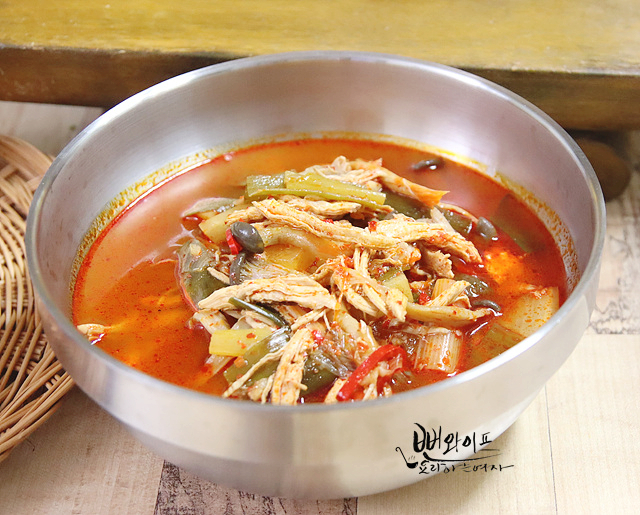
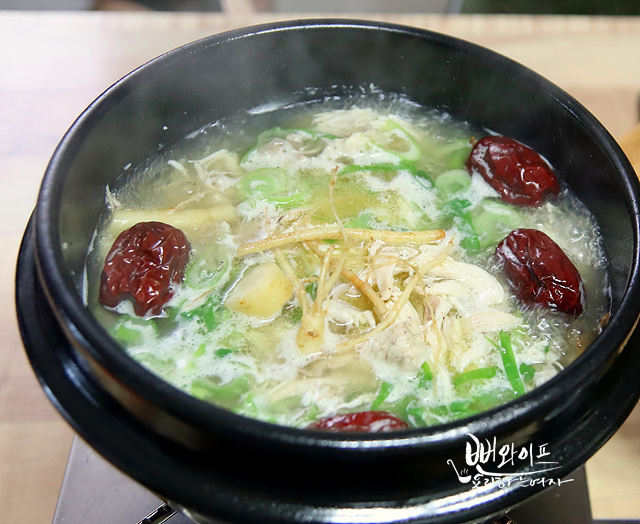
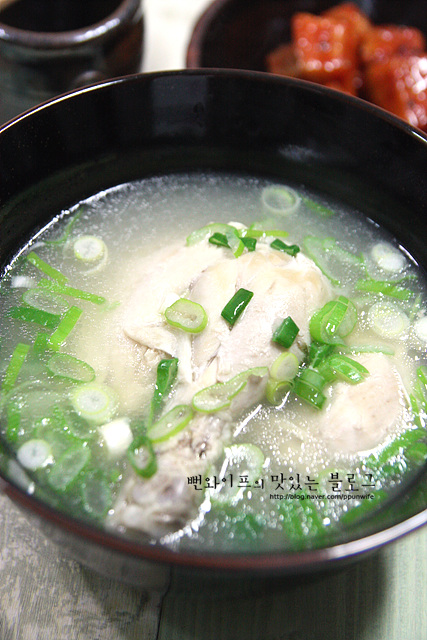
Dakgaejang (Spicy Chicken Soup), Rich and Spicy
A nourishing restorative soup made by simmering shredded chicken and vegetables in a deeply brewed chicken bone broth with spicy seasoning.
Translated from Korean by AI and not yet checked by a native speaker. Amounts and numbers are taken directly from the original recipe. Read the Korean original →
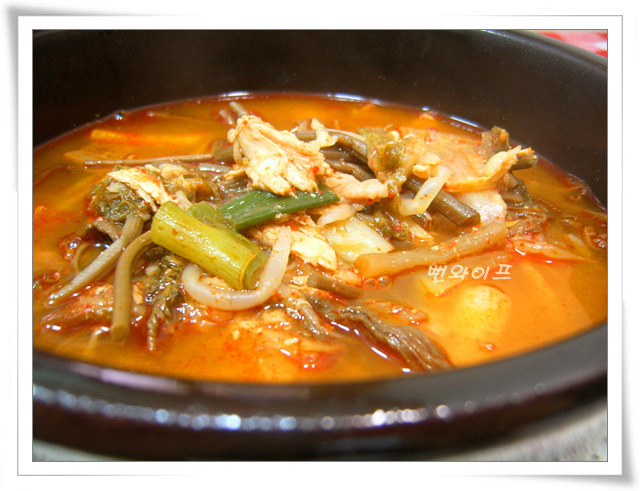
Simmer chicken thoroughly to make a rich broth, then combine the shredded meat with vegetables like bracken fern and mung bean sprouts seasoned with a spicy sauce. Simmered gently for a long time, the deep flavors of the ingredients come through, making it perfect as a restorative dish for dog days of summer or a hearty meal on a cold day.
- Servings
- 4 servings
- Cook time
- 35 minprep not included
- Difficulty
- Medium
- Spiciness
- Spicy
Ingredients
Ingredients
- Chicken1/2 whole (large)
- Korean radish (mu)100 g
- Mung bean sprouts100 g
- Bracken fern (gosari)100 g
- Taro50 g
- Large green onion (daepa)1 stalk
- Water10 cups
Seasoning
- Gochugaru (Korean chili flakes)4 tbsp
- Minced garlic2 tbsp
- Soup soy sauce (guk-ganjang)2 tbsp
- Doenjang (Korean soybean paste)1 tbsp
- Mirin (cooking rice wine)2 tbsp
- Ginger juice1 tbsp
- Ground black pepper1 tsp
- Salta little
- If using a whole chicken, prepare one medium chicken; for a large chicken weighing over 1 kg, half a chicken is enough.
- Do not throw away the leftover chicken bones after prepping; keep them in the freezer and use them when making broth, as they can be used across many soup dishes.
Steps
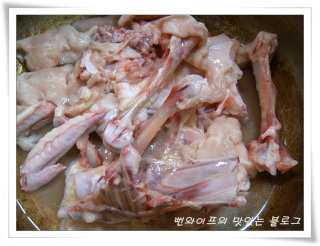
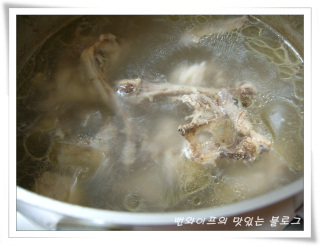
1. I gathered chicken breasts from two chickens that rarely get eaten, along with bones removed while prepping a whole chicken.
If using a whole chicken, prepare one medium chicken; for a large chicken weighing over 1 kg, half a chicken is enough.
Do not throw away leftover chicken bones after prepping; keep them in the freezer and use them when making broth, as they can be used across many soup dishes.
2. Add the chicken bones and meat to the water and boil thoroughly for over 20 minutes.
For a whole chicken, boil for over 10 minutes more until the meat is fully cooked.
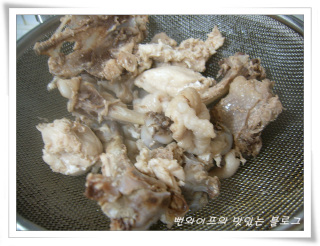
3. Strain the broth through a sieve, and tear the deboned meat into bite-sized pieces.
The strained broth should yield around 8 cups.
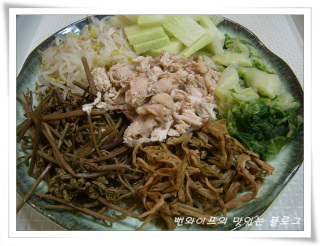
4. Cut the boiled bracken fern, taro stems, blanched mung bean sprouts, outer cabbage leaves, and Korean radish into bite-sized lengths.
Though missing from the photo, I also sliced the large green onion into large pieces.
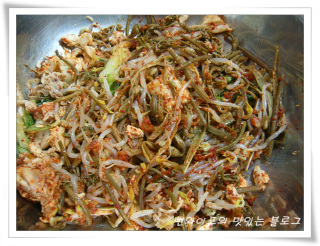
5. Place all the above ingredients except the radish into a bowl, add all the seasoning ingredients (except salt), and mix well with your hands.
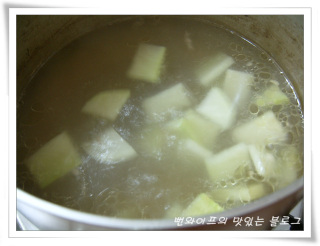
6. Add the radish to the broth and bring it to a rolling boil.
You can also add the radish when boiling the chicken bones and meat, then fish it out.
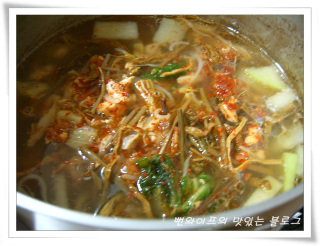
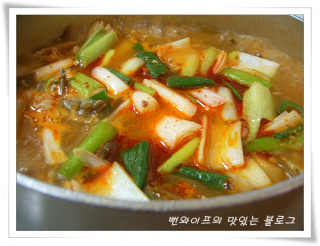
7. Add the seasoned ingredients, and once it starts to boil, simmer over low heat for over 15 minutes until all ingredients are completely tender.
8. Adjust the seasoning if it is bland, add the large green onion, and simmer for a few more minutes until cooked through.
 Ppunwife's tips
- If you want a sharper spicy kick, you can add about 2 tbsp of chili oil when boiling.
- Dakgaejang and yukgaejang taste much better when cooked in large batches because the broth becomes deeply concentrated.
- Make a large batch at once, let it cool, freeze it in 1-portion servings, and thaw and boil it quickly whenever needed.
FAQ
How can I make it spicier and with more kick?
To your taste, you can add about 2 tbsp of chili oil while boiling to give it a sharper, spicier kick.
Can I use a whole chicken instead of chicken bones and chicken breast?
If using a whole chicken, prepare one medium chicken, or half a chicken for a large chicken weighing over 1 kg, and boil for over 10 minutes longer so the meat cooks through.
How should I store it if I cook a large batch?
Boil a generous batch, let it cool, divide into 1-portion containers, and freeze. Whenever you need a meal, just thaw and quickly boil it up.