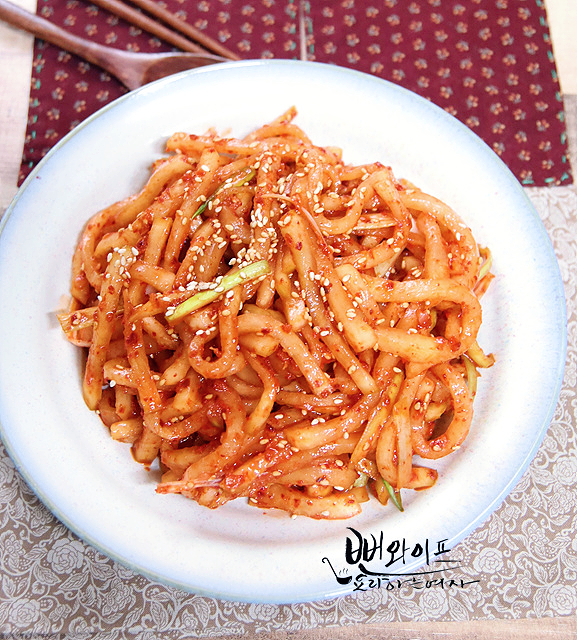
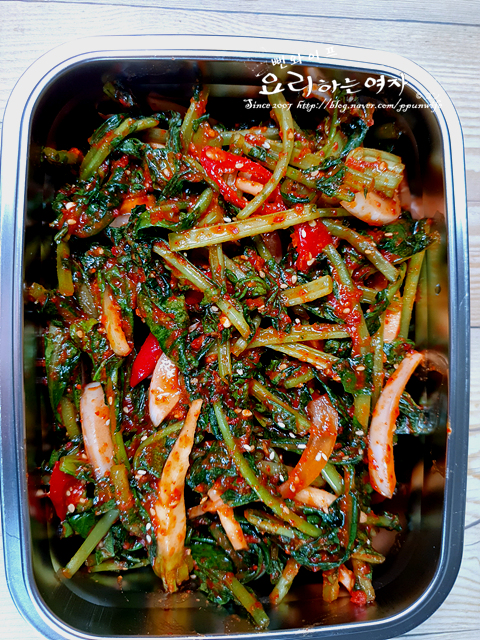
Crunchy Mumallaengi Kimchi (Dried Radish Kimchi)
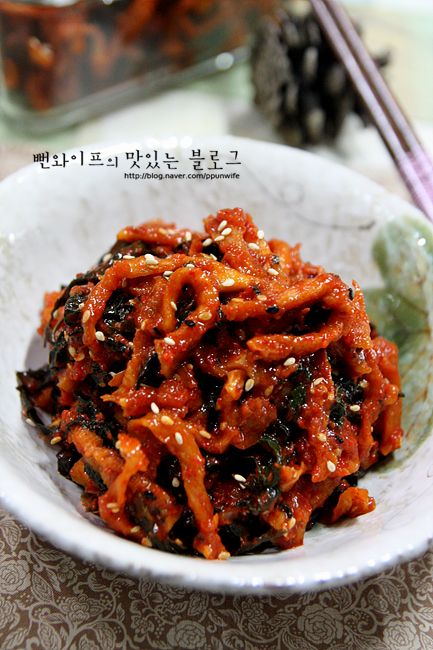
Crunchy dried radish kimchi tossed with dried chili leaves in a seasoned glutinous rice paste and gochugaru sauce.
Translated from Korean by AI and not yet checked by a native speaker. Amounts and numbers are taken directly from the original recipe. Read the Korean original →
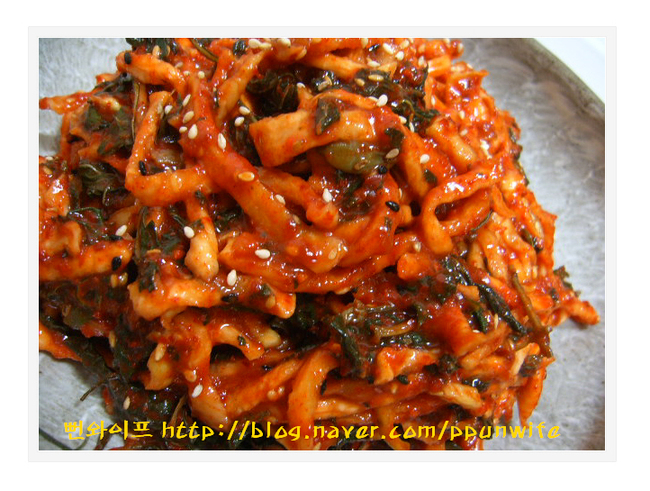
This winter side dish is made by rehydrating dried radish and dried chili leaves, then tossing them in a moist glutinous rice paste seasoning. The chewy, crunchy texture pairs wonderfully with the sweet and savory sauce. It is delicious eaten right away or left at room temperature to ferment slightly for a tangy flavor.
- Servings
- about 5–6 servings
- Difficulty
- Medium
- Spiciness
- Spicy
Ingredients
Ingredients
- Dried radish strips (mumallaengi)150 g
- Dried chili leaves50 g
Seasoning
- Glutinous rice paste2 cups
- Minced garlic3 tbsp
- Gochugaru (Korean chili flakes)1 cup
- Anchovy fish sauce4 tbsp
- Corn syrup (mulyeot)4 tbsp
- Minced ginger1 tsp
- Toasted sesame seeds
Glutinous rice paste
- Glutinous rice flour4 tbsp
- Water2 cups
- You do not need to soak the dried radish strips in water for long; simply scrub and rinse them about 4 times to rehydrate them, or soak them for about 30 minutes if you prefer a softer texture, then squeeze out the water firmly.
- Soak the dried chili leaves for over 30 minutes until soft, rinse several times, and squeeze out the water firmly.
- If you do not have dried chili leaves, you can cut scallions into suitable lengths and add them instead.
- If you dislike the strong aroma of anchovy fish sauce, you can use a mix of anchovy fish sauce and soy sauce.
Steps
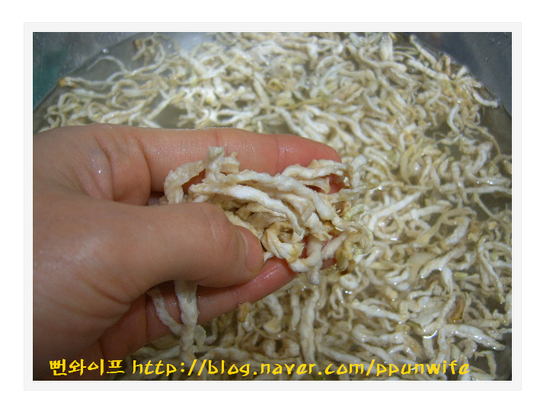
These dried radish strips are a bit thinner than other varieties. I prefer thinner ones over thick ones, so I buy these every year.
Without needing to soak them in water for long, scrubbing and rinsing them about 4 times rehydrates them just right. I prefer them a bit chewy.
If you like them softer, soak them for about 30 minutes. Squeeze out the excess water firmly and set aside.
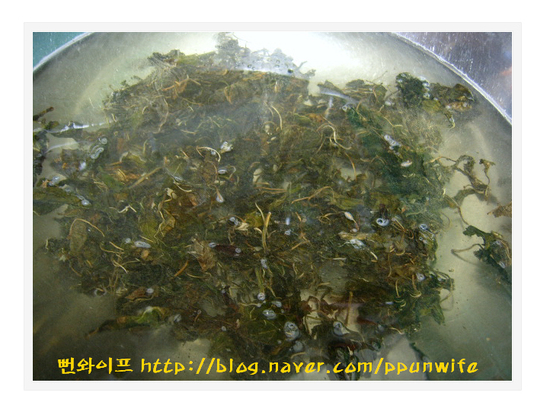
The chili leaves need to be soaked for over 30 minutes.
Because the thin chili leaves are dried rock-hard, they must be soaked in water for a long time to become soft.
Once softened, rinse the chili leaves several times in water and squeeze out the excess water firmly.
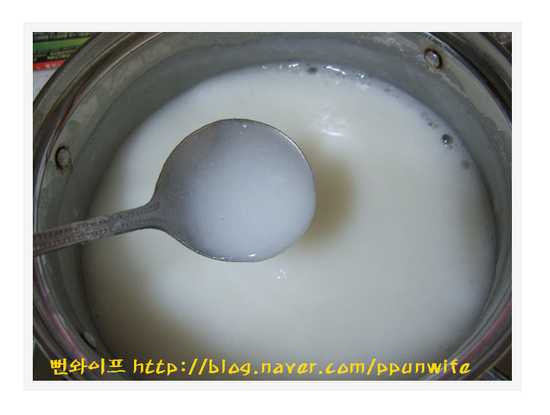
Add 4 tbsp of glutinous rice flour and 2 cups of water, then stir until there are no lumps.
Turn on the heat and simmer the paste until it thickens. Once done, place the bowl in cold water to let it cool down.
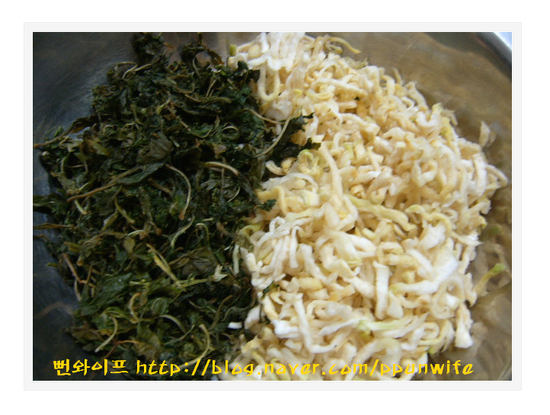
Squeeze the water out of the rehydrated dried radish strips and chili leaves, then place them in a bowl.
Chili leaves are not easy to come by these days. In fact, chili leaves are more expensive than dried radish.
Dried radish strips pair wonderfully with slightly bitter chili leaves.
If you do not have dried chili leaves, you can cut scallions into suitable lengths and add them.
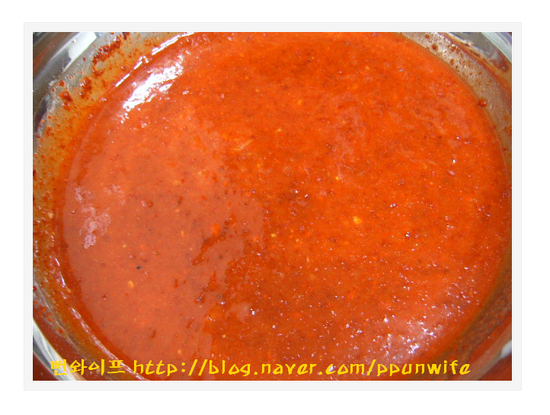
To the cooled glutinous rice paste, add 3 tbsp minced garlic, 1 cup gochugaru (Korean chili flakes) (0.5 cup fine + 0.5 cup coarse), 4 tbsp anchovy fish sauce, 4 tbsp corn syrup (mulyeot), and 1 tsp minced ginger to make the seasoning.
Mix well and let it sit for about 30 minutes so the chili flakes can hydrate.
If you dislike the strong scent of anchovy fish sauce, you can mix anchovy fish sauce and soy sauce.
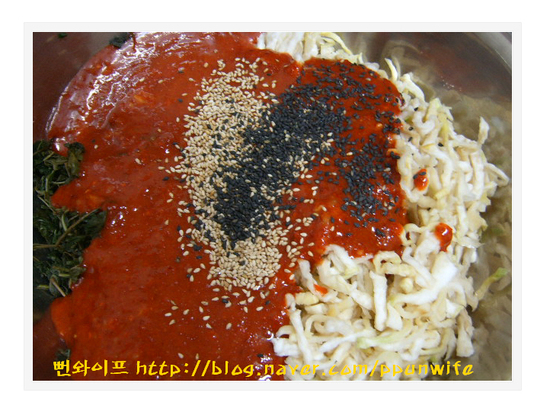
Add all of the seasoning, dried radish strips, and chili leaves together, sprinkle with toasted sesame seeds, and toss well.
Taste and adjust the seasoning with salt to suit your preference.
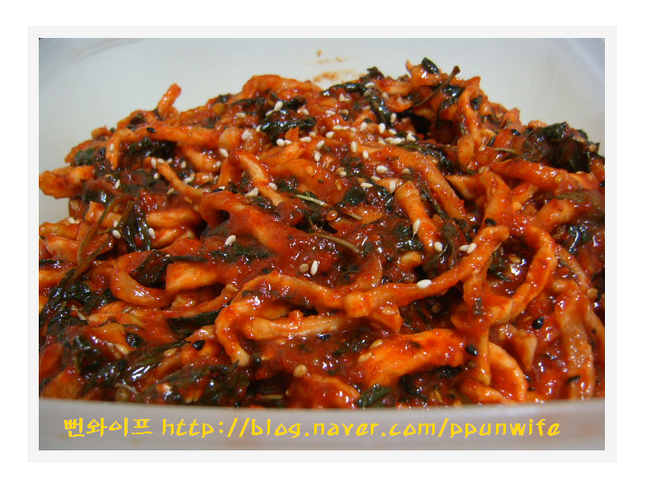
A container of dried radish kimchi is finished in no time. It is so simple that it barely feels like making kimchi.
I made a generous batch of glutinous rice paste, so it turned out moist and nicely seasoned.
It is delicious eaten right away, and even tastier after letting it ferment slightly at room temperature to turn pleasantly tangy.
 Ppunwife's tips
- If you grind regular coarse gochugaru in a blender like the kind used for making gochujang and add fine gochugaru, the color turns out truly lovely.
- It is delicious eaten right away, and even tastier after letting it ferment slightly at room temperature to turn pleasantly tangy.
FAQ
How long should I soak the dried radish strips in water?
If you want a chewy texture, lightly rehydrate them just by scrubbing and washing them three or four times; if you want them soft, soak them in water for about 30 minutes.
What can I substitute if I do not have dried chili leaves?
Instead of dried chili leaves, you can cut scallions into suitable lengths and mix them in.
What should I do if the smell of anchovy fish sauce is too strong?
If the scent of anchovy fish sauce feels too strong, you can season it using a mixture of anchovy fish sauce and soy sauce.