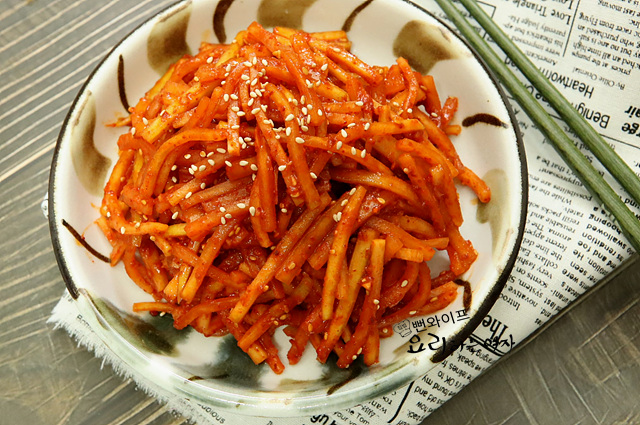
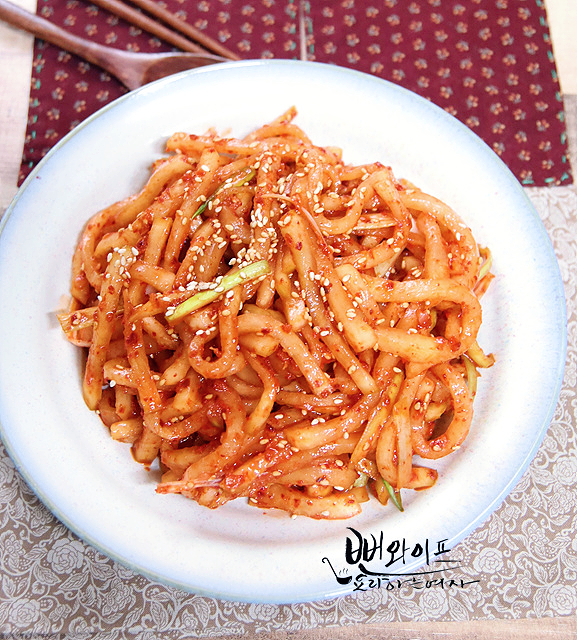
Crunchy Mumallaengi Kimchi (Dried Radish Kimchi) Side Dish
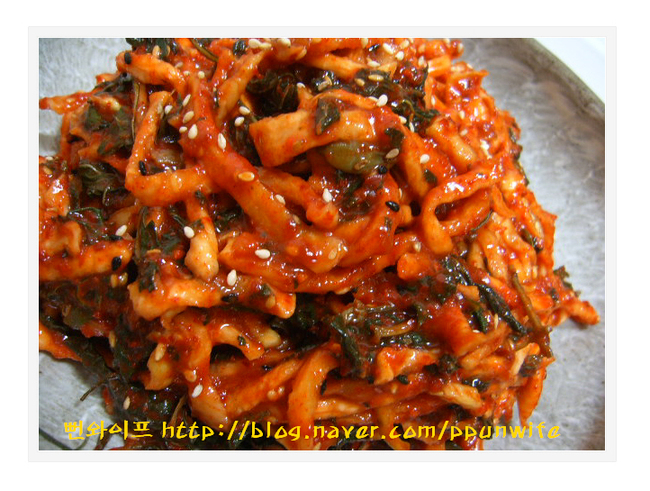
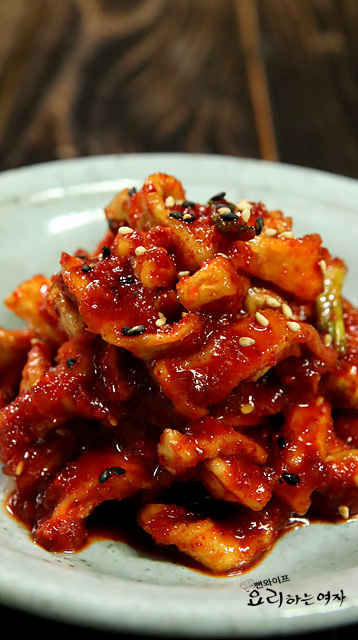
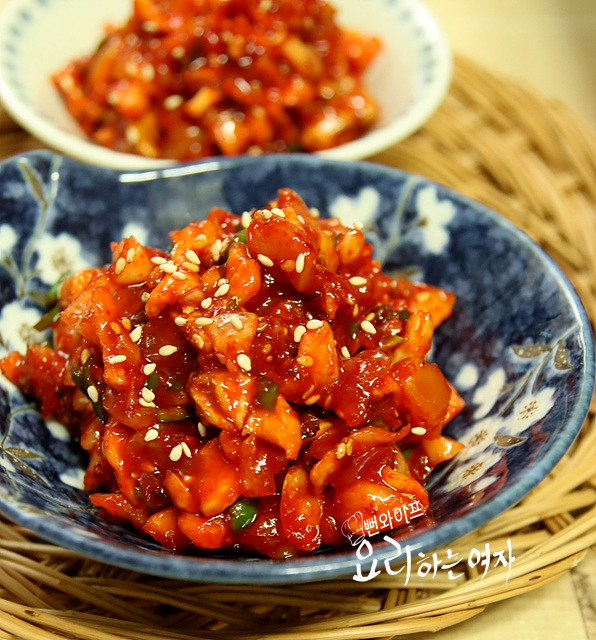
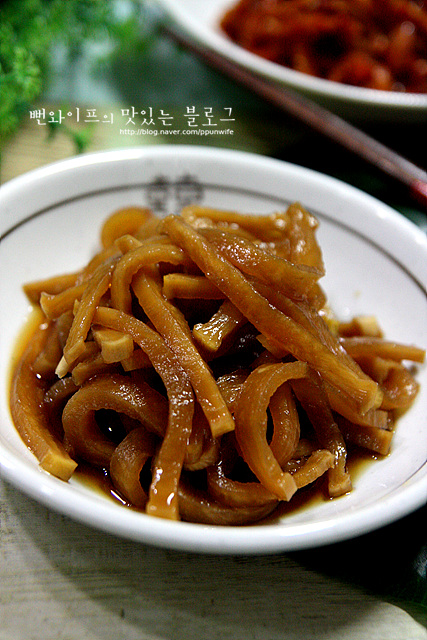
Mumallaengi kimchi (dried radish kimchi) flavored with dried chili leaves and glutinous rice paste made with anchovy broth for deep savoriness.
Translated from Korean by AI and not yet checked by a native speaker. Amounts and numbers are taken directly from the original recipe. Read the Korean original →
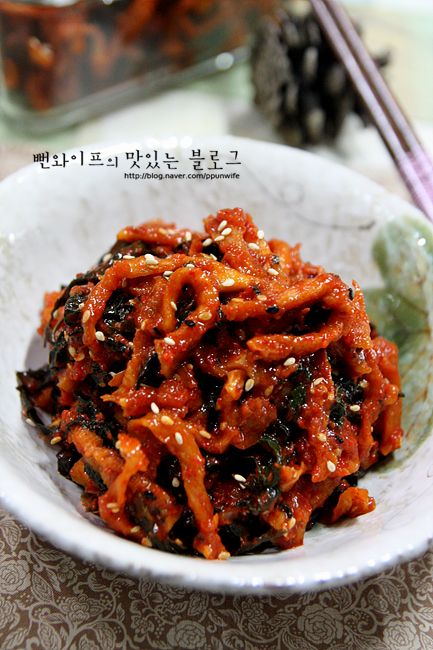
This special kimchi keeps a wonderfully chewy, crunchy texture by lightly rinsing the dried radish strips instead of soaking them in water for a long time. Glutinous rice paste made with anchovy broth and a seasoned fish sauce base give it deep umami. It is delicious eaten right away fresh or fermented until pleasantly tangy.
- Servings
- about 10–12 servings
- Difficulty
- Medium
- Spiciness
- Spicy
Ingredients
Ingredients
- Dried radish strips (mumallaengi)250 g
- Dried chili leaves100 g
Seasoning
- Glutinous rice paste6 cups
- Minced garlic6 tbsp
- Gochugaru (Korean chili flakes)2 cups
- Anchovy fish sauce9 tbsp
- Corn syrup (mulyeot)9 tbsp
- Minced ginger1 tbsp
- Toasted sesame seeds
Glutinous rice paste
- Glutinous rice flour8 tbsp
- Anchovy broth6 cups
- If you do not have chili leaves, you can use scallions instead.
- Completely dried chili leaves should be soaked in water for about 2 hours.
- If you soak dried radish strips in water for a long time, the sweetness and crisp texture are lost, so rinse them cleanly two or three times and drain them in a strainer right away.
- If you do not like sweet flavors, you can reduce the corn syrup by about 1 to 2 tbsp.
Steps
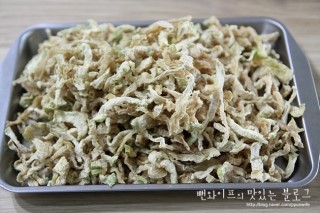
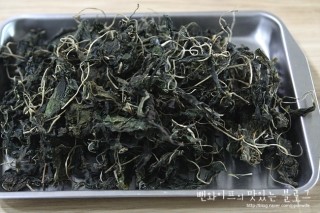
1. The ingredients are weighed in their dry state.
250 g of dried radish strips is about 5 cups when pressed into measuring cups...
2. 100 g of dried chili leaves weighs less than the dried radish strips, but because they have more volume, they also came out to about 5 cups.
I provided the cup measurements as a guide for those without a scale, but depending on dryness or thickness, the volume can vary and cup measurements will not be exact, so I think weighing them on a scale is best.
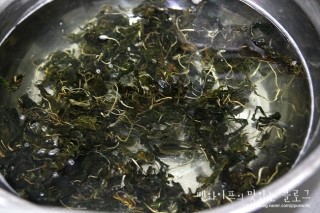
3. Completely dried chili leaves must be soaked thoroughly, so put them in water to soak first.
It will vary depending on how dry they are, but because mine did not soften easily, I soaked them for about 2 hours.
The soaking time is not strictly important as long as they become soft enough to eat comfortably.
I removed impurities and yellowed leaves before soaking, but they still needed a fair amount of sorting once soaked.
Once they are softly hydrated, rinse them and squeeze out the excess moisture.
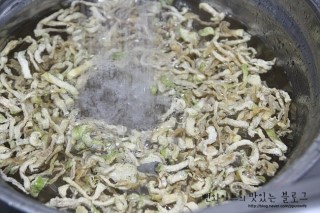
4. Clean the dried radish strips by removing any debris in advance, then rinse them cleanly in water two or three times as if washing them.
If you soak them in water like the chili leaves, they will lose their crunch and natural sweetness, so just rinse them and drain in a strainer right away.
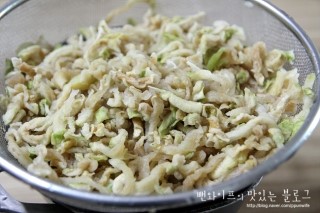
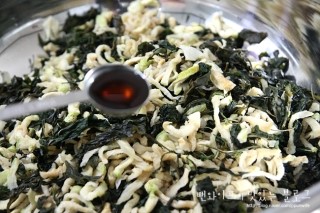
5. Drain in a strainer to remove excess moisture.
6. Place the drained dried radish strips and chili leaves together, drizzle the fish sauce evenly over all the ingredients, and drizzle the corn syrup evenly over them as well.
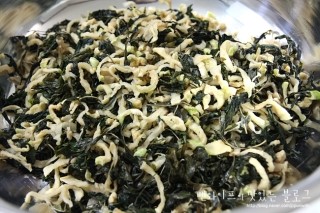
7. Toss thoroughly with both hands so the seasoning absorbs evenly...
8. Just by tossing with the fish sauce and corn syrup, the dried radish strips plumped up quite a bit.
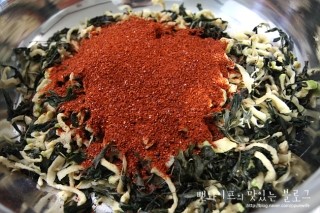
Add the gochugaru and mix thoroughly so the color becomes vibrant.
If you use half fine gochugaru and half coarse gochugaru, you will get a much more beautiful color.
Doing this when making kimchi gives a pretty color even with the exact same amount.
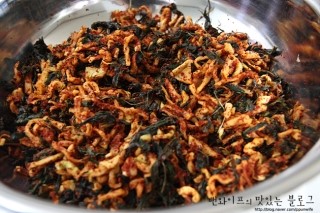
10
9. Let it sit for about 2 hours so the seasonings absorb and the red color from the gochugaru coats the ingredients.
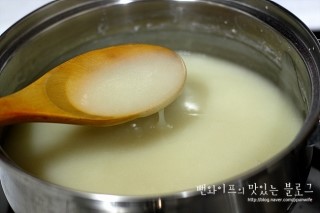
10. Add glutinous rice flour to rich anchovy broth and simmer to make the glutinous rice paste.
This time, I made the paste a bit thin so the seasoning stays moist, and I used a rich anchovy broth to bring out deep flavor.
Set it in a container of cold water to cool.
11
12
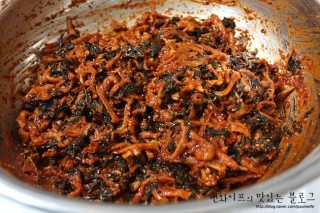
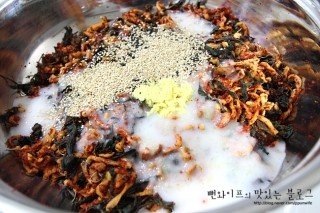
11. Add the cooled glutinous rice paste, 6 tbsp minced garlic, 1 tbsp minced ginger, and toasted sesame seeds...
12. Mix thoroughly, and it is finished.
If it tastes underseasoned, you can adjust the seasoning with fish sauce or salt.
 Ppunwife's tips
- Using half fine gochugaru and half coarse gochugaru produces a much richer, more vibrant color.
- If it is underseasoned, adjust the taste with fish sauce or salt.
FAQ
Should I soak the dried radish strips in water for a long time?
If you soak them in water for a long time, the distinctive crunchy texture and natural sweetness of the radish will leach out, so it is best to rinse them lightly and drain immediately in a strainer.
What can I use as a substitute if I don't have dried chili leaves?
If dried chili leaves are hard to find, you can slice scallions and add them instead.
Is there a trick to getting an appetizing red color on the dried radish strips?
Mixing half fine gochugaru and half coarse gochugaru, tossing them in fish sauce, and letting them sit ahead of time will tint them with a vibrant color.
How can I adjust it if I want less sweetness?
If you prefer it less sweet, you can reduce the amount of corn syrup in the seasoning by about 1 to 2 tbsp when mixing.