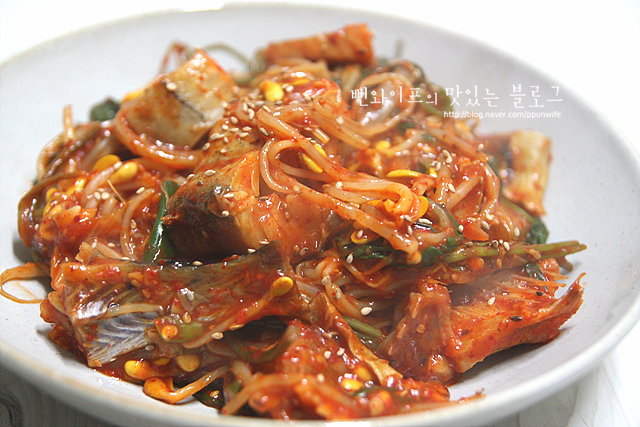
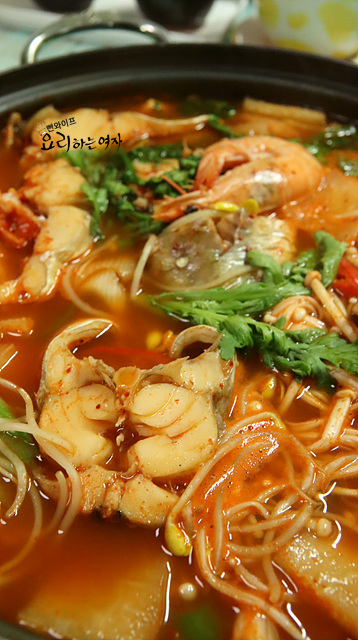
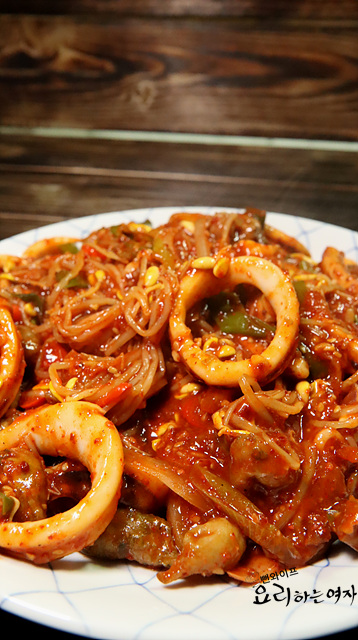
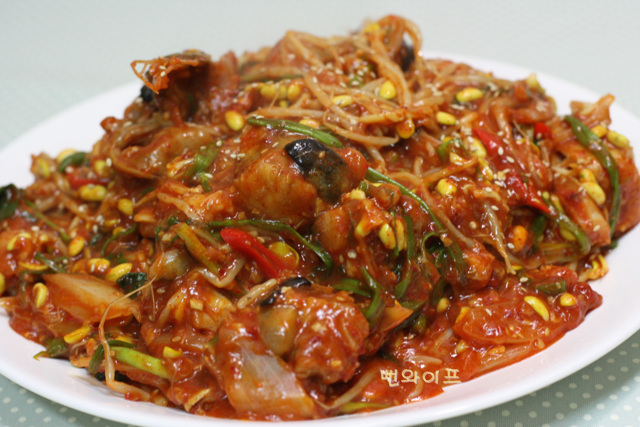
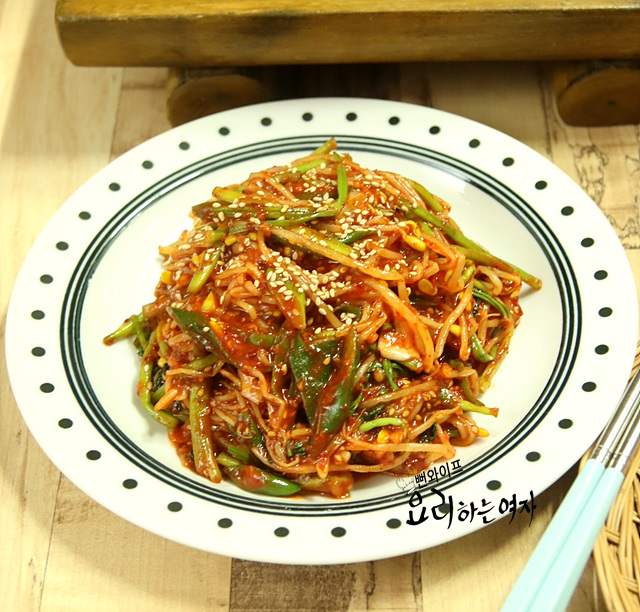
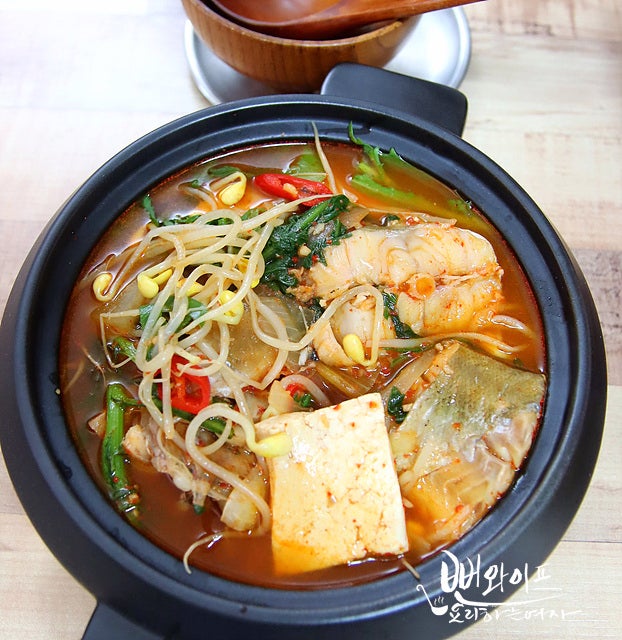
Dongtae Kongnamul Jjim (Braised Pollack with Bean Sprouts)
A hearty one-dish meal of tender frozen pollack and crunchy soybean sprouts stir-fried in a spicy seasoning sauce.
Translated from Korean by AI and not yet checked by a native speaker. Amounts and numbers are taken directly from the original recipe. Read the Korean original →
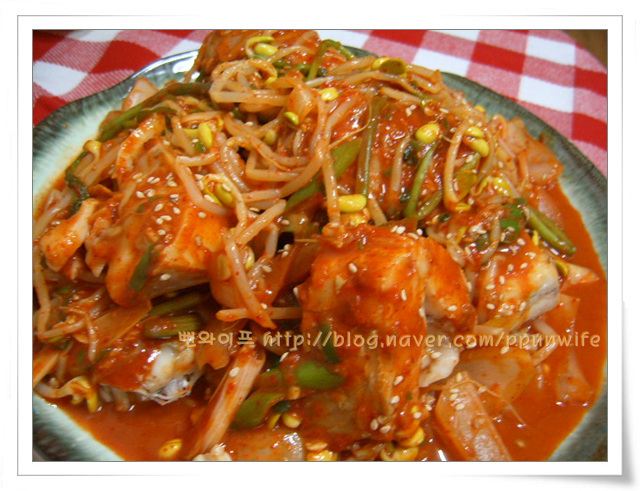
This is a hearty braised dish made with tender frozen pollack and crisp thick soybean sprouts for braising, all brought together in a spicy sauce. The key is to mix the seasoning sauce in advance so its color deepens, and to cook the pollack separately in a small amount of broth so the flesh does not break apart when plating. With its spicy, savory flavor, it is wonderful as a side dish for rice or as an accompaniment to drinks.
- Servings
- 3–4 servings
- Difficulty
- Hard
- Spiciness
- Very spicy
Ingredients
Ingredients
- Frozen pollack1 whole (large)
- Thick soybean sprouts for braising500 g
- Water dropwort (minari)1 handful
- Onion1/2
- Large green onion (daepa)1/2 stalks
- Cheongyang chili pepper (hot green chili)3 (minced)
- Anchovy broth1 cup
Pollack seasoning
- Salt1 tsp
- Mirin (cooking rice wine)1 tbsp
Soybean sprout seasoning
- Salt1 tsp
Starch slurry
- Potato starch slurry3 tbsp
Seasoning
- Coarse gochugaru (Korean chili flakes)2 tbsp
- Fine gochugaru (Korean chili flakes)3 tbsp
- Minced garlic2 tbsp
- Mirin (cooking rice wine)1 tbsp
- Regular soy sauce (jin-ganjang)1 tbsp
- Oyster sauce1 tbsp
- Sugar0.5 tbsp
- Ginger powdera little
- Ground black peppera little
- Broth3 tbsp
- Salta little (season with salt at the very end)
- You can use anchovy powder or beef dashida instead of anchovy broth.
- Use the head and chest portion of the frozen pollack for soups or stews, and use the belly and tail portions for this braised dish. Half-dried pollack (kodari) also works well in place of frozen pollack.
- Using thick soybean sprouts meant for braising rather than the ones for seasoned salads keeps them crunchy and prevents them from wilting down too much.
Steps
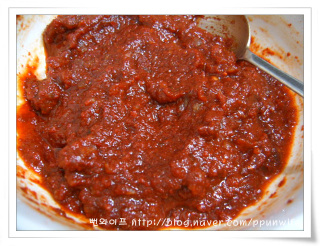
1. Add all seasoning ingredients except the salt in the specified amounts and mix well.
(When making this braised dish, mix the seasoning sauce first before preparing the other ingredients. Letting it sit and hydrate like this gives the braised dish a very rich color.)
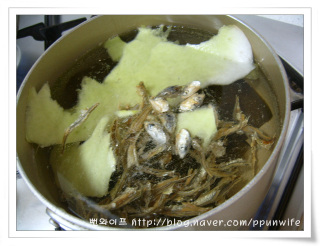
2. Add dried anchovies to the water used to soak dried kelp (dasima) to make a rich broth. Adding a rich broth gives the braised dish much more savory umami flavor.
(If you use anchovy powder or dashida, you may use that instead.)
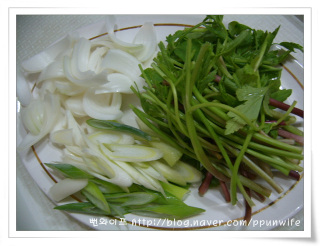
3. Cut a handful of water dropwort (minari) into suitable lengths and slice half an onion. Slice the large green onion (daepa) diagonally.
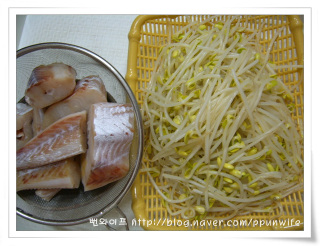
4. This uses one large frozen pollack. Clean it thoroughly, then season with salt and mirin (cooking rice wine).
(From the head to the chest area, once the entrails are removed the flesh easily falls apart, making it unsuitable for braising. Save those parts for soup or stew, and use the belly and tail portions of the frozen pollack for braising. Using half-dried pollack instead of frozen pollack also works well.)
Blanch the soybean sprouts briefly in boiling water, rinse in cold water, and drain well.
Add 1 tsp salt and toss to season.
(It is better to use thick soybean sprouts meant for braising rather than ones for seasoned salads. Because the stems are thick, even after braising they do not wilt down too much, do not turn tough, and retain a crisp crunch.)
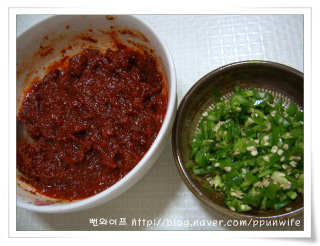
5. To enjoy a spicy kick, I minced 3 Cheongyang chili peppers. This is the seasoning sauce mixed and set aside earlier.
If eating with children, leave out the chili peppers.
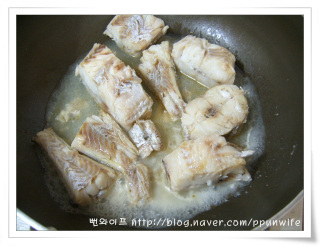
6. Pour the anchovy broth into a pan and cook the frozen pollack. Just enough broth to submerge the fish halfway is sufficient since the fish needs to cook through.
Flip the pieces over to cook both sides, then transfer them to another plate.
(If you boil frozen pollack in a large amount of water, you cannot use all of that liquid. Also, the savory flavor leaches out into the water and it loses taste. Cooking it like a braise allows you to use the flavorful juices that come out of the fish directly.)
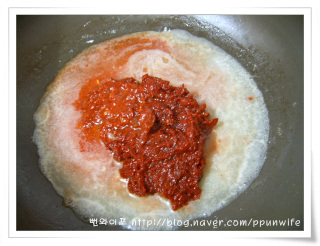
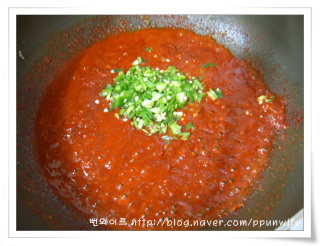
7. Dissolve the seasoning sauce into the liquid left from cooking the frozen pollack.
8. Add the minced Cheongyang chili peppers and bring to a brief boil.
10
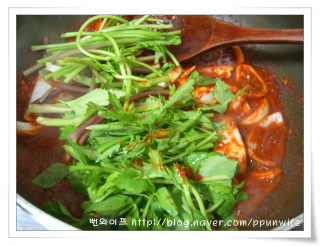
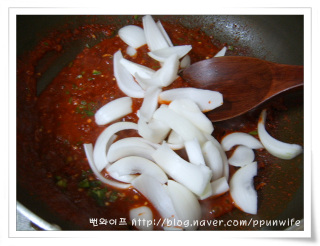
9. Add the onion and cook briefly.
10. Add the water dropwort (minari).
11
12
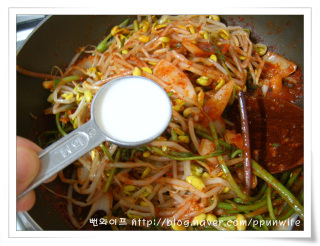
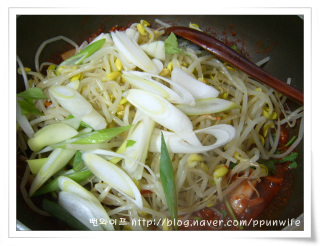
11. Add the blanched soybean sprouts and large green onion (daepa), then mix evenly.
12. Once the seasoning and ingredients are well blended, drizzle in 3 tbsp potato starch slurry and stir-fry quickly over high heat.
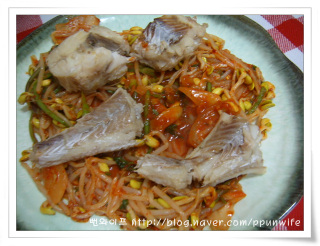
Spread the stir-fried soybean sprouts on the bottom of a serving platter, place the frozen pollack on top, then add another layer of soybean sprouts and more fish.
Plating in layers like this allows you to serve the pollack flesh intact without breaking it apart.
 Ppunwife's tips
- When making this braised dish, mixing the seasoning sauce first and letting it hydrate gives the finished dish a vibrant, rich color.
- Cooking the frozen pollack like a braise in a small amount of liquid instead of boiling it in lots of water preserves its natural juices for the sauce.
- Layering the stir-fried soybean sprouts and the pollack alternately on the serving platter prevents the delicate fish from breaking apart.
FAQ
Which parts of the frozen pollack are best to use for this braised dish?
The head and chest portions break apart easily once cleaned, so it is best to reserve them for soups or stews and use the belly and tail portions for braising.
Can I use half-dried pollack (kodari) instead of frozen pollack?
Yes, using half-dried pollack instead of frozen pollack works very well.
Why is it recommended to use thick soybean sprouts for braising instead of regular ones?
Thick braising sprouts have sturdier stems that do not wilt down easily or become tough when heated, maintaining their crisp and crunchy texture.
How can I prevent the pollack flesh from breaking apart when plating?
Spread a layer of stir-fried soybean sprouts on the platter first, place the pollack on top, and alternate in layers so the fish stays completely intact.