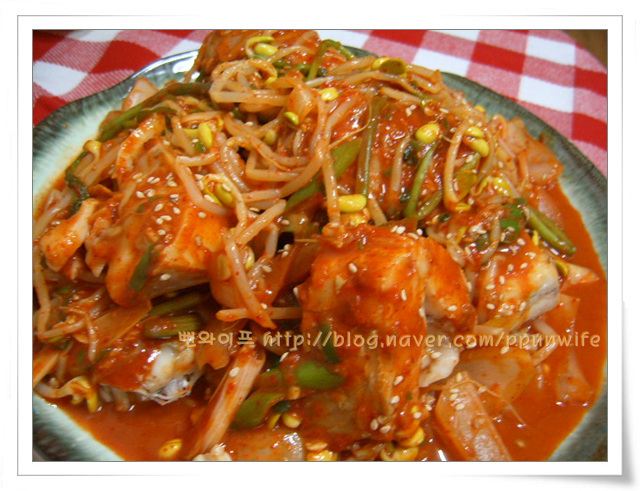
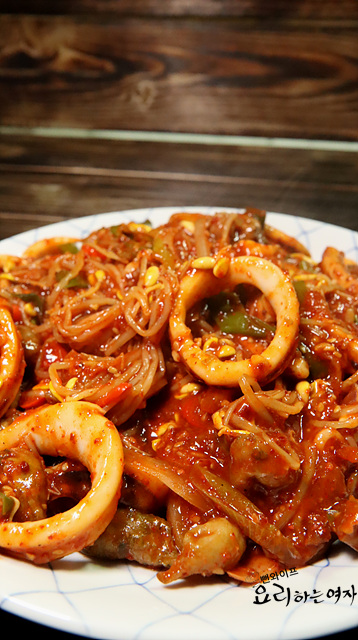
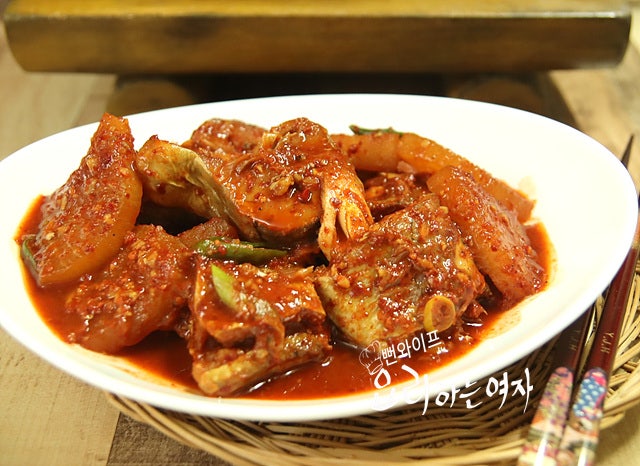
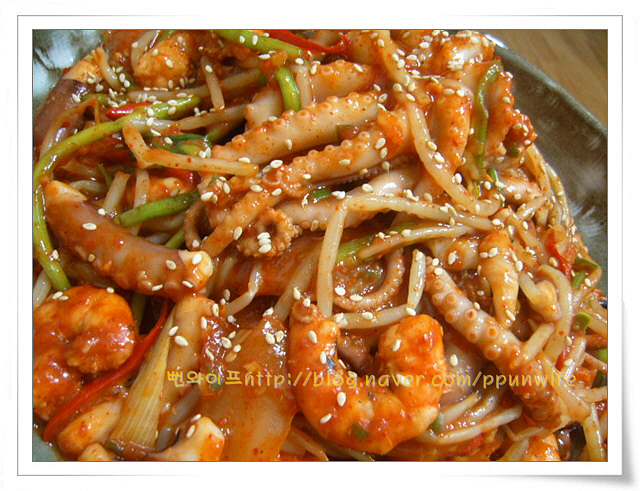
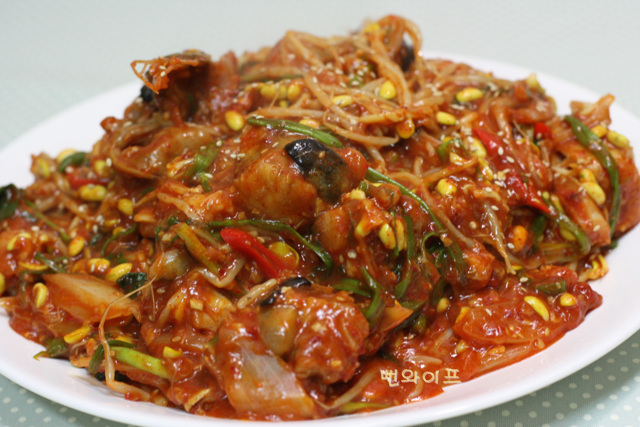
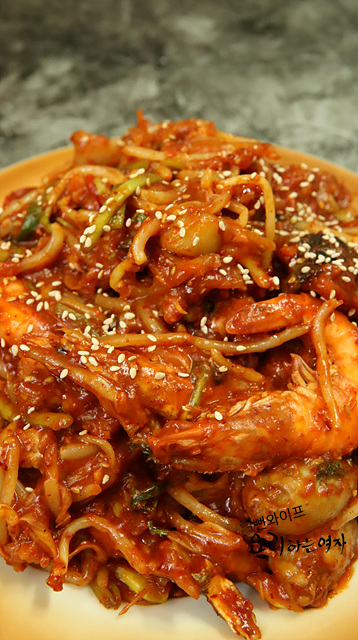
Kongnamul Kodari Jjim (Braised Pollock with Soybean Sprouts)
A braised dish featuring chewy semi-dried pollock and crisp soybean sprouts in a spicy sauce thickened with a starch slurry.
Translated from Korean by AI and not yet checked by a native speaker. Amounts and numbers are taken directly from the original recipe. Read the Korean original →
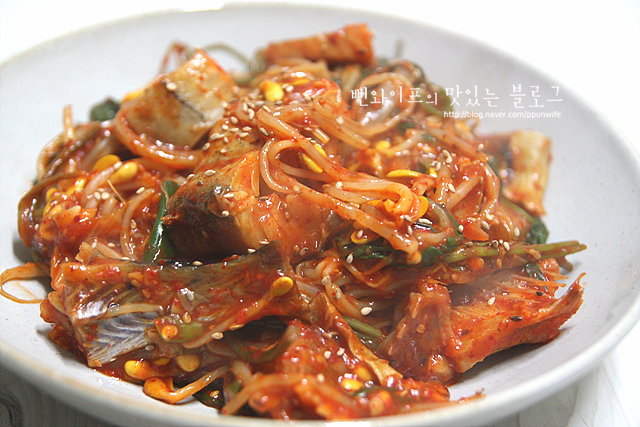
This spicy braised dish for 2 uses semi-dried pollock so the flesh stays firm and chewy without breaking apart. Crisp soybean sprouts and water dropwort are added to a rich broth made with pollock head and dried anchovies, then thickened with a starch slurry to make a great side dish for rice or drinks.
- Servings
- 2 servings
- Difficulty
- Medium
- Spiciness
- Spicy
Ingredients
Ingredients
- Semi-dried pollack (kodari)1 whole (large)
- Soybean sprouts2 handfuls, 200 g
- Water dropwort (minari)1 handful
- Onion1/2
- Cheongyang chili pepper (hot green chili)1
- Large green onion (daepa)1/2 stalks
- Anchovy broth1/2 cup
Seasoning
- Gochugaru (Korean chili flakes)3 tbsp
- Minced garlic1 tbsp
- Mirin (cooking rice wine)1 tbsp
- Regular soy sauce (jin-ganjang)1 tbsp
- Sugar1/2 tsp
- Ginger juice1/2 tsp
- Ground black peppera little
- Water3 tbsp
- Salta little
- Toasted sesame oil
- Toasted sesame seeds
Starch slurry
- Potato starch1 tbsp
- Water1 tbsp
- Combine the pollock head, 10 dried anchovies, 1 piece of dried kelp (dasima, 5 cm square), and 5 cups of water, then simmer for 20 minutes to make a rich broth.
- If you are using thick-stemmed soybean sprouts meant for braised dishes, it is good to blanch them briefly in boiling water before using.
Steps
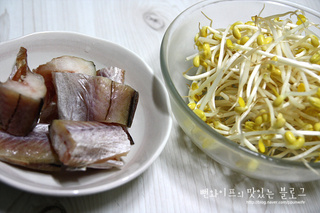
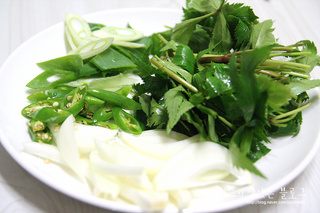
1. Cut off the head and fins of the semi-dried pollack, then cut it into bite-sized pieces.
Prepare two handfuls of soybean sprouts.
2. Thickly slice the onion, cut the water dropwort into 3 to 4 cm lengths, and diagonally slice the large green onion and chili pepper.
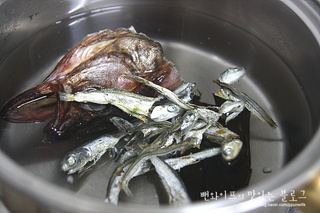
3. Combine the pollock head, 10 dried anchovies, 1 piece of dried kelp (dasima, 5 cm square), and 5 cups of water, then simmer for 20 minutes to make a rich broth.
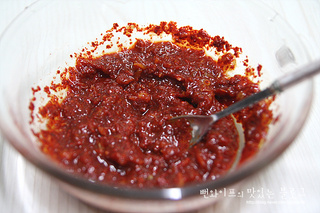
4. Mix all seasoning ingredients together in advance, except for the salt, toasted sesame oil, and toasted sesame seeds.
It is best to make the sauce first when cooking so the ingredients can meld and the chili flakes can hydrate and release their vibrant color.
Using half fine gochugaru and half coarse gochugaru in spicy seasonings for braised, stir-fried, or simmered dishes gives a much prettier color.
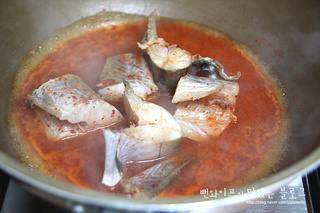
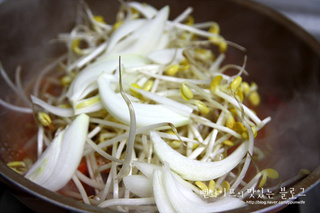
5. Add the anchovy broth, pollock, and half of the seasoning sauce, then simmer until the pollock is cooked through.
If the pollock is not fully submerged in the liquid, flip it over once halfway through cooking.
6. When the pollock is almost cooked through, add the soybean sprouts and onion.
Cover with a lid until the soybean sprouts are cooked through...
If you are using thick-stemmed soybean sprouts meant for braised dishes, it is good to blanch them briefly in boiling water before using.
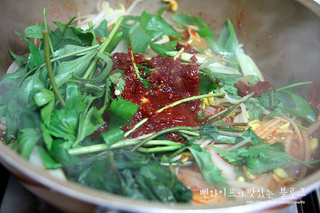
7. Add the water dropwort, chili pepper, large green onion, and the rest of the seasoning sauce, then mix evenly.
If it tastes bland, season with salt.
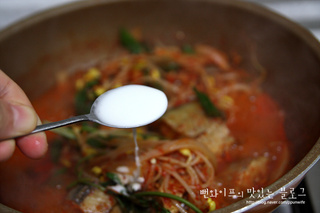
8. Swirl the starch slurry all over...
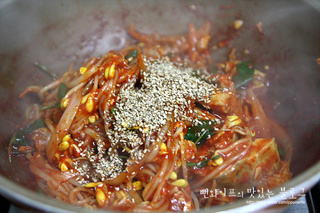
Once the sauce reduces until thick and glossy, finish by adding toasted sesame oil and toasted sesame seeds.
 Ppunwife's tips
- It is best to make the sauce first when cooking so the ingredients can meld and the gochugaru can hydrate and release its vibrant color.
- Using half fine gochugaru and half coarse gochugaru in spicy seasonings for braised, stir-fried, or simmered dishes gives a much prettier color.
- If the pollock is not submerged in the broth, flip it over once halfway through to cook.
- If using thick-stemmed soybean sprouts meant for braised dishes, it is good to blanch them briefly in boiling water before using.
FAQ
Is there a way to get a prettier color when making sauce for braised dishes?
Mixing half fine gochugaru and half coarse gochugaru produces a much prettier color. It is also good to make the sauce before you start cooking so the chili flakes can hydrate and release their color well.
Are there any tips for cooking thick-stemmed soybean sprouts meant for braised dishes?
For thick-stemmed soybean sprouts meant for braised dishes, it is good to blanch them briefly in boiling water before adding them to the dish.
What should I do if the pollock is not completely submerged in the liquid while braising?
If the pollock is not submerged in the broth, simply flip it over once halfway through cooking so it cooks evenly.