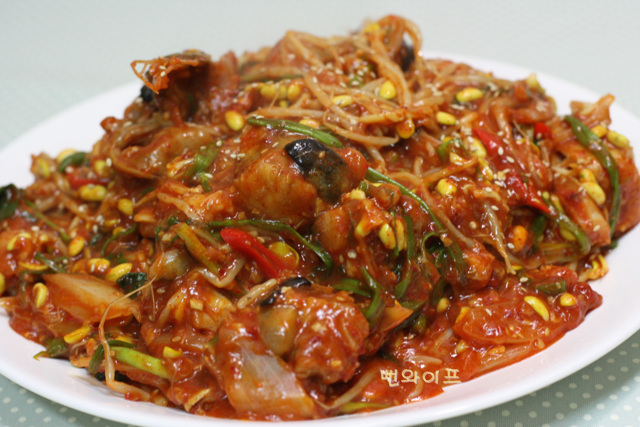
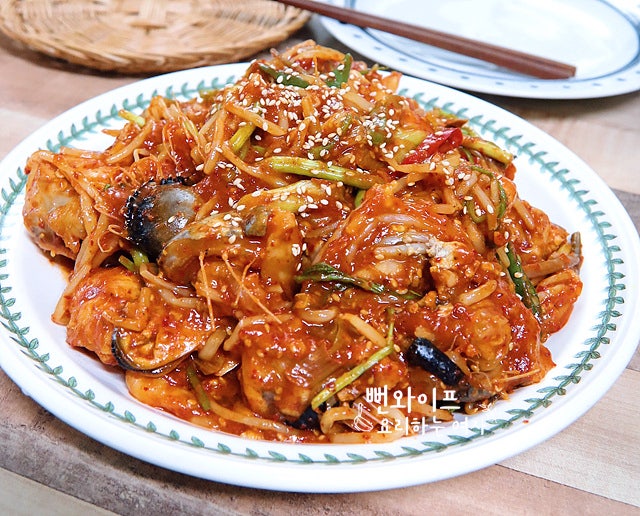
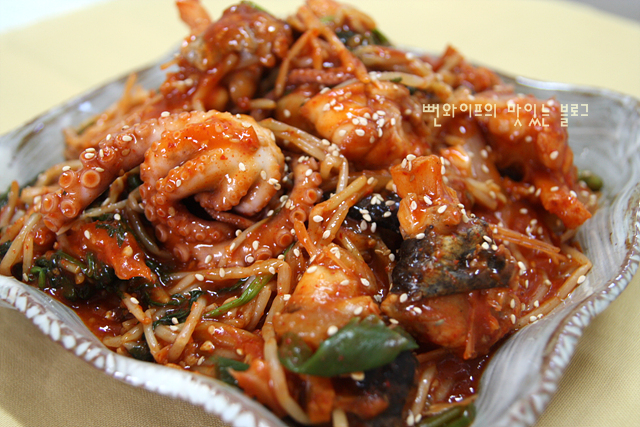
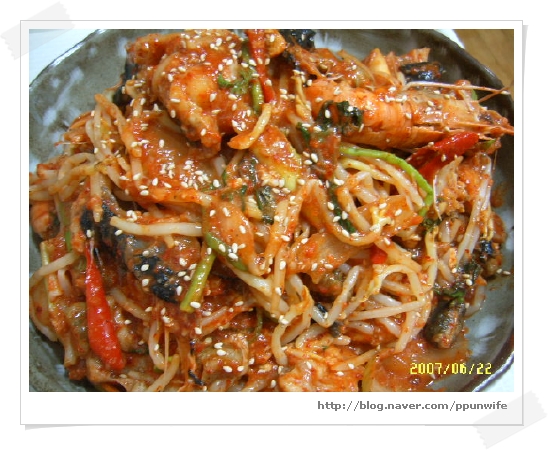
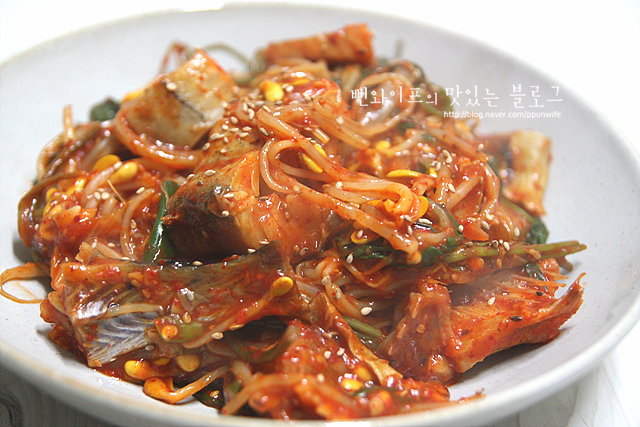
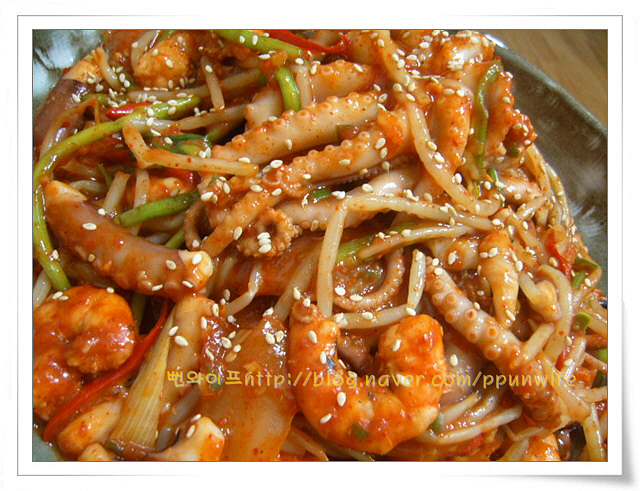
Agwi Jjim (Braised Spicy Anglerfish)
A hearty braised dish made by stir-frying monkfish and crisp thick soybean sprouts in a spicy seasoned sauce.
Translated from Korean by AI and not yet checked by a native speaker. Amounts and numbers are taken directly from the original recipe. Read the Korean original →
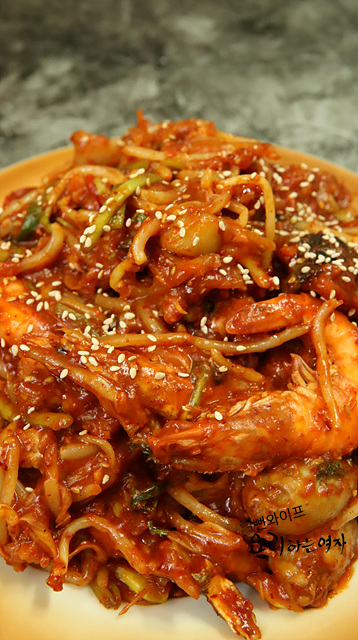
This is a signature one-dish meal featuring crisp thick soybean sprouts and tender monkfish tossed in a deeply flavored, aged spicy sauce. Using the water from boiling the soybean sprouts adds savory depth, while stirring in a starch slurry keeps the sauce clinging tightly to every bite. It is wonderful for hosting guests or enjoying as a weekend evening drinking snack.
- Servings
- 3–4 servings
- Difficulty
- Medium
- Spiciness
- Spicy
Ingredients
Ingredients
- Monkfish (or monkfish (agwi))1 kg
- Mideodeok (sea squirt)100 g
- Shrimp5 (medium size)
- Soybean sprouts500 g
- Water dropwort (minari)100 g
- Large green onion (daepa)1/2 stalk
- Cheongyang chili pepper (hot green chili)2
- Red chili pepper1
- Potato starch slurry4 tbsp (4 tbsp)
- Water from boiled soybean sprouts1 cup
Seasoning
- Gochugaru (Korean chili flakes)7 tbsp
- Gin (or brewed soy sauce (yangjo-ganjang))3 tbsp
- Minced garlic3 tbsp
- Oyster sauce1 tbsp
- Tuna extract sauce (chamchi-aek)1 tbsp
- Mirin (cooking rice wine)2 tbsp
- Sugar1 tbsp
- Minced ginger1 tsp
- Ground black pepper1/3 tsp
- Toasted sesame oil1 tbsp
- Toasted sesame seeds1 tbsp
- Using fresh, raw monkfish yields the best flavor without any unpleasant odors.
- If the monkfish has a fishy smell, cut it into bite-sized pieces and soak it in water from washing rice, then rinse with water and drain.
- Choose thick-stemmed soybean sprouts intended for braising, and trim away the yellow heads and messy root ends.
- You can substitute stalked sea squirt (omandungi) for mideodeok; shrimp or blue crab can also be added if you have them, but they are optional.
- Adding Korean mint (banga) leaves, perilla leaves, or crown daisy makes a great pairing.
Steps
Prepare the ingredients
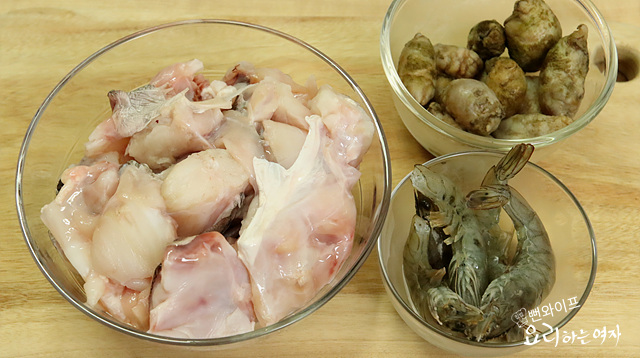
The monkfish I prepared is about the size of 1 large fish. The weight of the cleaned monkfish is 1kg.
These days they are sold already cleaned, so feel free to pick one up.
If you prepare and cook with fresh, raw monkfish, it has no off-odors and tastes delicious.
If the monkfish has a fishy smell, cut it into bite-sized pieces and soak it in water from washing rice. Rinse with clean water and drain thoroughly.
Season it ahead of time with 1 tbsp salt and 2 tbsp mirin.
The fragrant aroma of mideodeok (sea squirt) or stalked sea squirt pairs wonderfully with braised monkfish, so preparing them together makes the dish even tastier.
If you have shrimp or blue crab, you can prepare a little of each, but they are optional.
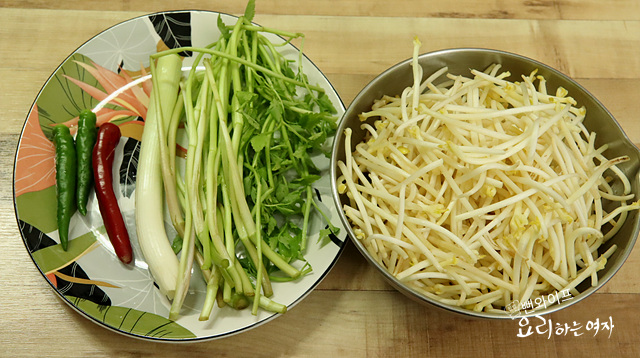
For the soybean sprouts, use thick-stemmed ones suited for braising rather than regular ones, and trim off the heads and messy root ends.
Prepare about a handful of water dropwort (minari), the perfect match for braised soybean sprouts. Cheongyang chili peppers and red chili pepper for some heat are all the ingredients you need for agwi jjim.
Make the sauce and slice the vegetables
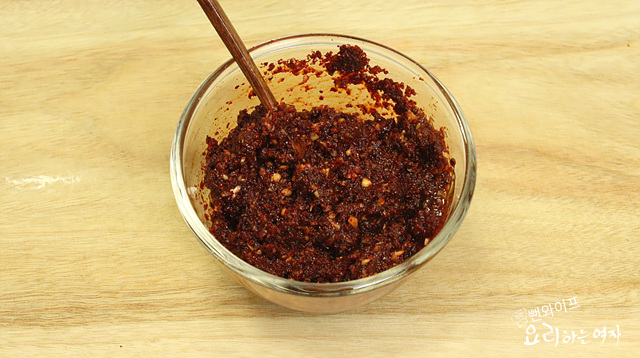
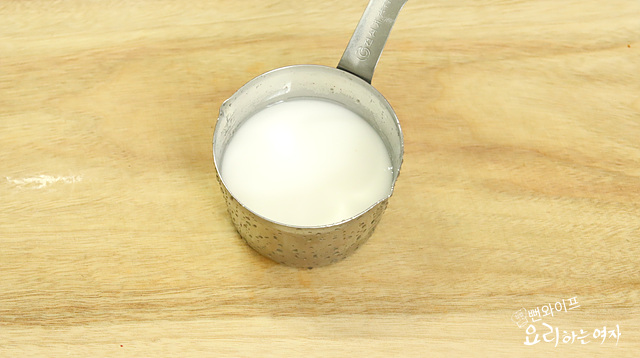
Mix all the seasoning ingredients together except for the toasted sesame oil and toasted sesame seeds, then let it age.
If you make the seasoning a day in advance to let it age, the flavors meld deeply, the color becomes vibrant, and the raw smell of gochugaru disappears.
If the mixed seasoning is too stiff, blend in a little broth or water to soften it.
Mix equal parts starch and water to add gloss and body to the braised dish: 4 tbsp potato starch and 4 tbsp water.
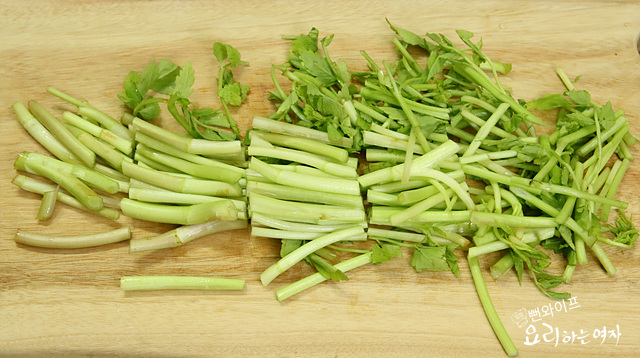
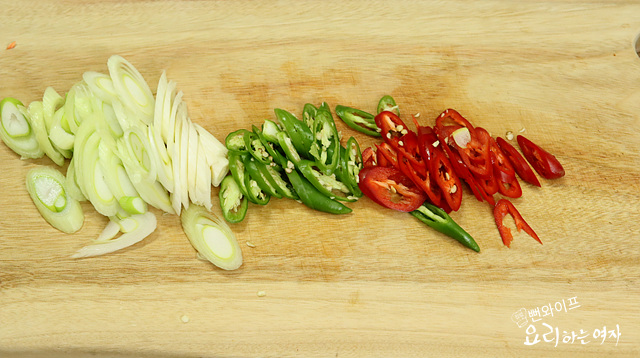
Cut the water dropwort into bite-sized lengths of 3 to 4 cm, and slice the large green onion and chili peppers diagonally.
You can also add Korean mint leaves, perilla leaves, or crown daisy.
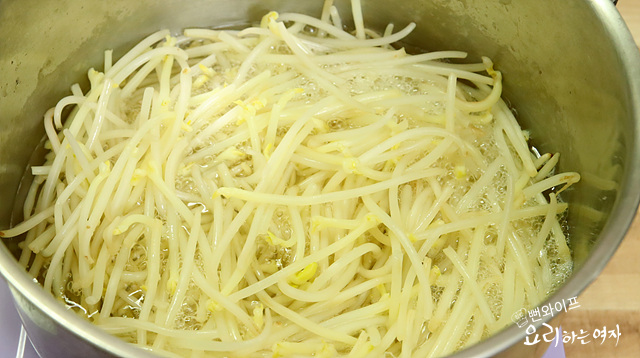
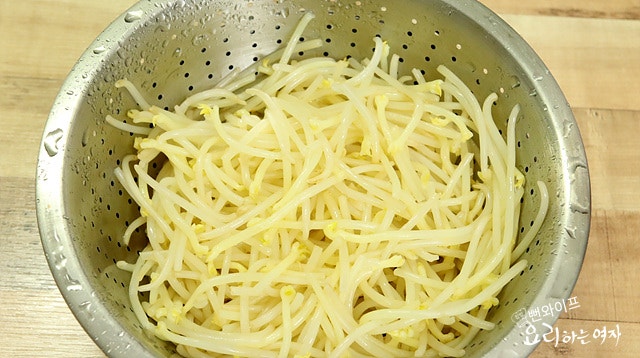
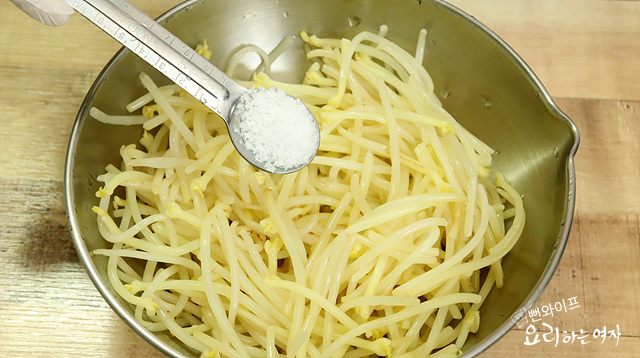
Place the soybean sprouts into a pot, pour in enough water to submerge them about halfway, cover with a lid, and cook.
Once steam rises and you smell a nutty, savory aroma, they are cooked; rinse them several times in cold water and drain well in a colander.
Because the stems are thick, seasoning them lightly with salt prevents the sauce from sliding off and makes the flavor just right.
Cook the dish
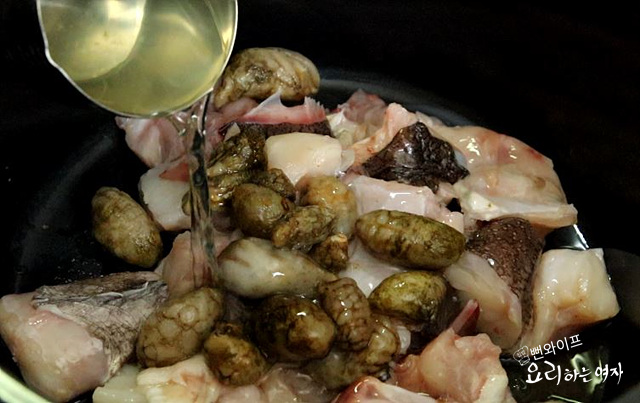
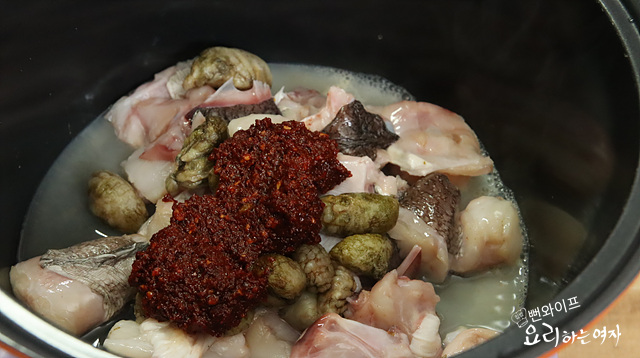
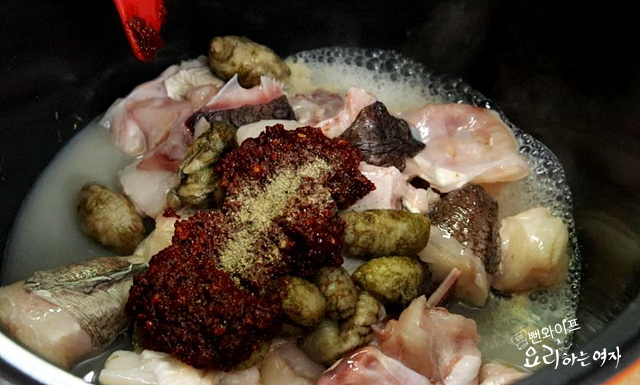
Now let us start stir-frying in earnest.
Use a pot with a wide, thick bottom so the sauce does not burn and you can stir-fry easily.
Add the cleaned monkfish, mideodeok, 1 cup of water from boiled soybean sprouts, and only half of the prepared sauce. You will add the remaining half when adding the vegetables.
Add the ground black pepper as well.
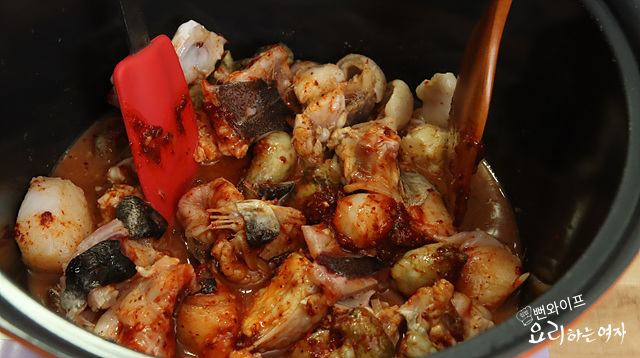
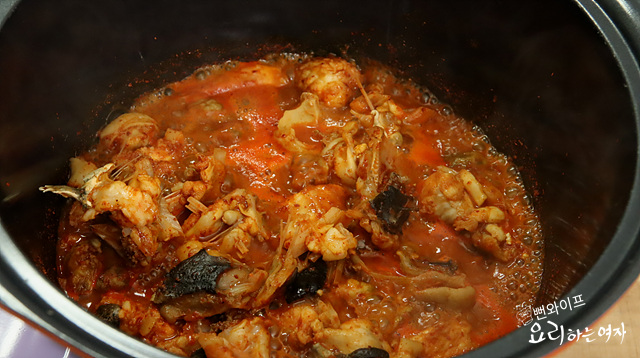
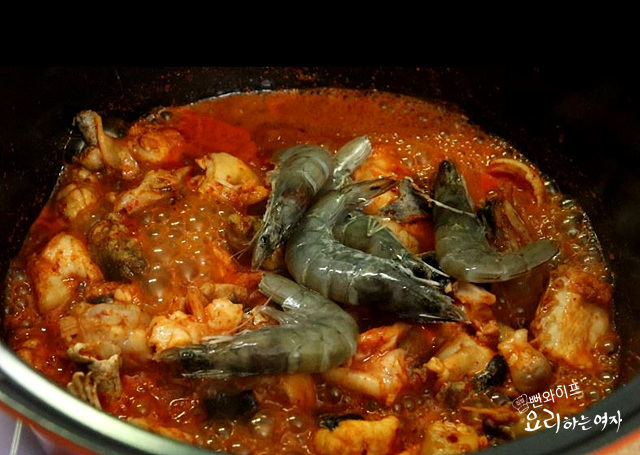
Stir-fry well over medium-high heat until the monkfish is cooked through. Once the seasoning coats the monkfish thoroughly and it is cooked, add the shrimp and stir-fry.
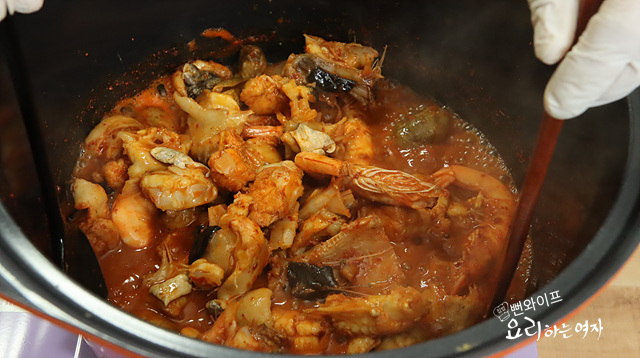
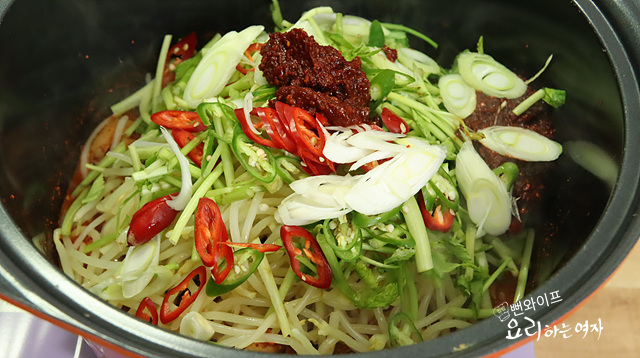
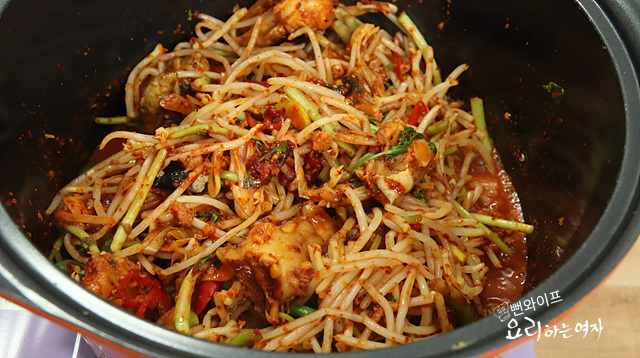
When the seafood is fully cooked, add the soybean sprouts, water dropwort, large green onion, and chili peppers all at once, pour in the remaining sauce, and toss so the seasoning coats everything evenly.
At this point, taste the seasoned sprouts and monkfish; if it tastes mild, adjust the seasoning with salt.
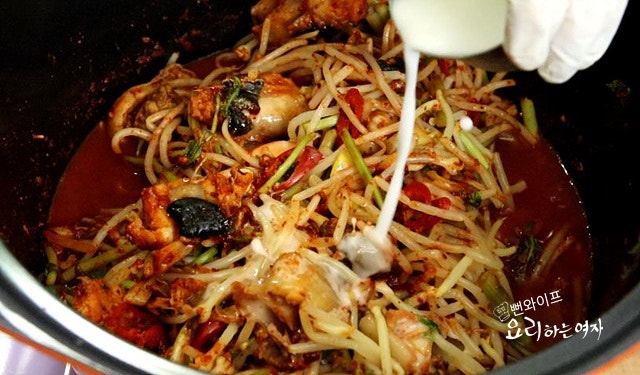
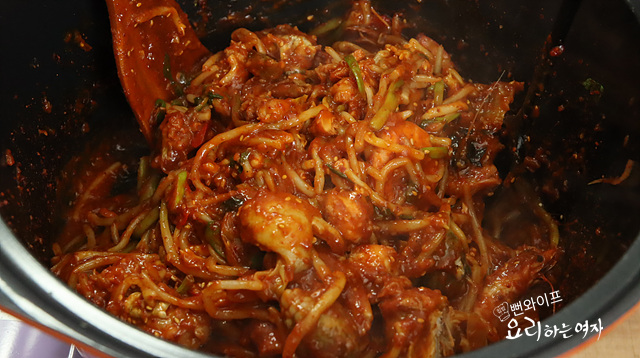
The starch tends to settle at the bottom, so stir it well, then pour about half of it evenly over the top and stir.
Add the remaining half and toss everything thoroughly.
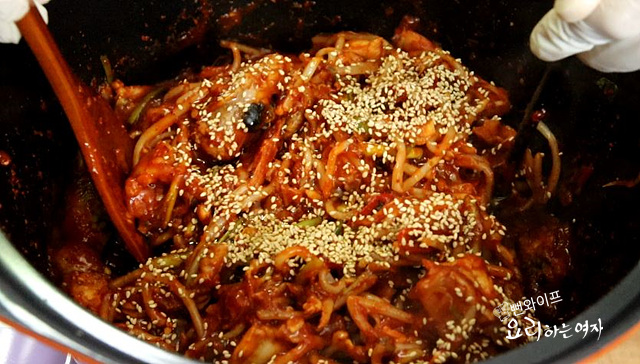
Once it turns thick and glossy, turn off the heat, add the toasted sesame oil and toasted sesame seeds, and toss to finish.
Adding starch while stir-frying brings out a lovely gloss and binds the flavors together, and finishing with toasted sesame oil and toasted sesame seeds adds a nutty aroma that makes you want to dig in right away.
 Ppunwife's tips
- If you make the seasoning a day in advance to let it age, the ingredients meld deeply, the color becomes vibrant, and the raw smell of gochugaru disappears.
- Use a pot with a wide, thick bottom so the sauce does not burn and you can stir-fry with ease.
- The starch settles at the bottom, so stir it well, then pour about half evenly over the dish and mix.
- Be sure to stir-fry rice with the leftover sauce, water dropwort, and dried seaweed.
FAQ
How should I clean monkfish if it has a fishy smell?
Cutting it into bite-sized pieces, soaking it in water from washing rice, and rinsing with clean water helps reduce unpleasant odors.
What is the secret to keeping the soybean sprout stems crisp while letting the seasoning soak in well?
Boiling thick-stemmed sprouts meant for braising, rinsing them in cold water, and lightly seasoning them with salt removes excess moisture and keeps the sauce from sliding off.
What is the benefit of mixing the seasoning sauce a day in advance?
The ingredients meld thoroughly, deepening the flavor, brightening the color, and removing the raw taste of the chili flakes.
Can I use other seafood instead of sea squirts or shrimp?
You can add blue crab or various other seafood according to your preference to enjoy it as a rich seafood braise.