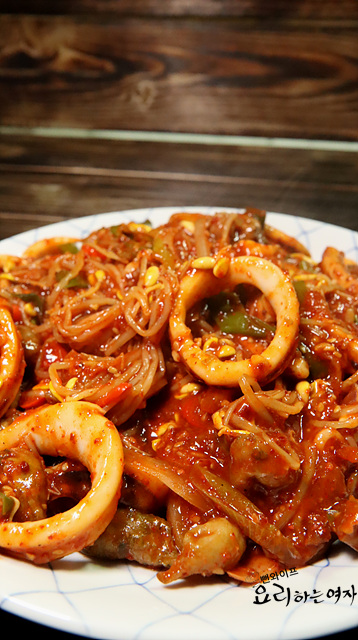
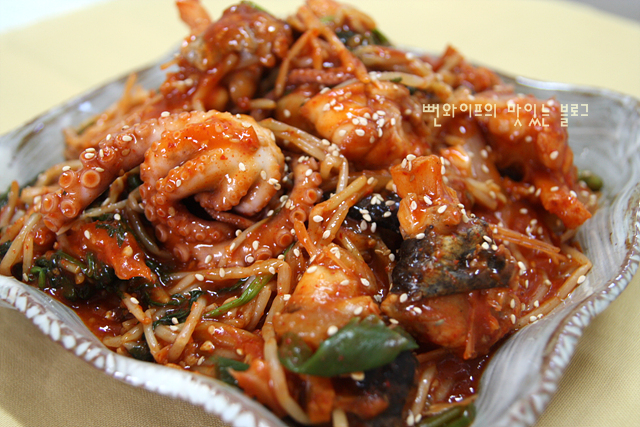
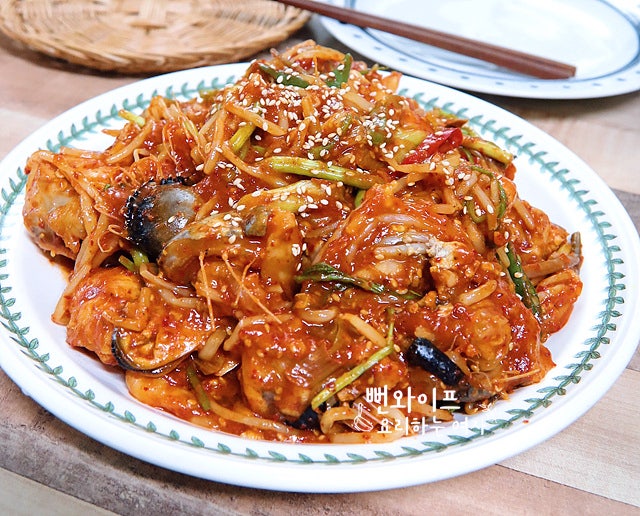
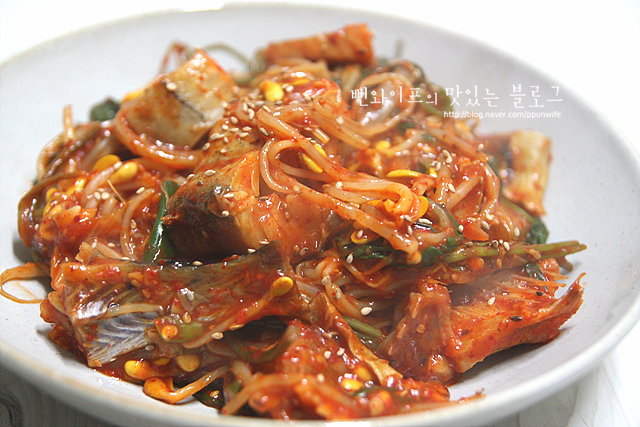
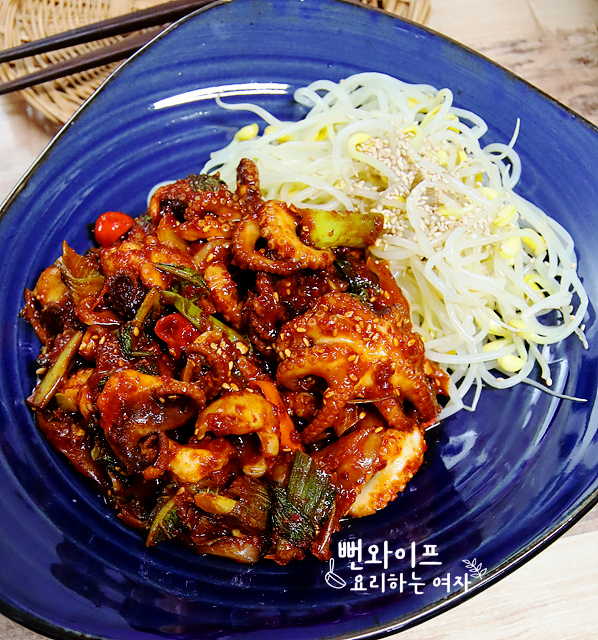
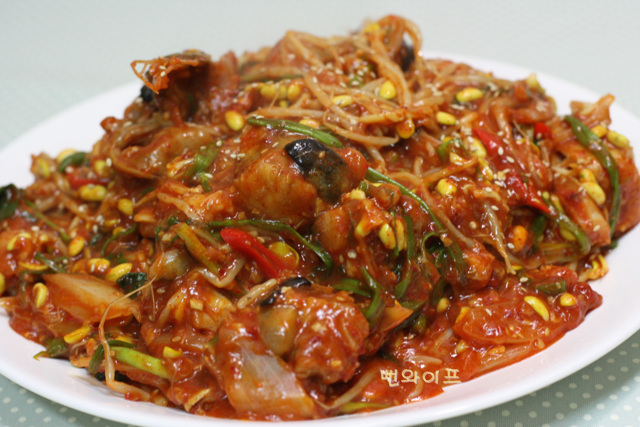
Spicy Nakji Jjim (Braised Spicy Octopus)
A one-dish seafood specialty featuring small octopus and soybean sprouts stir-fried in a spicy seasoning sauce and thickened with potato starch slurry.
Translated from Korean by AI and not yet checked by a native speaker. Amounts and numbers are taken directly from the original recipe. Read the Korean original →
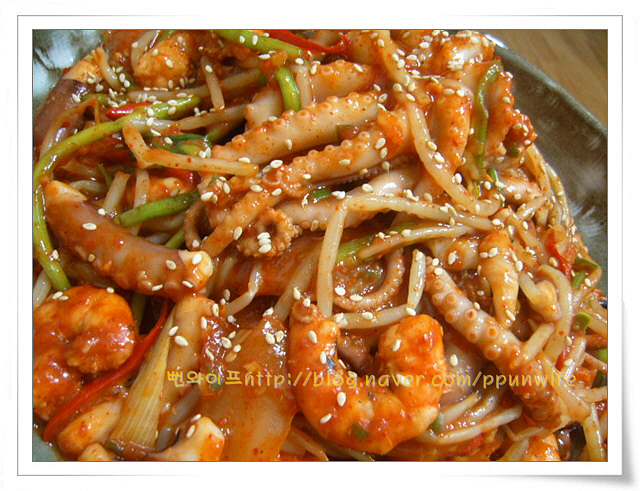
This one-dish specialty features chewy small octopus and plump soybean sprouts stir-fried with Cheongyang chili pepper and gochugaru for a fiery kick. Mixing the seasoning sauce in advance lets the flavors develop and yields a vibrant red color, while swirling in potato starch slurry at the end is key to achieving the perfect glossy thickness. It is also wonderful to finish by tossing leftover sauce with rice, seaweed flakes, and water dropwort for fried rice.
- Servings
- 3–4 servings
- Difficulty
- Hard
- Spiciness
- Spicy
Ingredients
Ingredients
- Small octopus (nakji)5, 500 g
- Shrimp10
- Soybean sprouts5 handfuls, 500 g
- Water dropwort (minari)200 g
- Onion1/2
- Large green onion (daepa)1/2 stalk
- Red chili pepper2
- Cheongyang chili pepper (hot green chili)2
Seasoning sauce
- Gochugaru (Korean chili flakes)2 tbsp
- Fine gochugaru (Korean chili flakes)2 tbsp
- Oyster sauce1 tbsp
- Regular soy sauce (jin-ganjang)1 tbsp
- Minced garlic2 tbsp
- Mirin (cooking rice wine)2 tbsp
- Sugar0.5 tbsp
- Ginger powder0.5 tsp
- Ground black pepper0.5 tsp
- Dried anchovy powder1 tsp
- Broth (or water)2 tbsp
For stir-frying
- Anchovy broth1/2 cup
- Potato starch slurry3 tbsp
To finish
- Toasted sesame oil
- Toasted sesame seeds
- Warty sea squirts (mideodeok) also work great instead of shrimp.
- These soybean sprouts are the braising kind, with thicker stems than regular soybean sprouts.
Steps
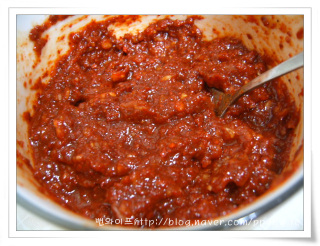
1. Mixing the sauce ahead of time and letting it sit not only makes cooking easier, but also gives the braised dish a much prettier color.
Make the sauce first before prepping the other ingredients.
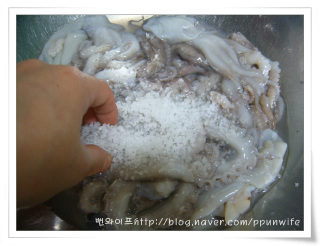
2. Make a small slit in the octopus head and carefully remove the ink sac and entrails without puncturing them.
Add a handful of coarse salt, knead and scrub thoroughly, then rinse in clean water and drain.
This cleans away any grit trapped in the suckers and gives the octopus a delightfully springy texture.
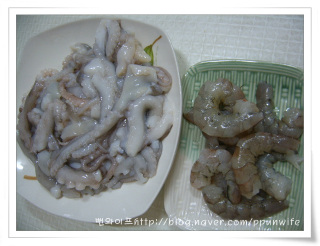
3. Cut the cleaned octopus into bite-sized lengths.
Peel and devein 10 medium shrimp, then rinse clean and set aside.
(Warty sea squirts also work great instead of shrimp.)
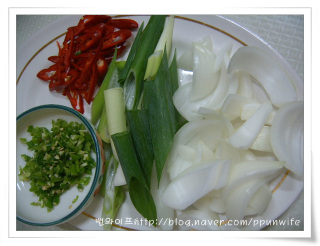
4. Thickly slice the onion, large green onion, and red chili pepper diagonally.
Finely mince 2 Cheongyang chili peppers for extra heat.
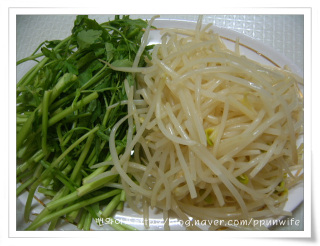
5. These soybean sprouts are meant for braising, so their stems are thicker than regular soybean sprouts. Blanch them briefly in boiling water, rinse in cold water, and drain.
Cut the fresh water dropwort to the same length as the soybean sprouts.
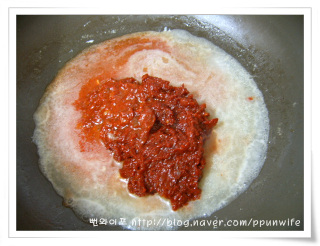
6. Pour 1/2 cup of anchovy broth into a pan and stir in the sauce.
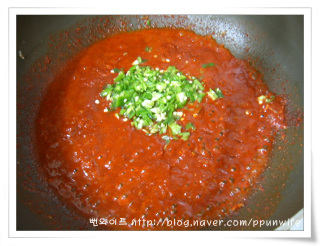
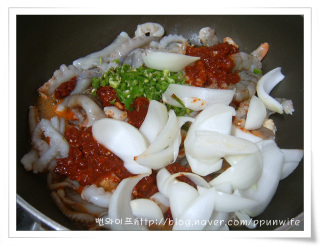
7. Add the minced Cheongyang chili pepper and bring to a gentle simmer.
8. Add the octopus and onion, and stir-fry until halfway cooked.
10

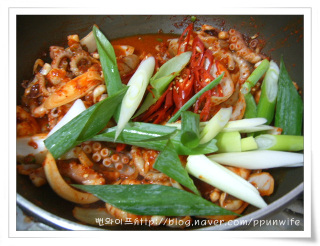
9. Add the large green onion and red chili pepper, toss a few times, then...
10. Add the blanched soybean sprouts and water dropwort, and stir-fry until the seasoning and all ingredients are evenly combined.
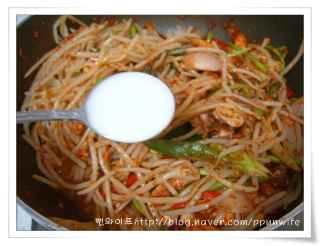
Once the sauce and ingredients are well blended, swirl in 3 tbsp of potato starch slurry and stir-fry until thick.
Adjust the taste with salt if needed, then finish by drizzling toasted sesame oil and tossing everything together.

Transfer to a serving plate and sprinkle with toasted sesame seeds.
 Ppunwife's tips
- Mixing the sauce ahead of time and letting it sit not only makes cooking easier, but also gives the braised dish a much prettier color.
- Adding a handful of coarse salt, kneading and scrubbing the octopus, and then rinsing it clean gets rid of grit in the suckers and gives it a nice springy texture.
- After enjoying the octopus and vegetables, chop some water dropwort and dried seaweed flakes into the leftover sauce and stir-fry with rice.
FAQ
Why do you use coarse salt when cleaning octopus?
Scrubbing it with coarse salt thoroughly removes dirt and debris trapped in the suction cups and gives the octopus a pleasantly springy texture.
Is there a reason to mix the seasoning sauce before prepping the ingredients?
Letting the seasoning sit ahead of time allows the chili flakes to bloom, which makes cooking smoother and gives the final dish a much richer, vibrant color.
Can I substitute other seafood for the shrimp?
Yes, warty sea squirts (mideodeok) are a fantastic alternative to shrimp.
How can I use the leftover sauce?
Once you have finished the octopus and vegetables, add chopped water dropwort and dried seaweed flakes to the leftover sauce and toss with rice for delicious fried rice.