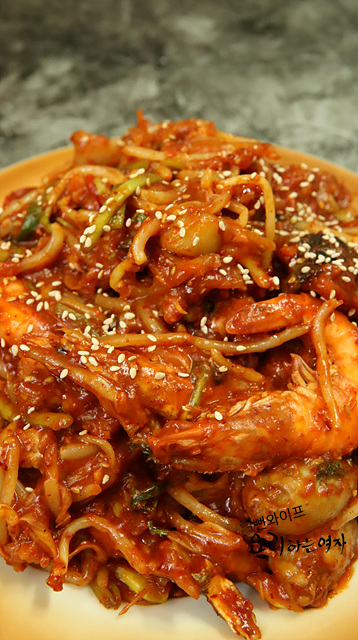
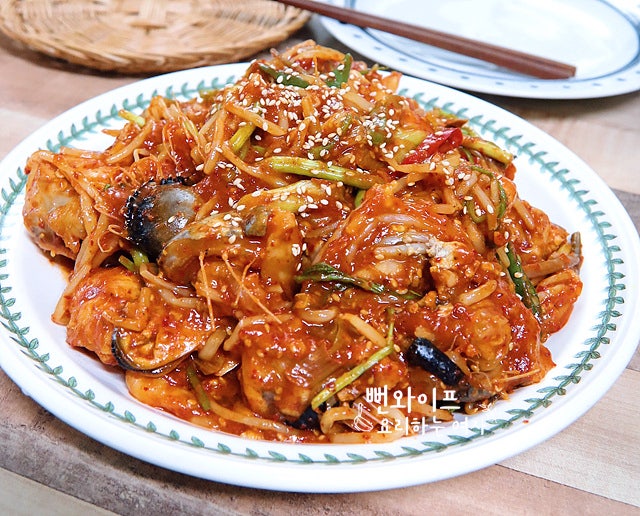
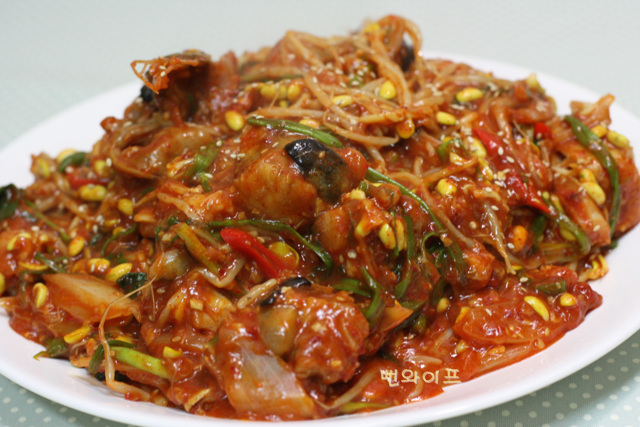
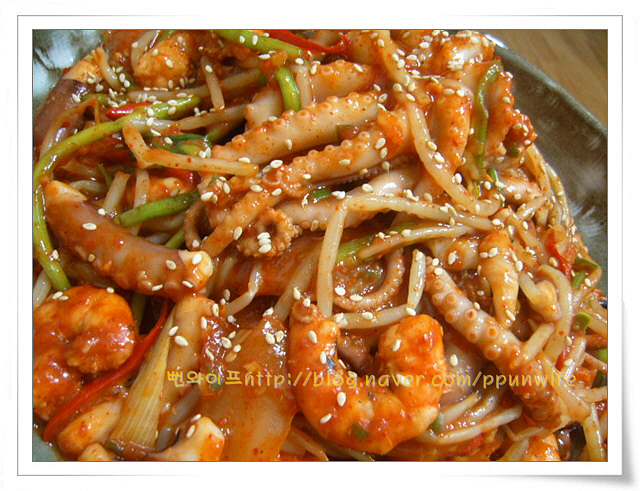
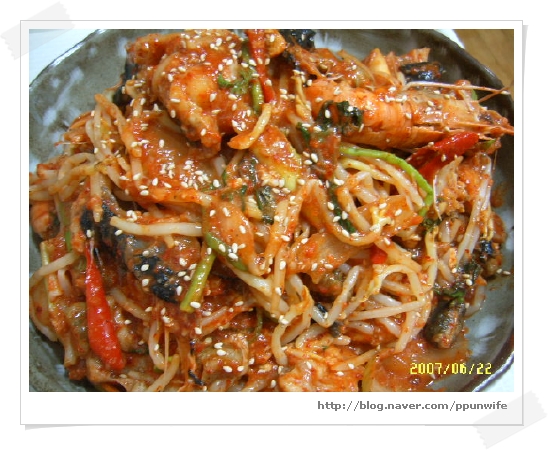
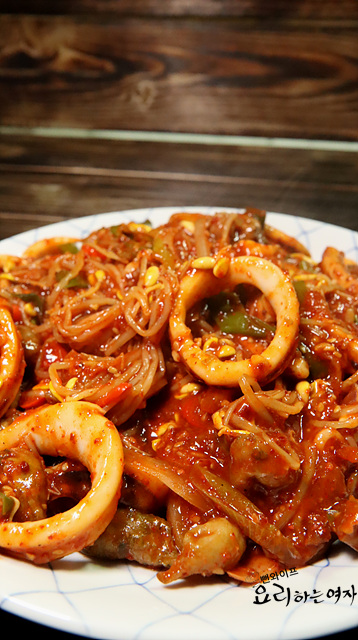
Spicy Nakji Agwijjim (Braised Monkfish and Octopus)
A spicy braised dish made with monkfish, small octopus, and crunchy soybean sprouts.
Translated from Korean by AI and not yet checked by a native speaker. Amounts and numbers are taken directly from the original recipe. Read the Korean original →
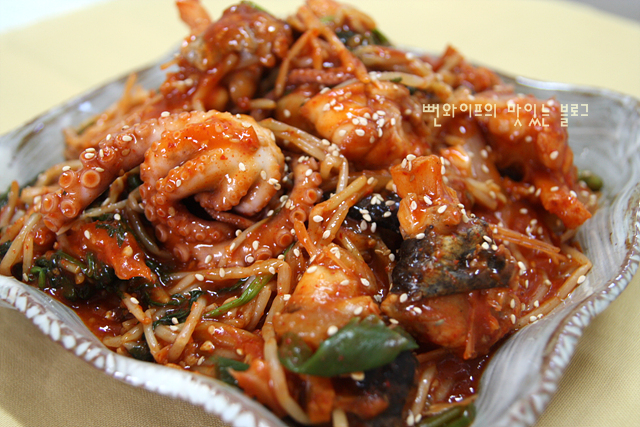
This standout dish features plump monkfish, chewy small octopus, and thick soybean sprouts stir-fried in a spicy seasoning sauce. A rich anchovy broth brings out deep umami, while a potato starch slurry thickens the sauce so it clings nicely to every ingredient instead of separating.
- Servings
- 2–3 servings
- Difficulty
- Hard
- Spiciness
- Spicy
Ingredients
Ingredients
- Monkfish800 g
- Small octopus (nakji)3
- Thick soybean sprouts for braising400 g
- Water dropwort (minari)50 g
- Onion1/2
- Large green onion (daepa)1/2 stalks
- Red chili pepper1
- Cheongyang chili pepper (hot green chili)2
- Korean mint (banga)1/2 handful, 10 g
- Rich anchovy broth2/3 cup
- Potato starch slurry3 tbsp
Monkfish marinade
- Salt1/2 tbsp
- Cheongju (Korean rice wine) (or mirin (cooking rice wine))2 tbsp
Soybean sprout seasoning
- Salt1/2 tbsp
Potato starch slurry
- Potato starch (or potato starch)3 tbsp
- Water3 tbsp
Seasoning
- Gochugaru (Korean chili flakes)6 tbsp
- Minced garlic2 tbsp
- Cheongju (Korean rice wine) (or mirin (cooking rice wine))2 tbsp
- Regular soy sauce (jin-ganjang)1 tbsp
- Oyster sauce1 tbsp
- Sugar1/2 tbsp
- Ginger juice1 tsp
- Salt1/2–1 tsp
- Ground black pepper1/3 tsp
- Water or broth2 tbsp
- Toasted sesame oil1 tbsp
- Toasted sesame seedsas needed
- If Korean mint is hard to find, slice up perilla leaves instead.
- I used thick soybean sprouts meant for braising, and you can leave the heads on. Regular soybean sprouts used for seasoned side dishes wilt too much when braised and lose their crunch.
- I had small octopus on hand so I added it, but feel free to add other seafood like shrimp or stalked sea squirts.
Steps
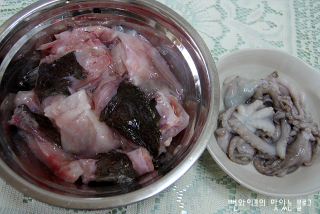
Cut the monkfish into bite-sized pieces, rinse under running water, drain, and season with 1/2 tbsp salt and 2 tbsp cheongju (or mirin). Remove the internal organs from the small octopus and leave it whole without cutting.
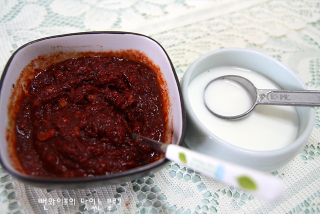
Mix all the seasoning ingredients together, except for the toasted sesame oil and toasted sesame seeds. Making the sauce in advance tastes better because the ingredients meld and mature, and the gochugaru blooms to give it a much prettier color. For the potato starch slurry, simply mix 3 tbsp potato starch with 3 tbsp water. Unlike batter for deep-frying, slurry meant for thickening sauce doesn't need time to settle—just stir it together. Because the starch will sink if left sitting, stir it once more right before pouring it in during cooking.
Cut the water dropwort into 4 to 5 cm lengths. I also prepared Korean mint (banga), which is used in the Busan and Gyeongnam regions to give agwijjim its distinctive herbal aroma. If it is hard to find, slice up perilla leaves instead.
Cut the onion into thick slices, slice the large green onion and red chili pepper thickly on a diagonal, and finely chop the spicy Cheongyang chili peppers.
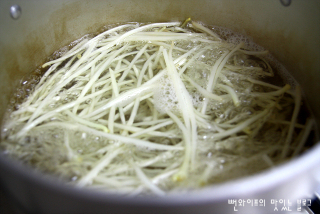
I used thick soybean sprouts meant for braising, and you can leave the heads on. Regular soybean sprouts used for seasoned side dishes wilt too much when braised and lose their crunch. Add the soybean sprouts to boiling water, let the water return to a boil, and blanch for just about 3 minutes.
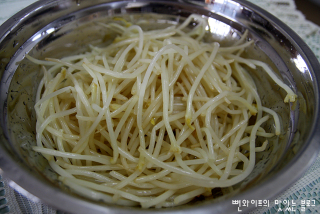
Rinse in cold water, drain in a colander, and toss gently with salt so the seasoning absorbs. If left sitting for too long after blanching, soybean sprouts wilt and turn tough, so prepare them last among the ingredients.
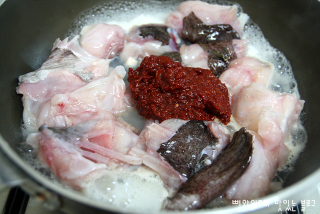
Once all ingredients are prepped, begin cooking the agwijjim. In a wide, deep pan, add the monkfish, rich anchovy broth, and half of the prepared sauce. For braised dishes, using a richer anchovy broth made with more dried anchovies and simmered longer than usual gives the dish much more umami.
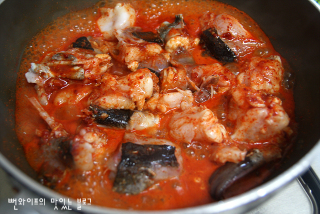
Cook over high heat, stirring occasionally, until the monkfish turns white.
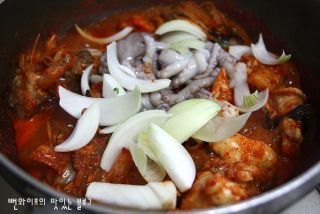
Add the small octopus and onion, then stir a few times; the octopus cooks very quickly.
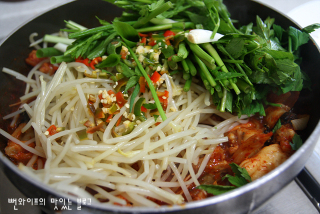
Add the blanched soybean sprouts, water dropwort, large green onion, Korean mint, red chili pepper, Cheongyang chili peppers, and the rest of the sauce. Stir everything together so the sauce and ingredients combine well.
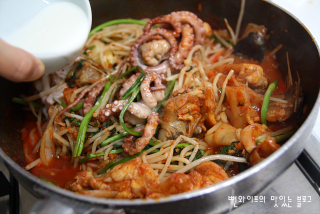
Pour the potato starch slurry evenly in a circle around the pan rather than pouring it all in one spot.
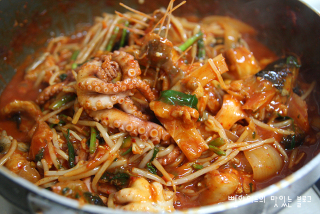
Hold spatulas in both hands and toss briskly; the sauce will thicken into a glossy coating that clings to the ingredients. Taste and add salt if it needs more seasoning. Turn off the heat, stir in the toasted sesame oil and toasted sesame seeds at the end, and you are done.
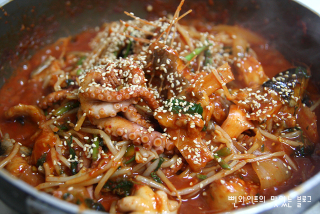
 Ppunwife's tips
- Making the seasoning sauce in advance tastes better because the flavors meld and mature, and the gochugaru blooms to give it a much prettier color.
- Unlike batter for deep-frying, slurry meant for thickening sauce doesn't need time to settle—just stir it together. Because the starch will sink if left sitting, stir it once more right before pouring it into the pan.
- If left sitting for too long after blanching, soybean sprouts wilt and turn tough, so prepare them last among the ingredients.
- For braised dishes, using a richer anchovy broth made with more dried anchovies and simmered longer than usual gives the dish much more umami.
- Pour the potato starch slurry evenly in a circle around the pan rather than all in one spot, then toss briskly with spatulas in both hands so the glossy sauce clings well to the ingredients.
- For braised dishes or boiled fish (suyuk), larger monkfish is always more delicious.
FAQ
Can I substitute another ingredient for Korean mint (banga)?
If Korean mint is hard to find, slice up perilla leaves and use them instead.
Can I use regular soybean sprouts meant for side dishes?
Regular soybean sprouts wilt too much when braised and lose their crunch, so it is best to use thick soybean sprouts grown for braising.
Can I add other seafood besides small octopus?
Yes, feel free to add various other seafood to your taste, such as shrimp or stalked sea squirts (mideodeok).
How do I keep the potato starch slurry from clumping when adding it?
Stir the slurry again to mix any settled starch, pour it evenly in a circle around the pan instead of in one spot, and stir briskly with spatulas.