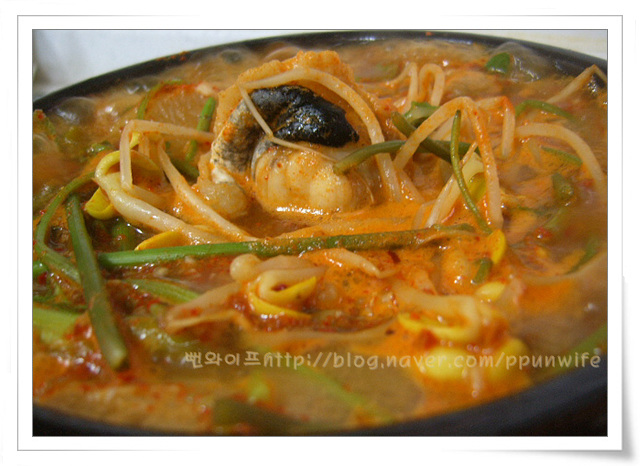
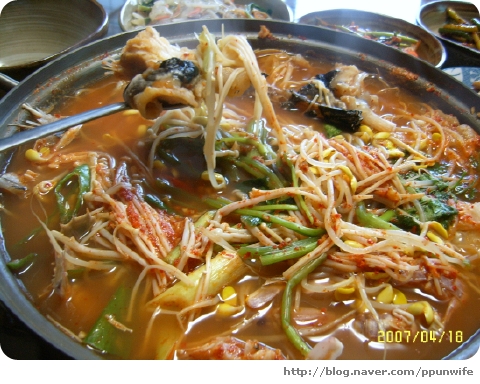
Spicy Agujjim (Braised Spicy Monkfish) with Fresh Chili
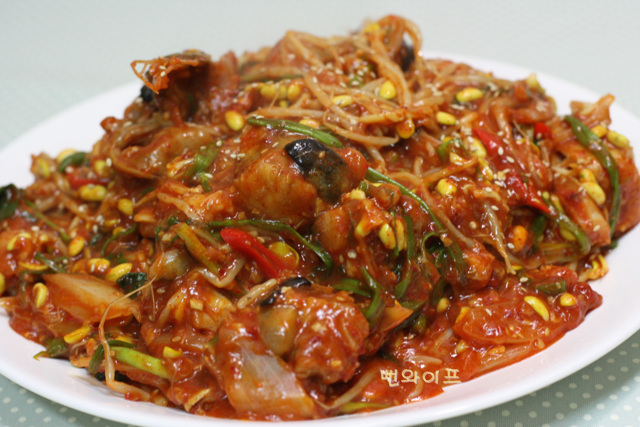
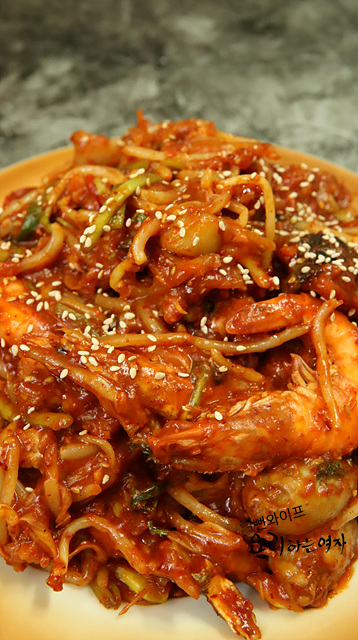
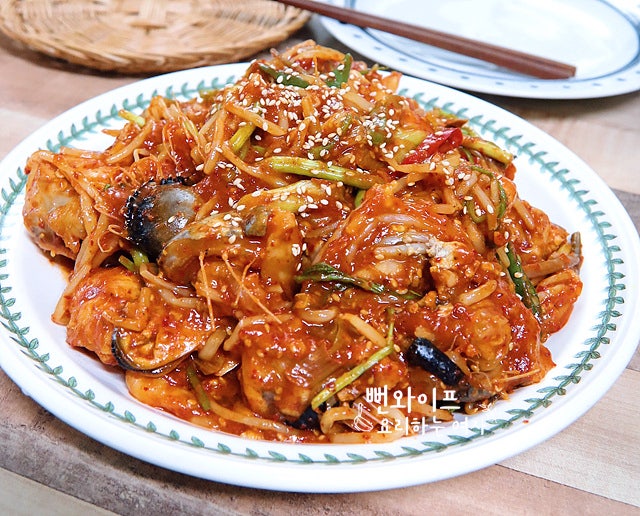
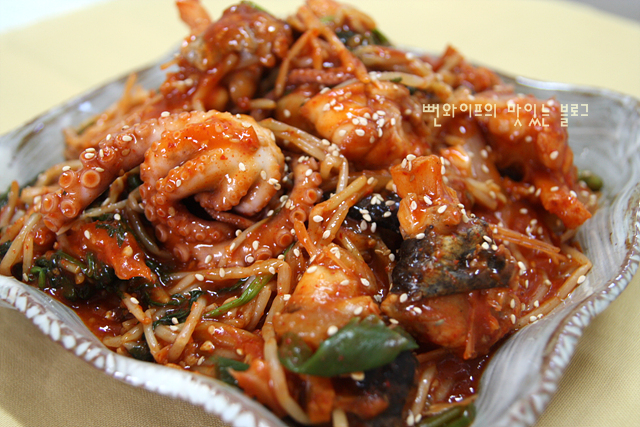
A spicy seafood agujjim (braised spicy monkfish) specialty flavored with ground fresh red chilies for a clean, sharp heat.
Translated from Korean by AI and not yet checked by a native speaker. Amounts and numbers are taken directly from the original recipe. Read the Korean original →
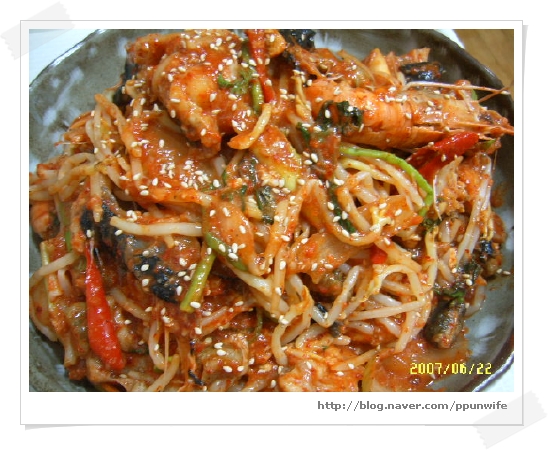
This agujjim gets its intense, sharp heat from freshly ground red Cheongyang chilies blended right into the sauce. Paired with thick, crunchy braising soybean sprouts, fragrant sea squirts, and Korean mint leaves, it makes a hearty main dish and a fantastic drinking snack.
- Servings
- about 3–4 servings
- Difficulty
- Hard
- Spiciness
- Very spicy
Ingredients
Ingredients
- Monkfish1 whole (large)
- Mideodeok (sea squirt)150 g
- Crayfish6
- Soybean sprouts400 g
- Water dropwort (minari)100 g
- Korean mint (banga)15 g
- Onion1/2
- Large green onion (daepa)1 stalk
- Red chili pepper8
Seasoning sauce
- Gochugaru (Korean chili flakes)6 tbsp
- Red chili pepper4 (ground)
- Garlic2 tbsp
- Mirin (cooking rice wine)2 tbsp
- Sugar2 tsp
- Oyster sauce (or soy sauce)2 tsp
- Ginger1 tsp
- Salt1 tsp
- Ground black pepper1 tsp
- Dasida (Korean beef stock powder)1 tsp
- Broth3 tbsp
When stir-frying
- Broth1/2 cup
- Potato starch slurry3 tbsp (mixed with equal parts potato starch and water)
Finishing
- Toasted sesame oil
- Toasted sesame seeds
- You can buy fresh monkfish in bulk, cut it into bite-sized pieces for single meals, and store them in the freezer.
- The recipe calls for 1 large monkfish, but you can use 2 small ones instead.
- Regular soybean sprouts soften too quickly and lack crunch, so it is best to use thick soybean sprouts meant for braises.
- You can omit the crayfish if you do not have any.
- Grinding fresh red Cheongyang chili peppers into the sauce doubles the sharp, fiery kick.
Steps
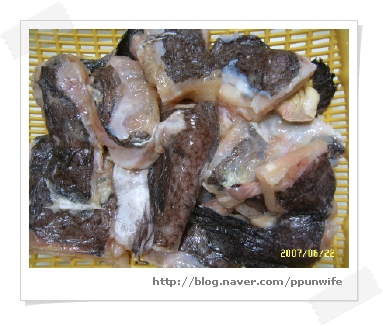
Fresh or frozen monkfish both work fine. I buy plenty of fresh monkfish, cut it into bite-sized portions for one meal,
and store them in the freezer. That amount shown is for one large fish.
For small ones, 2 will do. Wash it clean and drain well.
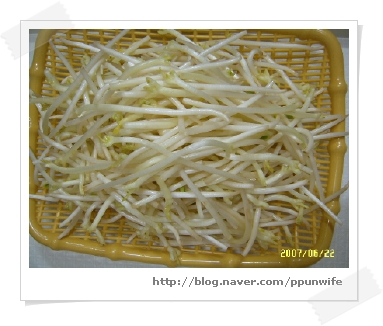
Markets sell thick soybean sprouts meant for braised dishes. If you use regular soybean sprouts, they soften too quickly
and lack crunch, so they are not ideal for agujjim.
You can leave the sprout heads on, but today they looked a bit untidy, so I removed them neatly.
Just blanch the soybean sprouts briefly in boiling water, rinse in cold water, and drain well.
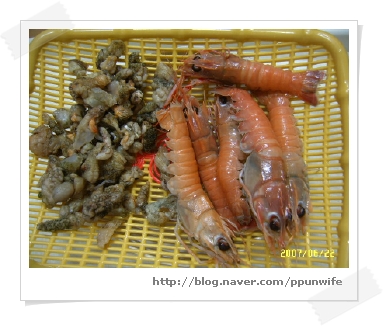
When making agujjim, try your best to include mideodeok (sea squirt). Having only monkfish and soybean sprouts can taste a bit plain.
Unlike the monkfish, their fragrant aroma and pleasantly chewy texture make them great to enjoy alongside the sprouts, so they are wonderful to add to the braise.
I had fresh crayfish, so I added some too (you can skip the crayfish).
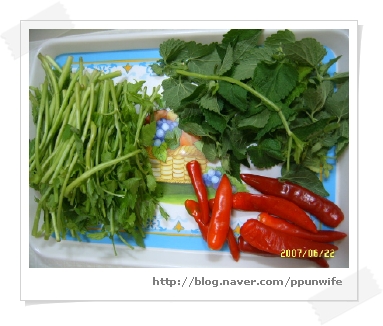
For vegetables, prepare water dropwort (minari) and korean mint (banga)—the ones next to the minari that look like young perilla leaves. They have an intense aroma,
making them an essential herb for braised dishes in Gyeongnam and Busan. Grind 4 to 5 of the red chili peppers
and add them to the seasoning sauce. This was the prime suspect that gave my husband a real taste of heat.
Grinding fresh red Cheongyang chili peppers doubles the sharp kick compared to just using spicy chili flakes.
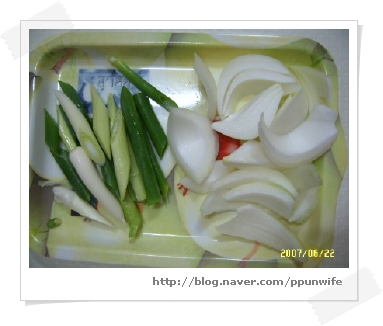
Thickly slice the onion and large green onion (daepa), and the prep is done.
If you add a lot of onion, it might be better to reduce the sugar.
If you dislike the strong sweetness from onions, it is better to leave them out.
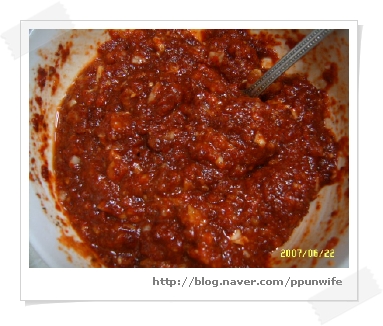
Grind 4 to 5 red chili peppers, place them in a bowl, and mix them together with the seasoning ingredients listed above.
Make this seasoning sauce in advance. If you plan to eat agujjim for dinner, making it in the morning is great.
As the sauce sits and matures, it develops a much deeper flavor.
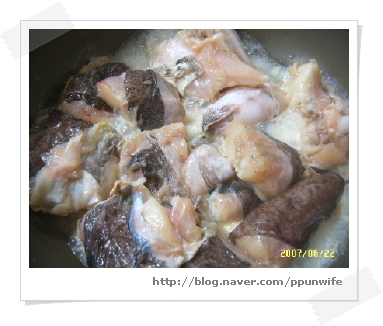
Now that the ingredients are ready, let's get started.
Place the monkfish in a frying pan, sprinkle lightly with fine salt, add 1 tsp mirin (cooking rice wine), and cook through.
You do not need to season heavily with salt.
Just sprinkle lightly as if seasoning beforehand. Transfer the cooked monkfish to another plate.
Do not throw away the broth released while cooking the monkfish; save it together.
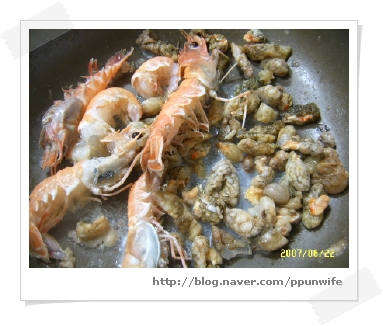
In the frying pan used to cook the monkfish, add the crayfish and mideodeok, season with a pinch of salt, and cook.
To make them easy to eat, I made a small slit in the crayfish and removed the digestive tract.
Transfer these to another plate as well. Do not discard the liquid released here either.
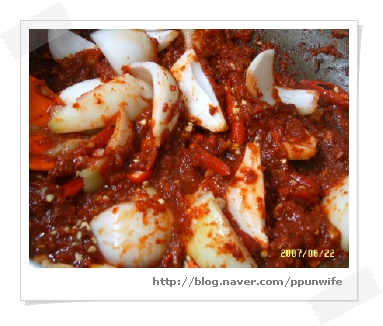
Add the seasoning sauce to the frying pan and stir-fry, then add the onion and stir-fry briefly.
Pour 1/2 cup broth into the sauce, which will have become quite thick, to give it a rich consistency.
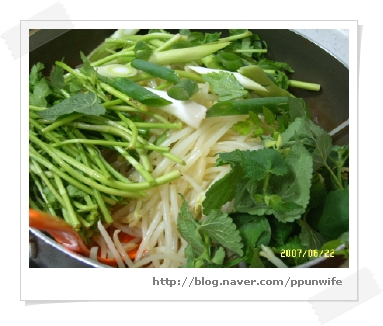
Add the soybean sprouts, water dropwort (minari), and korean mint (banga), toss a few times, and then
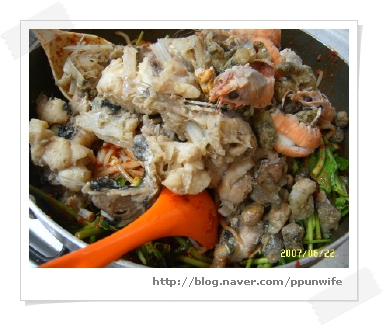
Add the cooked monkfish, mideodeok, and crayfish, and mix everything together.
Since all the ingredients are already cooked, just toss until the seasoning is evenly distributed.
If it needs more seasoning, finish with salt here.
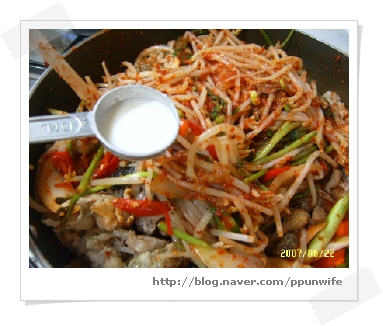
Drizzle the prepared potato starch slurry evenly at the end while stir-frying quickly over high heat.
Once the sauce comes together and turns thick, drizzle with toasted sesame oil, sprinkle toasted sesame seeds, and transfer to a plate.
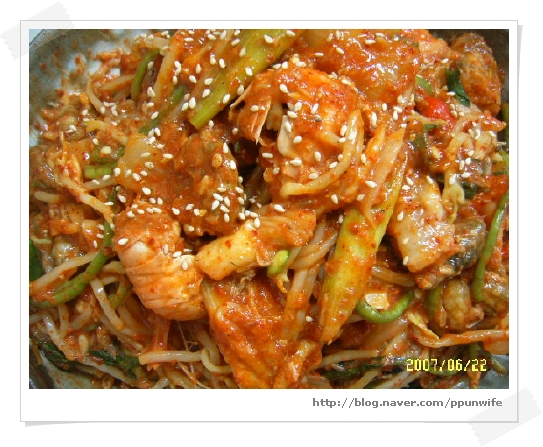
Wow, we finished a whole large plate piled high with this fiery dish.
He said this was the spiciest agujjim I have ever made. Hearing him repeatedly say it was spicy yet delicious
made me feel proud. If you are eating with children, simply leave out the Cheongyang chilies. Reducing the amount of gochugaru
a bit should also make it great for the whole family.
 Ppunwife's tips
- Making the seasoning sauce in advance allows the flavors to mature, giving it a deeper taste.
- Do not discard the broth released while cooking the seafood; keep it to use.
- If you do not like the strong sweetness of onions, omit them, or reduce the sugar if using plenty of onion.
- When cooking for children, leave out the Cheongyang chili peppers and reduce the amount of gochugaru.
FAQ
How can I adjust the heat to make it less spicy?
You can make it milder by omitting the fresh Cheongyang chili peppers from the seasoning and reducing the amount of gochugaru.
Is there a specific type of soybean sprout that works best for agujjim?
Regular soybean sprouts quickly lose their crunch and wilt easily, so it is better to use the thicker soybean sprouts sold specifically for braised dishes.
Does letting the seasoning sauce mature in advance make a difference in flavor?
Mixing the sauce half a day or the morning before cooking lets the ingredients meld and mature, giving it a much deeper flavor.
What is the secret to coating the seafood and vegetables evenly with the sauce when stir-frying?
Precook the ingredients, toss them quickly into the sauce, and finally drizzle in the potato starch slurry over high heat to set the thickness and coat everything evenly.